Sobrassada de Mallorca
Mallorca, Balearic Islands
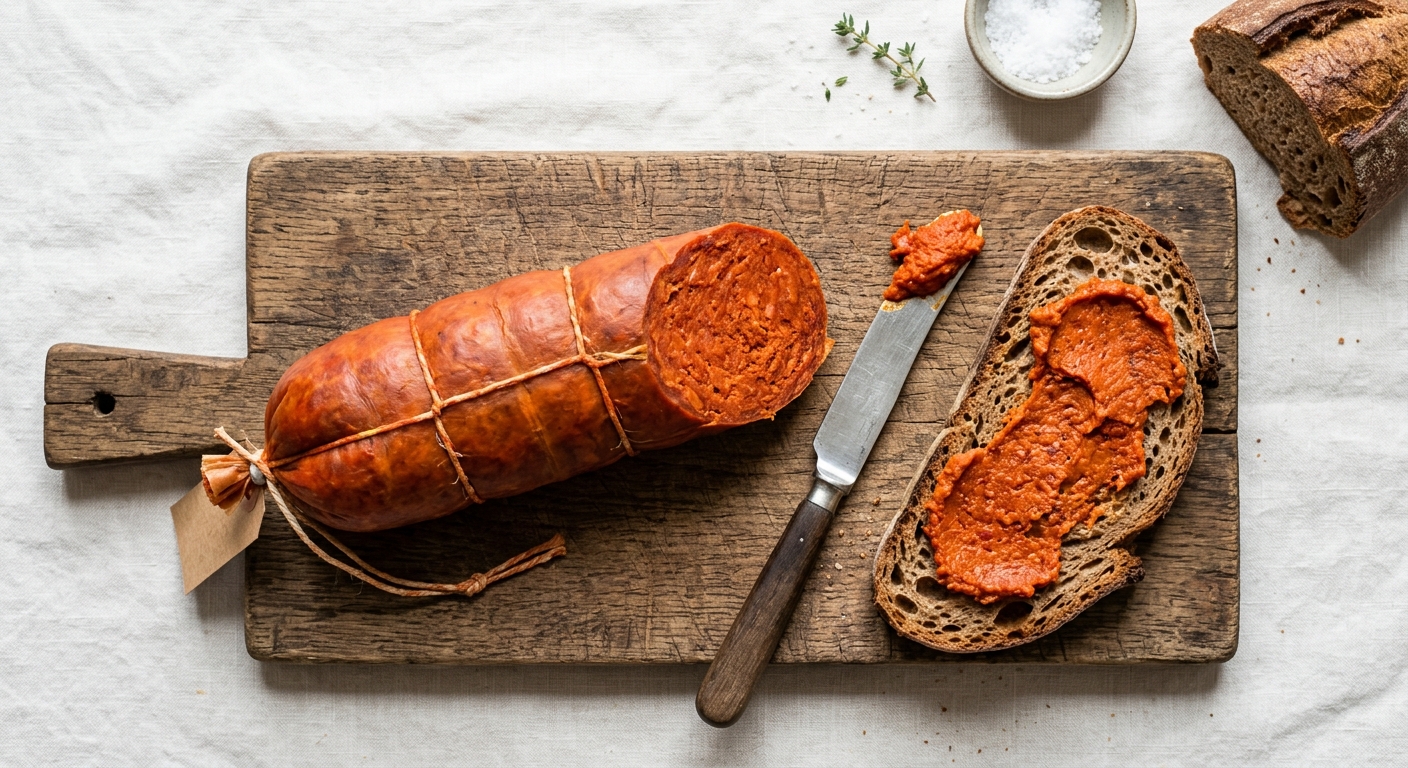
Sobrassada is a raw cured sausage from Mallorca, spreadable at room temperature and coloured deep rust-red from a large quantity of ground sweet paprika. The mixture of minced pork, paprika, salt, and black pepper is stuffed into natural casings and left to cure over weeks, during which the fat softens and the paprika distributes through the meat until the whole mass becomes a dense, unctuous paste. It spreads onto bread with a knife, melts into eggs in the pan, and disappears into sauces. The version made from porc negre, Mallorca's native black pig, carries a richer fat and a deeper flavour than the mainland-breed equivalent. Two EU protected designations cover the product: IGP Sobrassada de Mallorca for the standard version using commercial white pigs, and the more restricted IGP for sobrassada made exclusively from the island's black pig. Both designations require production on the island. The black pig version is sold with a black label and costs considerably more. Neither version is cooked before eating. The casing is split, and the contents are scooped or sliced onto whatever is being eaten.
History
Sobrassada appears in Mallorcan documents from the 14th century. The word derives from the Catalan sobrasar, meaning to cook lightly or to singe, though the sausage itself is not cooked. One theory traces the name to the technique of passing the stuffed sausage briefly over heat to seal the casing before hanging. The more convincing explanation connects it to the Arabic influence on island cooking in the period before the Catalan conquest of 1229, when techniques for spiced and preserved meat were already established in the Mediterranean. Paprika came later. Before the Columbian exchange brought capsicum peppers to Europe, the Mallorcan sausage would have been pale and seasoned with other aromatics. Paprika arrived in the Balearics sometime in the 16th or 17th century and transformed the sausage into the red paste it is today. The matança, the annual domestic pig slaughter, became the social and practical occasion for producing sobrassada, along with the other preserved meats that would carry a household through winter. Families in Es Pla still hold matança events, though the scale has contracted from the full household production of previous generations to something closer to a ritual gathering. The porc negre breed, having declined nearly to extinction in the mid-20th century as commercial white pigs replaced it, was revived through conservation efforts starting in the 1980s. Today it is the basis of the premium sobrassada market and a point of regional culinary pride.
Ingredients
Preparation
The pork is minced on a coarse plate, keeping visible chunks of fat through the mix. Sweet paprika goes in at a ratio far higher than in most cured sausages, typically 30 to 50 grams per kilogram of meat, along with salt and black pepper. Some producers add a small amount of hot paprika for depth. No garlic. No nitrites in traditional recipes, though commercial versions may include curing salts. The mixture is stuffed into natural casings, either large intestine for the round botifarró-style or thin casings for the elongated llonganissa sobrassada. The casing is tied at intervals and the sausage hangs in a cool, dry curing room with good air circulation. At room temperature, the curing takes four to eight weeks depending on the casing size. The fat slowly liquefies and blends with the paprika. When ready, the casing peels away and the interior has the consistency of soft butter.
Taste
The paprika is the dominant note, sweet and slightly earthy, with a warmth that builds rather than shocks. The fat carries the flavour across the palate. Salt is present but not sharp. Black pepper surfaces in the finish. There is no smokiness. The porc negre version has more complexity in the fat, with a nuttier, rounder quality that comes from the breed's diet of carobs and figs. Both versions leave a coating of paprika-orange fat on the lips and tongue that lingers for a few minutes after eating.
Texture
Spreadable at cool room temperature, firmer when cold from a refrigerator but still soft enough to break with a spoon. The grind shows visible pieces of meat and fat at close range; it is not smooth like a pâté. When heated in a pan, the fat renders and the mass becomes looser and more liquid. On bread, it sits somewhere between butter and a coarse terrine. The casing is thin and peels away from the paste cleanly when the sausage is sliced.
Rituals & Traditions
The matança
The matança is the domestic pig slaughter, held between late November and January when temperatures drop enough to work with meat outdoors. Extended families gather at a farm or village house. The pig is killed early in the morning, and the work of butchering, seasoning, and stuffing lasts the entire day. Sobrassada is the main product: kilograms of minced pork mixed with paprika and stuffed into casings throughout the afternoon. The family eats together in the evening from the fresh offal that won't be cured. In Es Pla villages, the matança remains a genuine working occasion as well as a social one, though fewer families now raise their own pig through the year. For those that do, the day's output in sobrassada, botifarrons, and llangonissa supplies the household for most of the year.
Spreading on the pa amb oli at the table
In Mallorcan cellar restaurants, sobrassada arrives at the table in its casing, uncut. The diner splits the casing with a knife and spreads the contents directly onto the bread already prepared with tomato and oil. There is no pre-portioning by the kitchen. The act of splitting the casing and spreading is done by the person eating. How thick to go on the bread is a personal decision, as is the ratio of honey or no honey on top. The ritual is domestic in character even when performed in a restaurant.
Serve at room temperature
Sobrassada straight from the refrigerator is firmer and less flavourful. The fat has solidified and the paprika sits muted in the cold. Fifteen minutes at room temperature transforms it: the fat softens, the paste loosens, and the full aroma of paprika and cured pork opens up. Traditional households in Mallorca keep a piece of sobrassada on the counter, not in the refrigerator, for daily use. It is safe to do this for a week or two with whole, intact sausages. Once the casing is split, keep it wrapped in the refrigerator and allow it to warm before eating.
Do not confuse with mainland sobrasada
Sobrasada made on the Spanish mainland exists and is sold widely, but it is a different product. The Mallorcan IGP designation requires island production and sets standards for meat content, paprika ratio, and curing time that mainland versions do not follow. Mainland sobrasada often includes garlic and different paprika ratios, and the texture is generally firmer. When buying the genuine article, check for the Mallorca IGP label. The porc negre version carries an additional black label distinguishing it from the standard version. Anything labelled only sobrasada without geographic indication is likely mainland or industrial.
Recipes
Sobrassada amb Mel
Sobrassada de Mallorca
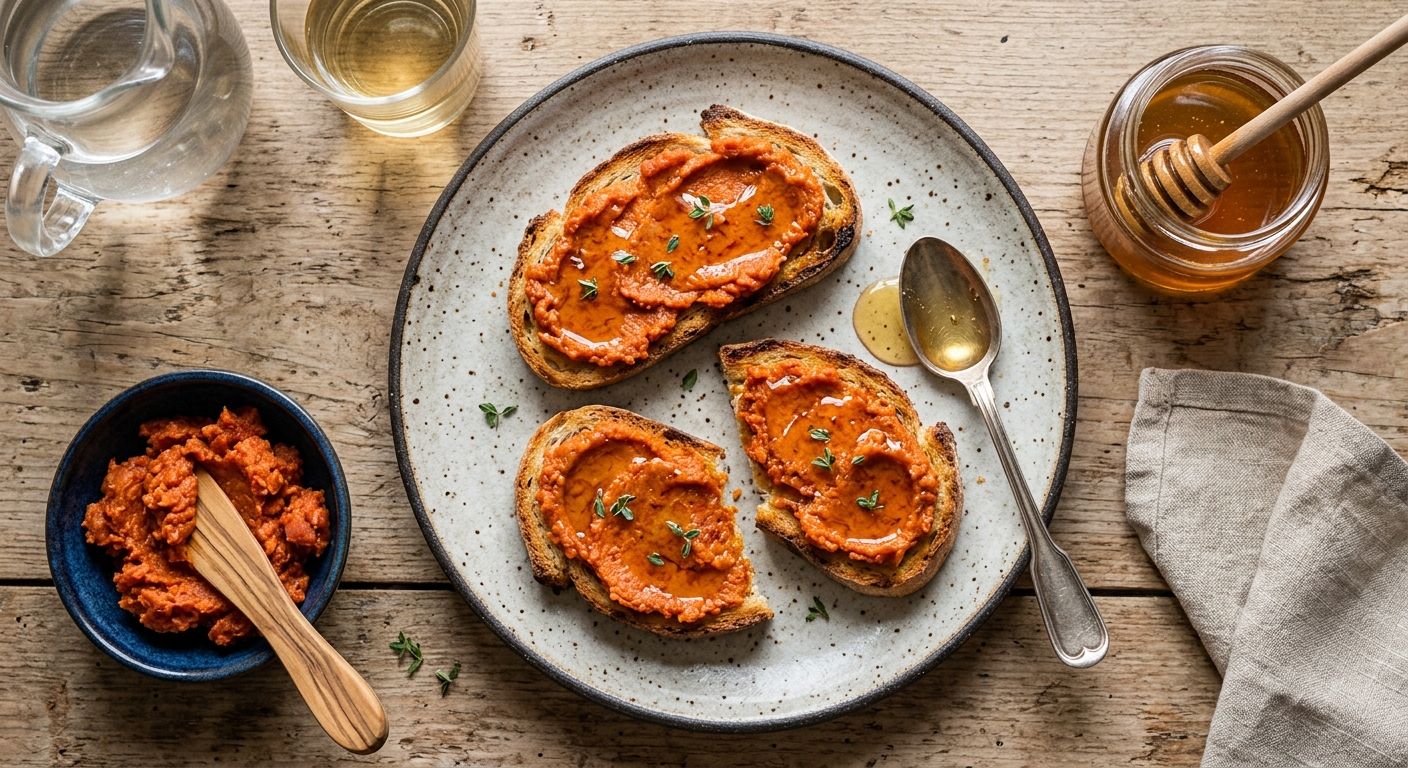
The most direct way to eat sobrassada on Mallorca: spread thick on coarse bread, finished with a drizzle of local honey. The sweetness of the honey pulls the paprika forward and cuts the salt. This is morning food in most Mallorcan households, served with coffee. It is also what comes to the table unbidden at cellar restaurants when you sit down before the menu arrives.
Coca de Sobrassada
Sobrassada de Mallorca
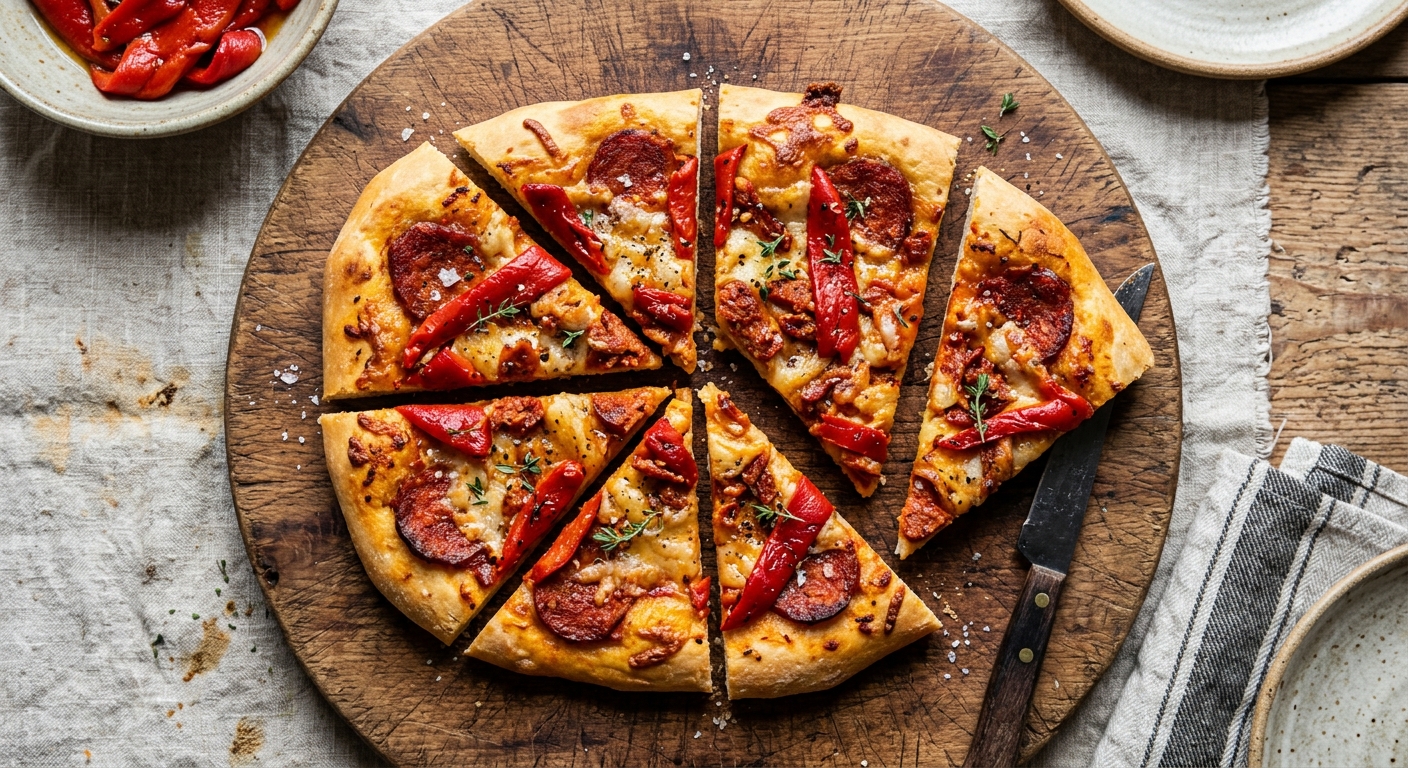
Coca is Mallorca's flatbread, closer to a focaccia than a pizza, with a thin crisp base and no cheese. Sobrassada goes on before the oven, melting into the dough as it bakes and turning the surface an orange-red. A drizzle of honey when it comes out of the oven is optional but standard in the Mallorcan kitchen. The result is a flat bread that smells of paprika fat and reads somewhere between savoury and sweet.
Croquetes de Sobrassada
Sobrassada de Mallorca
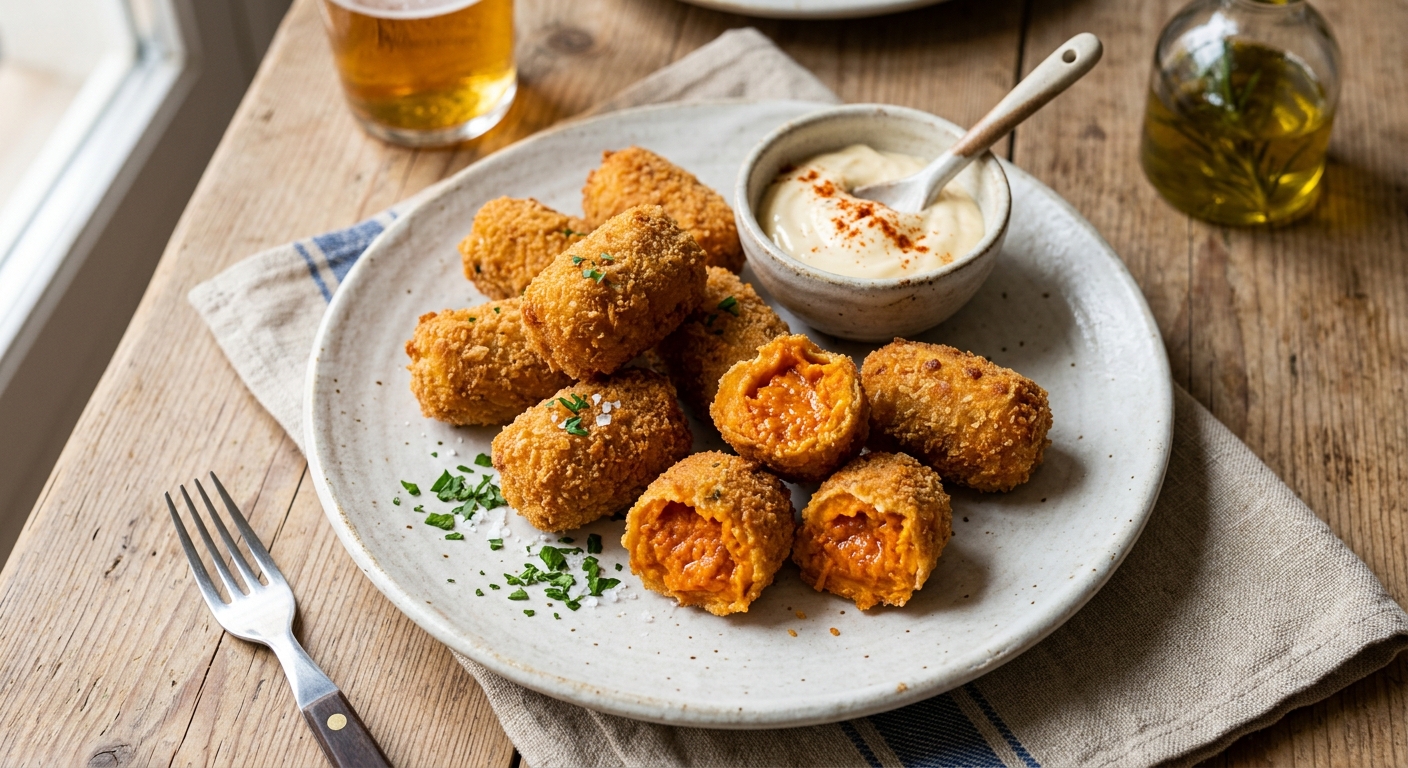
The classic Mallorcan tapa in croquette form. A bechamel enriched with sobrassada sets cold, then gets rolled in breadcrumbs and fried until the outside cracks and the inside runs. The paprika turns the bechamel orange from the inside. These are pub and bar food across Mallorca, made the day before, fried to order.
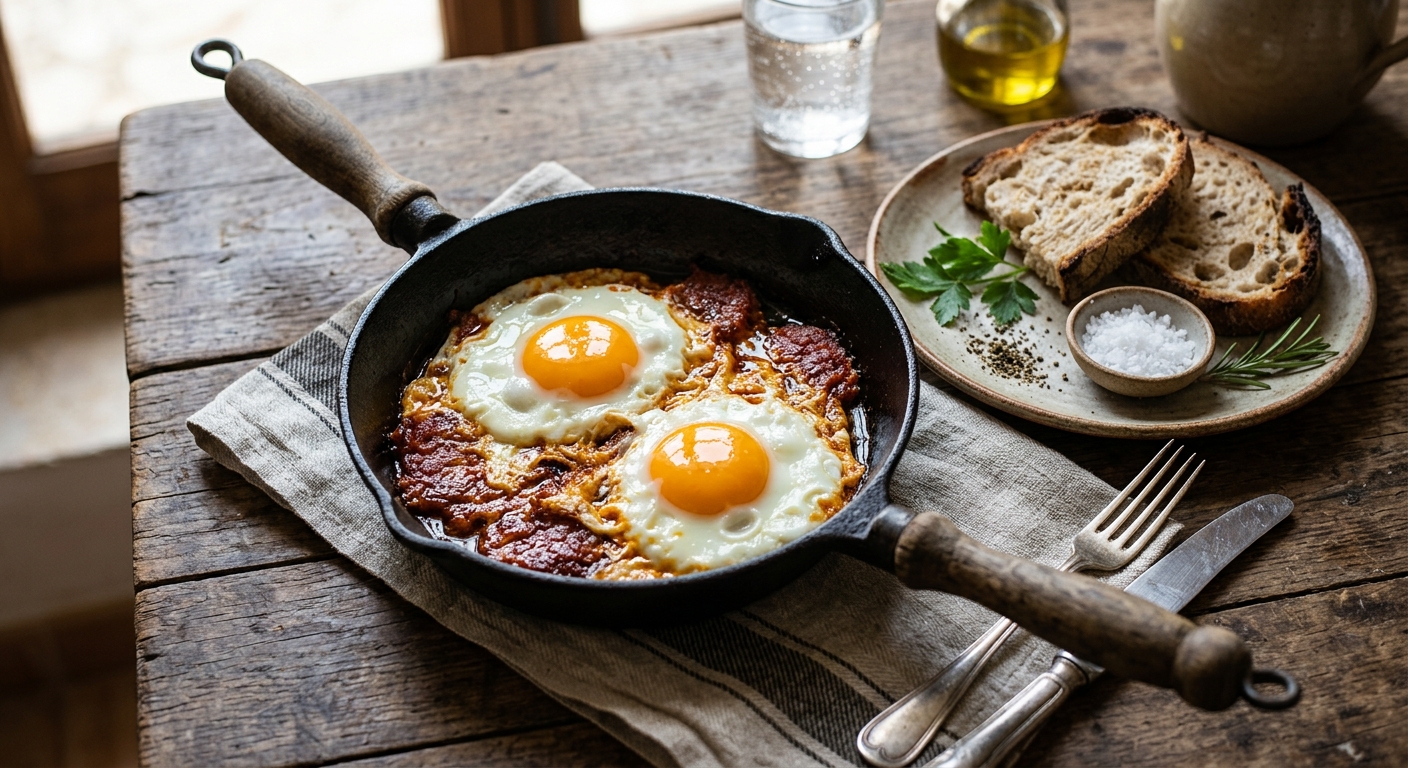
Ous amb Sobrassada
Sobrassada de Mallorca
Sobrassada and eggs in the pan: the sausage melts into rendered orange fat before the eggs go in, basting the whites as they set. This is the Mallorcan working breakfast, quick to make and forceful in flavour. The eggs cook in paprika-coloured fat and arrive at the table with that fat pooled around them. Bread is not optional.
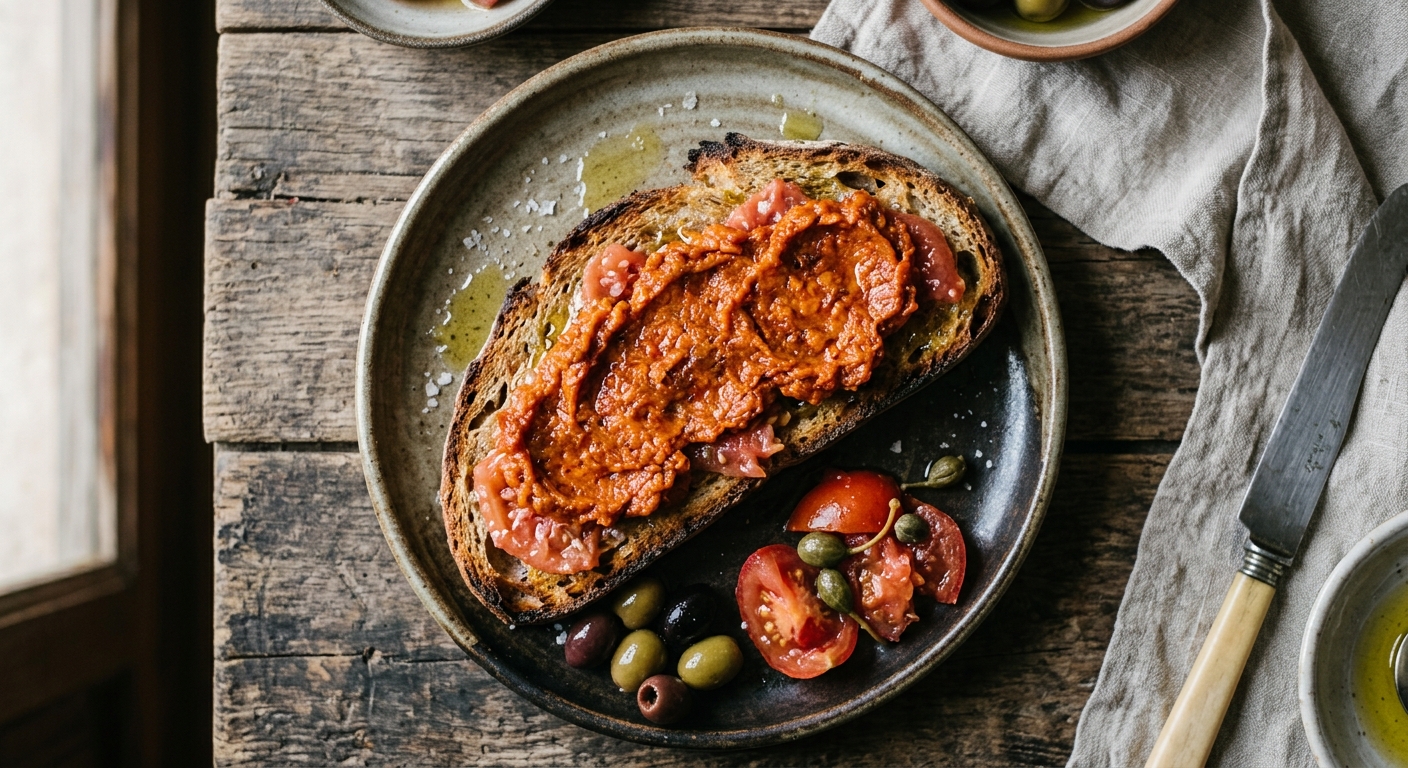
Pa amb Oli amb Sobrassada
Sobrassada de Mallorca
Pa amb oli is the Mallorcan foundation: coarse bread, a ripe tomato rubbed into it, olive oil, salt. Sobrassada goes on top and turns it into a full snack or a light meal. This is the most common way Mallorcans eat their cured sausage at home. The tomato provides acidity, the oil carries the flavour, and the sobrassada provides fat and paprika. Nothing is measured. Everything is adjusted at the table.
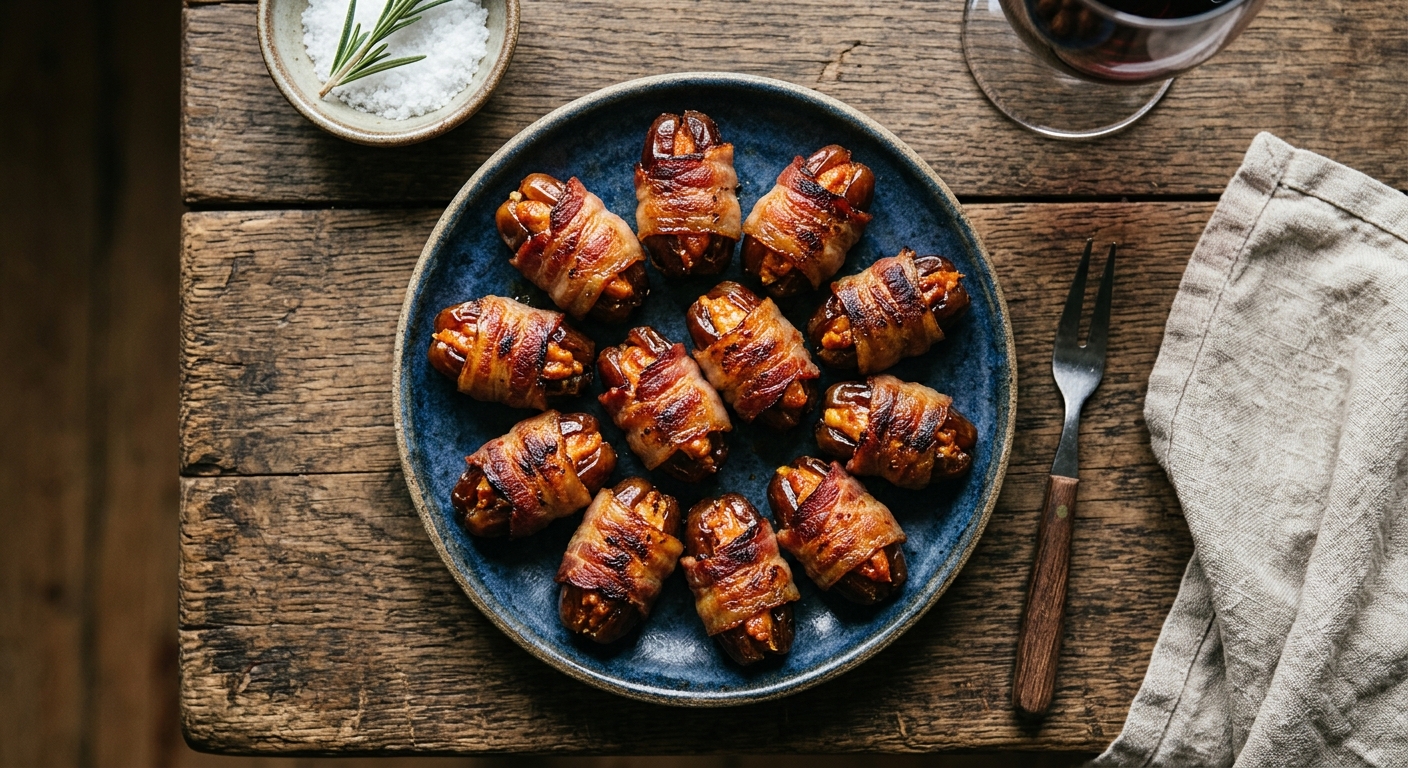
Dates Stuffed with Sobrassada and Bacon
Sobrassada de Mallorca
A tapa that turns up at Mallorcan bar menus and Christmas tables alike. Medjool dates are pitted, filled with sobrassada, wrapped in thin bacon, and roasted until the bacon crisps and the sobrassada heats through. Three flavours in one bite: the caramel sweetness of the date, the paprika-salt of the cured sausage, and the smoke of the bacon. The combination is not subtle, and that is the point.
On the Map
Where to Eat
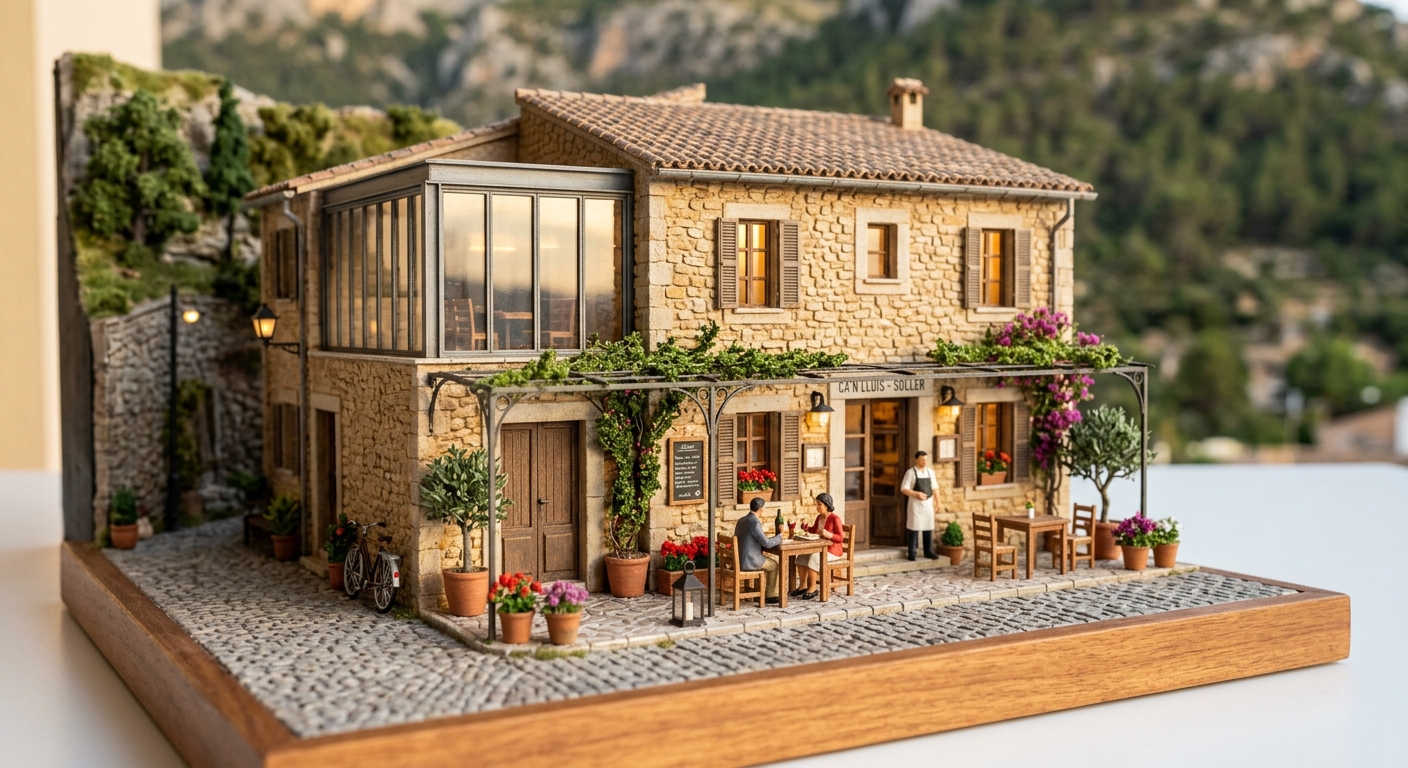
Ca'n Boqueta
Sóller, Spain
Ca'n Boqueta sits on the Gran Via in Sóller, a town in the Serra de Tramuntana mountain range north of Palma, accessible by the historic wooden tram that runs from the port. Chef Xisco Martorell has earned a Michelin Bib Gourmand for cooking that updates Mallorcan tradition rather than abandoning it. The restaurant occupies a typical Mallorcan townhouse with a rear patio looking out over the valley and its orange groves. Sobrassada appears across the menu: as a starter spread on bread, inside pastry courses, and alongside black pig preparations where the sausage and the roast share the same animal. The tasting menus change with the season, but the Mallorcan black pig and its cured products remain a constant. The kitchen sources porc negre sobrassada from island producers and uses it at every stage of the meal from snack to main.
Ca'n Joan de S'Aigo
Palma, Spain
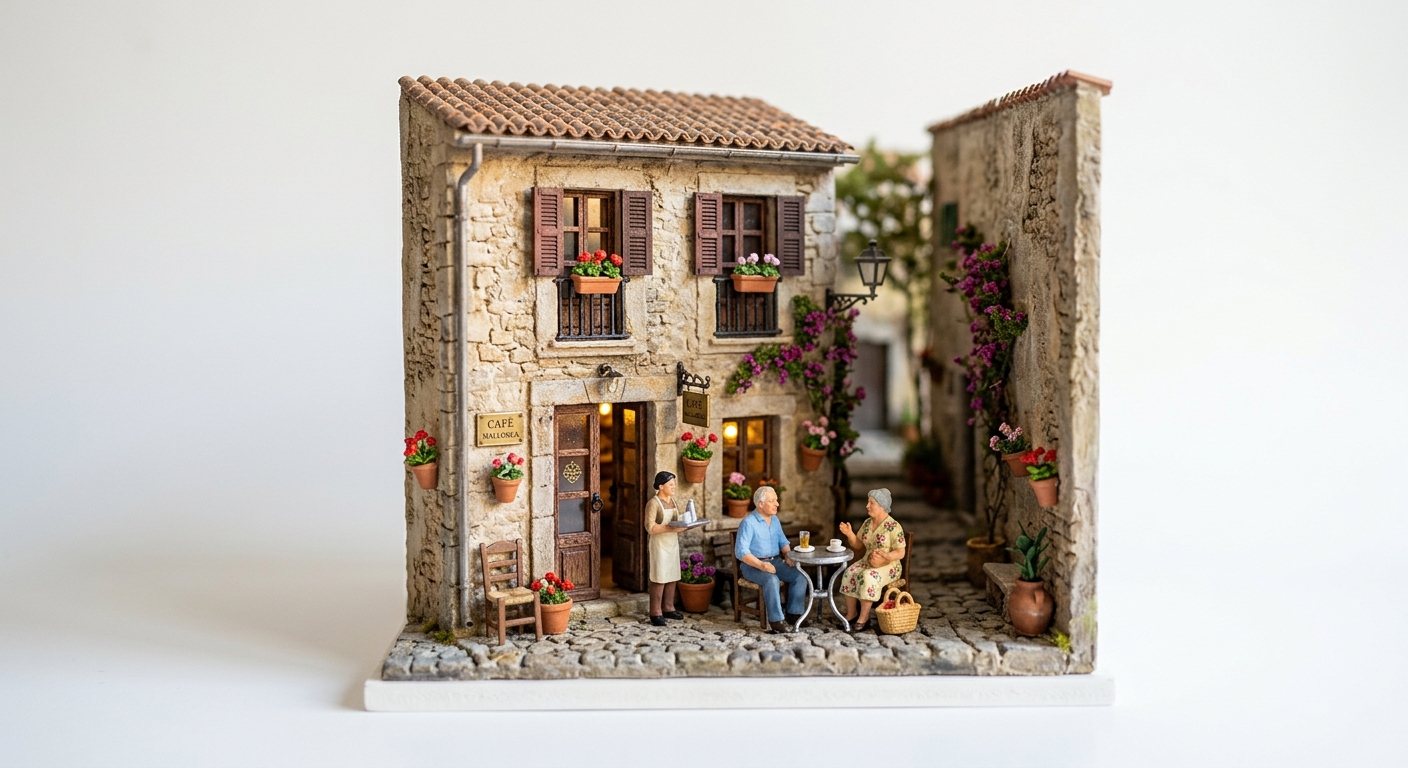
Ca'n Joan de S'Aigo traces its origins to a confectionery shop from the 1700s, making it one of the oldest establishments on the Balearic Islands. The current location on Carrer de Can Sanç in Palma's old city opened in 1977, restoring and preserving the original character of the first shop. The menu has not strayed: ensaimades, almond ice cream, hot chocolate, and the cured pork products that Mallorcans have eaten alongside their pastries for generations. The sobrassada-filled ensaimada is the reason to come: the paprika fat from the sausage blooms through the spiral dough as it bakes, and the combination of sweet pastry and salt-forward cured meat is one of the island's most specific flavour experiences. The café also serves sobrassada on toast alongside the morning coffee, the honey optional but widely chosen.
Celler Sa Premsa
Palma, Spain
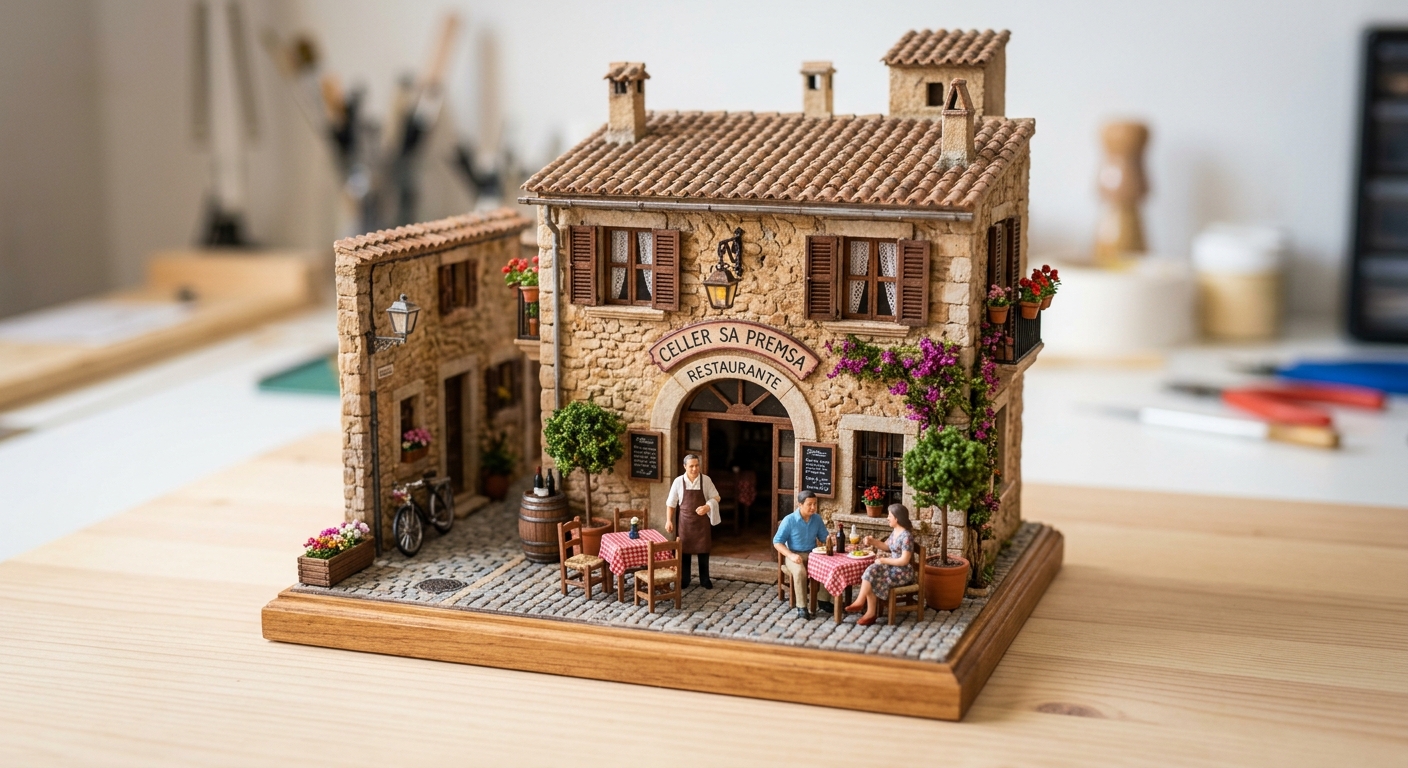
Celler Sa Premsa opened in 1958 when a former banker converted an old warehouse in central Palma into a wine cellar restaurant. Three generations of the same family have run it since. The dining room has not changed: high ceilings, rows of enormous oak barrels along the walls, long wooden tables, and the smell of decades of cooking in the stone. The menu covers the full range of Mallorcan peasant cooking: sopas mallorquines, arrós brut, tumbet, frit mallorquí, and the cured pork products that anchor the island's food culture. Sobrassada comes to the table in its casing with bread already rubbed with tomato. The cooking is not refined. It is the kind of food that fed the island's working population for a century, served at prices that working people can still afford.