Currywurst
Berlin, Germany
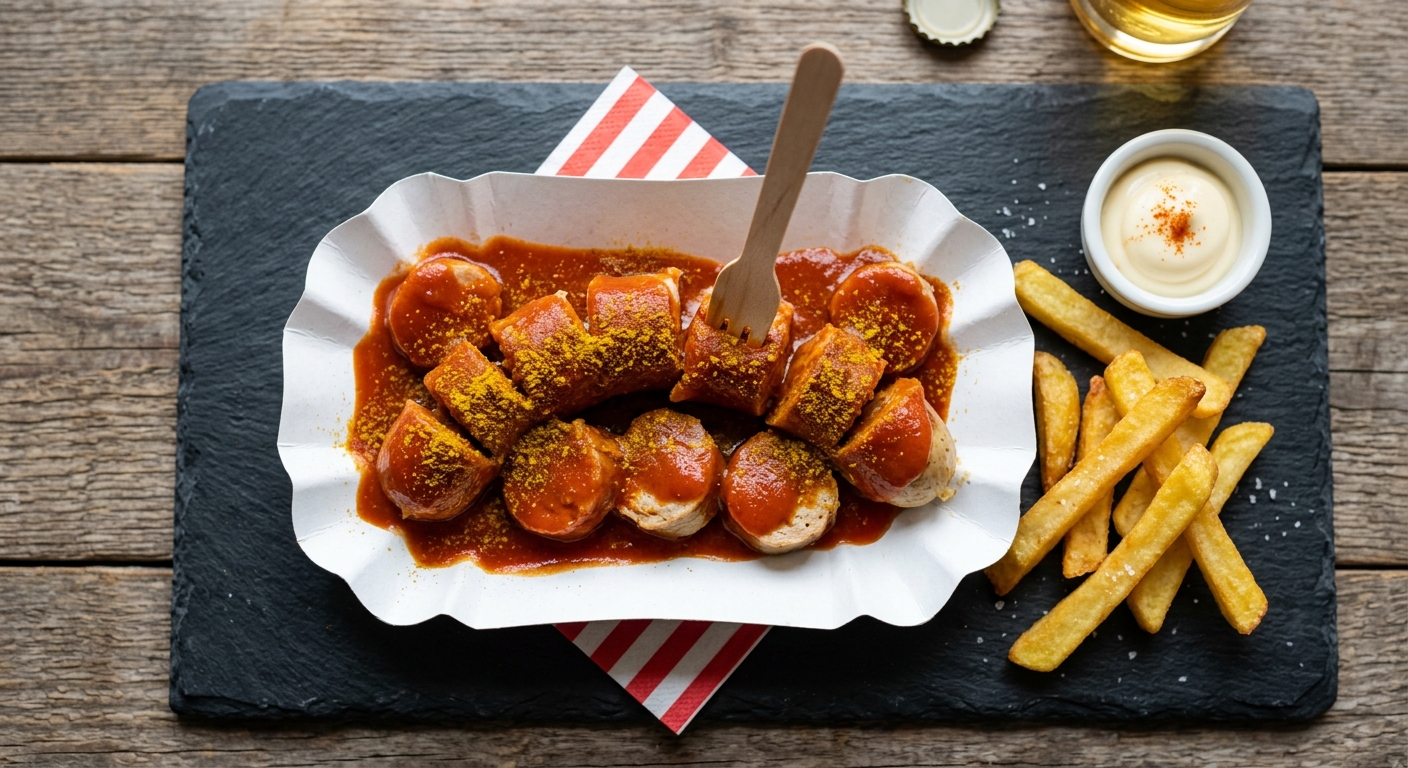
Currywurst is Berlin's most consumed street food: a steamed and pan-fried pork sausage, sliced into rounds, blanketed in a curried tomato ketchup sauce, and dusted with curry powder. It is sold at Imbiss stands across Germany, but Berlin claims it as its own invention. The sauce is the point. The sausage is a delivery mechanism for the sweet, spiced, faintly vinegary tomato base that Herta Heuwer developed in 1949 at her stand on Stuttgarter Platz in Charlottenburg. Germans eat roughly 800 million currywursts per year, and Berlin alone accounts for about 70 million of those. Two versions divide the city: mit Darm (with casing, which gives a snap on the bite) and ohne Darm (without casing, softer and finer-textured). Most East Berliners default to ohne Darm; in the West, mit Darm is the classic choice. Both come on a paper plate with a small plastic fork and, almost always, a side of Pommes frites or a Brötchen.
History
Herta Heuwer opened her Imbiss at Stuttgarter Platz 4 in Berlin-Charlottenburg on September 4, 1949. The city was in ruins. British, American, and French occupation zones overlapped in the west of the city, and Allied soldiers brought foreign condiments with them: ketchup, Worcestershire sauce, curry powder. Heuwer experimented with these new ingredients and arrived at a sauce she called Chillup, a portmanteau of chilli and ketchup. She poured it over a grilled Bratwurst, dusted the plate with curry powder, and sold it for sixty pfennigs. The combination was a hit from the first day. She patented the sauce recipe in 1959 and is credited with selling first currywurst at that stand until 1974. The sausage spread rapidly through West Berlin's working-class districts, where construction workers rebuilding the bombed city ate standing at Imbiss stands because sit-down restaurants were too expensive. Karl-Marx-Strasse in Neukölln, Mehringdamm in Kreuzberg, and the market halls of Charlottenburg all developed their own stands in the 1950s and 1960s. In East Berlin, the currywurst arrived later but took root just as firmly. Konnopke's Imbiss under the Schönhauser Allee viaduct had been operating as a simple sausage stand since 1930; it added currywurst to the menu in 1960 and became the GDR's most famous stand. After reunification, the ohne Darm version from East Berlin and the mit Darm version from West Berlin coexisted on the same menus. The Deutsches Currywurst Museum opened in Berlin-Mitte in 2009 and drew over three million visitors before closing in 2018. The sausage has outlasted its museum.
Ingredients
Preparation
The standard Imbiss method begins with steaming. The sausages go into hot water or a steam bath until they are cooked through, which prevents splitting during the subsequent fry. They then move to a flat griddle or pan with a little oil, cooking until the exterior is lightly browned and the skin has some colour. The sausages are transferred to a paper plate and cut with scissors into rounds of roughly two centimetres each. The curry ketchup sauce is ladled hot from a pot directly over the sliced sausage, enough to pool slightly on the plate. A final dusting of curry powder goes on top, sometimes with a pinch of cayenne for heat. The plate is handed over with a small plastic fork and, on request, a toothpick-style wooden skewer. At home, the technique is identical except that many cooks make the sauce from scratch rather than using commercial Currywurst-Sosse. The sauce takes longer than the sausage: tomato paste or ketchup as the base, Worcestershire sauce for depth, curry powder in two stages (into the sauce while cooking, then dusted fresh at serving), paprika, vinegar for brightness, and enough sugar to round the edges. Some recipes add onion or garlic; purists do not.
Taste
The sauce dominates the first impression: sweet from the tomato and sugar, warm from the curry powder, with a faint acidic edge from the vinegar and Worcestershire. The sausage itself is mild, lightly smoky, and fatty enough to carry the sauce without being overwhelmed. Curry powder arrives in two waves: once cooked into the sauce, where it mellows and integrates, and once dusted fresh on top, where it is dry and pungent. The contrast between the two applications of the same spice is part of the dish's logic. Mit Darm versions add a snap to each bite; ohne Darm versions are smoother and merge more easily with the sauce. Neither version is spicy in the chilli sense. The heat is warm and aromatic rather than sharp.
Texture
The sausage rounds are soft inside with a slight chew. Mit Darm has a skin that resists briefly before yielding; ohne Darm has no such moment, the fork goes through cleanly. The sauce is thick and sticky, not a loose liquid but not a paste either. It clings to each round and creates a small pool on the paper plate. Pommes frites, when served alongside, get dragged through that pool. The combination of soft sausage, thick sauce, and crisp fries covers three textures in one plate.
Rituals & Traditions
Mit Darm oder ohne Darm
Every serious Berlin currywurst order begins with a decision: mit Darm or ohne Darm. The casing question is not about snobbishness, it is about geography and habit. Most people who grew up in the eastern districts order ohne Darm by reflex; most who grew up in the west reach for mit Darm. The distinction became formalised after 1990 when East and West menus merged. At Konnopke's, the ohne Darm version is the house specialty and what most regulars order. At Curry 36 and the western stands, mit Darm dominates. Neither is objectively better. Asking a Berliner which they prefer produces the same kind of mild tribal certainty as asking whether they take mustard.
Eating standing at the Imbiss
Currywurst is standing food. The original Imbiss design includes no chairs, no table, and no indoor space. You take your paper plate, locate a free section of the standing counter running along the outside of the kiosk, and eat there. The standing counter serves two purposes: it holds your beer or drink while you eat, and it provides a surface to dab extra curry sauce from the Pommes. Eating currywurst in a restaurant, seated at a table with cutlery, is not wrong, but it removes the context that makes the food make sense. The plastic fork and paper plate are not inconveniences to be upgraded. They are the format.
Order the Pommes on the same plate
When ordering currywurst with Pommes, specify that you want them on one plate together, not separate. This is the standard at most stands, but some will ask. The fries sit underneath or alongside the sausage rounds and absorb the curry sauce as it pools. By the time you reach the bottom of the plate, the fries have become sauce-soaked and are better than they were when fresh. Order Rot-Weiss if you want ketchup and mayonnaise mixed together on the fries in the Berlin style.
Do not ask for knife and fork
The plastic fork is the correct utensil. Asking for a proper knife marks you immediately as someone who does not eat currywurst regularly. The sausage is pre-sliced by the stand, so a knife is unnecessary. At some upscale Imbiss variations, a wooden skewer replaces the plastic fork. Both are correct. What is not correct is sitting down at a table and cutting the sausage yourself with restaurant cutlery. The food was designed to be eaten on your feet with a miniature fork over a paper plate.
Recipes
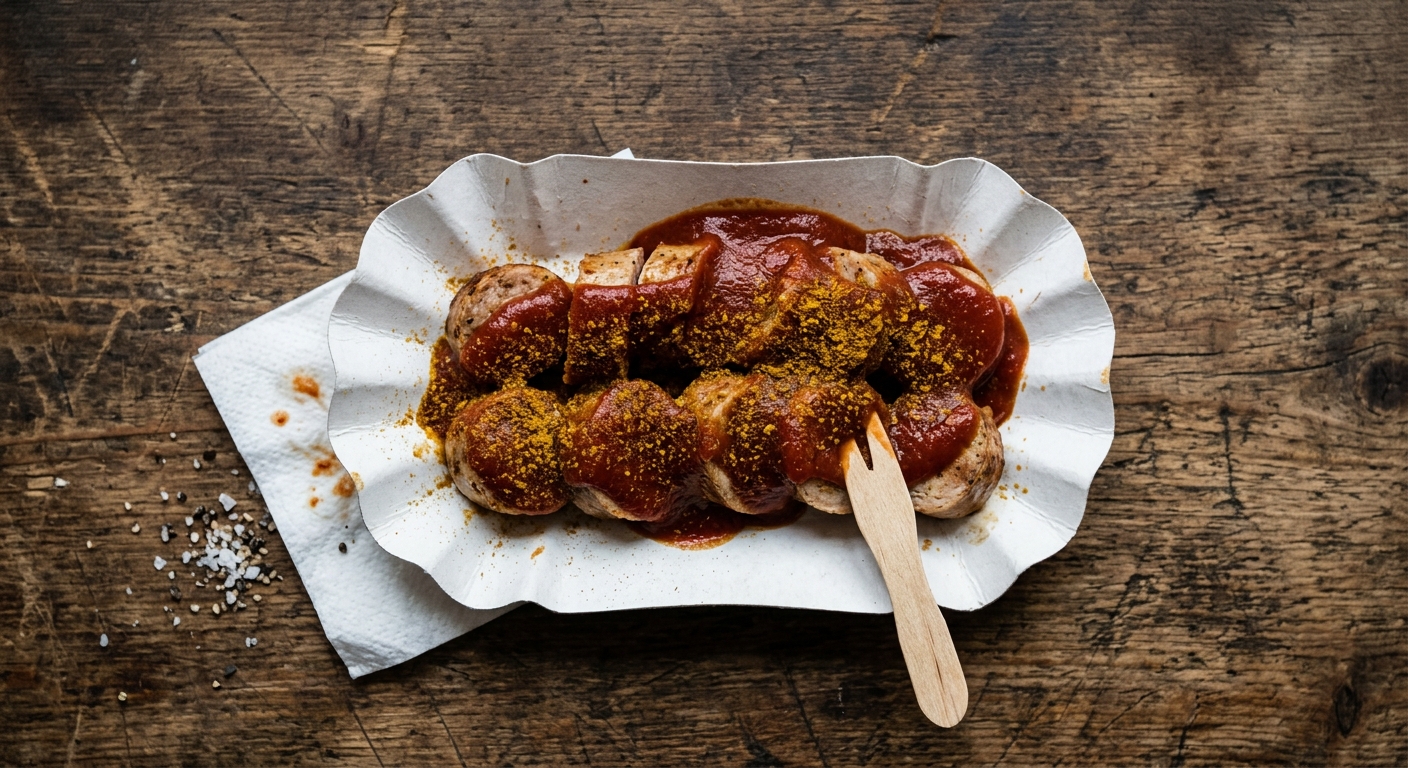
Classic Currywurst
Currywurst
The Berlin Imbiss version: steamed then fried pork sausage, sliced into rounds, covered in warm curry ketchup sauce, and dusted with curry powder. Paper plate required.
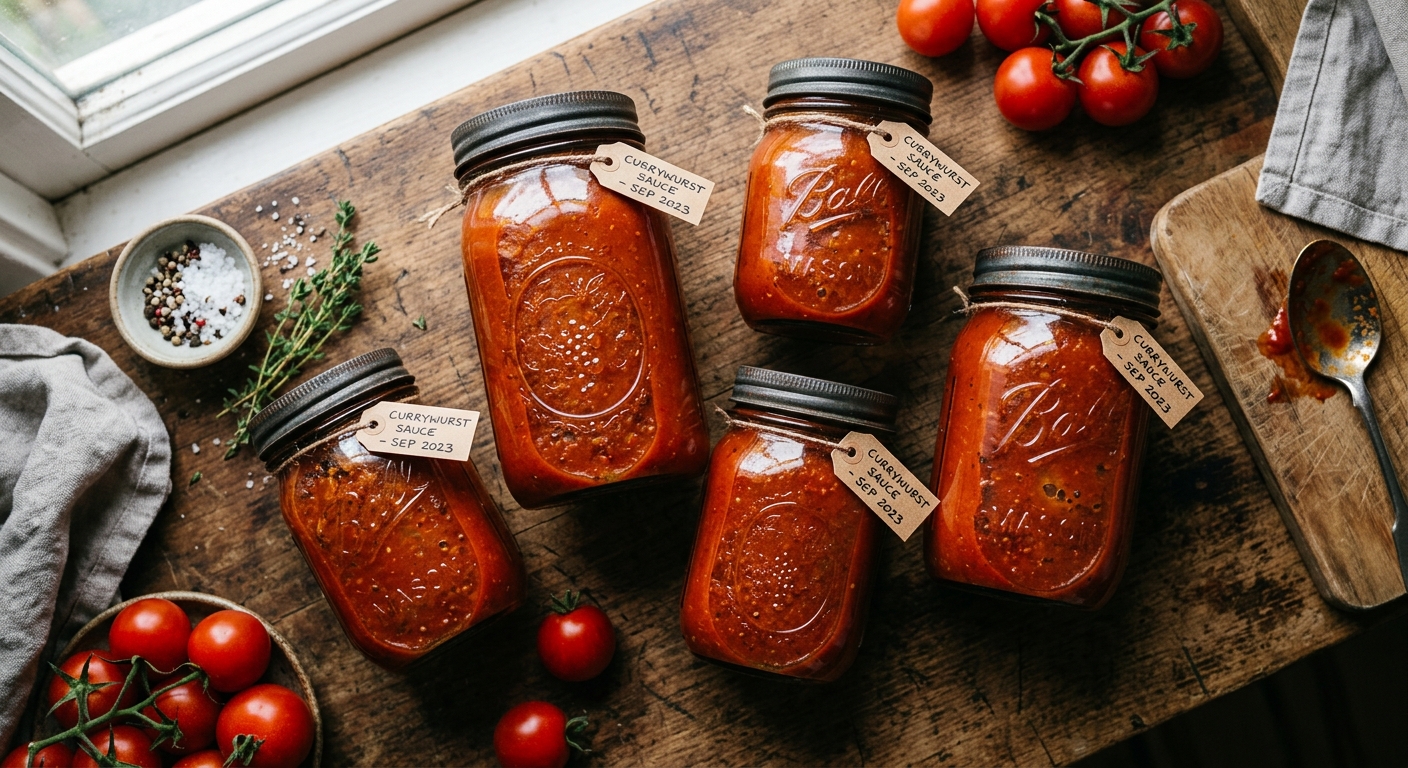
Currywurst im Glas (Preserved Curry Sauce)
Currywurst
A large batch of currywurst sauce cooked down and hot-filled into sterilised jars for the pantry. Each jar keeps for six months and turns any grilled sausage into a currywurst in two minutes.
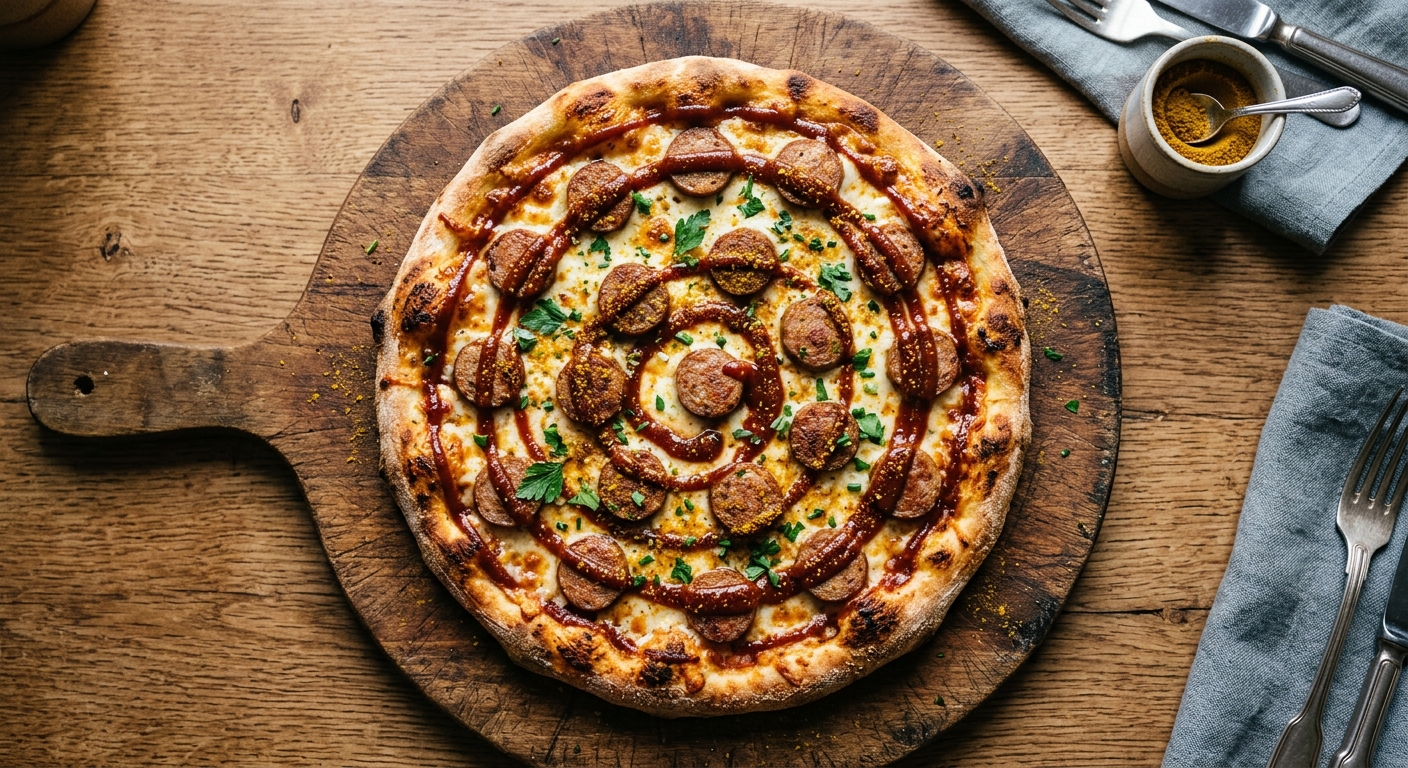
Currywurst Pizza
Currywurst
Curry ketchup sauce as the base, sliced cooked Bratwurst on top, mozzarella, and a final dusting of curry powder straight from the oven. Berlin street food on a pizza stone.
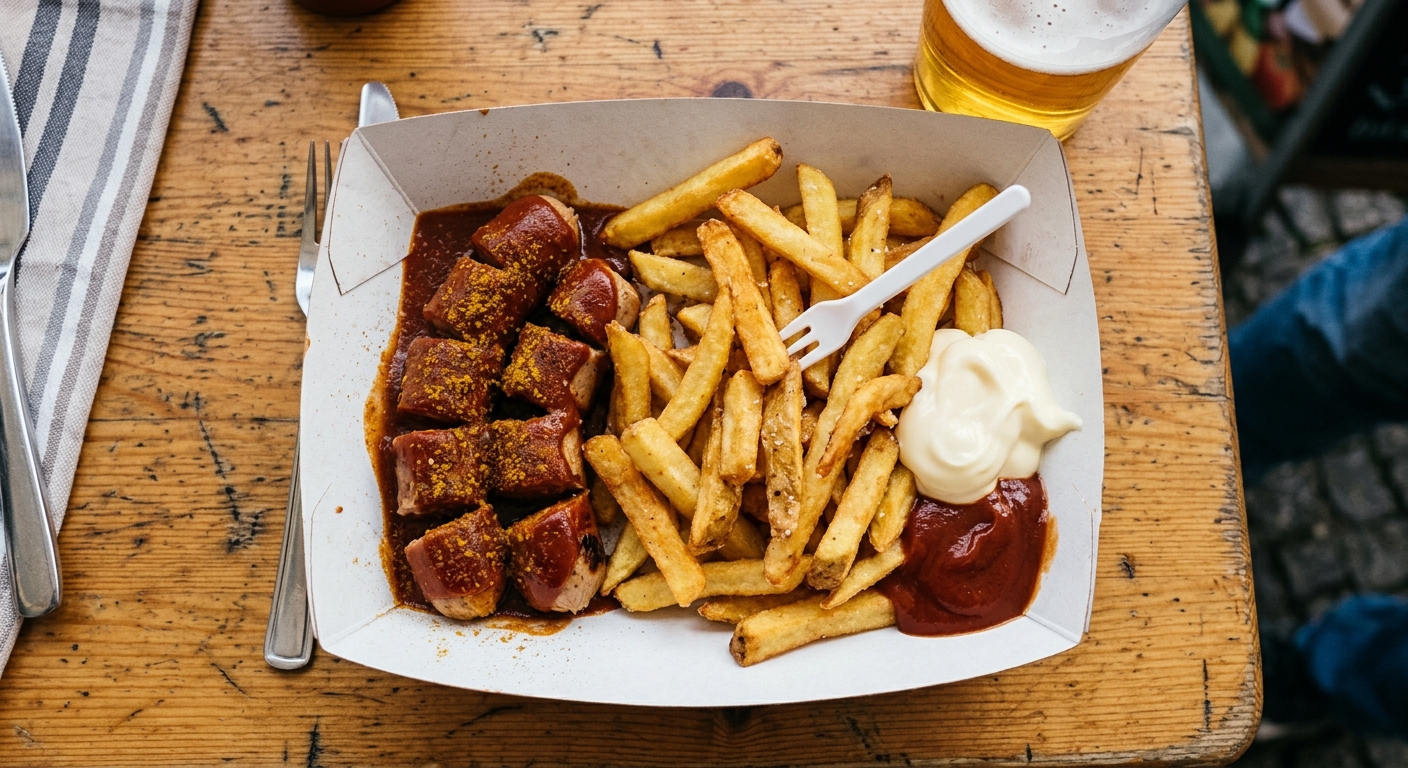
Currywurst with Hand-Cut Fries
Currywurst
The full Imbiss plate: currywurst and hand-cut fries on one paper plate, the fries absorbing the curry sauce from below. The Berliner Rot-Weiss sauce of ketchup and mayonnaise goes on the fries.
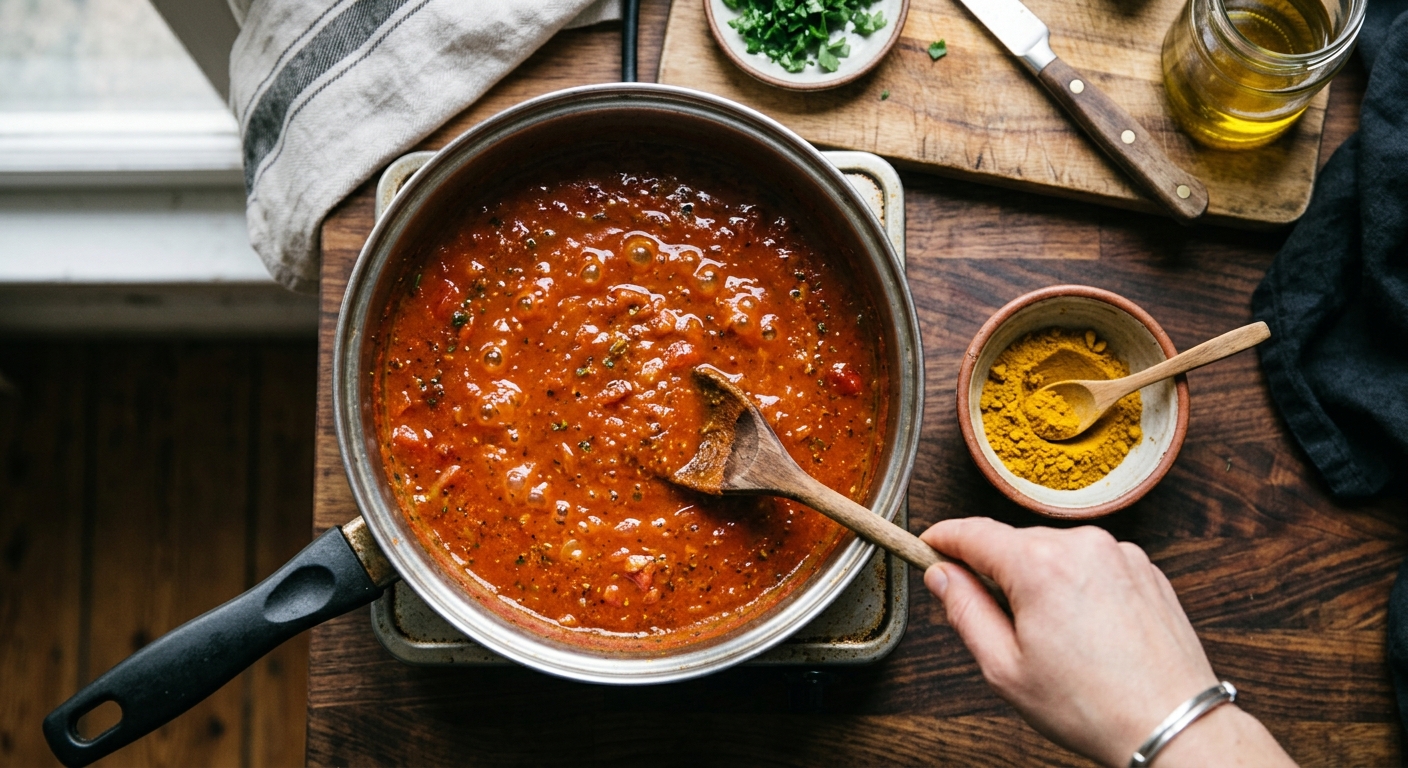
Homemade Currywurst Sauce
Currywurst
The sauce built from scratch: tomato paste base, Worcestershire for depth, curry powder in two stages, and enough vinegar to keep it from tasting flat. This is the component that makes or breaks the dish.
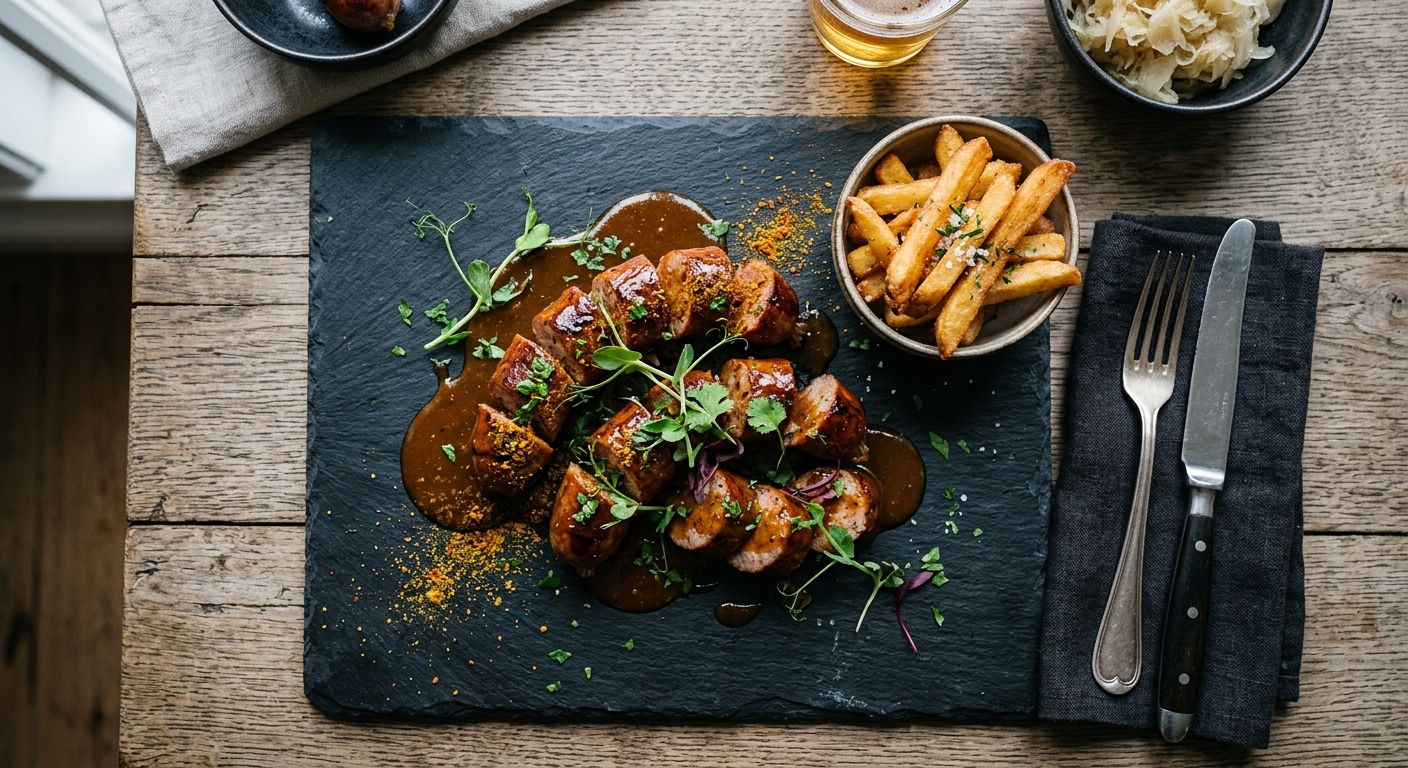
Luxury Currywurst
Currywurst
The same logic as the Imbiss original but with a coarse-ground heritage-breed sausage, a sauce built from San Marzano tomatoes and Madras curry, and a dusting of Kashmiri chilli powder. The format stays the same: sliced, sauced, standing.
On the Map
Where to Eat
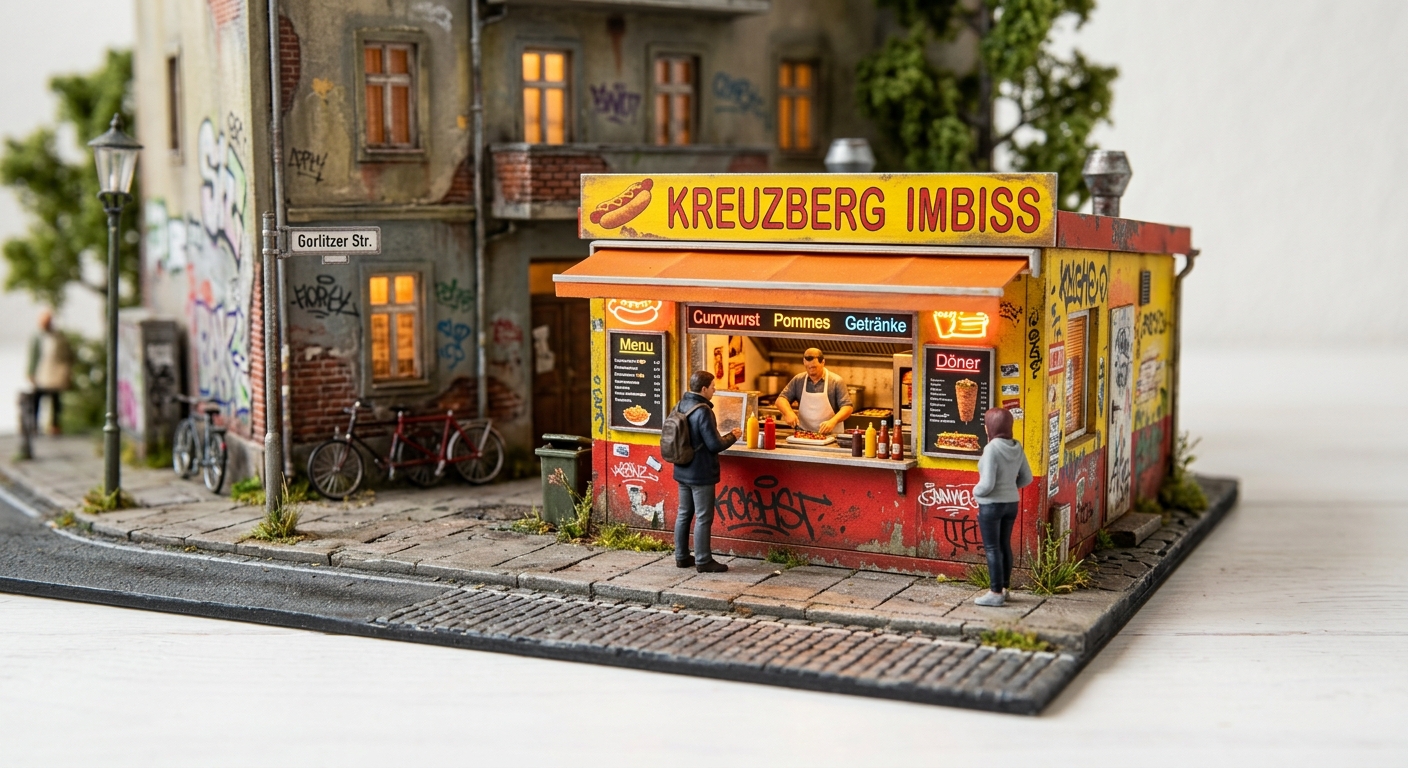
Curry 36
Berlin, Germany
Curry 36 has operated at Mehringdamm 36 in Kreuzberg since 1981, and it is one of the few Imbiss stands that has remained genuinely popular with both tourists and daily regulars over four decades. The stand opens at 9am and closes at 5am the following day, which makes it one of the only currywurst sources in the city available at 3am on a Wednesday. The mit Darm version is the default here: a sausage with natural casing, grilled until the skin has colour and snap. The curry sauce is thick, red-orange, sweet and warm without being hot. Night buses stop nearby and the queue in the early hours is often longer than the lunch queue. Construction workers, office staff, clubbers, tourists, and taxi drivers arriving for a break all eat from the same paper plates at the standing counter along the front of the kiosk.
Konnopke's Imbiss
Berlin, Germany
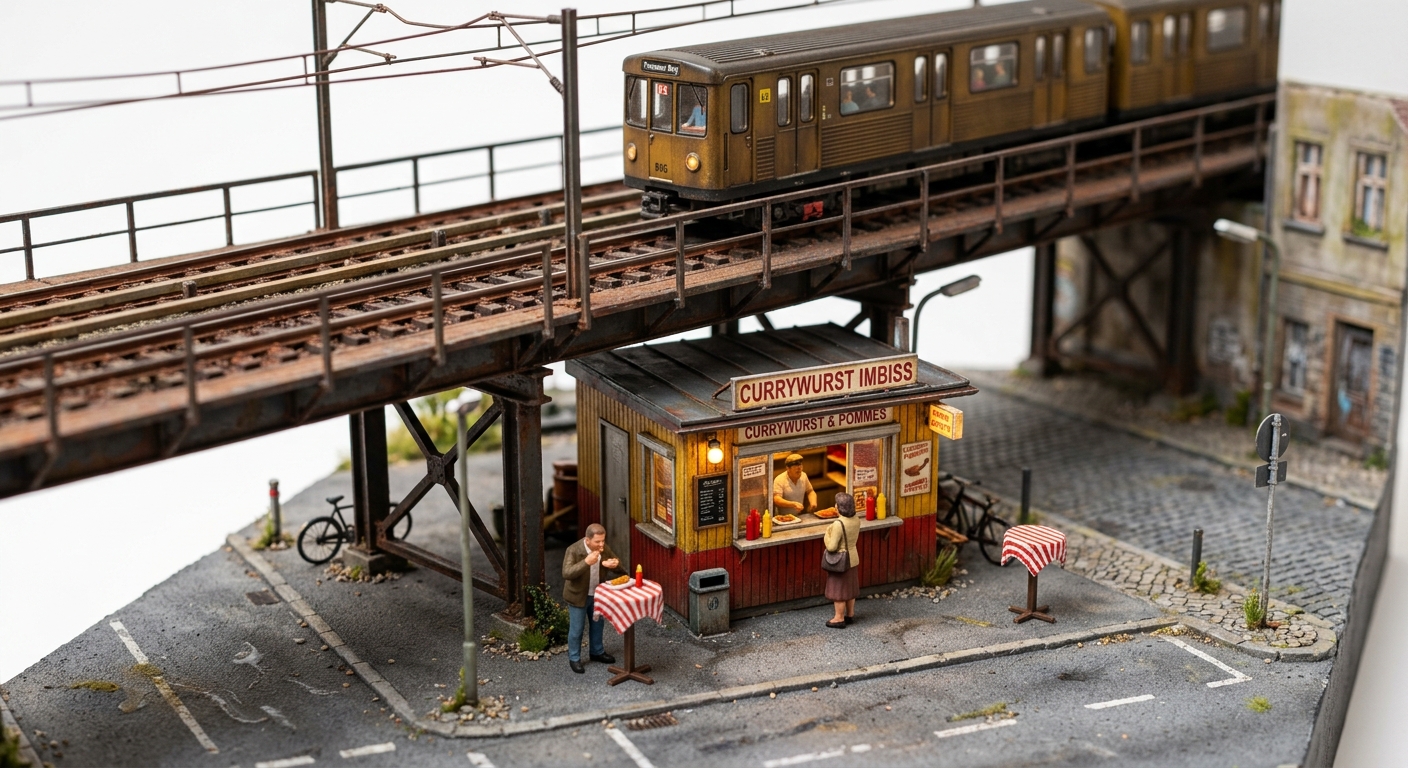
The oldest and most storied currywurst stand in Berlin, operating continuously since 1930 under the iron viaduct of the Schönhauser Allee U-Bahn in Prenzlauer Berg. Max Konnopke started the stand selling simple sausages from a handcart. His wife Charlotte later expanded it to a proper kiosk, and the family added currywurst to the menu in 1960. The GDR-era stand attracted long queues of East Berliners who treated it as a reliable neighbourhood institution rather than a tourist site. Reunification brought new visitors but the menu and spirit stayed the same. The ohne Darm version is the house speciality: a sausage without casing, finer in texture, always without the snap that western Berlin versions offer. The stand serves from early morning through late evening, and the queue at lunchtime rarely drops below ten people.
Witty's
Berlin, Germany
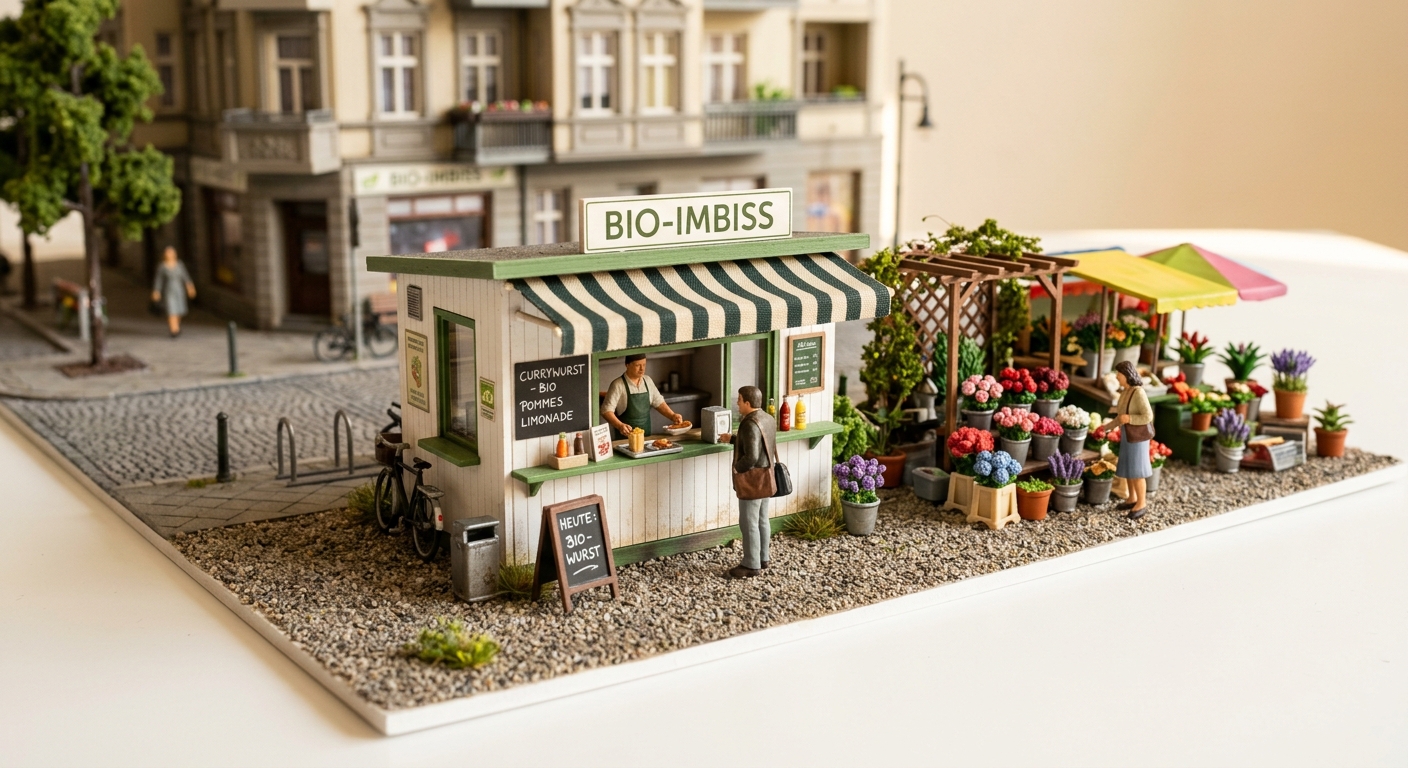
Witty's at Wittenbergplatz has been selling sausages since 1984, directly opposite the KaDeWe department store in Schöneberg. In 2003 it became the first certified organic Imbiss in Germany, switching entirely to Bio-certified pork and a housemade curry sauce built from organic tomatoes and spices. The transformation did not soften the format: paper plates, plastic forks, standing counter. What changed was the sourcing. The sausages come from traceable supply chains, the sauce is made fresh each day without artificial additives, and the curry powder is a custom blend. The result tastes cleaner than a standard Imbiss plate without tasting different in character. Witty's draws a mixed crowd: locals from Schöneberg, KaDeWe shoppers, and visitors who specifically seek out the organic version. A second location operates at Friedrichstraße station.