
Sausages from 30 countries
The World Atlas
of Sausages
Recently Added
38 sausages from around the world
Csabai Kolbász
Békéscsaba, Hungary
Csabai kolbász is Hungary's most exported cured sausage, a PGI-protected product from Békéscsaba in the southern Great Plain. A deep, brick-red exterior comes from two paprikas: sweet for colour and body, hot for the burn that defines the sausage's character. Pork is hand-boned from pigs fattened above 135 kilograms, mixed with garlic and caraway, cold-smoked over beechwood, then air-dried until firm. The result is a sausage you can slice thin and eat raw with bread, or cut thick and cook into stews and eggs. Békéscsaba has been making this sausage since at least 1868, and the Csabai Kolbászfesztivál every October turns the town into a pilgrimage site for sausage enthusiasts across central Europe.
Currywurst
Berlin, Germany
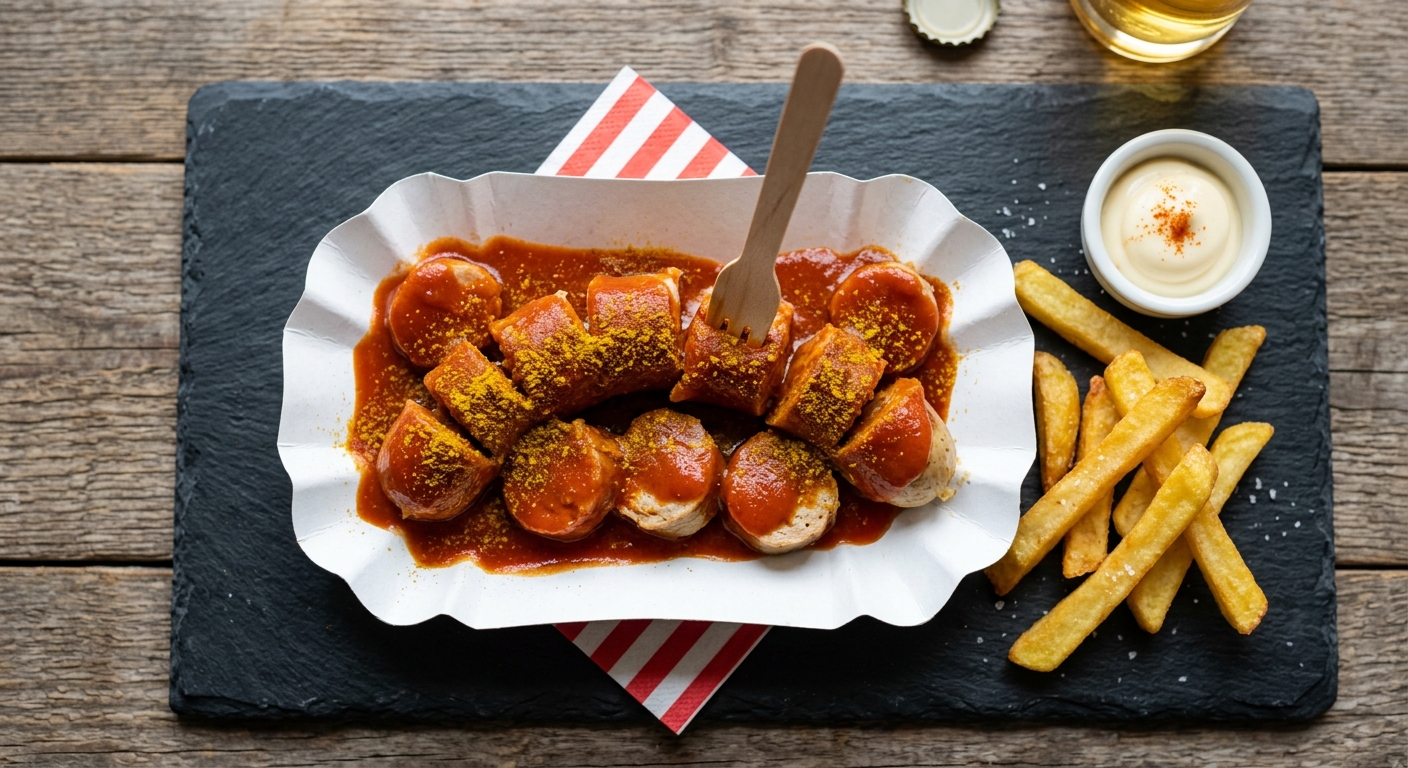
Currywurst is Berlin's most consumed street food: a steamed and pan-fried pork sausage, sliced into rounds, blanketed in a curried tomato ketchup sauce, and dusted with curry powder. It is sold at Imbiss stands across Germany, but Berlin claims it as its own invention. The sauce is the point. The sausage is a delivery mechanism for the sweet, spiced, faintly vinegary tomato base that Herta Heuwer developed in 1949 at her stand on Stuttgarter Platz in Charlottenburg. Germans eat roughly 800 million currywursts per year, and Berlin alone accounts for about 70 million of those. Two versions divide the city: mit Darm (with casing, which gives a snap on the bite) and ohne Darm (without casing, softer and finer-textured). Most East Berliners default to ohne Darm; in the West, mit Darm is the classic choice. Both come on a paper plate with a small plastic fork and, almost always, a side of Pommes frites or a Brötchen.
Skilandis
Lithuania
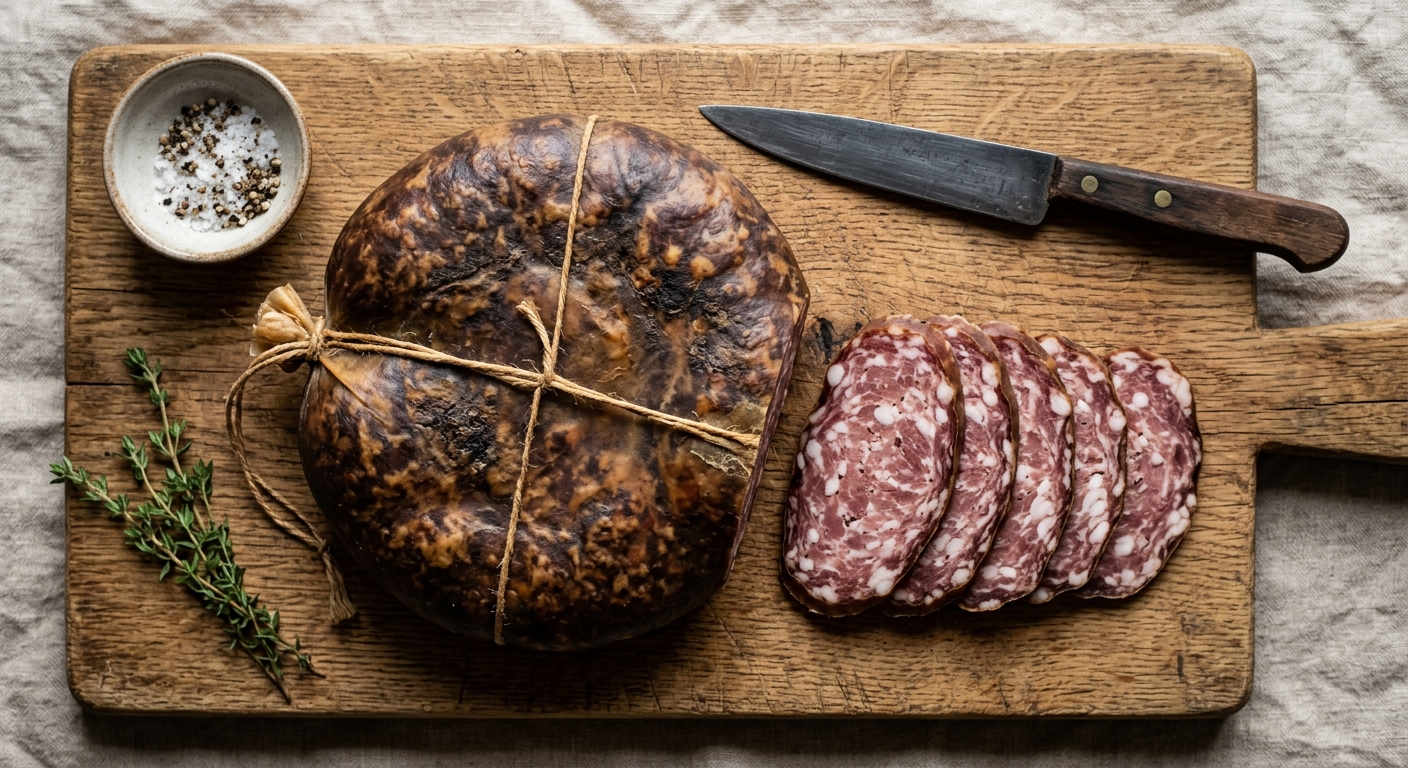
Skilandis is a cold-smoked Lithuanian sausage stuffed not into a casing but into a pig's bladder or stomach. The interior is a coarse mixture of lean pork and fat, seasoned with garlic, salt, and black pepper, pressed firmly into the bladder, then cold-smoked over several weeks and air-dried until the entire mass sets hard and dense. The result is something closer to a salami or cured ham in character than a typical sausage: it is sliced paper-thin with a sharp knife and eaten without cooking. The surface of a cured skilandis is dark and firm; the interior, when cut, shows a deep red-brown with visible flecks of fat. A single bladder-stuffed piece can weigh anywhere from half a kilogram to more than two kilograms. The EU granted it Protected Geographical Indication status in 2009, restricting the name to products made in Lithuania following the traditional method.
Sobrassada de Mallorca
Mallorca, Balearic Islands
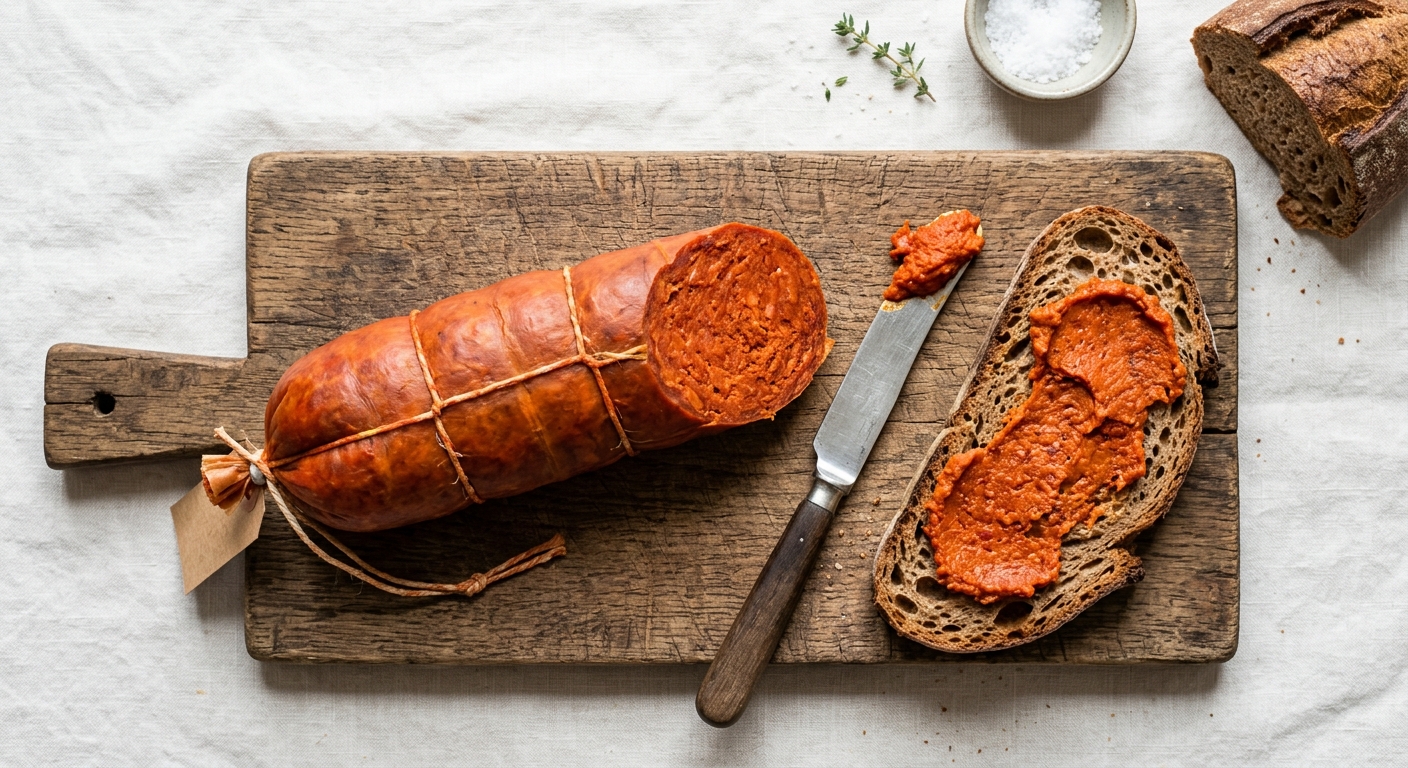
Sobrassada is a raw cured sausage from Mallorca, spreadable at room temperature and coloured deep rust-red from a large quantity of ground sweet paprika. The mixture of minced pork, paprika, salt, and black pepper is stuffed into natural casings and left to cure over weeks, during which the fat softens and the paprika distributes through the meat until the whole mass becomes a dense, unctuous paste. It spreads onto bread with a knife, melts into eggs in the pan, and disappears into sauces. The version made from porc negre, Mallorca's native black pig, carries a richer fat and a deeper flavour than the mainland-breed equivalent. Two EU protected designations cover the product: IGP Sobrassada de Mallorca for the standard version using commercial white pigs, and the more restricted IGP for sobrassada made exclusively from the island's black pig. Both designations require production on the island. The black pig version is sold with a black label and costs considerably more. Neither version is cooked before eating. The casing is split, and the contents are scooped or sliced onto whatever is being eaten.
Linguiça
São Paulo & Southeast Brazil
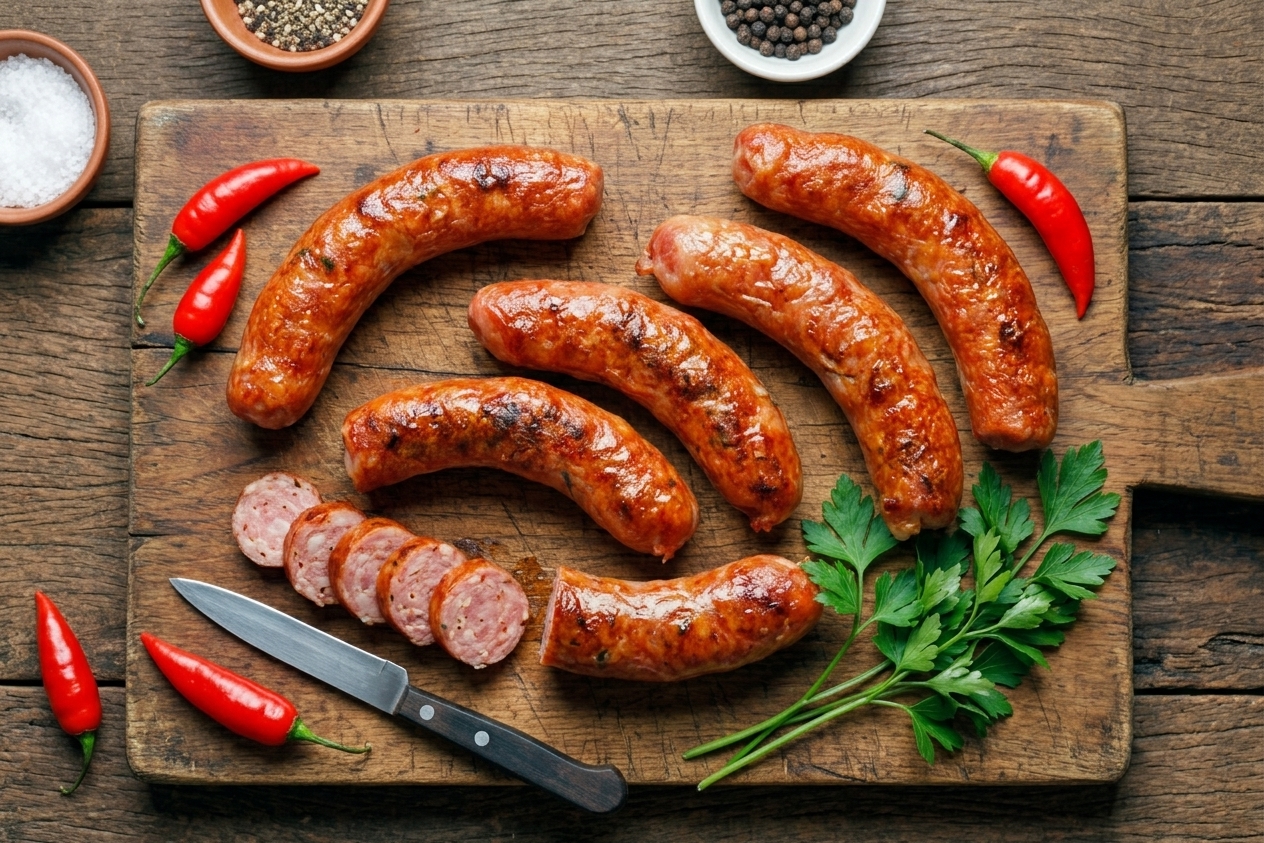
Linguiça is a pork sausage with deep roots in Portuguese cuisine that became, through centuries of use in Brazil, one of the essential components of the Brazilian table. It arrives in two distinct everyday forms. Calabresa is the smoked version: cured, dried, heavy with sweet paprika and garlic, sliced into coins and thrown onto the grill or into the frying pan. Toscana is fresh and unsmoked, seasoned with fennel seed and black pepper in the Italian-immigrant tradition of São Paulo's interior. Both show up at the churrasco, Brazil's communal grilling tradition, where linguiça on skewers over charcoal is as expected as picanha. The calabresa half coils in dozens of supermarket refrigerators across the country, and the toscana sweats in butcher cases from the coffee-growing highlands around Campinas to the gaúcho plains of Rio Grande do Sul. Neither style is delicate food. Both are built for fire, fat, and sharing.
Medisterpølse
Copenhagen & Zealand, Denmark
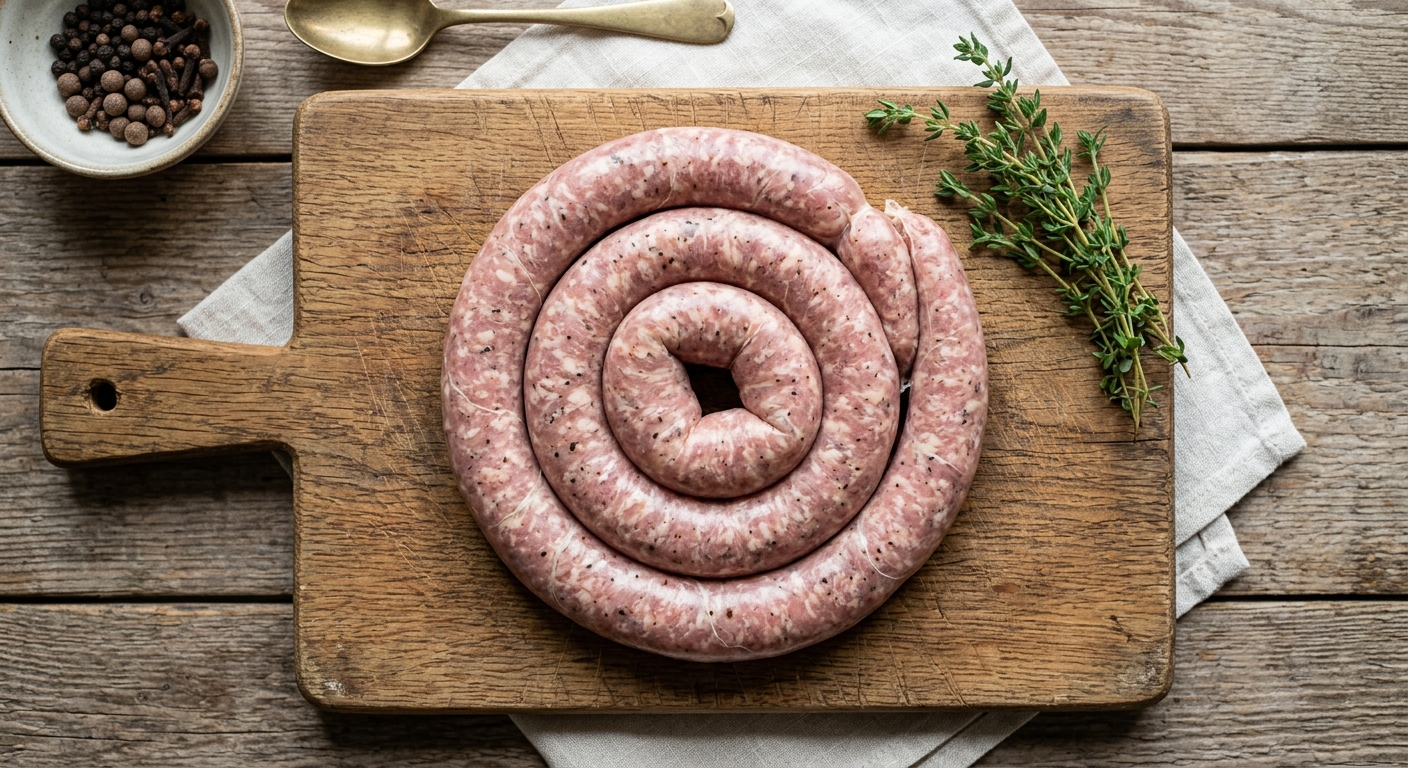
Medisterpølse is a coarse, lightly spiced pork sausage that has been a fixture of the Danish kitchen for at least two centuries. Coiled into long spirals or formed into fat, loosely linked rings, it is sold at every Danish butcher and supermarket, most often pan-fried or griddled until the exterior develops a dark, crackling crust while the interior stays loose and juicy. The sausage is made from coarsely minced pork with a high fat content, seasoned with allspice, cloves, and salt, and stuffed into natural pork casings. No curing, no smoking: medisterpølse is a fresh sausage meant to be cooked and eaten the same day. It appears on the Danish Christmas table alongside flæskesteg and rødkål, and on ordinary weekday plates with boiled potatoes and brown gravy. It is also one of the few traditional Danish meat preparations that works convincingly as a smørrebrød topping, sliced thick and laid on rugbrød.
Sai Krok Isan
Isan, Thailand
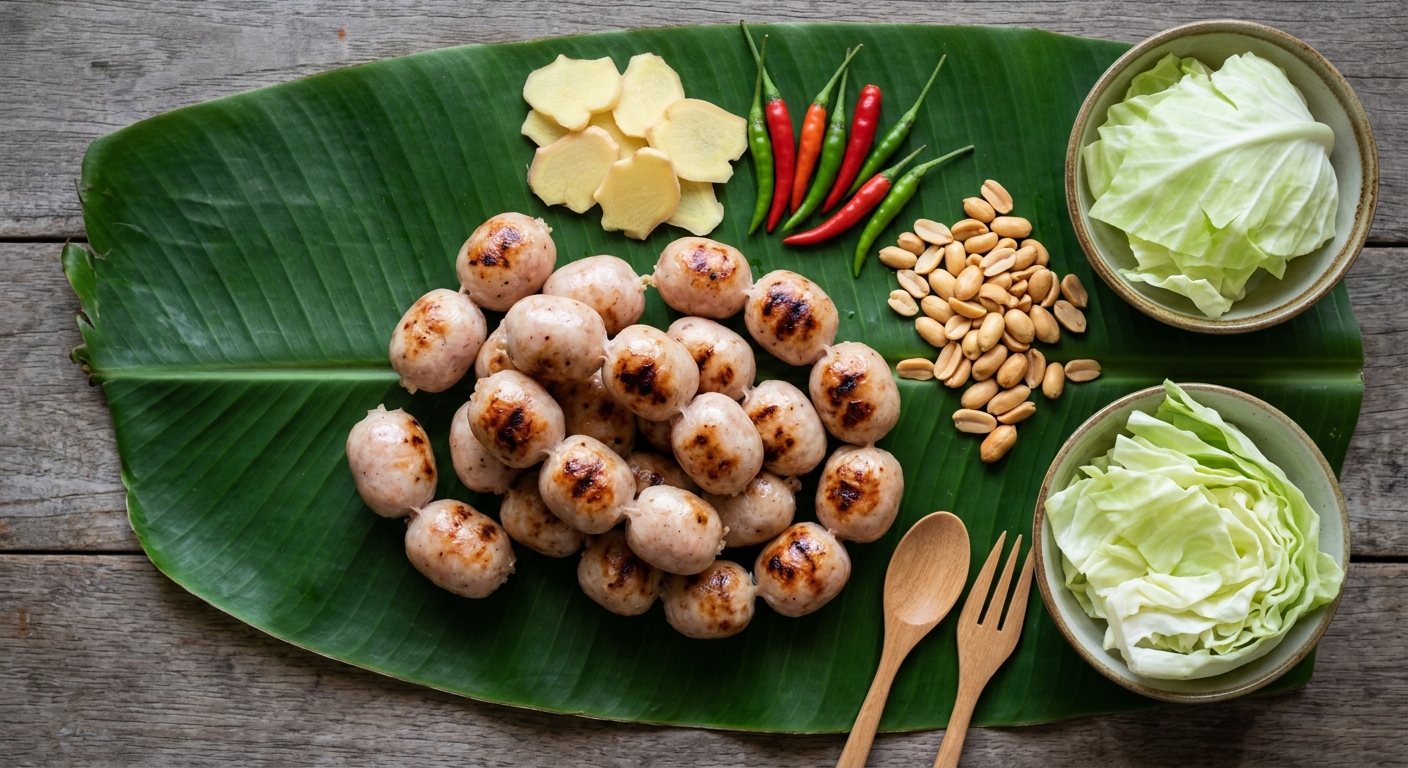
Sai krok isan is a fermented pork and rice sausage from Thailand's northeast, the Isan region. Coiled in short links and sold by the strand from charcoal grills, it is the dominant street food of the region and one of the most recognisable sausages in Southeast Asia. The defining characteristic is controlled fermentation: raw pork, cooked sticky rice, garlic, salt, and black pepper are mixed and left to ferment for two to four days in warm weather. The rice feeds lactic acid bacteria that sour the sausage from the inside out. The result is a plump, slightly wrinkled link with a mild tang and deep pork flavour. Charcoal heat tightens the casing and crisps the exterior while the interior stays moist and yielding. The sausage is eaten in small bites, wrapped in raw cabbage leaf or eaten alongside sliced fresh ginger and bird's eye chillies — the raw vegetables cut the fat.
Longganisa
Pampanga, Philippines
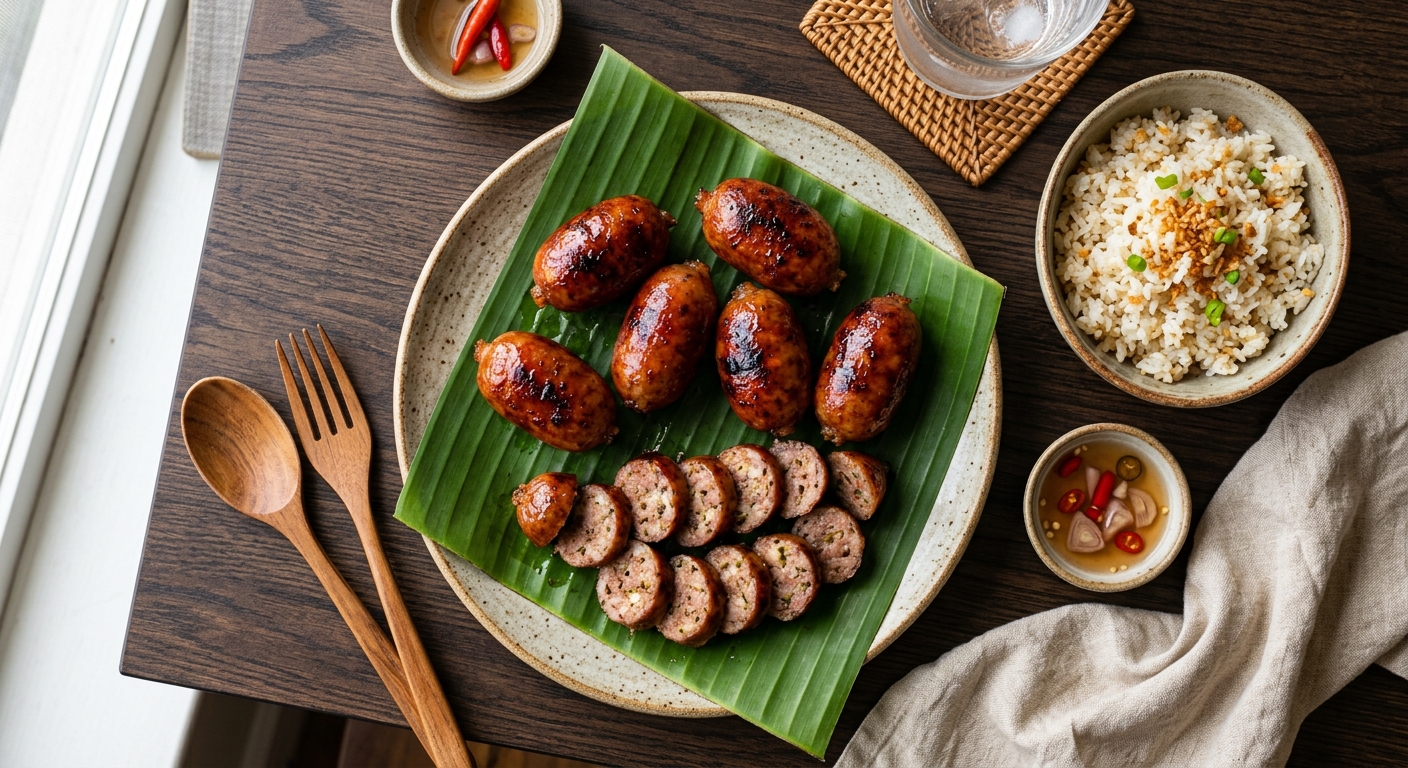
Longganisa is the Filipino fresh or cured pork sausage at the centre of the country's most beloved breakfast. Short, plump, and tied in individual links, it comes in two broad styles: hamonado, which is sweet from sugar and pineapple or anise wine, and de recado, which is garlic-forward and lightly sour. Pampanga makes the most celebrated version, a hamonado type cured with generous sugar and garlic until the casing glazes and the fat caramelises in the pan. Every Philippine province has its own formula. Vigan longganisa from Ilocos Norte is small, dense, and pungent with garlic and vinegar. Lucban in Quezon packs its links with oregano and fat. The Pampanga version sits between sweet and savoury, with the sugar doing most of the talking but the garlic never far behind.
Recipes
Cook something new today
Caldo Verde with Alheira
Alheira
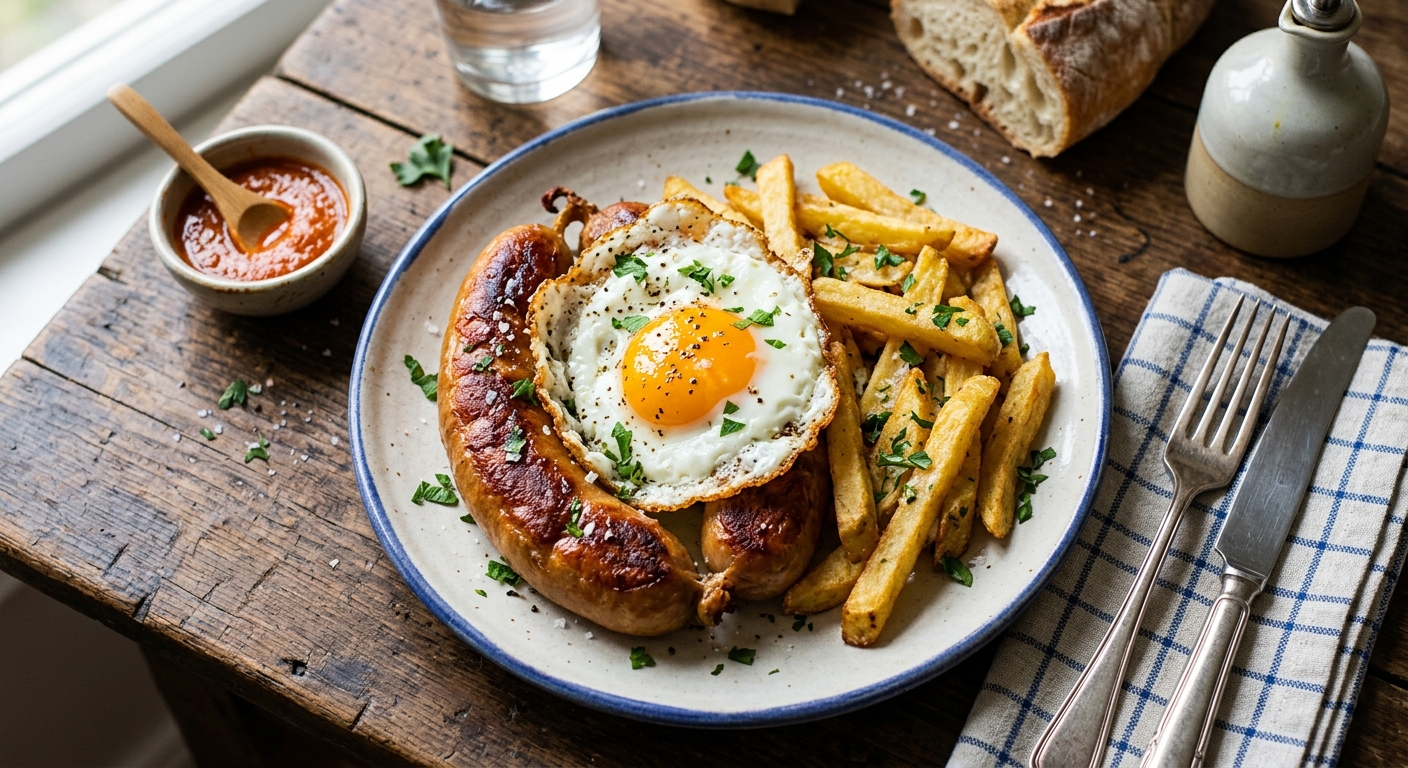
Alheira Frita com Ovo e Batatas
Alheira
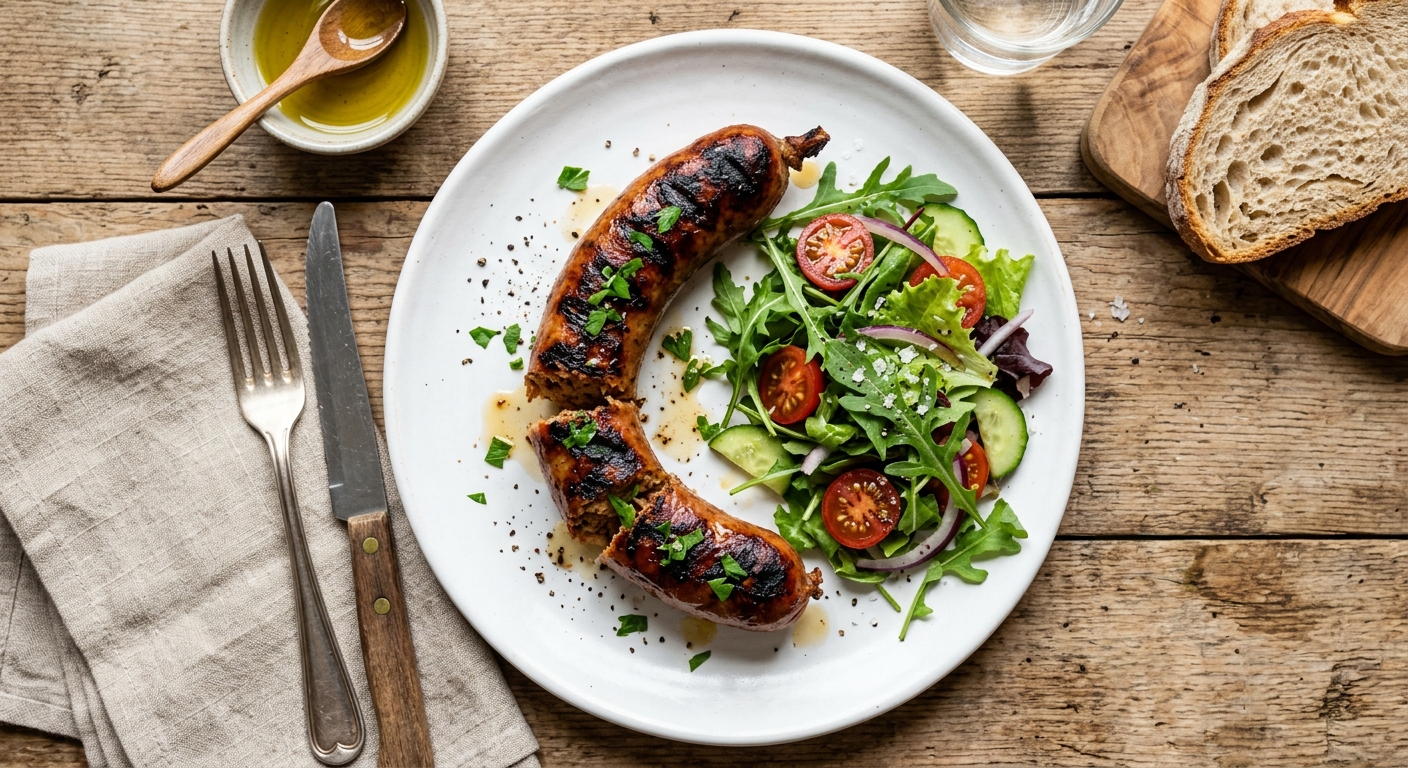
Alheira Grelhada
Alheira
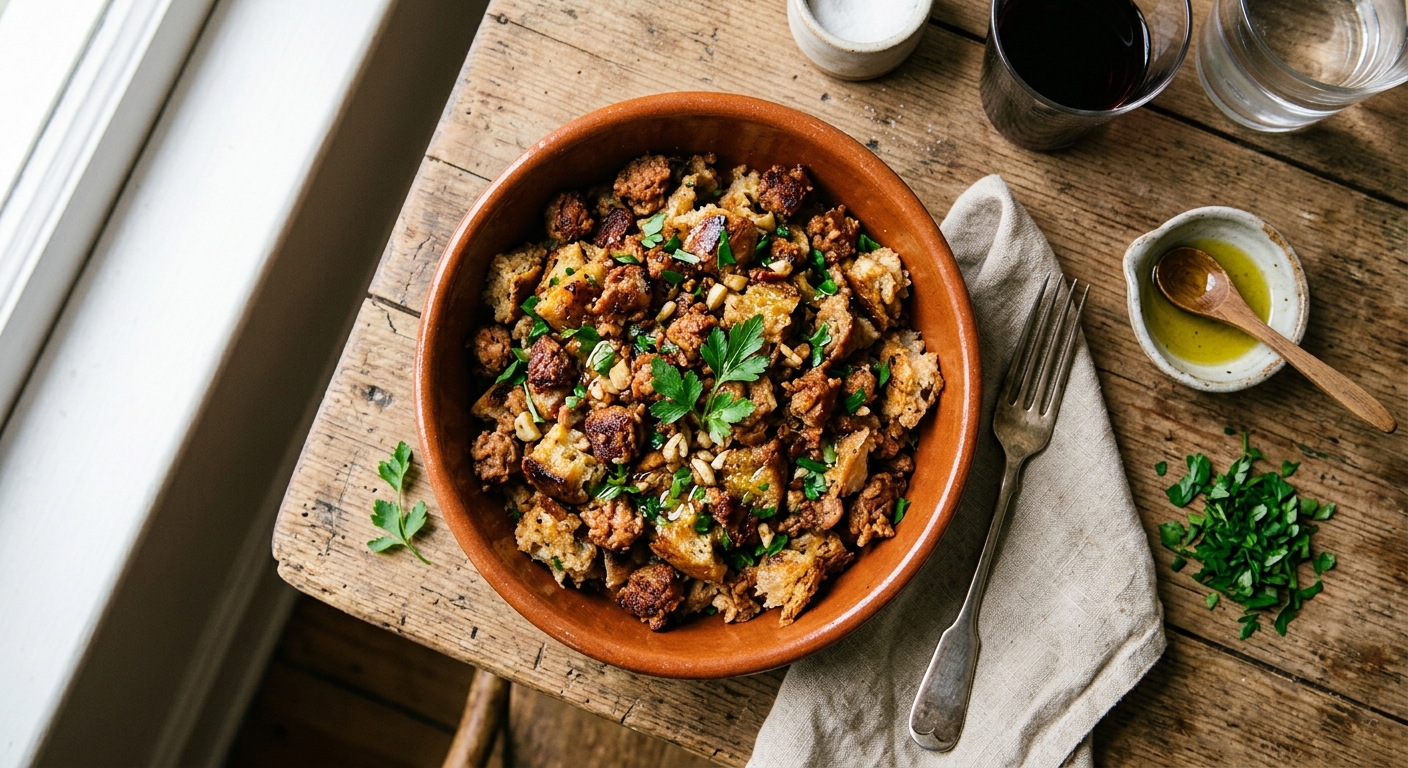
Migas de Alheira
Alheira
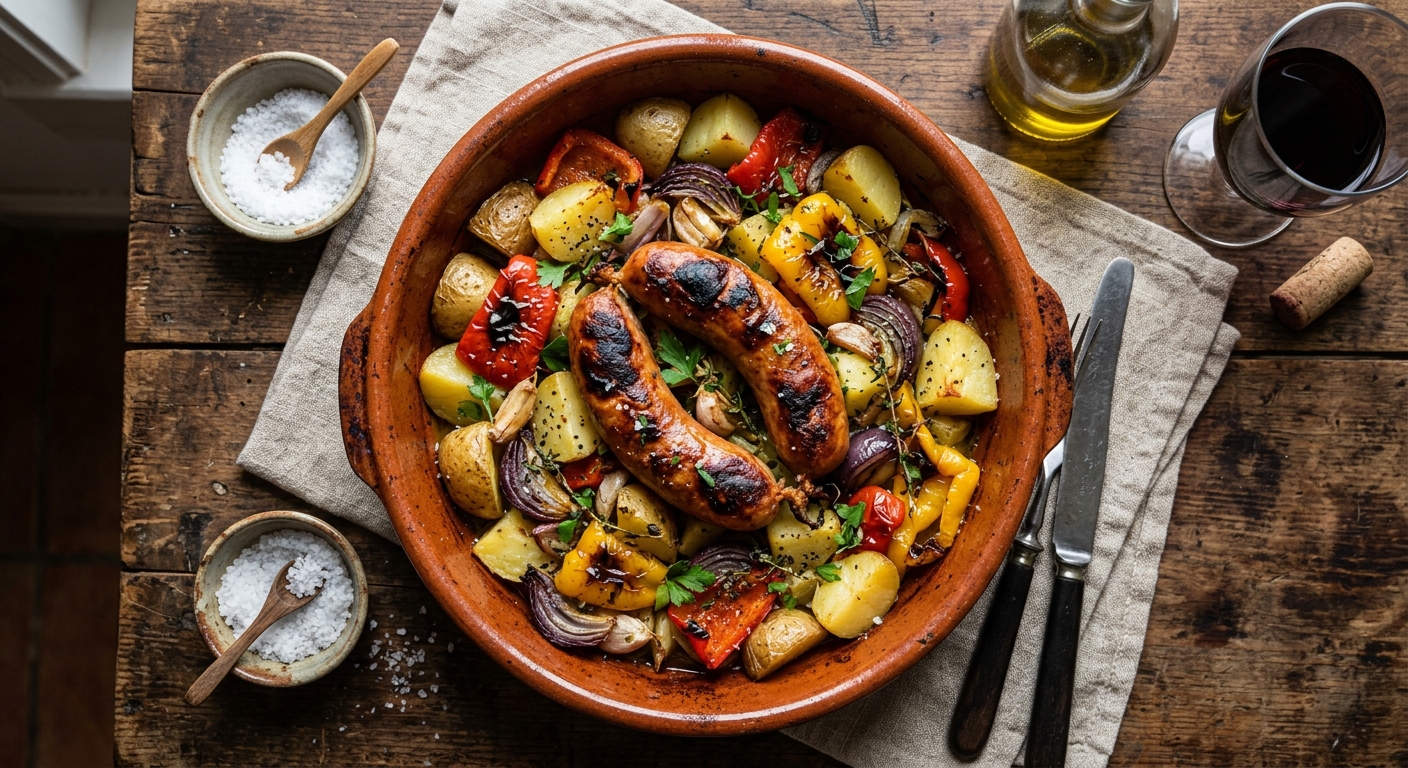
Alheira no Forno com Legumes
Alheira
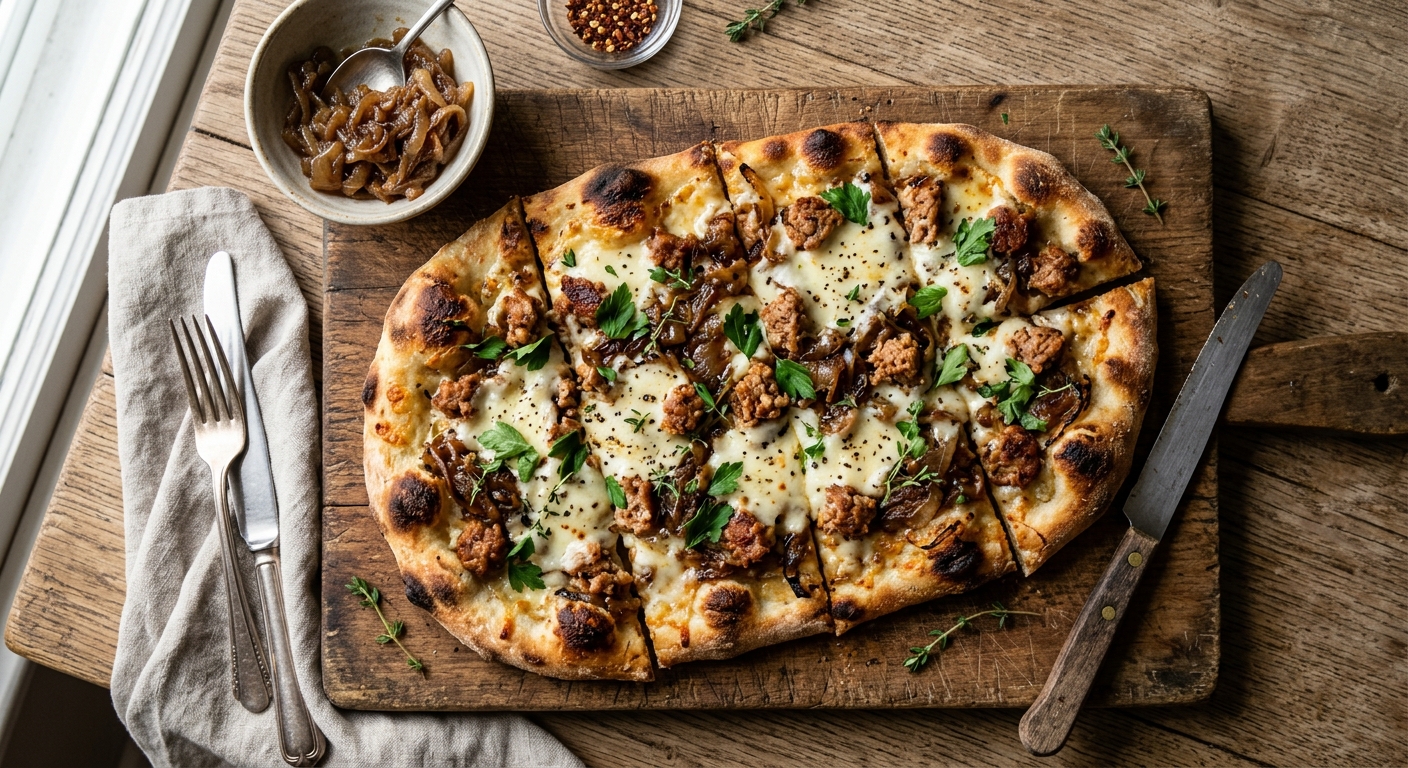
Flatbread with Crumbled Alheira
Alheira
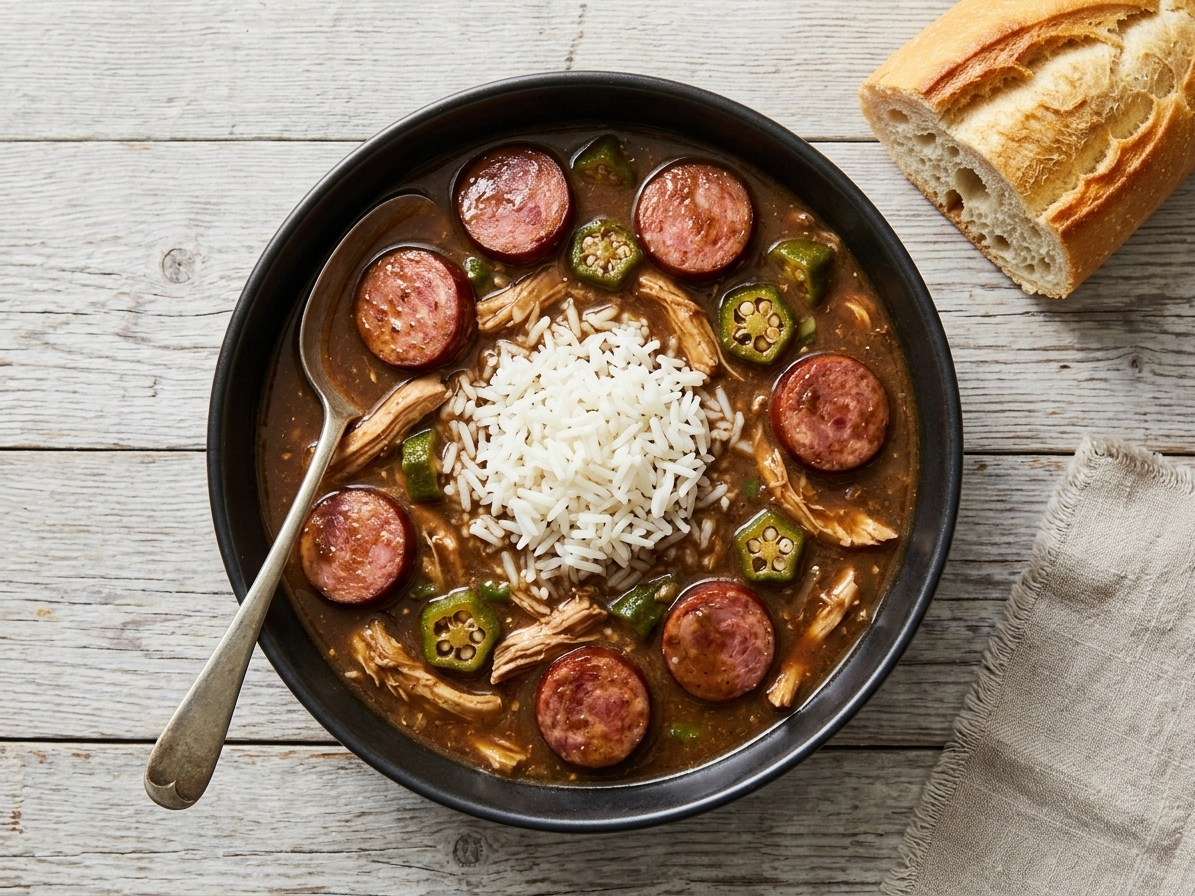
Chicken & Andouille Gumbo
Andouille
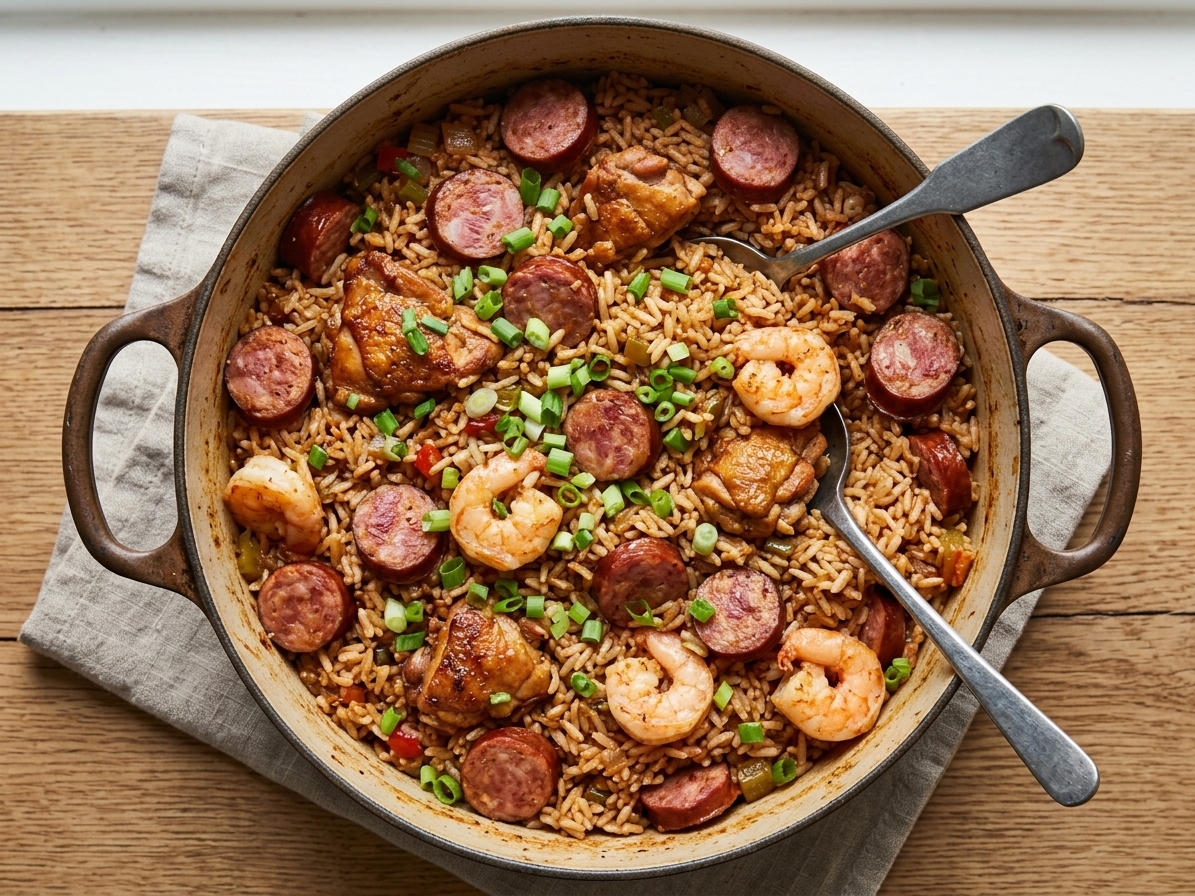
Cajun Jambalaya
Andouille
Explore the World
Sausages, producers, and restaurants on the map
Where to Buy
Butchers, farms, and market stalls
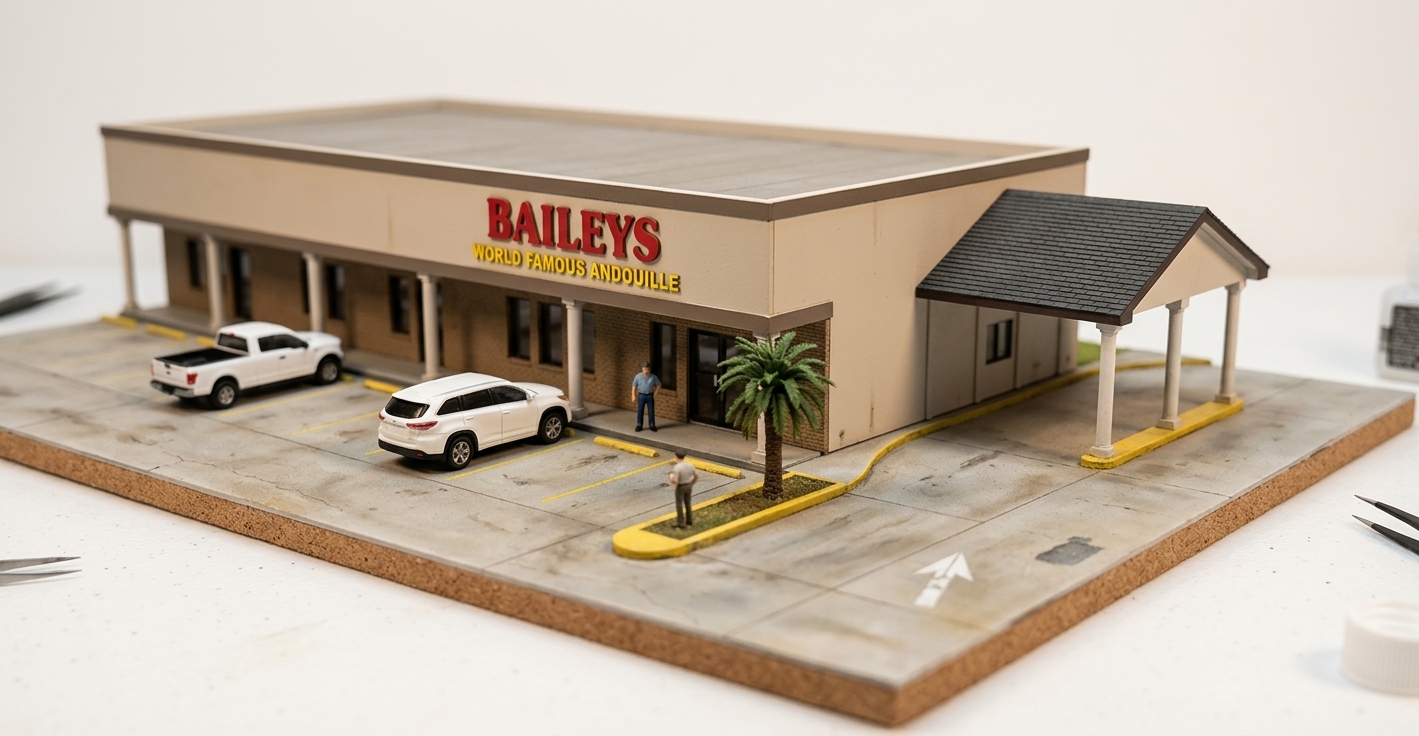
Bailey's Andouille
LaPlace, United States
A family-run andouille shop on Airline Hwy in LaPlace, the Andouille Capital of the World. Bailey's has built a devoted local following for their hand-stuffed, pecan-smoked andouille sausage. The strip mall storefront with the big red and yellow sign is a LaPlace landmark. Ships nationwide.
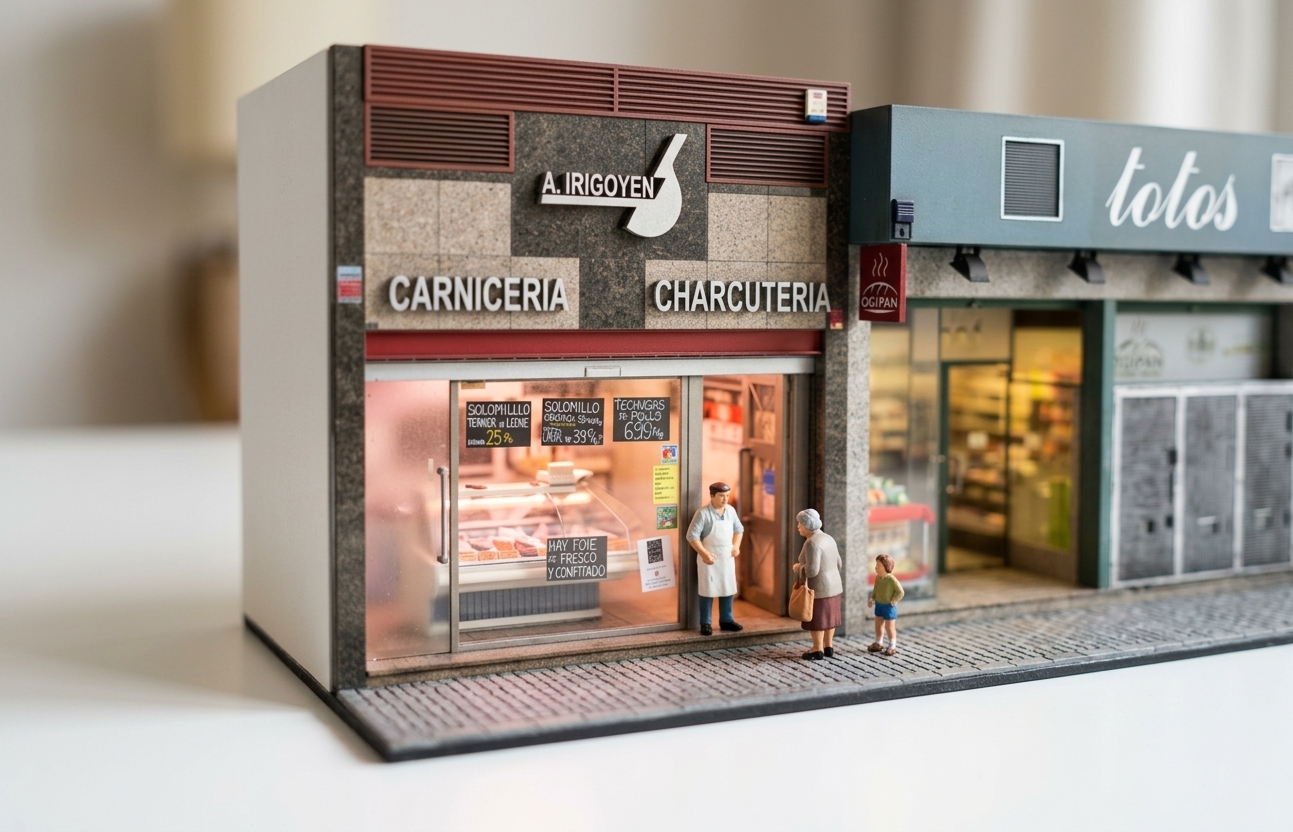
Carnicería A. Irigoyen
Pamplona, Spain
Family butchery in Pamplona's San Juan neighborhood, open for over 50 years. Won first prize at the XIII Navarre Txistorra Competition in 2018, making their chistorra the best in the region that year. They also do Navarran lamb and beef. Home delivery available in Pamplona.
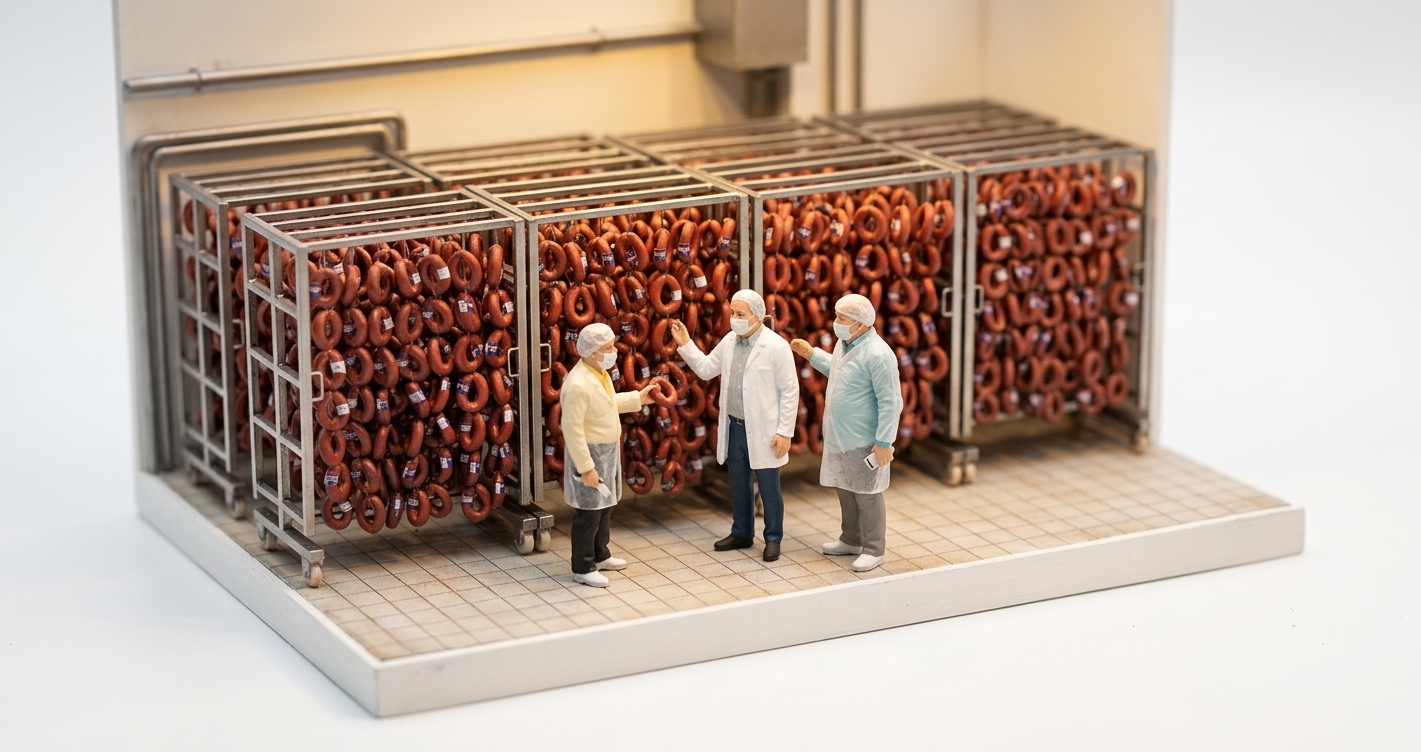
Cumhuriyet Sucukları
Afyonkarahisar, Turkey
Founded in 1923 by a butcher known as Kasap Kara Mehmet in Afyonkarahisar, the sucuk capital of Turkey. Cumhuriyet combines traditional Afyon recipes with modern production: 100% beef, no heat treatment, fermented and air-dried. Their sucuk carries the weight of the Afyon geographical indication, which gained EU protected status.
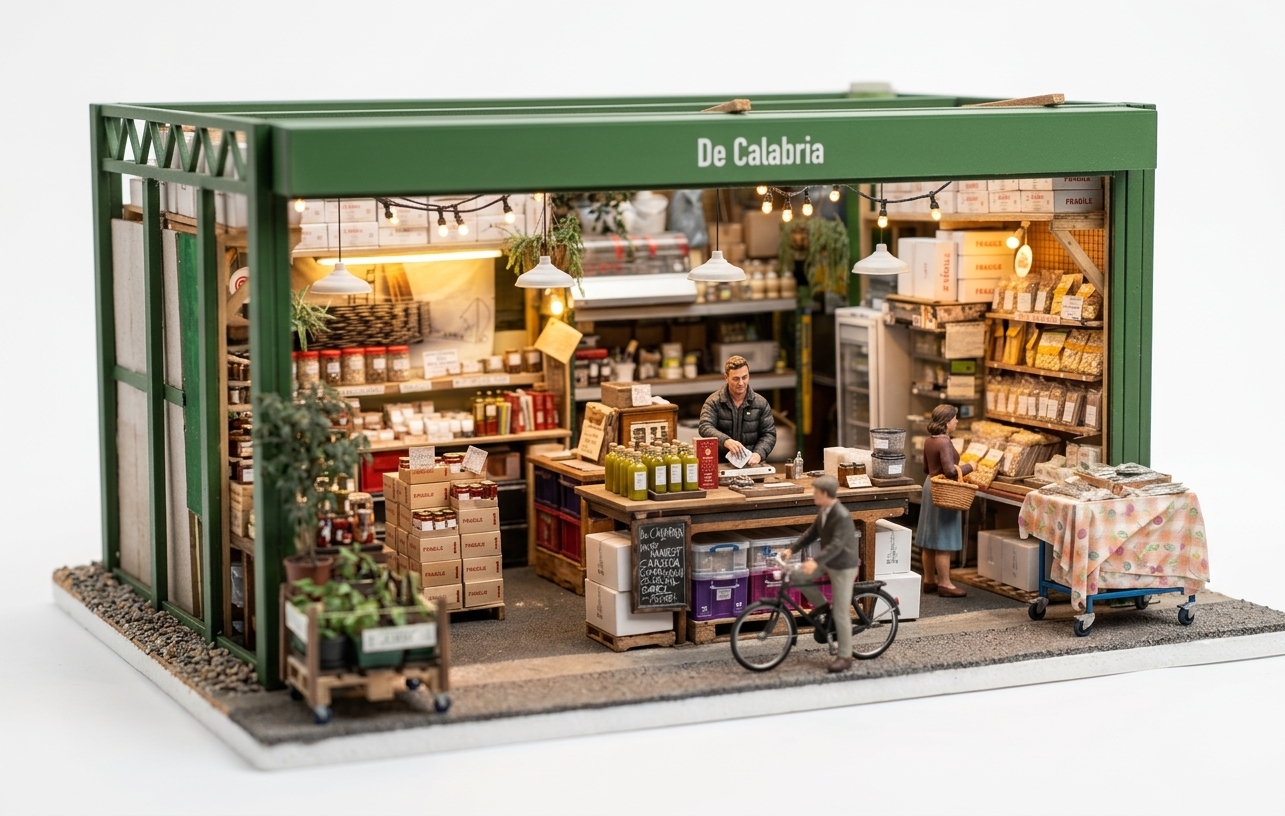
De Calabria
London, United Kingdom
A Calabrian specialty stall at London's Borough Market, run by Giuseppe Mele, importing 'nduja and other cured meats direct from Calabria. They also serve fresh 'nduja pasta on-site. Open Thursday through Saturday. One of the best sources for authentic 'nduja outside Italy.
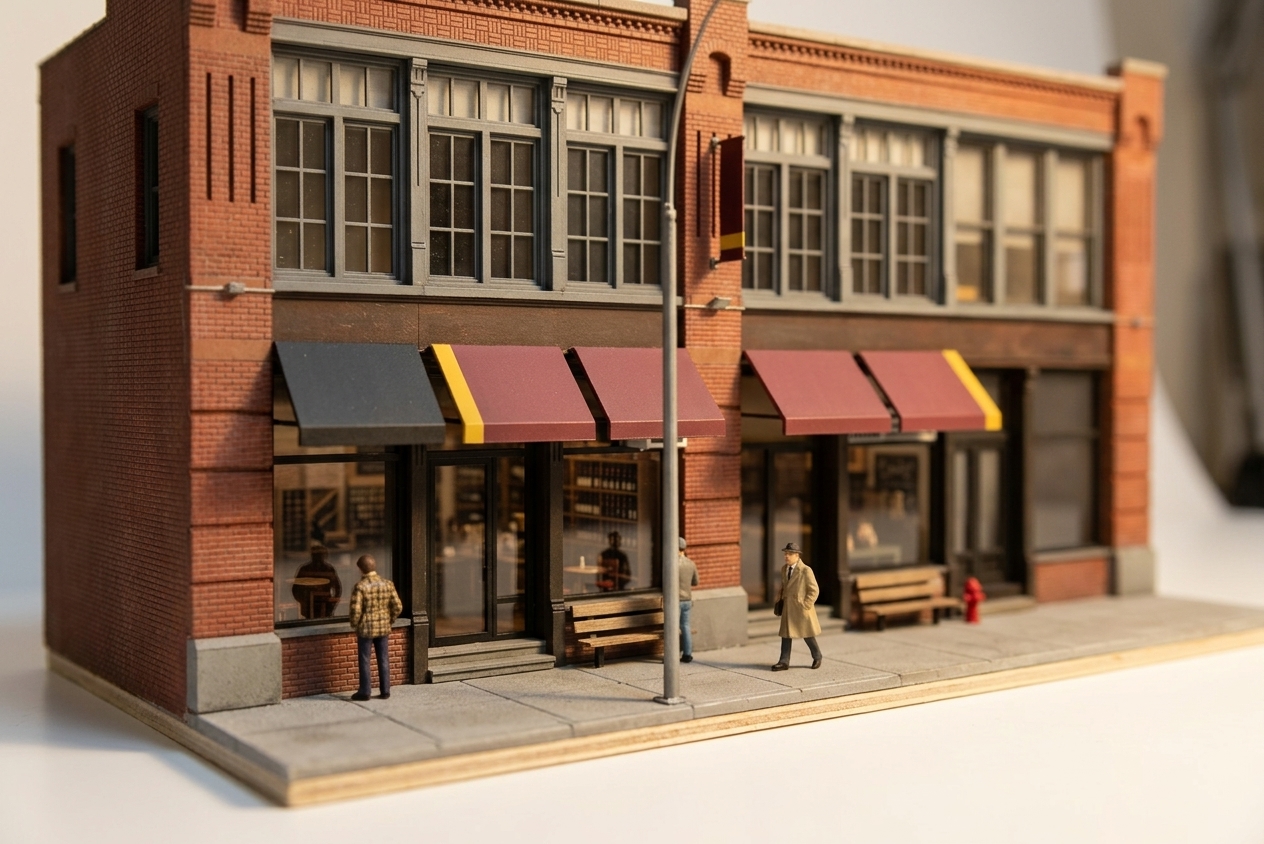
Despaña Fine Foods
New York, United States
Spanish deli and tapas cafe in SoHo, Manhattan, operating since 1971. They make their own chistorra in New York using imported Pimentón de La Vera. The retail shop carries Spanish cheeses, jamón, and pantry staples. The attached cafe serves patatas bravas con chistorra. The primary source for authentic chistorra in the United States.
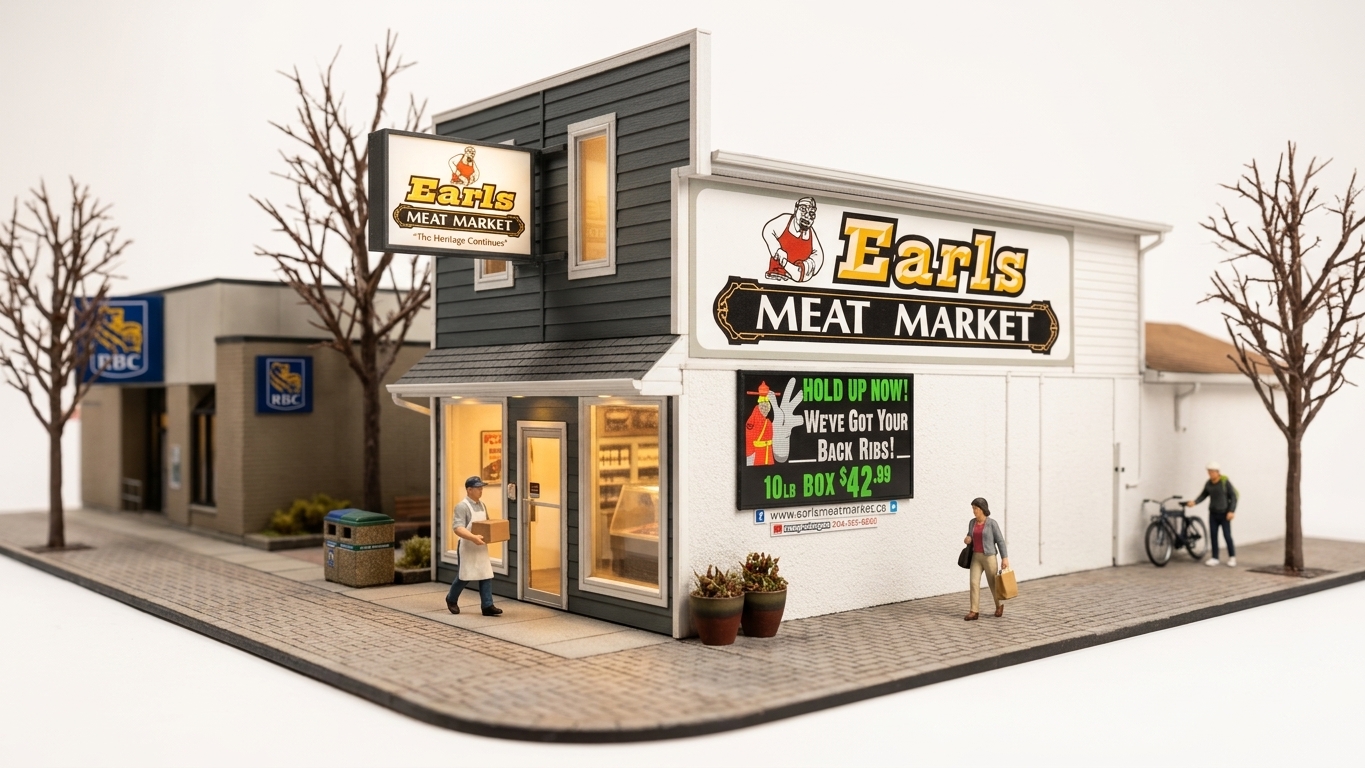
Earls Meat Market
Steinbach, Canada
Earl Funk opened this custom-cut butcher shop in Steinbach in 2005, committed to buying only local, naturally raised beef and pork. His farmer's sausage recipe comes from four generations of meat cutters in his family. The pork is sourced from Manitoba farms, ground on-site, and smoked in their own smokehouse behind the shop.

Egetürk
Cologne, Germany
Europe's largest halal meat producer, based in Cologne since 1966. Egetürk makes multiple sucuk varieties including Afyon-style and Kayseri-style, producing 150 tons per day. Their products are sold across Europe and North America. What started as a small Turkish butcher shop serving Cologne's guest worker community grew into an industrial-scale operation that kept the traditional recipes intact.
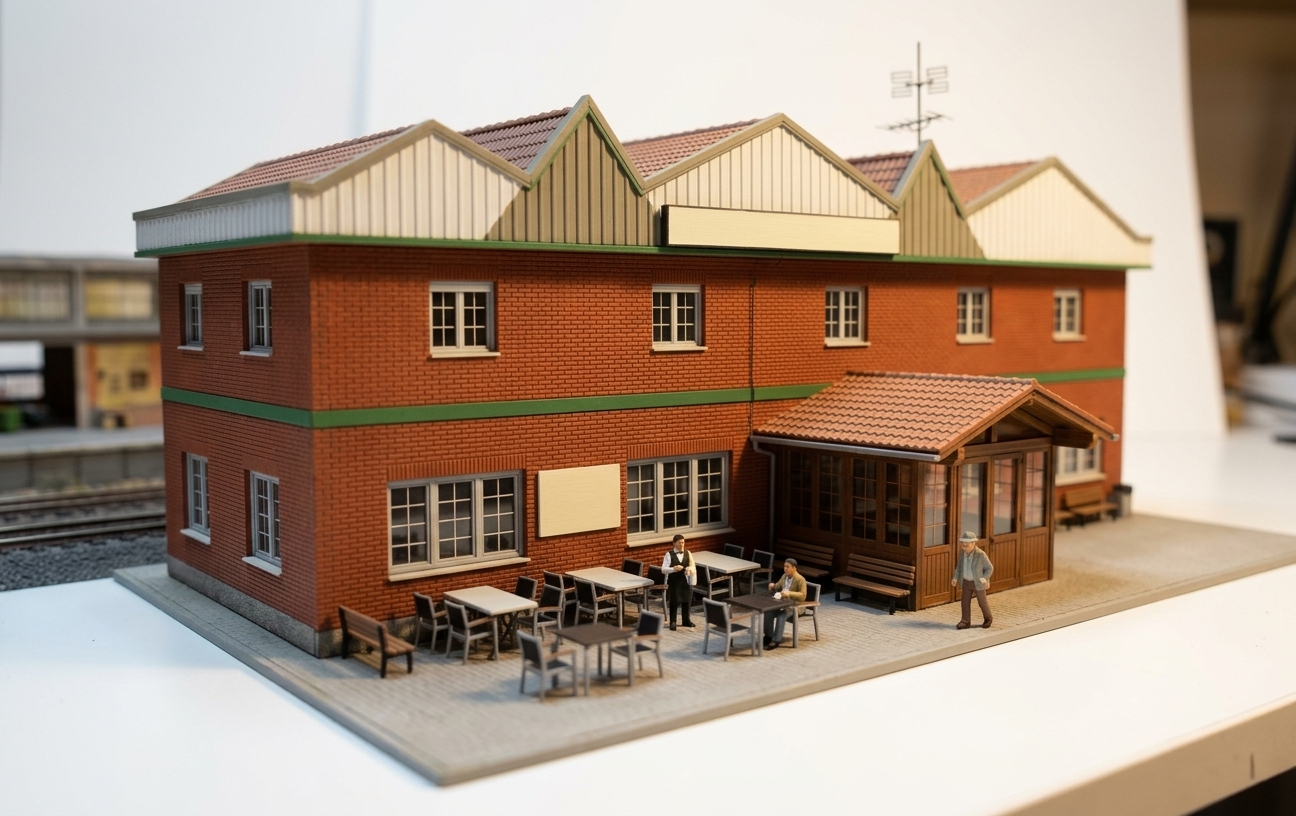
Embutidos Ezequiel
Villamanín, Spain
A family-run producer in Villamanín, León, making IGP Chorizo de León for over 75 years. Their chorizos are coarse-ground, heavily smoked over oak, and cured in the cold mountain air of the Cantabrian foothills. They run an on-site restaurant where you can eat their products with local bread and wine.
Where to Eat
The best spots to eat sausage
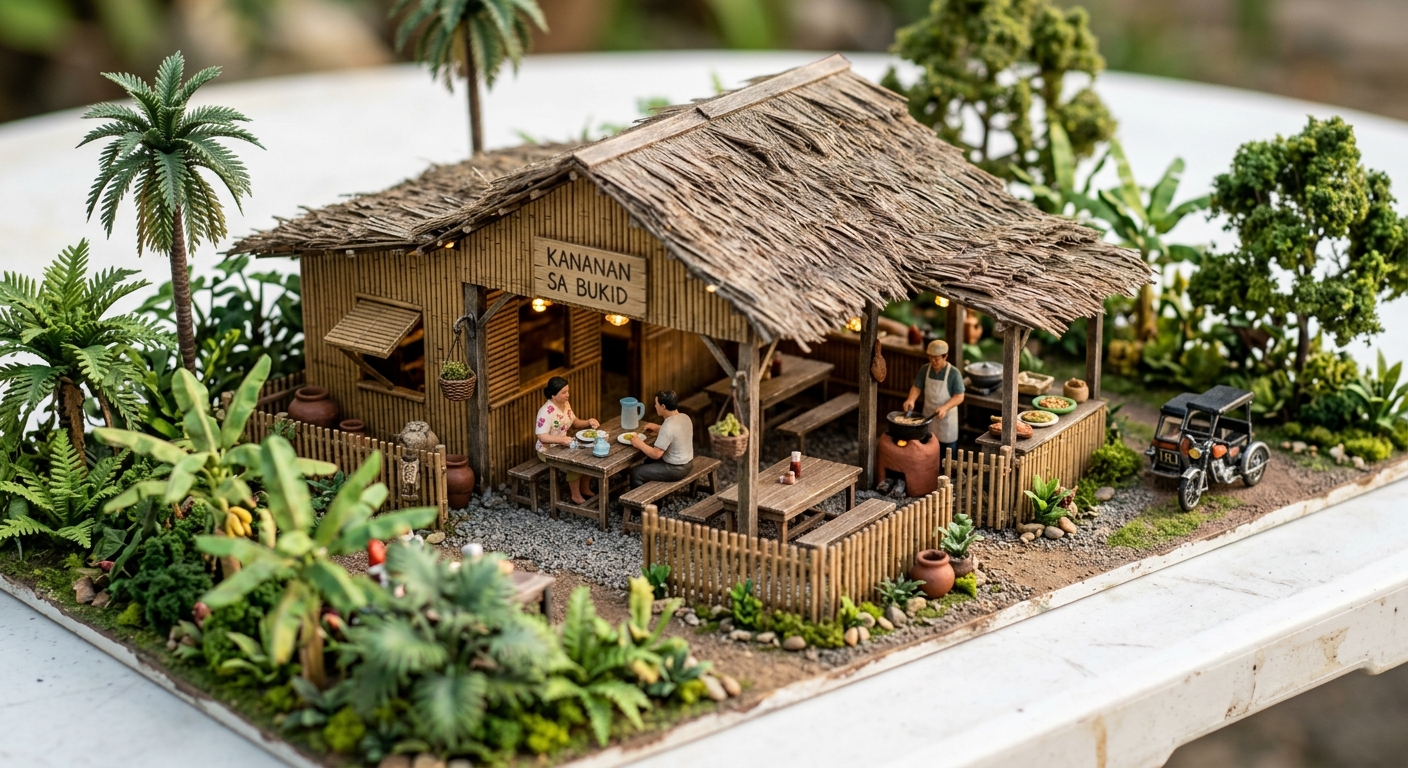
Apag Marangle
Guagua, Philippines
Apag Marangle opened in Guagua, Pampanga, with a menu built around the traditional Kapampangan communal meal format called salu-salo. The name translates roughly to come, let's eat together. The restaurant serves the full repertoire of regional dishes: kare-kare, sisig, lechon kawali, betute (stuffed deep-fried frog), and longganisa from the Guagua style, the garlicky sour type distinct to this part of southern Pampanga. The longganisa de recado from this region is denser and more acidic than the hamonado versions made in San Fernando and Angeles, cured with vinegar and packed with whole garlic cloves. Dishes arrive in the traditional banquet style at the table, meant for sharing across a group. The setting in Guagua, the municipal origin of the Guagua longganisa style, makes this the most contextually appropriate place in the region to eat the sausage. A second location operates in Angeles City.
Known For: Longganisa de recado (Guagua style), kare-kare, betute, communal salu-salo dining
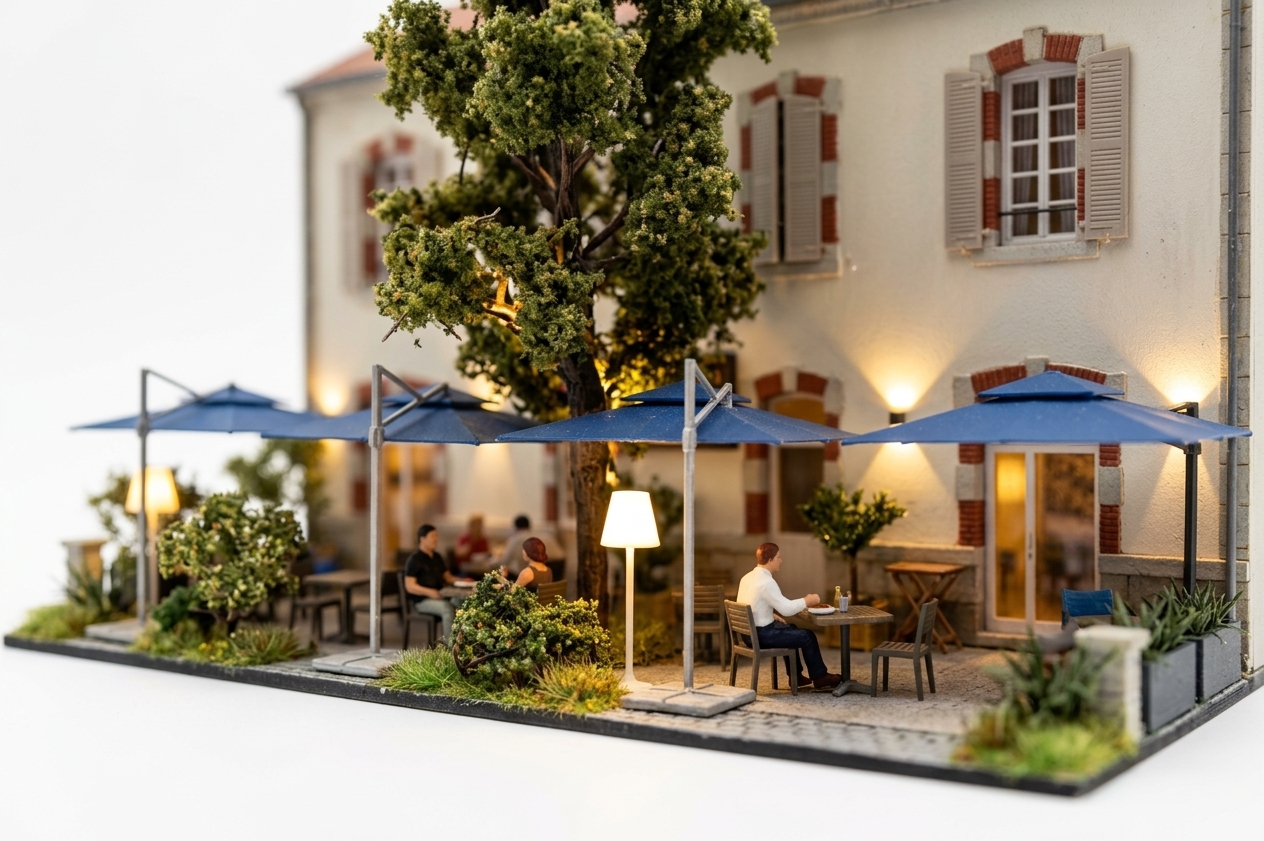
Auberge de Montfleury
Privas, France
A country inn on a hillside outside Privas, the Ardèche capital. The dining room overlooks chestnut groves. The kitchen works with what the department produces: caillettes, picodon cheese, chestnut flour, and saucisson sec sliced thick for the assiette ardéchoise. Rooms are simple. Dinner is the reason to come. The prix fixe menu runs four courses with local wine included.
Known For: Assiette ardéchoise, four-course prix fixe with local wine
Bale Dutung
Angeles City, Philippines
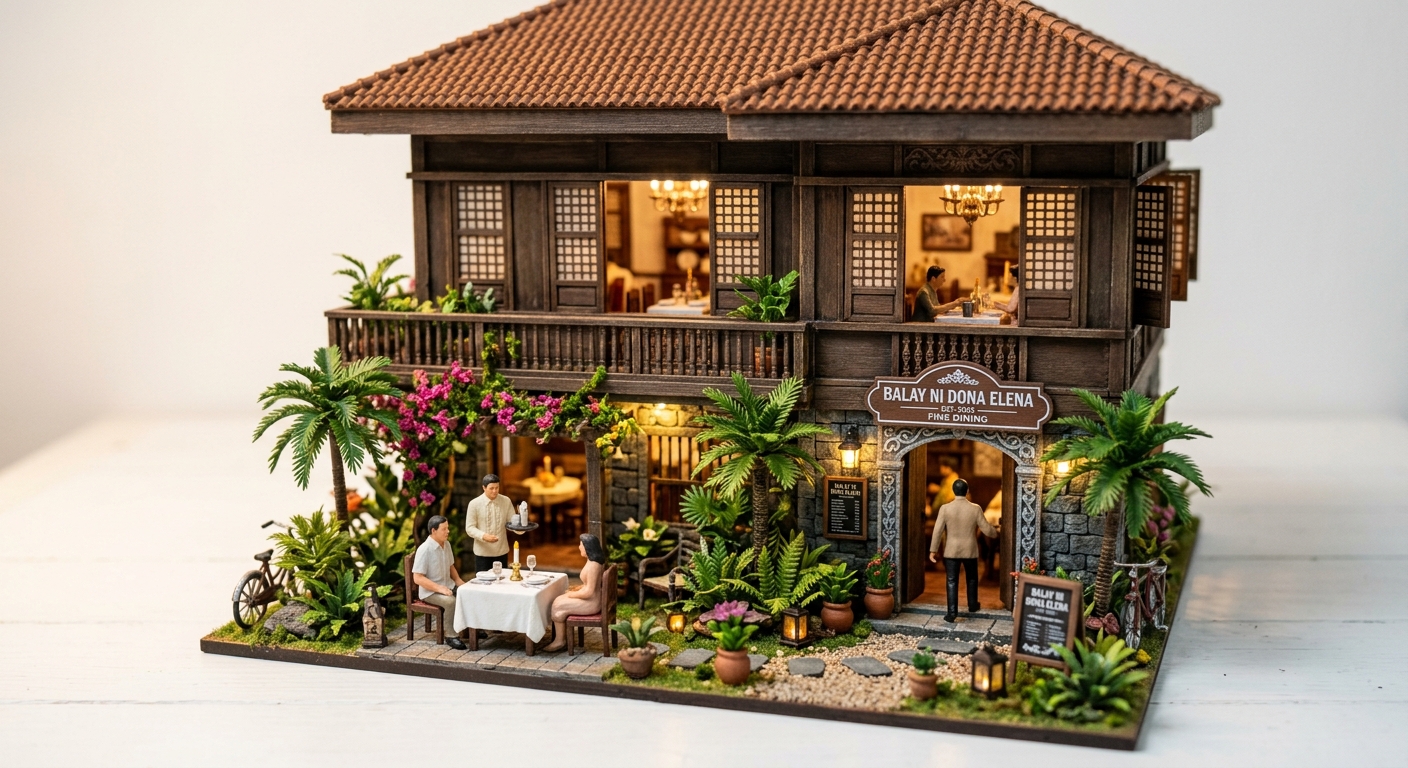
Bale Dutung is the private dining space of Chef Claude Tayag in a compound in Villa Gloria Subdivision, Angeles City. The name means House of Wood in Kapampangan; the building is built from reclaimed hardwood and antique materials, with Tayag's sculpture and art filling the rooms. Dinner is by reservation only, served as a multi-course Kapampangan degustation. The Kapampangan Spread includes longganisang Guagua alongside dishes like sisig, lechon, kare-kare, and the pork preparations that Tayag has spent decades refining. Anthony Bourdain filmed an episode of No Reservations here in the mid-2000s, eating the same food that Tayag's family and community grew up on. The longganisa served here traces back to the Guagua style, a garlicky, slightly sour version from the municipality south of San Fernando, distinct from the sweeter San Fernando type. Bale Dutung is not a restaurant in the conventional sense; it is a dining event, and the longganisa arrives in the context of a full Kapampangan table.
Known For: Multi-course Kapampangan degustation, longganisang Guagua, sisig, Chef Claude Tayag
Bar do Juarez
São Paulo, Brazil
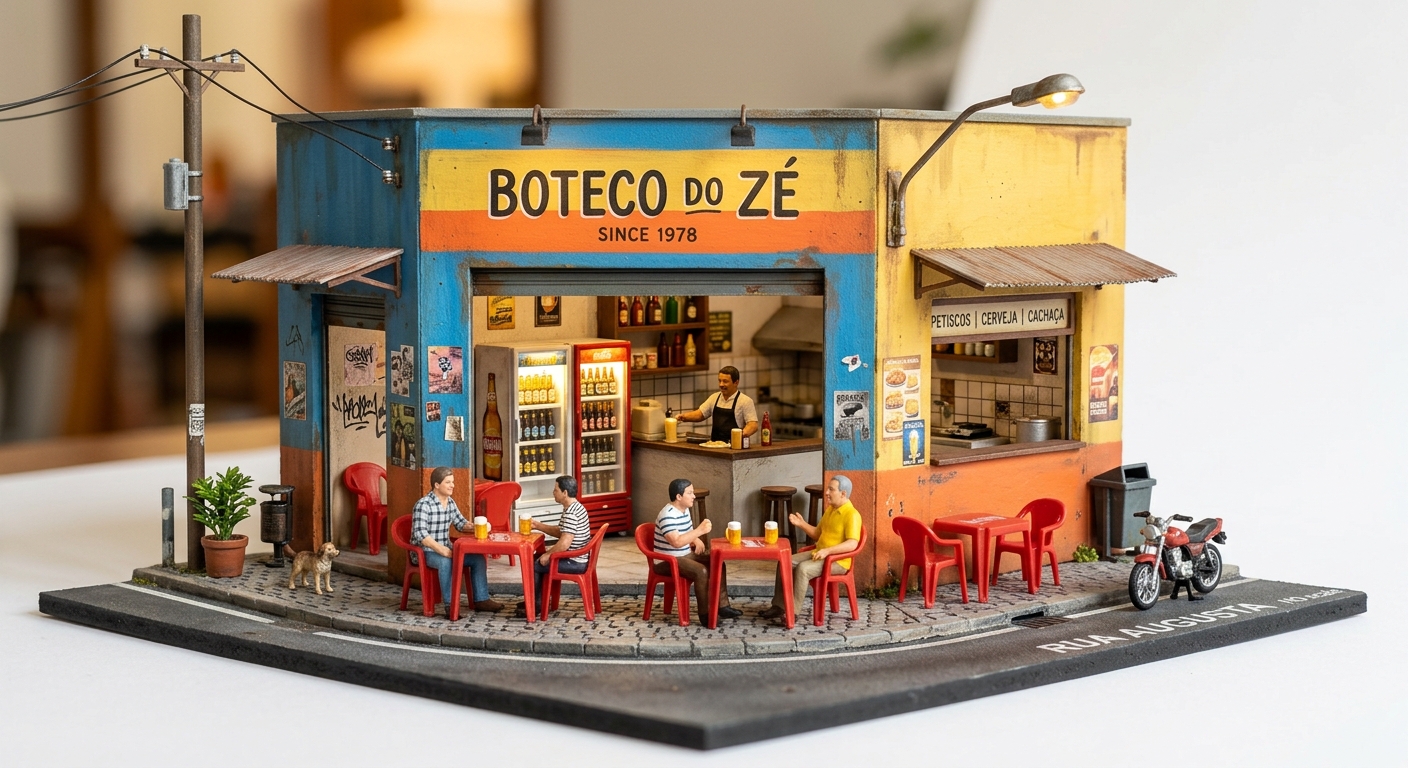
Bar do Juarez was founded in 1999 by Juarez Alves, who came from Bahia to São Paulo in 1973 and built his bar business around the kind of boteco that once filled the old city centre: bare tables, cold beer from the fridge, and straightforward food cooked to order. The group now has six locations across the city, including Itaim, Pinheiros, Brooklin, Moema, Santana, and Mooca, each designed to evoke the mid-century neighbourhood bar rather than a themed restaurant. Linguiça acebolada is one of the most ordered items on the menu: calabresa cut on the bias and fried in a cast-iron pan with a mountain of caramelised white onion, brought to the table sizzling with a basket of pão francês alongside. The boteco ritual here is to use the bread to soak up the fat and onion juices from the pan. The petisco portions are sized for sharing and the draft beer, called chope, comes in small 200ml glasses refilled continuously. The Itaim location on Avenida Presidente Juscelino Kubitschek is the most central for visitors.
Known For: Linguiça acebolada, cold chope on tap, classic São Paulo boteco atmosphere
Baranjska Kuća
Karanac, Croatia
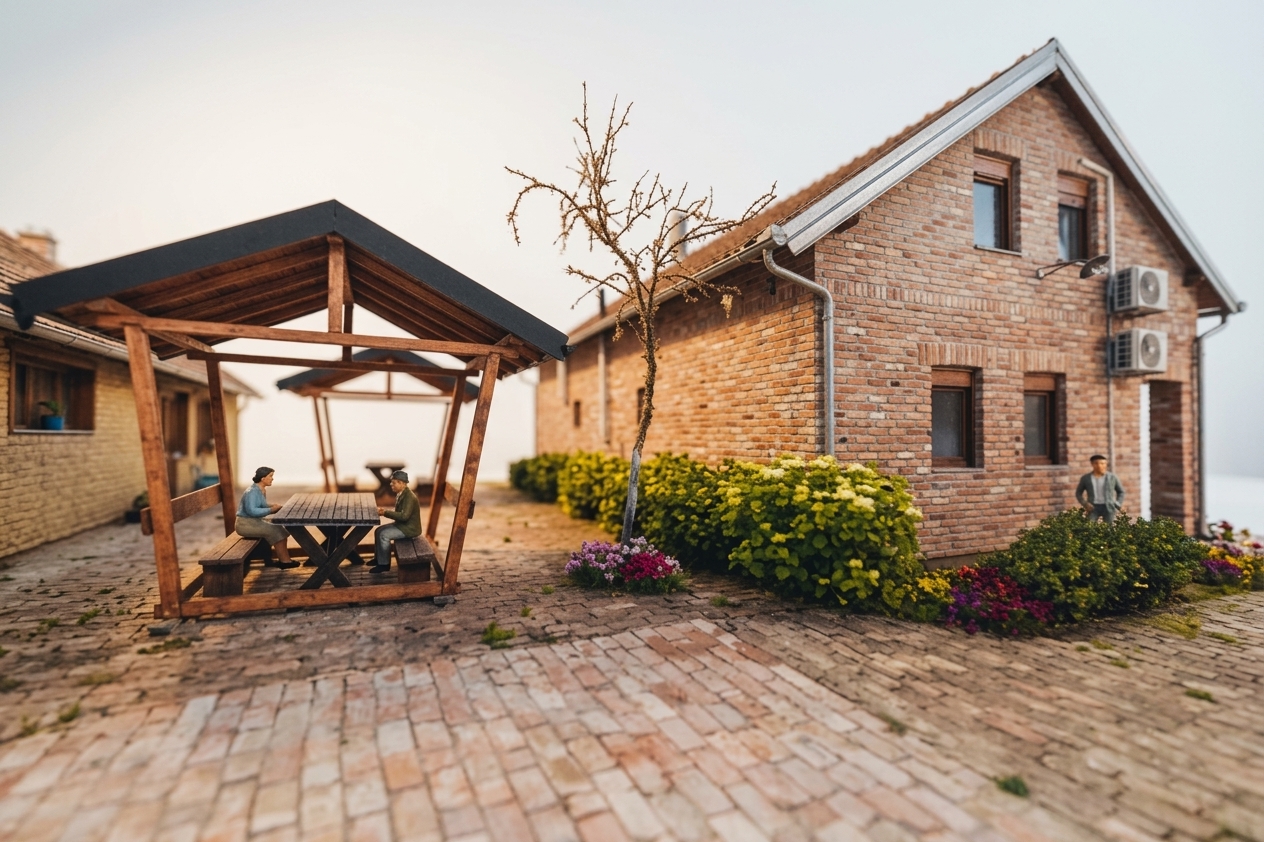
Part restaurant, part open-air ethnographic museum, in the village of Karanac near Osijek. Over 40 years of tradition. The chestnut-shaded backyard holds a barn, a blacksmith's workshop, and old craft huts. The kitchen serves čobanac, kobasica, kulen, and river fish stews cooked in clay pots over open fire. Live Roma folk music on weekends.
Known For: Čobanac, kobasica, kulen, ethnographic museum courtyard, live folk music

Belvárosi Disznótoros
Budapest, Hungary
A Budapest institution that brings the rural Hungarian pig-slaughter feast into the city centre. You order at a counter, choose a meat from the daily selection, then pick two sides and pickles. The menu reads like a disznóvágás spread: blood sausage, liver sausage, smoked ribs, pork chops, and cured kolbász including csabai. Paprika runs through nearly everything. Two locations operate in central Budapest: the original on Károlyi Mihály utca in District V, and a second on Király utca in Erzsébetváros. Both draw neighbourhood regulars and workers at lunch, tourists and food-curious visitors in the evenings. The format is fast, the food is filling, and the prices match the working-class origins of the dishes on offer.
Known For: Counter-service disznóvágás dishes including csabai kolbász, blood sausage, and grilled pork in central Budapest
Bitzinger Würstelstand Albertina
Vienna, Austria
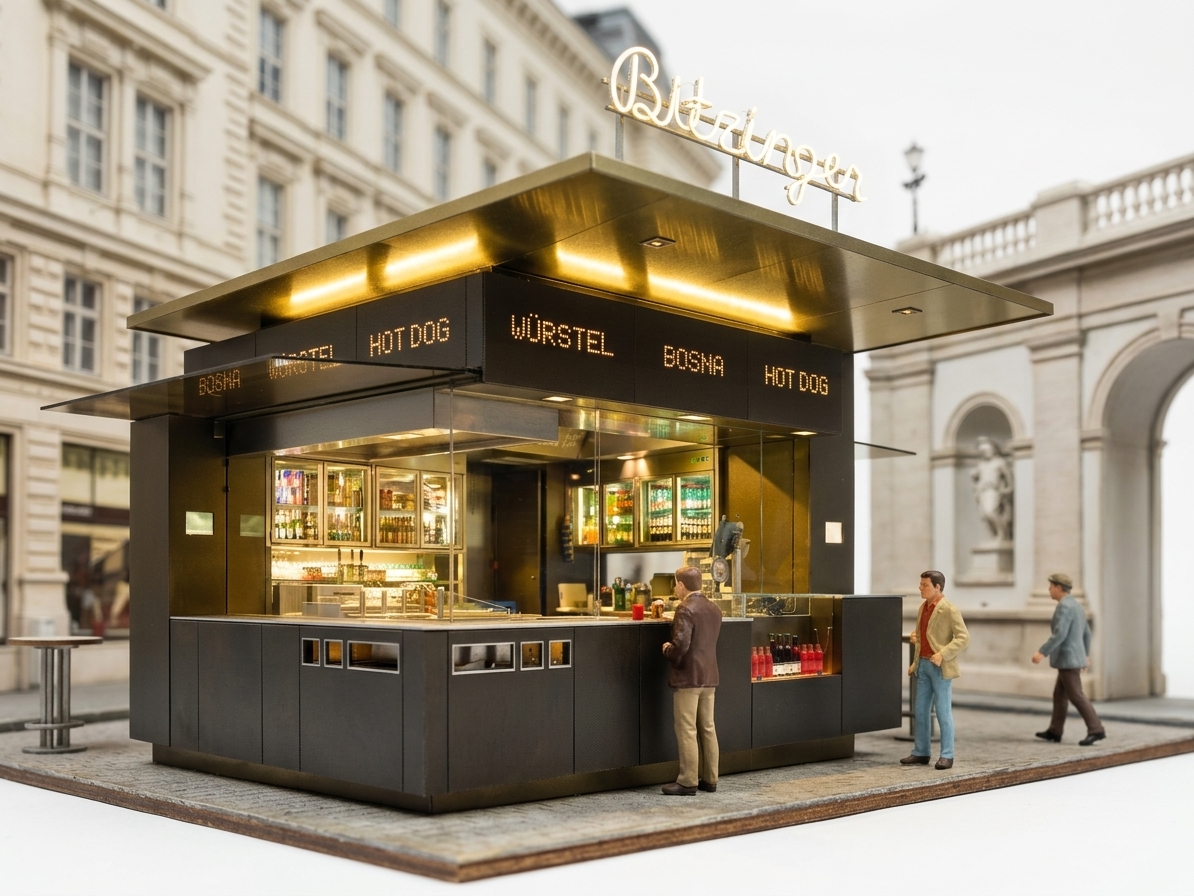
Vienna's most famous sausage stand, located right behind the Albertina museum and the State Opera. Open since the 1960s, Bitzinger is where opera-goers in formal attire stand next to taxi drivers, all eating Käsekrainer at midnight. A true Viennese institution.
Known For: Late-night Käsekrainer in front of the Opera
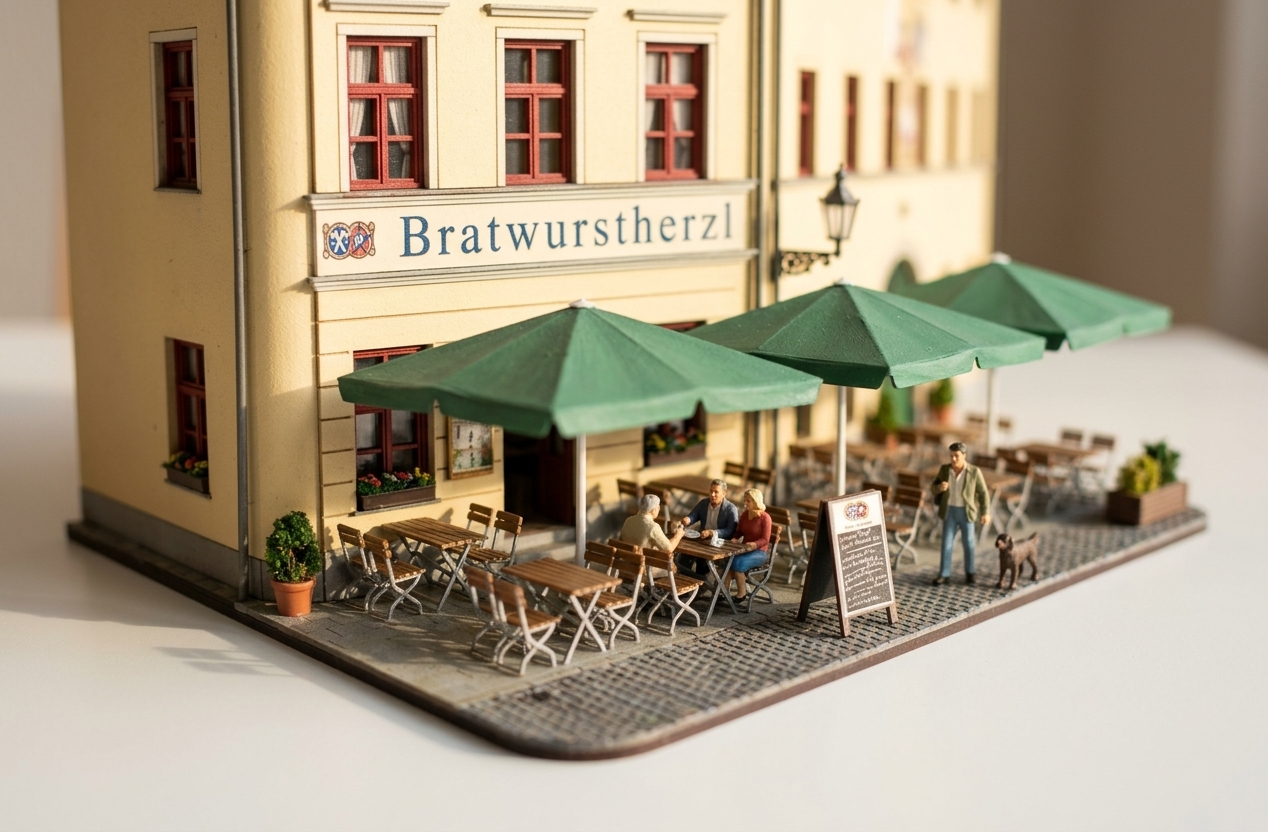
Bratwurstherzl am Viktualienmarkt
Munich, Germany
A gasthaus since 1633, Bratwurstherzl sits at Dreifaltigkeitsplatz behind the Viktualienmarkt. The 350-year-old brick vaulted ceiling watches over an open beechwood grill. Locals come for Weisswurst in the morning and Rostbratwurst at lunch. The outdoor terrace with green umbrellas is one of Munich's best people-watching spots. Hacker-Pschorr on tap.
Known For: Weisswurst, open beechwood grill, Rostbratwurst, 350-year-old vaulted ceiling
How It Works
Explore
Browse the interactive map to discover sausages by region, from Thuringia to Argentina.
Discover
Learn about ingredients, history, and what makes each variety unique. Find the best producers.
Taste
Get real tips on where to buy and eat. Community reviews from fellow sausage enthusiasts.