Vossapølse
Vossakorv
Voss, Norway
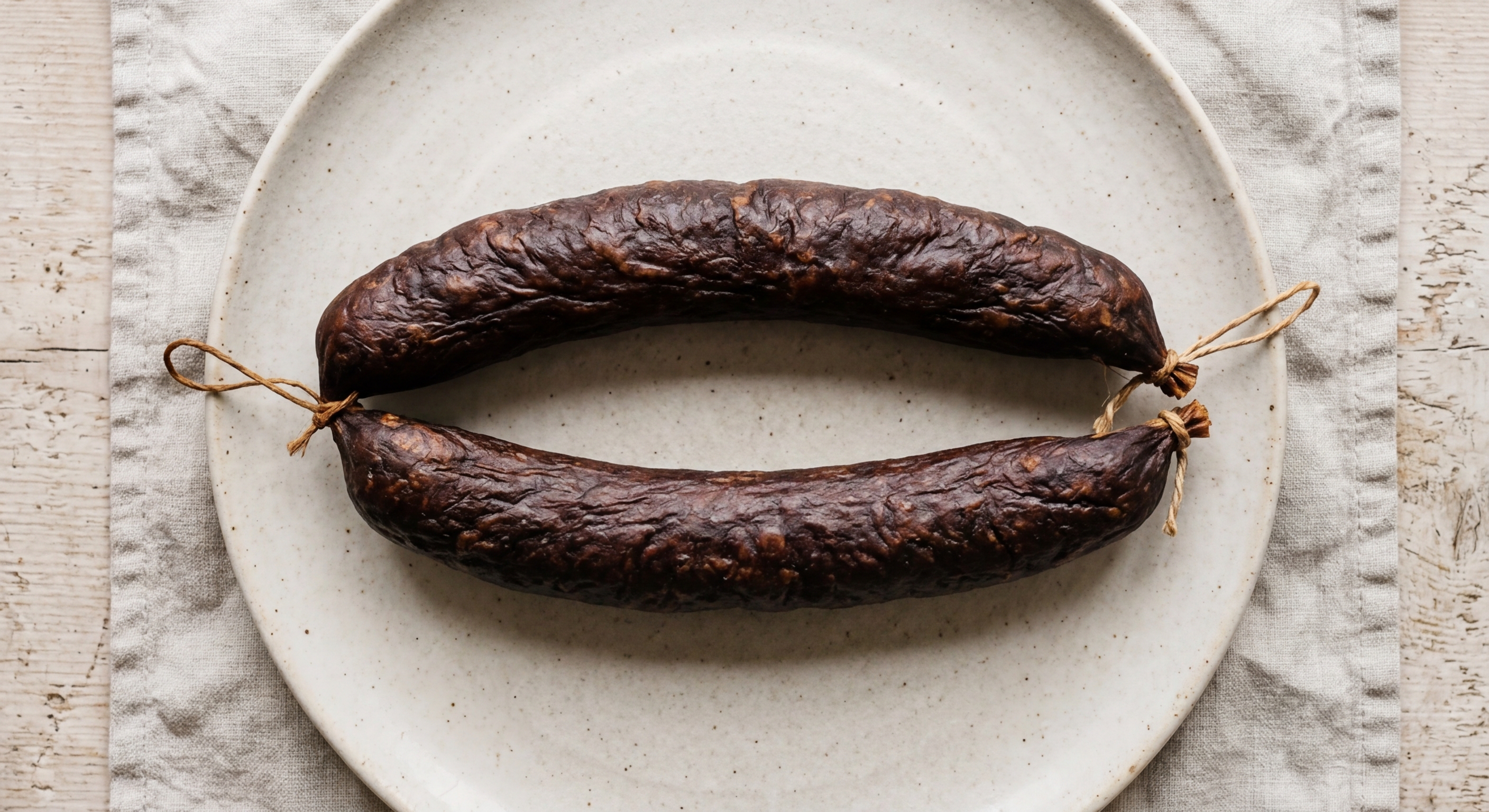
Vossapølse is a cold-smoked Norwegian sausage from the Voss district in Vestland county, western Norway. It is made from coarsely ground lamb or mutton, sometimes mixed with a portion of beef, seasoned with salt, pepper, and occasionally ginger, then stuffed into natural casings and cold-smoked over birch or juniper wood for several days. The finished sausage is dark brown on the outside, firm and dense in the hand, and carries a pronounced smoke that reads clean rather than heavy. The lamb gives it a gamey depth that separates it from any pork sausage of similar type. Norway awarded it Protected Geographical Indication status, tying the name to production in the Voss region using traditional methods. Locals eat it sliced cold on bread, or pan-fried and served hot alongside boiled potatoes and creamed cabbage in the weeks around Christmas.
History
Voss sits in a broad valley at the eastern edge of the fjord country, ringed by mountains that made autumn sheep farming the dominant land use for centuries. Each year, after the summer grazing on high pastures, farmers brought their sheep down for the slaktesesong, the autumn slaughter. Salt was expensive and refrigeration did not exist, so smoking became the primary preservation method. The combination of birch forests above the valley floor and juniper scrub on the hillsides gave Voss farmers a ready fuel source that also flavoured the meat. The sausages hung in smokehouses attached to farmhouses, cold-smoked over days, then stored through the winter. By the 19th century, Voss had a reputation throughout western Norway for the quality of its smoked lamb products. Vossapølse became the sausage that represented the district, associated with the Christmas season and with the hospitality of western Norwegian farmsteads. Rail access to Bergen, established in 1883, allowed the sausage to reach a wider market. The PGI designation formalised what producers had long claimed: that the particular combination of Voss lamb breeds, the local wood, and the mountain air of the valley produced something that could not be replicated elsewhere.
Ingredients
Preparation
The meat is cut from the shoulder and leg, trimmed but not lean, leaving enough fat to keep the sausage moist through smoking and storage. A portion of beef may be worked in for texture and to moderate the intensity of the lamb. The mixture is coarsely ground, seasoned with salt and pepper, and packed into natural casings without excess force. The filled sausages rest overnight in a cool space before moving to the smokehouse. Cold smoking begins the next day, using birch logs or juniper branches as the primary fuel. Temperatures stay below 25 degrees Celsius throughout. Smoking runs for two to four days, with pauses overnight. The finished sausages are firm to the touch, dark on the exterior, and ready to eat without further cooking, though most people choose to fry or grill them.
Taste
The dominant note is smoke, a clean cold-wood smoke from birch or juniper rather than the heavier smoke of hot-smoked products. Behind it the lamb comes through: slightly gamey, earthy, with a richness that pork sausages rarely achieve. Salt is present but not sharp. Black pepper arrives in the finish. Ginger, when used, adds a faint warmth that only registers on the back of the palate. The overall character is robust and direct, built for cold weather and dark bread.
Texture
Firm and dense, with a coarse grind that shows visible pieces of meat and fat when sliced. Cold from the refrigerator, a slice holds its shape cleanly on a knife or board. The casing is tight and does not slip. When pan-fried, the exterior develops a brown crust and the interior softens slightly while staying cohesive. The fat renders into the meat rather than pooling in the pan. Nothing about the texture is delicate.
Rituals & Traditions
Slaktesesong: the autumn sheep slaughter
In Voss and the surrounding valley districts, the slaktesesong ran through October and November after the sheep came down from the summer mountain pastures. Farms slaughtered their animals in the cold, working quickly before frost set in hard. The slaughter produced every preserved product the household would eat through winter: fenalår (cured leg), pinnekjøtt (salted and dried ribs), spekemat of various kinds, and vossapølse. Neighbours helped each other, moving from farm to farm across the valley. The sausages went into the smokehouse within a day of slaughter, and the smoke ran for several days until the meat was properly coloured and preserved. What began as necessity became tradition, and even households that no longer keep sheep observe the season by buying fresh from local producers.
Serve cold-sliced at room temperature on dark bread
Remove the sausage from the refrigerator twenty minutes before slicing. Cold from the fridge, the fat is hard and the smoke aroma is muted. At room temperature, the fat softens, the casing relaxes, and the slice cuts more cleanly. Use a sharp knife with a long blade and cut at a slight diagonal for wider slices. Four to five millimetres is the correct thickness for cold eating on bread, thicker than a salami but not so thick that the smoke and salt become heavy.
Fry in butter for hot service
When serving vossapølse hot, cut the sausage into rounds eight to ten millimetres thick and fry in butter over medium-high heat. The butter browns alongside the sausage and coats the cut surfaces. Turn once when the bottom face is well coloured. The interior should stay warm through but not dry out. Serve immediately with potatoes and kålrabistappe, or alongside fried eggs and flatbrød for a simpler meal.
Do not boil it
Boiling draws the smoke out of the casing and into the water. The casing turns pale and slack, the texture becomes waterlogged, and the fat that should be inside the sausage ends up on the surface of the water. Vossapølse is for cold slicing or dry-heat cooking. If you need a poached sausage, use a different product.
Recipes
Grillet Vossapølse
Vossapølse
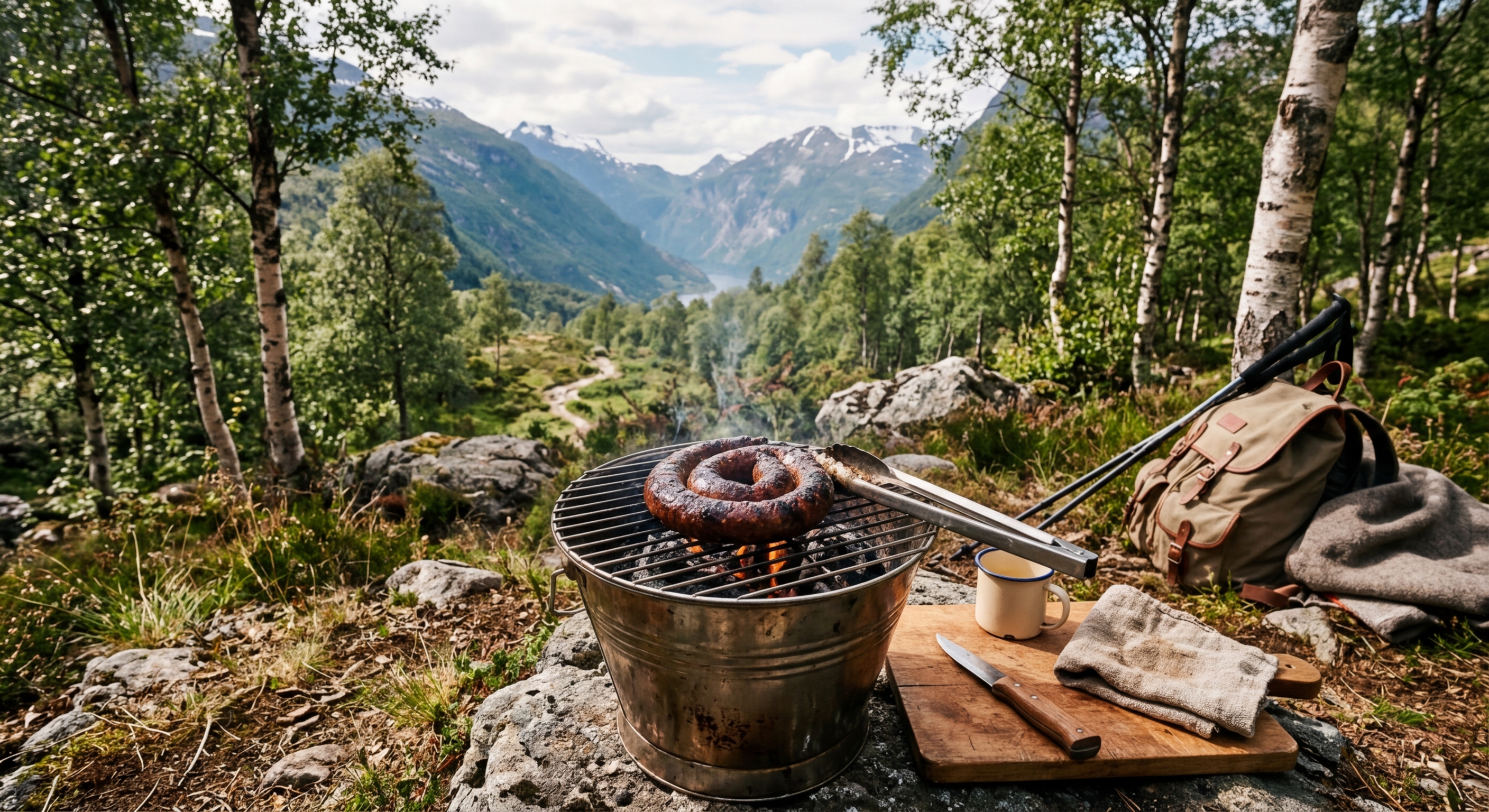
Vossapølse grilled over an open fire at a mountain camp or outdoor fire ring is the summer version of a sausage otherwise associated with dark season and Christmas. The fire adds a second layer of smoke on top of the cold-smoking already in the sausage. The casing blisters and chars at the edges, and the fat inside runs to the surface. Eat it with flatbrød and mustard, standing up, without a plate.

Stekt Vossapølse med Egg og Flatbrød
Vossapølse
Pan-fried vossapølse rounds alongside scrambled eggs and crisp flatbrød is a western Norwegian breakfast and lunch staple. The butter goes brown in the pan before the sausage is even in, and that browned butter coats every cut surface. The eggs cook in the fat left after the sausage comes out. Flatbrød breaks into shards alongside and catches the yolk.
Vossapølse Lapskaus
Vossapølse
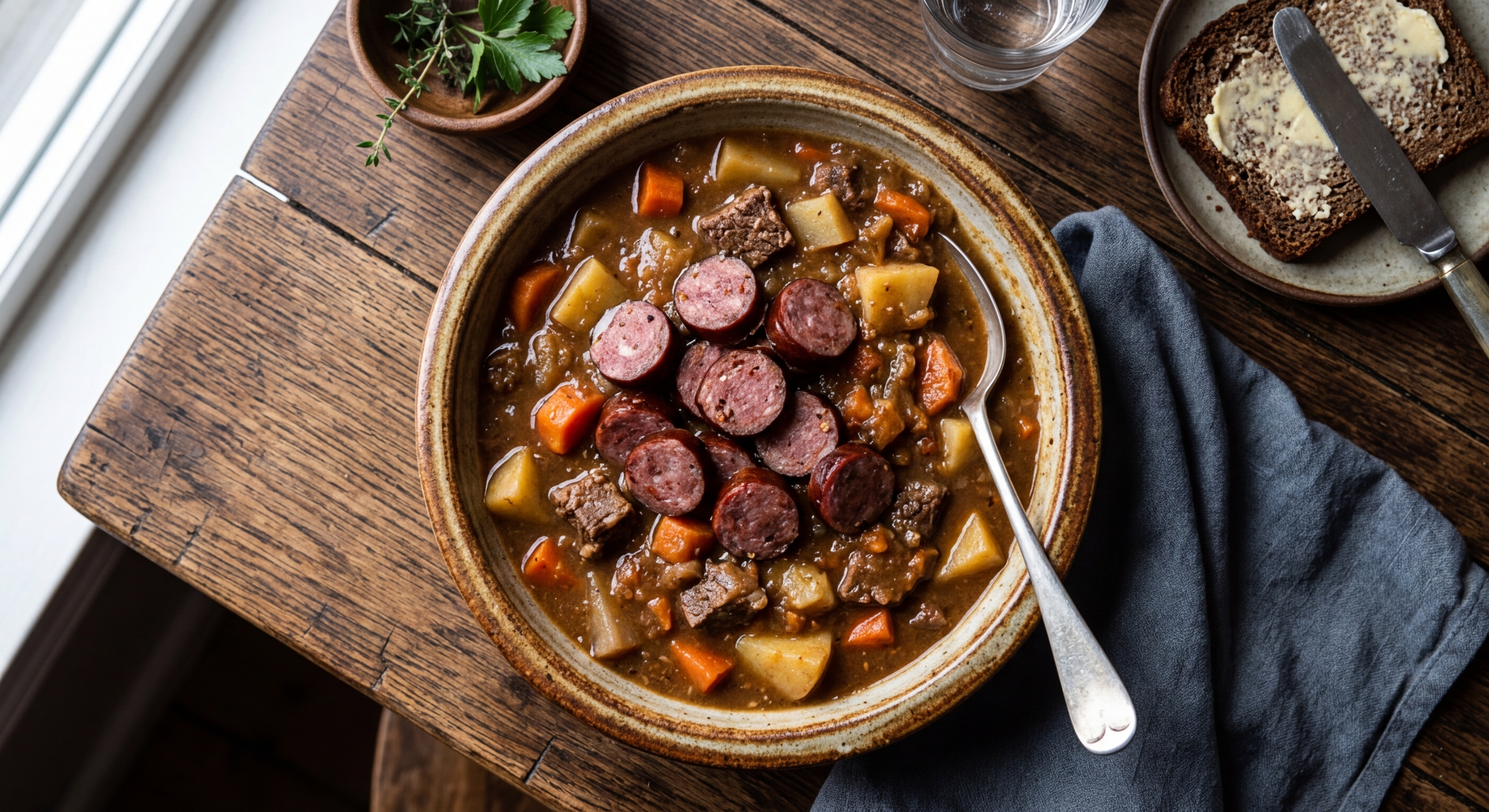
Lapskaus is Norwegian meat stew: cubed root vegetables and meat in a thick, savoury broth, cooked until everything is soft. Sailor and working-class households in Bergen made it from whatever they had, and the smoked sausage from Voss was a natural addition. Vossapølse gives the broth a pronounced smoke and a lamb depth that beef alone does not produce. This is a cold-weather dish, heavy and filling, with a long simmer behind it.
Vossapølse med Kålstuving
Vossapølse
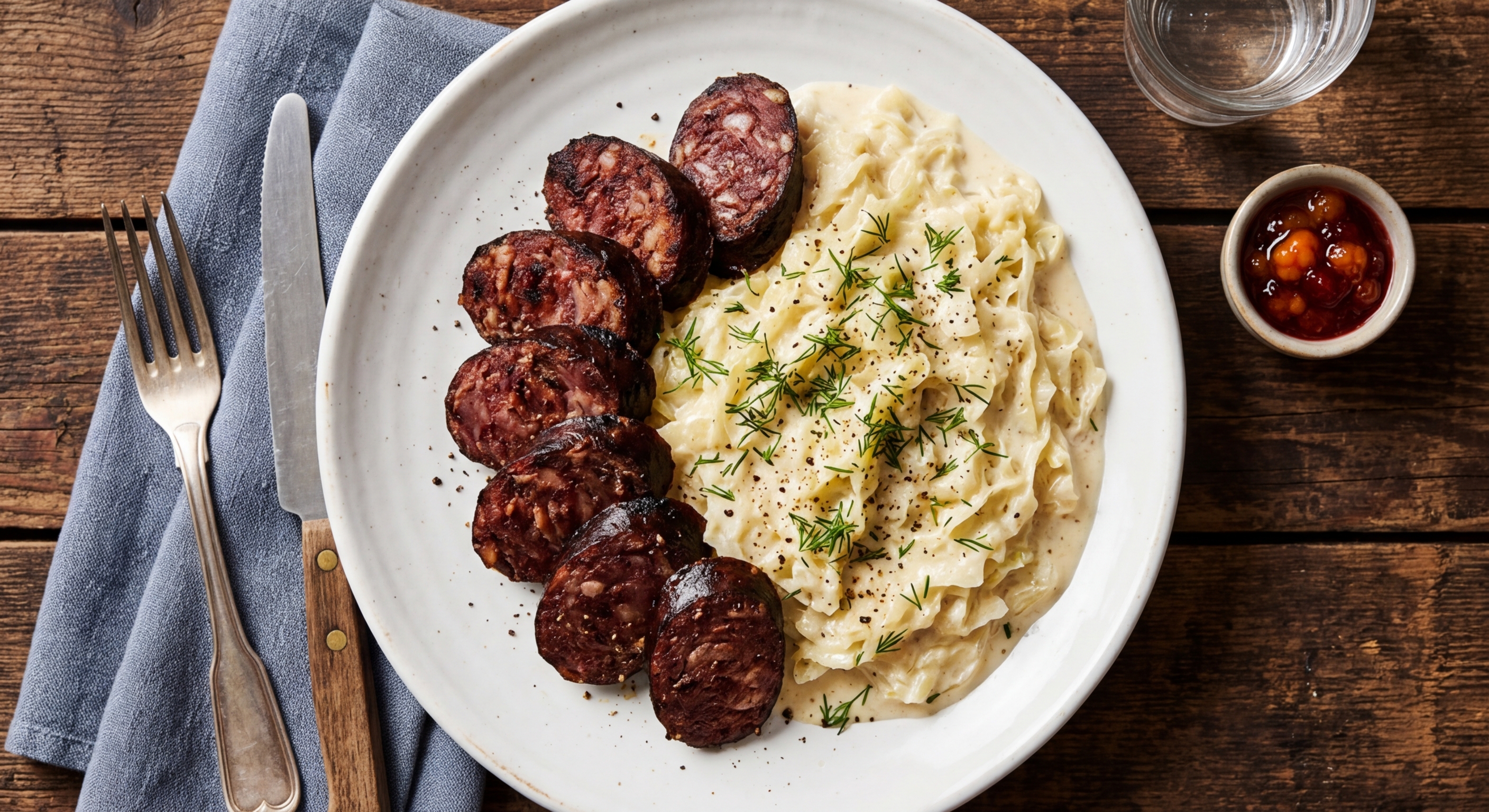
Kålstuving is creamed cabbage: white cabbage braised in a butter-flour sauce until soft, lightly seasoned, rich but not heavy. It is the traditional Christmas plate in western Norway alongside fried vossapølse and boiled potatoes. The sweetness of the cabbage and the smoke of the sausage have shared this plate for generations. Nothing here is complicated, but the result only works when each element is made properly.

Vossapølse med Rotmos
Vossapølse
Rotmos is mashed root vegetables: swede and potato cooked together, then mashed with butter until smooth. The sweetness of the swede tempers the smoke and salt of the sausage. This pairing appears across Scandinavia under different names, but in western Norway it belongs specifically to the autumn and Christmas table, when fried vossapølse rounds sit alongside a mound of orange-yellow mash.
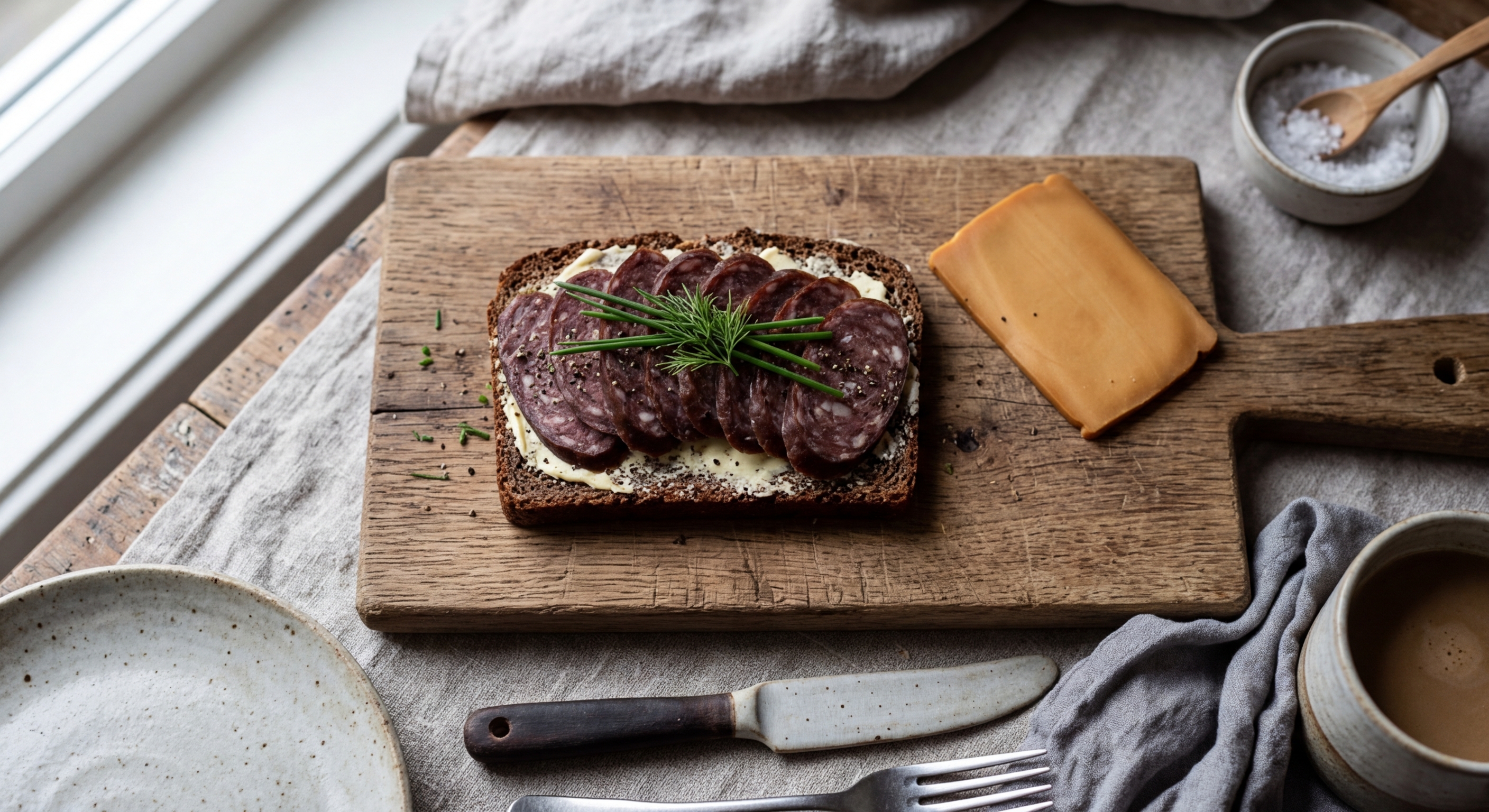
Vossapølse Smørbrød
Vossapølse
The cold open-faced sandwich is the first thing most Norwegians reach for when there is a smoked sausage in the house. Slice the vossapølse at room temperature, lay it on dark bread with butter, and add mustard or sour cream on the side. The bread does structural work, the fat in the sausage does the rest. No cooking required.
On the Map
Where to Eat
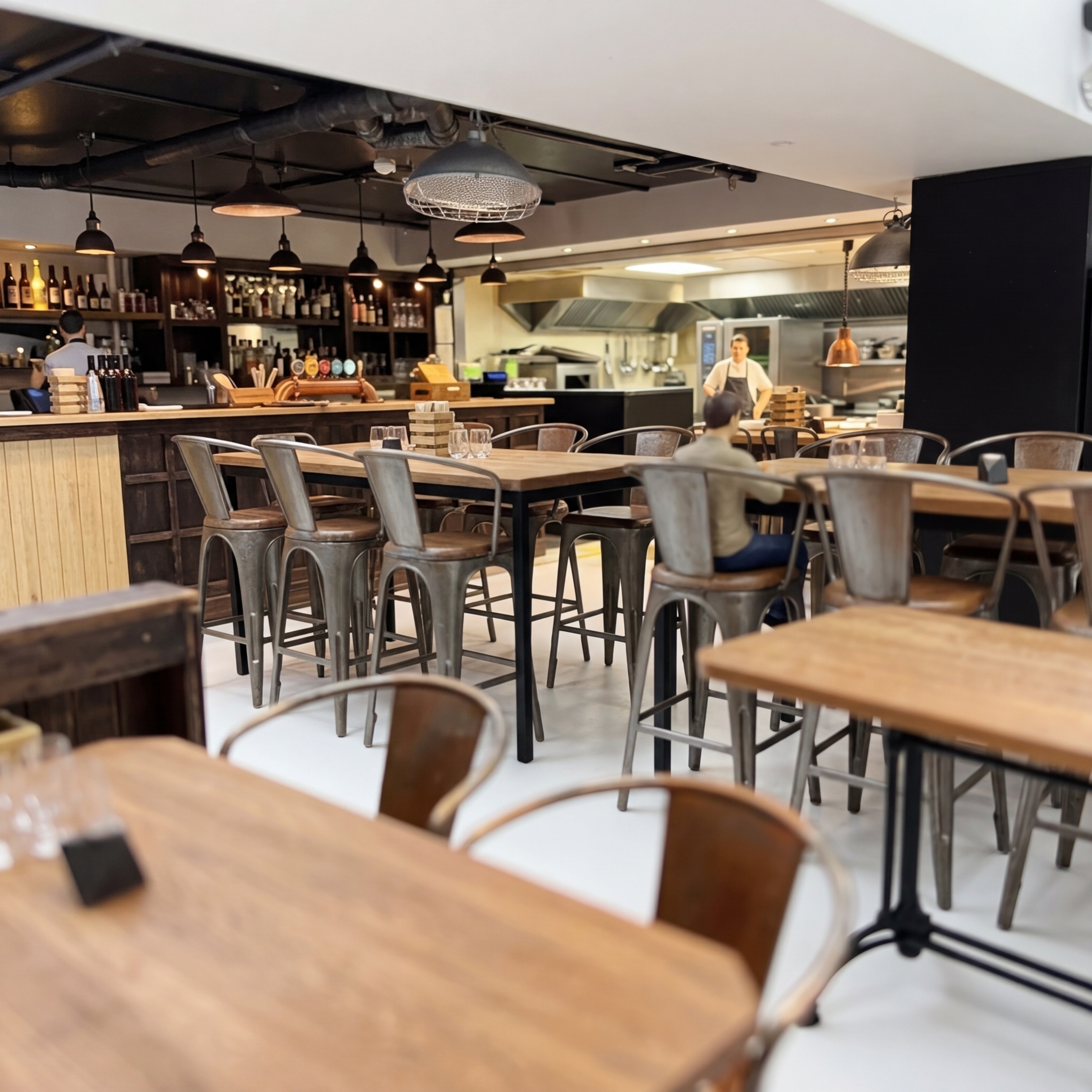
Bare Vestland
Bergen, Norway
Bare Vestland operates as a gastropub dedicated to the food of western Norway, serving traditional regional dishes in small portions so guests can move through several in an evening. The name translates roughly as 'Just Vestland', a statement of intent about the sourcing and cooking philosophy. The kitchen draws from the same larder that has fed western Norwegians for centuries: dried and smoked lamb products, salt fish, root vegetables, fermented dairy, and flatbread. Vossapølse appears on the card alongside other smoked meats from the Voss and Hardanger districts, often served as part of a charcuterie spread with flatbrød and mustard. The address is Vågsallmenningen, on the waterfront near Bryggen in central Bergen. The room is casual and the wine list focuses on natural and low-intervention bottles. The concept brought renewed attention to traditional western Norwegian food in Bergen's restaurant scene when it opened.

Restaurant Magdalene at Fleischer's Hotel
Voss, Norway
Restaurant Magdalene is the main dining room of Fleischer's Hotel in Vossevangen, a Swiss-style grand hotel built in 1889 that has operated without interruption since. The restaurant is named after the first hostess and head chef of the hotel's founding era. Magdalene is a member of Vossameny, an association of local restaurants and producers with a shared commitment to traditional western Norwegian food culture and regional sourcing. The menu rotates with the season and draws on local farms and producers in the Voss valley, featuring smoked lamb products including vossapølse, smalahove (smoked sheep's head), pinnekjøtt (salted dried mutton ribs), and fenalår (cured leg) during the autumn and Christmas season. The dining room occupies the ground floor of the original hotel building, with the mountain valley visible through the large windows. Fleischer's Hotel is at the centre of Vossevangen, a short walk from the railway station on the Bergen line.
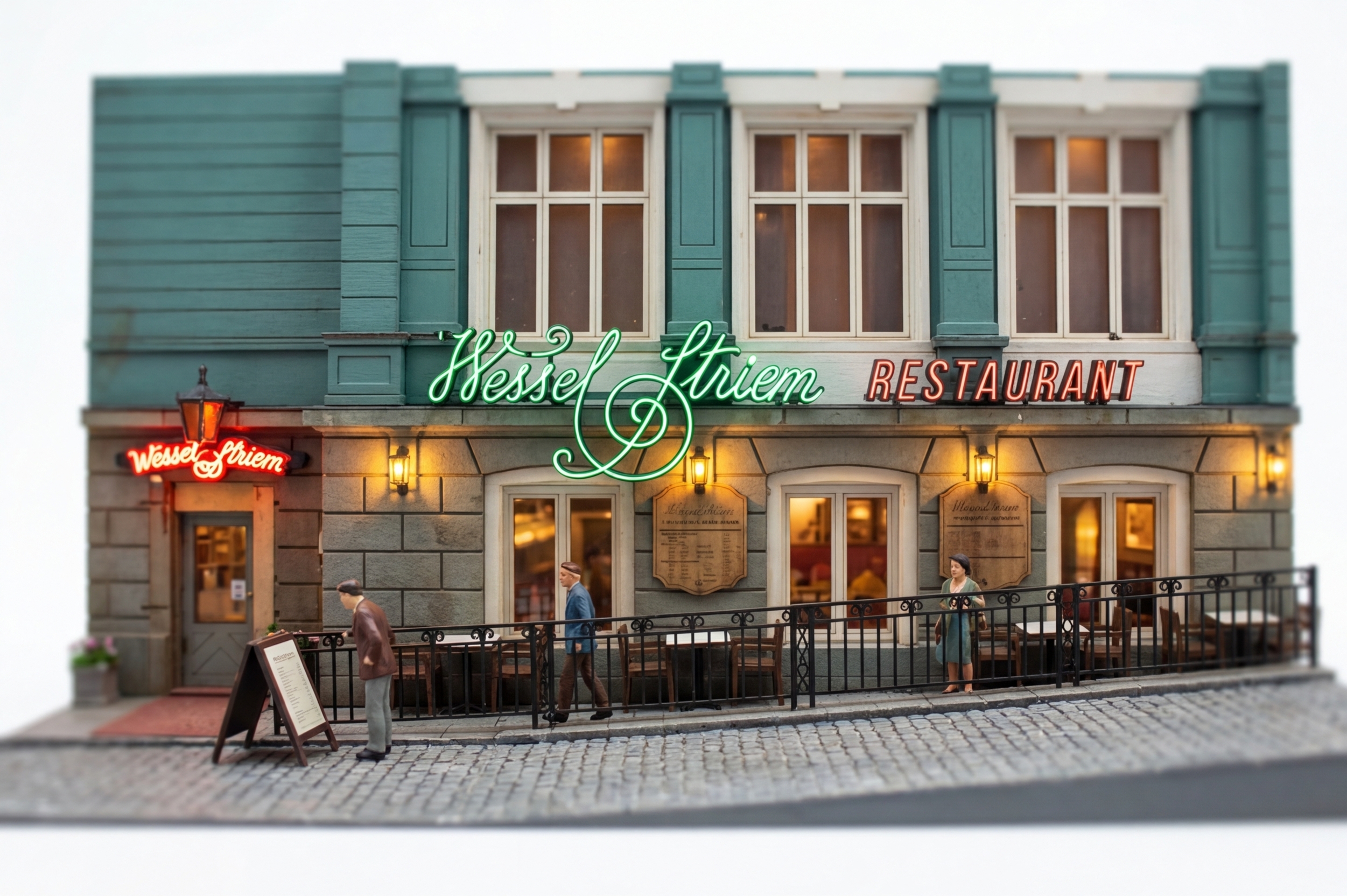
Wesselstuen
Bergen, Norway
Wesselstuen has occupied its corner on Øvre Ole Bulls plass in central Bergen since 1971, making it one of the oldest continuously operating restaurants in the city. The room is housed in an 18th-century building and has the feel of a place that has not tried too hard to change: low ceilings, dark wood, a long bar, and tables close together. The menu stays close to Bergen and western Norwegian tradition. Homemade potato dumplings (raspeballer) with smoked pork knuckle, Vossa sausage, and turnip mash appear as the signature dish on the regular card, alongside fish soup and other Bergen staples. The Vossa sausage comes sliced and fried, sourced from producers in the Voss valley. Wesselstuen draws a regular crowd of locals alongside visitors, and the atmosphere is deliberately informal. Writers, journalists, and dockworkers have all been at home here across the decades.