Taiwanese Sausage
香腸 (xiāngcháng)
Taipei & Taiwan
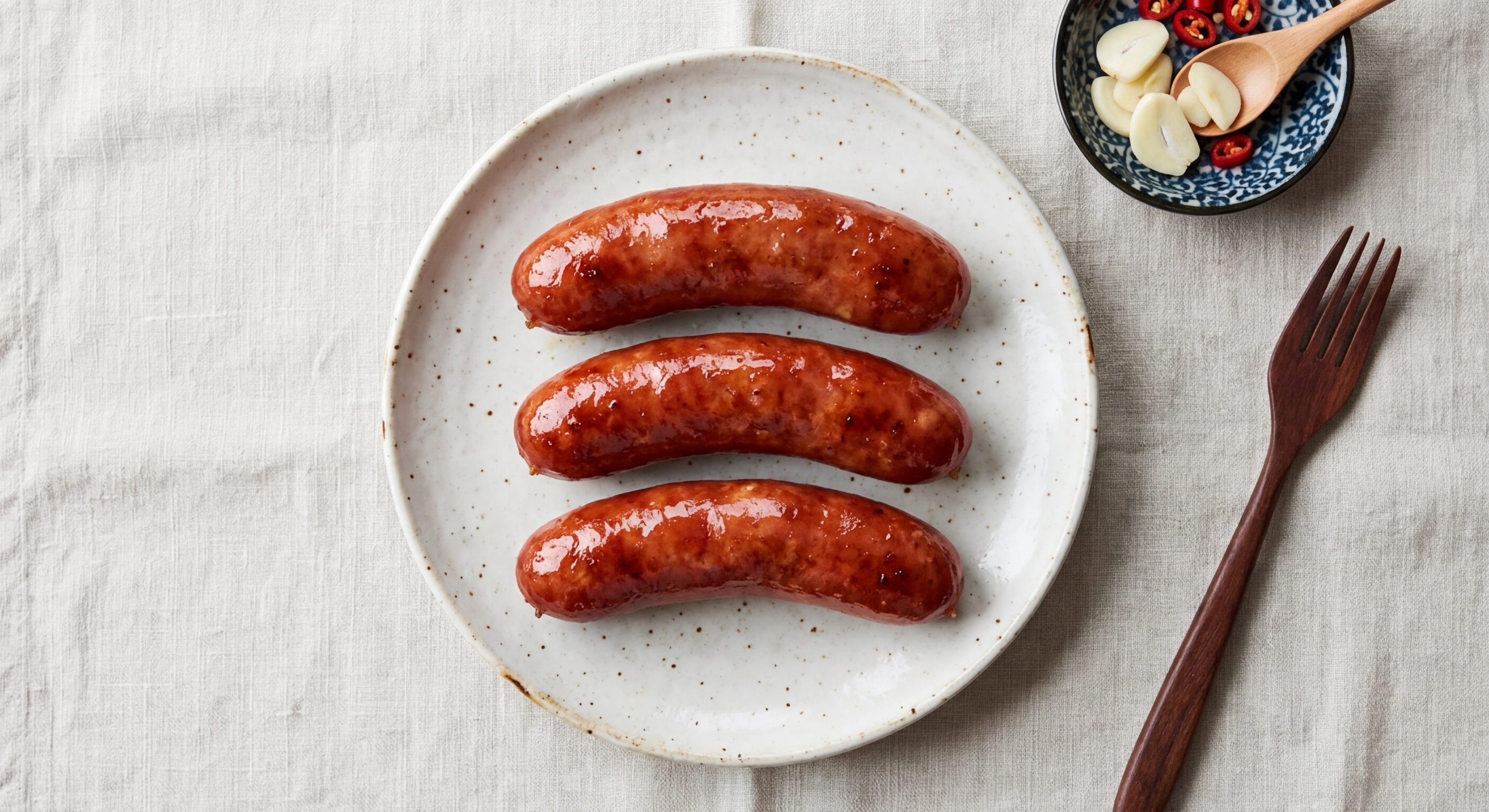
Taiwan's most recognisable street food: a short, plump pork sausage with a noticeable sweetness that sets it apart from every other Chinese-language sausage tradition. Fatty pork is seasoned with sugar, soy sauce, rice wine, five-spice powder, and garlic, then stuffed into natural casings and dried briefly before grilling over charcoal. The exterior caramelises where the sugar hits the heat, turning deep amber with small scorched patches. Inside, the fat and meat stay juicy. The sausage arrives on a bamboo skewer at every night market in the country, eaten bite by bite alongside thin raw garlic slices. The practice has its own saying: 一口香腸一口蒜 (one bite sausage, one bite garlic).
History
Pork sausage-making in Taiwan draws on Hokkien and Hakka traditions brought by Han Chinese settlers from Fujian and Guangdong provinces during the 17th and 18th centuries. Those settlers preserved pork in dried and fermented forms suited to Taiwan's humid subtropical climate. The sweet sausage that emerged in Taiwan diverged from mainland lap cheong by leaning harder on sugar and rice wine, producing a fresh-grilled rather than air-dried product. Japanese colonial rule from 1895 to 1945 reinforced a culture of street food stalls and market eating that shaped how the sausage came to be sold. After the 1949 influx of mainlanders following the Chinese Civil War, Taiwan's food culture absorbed further regional influences, but the local sweet pork sausage remained a constant. Night markets formalised from the 1960s onward as Taiwan urbanised, and the sausage vendor became one of the anchor stalls. The 大腸包小腸 (da chang bao xiao chang) format, in which a grilled pork sausage is slipped inside a split sticky rice sausage like a bun, developed in the night markets and became a separate institution. Hakka communities in Hsinchu and Miaoli counties kept older, less-sweet formulations, and aboriginal Taiwanese groups in the mountains developed their own boar-based sausage traditions with minimal sugar and heavy garlic.
Ingredients
Preparation
Pork shoulder and back fat are ground together through a medium plate, keeping a visible grain. Sugar, soy sauce, rice wine, five-spice powder, garlic, salt, and white pepper go into the bowl and are mixed by hand until the meat is tacky and the sugar has dissolved into the fat. The mixture rests for at least two hours in the refrigerator. Vendors fill the seasoned meat into natural pork casings and tie them into short links, typically 10 to 14 centimetres. The sausages then hang at ambient temperature for several hours or overnight to allow the casing to dry and the surface to develop a slight pellicle. Grilling is done over charcoal at moderate heat, turning the sausages often so the sugar caramelises without burning. The finished sausage is pushed onto a bamboo skewer and handed to the customer. Sliced raw garlic is offered alongside at every stall.
Taste
The sweetness arrives first, caramelised at the surface and blended into the fat throughout. Five-spice provides a warm, faintly anise-scented undertone without tasting medicinal. Soy sauce contributes umami and a faint salt note behind the sugar. Garlic in the meat is subtle after cooking, but the raw garlic slice served alongside is sharp and assertive. Eating a bite of sausage followed by a sliver of raw garlic is the intended experience: the sweetness and the bite land together.
Texture
The casing is tight and snaps on the first bite, releasing juice and a rush of rendered fat. The filling is coarse enough to feel meaty rather than emulsified, with visible fat pockets throughout. The exterior is slightly sticky from caramelised sugar, and the charcoal char adds a thin, brittle layer on the side that faced the coals longest. The contrast between the charred outside and the soft, fatty interior is the point of charcoal grilling.
Rituals & Traditions
The dice game (骰子遊戲)
Night market sausage vendors across Taiwan run a dice game alongside their grill. Customers roll one or more dice: roll a six and the sausage is free, roll low and you pay full price, sometimes more. The game is displayed on a small board at the stall and is an expected part of the theatre of buying a sausage at a market. Children and adults play. The vendor calls out results with practiced enthusiasm. Whether the dice are fair is a question no one asks.
Da chang bao xiao chang (大腸包小腸)
The name translates as 'large intestine wrapping small intestine.' A grilled glutinous rice sausage is split open lengthwise, and a grilled pork sausage is placed inside like a hot dog in a bun. Toppings vary by vendor: raw garlic, pickled cabbage, basil, soy sauce paste, chilli sauce. The rice sausage absorbs fat from the pork sausage and softens around it as you eat. It is one of the most requested items at Shilin Night Market.
Eat the garlic
The raw garlic at a Taiwanese sausage stall is not a garnish. Take a thin slice and eat it between bites of sausage. The sausage's sweetness and the garlic's raw bite are designed to work against each other. Eating the sausage alone, without the garlic, produces a one-note sweetness that becomes heavy by the third bite. The garlic is the other half of the dish.
Recipes
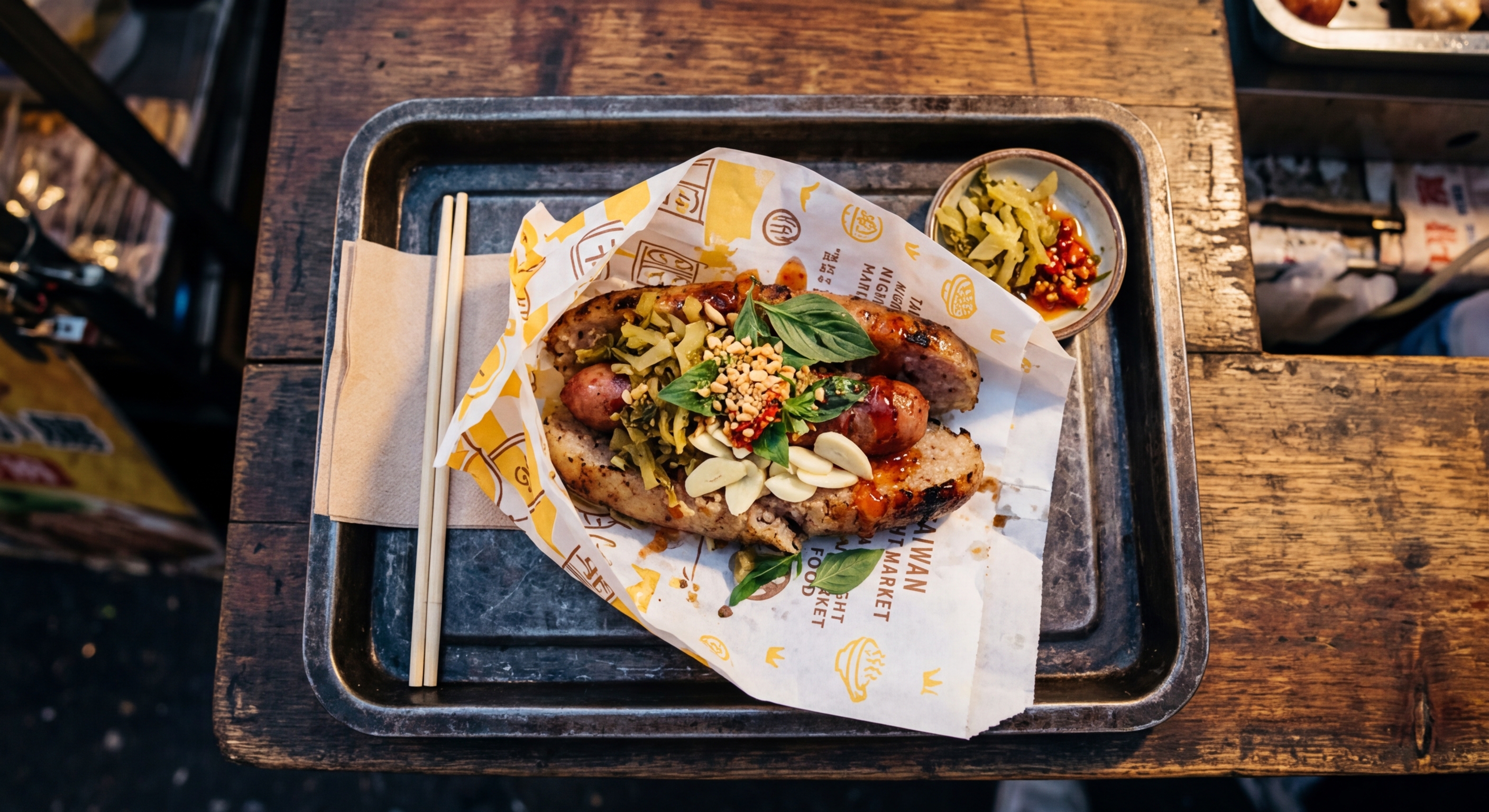
Da Chang Bao Xiao Chang (大腸包小腸)
Taiwanese Sausage
The name means 'large intestine wrapping small intestine.' A grilled sticky rice sausage is split open and used as the bun; a grilled sweet pork sausage goes inside. Toppings pile on top: raw garlic, pickled cabbage, fresh basil, and soy paste. The rice sausage soaks up the fat from the pork sausage as you eat. This is the signature format of Taiwan's night markets, assembled to order at the stall and eaten standing on the street.
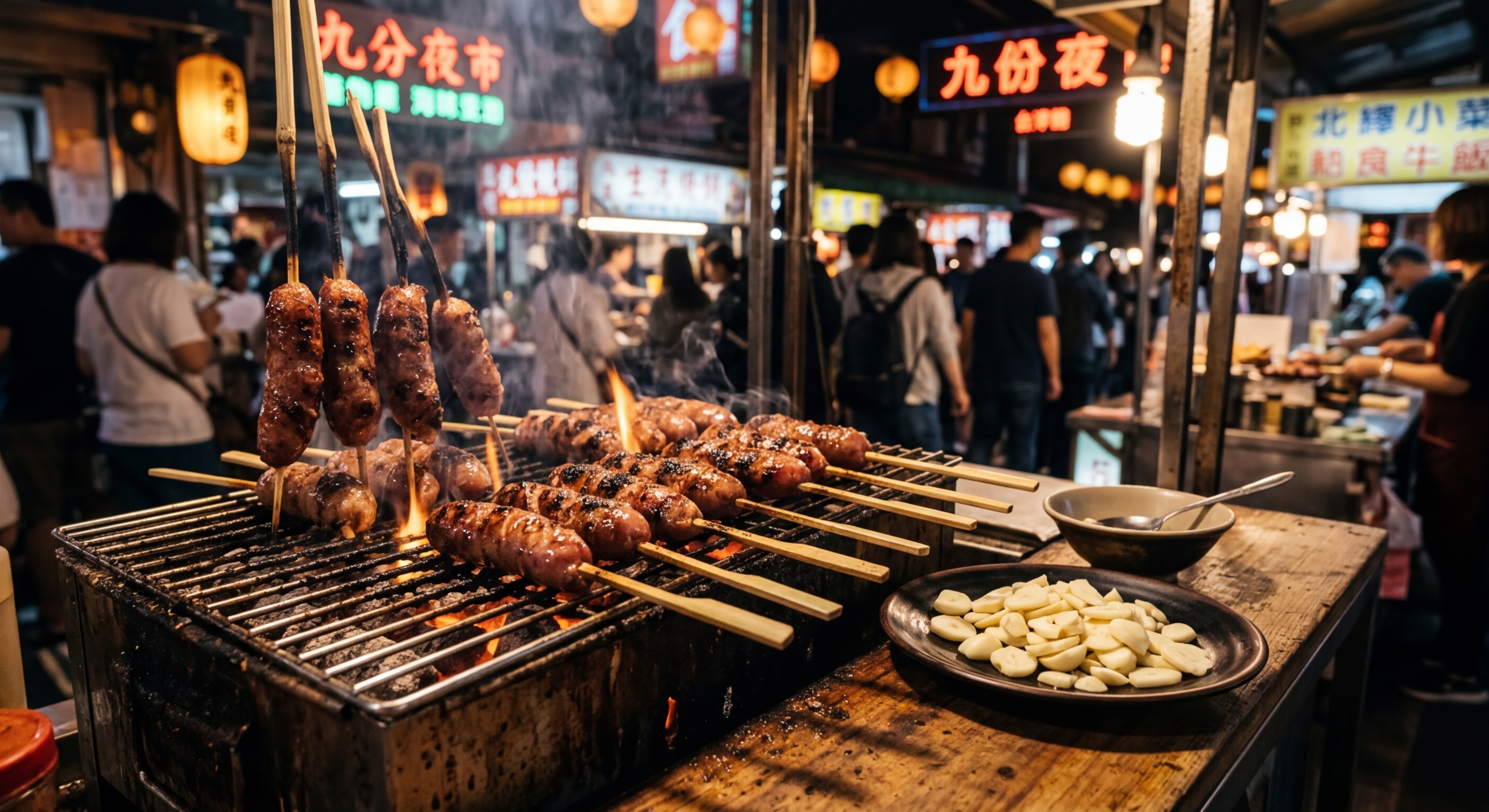
Grilled Taiwanese Sausage with Raw Garlic
Taiwanese Sausage
The night market baseline: sweet pork sausages grilled over charcoal on a wire rack, pushed onto bamboo skewers, and handed over with a pile of raw garlic slices. No sauce, no bun. The sausage's sugar caramelises against the heat and produces a lacquered skin with small char marks. The garlic is the other half of the dish. This recipe reproduces that result at home using a charcoal grill or a cast-iron grill pan.
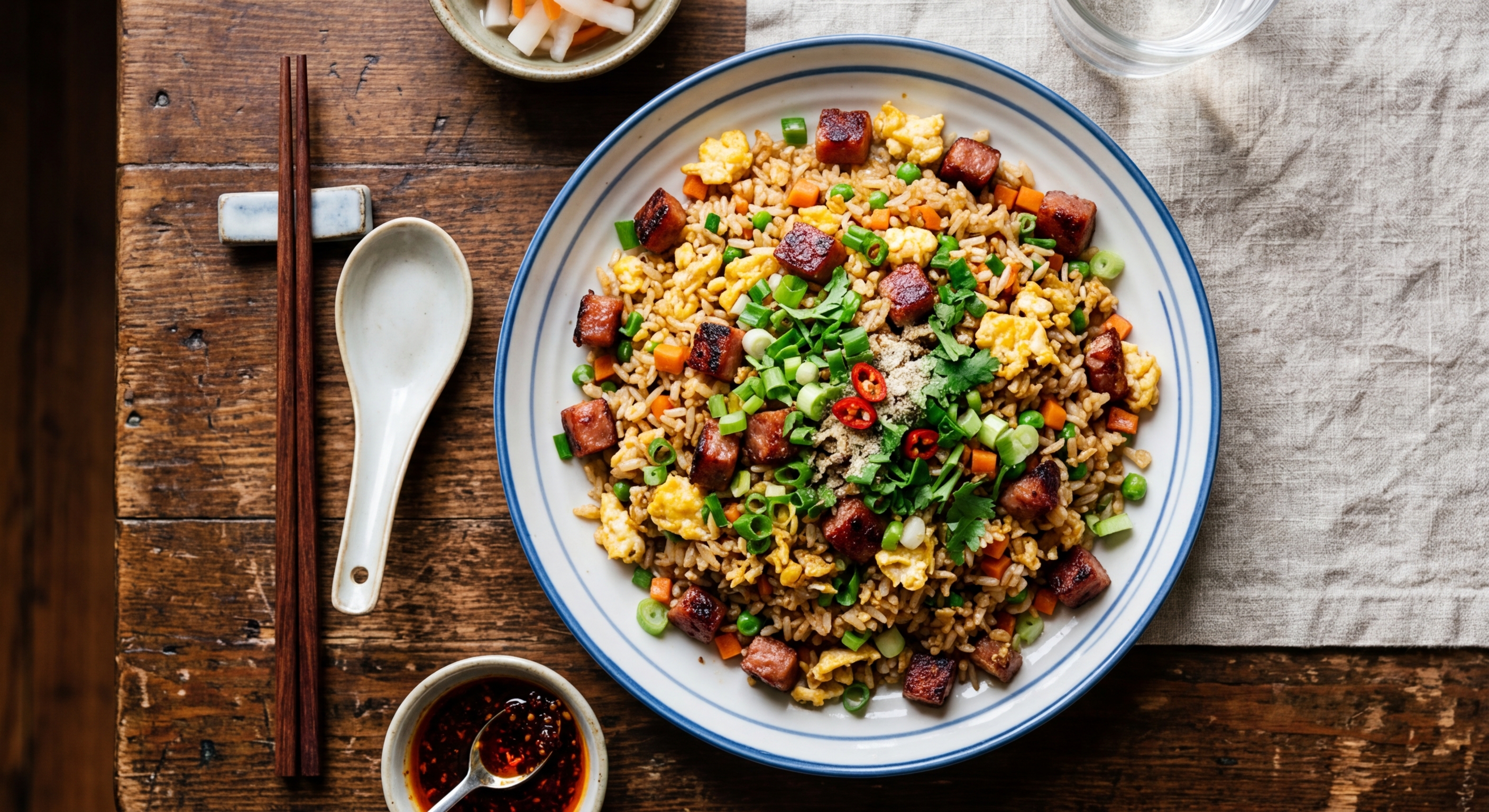
Taiwanese Sausage Fried Rice
Taiwanese Sausage
A fast weekday dish built from diced sweet pork sausage, day-old jasmine rice, egg, and scallions. The sausage goes in first, its fat rendering into the wok and coating every grain of rice. The sweetness in the meat caramelises at the wok's high heat and adds a faint char to the rice. This is home cooking, not night market food — it uses the sausage as a flavouring ingredient rather than the centrepiece.
Taiwanese Sausage Omelette
Taiwanese Sausage
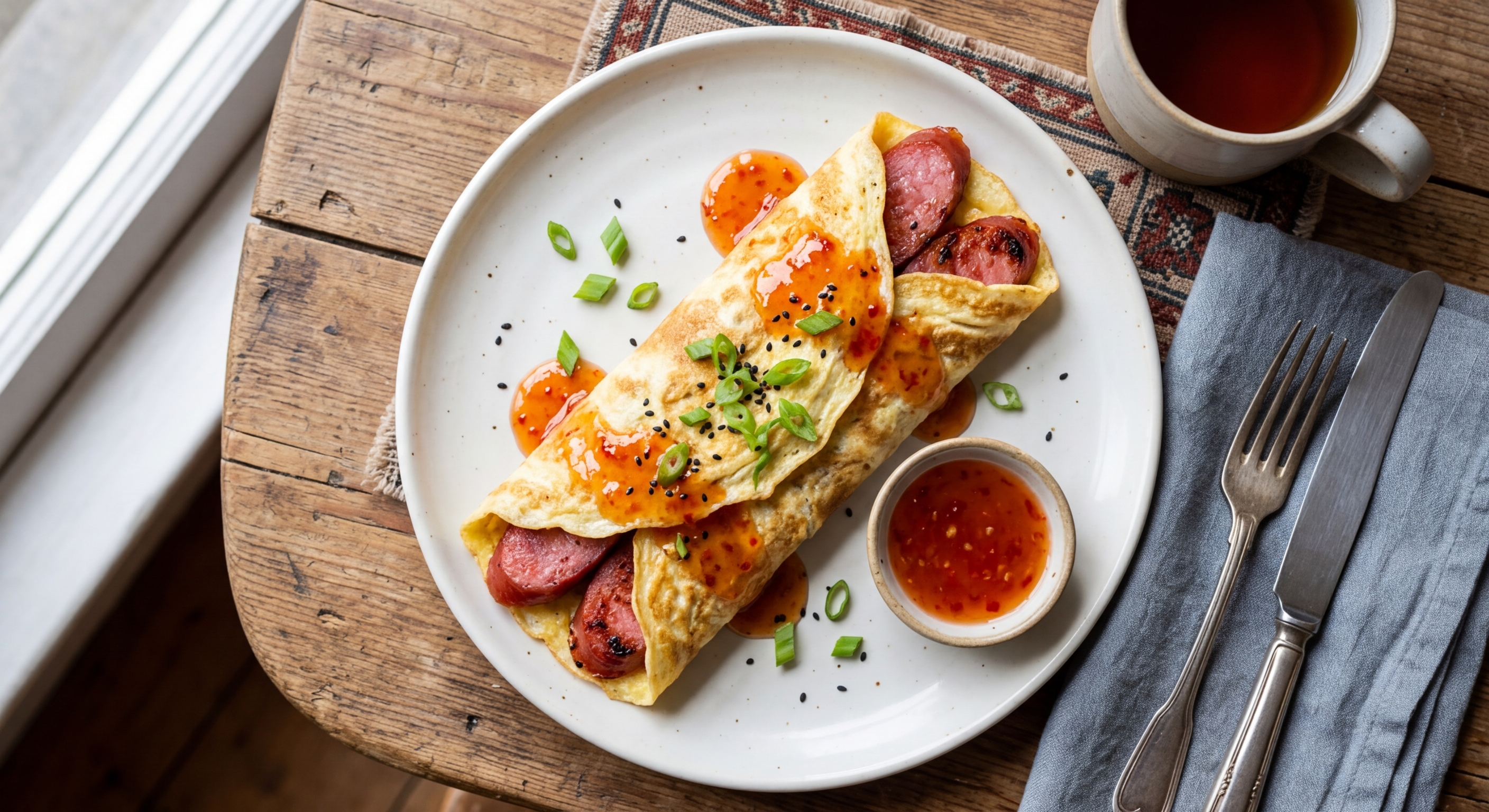
A thin egg wrap cooked in a wok, folded around sliced sausage, scallions, and a smear of soy sauce. This is breakfast food in Taiwanese homes and in the small morning shops that open before 8am. The egg cooks in seconds at high heat and folds into a rectangular parcel. The sausage goes in pre-cooked and sliced, and its sweetness bleeds into the egg. It takes eight minutes start to finish and produces a complete meal.
Taiwanese Sausage Sticky Rice (油飯)
Taiwanese Sausage
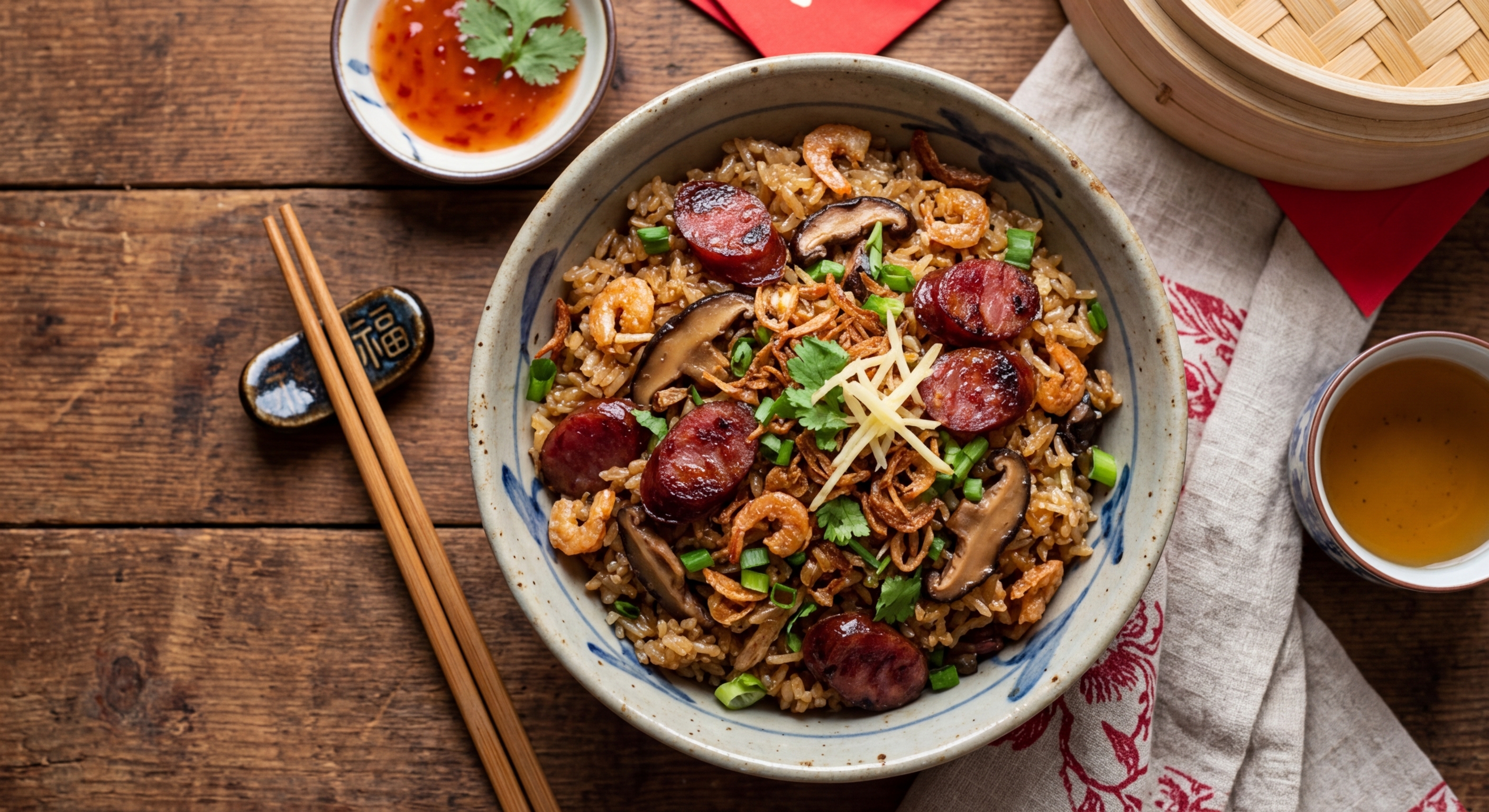
Yu fan (油飯), which translates as 'oil rice,' is a glutinous rice dish steamed with pork, dried mushrooms, dried shrimp, and seasonings. Adding sliced Taiwanese sweet sausage is a home variation that leans on the sausage's fat and sweetness to season the rice from the inside out. The finished rice is dense, aromatic, and eaten as a complete meal. It appears at Taiwanese family gatherings and is a common filling in restaurant takeaway boxes.
Taiwanese Sausage Stir-Fry with Garlic Shoots
Taiwanese Sausage
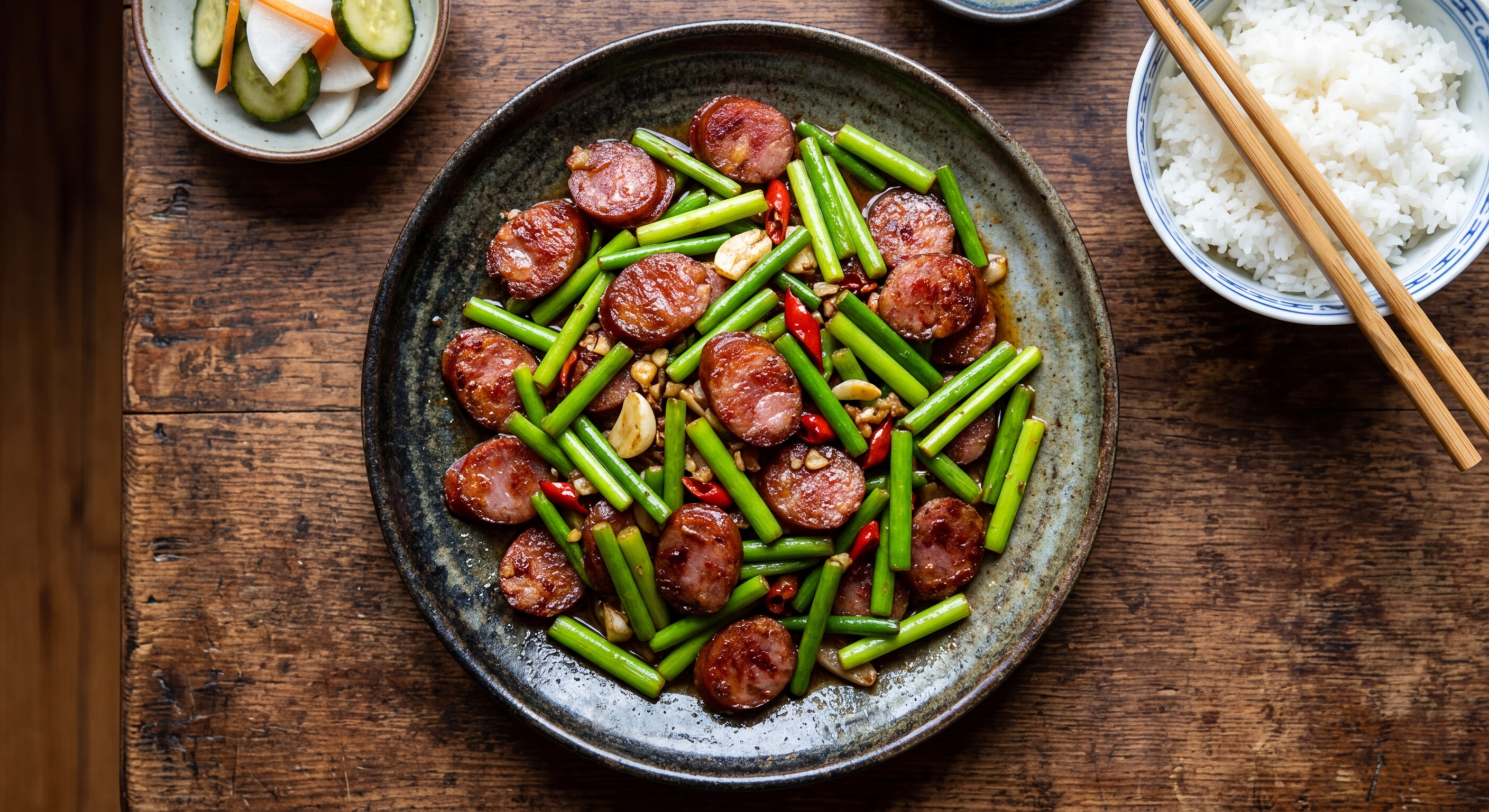
Sliced Taiwanese sausage stir-fried with garlic shoots (suanmiao, 蒜苗) is a classic home cook's dish across Taiwan. The garlic shoots are sweeter and less sharp than raw garlic, and they stay green and slightly crisp after a fast pass through a hot wok. The sausage contributes its own fat to the pan, and the sweetness in the meat and the vegetable flavour work together. This appears on the home dinner table and in small local restaurants serving rice-plate lunches.
On the Map
Where to Eat
Liuhe Night Market
Kaohsiung, Taiwan
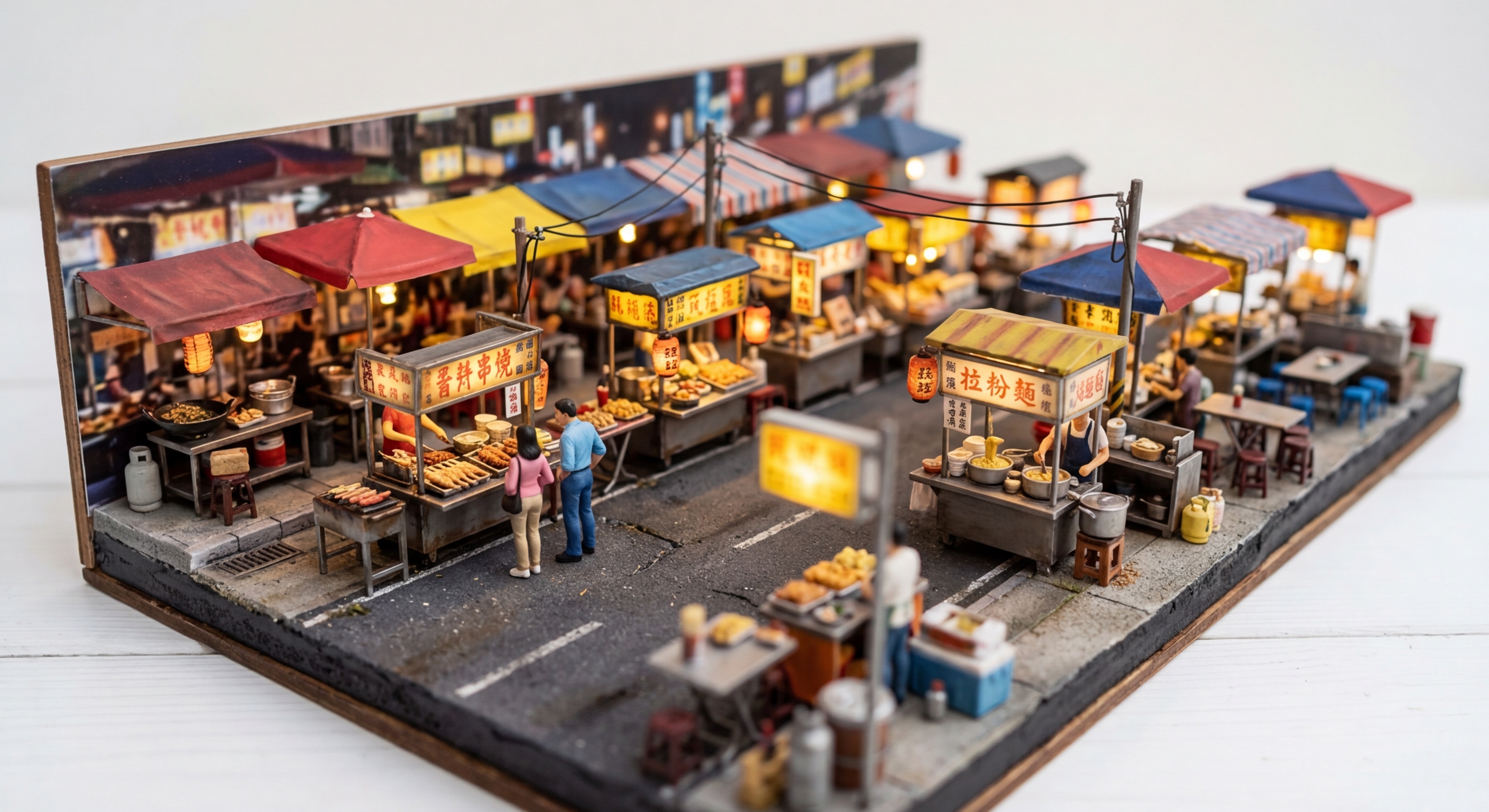
Liuhe Night Market (六合夜市) is Kaohsiung's most prominent night market, running along Liuhe 2nd Road in the Xinxing District of central Kaohsiung. It operates every evening from 6pm and covers about 400 metres of stalls under a canopy of hanging lights. Kaohsiung is Taiwan's second-largest city and a major port, and Liuhe draws both the city's own residents and tourists arriving at the nearby high-speed rail terminus. Grilled sausage stalls are among the most visible vendors in the market. The Kaohsiung version of the sweet pork sausage tends to carry a slightly deeper char from the grill and is served with the same raw garlic accompaniment as in Taipei. Several stalls at Liuhe also offer a local variation seasoned with black sesame and a touch of five-spice, a recipe common in southern Taiwan. The market has been a fixture of Kaohsiung street food culture since the 1960s and was one of the first night markets in Taiwan to be formally registered with the city government as a tourist attraction.
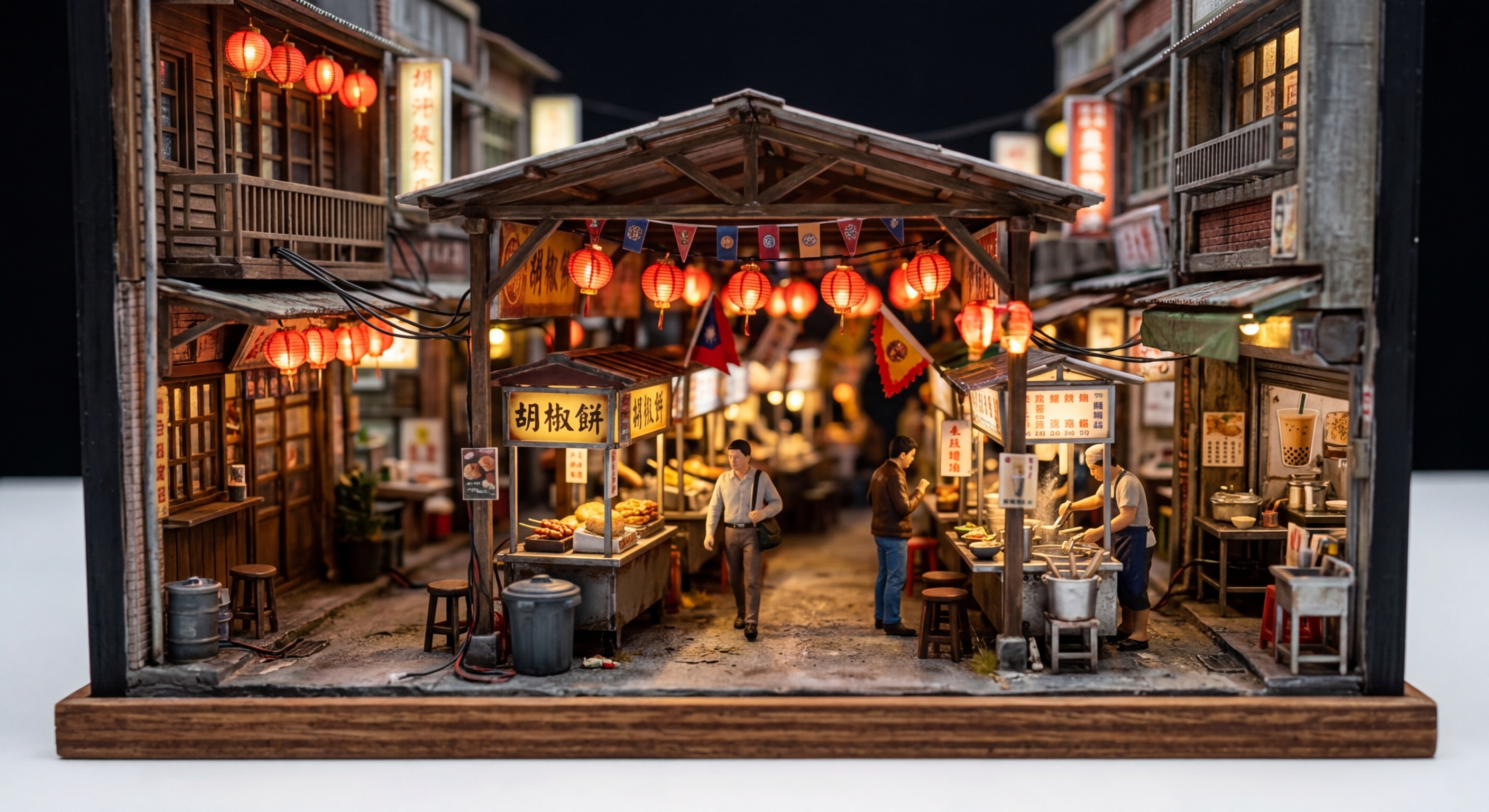
Raohe Street Night Market Sausage Vendors
Taipei, Taiwan
Raohe Street Night Market (饒河街觀光夜市) runs for about 600 metres along Raohe Street in Songshan District, Taipei. It operates every day from 5pm to midnight and is one of the oldest night markets in the city, established in the 1980s when Songshan was a working industrial neighbourhood. The entrance gate faces Ciyou Temple, and the lane runs straight from there, lined on both sides with stalls. Grilled sausage stalls sit at intervals along the entire length. The sausages here are short links grilled over charcoal, handed to customers on bamboo skewers with a small packet of sliced raw garlic. Several vendors also do da chang bao xiao chang, assembling the rice-and-pork sausage combination to order with toppings of garlic, basil, and chilli sauce. The market is less crowded than Shilin on weekdays and is a consistent choice for residents of eastern Taipei. The vendors at Raohe tend toward slightly less sweet seasoning than some Shilin competitors, with a more prominent five-spice note.
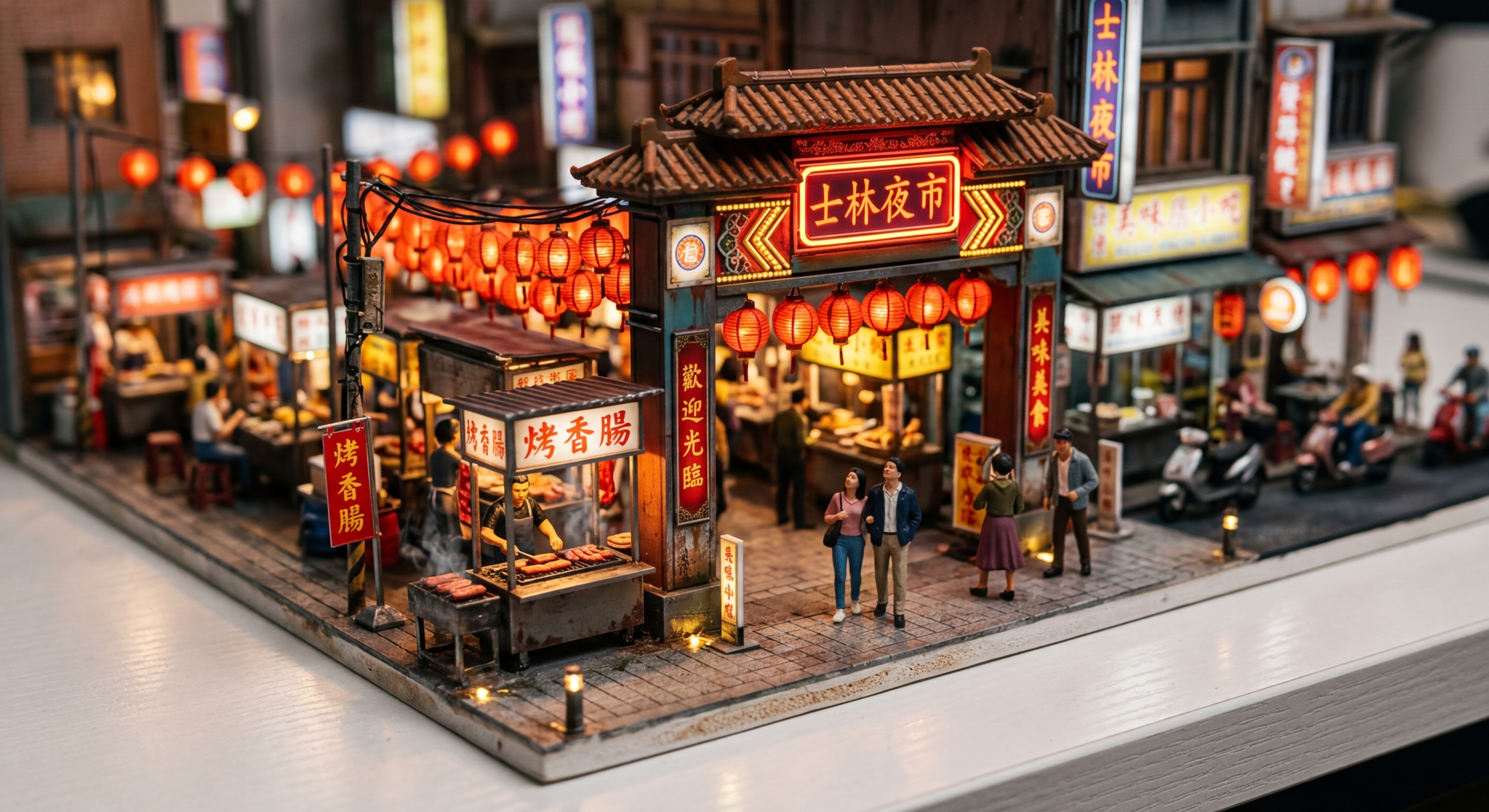
Shilin Night Market Sausage Stalls
Taipei, Taiwan
Shilin Night Market (士林夜市) in Shilin District, Taipei, is the largest and most visited night market in Taiwan, operating every evening from around 4pm until past midnight. The market centres on a covered food court and a surrounding street grid. Sausage grills are fixtures throughout the outdoor lanes, each vendor operating a small charcoal grill over which fresh pork sausages turn slowly on wire racks. The stalls sell both standard grilled xiangchang on bamboo skewers and da chang bao xiao chang, the format in which a grilled pork sausage is placed inside a split sticky rice sausage. At most stalls a small dice-rolling game sits beside the register: roll a six and your sausage is free. Lines at the most popular stalls stretch into the lane on weekends. The sausage vendors at Shilin are among the clearest expressions of Taiwan's night market food culture, operating in a tradition that has been continuous since the market formalised in the 1950s and 1960s.