Sundae
순대
Seoul & the Korean Peninsula
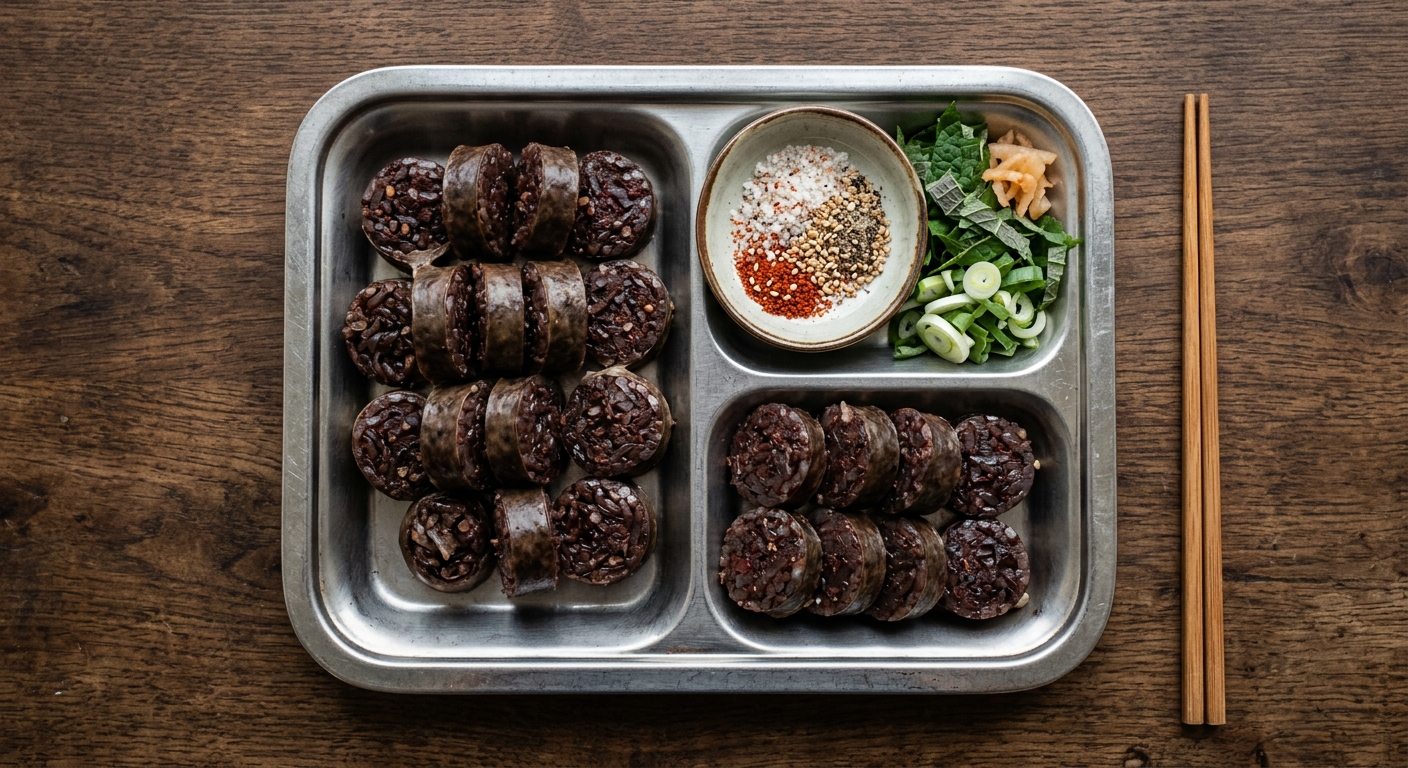
Sundae is Korea's street food sausage: pig intestine stuffed with glass noodles, pork blood, glutinous rice, and green onion, then steamed until the casing tightens around the filling. It is not a blood sausage in the European sense. The blood binds and colors, but the dominant texture is noodle. Seoul street stalls sell it by the portion from steamer trays, kept hot all day. You eat it with salt and ground chili powder, or with the broth from a sundae-guk soup. Every pojangmacha tent in the city offers some version of it, and the smell of a steamer at a street cart is one of Seoul's defining sensory landmarks.
History
Sundae appears in Joseon-era records, though the basic technique of stuffing intestines with grains and blood is far older across East and Southeast Asia. During the Joseon Dynasty, sundae was prepared for royal banquets alongside other pork offal dishes. After the Korean War, food scarcity drove cooks toward versions that used cheaper fillers: glass noodles stretched the blood and rice further, and this became the street food standard. The Sillim-dong neighborhood of Seoul developed into a sundae specialty district in the 1970s and 1980s, with dozens of stalls competing along a covered alley. That alley still operates. North Korea has its own version, Pyongyang sundae, stuffed more densely with pork and blood and less dependent on noodles. The two versions diverged across the postwar decades and remain distinct.
Ingredients
Preparation
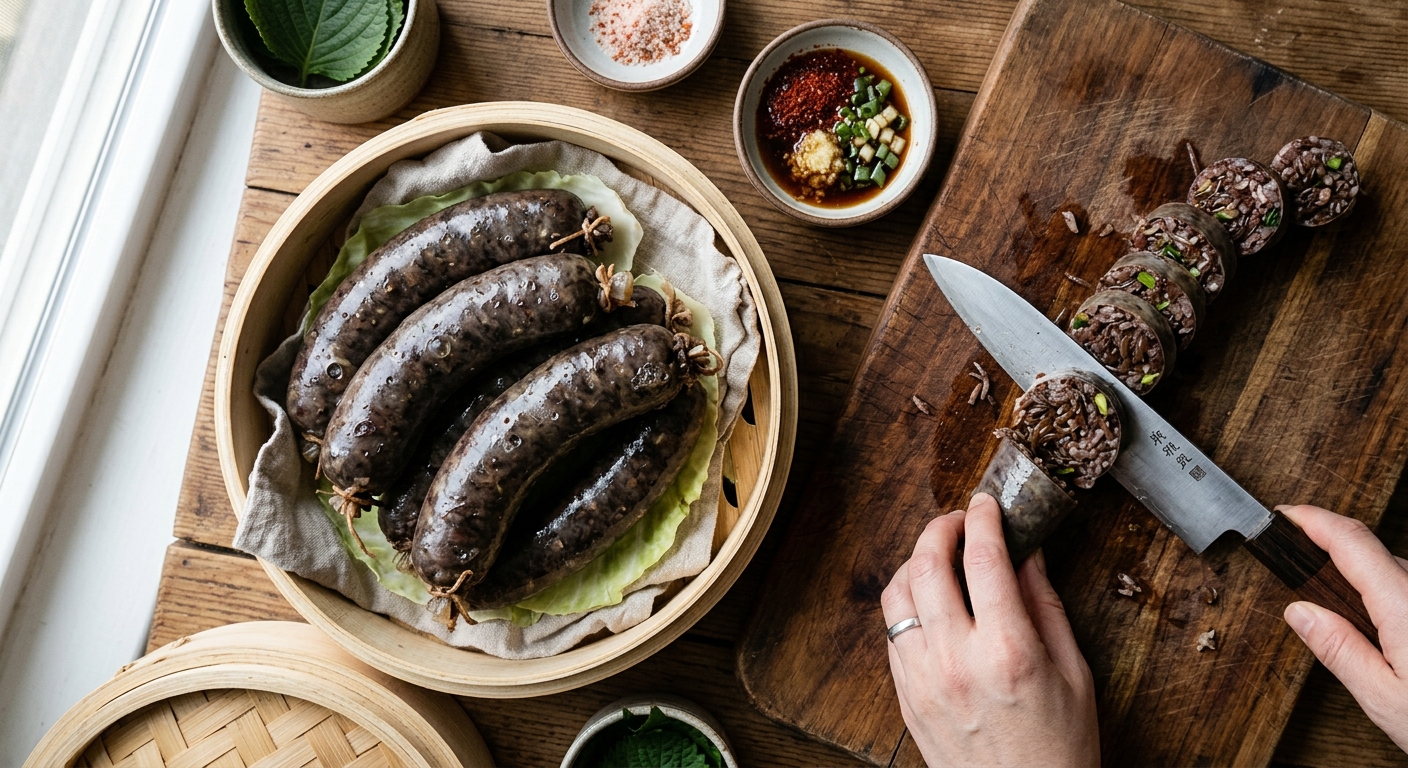
Glass noodles are soaked, cut short, and mixed with cooked glutinous rice, pork blood, sliced green onion, minced garlic, sesame oil, soy sauce, and black pepper. The mixture should be loose enough to slide into the casing without air pockets but not so wet that it leaks. Cleaned pig intestine is tied at one end, then filled by hand or with a sausage funnel, leaving room for expansion. The filled links are tied off and placed in a steamer basket over boiling water. Steaming takes 20 to 30 minutes. The casing firms up and the interior sets. Sundae is eaten the day it is made; it does not keep.
Taste
Mild, savory, and faintly mineral from the blood. The glass noodles carry little flavor on their own but absorb the sesame and soy from the stuffing. Salt and chili powder dip sharpens everything on contact. Without the dip, sundae tastes clean and gentle. The pork intestine casing adds a faint organ note at the edge of each bite.
Texture
Soft throughout, with the glass noodles giving a springy, slightly chewy pull. The casing is thin and tender from steaming, not snappy. The glutinous rice contributes a gentle stickiness in the filling. The whole link yields easily when cut, showing a dark cross-section of noodles and blood.
Rituals & Traditions
Order by portion at the pojangmacha
Sundae at a street stall comes by the inbun (one portion) or dubun (two portions), served on a small tray with salt-chili dip and sometimes a cup of steaming broth. Point at what you want if the vendor does not speak your language.
Use the provided dip, not sauce packets
At a proper sundae stall, the sogeumjang comes in a small dish. Do not reach for bottled sauces or condiments from elsewhere. The salt-chili ratio is the vendor's recipe, and it is specific to their sundae.
Sundae Town, Sillim-dong: the full alley experience
The covered alley in Sillim-dong has operated since the 1970s, with stalls competing side by side. Visitors eat standing at counters or on low stools. The protocol is informal: sit down, point at the steamer, eat, pay, leave. The alley runs loudest on weekend evenings.
Do not refrigerate and reheat
Sundae is best eaten directly from the steamer. Glass noodles turn gummy when chilled and do not recover. Buy and eat on the spot.
Recipes
Gimmari and Sundae Street Plate
Sundae
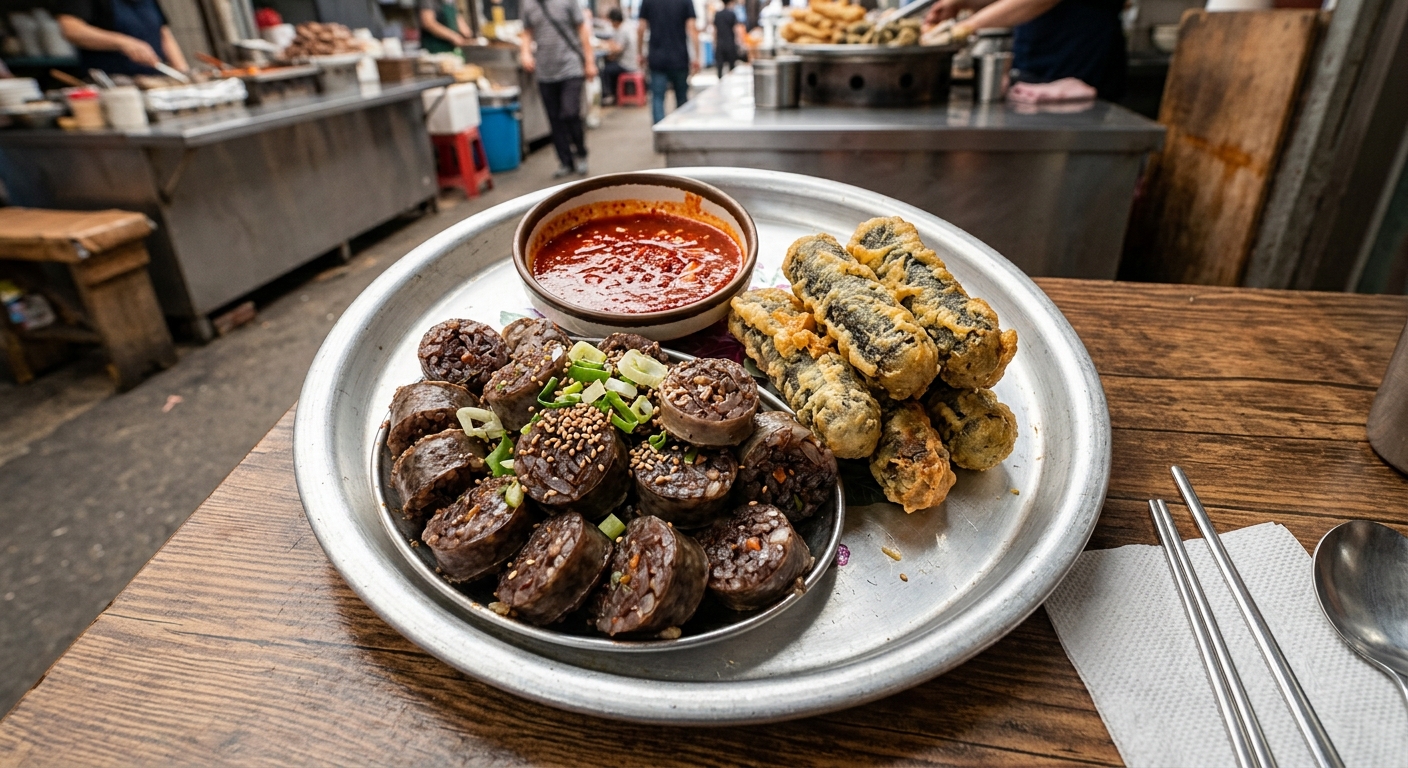
The classic Gwangjang Market combination: fried gimmari (glass noodles wrapped in seaweed and deep-fried) alongside steamed sundae slices, served on a single plate with dipping sauces. Two preparations, one plate, eaten standing.
Homemade Sundae
Sundae
Making sundae from scratch at home: cleaning the casing, seasoning the filling, and steaming until the links hold their shape. The process takes time and is tactile work, but the ingredients are simple and the result is fresher than anything from a pre-made pack.
Sundae Bokkeum (Stir-Fried Sundae with Vegetables)
Sundae
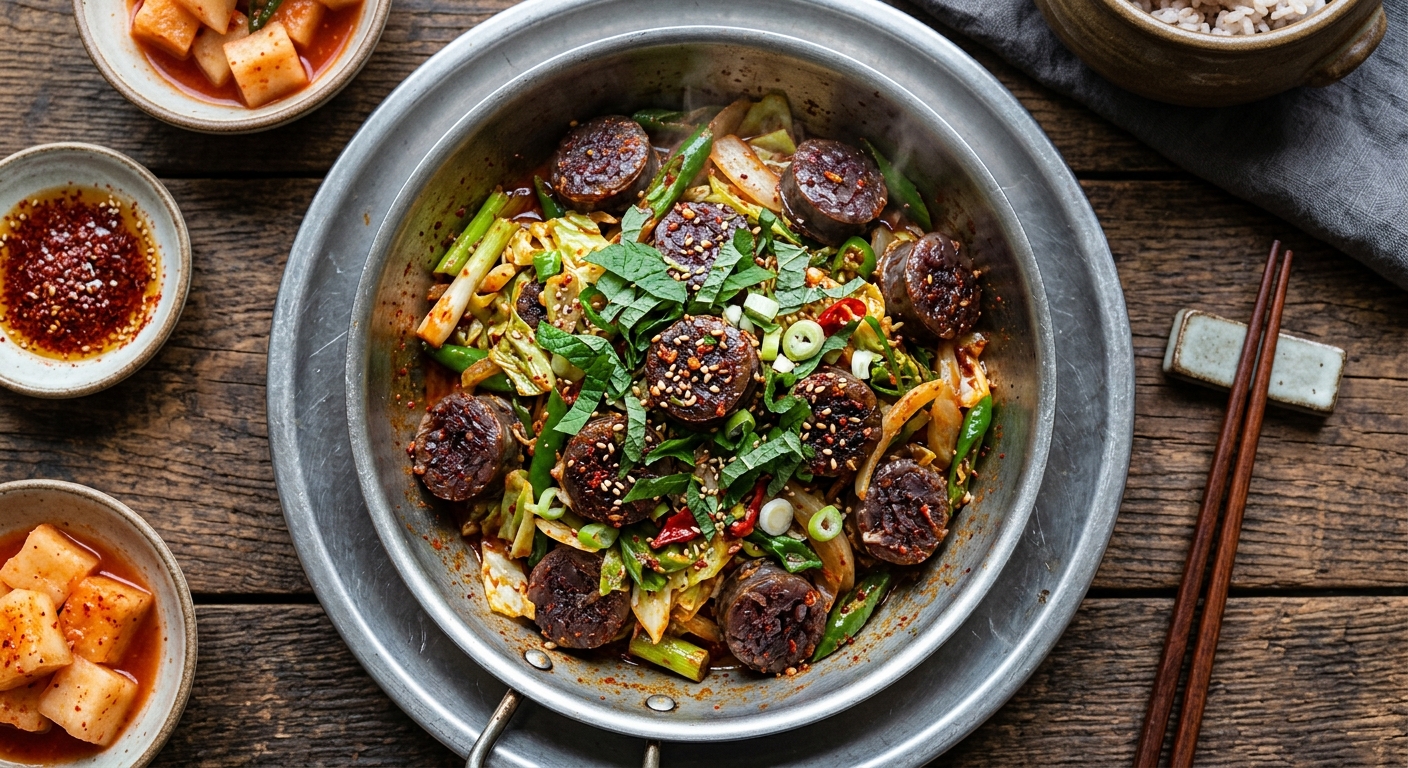
Sliced sundae links stir-fried with cabbage, green onion, and gochugaru in a hot wok. The heat crisps the cut edges of the sausage while the sauce clings to every surface. A standard menu item at sundae restaurants across Seoul.
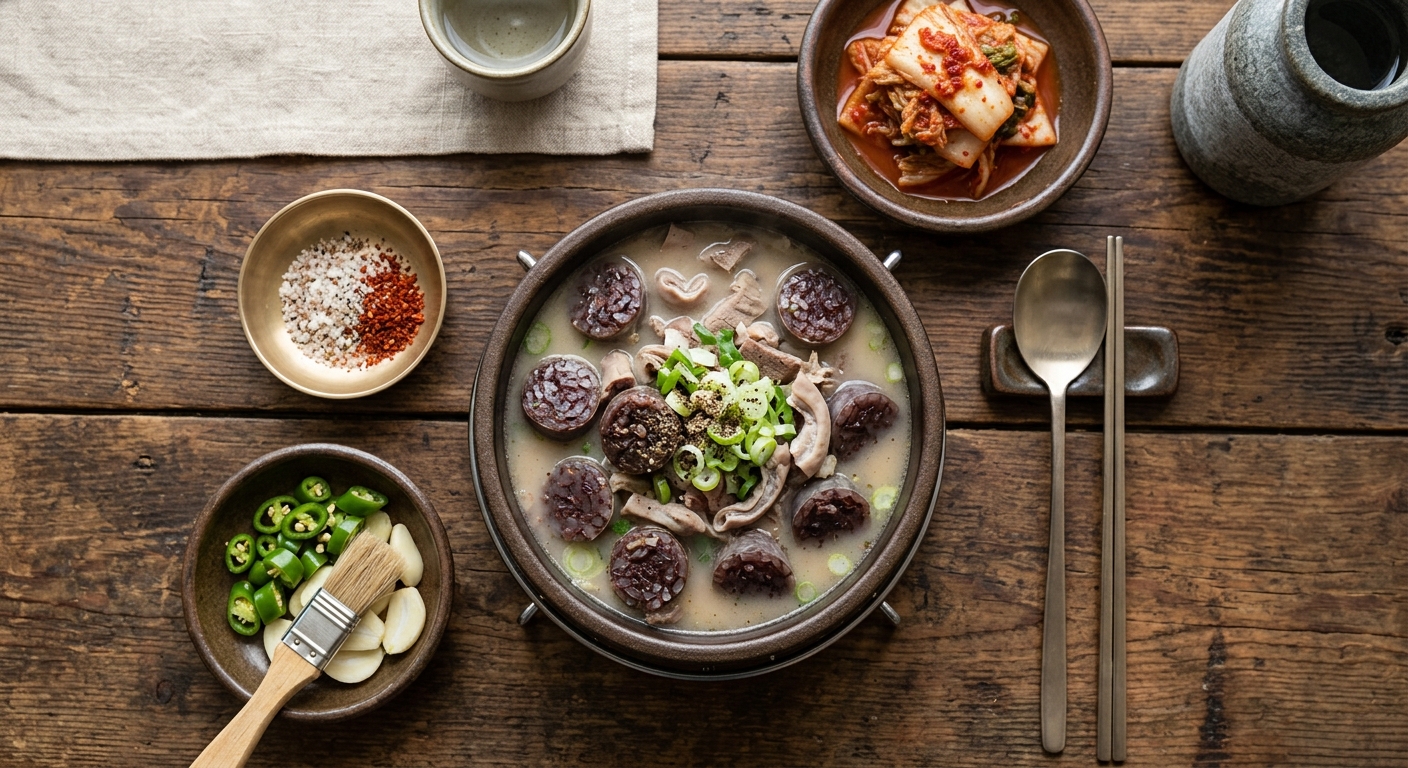
Sundae Guk (Sundae Soup)
Sundae
A milky pork bone broth soup with steamed sundae links, sliced pork, and offal. The broth runs opaque and rich from hours of simmering bones. Salt, fermented shrimp paste, and gochugaru go in at the table, not the kitchen.
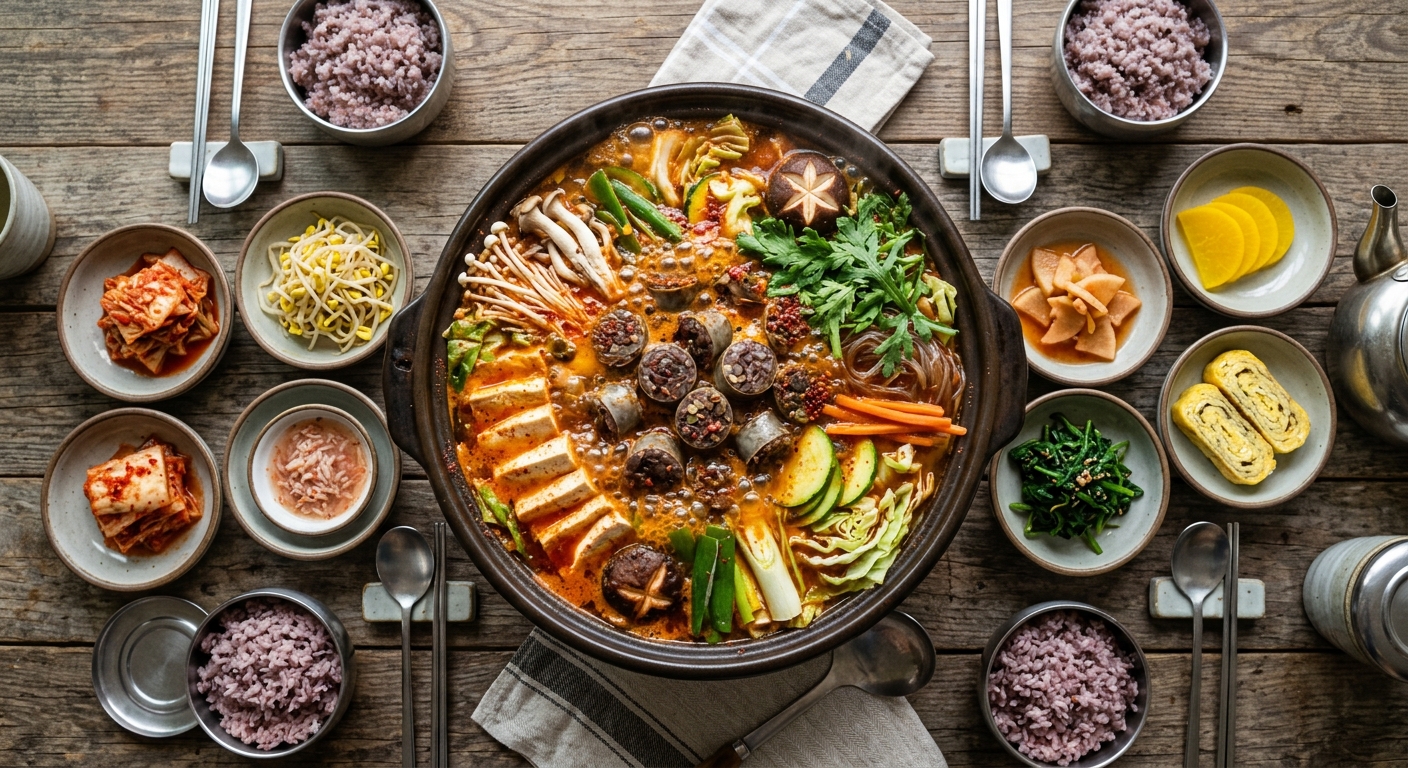
Sundae Jeongol (Sundae Hot Pot)
Sundae
A table hot pot built around sundae, pork offal, vegetables, and a spiced broth. The jeongol format means everything goes into the pot at once and cooks at the table. It is a meal for sharing, loud and informal, with each person pulling ingredients from the bubbling center.
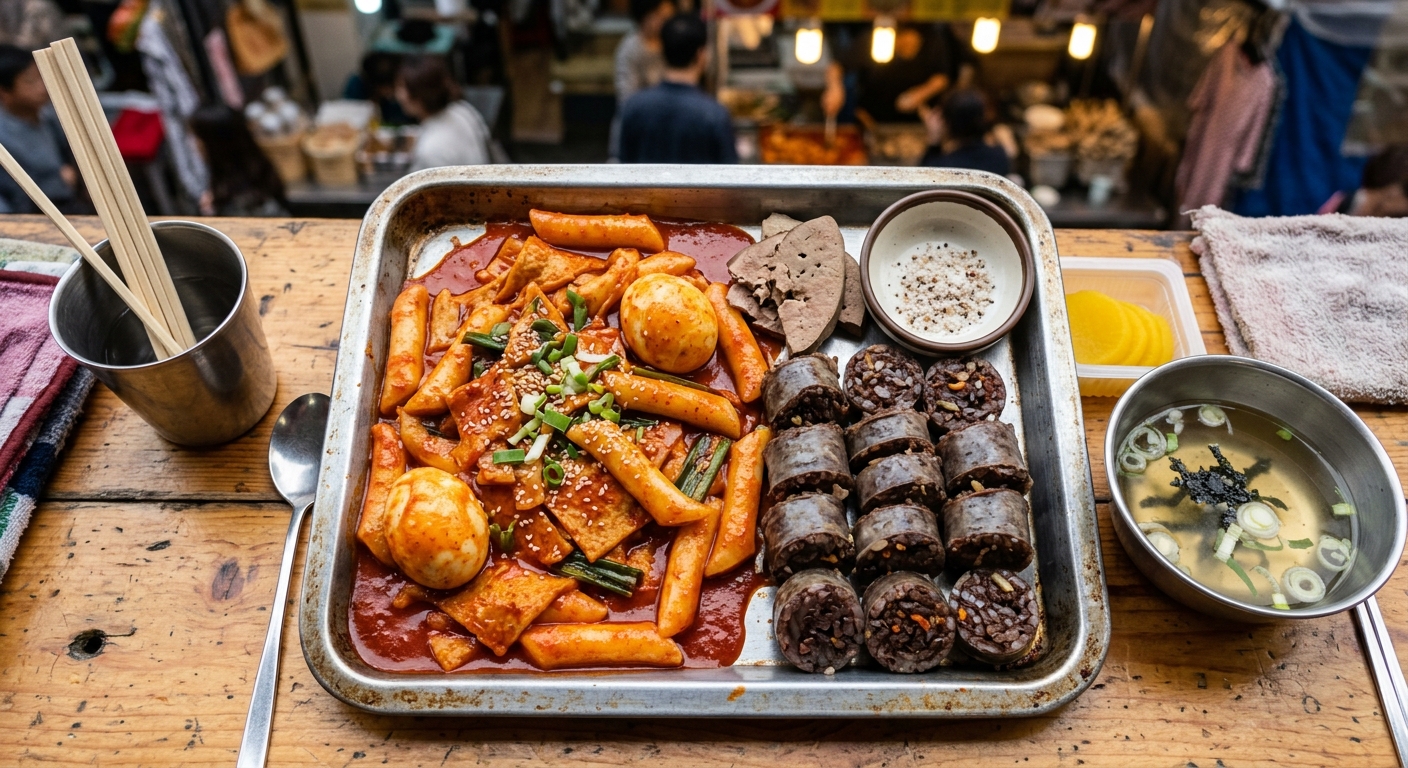
Tteokbokki Sundae (Spicy Rice Cakes with Sundae)
Sundae
The combination plate that defines Korean street food. Cylindrical garaetteok rice cakes simmered in a gochujang sauce, with steamed sundae slices added at the end. Every pojangmacha in Seoul sells this. The sauce is the thing: thick, red, and hot enough to color your lips.
On the Map
Where to Eat
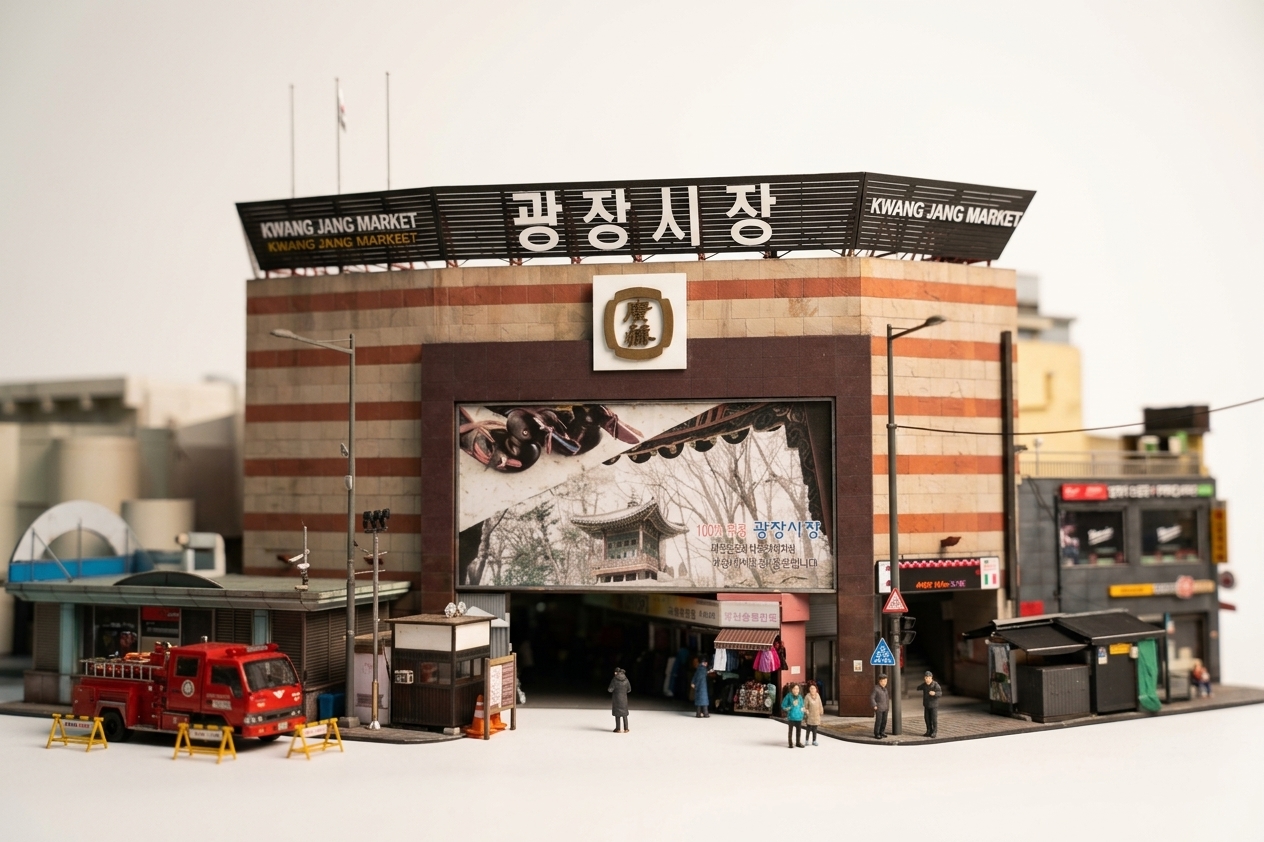
Gwangjang Market Sundae Stalls (광장시장 순대)
Seoul, South Korea
Gwangjang Market in Jongno-gu opened in 1905, making it one of the oldest traditional markets in Seoul still in continuous operation. The covered central food hall runs down the middle of the market and holds rows of vendors cooking bindaetteok, mayak gimbap, yukhoe, and sundae. The sundae stalls cluster near the center of the hall, recognizable by their steel steamers and the trays of sliced sundae kept warm under glass covers. Each vendor sells sundae alongside tteokbokki, and the combination plate is the default order for most visitors. The market draws both local workers from the surrounding fabric and garment district and tourists who have seen the market on every major Korean food documentary made in the last decade.
Sundae Town (순대타운)
Seoul, South Korea
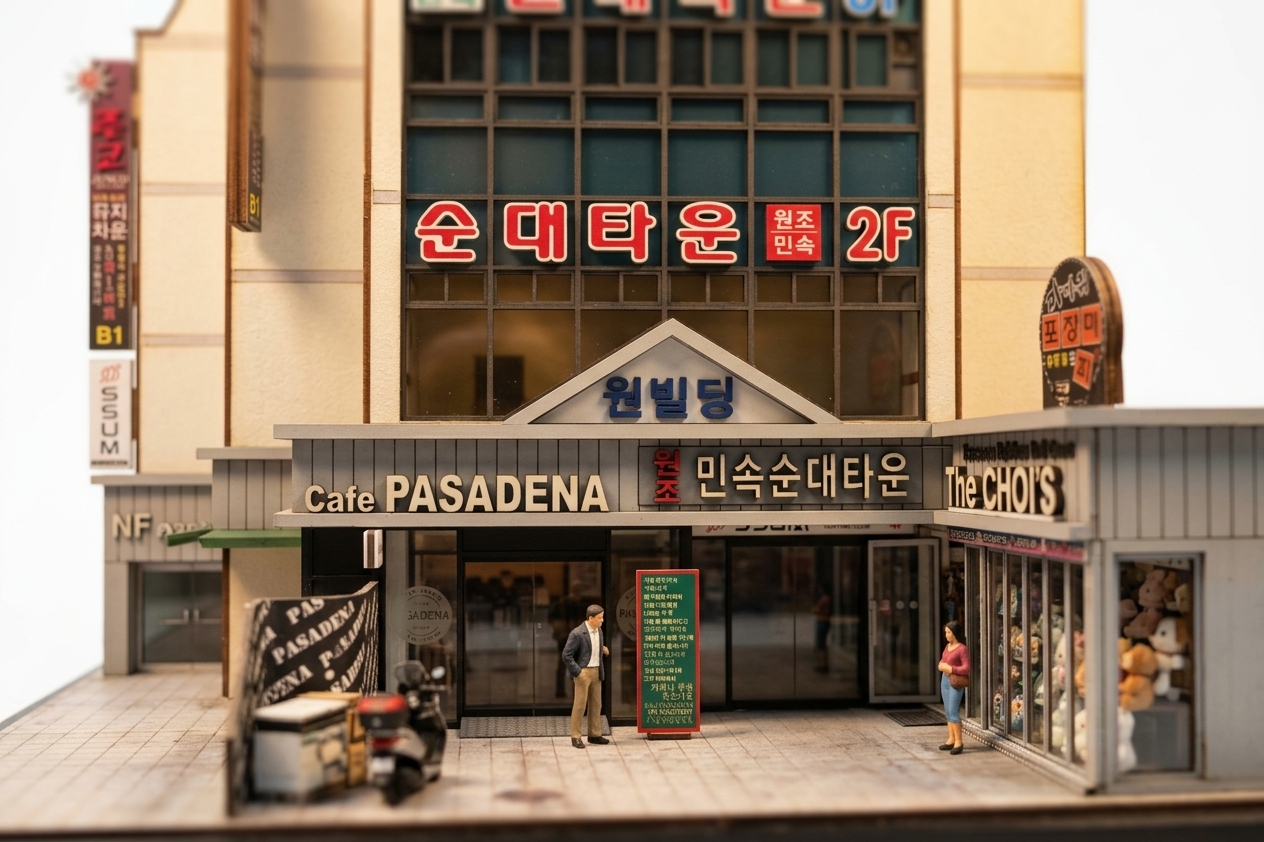
A covered alley off Sillim-dong in Gwanak-gu, Seoul, lined with sundae stalls that have traded side by side since the 1970s. The alley earned its reputation by doing one thing: steaming sundae all day, every day. Each stall keeps a wide metal steamer loaded with links and offal cuts. You sit at a low counter, point at what you want, and receive a tray with sundae, a cup of broth, and a small dish of salt and gochugaru. There is no menu in the conventional sense. The vendors know the portions, the regulars know the price, and the rhythm of the alley is self-explanatory. On weekend evenings the alley packs tight, with people eating standing when the stools fill up.
Ttosuni Sundae (또순이원조순대)
Seoul, South Korea
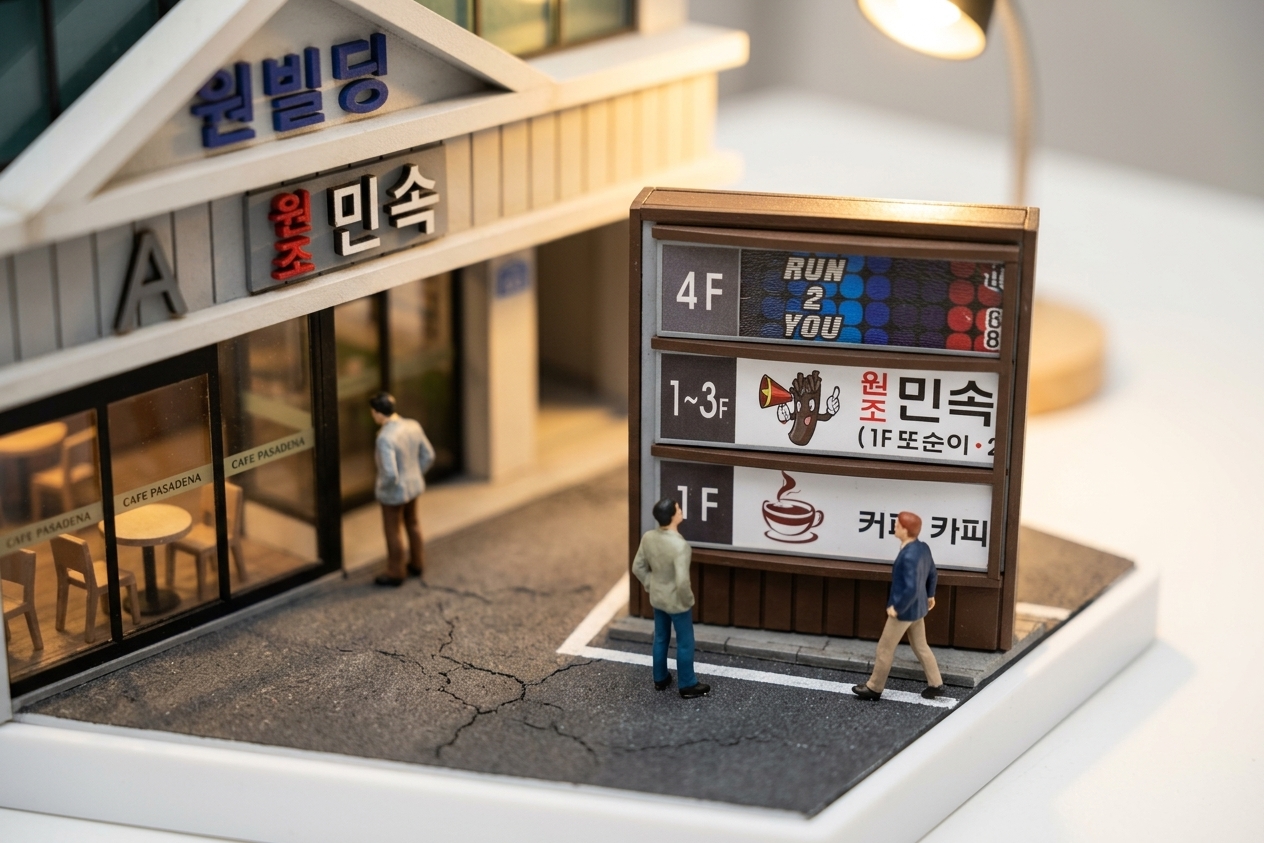
Started as a street stand in 1976, now the anchor restaurant of Sillim-dong Sundae Town. Four decades of sundae-making earned Ttosuni a ground-floor spot in the Wonbilding complex and repeat features on KBS and MBC television. The signature baek sundae (white sundae) comes fried with vegetables. Open 24 hours, which tells you something about demand.