Skilandis
Lithuania
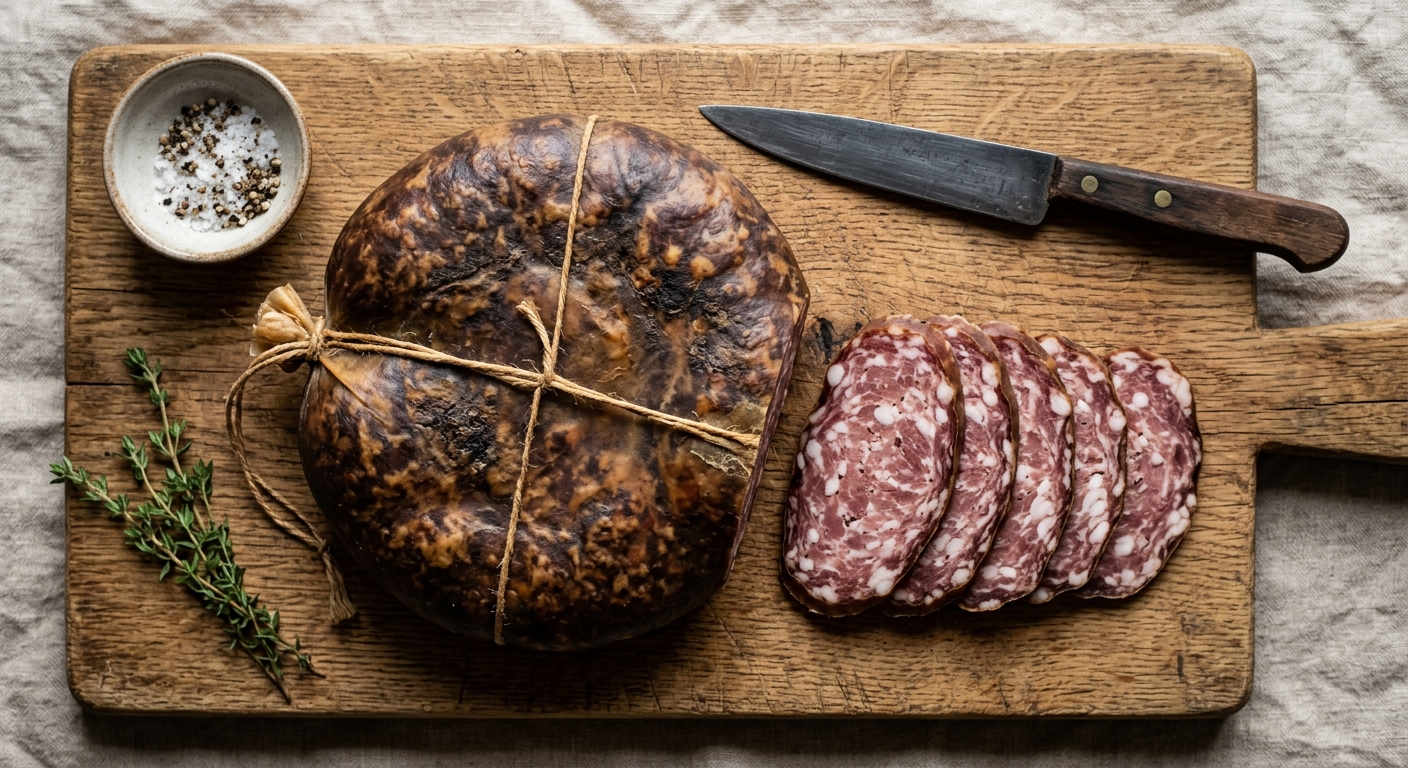
Skilandis is a cold-smoked Lithuanian sausage stuffed not into a casing but into a pig's bladder or stomach. The interior is a coarse mixture of lean pork and fat, seasoned with garlic, salt, and black pepper, pressed firmly into the bladder, then cold-smoked over several weeks and air-dried until the entire mass sets hard and dense. The result is something closer to a salami or cured ham in character than a typical sausage: it is sliced paper-thin with a sharp knife and eaten without cooking. The surface of a cured skilandis is dark and firm; the interior, when cut, shows a deep red-brown with visible flecks of fat. A single bladder-stuffed piece can weigh anywhere from half a kilogram to more than two kilograms. The EU granted it Protected Geographical Indication status in 2009, restricting the name to products made in Lithuania following the traditional method.
History
The word skilandis appears in Lithuanian written sources from the 16th century, though the practice of stuffing smoked meat into pig organs is older than any document. Rural Lithuanian households slaughtered pigs in late autumn and early winter, a seasonal event called kiaulių skerdimas. The cold temperatures made it possible to work with raw meat outdoors and to begin the smoking and drying process that would carry preserved food through the lean months until spring. The pig's bladder and stomach were valued as natural containers: thick-walled, close-grained, and capable of holding the compressed meat mixture through months of hanging. The garlic and salt served as preservatives before nitrite curing salts were available. Smoking over alder or juniper wood added further antimicrobial protection while building the flavour the product is known for. Under Soviet occupation, large-scale industrial meat processing standardised and largely replaced household production. The traditional farmhouse skilandis survived mainly in rural areas of Aukštaitija, Žemaitija, and the Dzūkija region, where families continued to cure their own pigs. After Lithuanian independence in 1990, the craft was revived as part of broader interest in preserving pre-Soviet rural traditions. The PGI registration in 2009 provided legal protection and brought new attention to small producers, several of whom have developed reputations for their particular smoking styles.
Ingredients
Preparation
The lean pork is hand-cut or coarsely ground, never minced fine. Back fat or belly fat is cut into larger chunks and mixed through the meat. Salt goes in at roughly 20 to 25 grams per kilogram of meat, along with chopped garlic and cracked black pepper. Some makers add a small amount of sugar or saltpetre in traditional recipes; others work with salt alone. The mixture is packed by hand into a clean pig's bladder or stomach, pressing firmly to eliminate air pockets. The filled bladder is tied at the neck and pressed under a weight for one to three days to consolidate the mass and release any remaining air. After pressing, the piece is hung in a smokehouse and cold-smoked over alder, birch, or juniper wood at temperatures below 25 degrees Celsius. Cold smoking continues for several weeks, interrupted by rest periods at cooler temperatures. The total process from stuffing to table takes two to four months. The finished skilandis is dense enough to slice thin without crumbling, with a dark exterior from the smoke and a firm, dry interior.
Taste
The smoke is the first thing on the palate: a clean, cold-wood smokiness from alder or juniper, not the heavy barbecue smoke of hot-smoked products. Behind it is the salt and garlic, both present in full but not dominating. The fat provides richness and a slight sweetness that balances the salt. Black pepper surfaces in the finish, lingering for a minute or two after swallowing. The flavour is concentrated because the product is eaten in thin slices, so each slice delivers a full hit of seasoning. The overall character is closer to a good dry-cured salami than to a cooked sausage: dry, complex, slightly tannic from the smoke.
Texture
Firm and dry throughout. A properly cured skilandis resists the knife slightly, requiring some pressure to slice thin. The slices hold their shape on a board and do not crumble. The fat pieces within are white and waxy rather than soft, having dried along with the meat over the long curing period. When bitten, the texture is chewy without being tough, closer to a dry-cured ham than to fresh sausage. The exterior rind from the cured bladder is not eaten; it is trimmed away before slicing.
Rituals & Traditions
Kiaulių skerdimas (pig slaughter day)
The kiaulių skerdimas, or pig slaughter, was the central food event of the Lithuanian rural year. Held in late November or December when the cold set in, it gathered extended family and neighbours at the farmstead. The work began before dawn and continued through the day: slaughtering, scalding, butchering, rendering fat, and filling the bladders and stomachs with the meat mixture destined to become skilandis. The bladders were pressed under boards and weights overnight, then moved to the smokehouse. The family ate well that evening from the offal and blood products that could not be preserved. Everything else was smoked and hung. A household that processed one or two pigs in December would still be eating skilandis the following summer. The tradition has contracted in urban Lithuania but remains alive in rural districts, particularly in Aukštaitija and Žemaitija, where farmsteads with their own pigs still observe it.
Slice very thin with a sharp knife
Skilandis is not a sausage to cut into thick rounds. The correct thickness is two to three millimetres, thin enough to see light through the slice if held up to a window. A sharp long-bladed knife is essential; a serrated knife tears the texture. Hold the piece steady on a board and cut on a slight diagonal for a wider surface area. Thin slicing delivers more smoke and salt per bite relative to the fat, which keeps each piece from feeling heavy. Thick-cut skilandis is edible but misses the point of the slow curing process.
Serve at room temperature
Cold from the refrigerator, skilandis is dense and its aromas are muted. Allow a sliced piece to rest for fifteen minutes at room temperature before serving. The fat, which looks white and waxy when cold, becomes slightly translucent as it warms and releases more of the garlic and smoke compounds. The improvement is audible: the slice becomes more supple and the flavour opens in the mouth rather than arriving all at once.
Do not cook it
Skilandis is a cold-consumed product. Frying or grilling destroys the texture that months of careful cold smoking and drying produced. The fat renders out, the lean meat seizes and becomes rubbery, and the smoke flavour turns acrid under direct heat. It is not a cooking sausage. Eat it thin-sliced at room temperature on bread, on a cold plate, or by itself. If you want a hot dish, use a different sausage.
Recipes
Skilandis Bulvių Plokštainis
Skilandis
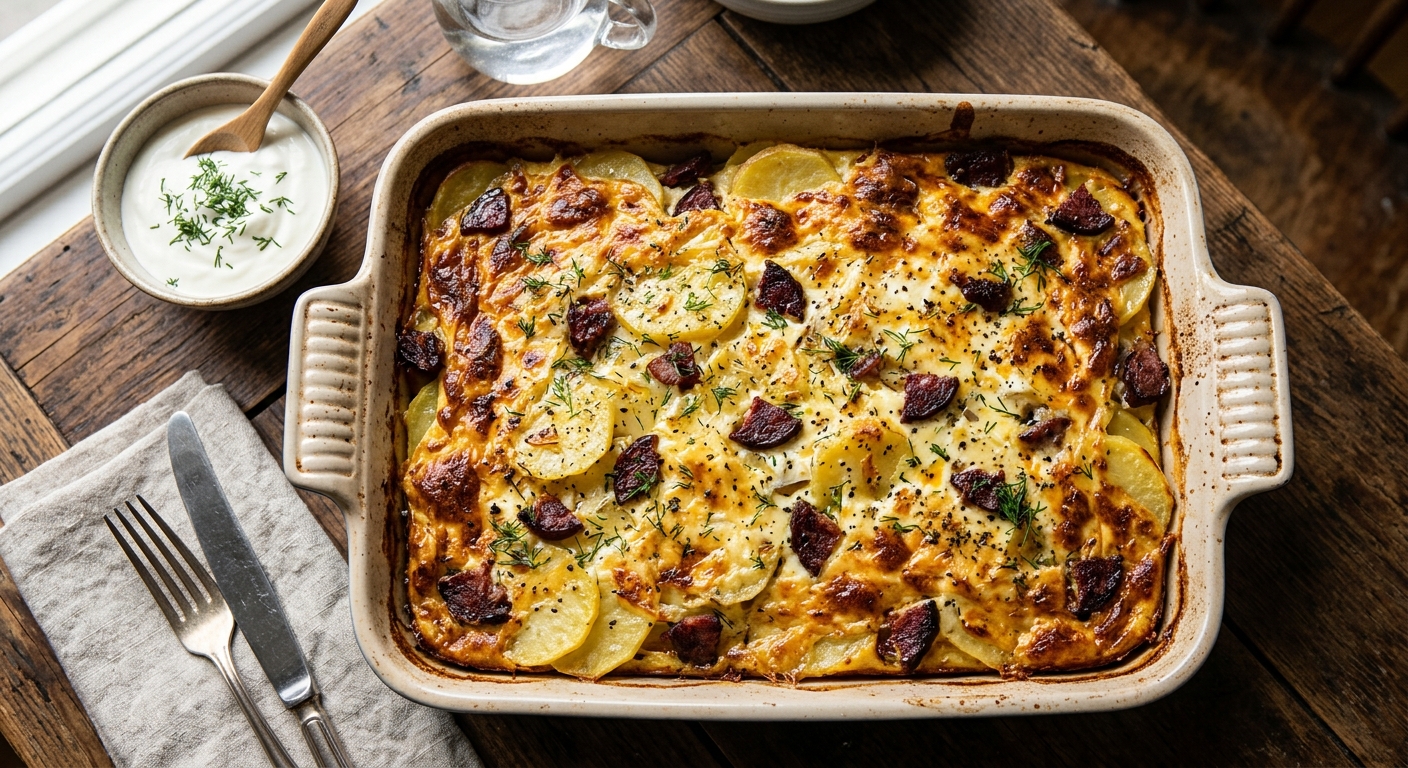
Bulvių plokštainis is a Lithuanian baked potato dish, denser and more savoury than a gratin, layered with smoked meat and baked until the top browns. Skilandis, with its concentrated smoke and garlic, works through the potato base the way salt pork does in Eastern European cooking. This is a winter dish, the kind that sits in the oven while the house warms up.
Skilandis Omletas
Skilandis
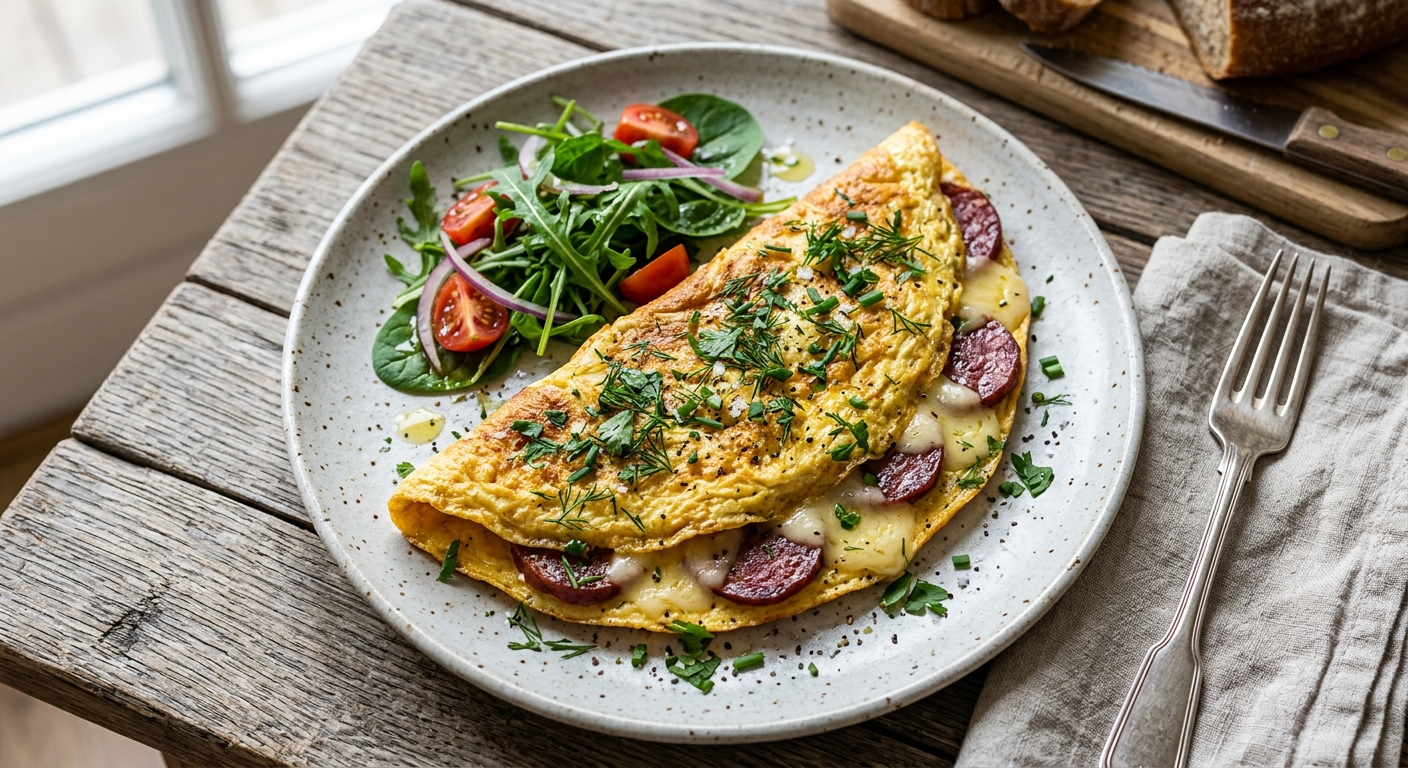
A simple flat omelette with thin-cut skilandis and Lithuanian curd cheese (varškė). The skilandis goes into the pan last so the heat does not drive off the smoke. The curd cheese melts partially, staying in distinct curds through the egg rather than blending smooth. A practical breakfast or lunch dish, done in under ten minutes.
Šaltibarščiai su Skilandžiu
Skilandis
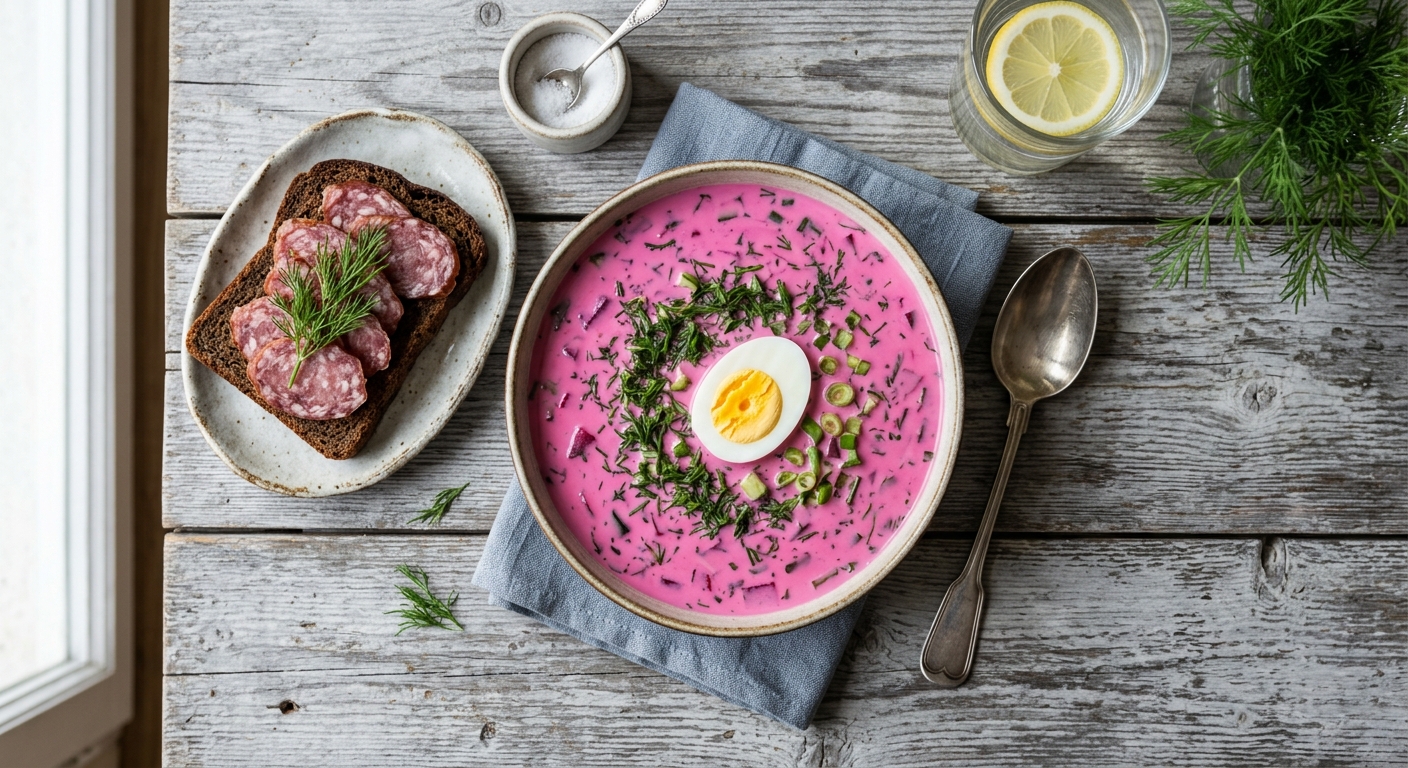
Šaltibarščiai is Lithuania's cold pink beet soup, eaten in summer when the weather is warm. It is not traditional to add skilandis directly to the soup, but a few paper-thin slices on the side of the bowl turn a light first course into a more substantial meal. The smoke and salt of the skilandis against the cool, slightly sweet beet soup is a contrast that works in the same way pickled herring does alongside borscht.
Skilandis su Marinuotais Grybais
Skilandis
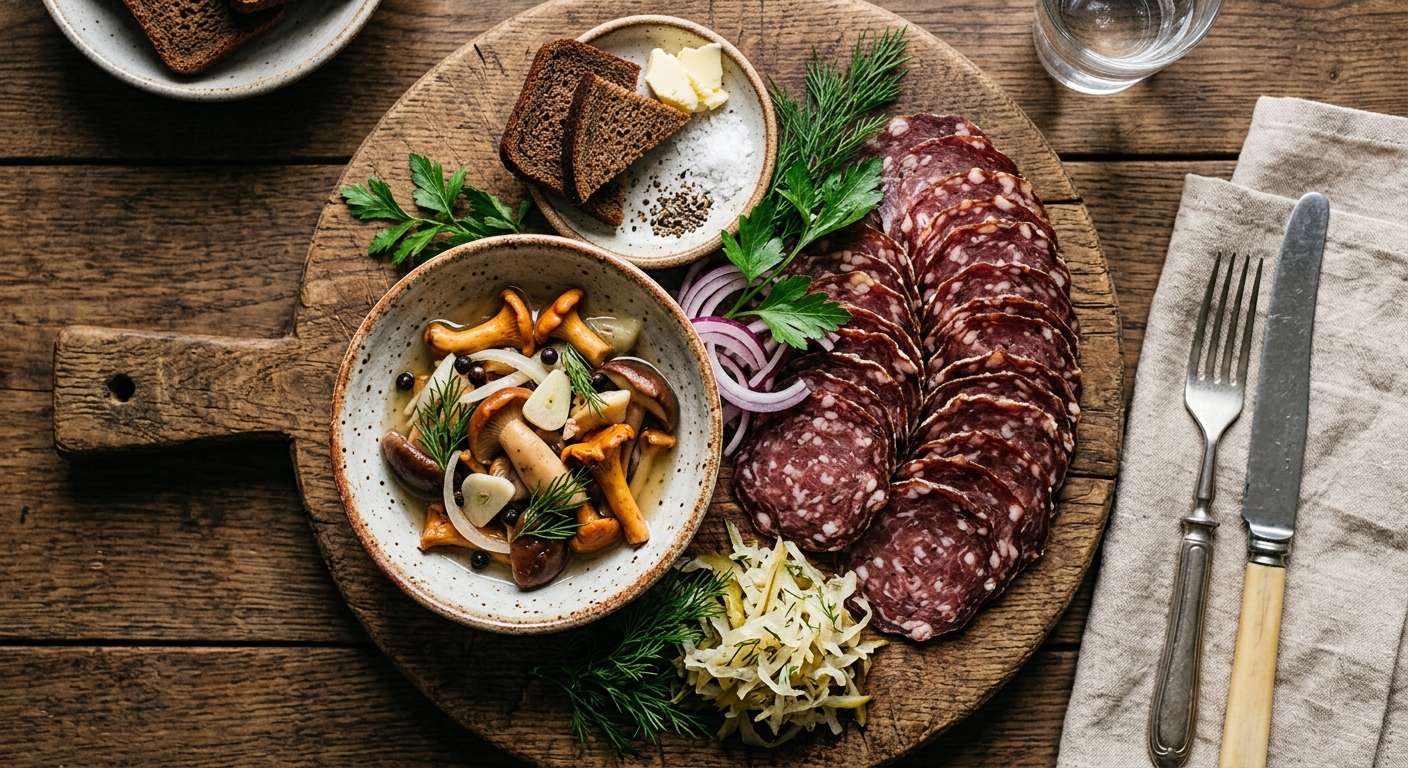
This is a cold plate, not a cooked dish. Thin-sliced skilandis and pickled forest mushrooms, chanterelles or porcini, arranged on dark rye with a few drops of the pickling brine over the whole plate. The forest is the common element: the same autumn woods that provided the pig's feed also supplied the mushrooms. The pairing works because the brine's acidity cuts through the smoked fat and resets the palate.
Skilandis Sumuštinis
Skilandis
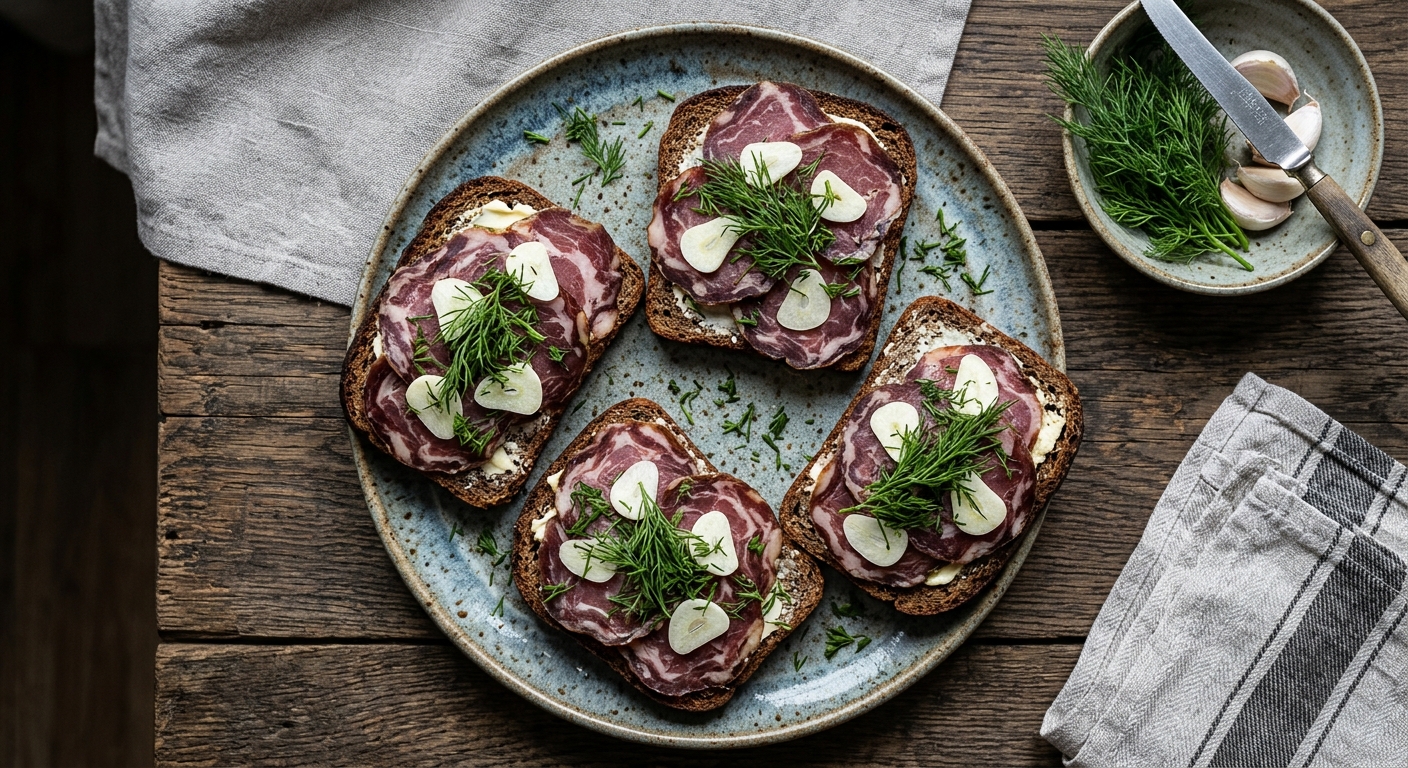
The most direct way to eat skilandis: paper-thin slices on dark Lithuanian rye with raw garlic and a smear of butter. This is not a recipe so much as a habit, the thing Lithuanians reach for when the skilandis comes off the hook and the bread is fresh from the bakery. Two or three slices per piece of bread, nothing else competing.
Skilandis Užkandžiai
Skilandis
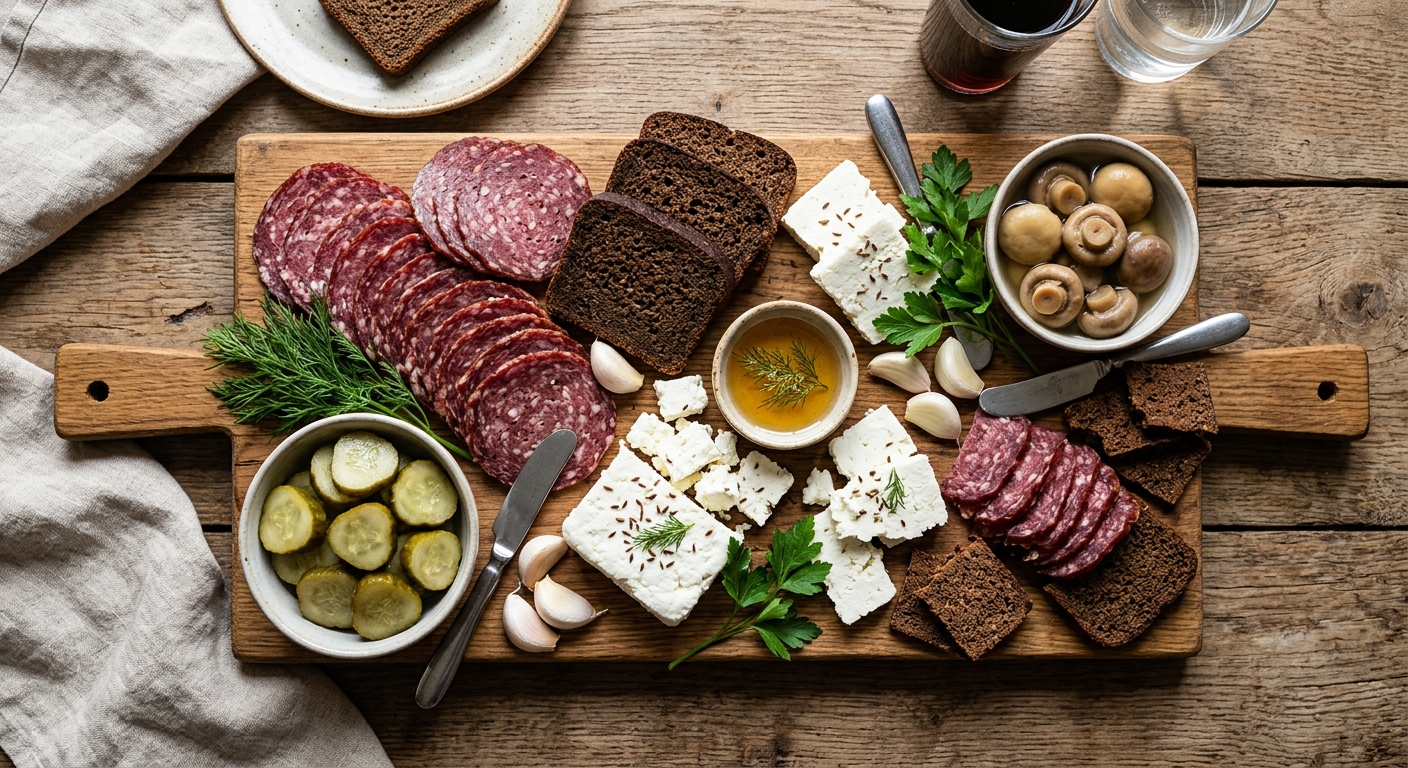
Užkandžiai means appetisers or snacks in Lithuanian. This is the cold platter that opens a proper Lithuanian meal or stands alone as something to eat with beer: dark rye, paper-thin skilandis, curd cheese with spring onion, fermented cucumbers, pickled mushrooms, and raw garlic. No cooking required. The arrangement does the work. It is the Lithuanian version of a charcuterie board, rooted in the cellar and the smokehouse rather than the French dairy tradition.
On the Map
Where to Eat
Lokys
Vilnius, Lithuania
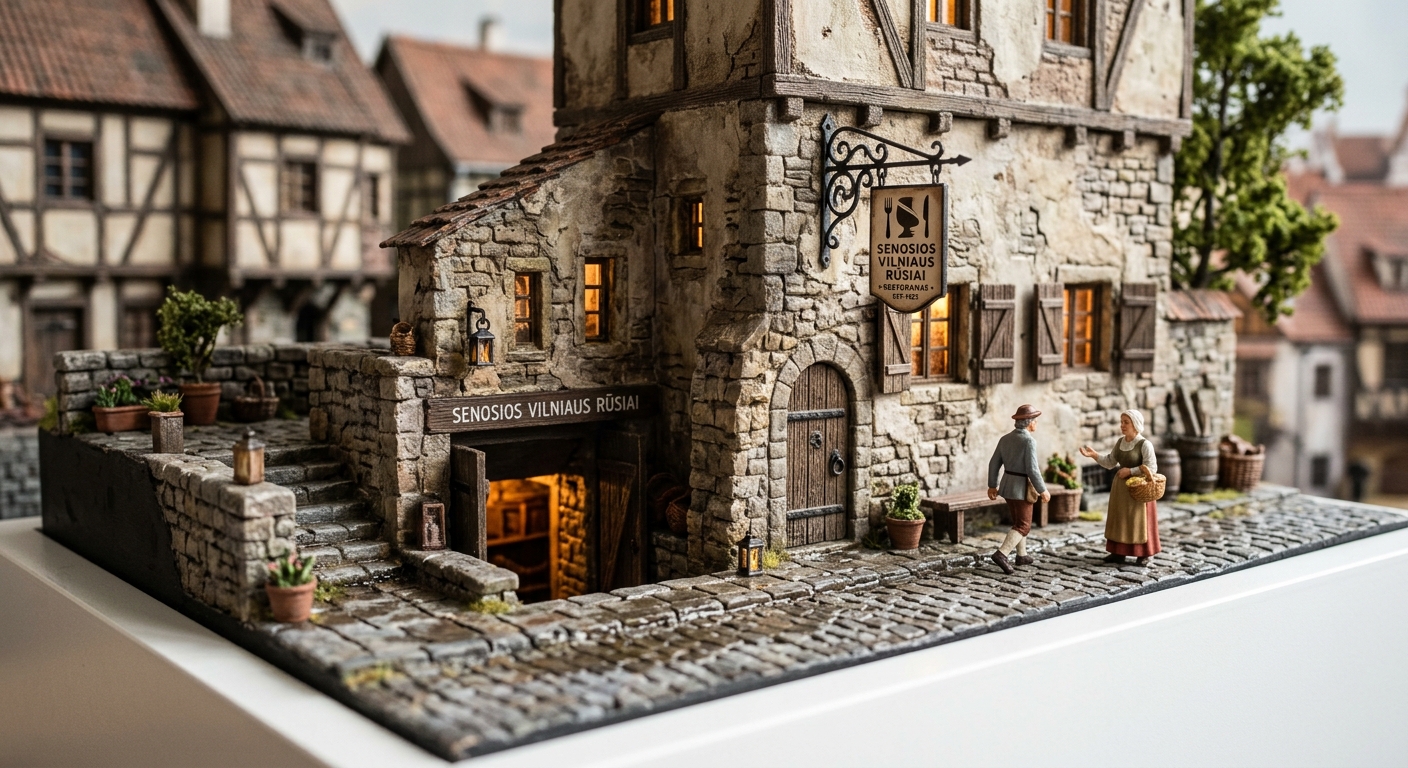
Lokys has operated in Vilnius Old Town since 1972, making it the oldest continuously running restaurant in the district. The building is a 15th-century merchant house, with Gothic cellars and vaulted stone rooms that serve as the dining areas. The menu centres on historical Lithuanian cuisine, drawing on recipes from the 14th to 17th centuries when the Lithuanian-Polish Commonwealth's nobility ate from the forest and the smokehouse. Game, mushrooms, smoked meats, and fermented preparations dominate the card. Skilandis appears as a cold starter, sliced thin and served on dark rye with pickled mushrooms. The atmosphere is deliberately medieval in character without being a theme park.
Senoji Trobelė
Vilnius, Lithuania
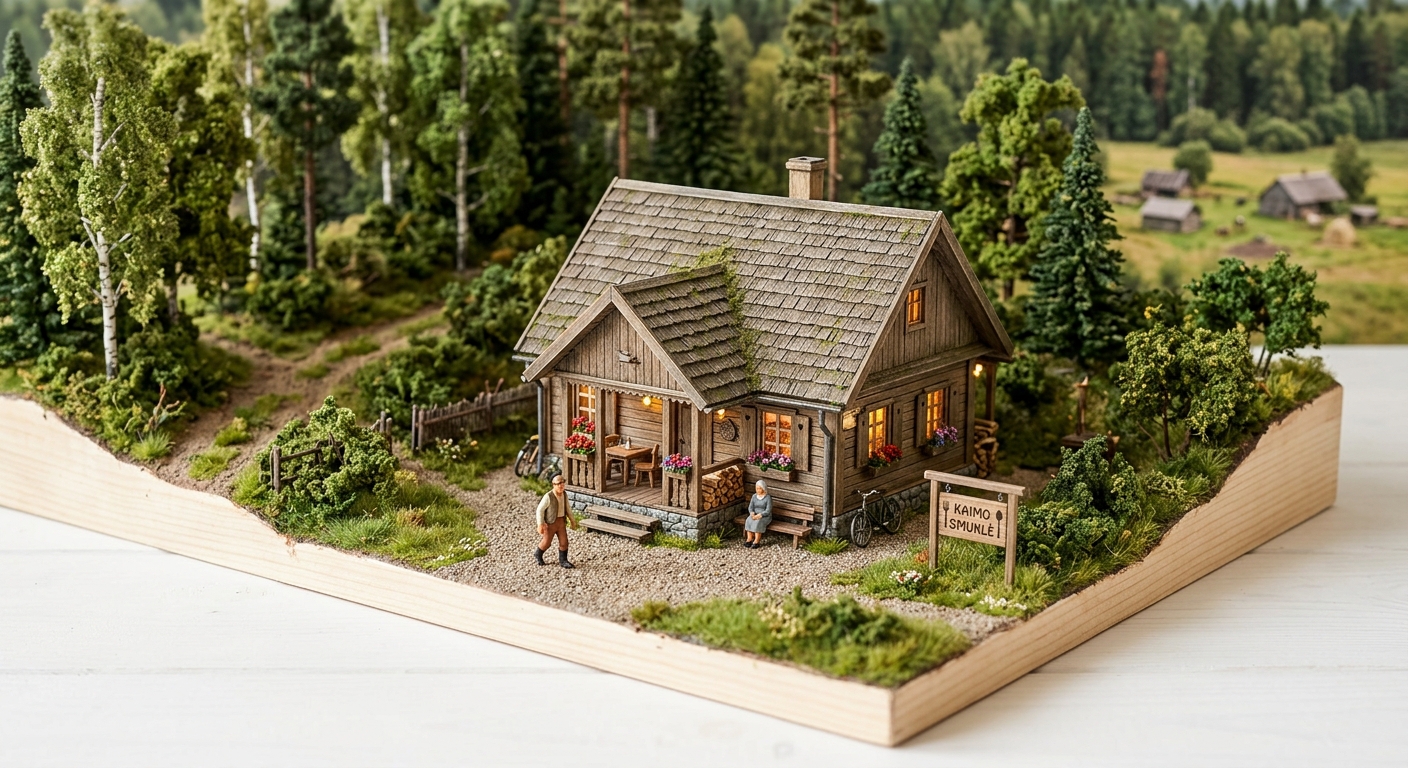
Senoji Trobelė, which translates as the Old Cottage, is a family-run restaurant in Vilnius near the Naujamestis district. The kitchen follows recipes passed down through generations, with the focus on everyday Lithuanian farmhouse cooking rather than noble or historical cuisine. The cold meat plate is a fixture on the menu: skilandis sliced thin alongside kumpis (smoked leg), head cheese, and pickled vegetables. The room is small, the service personal, and the portions sized for appetite rather than appearances. The restaurant consistently ranks in the top twenty of Vilnius dining on review platforms.
Žemaičių Ąsotis
Vilnius, Lithuania
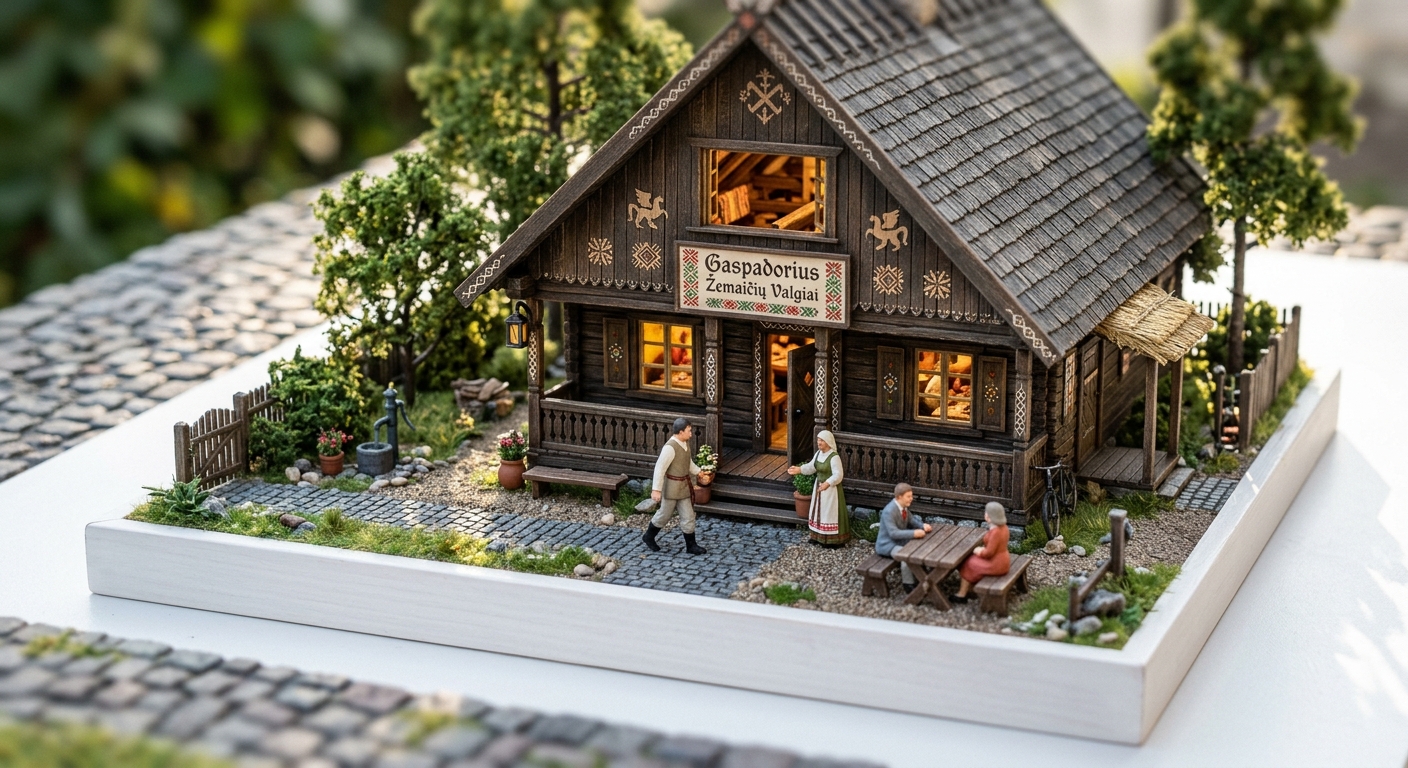
Žemaičių Ąsotis takes its name from the clay jug (ąsotis) associated with Samogitian drinking culture, and the interior confirms the connection: folk art, hanging ceramics, and wooden furniture dominate the room. The menu is rooted in Žemaitija, the western Lithuanian region with its own dialect and food traditions, but extends to cover Lithuanian farmhouse cooking broadly. Skilandis features among the cold starters, served on dark rye with fermented cucumbers. The cepelinai are widely cited as some of the best in the city. The prices are low relative to the quality, which explains the consistently high review ratings.