Saucisson Sec de l'Ardèche
Saucisson de l'Ardèche
Ardèche, France
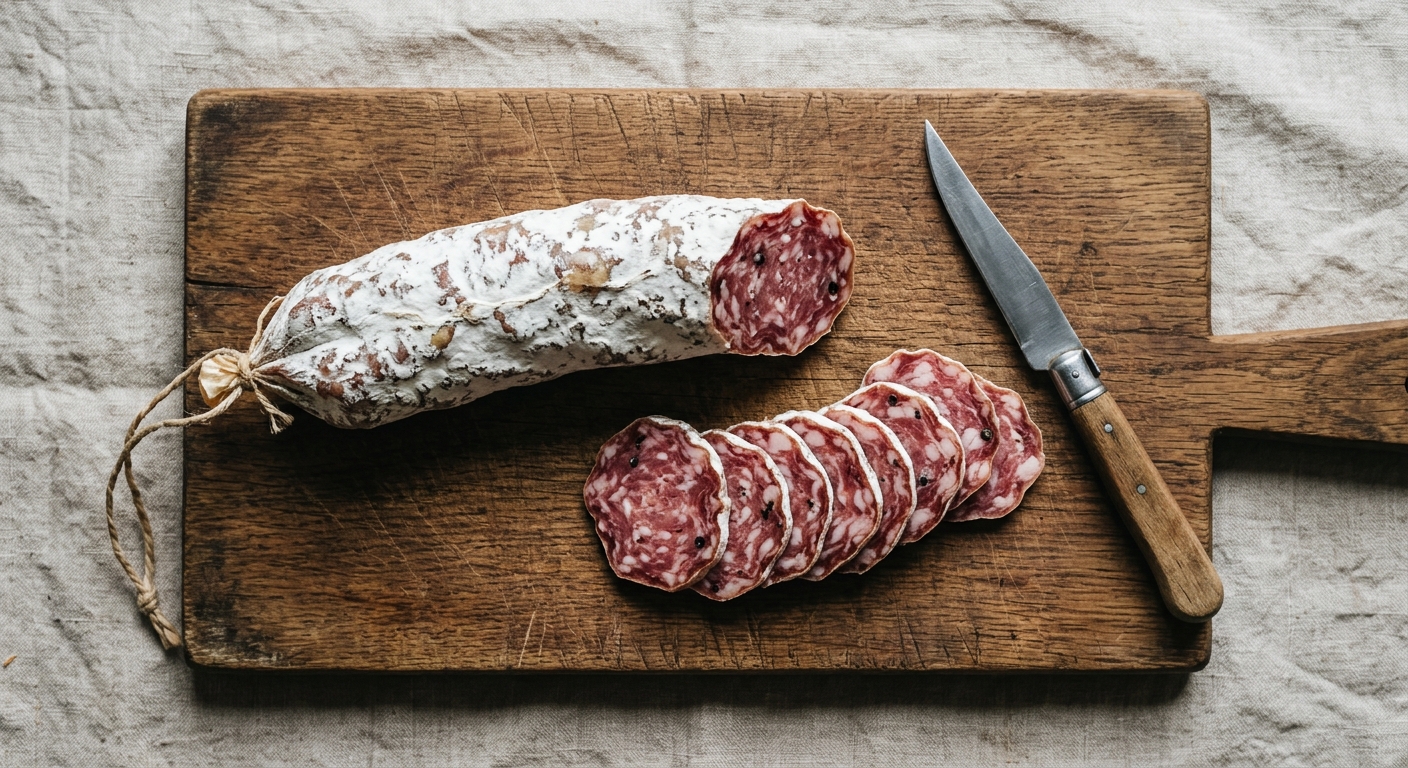
A dry-cured pork sausage from the mountains of the Ardèche, south-central France. Coarse-chopped pork from local breeds goes into natural casings with salt, black pepper, and garlic. Some producers add a measure of red wine. The sausages hang in cool mountain air for four to eight weeks, developing a white Penicillium bloom on the exterior. Since 2010, the IGP label protects the name. Sliced thin for apéritif, packed into picnic baskets, or laid across a charcuterie board, this saucisson carries the terroir of chestnut-covered hills and granite plateaus.
History
Pig farming in the Ardèche goes back centuries. The department's chestnut forests and oak groves provided a natural diet for free-ranging herds. Farmers cured their sausages through winter, hanging them in barns and cellars where cold, dry air did the work. Each family had its own recipe, passed down without writing it. By the 20th century, the Ardèche had earned a reputation across France for its charcuterie. In 2010, the European Union granted IGP status to 'Saucisson de l'Ardèche' and 'Saucisse de l'Ardèche', codifying what locals had known for generations: geography matters. The altitude, the humidity, the microbiology of mountain cellars all contribute to a product that cannot be replicated elsewhere.
Ingredients
Preparation
The pork is chopped coarse, not minced. Producers mix the lean meat with fat, salt, black pepper, and crushed garlic. Some add a splash of local red wine. The mixture rests overnight in a cool room. The next day, it goes into natural casings, tied at intervals with cotton string. The sausages hang in a séchoir (drying room) or cellar at 12 to 15 degrees Celsius. Over four to eight weeks, moisture leaves the meat. A white mold bloom colonizes the exterior, contributing to the flavor and protecting the interior from spoilage. The finished saucisson has lost about 30% of its original weight.
Taste
Concentrated pork flavor with a slow garlic burn and black pepper heat. The long cure intensifies the meatiness. Versions made with wine carry a faint tannic undertone. The Penicillium bloom adds an earthy, mushroom note to the rind.
Texture
Dense, firm, and sliceable. The coarse chop gives each slice a mosaic of lean meat and fat. The exterior is dry and chalky from the mold bloom. Inside, the meat is compact but not hard, with visible fat marbling that melts on the tongue.
Rituals & Traditions
Slice thin, at an angle
Cut saucisson sec in thin slices on the bias with a sharp knife. Thick rounds chew like rubber. The diagonal cut exposes more surface area and lets the fat warm against your palate.
Never refrigerate before serving
Take the saucisson out of the fridge at least 30 minutes before slicing. Cold fat tastes like nothing. Room temperature releases the garlic, the pepper, the funk of the mold bloom.
The apéritif ritual
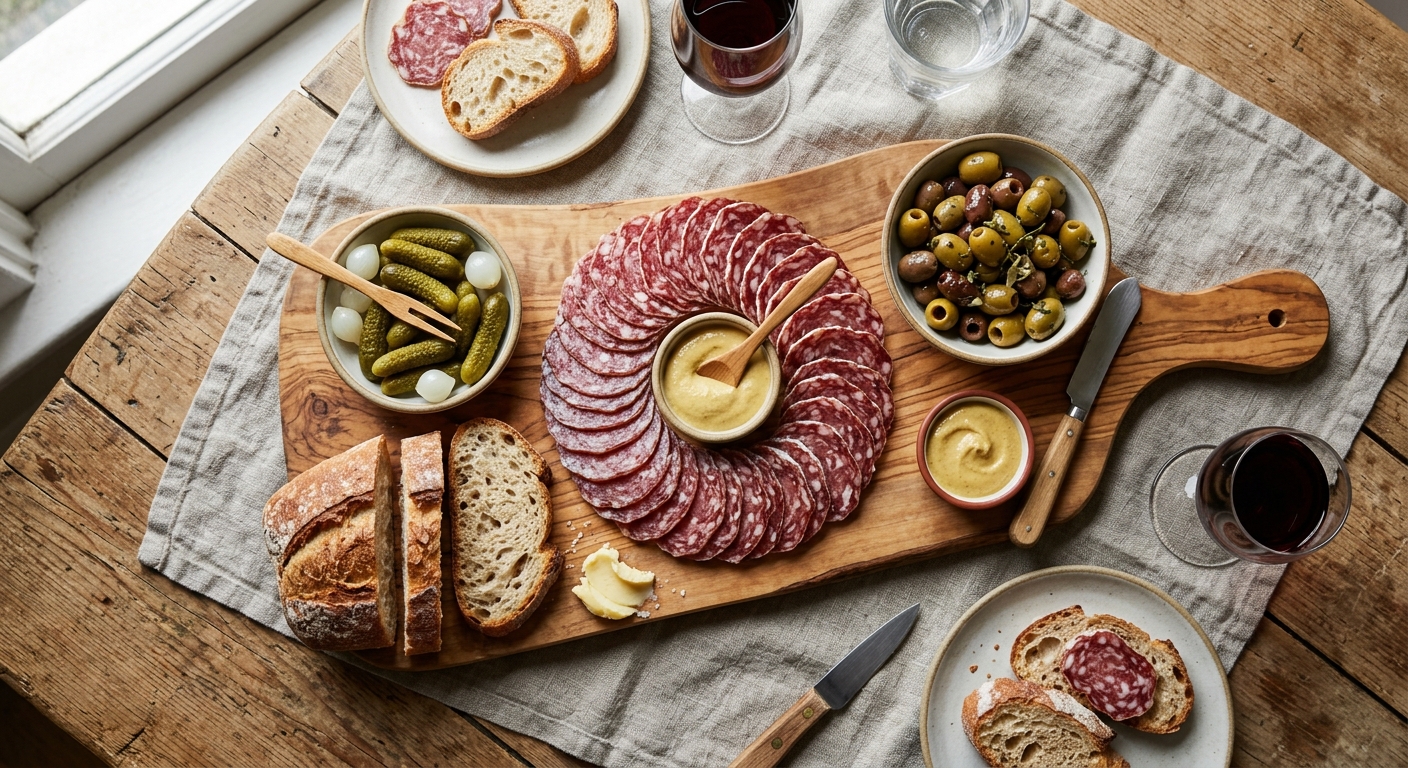
In the Ardèche, saucisson sec appears at apéritif hour without fail. A wooden board, a knife, sliced saucisson, cornichons, and a glass of local wine. No plates needed. Guests cut their own slices.
Do not peel the mold
The white Penicillium bloom on the exterior is not a defect. It develops during curing and contributes to the flavor. Peeling it off wastes a layer of taste. Just wipe off any dust and slice.
Recipes
Saucisson en Brioche
Saucisson Sec de l'Ardèche
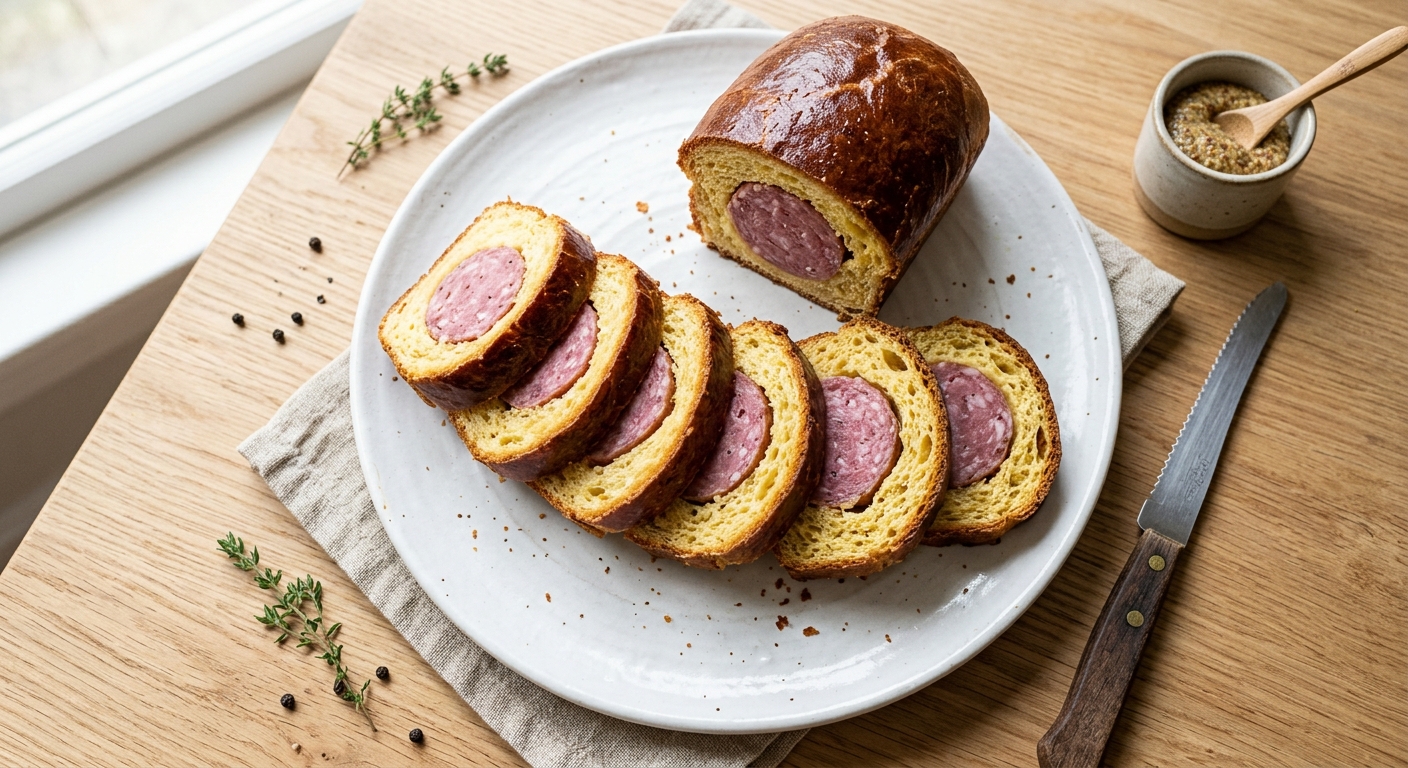
A whole saucisson sec baked inside buttery brioche dough. The recipe comes from Lyon, where charcuterie baked in pastry is a tradition that goes back centuries. The brioche puffs golden around the sausage, soaking up rendered fat where the two meet. Serve warm, sliced into thick rounds with a pot of Dijon mustard on the side.
French Charcuterie Board with Saucisson Sec
Saucisson Sec de l'Ardèche
A charcuterie board built around saucisson sec de l'Ardèche as the centerpiece. Cornichons, Dijon mustard, unsalted butter, a wedge of Comté, and a basket of sliced baguette. No fussy arrangements. The saucisson goes in the middle, the knife beside it, and guests cut their own slices. This is apéritif food, not dinner.
Chestnut and Saucisson Stuffing
Saucisson Sec de l'Ardèche
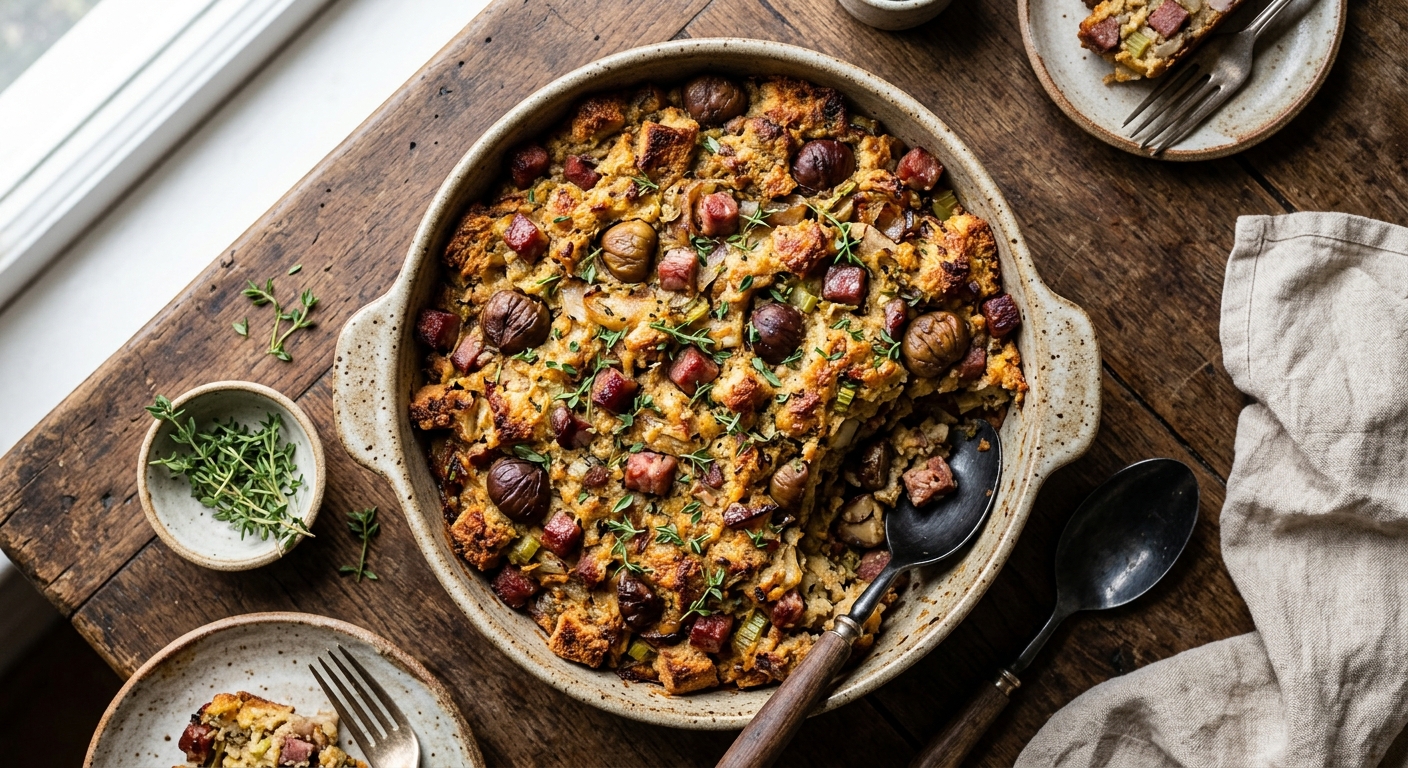
The Ardèche grows more chestnuts than any other department in France. This stuffing combines two local staples: roasted chestnuts and saucisson sec, bound with bread, eggs, and herbs. Use it to fill a roast chicken or guinea fowl, or bake it in a dish on its own. The chestnuts turn creamy, the saucisson adds salt and fat, and the whole thing smells like an Ardèche farmhouse kitchen in November.
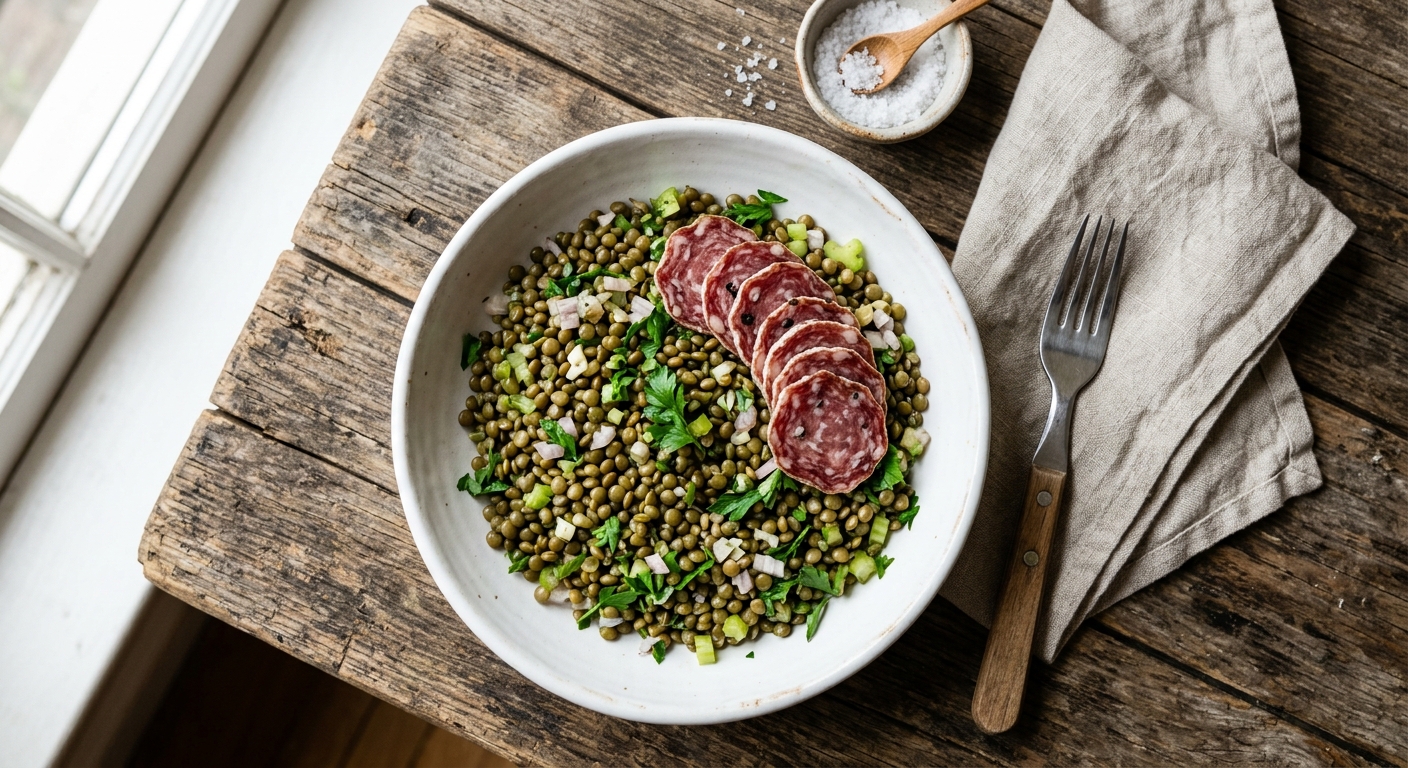
Warm Lentil Salad with Saucisson Sec
Saucisson Sec de l'Ardèche
A bistrot staple from central France. Green Puy lentils hold their shape when cooked, making them the right base for sliced saucisson sec. A mustard vinaigrette ties it together. The lentils go on the plate warm, the saucisson at room temperature. The contrast is the point. Shallots, parsley, and a good pour of olive oil finish the dish.
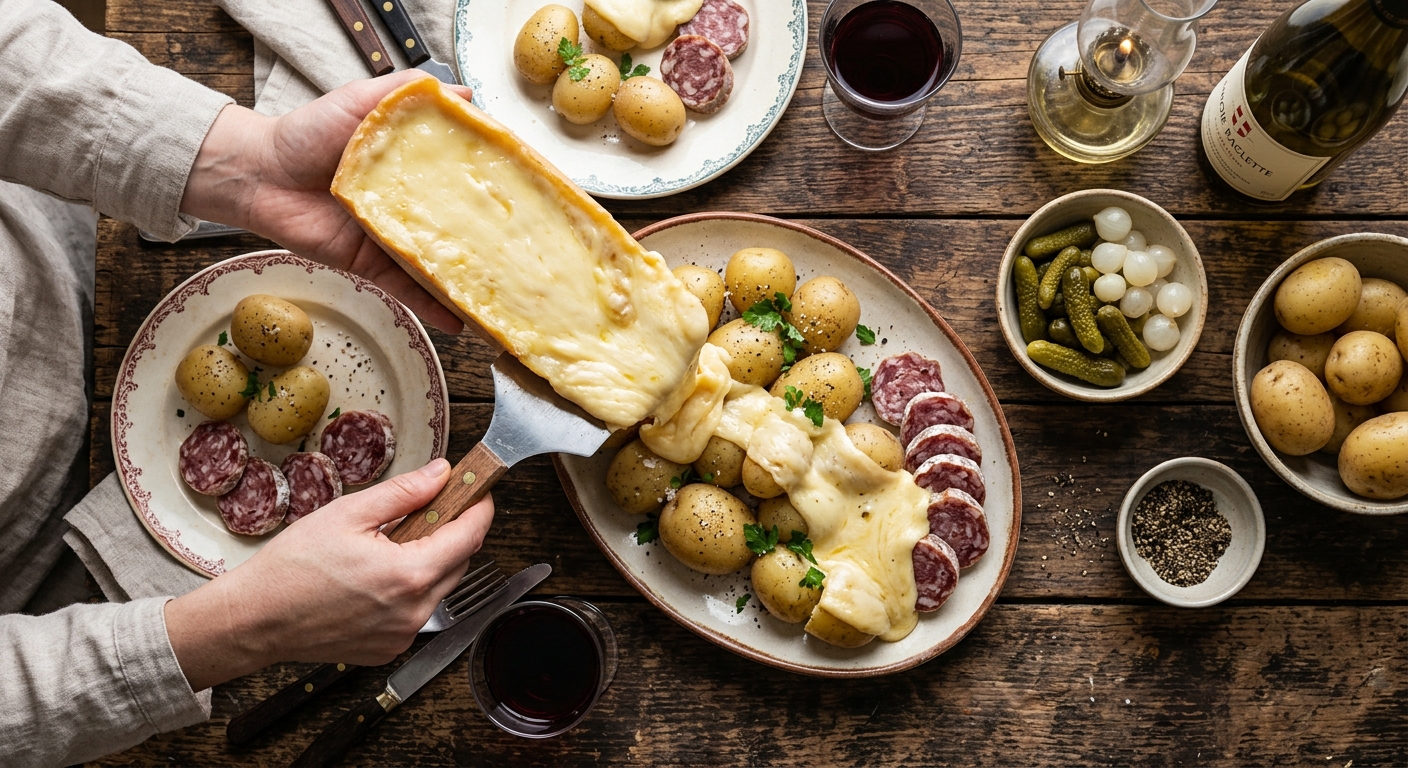
Raclette with Saucisson Sec
Saucisson Sec de l'Ardèche
Raclette is a communal meal. A half-wheel of cheese melts under a heat source, scraped onto plates of boiled potatoes, cornichons, and cured meats. Saucisson sec is the charcuterie of choice for many French families during raclette season (October through March). The hot, melted cheese hits the cold saucisson slices, and the fat begins to soften without cooking through.
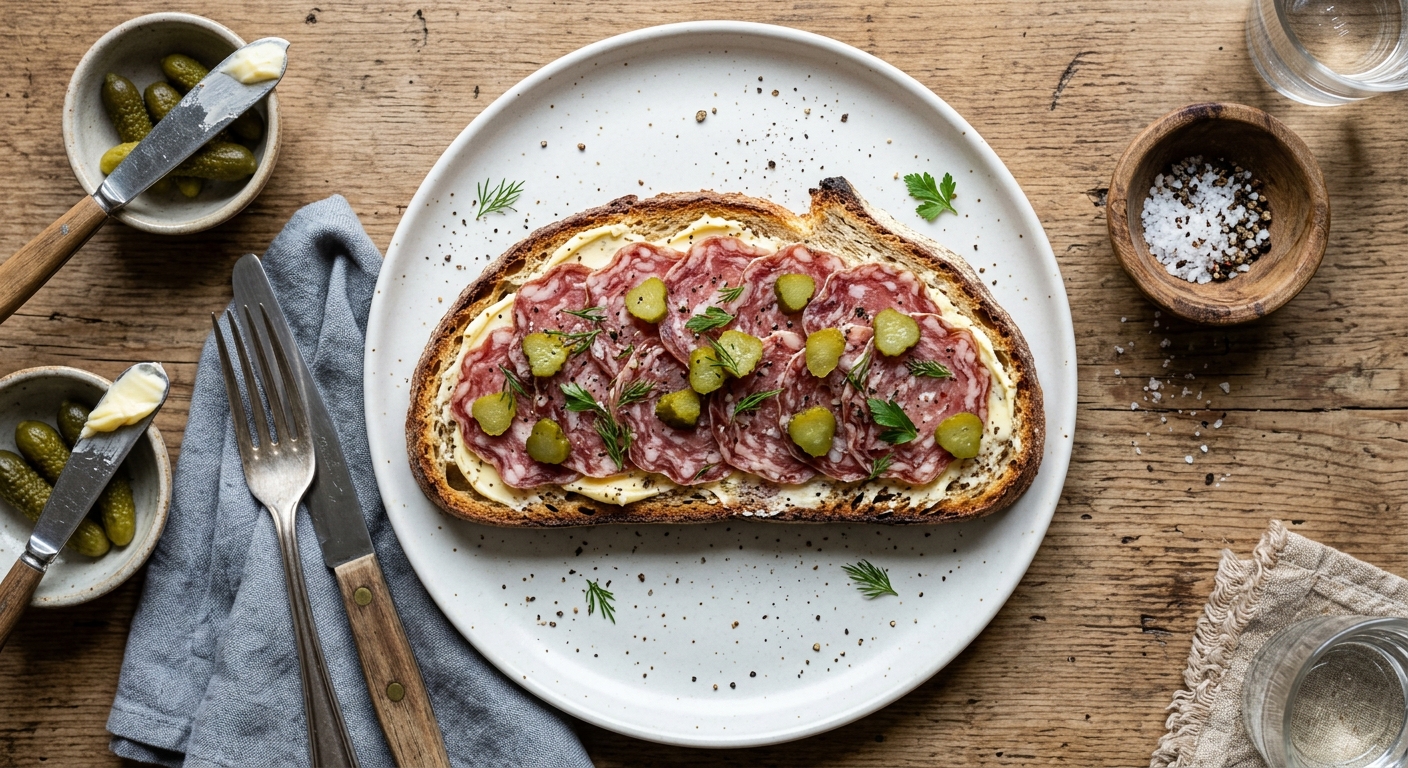
Saucisson, Butter, and Cornichon Tartine
Saucisson Sec de l'Ardèche
An open-faced sandwich that requires three things done right: good bread, cold butter, and saucisson sliced thin. A tartine is not a recipe so much as an assembly. Spread butter on bread. Lay saucisson on top. Add cornichon slices. Eat. The French version of a snack that needs no improvement.
On the Map
Where to Eat
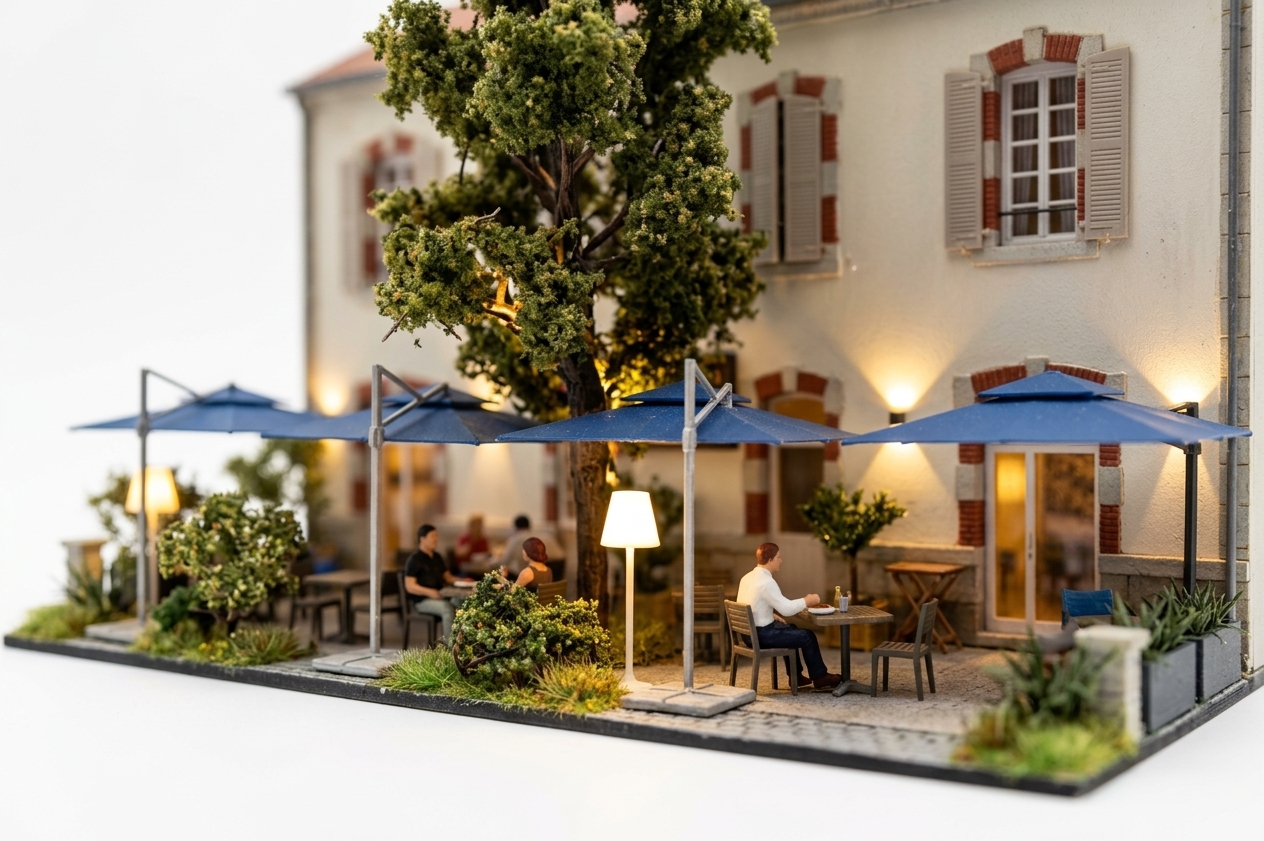
Auberge de Montfleury
Privas, France
A country inn on a hillside outside Privas, the Ardèche capital. The dining room overlooks chestnut groves. The kitchen works with what the department produces: caillettes, picodon cheese, chestnut flour, and saucisson sec sliced thick for the assiette ardéchoise. Rooms are simple. Dinner is the reason to come. The prix fixe menu runs four courses with local wine included.
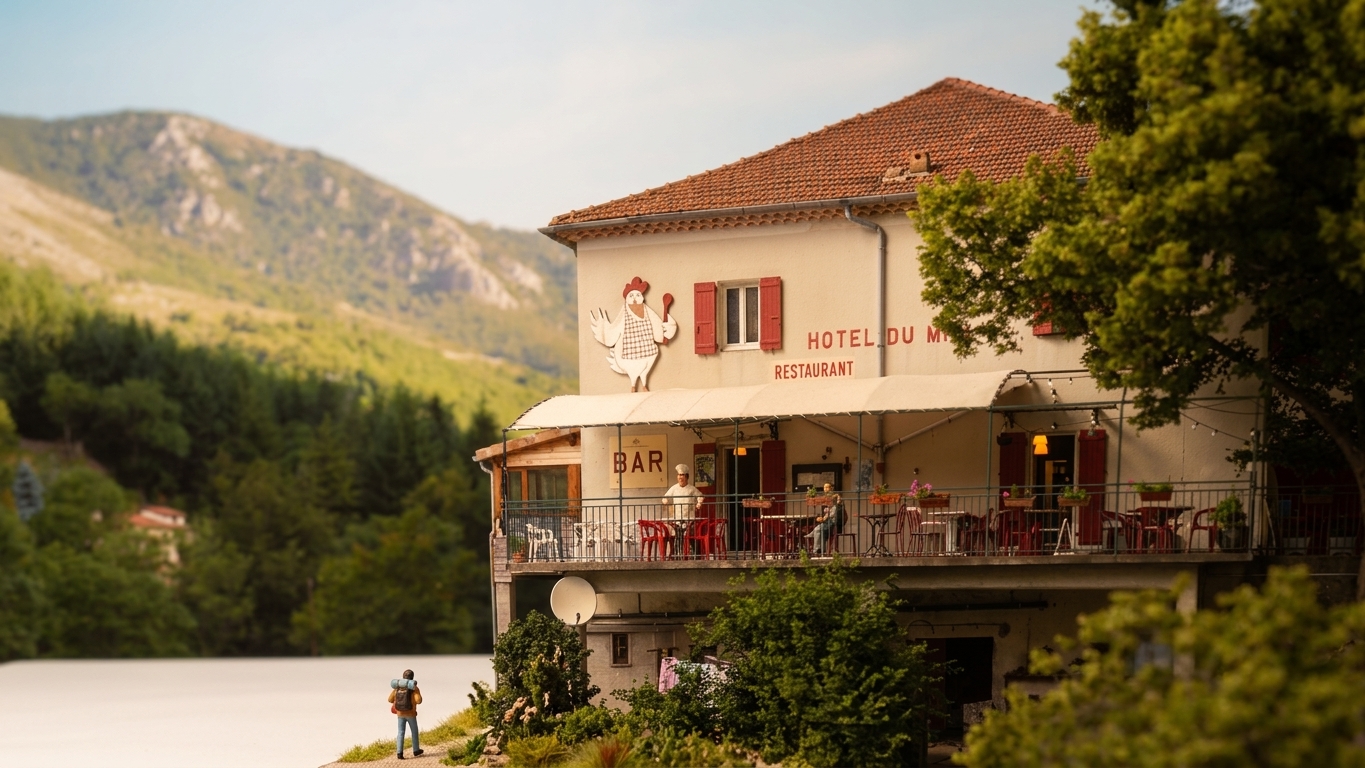
Chez Baratier
Aubenas, France
A bistrot on a narrow street in Aubenas, the market town of southern Ardèche. The menu changes with the seasons but the saucisson sec stays year-round, served as a first course with lentils or on its own with bread. The owner knows which farm raised the pig. The dining room seats 24 and fills up on market days. Reservations are a good idea.
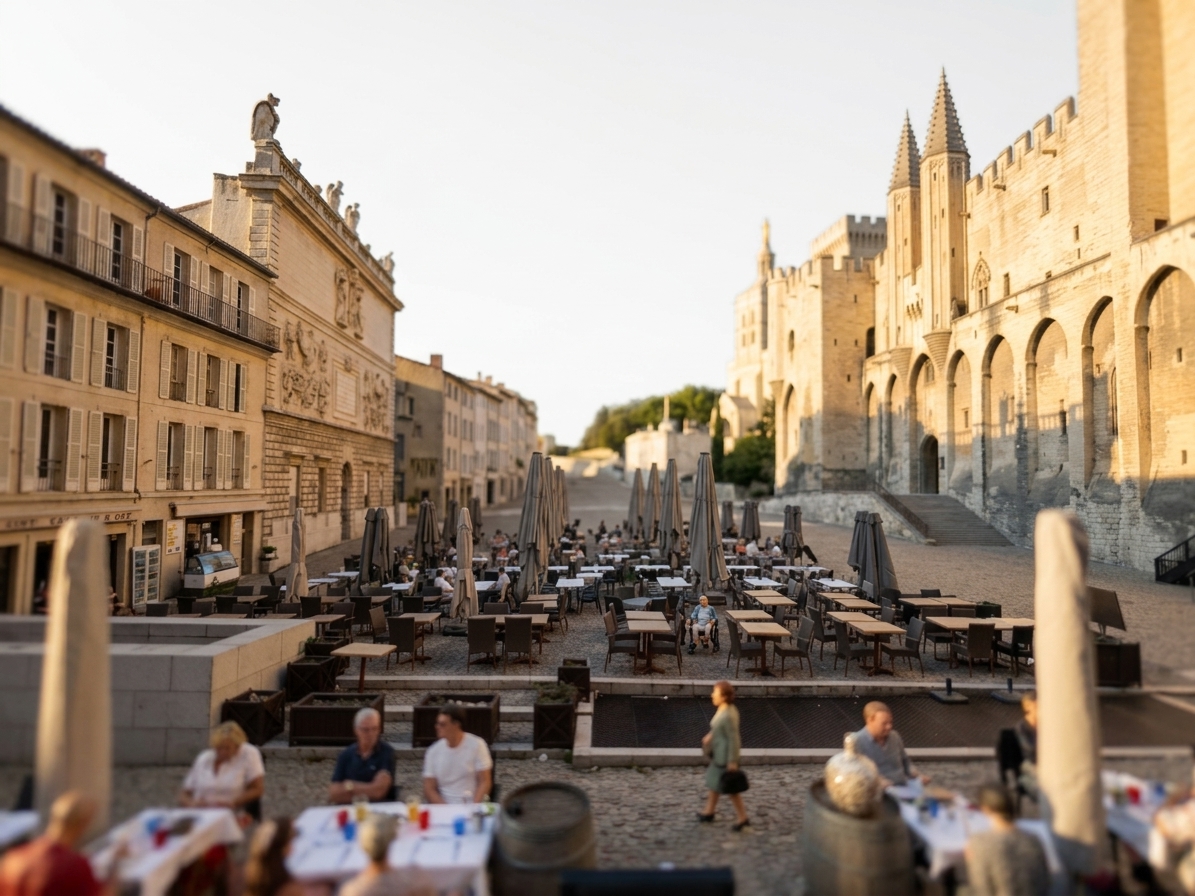
Le Carré du Palais
Avignon, France
A wine bar and restaurant inside the Palais des Papes complex in Avignon. The charcuterie board pulls from producers across the Rhone Valley and Ardèche. Their saucisson sec comes from a named Ardèche supplier and sits next to Nyons olives, picodon, and tapenade. The wine list is deep in southern Rhone bottles. The terrace faces the palace square. Tourists fill the tables at lunch, but the charcuterie does not suffer for it.