Salchipapa
Lima, Peru
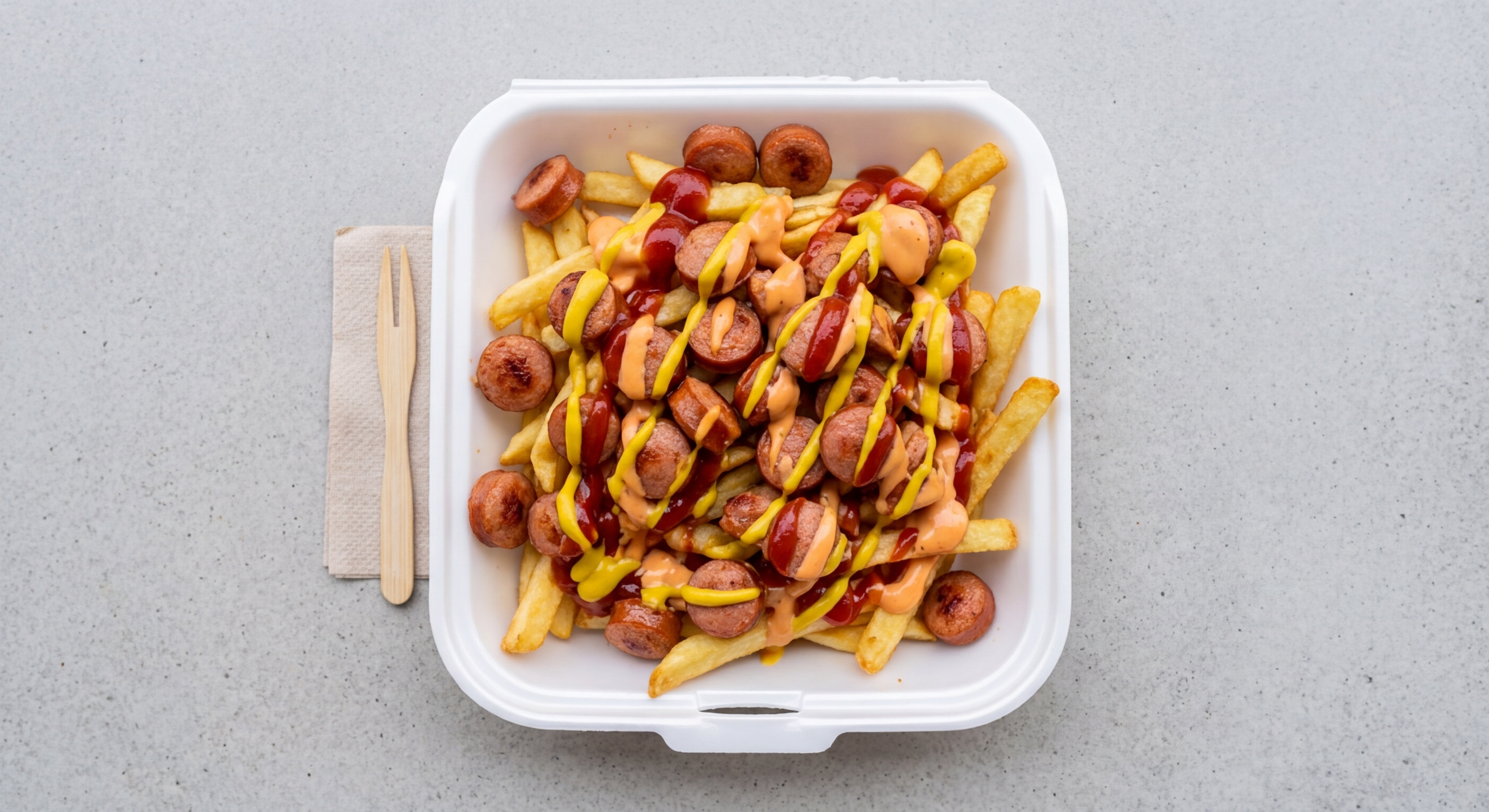
Salchipapa is Lima's working-class street dish: sliced frankfurter-style sausages fried in oil until the cut faces brown, then piled over french fries and dressed with whatever sauces the vendor keeps. The name compresses salchicha (sausage) and papa (potato) into a single word, and the dish is equally compressed: two ingredients, fried, sauced. That economy is the point. Lima street vendors developed it in the 1950s to feed workers and students who needed something fast, cheap, and filling. Tip Top, the drive-in on Avenida Arenales in Lince that opened in 1953, gave it a fixed address. Street carts spread it through every district by the 1970s. Peru now marks the third Sunday of November as Día de la Salchipapa. The dish crossed into Colombia, Bolivia, Ecuador, and Venezuela, each country applying its own toppings. Colombia added quail eggs, corn, and coleslaw, then salsa rosada. Ecuador brought hot sauce. Buenos Aires knows its own version. The sausage used is almost always a smooth, mild frankfurter rather than a coarse-ground sausage: the thin skin blisters in hot oil, the cut faces caramelize at the edges, and the interior stays moist. Slicing the sausage into rounds or coins before frying is non-negotiable; the increased surface area is the whole technique. In Lima, ají amarillo crema and huancaína sauce appear as options. In Bogotá, salsa rosada dominates. At home, the dish takes fifteen minutes. On a street cart, it takes four.
History
Lima in the early 1950s was a city growing faster than its infrastructure. Rural migration from the Andes had expanded the capital's population, and the new arrivals settled in working-class districts like La Victoria, El Agustino, and Lince. Markets and street vendors fed this population. Salchipapa grew from that context: a vendor's practical answer to two cheap, available ingredients that could be cooked quickly on a portable burner. The frankfurter-style sausage was an immigrant contribution. German, Italian, and Japanese immigrants who arrived in Peru through the 19th and 20th centuries brought sausage-making traditions with them, and the mild, smooth salchicha became a supermarket staple. Tip Top, the drive-in on Avenida Arenales that opened in 1953, is often cited as the first establishment to list salchipapa on a fixed menu. Peruvian food writer Jorge Yeshayahu Gonzales-Lara documented this connection. The dish spread through Lima's street cart culture through the 1960s and 1970s, then crossed borders. Colombia adopted it with additions: coastal vendors added quail eggs and corn, inland versions accumulated more sauces. Bolivia and Ecuador developed their own variants. In Peru, salchipapa acquired a national celebration: Día de la Salchipapa falls on the third Sunday of November. The ceremony is informal but genuine. Salchipaperias now operate as dedicated shops across Lima, some serving dozens of variations. The dish has also entered mid-range restaurants as a comfort food item, sometimes with upgraded ingredients but always recognizable by its format.
Ingredients
Preparation
The sausages are sliced into rounds or coins, typically one to two centimetres thick, before any heat is applied. This is the defining technique: the increased surface area turns the frying into caramelization rather than mere cooking. Oil goes into a wide pan or deep fryer and heats to around 180°C. The potatoes are cut into strips or wedges and fried first, removed, and salted while hot. The sausage rounds go into the same hot oil for two to three minutes, turning once, until the cut faces have browned and the skin is taut. Both elements are drained and combined on a paper plate or wide bowl. Sauces come at the end, either applied by the vendor or placed alongside in individual containers. In Peru, ají amarillo crema and huancaína sauce are the regional additions. In Colombia, salsa rosada (a ketchup-mayonnaise blend with added spices) is standard, along with mustard in squeeze bottles. Street vendors work on burners mounted to carts; dedicated salchipaperias use commercial fryers that keep oil temperature consistent. Home cooks achieve similar results in a cast-iron pan with enough oil to submerge the sausage coins.
Taste
The sausage gives mild, slightly smoky fat with a caramelized edge from the cut face. The potato underneath soaks up the oil and absorbs whichever sauce sits on top. Ají amarillo brings a fruity heat, not sharp but building. Salsa rosada is sweet and tangy. Huancaína adds the weight of cheese and mild chili. The dish has no aggressive flavour on its own; the sauce is where character enters.
Texture
The sausage coins are tender inside, with a browned and slightly firm cut face. The skin, if not split, provides a thin snap. The fries should be crisp on the outside and mealy within; softer fries absorb the sauce, crisper ones hold their structure longer. The combination of yielding sausage and potato under pooled sauce is the dish's defining texture.
Rituals & Traditions
Slice before frying
Salchipapa sausage is never fried whole. The coins go into the oil cut-face down first. This is the technique that separates the dish from a sausage with fries: the cut surface browns, the edges tighten, and the fat renders differently than it would through the skin alone.
Día de la Salchipapa
The third Sunday of November is Peru's national Salchipapa Day. Salchipaperias across Lima run specials, food writers publish rankings, and the occasion gets news coverage. It is an informal but genuine institution, created by vendors and enthusiasts rather than the government.
Eat it immediately
Salchipapa does not wait. The fries go soft within minutes of the sauce hitting them, the sausage cools and loses its edge, and the whole plate deflates. The correct approach is to eat standing at the cart or counter, not carry it somewhere else.
Do not skip the sauce decision
Ordering salchipapa without choosing your sauces is incomplete. The vendor will ask, or look at you expectantly. In Lima, the minimum is ketchup-mustard-mayo. In Bogotá, salsa rosada is assumed. Pointing at the bottles and making a choice is part of the transaction.
Recipes
Salchipapa al Horno
Salchipapa
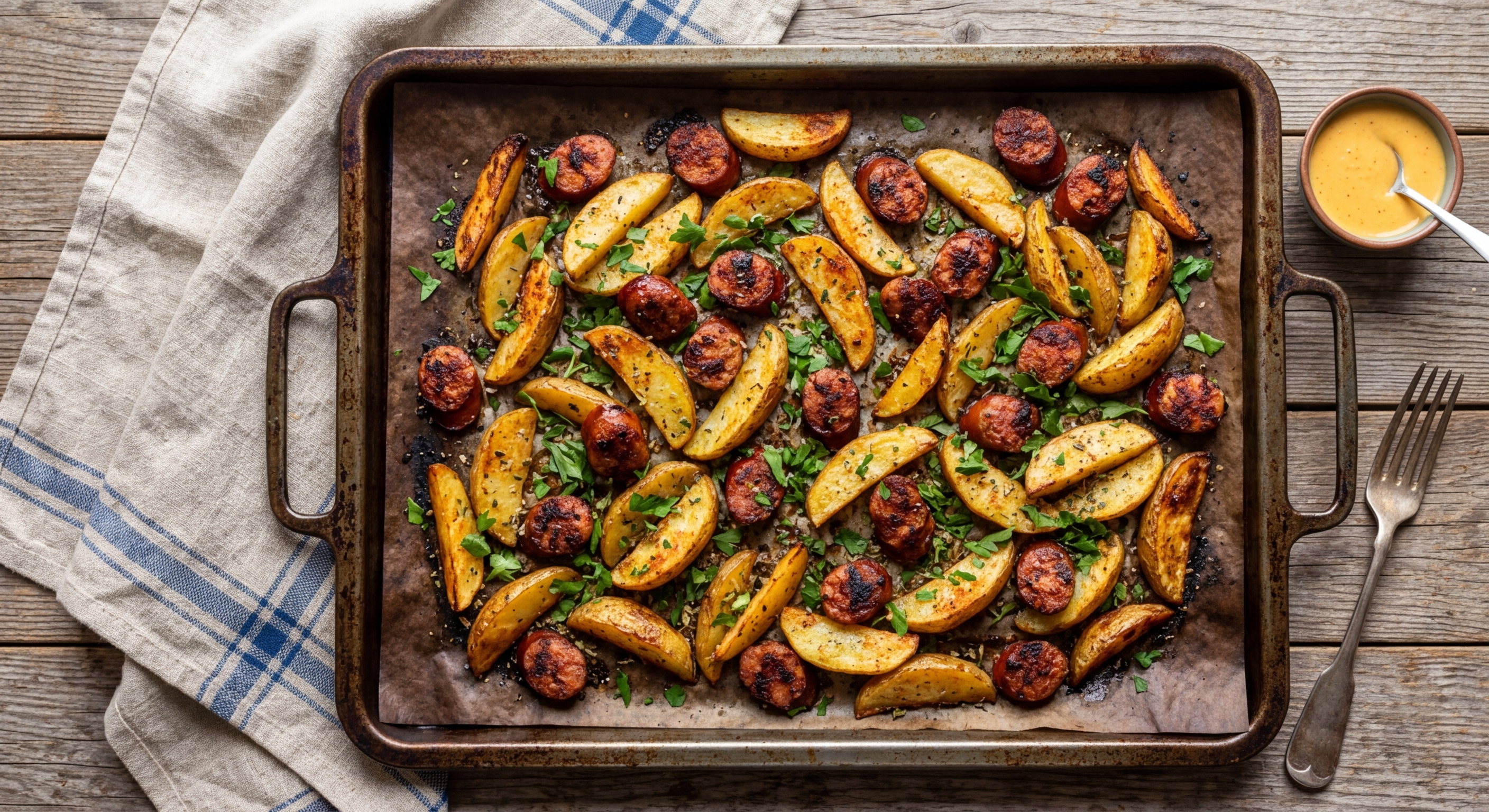
The oven version trades the fryer for a hot sheet pan. The sausage coins roast at high heat until their cut faces darken and the edges tighten; the potatoes go into the oven in a single layer and emerge with a dry, crisp surface. Less oil, same structure. Weeknight cooking without the splatter.
Salchipapa Clásica
Salchipapa
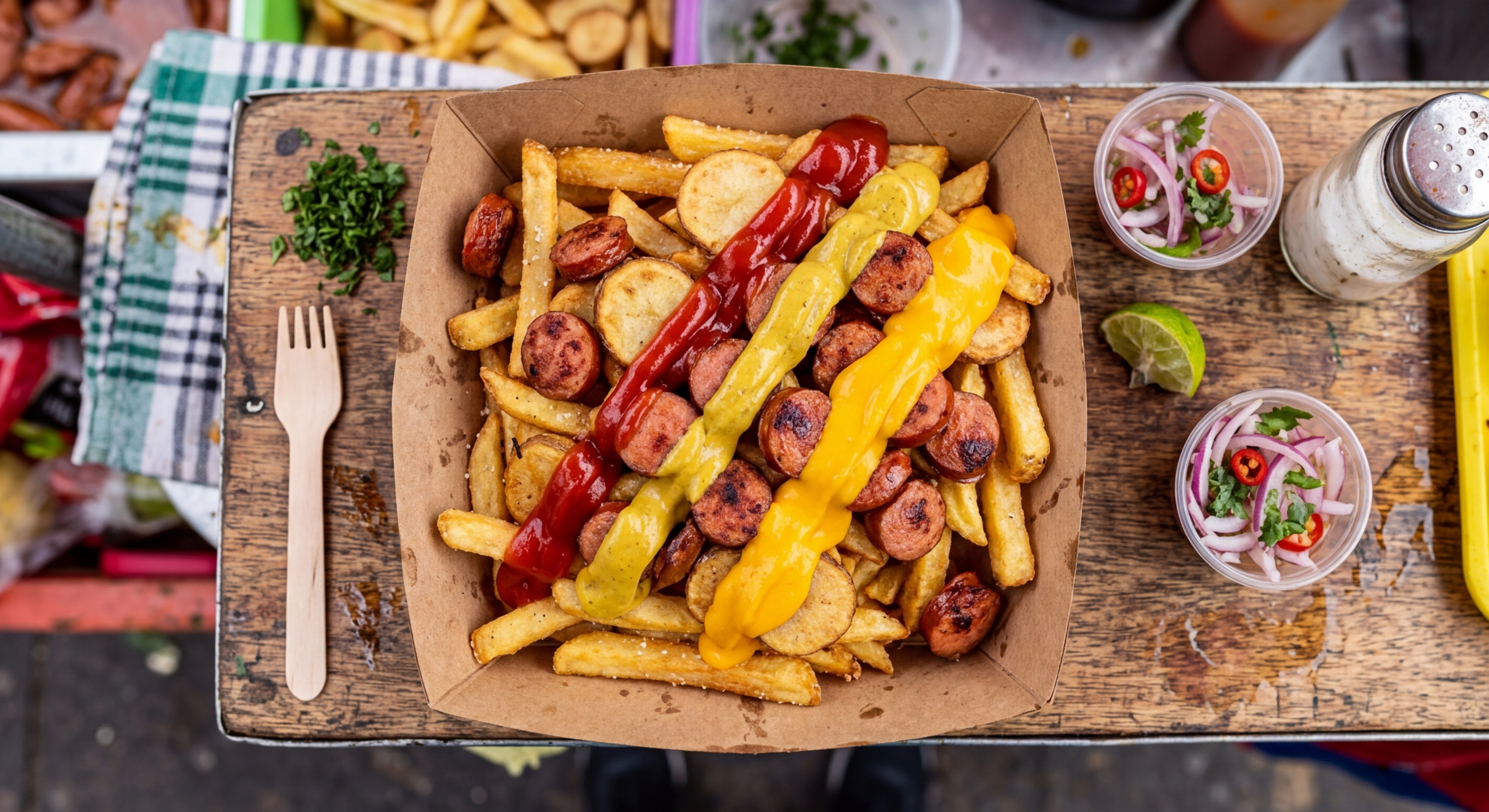
The Lima street cart version. Frankfurter coins fried until the cut faces brown, over a pile of thick-cut fries, with ketchup, mustard, and mayonnaise applied in three stripes from squeeze bottles. No garnish, no complexity. The dish as it has been served since the 1950s.
Salchipapa Colombiana
Salchipapa
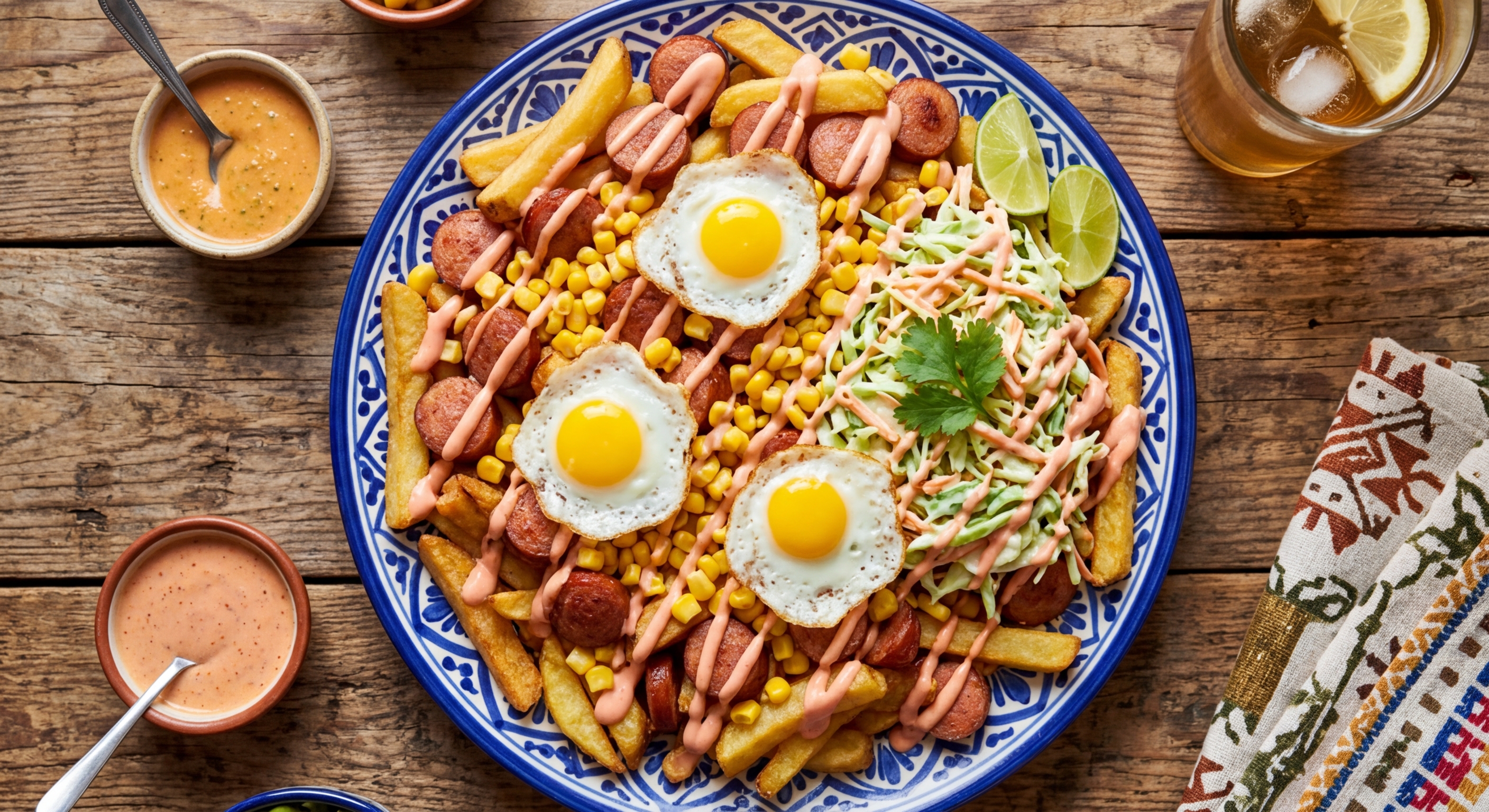
The Colombian version goes further than Lima's. Quail eggs, cooked corn kernels, and coleslaw join the sausage and fries, and salsa rosada (a ketchup-mayo blend) replaces the three separate sauce bottles. Coastal vendors in Bogotá and Cartagena built this configuration, and it is now the country's standard.
Salchipapa con Chorizo
Salchipapa
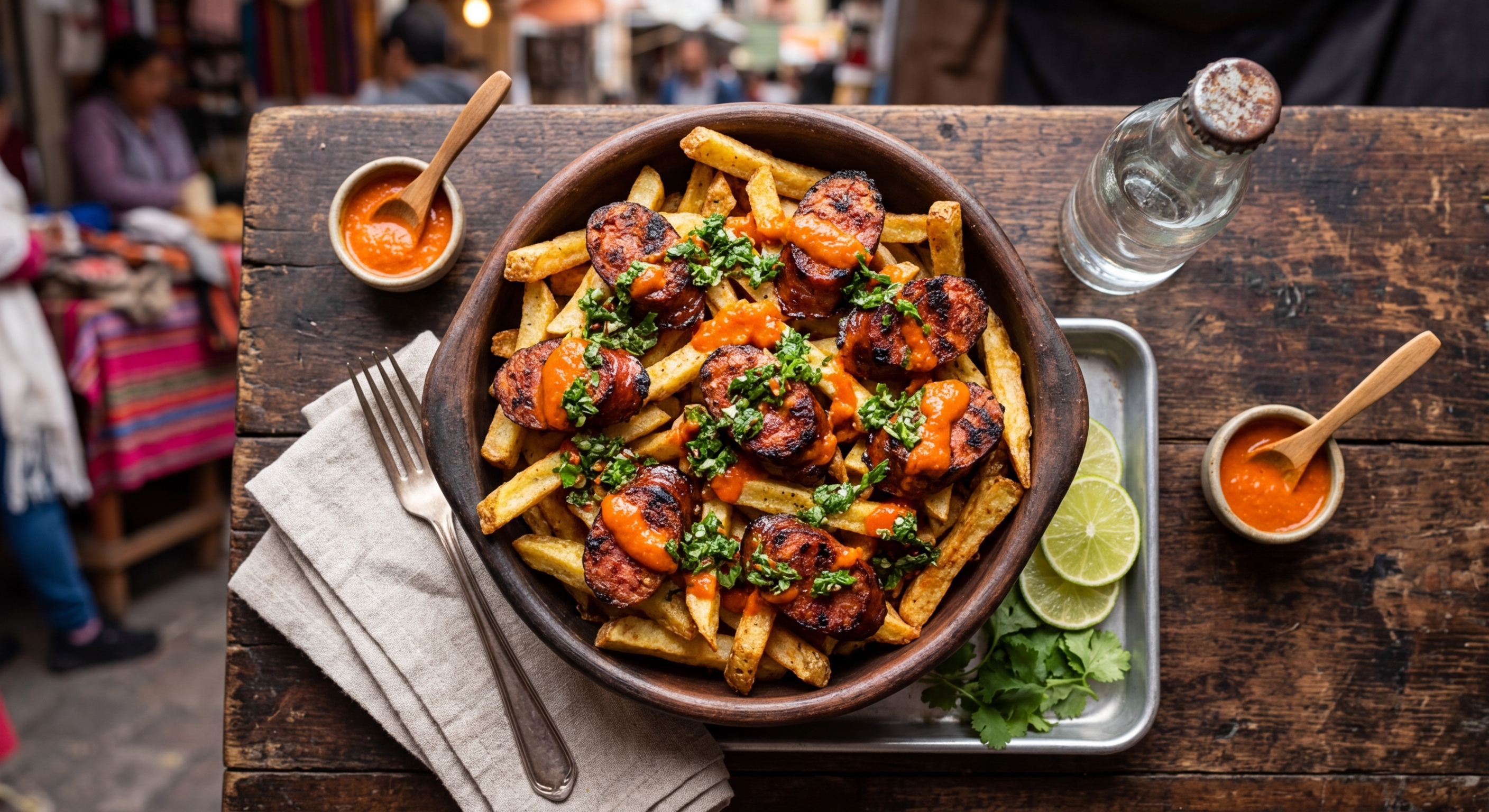
The standard salchipapa uses a mild, smooth frankfurter. Swap in fresh chorizo and the dish gets paprika oil, pork fat, and heat that the frankfurter never provides. Some Lima restaurants and Bogotá vendors call this choripapa. The technique is identical; the flavour is not.
Salchipapa con Salsa Huancaína
Salchipapa
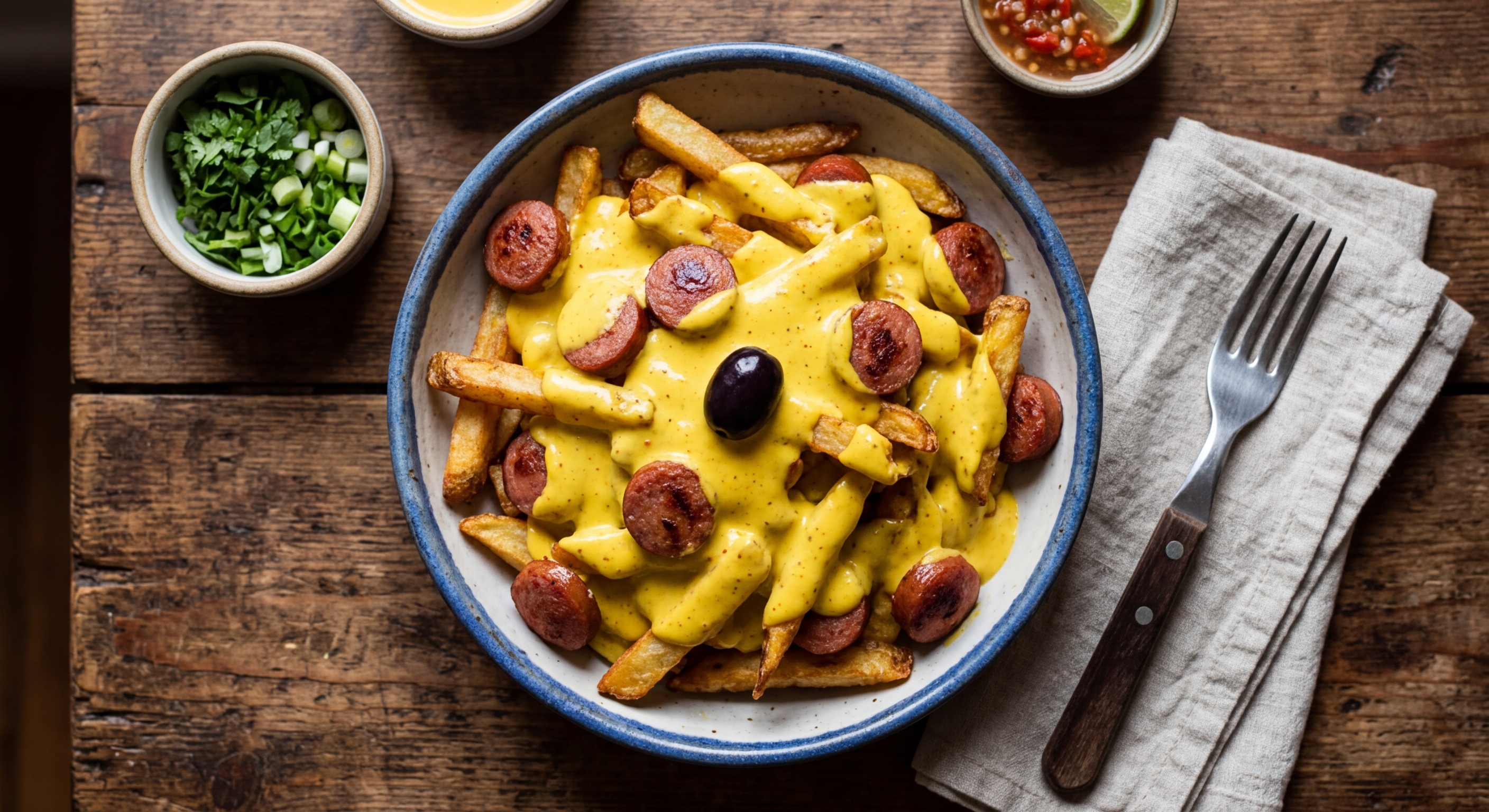
Huancaína sauce belongs to Peruvian cooking the way hollandaise belongs to French: a regional specialty that spread everywhere. Blended from ají amarillo, queso fresco, evaporated milk, and crackers, it is thick, faintly spicy, and fatty in a way that differs from mayonnaise. Over salchipapa it replaces all three standard sauces with one.
Salchipapa Loaded
Salchipapa
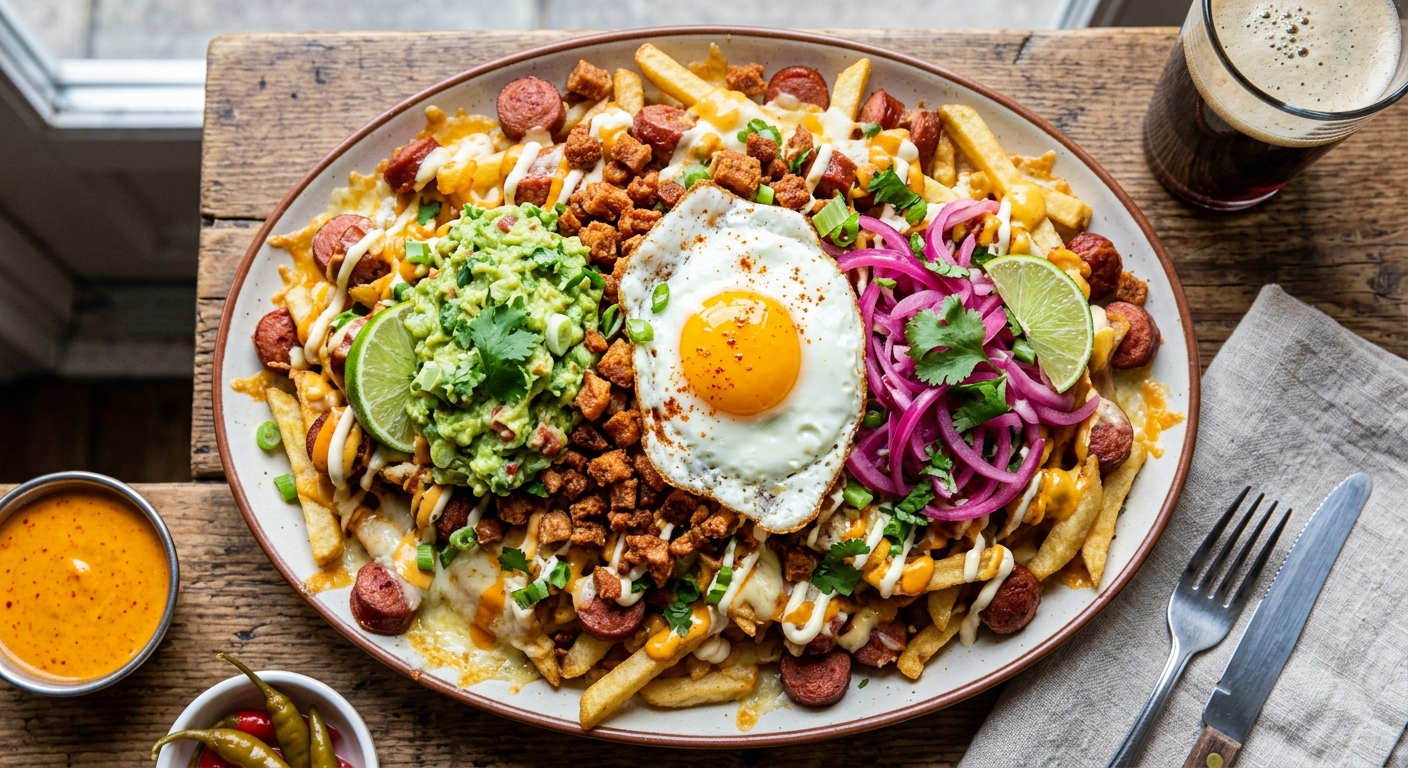
Every topping available at once: sausage coins, fries, melted cheese, guacamole, salsa rosada, fried egg, crispy chicharrón crumbles, and pickled red onion. This is the combination that upscale Lima salchipaperias and home cooks with better refrigerators make on weekend nights.
On the Map
Where to Eat
La Salchipapería
Lima, Peru
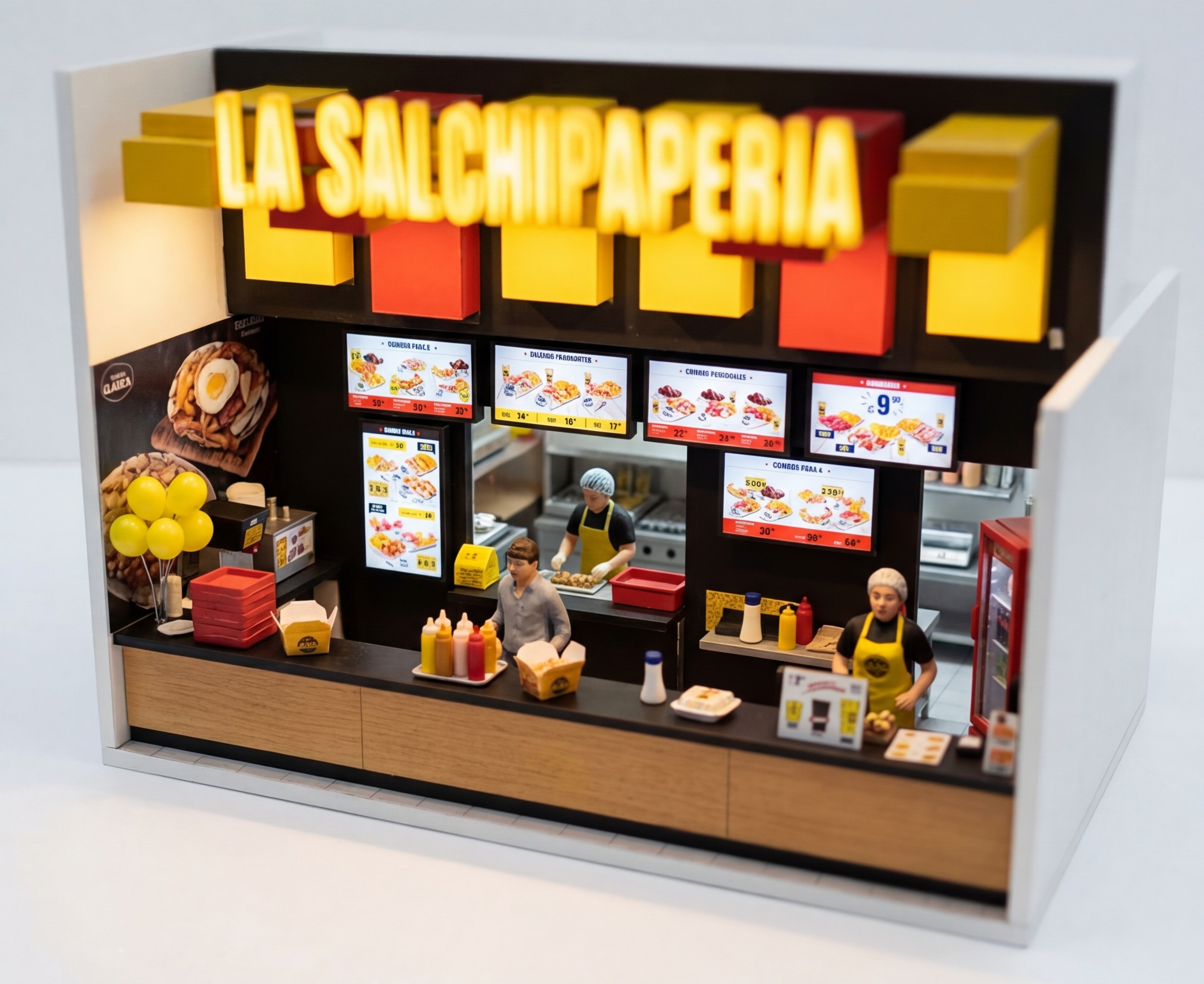
La Salchipapería runs several locations across Lima, with branches in Pueblo Libre, Lince, Miraflores, and San Borja. The Pueblo Libre location on Avenida La Marina is a neighbourhood fixture. The restaurant treats salchipapa as its sole subject: the menu lists a dozen variations, from the classic with three sauces to versions loaded with cheese sauce, ají amarillo cream, and crumbled chicharrón. The sausages are sliced into coins before frying, the potatoes cut thick and fried in oil hot enough to blister the outside. Each order arrives in a paper-lined basket or a wide bowl. Mallko Victoria, one of the people behind the annual Lima celebration of Día de la Salchipapa on the third Sunday of November, is connected to this chain. The shop attracts students, families, and anyone who grew up eating salchipapa from a street cart and wants it indoors without losing the informality.
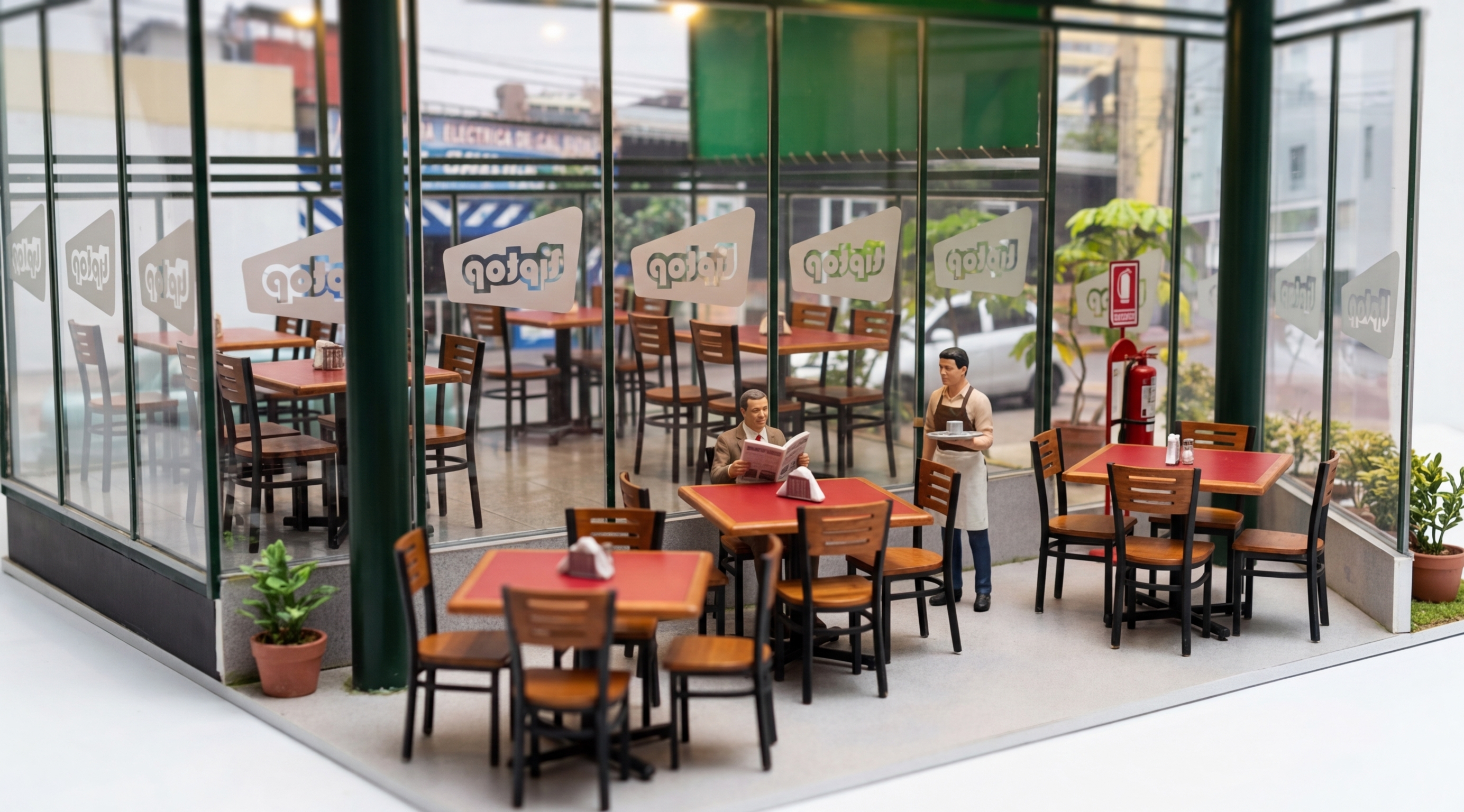
Tip Top
Lima, Peru
Tip Top opened on Avenida Gral. Antonio Álvarez de Arenales in Lince in 1953, making it one of Lima's first fixed fast food establishments and the place most associated with putting salchipapa on a printed menu. The original concept was a drive-in: customers pulled up, ordered through their car windows, and ate in their vehicles. That format survived for decades. The menu at Tip Top covers the classic Lima fast food repertoire: club sandwiches, chicharrones, milkshakes, and salchipapa in classic and special versions. The salchipapa arrives with rounds of fried frankfurter-style sausage over a pile of fried potatoes, with ketchup, mustard, and mayonnaise on the side. The atmosphere is deliberately unchanged. Formica counters, booths, the same menu items that artists and students ordered in the 1960s and 1970s. Tip Top became a nostalgia landmark as Lima grew around it. Multiple branches now operate across the city, but the Lince original on Avenida Arenales is where the story starts.