Sai Krok Isan
ไส้กรอกอีสาน
Isan, Thailand
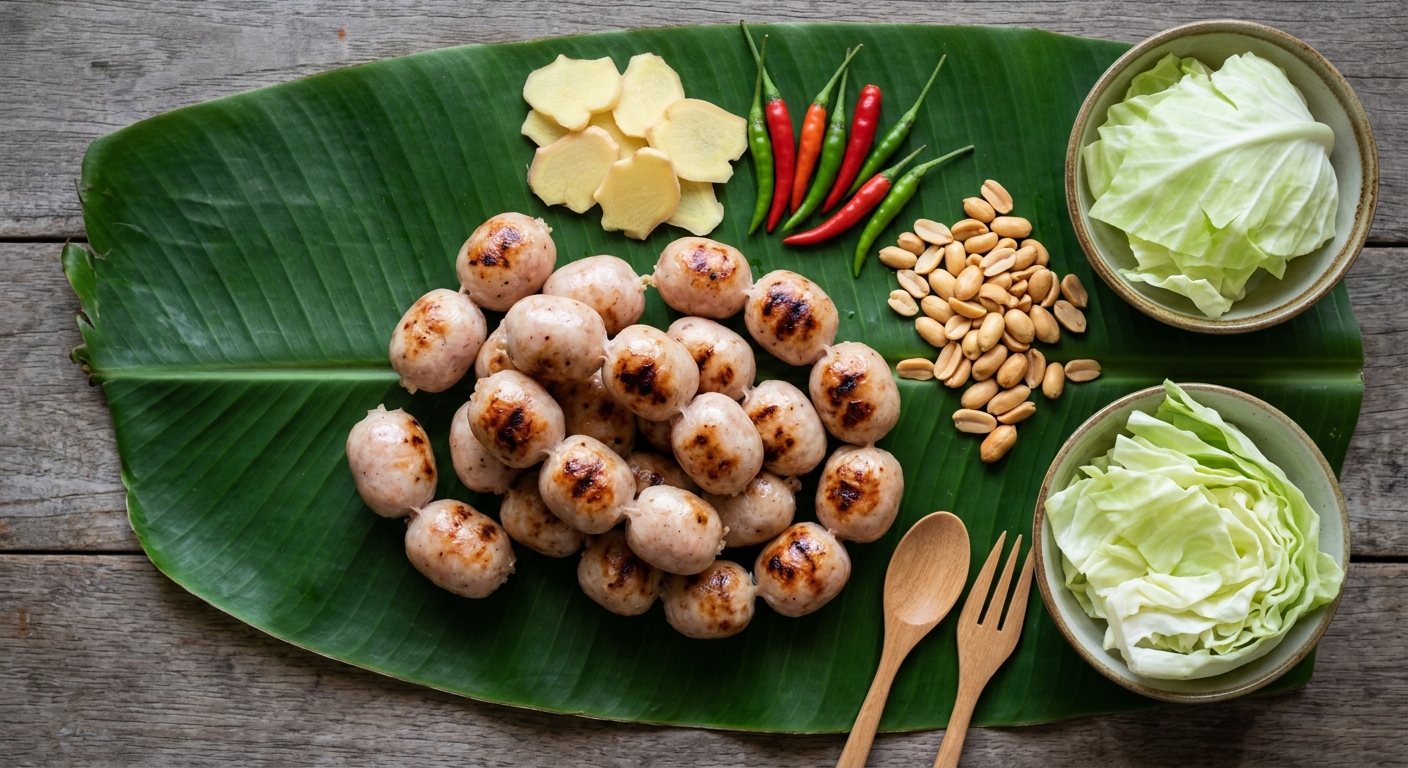
Sai krok isan is a fermented pork and rice sausage from Thailand's northeast, the Isan region. Coiled in short links and sold by the strand from charcoal grills, it is the dominant street food of the region and one of the most recognisable sausages in Southeast Asia. The defining characteristic is controlled fermentation: raw pork, cooked sticky rice, garlic, salt, and black pepper are mixed and left to ferment for two to four days in warm weather. The rice feeds lactic acid bacteria that sour the sausage from the inside out. The result is a plump, slightly wrinkled link with a mild tang and deep pork flavour. Charcoal heat tightens the casing and crisps the exterior while the interior stays moist and yielding. The sausage is eaten in small bites, wrapped in raw cabbage leaf or eaten alongside sliced fresh ginger and bird's eye chillies — the raw vegetables cut the fat.
History
Sai krok isan traces its origins to the fermented rice-and-pork traditions common across mainland Southeast Asia. In the Isan plateau, where sticky rice is the staple grain rather than jasmine rice, fermented sausage developed as a way to preserve pork in a hot climate before refrigeration. The sticky rice not only extends the volume of the sausage but drives the lactic fermentation that gives the sausage its character. The sour profile distinguishes Isan sausage from the fresh sausages of central and northern Thailand. By the mid-20th century, the highway towns of Khon Kaen became known for sai krok production. Amphoe Phon district in Khon Kaen developed into a concentrated sausage centre: dozens of stalls along Route 2 sell fresh-made links to travellers and truckers passing between Bangkok and the northeast. The style spread with Isan migration to Bangkok and across Thailand, where northeastern restaurants and market stalls serve it alongside som tam, larb, and khao niao. Outside Thailand it appears wherever Thai expatriate communities are large enough to sustain a market for regional ingredients.
Ingredients
Preparation
Pork shoulder and belly fat are ground together to a coarse texture. Cooked sticky rice, crushed garlic, salt, and black pepper go into the mix and are worked by hand until the rice is evenly distributed through the meat. The mixture is filled into natural pork casings and tied into short links, typically five to eight centimetres long. The stuffed sausages rest at warm ambient temperature for two to four days. During this period the rice starch ferments: lactic acid bacteria convert sugars and lower the pH, souring and preserving the sausage without refrigeration. The casing turns slightly tacky and the surface develops a dull sheen as the fermentation progresses. Vendors grill the sausages over charcoal, turning them until the skin blisters and chars in spots and the interior reaches a cooked temperature. The casing splits slightly at the ends during grilling, releasing a small amount of rendered fat that glazes the exterior.
Taste
Sour and savory, with the rice giving the pork an earthy roundness that fresh sausages lack. The fermentation tang is mild after two days, pronounced after four. Garlic comes through in every bite without dominating. The charcoal casing adds a faint bitterness at the edges. Eaten with a slice of raw ginger, the sharpness of the ginger lands against the fat of the pork and the acid of the ferment, all three elements in balance. Bird's eye chilli heat is optional but common.
Texture
The casing snaps firmly under the teeth then gives way to a soft, yielding interior. The sticky rice in the filling creates a different density than an all-meat sausage — it binds the mince into a cohesive mass without packing it tight. The surface chars and blisters from the grill, rough to the touch and slightly sticky at the split ends where fat has rendered out.
Rituals & Traditions
Eating by the strand
Sai krok isan is sold in strands of six to twelve linked sausages. Vendors grill the whole strand together over charcoal and serve it still linked on a small plate or skewer. Diners bite links off the strand or cut them free. The ginger and chilli on the side are shared between the sausages on the plate, not portioned per link. The eating is casual, often standing at a market stall or sitting on a plastic stool at the roadside.
The Amphoe Phon highway stalls
Amphoe Phon district in Khon Kaen is the acknowledged centre of sai krok production in Thailand. Route 2, the Mittraphap Highway connecting Bangkok to the northeast, runs through the district and is lined for several kilometres with sausage stalls. Travellers on long-haul journeys stop to buy strands vacuum-packed to take home. The stalls open at dawn and sell through the day. Buying sai krok from Amphoe Phon as a gift for family in Bangkok follows the same logic as pasalubong in the Philippines: the sausage is evidence of having been somewhere specific.
Let the ginger do its work
The raw ginger on the plate is not decoration. Eat a coin of ginger between every two or three bites of sausage. The compound heat of fresh ginger clears the palate and makes the sourness of the next link taste sharper and cleaner. Skipping the ginger and eating the sausage alone produces a heavier, greasier experience. The vegetable plate — ginger, chilli, cabbage — is inseparable from the sausage.
Recipes
Grilled Sai Krok Isan
Sai Krok Isan
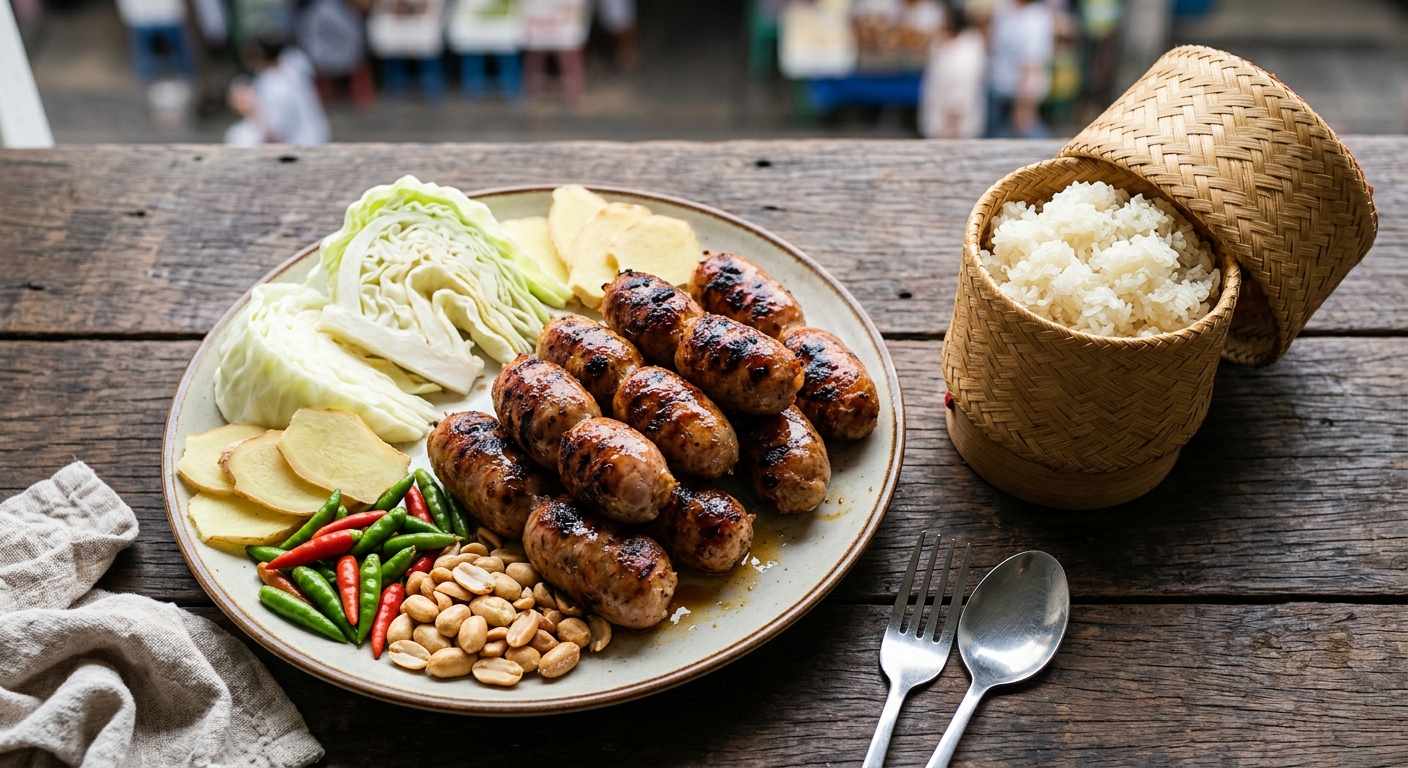
The classic preparation: sai krok isan cooked over charcoal until the casing blisters and chars in places, then served with a plate of sticky rice, fresh ginger coins, bird's eye chillies, and raw cabbage. This is exactly how roadside stalls in Amphoe Phon, Khon Kaen serve it — no sauce, no accompaniment beyond the raw vegetables. The fermented sausage does its own work.
Khao Pad Sai Krok Isan (Fried Rice with Sai Krok)
Sai Krok Isan
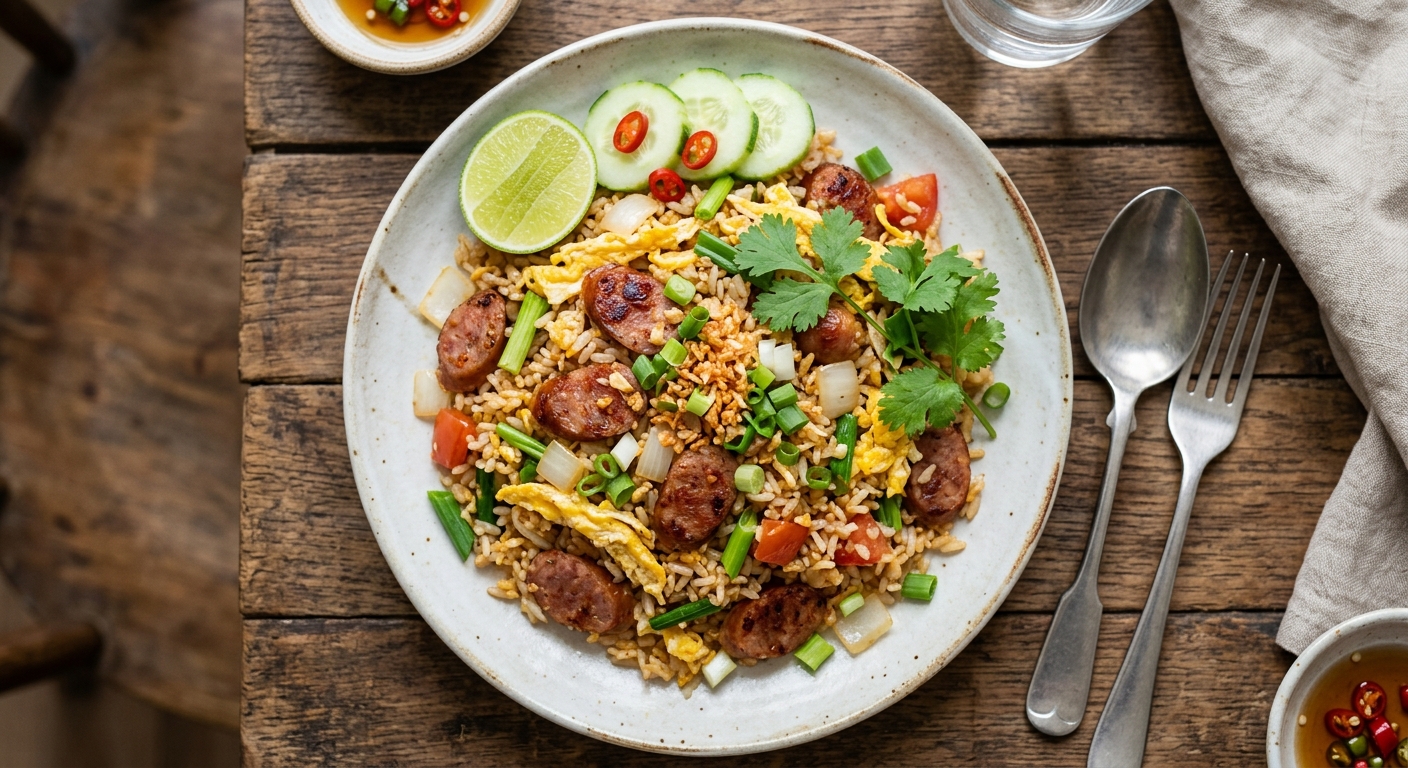
Thai fried rice made with sliced sai krok isan as the main protein. The sour, garlicky sausage seasons the rice in a way that no fresh protein can match: the fermented rice inside the casing merges with the cooked rice in the wok and the acidity cuts through the egg fat. Finish with a squeeze of lime and a fish sauce-chilli condiment on the side.
Sai Krok Isan Pad Krapao (Stir-Fried with Holy Basil)
Sai Krok Isan
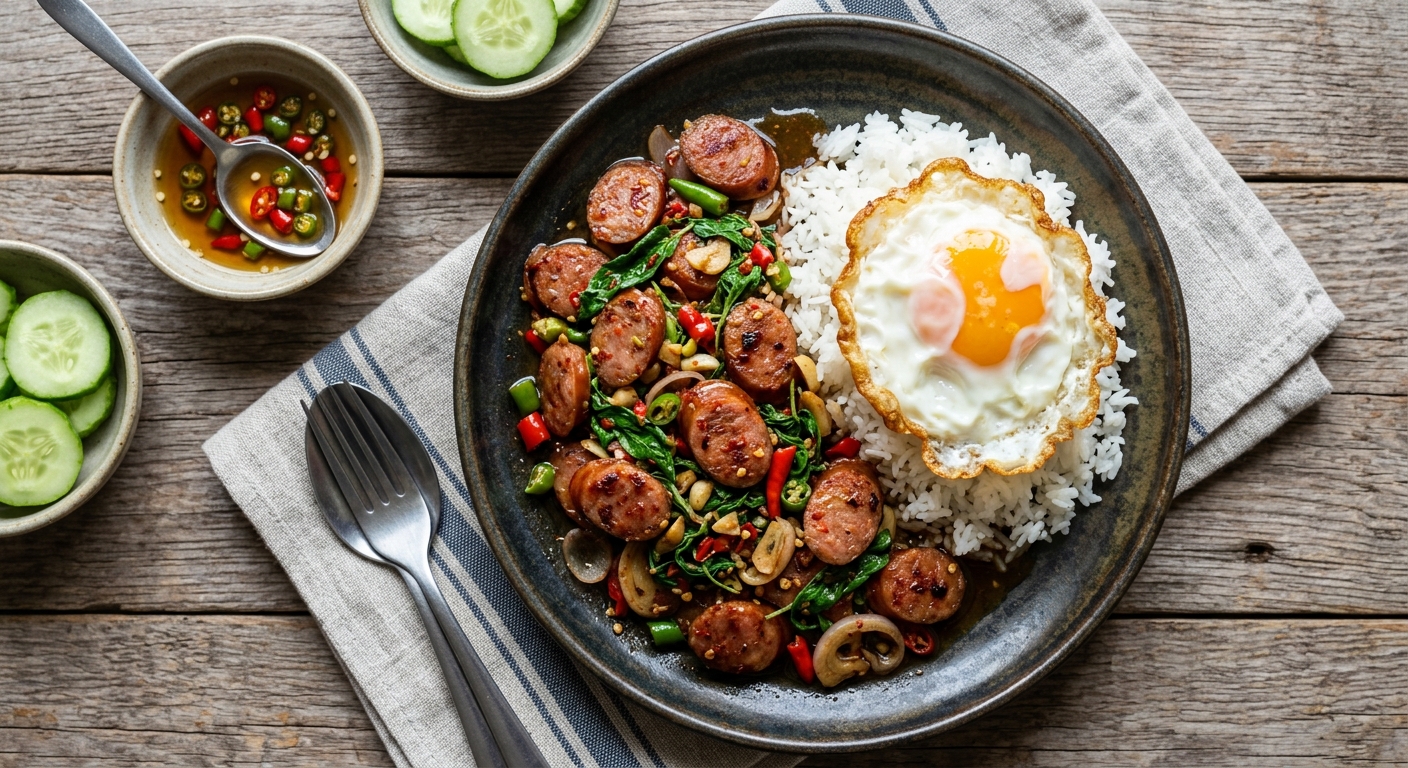
Pad krapao is Thailand's most-ordered stir-fry: meat or protein with garlic, bird's eye chillies, fish sauce, oyster sauce, and a fistful of holy basil (krapao) dropped in at the end. Using sliced sai krok isan as the protein introduces the sour fermented note of the sausage into the dish, which sits unexpectedly well against the heat of the chillies and the perfume of the basil. Serve with jasmine rice and a fried egg on top.
Sai Krok Isan with Som Tam
Sai Krok Isan
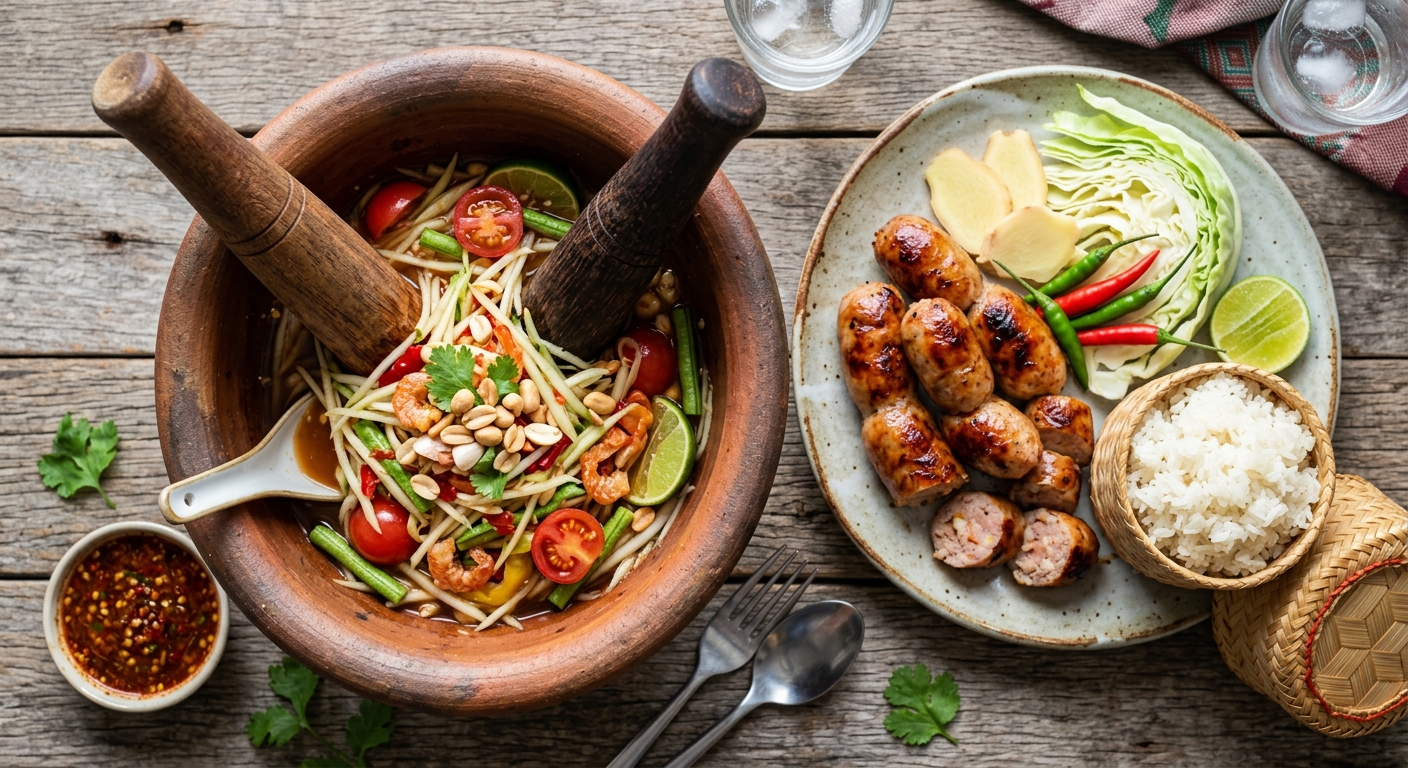
The most Isan of all combinations: grilled sai krok isan served alongside a fresh som tam (green papaya salad). No cooking required for the som tam itself — the pestle and mortar does all the work. The sour fermented sausage and the sour papaya salad are not redundant: their acids arrive differently, one from lactic fermentation and one from lime juice, and the sausage fat grounds the freshness of the raw salad. A standard Isan outdoor meal.
Sai Krok Isan Tod (Deep-Fried Sai Krok Isan)
Sai Krok Isan
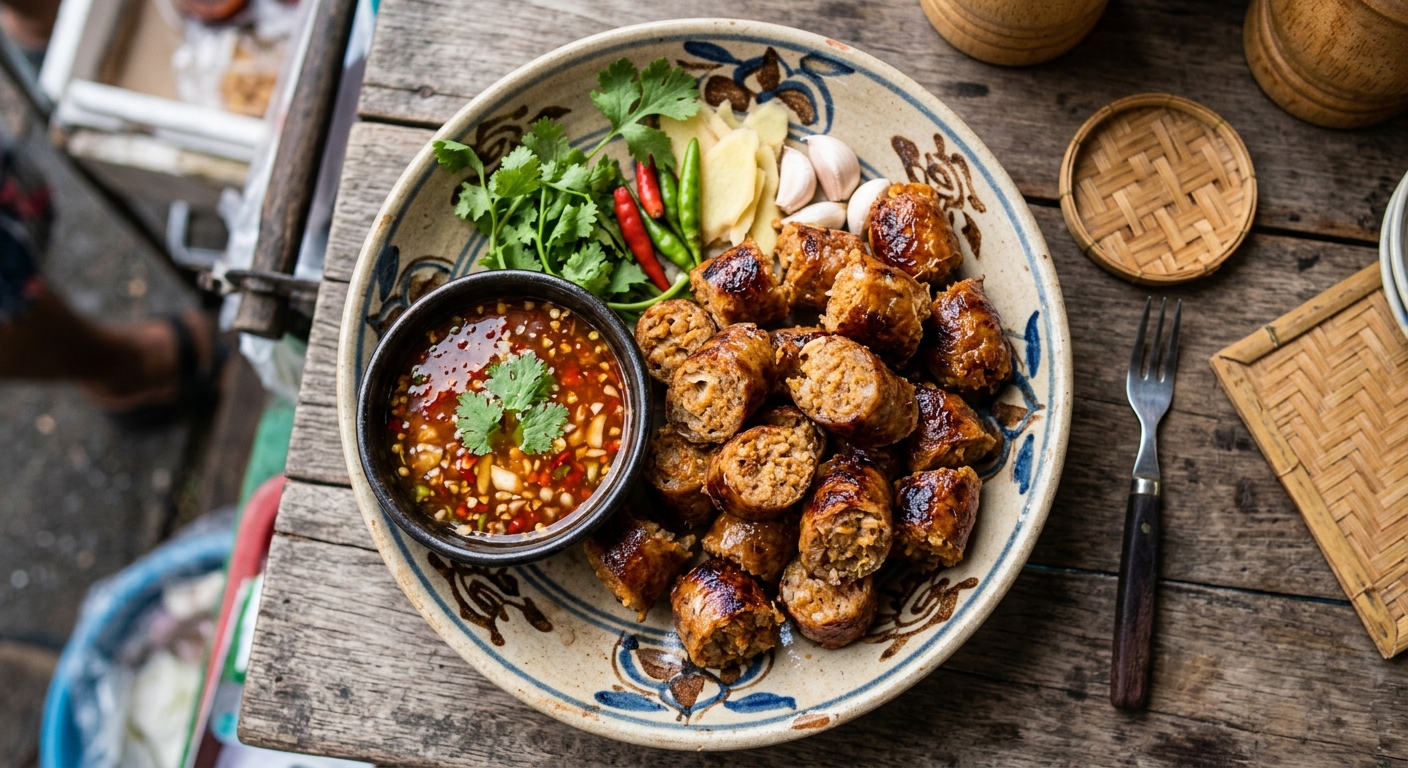
Frying sai krok isan in hot oil produces a result quite different from the grill: the casing goes crisp and shatters on the bite while the interior stays moist and sour. Street vendors in Bangkok markets use a small wok of oil rather than charcoal for speed. The fried links pair well with nam jim jeaw, a roasted chilli dipping sauce, in addition to the standard ginger and cabbage.
Yam Sai Krok Isan (Spicy Sai Krok Salad)
Sai Krok Isan
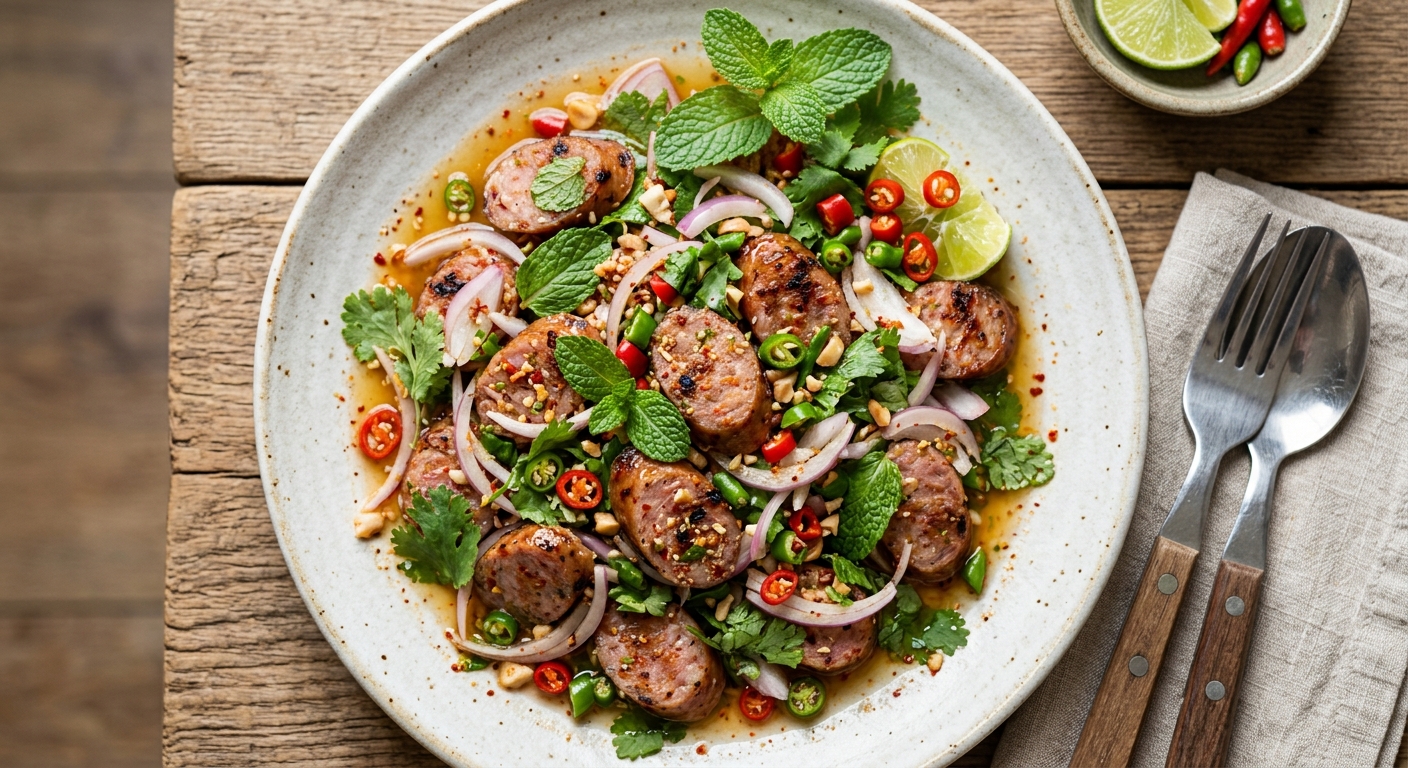
Yam is the Thai category of dressed, room-temperature salads built on lime juice, fish sauce, and chilli. This one takes grilled sai krok isan, slices the links into coins, and dresses them with a sharp lime dressing over shallots, lemongrass, and torn mint. The sourness of the fermented sausage and the sourness of the lime dressing reinforce each other. The result is a bold, herby dish that works as a starter or a rice side.
On the Map
Where to Eat
Mam Yai Goong
Amphoe Phon, Thailand
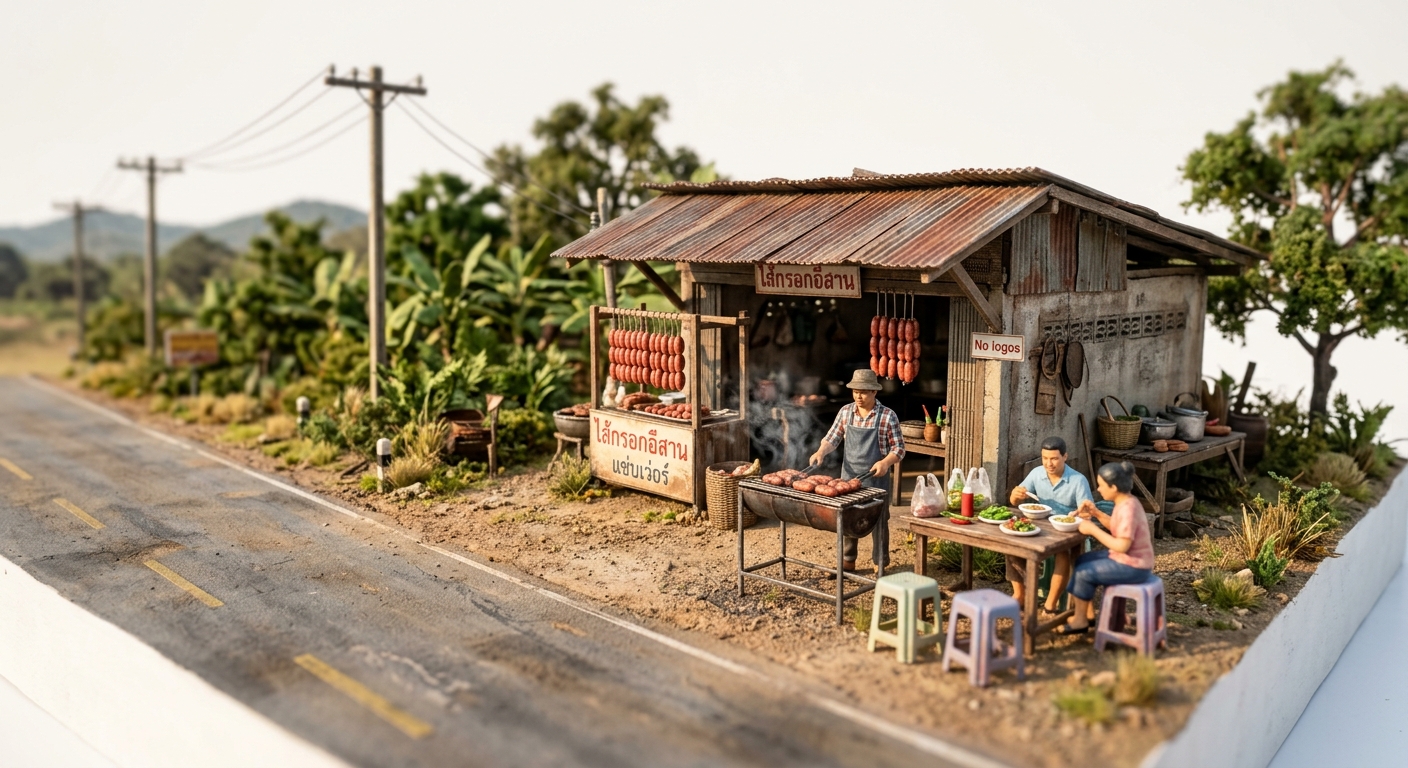
Mam Yai Goong (ร้านหม่ำยายกุ้ง) sits on the Mittraphap Highway in Amphoe Phon, Khon Kaen, in the district that functions as the sausage capital of Isan. The shop makes both sai krok isan (ไส้กรอกอีสาน) and mam (หม่ำ), a related fermented sausage with a stronger cure. Sausages are hung in long strands and grilled to order over charcoal while customers wait. Most buyers stop at the roadside, choose their strands, and leave with vacuum-packed bags for the journey home to Bangkok or further north. A handful of tables at the back offer the chance to eat on the spot with sticky rice, fresh ginger coins, and bird's eye chillies. The grills run from before sunrise. The sai krok isan here is short-linked, well-fermented, and sold by the dozen. Amphoe Phon's reputation rests on producers like this one, which supply the rest of Thailand through travellers and market intermediaries.
Nang Loeng Market
Bangkok, Thailand
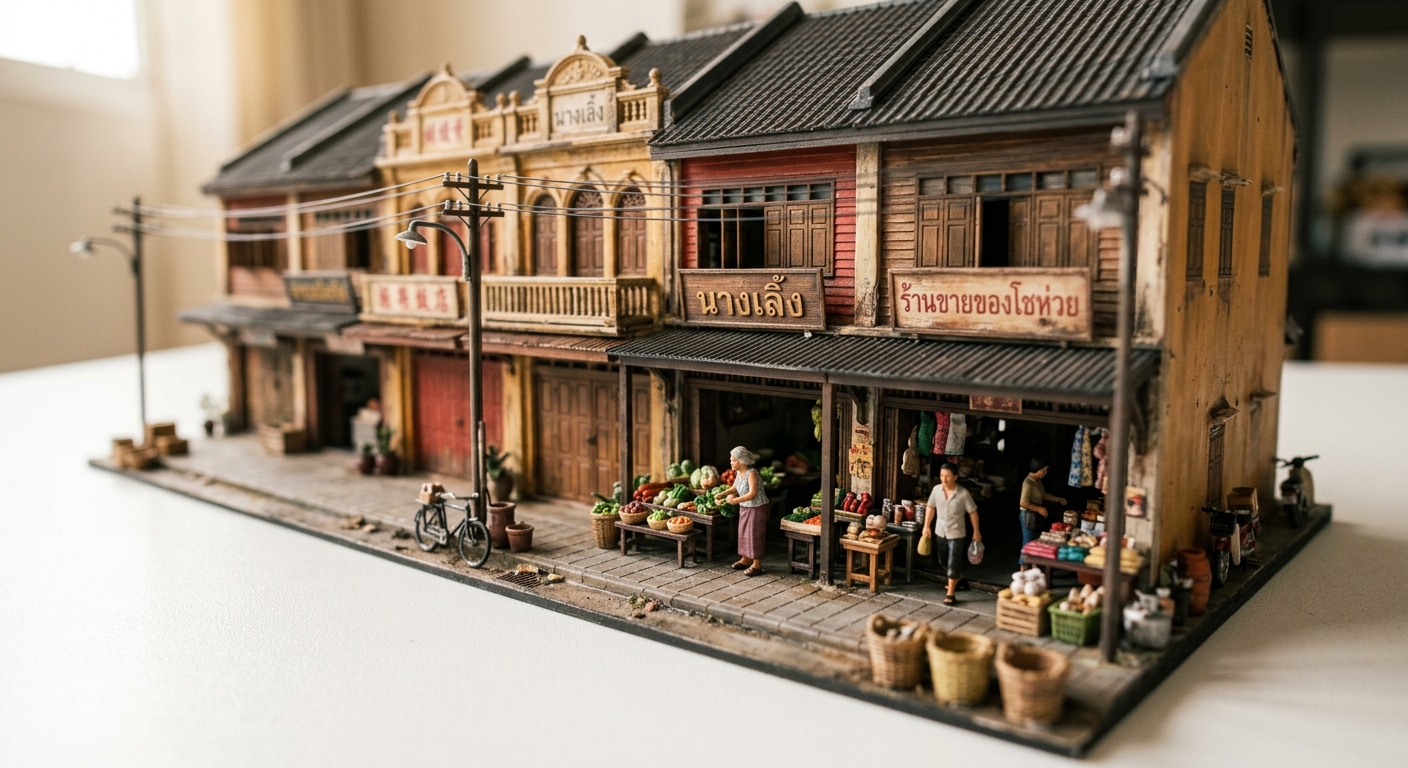
Nang Loeng (ตลาดนางเลิ้ง) is one of the oldest surviving markets in Bangkok, established in the Rattanakosin era and still operating from its original covered structure off Nakhon Sawan Road in Pom Prap Sattru Phai district. It draws a lunchtime crowd of civil servants and residents from the historic quarter. The market runs on a morning and early afternoon schedule and closes well before evening. Among the vendors inside, a stall called Mae Lek specialises in sai krok pla naem, a Bangkok variant of Isan fermented sausage that incorporates shredded snakehead fish crumble alongside the pork. The dish arrives with a mound of fresh herbs, crushed peanuts, a coin or two of fresh ginger, and a couple of small chillies, all wrapped in a cabbage leaf. Other sai krok isan vendors at Nang Loeng grill standard pork-and-rice versions over charcoal trays at the market entrance. The market is a reliable place to eat a genuine old-Bangkok version of the Isan sausage in an environment that has changed little since the mid-20th century.
Or Tor Kor Market
Bangkok, Thailand
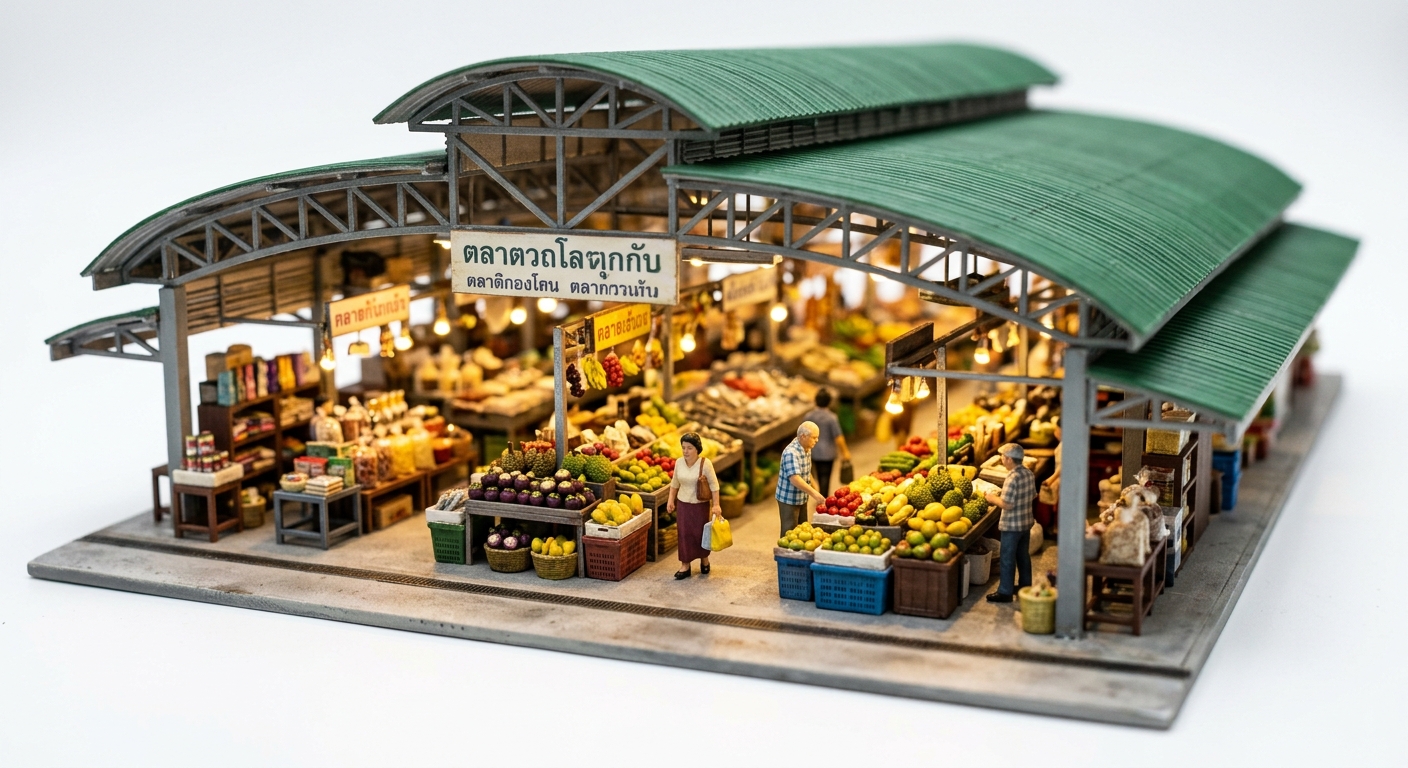
Or Tor Kor (ตลาด อตก.) is a government-run fresh market at Kamphaeng Phet Road in Chatuchak, directly opposite the Chatuchak Weekend Market and connected to Kamphaeng Phet MRT station. CNN named it one of the ten best fresh markets in the world in 2017. The market operates daily from early morning and stocks the widest selection of premium Thai produce in Bangkok: tropical fruits, fresh herbs, dry goods, prepared curries, and regional food from across the country. The Isan section sells sai krok isan grilled at market stalls alongside nam prik pao, som tam ingredients, and fermented fish products (pla ra). The sausages here come from Isan suppliers and are grilled to order over small charcoal trays, served with the standard accompaniment of sticky rice, raw ginger, and chilli. Prices run higher than at roadside stalls upcountry, but the quality is consistently good and the hygiene standards are among the best of any open market in Bangkok.