Nem Chua
Nem chua
Thanh Hóa, Vietnam
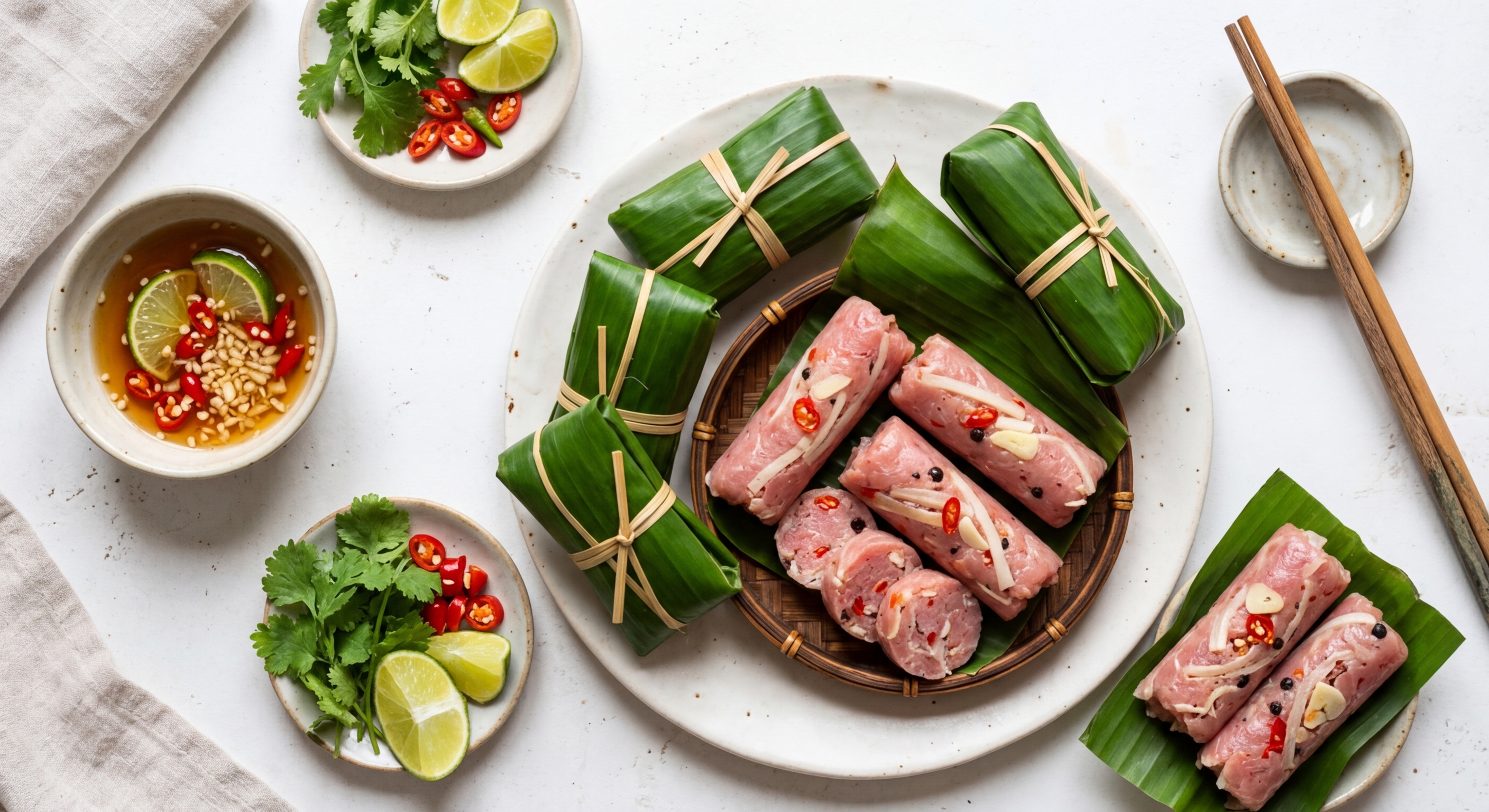
Nem chua is a Vietnamese fermented pork sausage eaten raw, straight from its banana leaf wrapping. Made from lean pork pounded to a smooth paste, it incorporates strips of boiled pork skin (bì), garlic, fish sauce, sugar, and salt, then wrapped tightly in banana leaves and left to ferment at room temperature for three to five days. Lactic acid bacteria do the preserving work, acidifying the paste and firming the texture without any heat. The finished sausage is pink, fragrant with garlic, and sour from the ferment. Vendors sell it in small parcels tied with a strip of the same leaf. Buyers unwrap it at the table, often eating it with a toothpick alongside fresh chilli slices and pickled garlic. The most cited origin is Thanh Hóa province in north-central Vietnam, where the technique and proportions have a long history. Versions from Lai Vung in Đồng Tháp and Bình Định province each have local champions, but Thanh Hóa remains the benchmark.
History
Nem chua belongs to a family of Southeast Asian fermented pork preparations that use lactic acid fermentation to preserve raw meat in tropical conditions. In Vietnam, the technique is widespread but Thanh Hóa province claims the version that set the standard. The province sits on the narrow coastal plain south of Hanoi, and its nem chua developed a reputation built on the local pork breeds and the specific proportions of skin to lean meat. By the late 20th century, shops in Thanh Hóa city sold vacuum-packed parcels for travellers to carry home as gifts, much like the sausage stalls of Amphoe Phon in Thailand do for sai krok isan. The practice of giving nem chua as a souvenir from Thanh Hóa remains common. In the Mekong Delta, Lai Vung district in Đồng Tháp developed its own version distinguished by a sweeter profile and tighter wrapping, and the local nem chua bà Năm style has its own following. Across Vietnam, nem chua is a staple street snack eaten alongside bia hơi, the fresh draft beer sold by the glass at pavement stalls. The fermentation period is short enough that home producers make it regularly, and the sausage is also mass-produced and distributed in vacuum-sealed form throughout the country.
Ingredients
Preparation
Lean pork is pounded by hand or ground very fine, then mixed with toasted rice powder, fish sauce, sugar, salt, and crushed garlic. Boiled pork skin is cut into thin strips and folded through the meat paste to add texture and a chew distinct from the surrounding flesh. The mixture is shaped into small cylinders or rounds, placed on a square of banana leaf, and a clove of garlic and a slice of chilli are set on top before the leaf is folded tight and tied with a strip of the same leaf or with rubber bands. The wrapped parcels rest at room temperature for three to five days, longer in cooler weather. The banana leaf keeps out air while allowing the slow seep of moisture, and the acids building up inside the parcel create the sour, lactic flavour that defines the finished product. The skin strips firm further during fermentation and the overall texture tightens. No cooking is required after fermentation.
Taste
Sour and savory, with the lactic tang arriving first and the garlic following close behind. Sugar in the mix rounds the acid edge without making the sausage sweet. The fish sauce gives a depth that salt alone would not achieve. Eaten with a slice of fresh chilli, the heat lifts the acid note and makes the garlic more present. Pickled garlic alongside cuts through the fat of the pork skin with its own vinegar sharpness.
Texture
Firm and slightly chewy from the lean pork paste, with a crunchy contrast from the pork skin strips distributed through the interior. The fermentation tightens the paste so it holds its shape when sliced but gives cleanly under the teeth. The banana leaf contact gives the outer surface a slight tackiness.
Rituals & Traditions
The banana leaf parcel
Nem chua arrives wrapped and tied. The ritual of unwrapping at the table is deliberate: the leaf is the fermentation vessel and the presentation. Parcels are sold individually at street stalls, five or six in a small plastic bag, and the buyer unwraps one at a time. The garlic clove pressed onto the surface of the sausage before wrapping is eaten alongside or left on the plate. Most vendors include a toothpick wedged into the leaf knot.
Thanh Hóa as a souvenir
Visitors to Thanh Hóa buy vacuum-packed nem chua to carry back to Hanoi or Ho Chi Minh City. The sausage keeps in its packaging for several days without refrigeration. The practice of bringing Thanh Hóa nem chua as a gift follows a Vietnamese pattern of regional food souvenirs: the sausage is proof of the journey and a taste of a specific place.
Eat it raw
The fermentation process is the cooking. Nem chua is not a raw sausage waiting to be cooked: it is a cured product that the acid has rendered safe. Heating it drives off the sourness and collapses the texture into something approaching ordinary ground pork. Buy it at the right fermentation point, three to five days old, from a vendor you trust, and eat it as it is.
Recipes
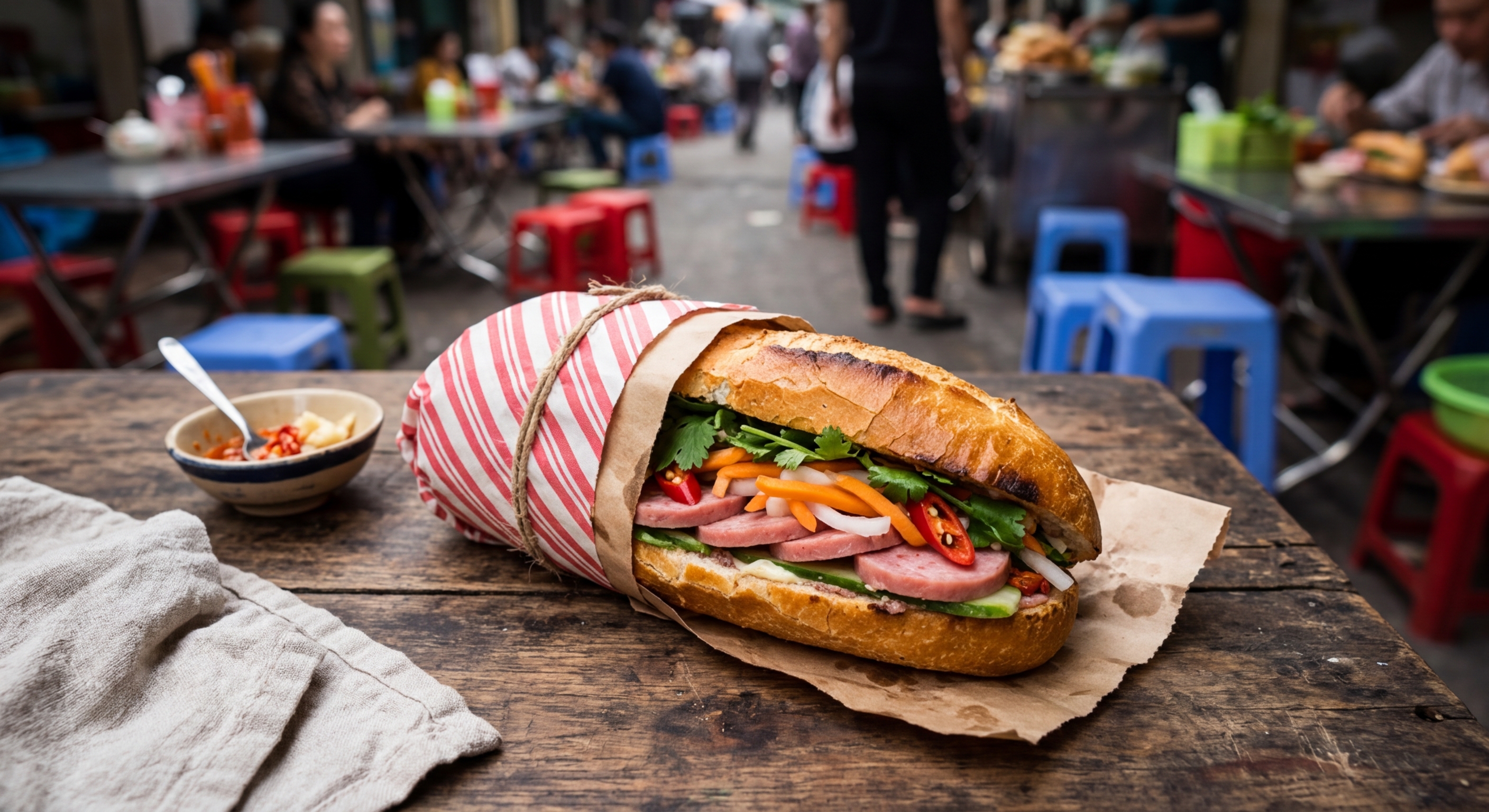
Bánh Mì Nem Chua (Nem Chua Baguette)
Nem Chua
Nem chua in a bánh mì is simple work: slice the sausage, load the baguette, and let the fermented pork carry the sandwich. The pickled carrot and daikon bring their own acid, which stacks against the sourness of the nem chua rather than fighting it. Coriander and cucumber cool the whole thing. The result is a lunch that takes ten minutes and tastes like it came from a proper bánh mì cart.
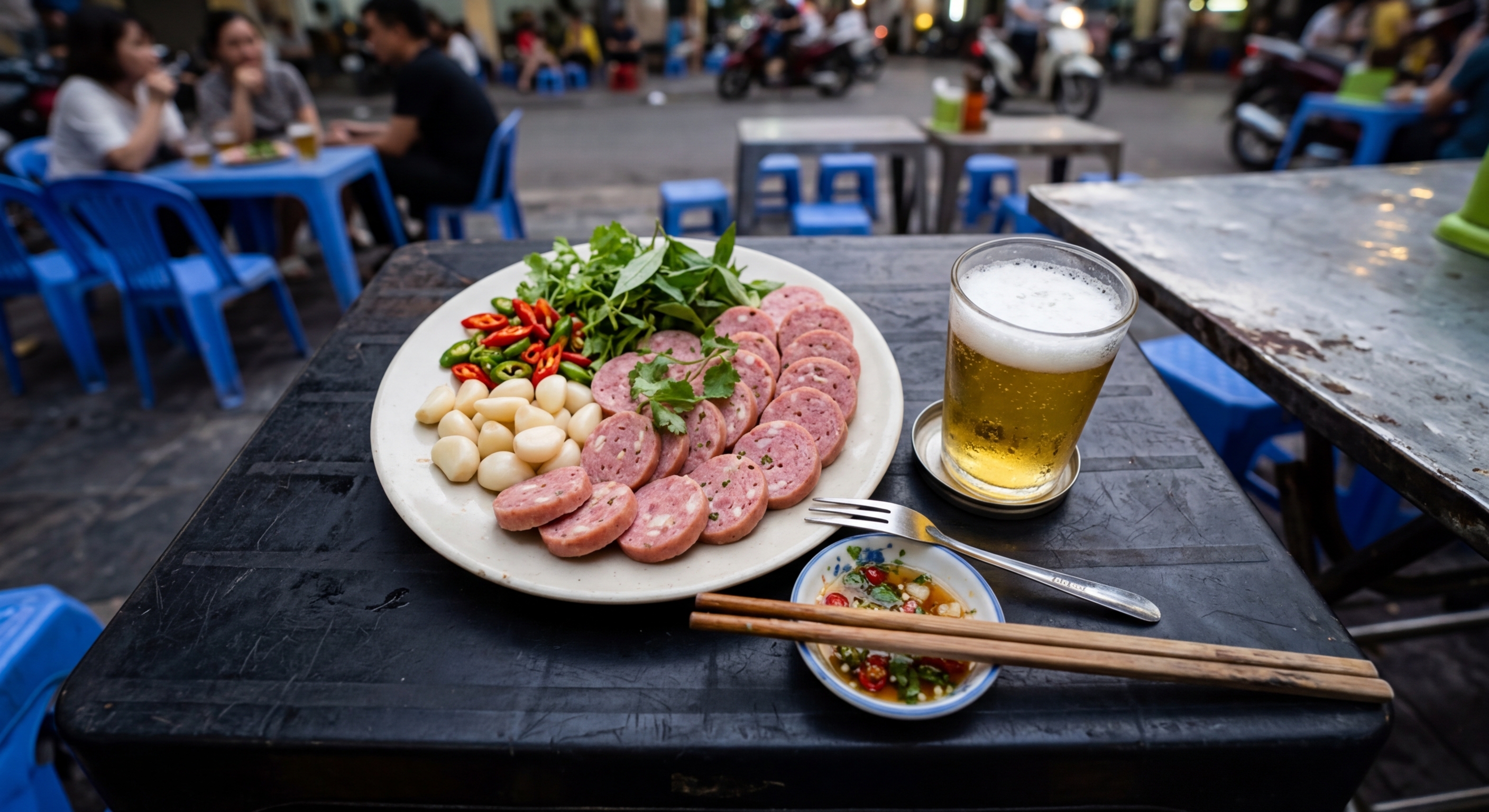
Nem Chua Bia Hơi (Beer Snack Plate)
Nem Chua
This is nem chua in its most direct form: the sausage unwrapped onto a small plate, the pickled garlic set alongside, a few chilli slices, and a cold glass of bia hơi within reach. No cooking, no assembly. The plate replicates the setup at any pavement bia hơi stall in Hanoi. Pickled garlic is the key element that most home versions skip, and its absence changes the plate considerably.
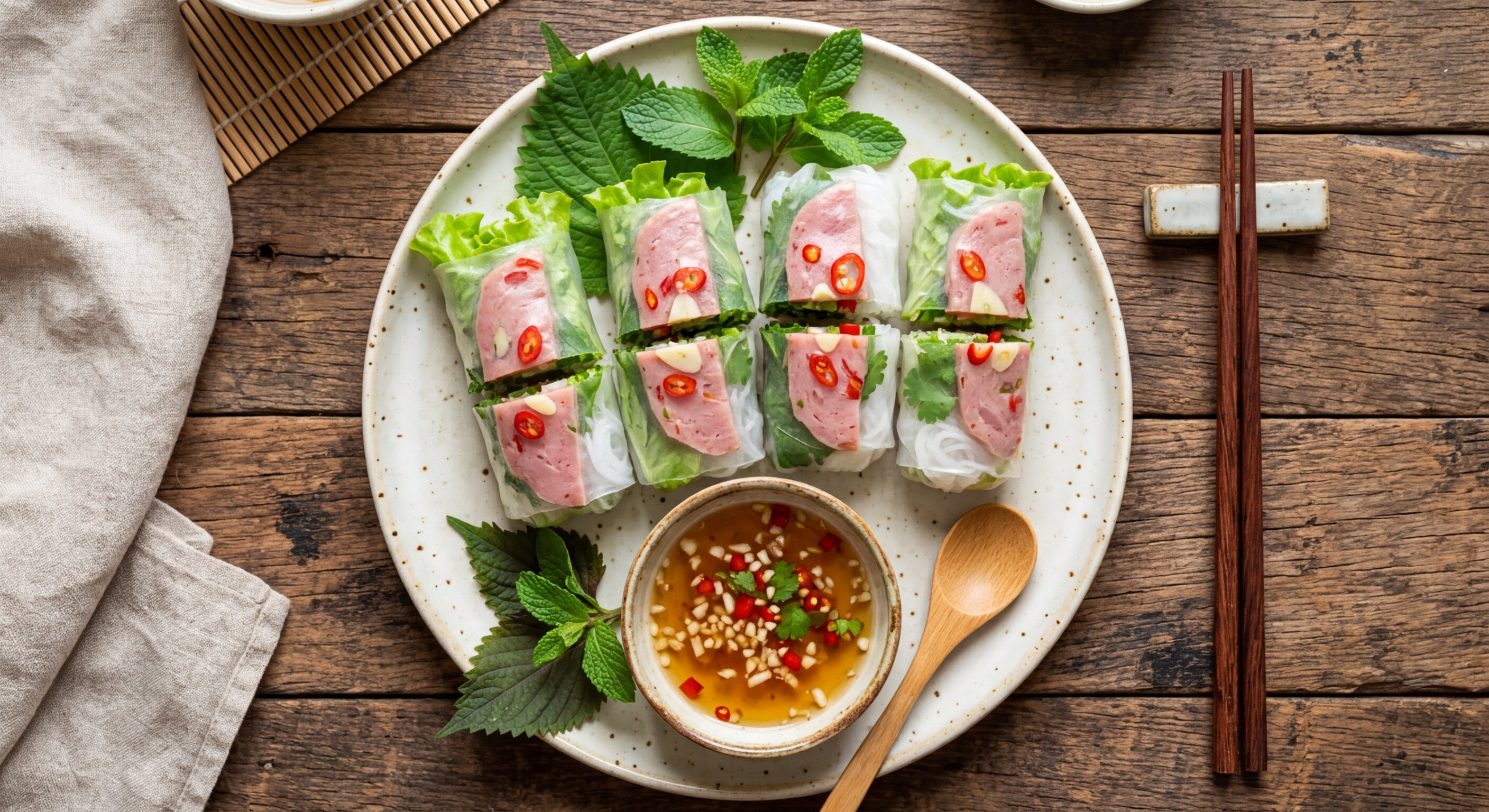
Nem Chua Cuốn (Rice Paper Rolls with Fresh Herbs)
Nem Chua
Nem chua cuốn is the roll-it-yourself approach to eating fermented pork sausage. Softened rice paper goes down flat, a slice of nem chua lands at one end alongside cucumber batons, rice vermicelli, mint, and perilla, and the whole thing rolls into a compact cylinder. The dipping sauce, nước chấm sharpened with lime and chilli, provides the only heat. The nem chua carries the sourness; the herbs cut through the fat of the pork skin; the rice paper keeps it all together.
Nem Chua Nướng (Grilled Nem Chua Skewers)
Nem Chua
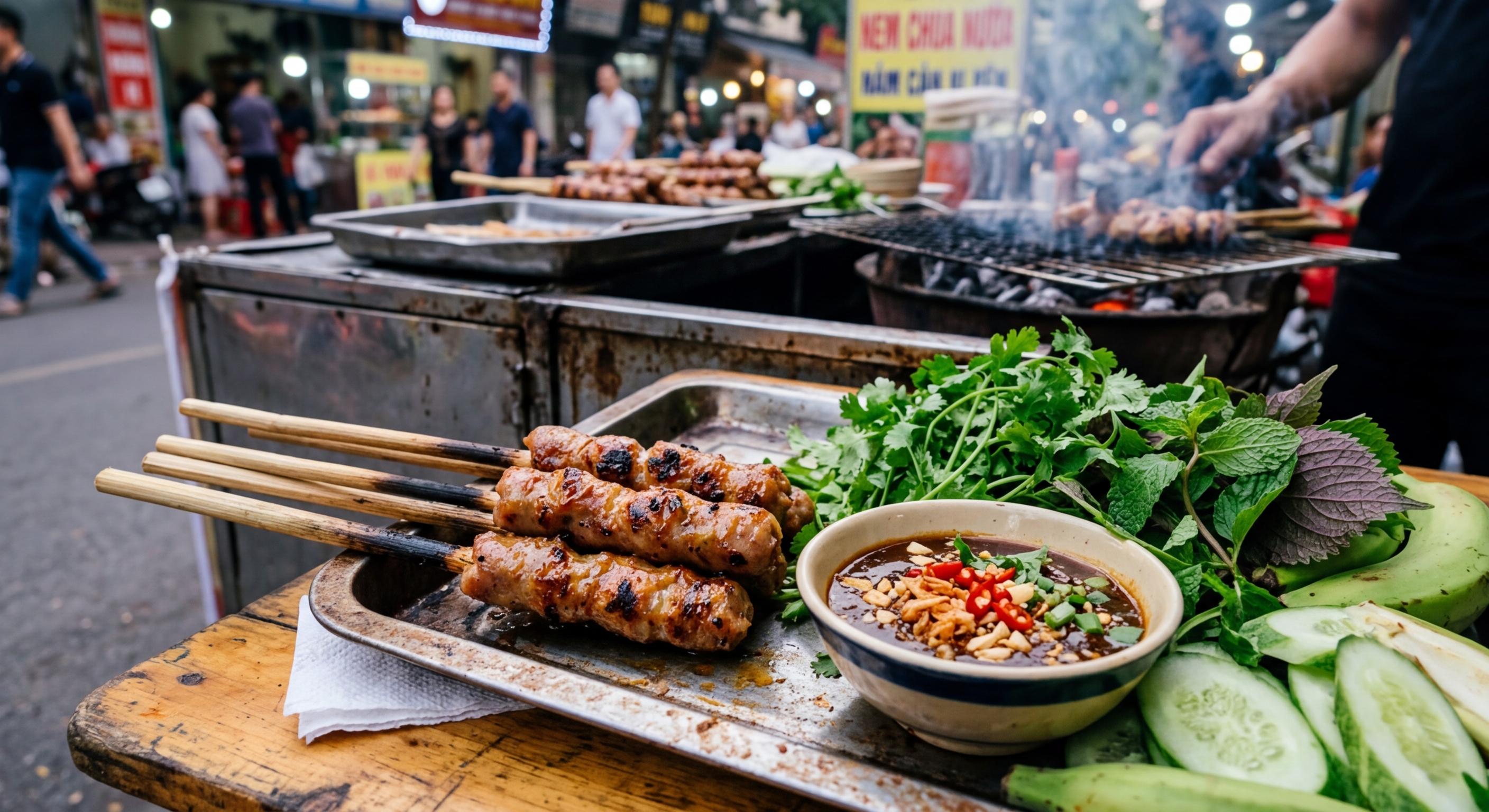
Threading nem chua onto bamboo skewers and grilling over charcoal is the outdoor version of nem chua rán. The heat chars the outer surface in patches and the lactic sourness tightens into something more concentrated as moisture cooks off. The sausage stays intact on the skewer, developing a faint smoke from the charcoal that the raw version lacks entirely. Eaten straight off the stick with a beer.
Nem Chua Rán (Deep-Fried Nem Chua)
Nem Chua
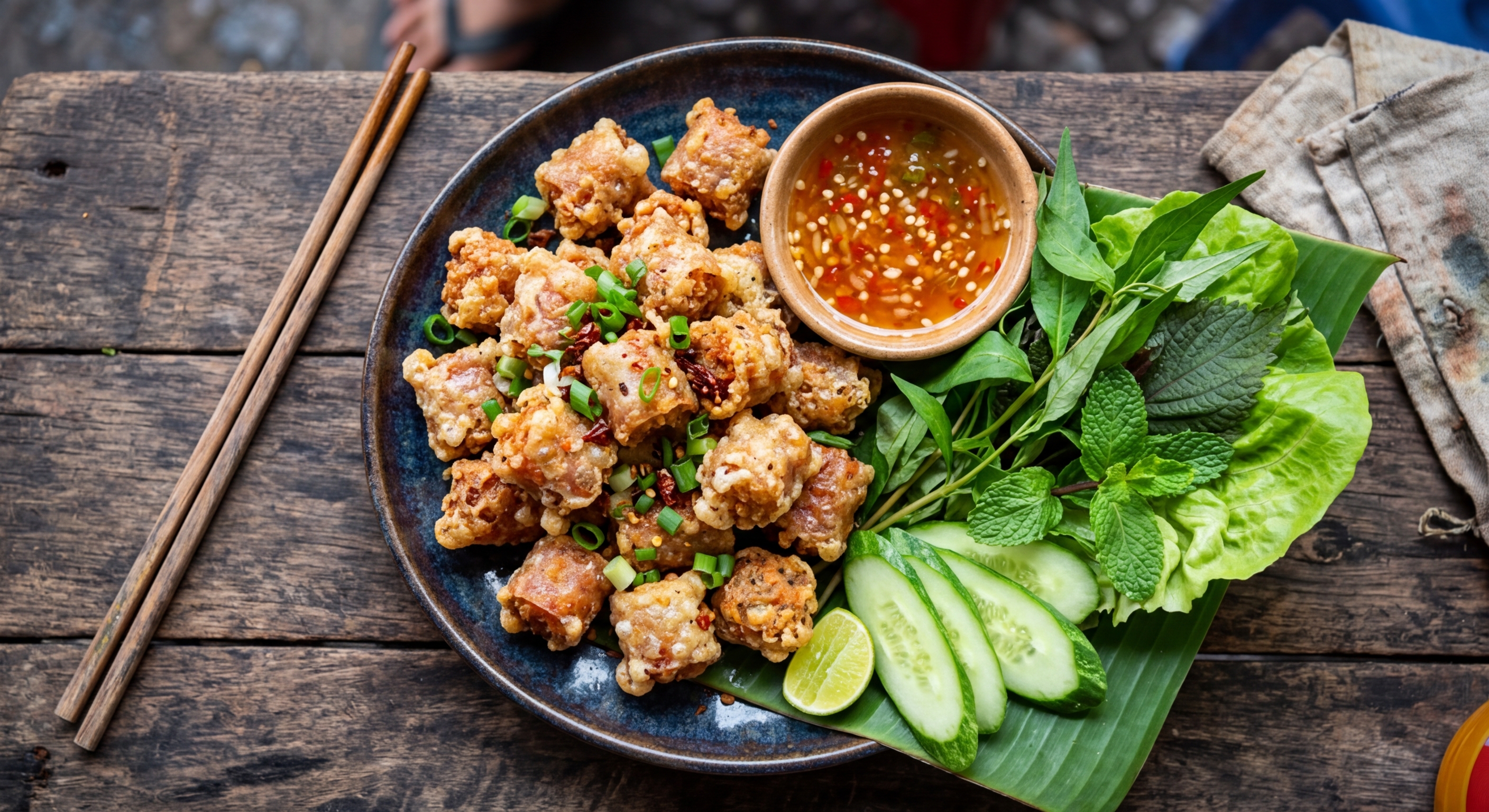
Nem chua rán takes the fermented sausage and drops it into hot oil, which crisps the outside to a crackled shell while the sour, garlicky interior stays warm and yielding. The frying drives off some of the lactic sourness and concentrates the pork flavour instead. Served with a sweet chilli dipping sauce or a bowl of nước chấm, it moves from beer snack to proper starter.
Nem Chua Rau Sống (Nem Chua with Fresh Herb Platter)
Nem Chua
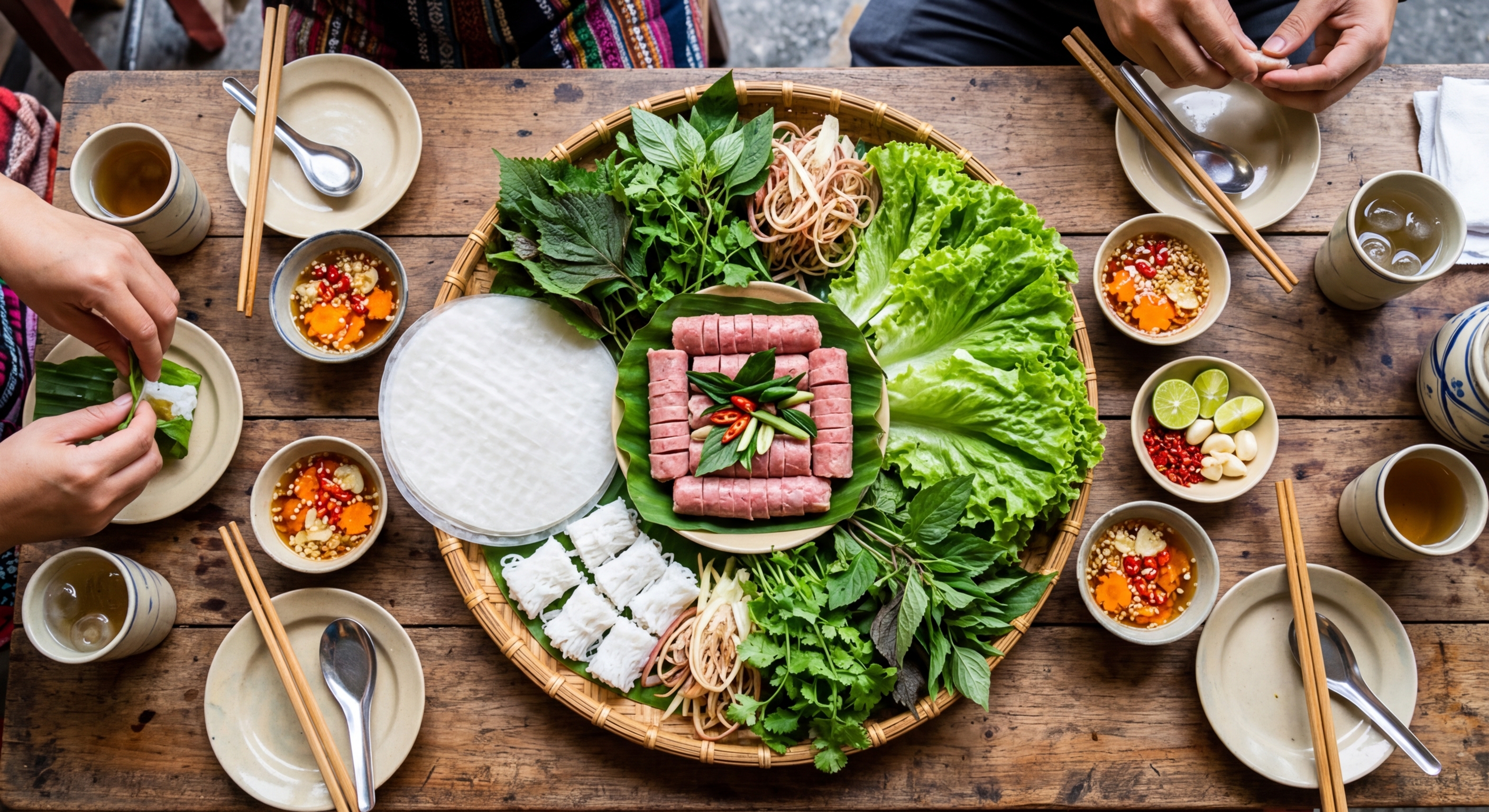
Rau sống means fresh raw vegetables and herbs, and in Vietnamese table culture a rau sống platter accompanies most grilled or cured meats as a matter of course. Here it is built specifically for nem chua: bitter perilla, sweet basil, crunchy water spinach stems, cucumber, and banana blossom alongside the fermented sausage and a bowl of dipping sauce. Each guest assembles bites at the table. The herb selection is the recipe.
On the Map
Where to Eat
Chợ Đông Ba
Huế, Vietnam
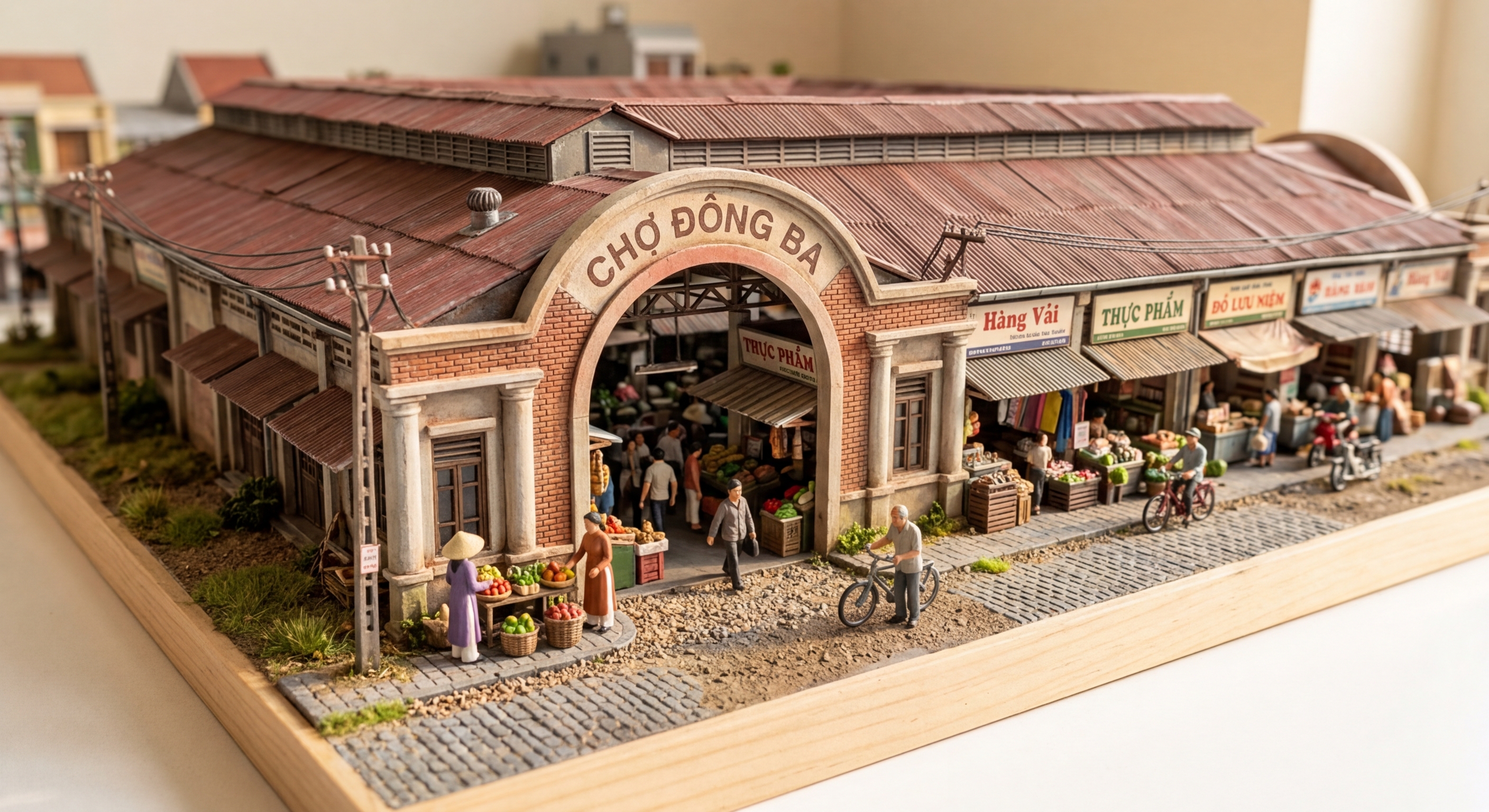
Chợ Đông Ba is the main covered market of Huế, operating since 1887 on the northern bank of the Perfume River (Sông Hương) near the old imperial citadel. The market runs across several floors and buildings, with the ground level devoted to fresh food: vegetables, fish, meat, and prepared foods. A cluster of vendors in the central food hall sells nem chua and nem nướng alongside other Huế charcuterie. The nem chua here shows a slight regional variation from the Thanh Hóa style: the parcels are smaller, the wrapping tighter, and the sausage leans slightly sweeter from a higher sugar proportion. Vendors sell parcels by the piece or in small bags of ten. The market also supplies bánh bèo, bánh nậm, and other Huế specialities, but the fermented pork section draws locals doing routine food shopping as well as visitors looking for a regional comparison to the northern style.
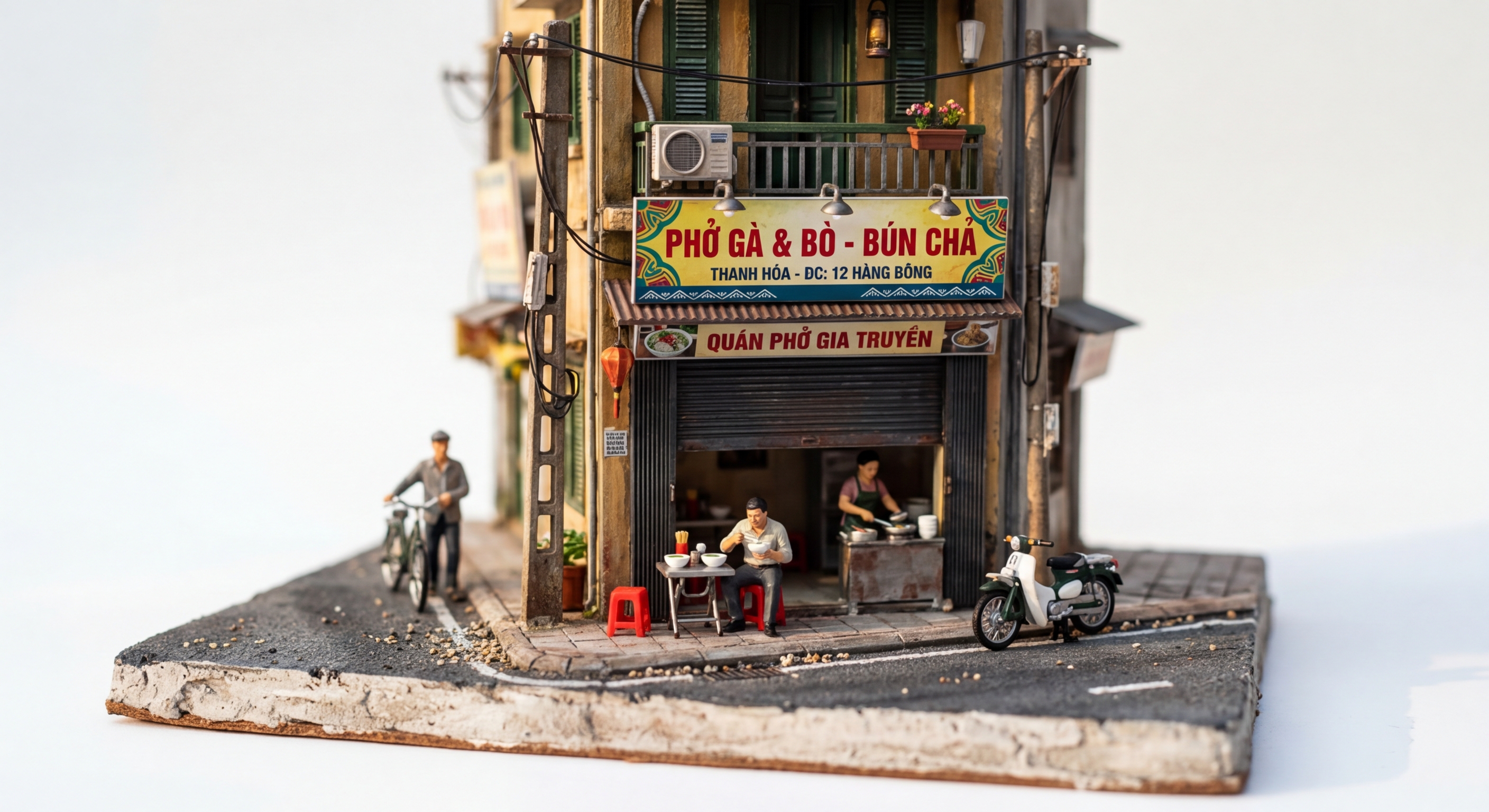
Nem Chua Bà Thu
Thanh Hóa, Vietnam
Bà Thu is one of the longest-running nem chua producers in Thanh Hóa city, operating from a shophouse on Lê Hoàn Street in the city centre. The shop sells nem chua wrapped in banana leaves and also vacuum-sealed parcels for travellers. Three to five days of fermentation at ambient temperature is the standard, and the sausage is made fresh each morning. Buyers line up in the early afternoon when the day's batch reaches the right sourness. The ratio of lean pork to bì (pork skin strips) leans toward the lean side, giving the Bà Thu version a firmer, denser texture than the sweeter southern styles. The parcels come tied with a strip of banana leaf and a whole garlic clove and a dried chilli tucked against the surface. The shop also sells nem nướng (grilled pork sausage) and chả quế (cinnamon pork roll) alongside the nem chua, but the fermented sausage draws the most traffic.
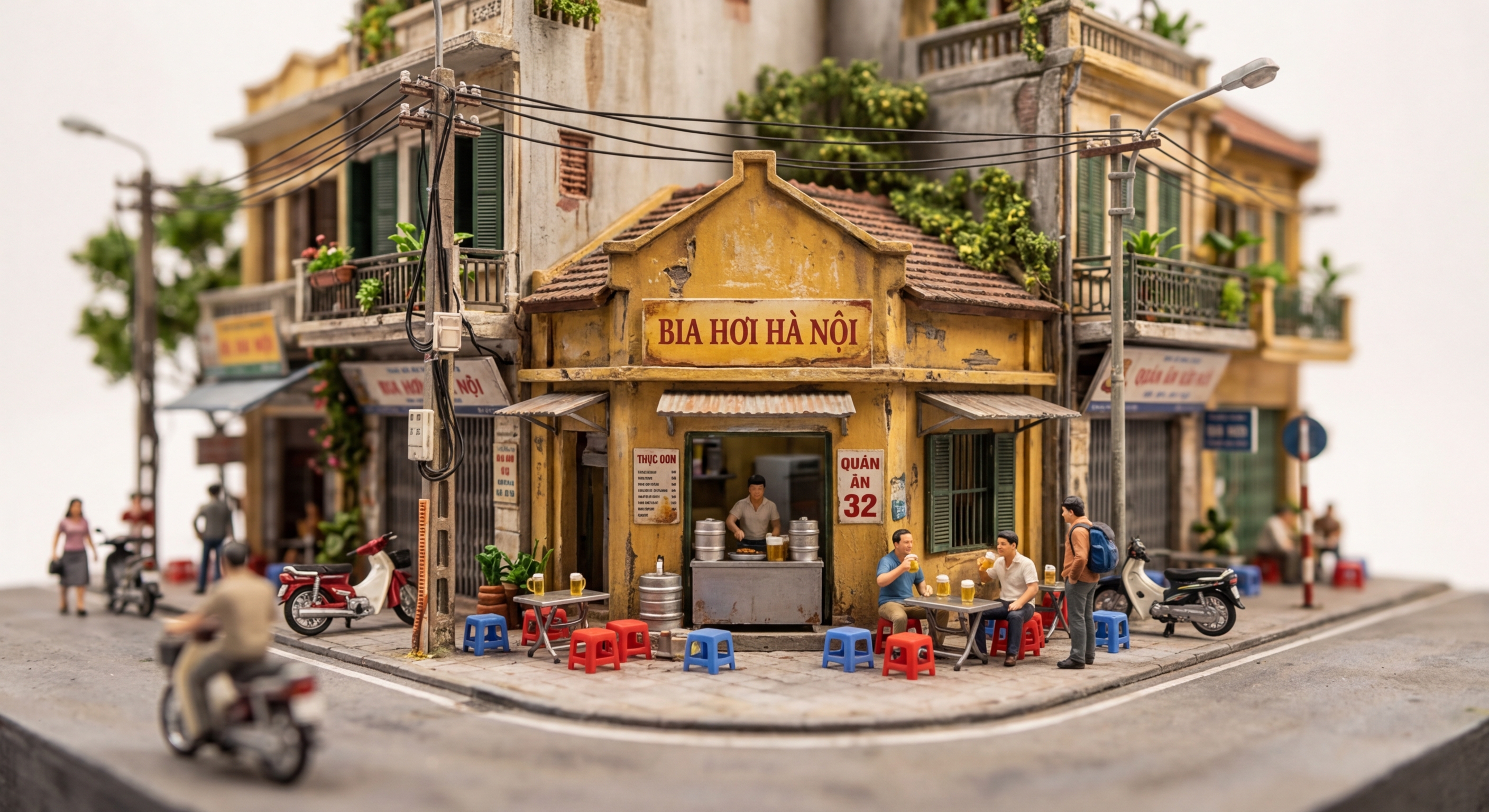
Bia Hơi Corner (Phố Cổ)
Hanoi, Vietnam
The intersection of Lương Ngọc Quyến and Tạ Hiện streets in Hanoi's Old Quarter (Phố Cổ) is the most photographed bia hơi corner in Vietnam. Dozens of plastic-stool vendors set up each afternoon selling fresh-brewed low-alcohol lager by the glass for a few thousand dong. Nem chua arrives on small plates alongside the beer, often with a dish of pickled garlic, sliced fresh chilli, and a few crackers. The sausage comes from nearby Thanh Hóa-style producers who supply the Old Quarter stalls. The setting is open-air, with tables spilling onto the pavement, and the crowd peaks in the early evening. The corner is a reliable place to eat nem chua in the context it was made for: a beer snack at dusk, eaten quickly with a toothpick, against the noise of Old Quarter traffic.