Mici
Mici / Mititei
Bucharest, Romania
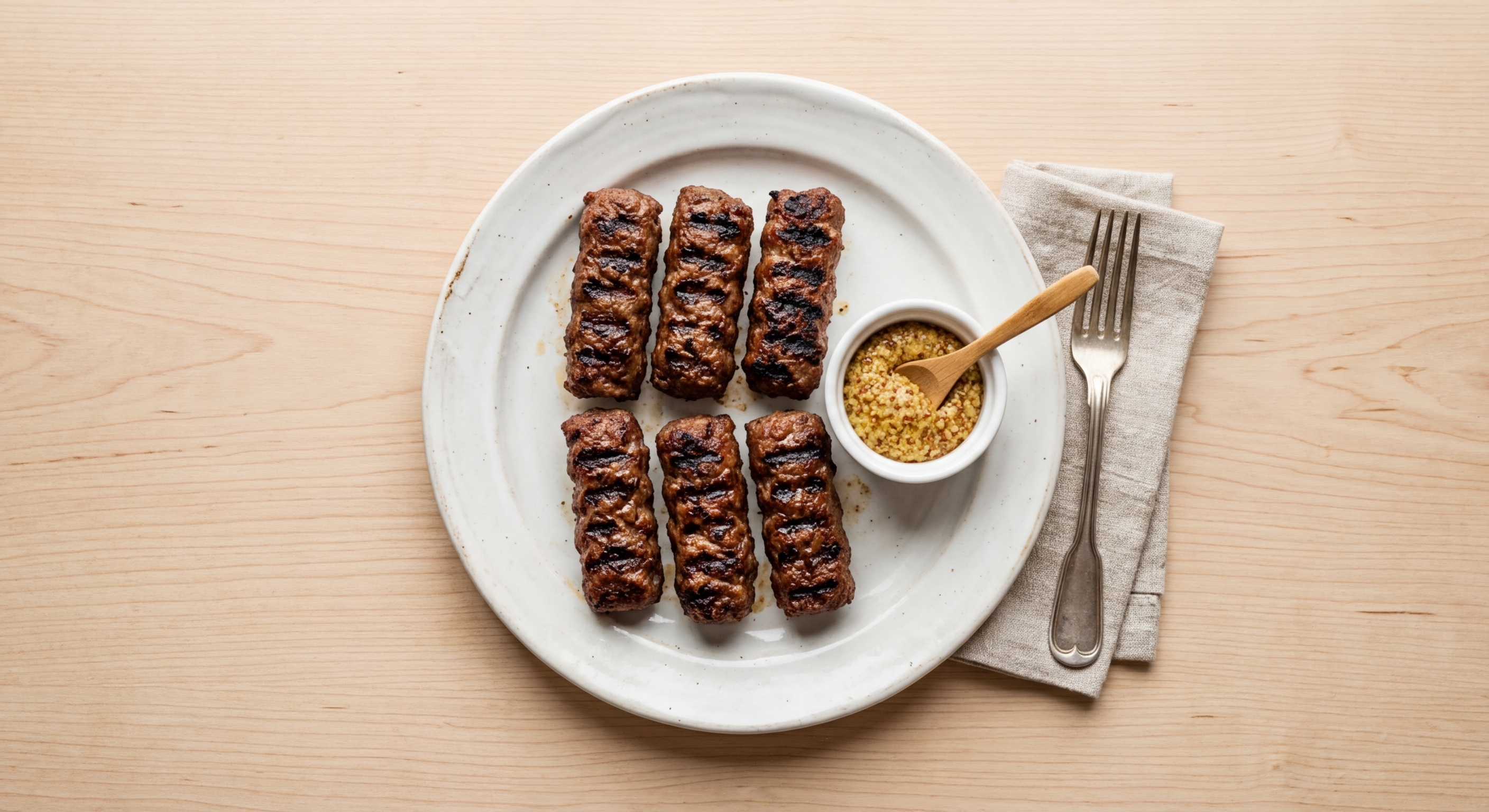
Mici are Romania's national street food: skinless grilled cylinders of seasoned minced meat, about 8 centimetres long, eaten with sharp mustard and cold beer. They have no casing. The mix is beef-dominant, with pork added for fat, sometimes lamb for depth. Garlic, black pepper, and dried thyme (cimbru) season the meat; baking soda dissolved in cold beef broth makes them puff on the grill, giving a light interior beneath the char. Every Romanian summer terrace has a charcoal grill running from noon to midnight, and mici are what that grill produces. The dish exists in Moldova too, under the same name and largely the same recipe.
History
The origin story involves a Bucharest han, the Ottoman-derived inn-courtyard where travellers ate and drank in the 18th and 19th centuries. Popular accounts say a cook at one of these hans ran out of sheep gut casings during a busy service, shaped the meat mixture into bare cylinders anyway, and grilled them directly over the coals. Whether or not this particular story is true, the han was the central eating institution of Ottoman-era Bucharest, and the transition from sausage with casing to sausage without one is the kind of practical improvisation that characterises how street foods evolve. The name mititei is the diminutive of mici, both meaning 'small ones' in Romanian. Written references to the dish in Bucharest date to the late 19th century, and by the interwar period mici had become standard at the city's bere gardens (beer gardens), which were a central feature of Bucharest summer life. The communist period institutionalised mici production: state food enterprises standardised the recipe, and every canteen and beer hall in the country served some version of the dish. After 1989, the privatisation of food production led to a proliferation of regional and household recipes. The baking soda and cold broth technique, which produces the characteristic puffed texture, is now considered standard, but older recipes omit it and rely on high fat content alone to achieve the interior lightness.
Ingredients
Preparation
The meat is minced, seasoned, and mixed by hand for several minutes to develop the protein network that holds the shape without a casing. Baking soda is dissolved in cold broth and worked into the mixture, which is then covered and rested in the refrigerator for at least two hours, and often overnight. The rest period allows the baking soda to work evenly through the fat. Before grilling, the mixture is shaped by hand into cylinders of about 8 centimetres length and 3 centimetres width, using wet hands to prevent sticking. The grill must be at maximum heat over white charcoal with no visible flame. Mici go onto the grate and are left without touching for 4–5 minutes until they release naturally; premature turning causes splitting. They are turned once, grilled for a further 3–4 minutes, then served immediately with muștar and white bread.
Taste
The first flavour is garlic, present from the first bite and carrying through to the finish. Black pepper comes next, coarse-ground so it punctuates rather than blends. The beef fat rounds everything out; pork fat makes the texture richer. Dried cimbru (thyme) runs underneath all of it, a faint herbal note that distinguishes Romanian mici from similar Balkan dishes. The char from charcoal adds smoke. Muștar, the sharp Romanian mustard typically served alongside, cuts through the fat and sharpens every bite.
Texture
The baking soda and broth technique produces a texture that is lighter than the meat content suggests. The exterior chars and crisps at the edges; the interior is loose and open, not dense. There is no snap from a casing. The bite goes straight through. Mici grilled at high heat over charcoal have more textural contrast than pan-fried versions: the surface firms up more, the char is harder. Eaten hot from the grill, they are at their most cohesive; as they cool, the fat sets and the interior firms.
Rituals & Traditions
The summer terrace grill
Romanian summer culture revolves around the terasa: the outdoor restaurant or beer garden that operates from May through September, often until one or two in the morning. A charcoal grill runs continuously. The standard order is mici, beer, and bread. Tables are communal or shared by groups, and the air carries charcoal smoke from the time the terrace opens. Eating mici at an indoor restaurant in winter is common and entirely legitimate; eating them on a summer terrace at 11pm with a cold Ursus in hand is the canonical form of the experience. The setting is the point as much as the food.
Eat them immediately off the grill
Mici are at their best within two minutes of coming off the heat. The baking soda creates steam inside the meat during grilling; as the mici cool, that steam condenses and the interior firms. Leaving them on a plate for five minutes changes the texture from open and light to denser and more compact. At a terrace, this means eating in the order they arrive rather than waiting for the full plate. A good grill operator staggers the batches so there are always fresh ones coming.
Do not add the baking soda to warm broth
The baking soda must be dissolved in cold broth before it goes into the meat mixture. Warm broth activates the soda immediately, producing carbon dioxide that escapes rather than being held in the protein network. Cold broth slows the reaction, trapping the gas inside the mixture during the refrigeration rest period. When the mici hit the hot grill, the gas expands and produces the characteristic puff and open interior. This is not a subtle difference: mici made with warm broth are noticeably denser.
1 Mai: the national mici day
Romanian May Day (1 Mai) is the unofficial national mici holiday. Millions of Romanians travel to parks, forests, and lakesides for outdoor grilling. The quantity of mici consumed on this single day is estimated at tens of millions across the country. Supermarkets run out of mici in the days before. Charcoal sells out. The tradition is not organised by any institution; it emerged organically as the first warm weekend of spring became associated with outdoor cooking. The dish that anchors the event is always mici.
Recipes
Mici cu Cartofi Prăjiți
Mici
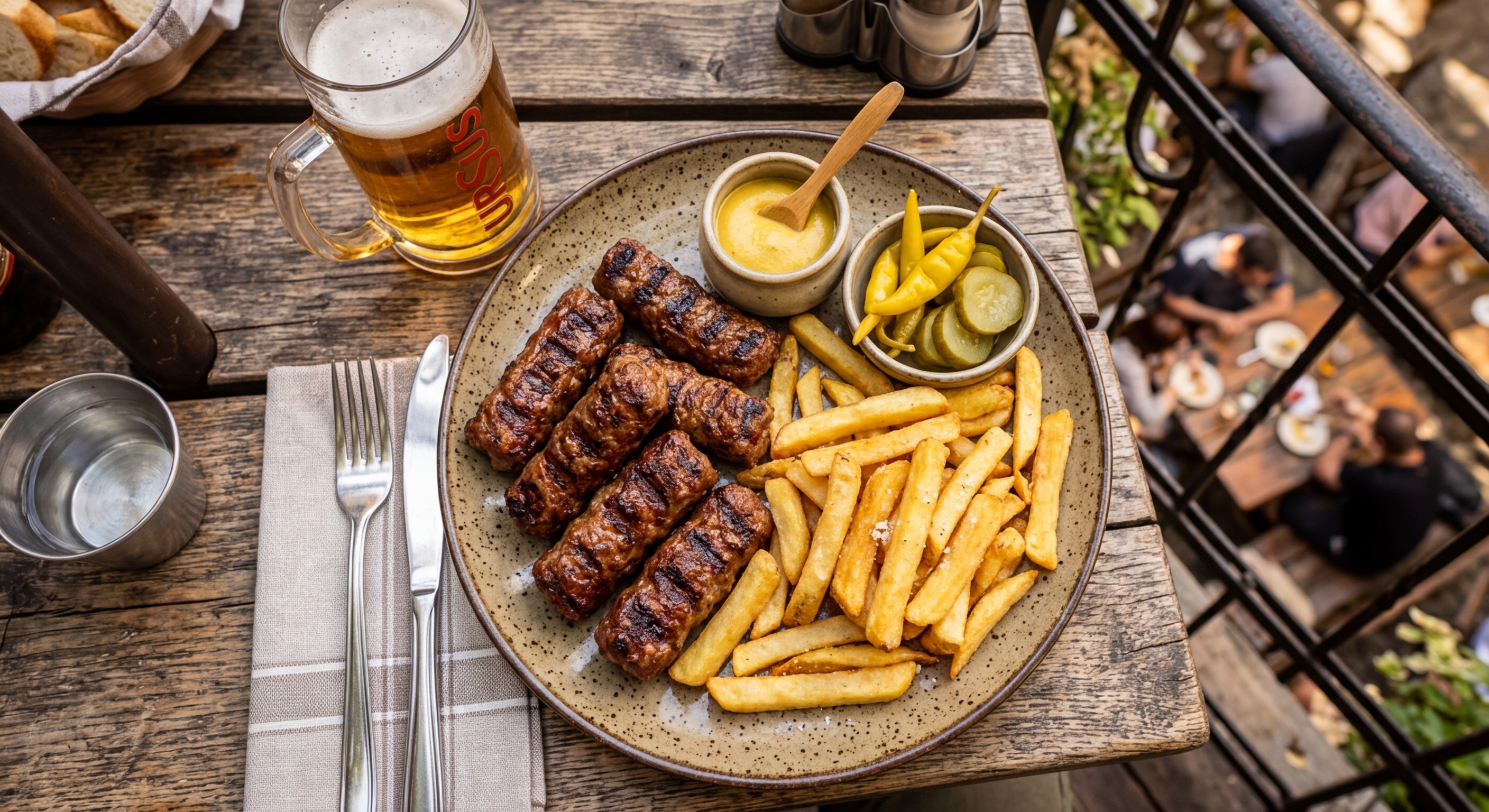
The terrace plate: mici and fries together, the way most Romanians actually eat them at a summer outdoor restaurant. The fries are cut thick, fried until golden, and salted heavily. Muștar on the side. A cold beer is implied.
Mici de Casă
Mici
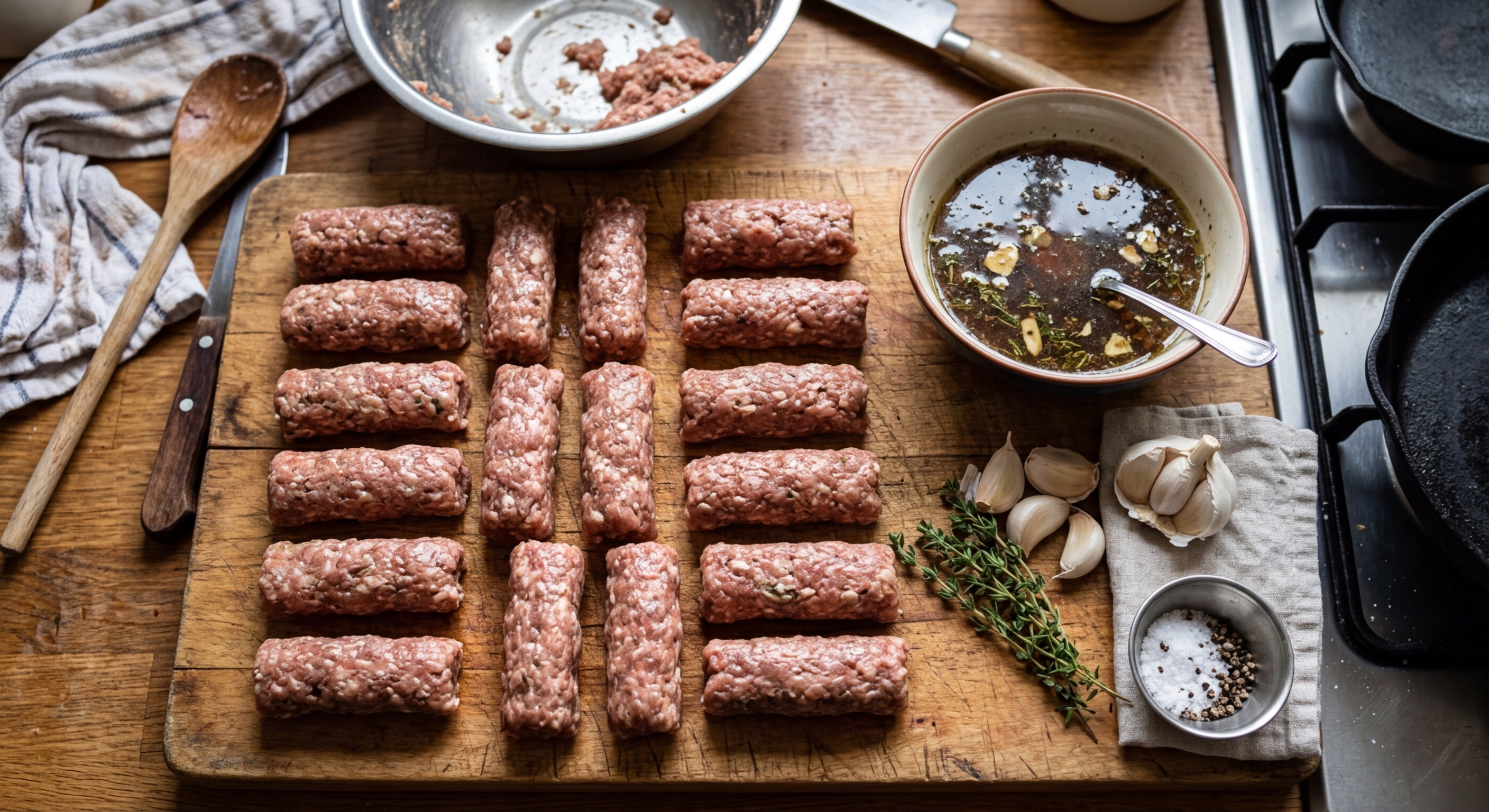
Homemade mici from scratch, with a three-meat mix of beef, pork, and lamb that many Romanian households consider the fullest version of the recipe. The lamb adds a faint gaminess that pure beef-pork blends lack. Made on a weekend when there is time to let the mixture rest overnight.
Mici în Sos de Bere
Mici
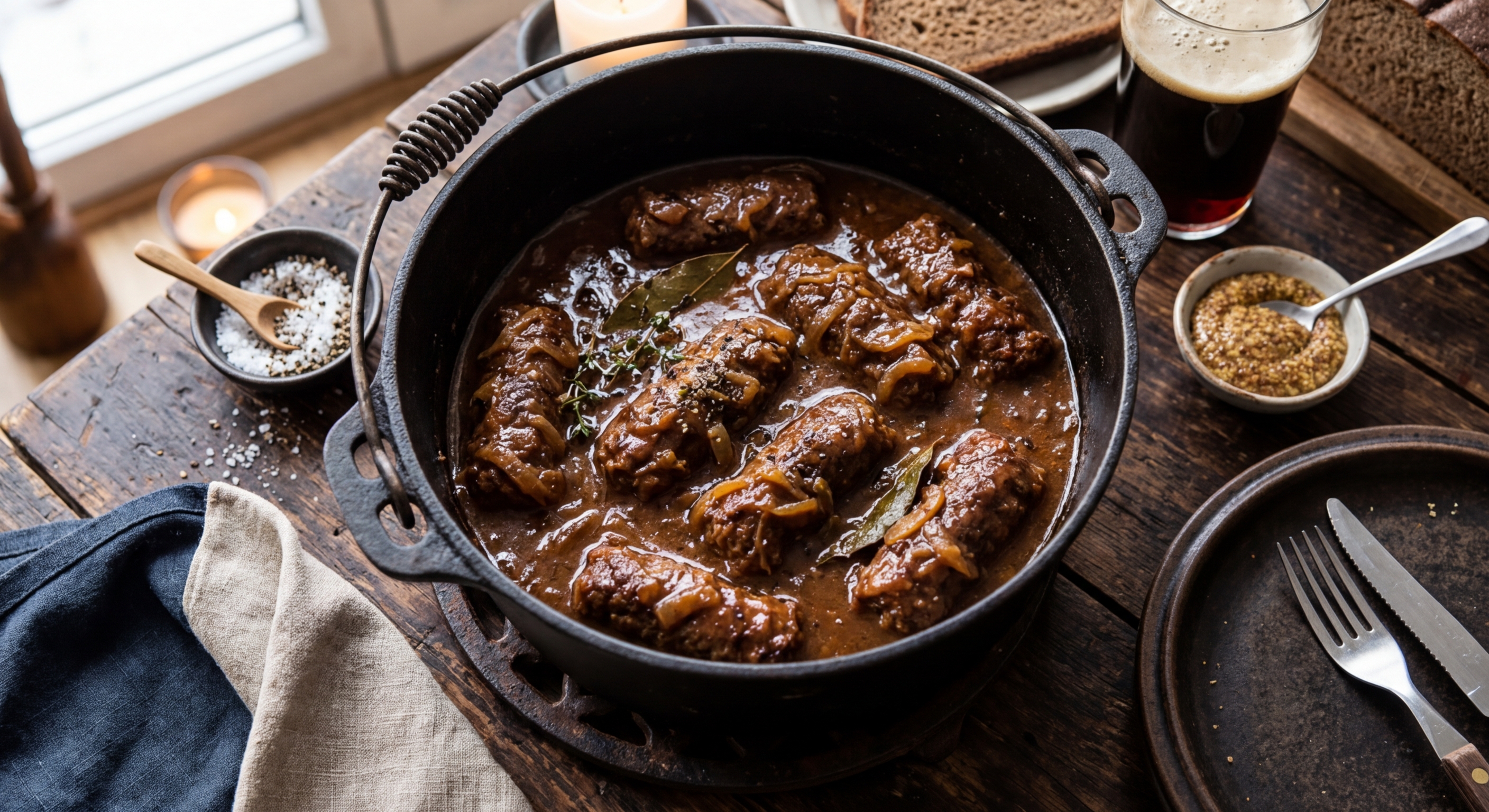
Mici braised in a beer and onion sauce until the liquid reduces to a thick glaze. A winter version of a summer food: the grill is put away, the pot comes out, and the result is closer to a stew than a street food. Serve with polenta or mashed potato.
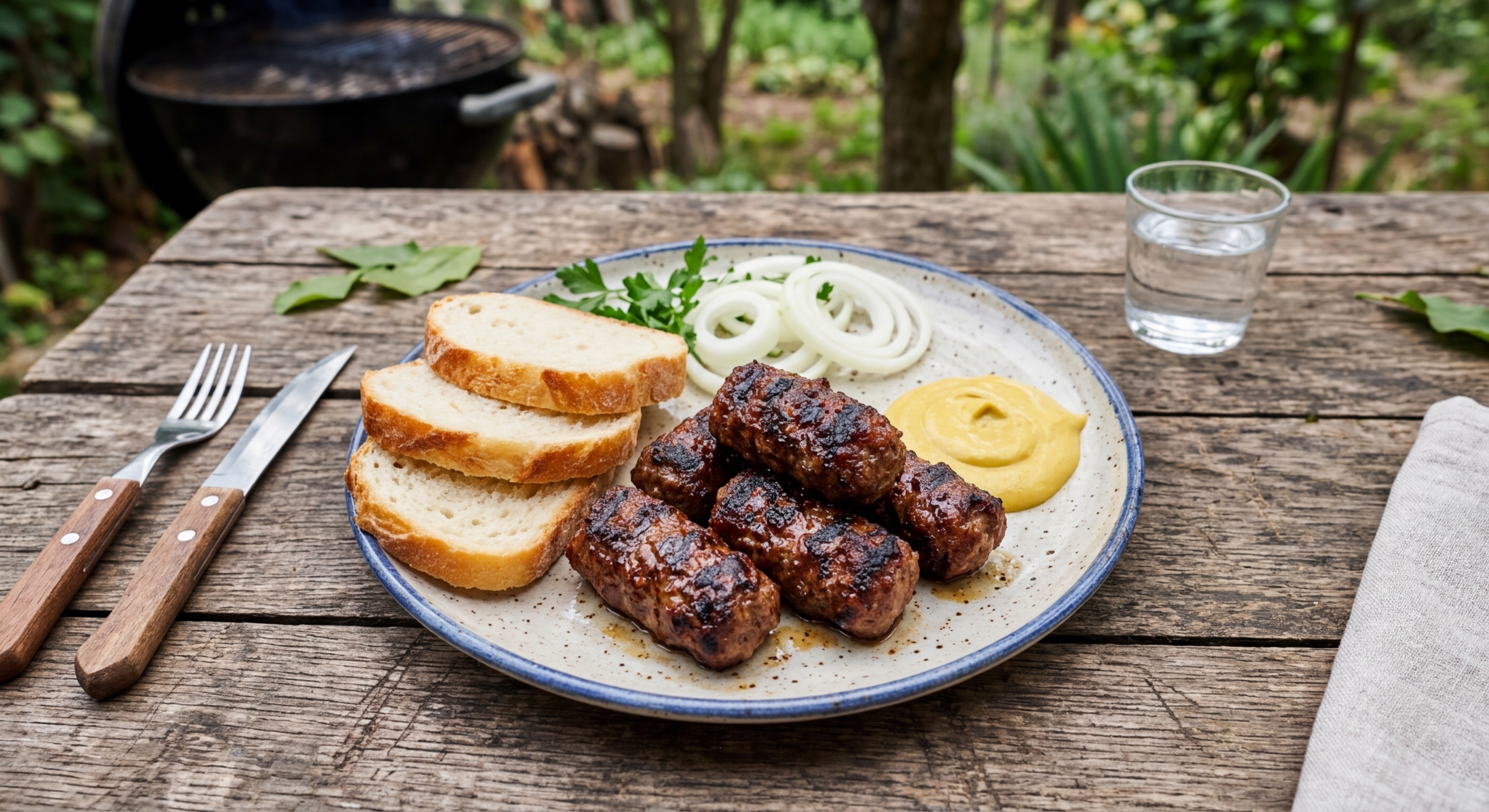
Mici la Grătar
Mici
The classic preparation: mici shaped by hand and grilled over a charcoal fire until the exterior chars and the inside stays juicy. Served with muștar (Romanian sharp mustard) and fresh white bread. This is the terrace version, the one every Romanian knows from summer evenings.
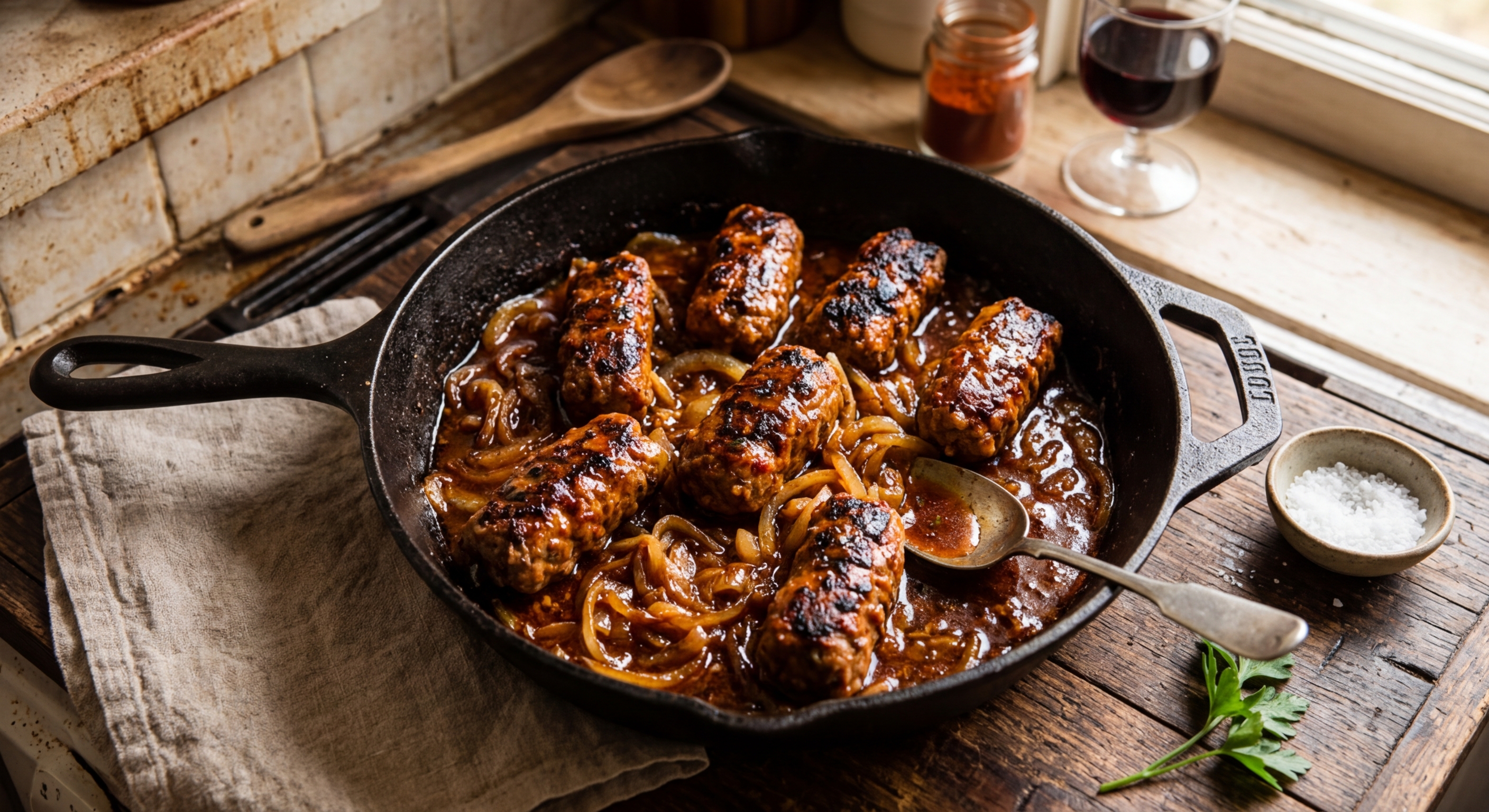
Mici la Tigaie
Mici
When you have no grill, a cast-iron pan on maximum heat is the workable alternative. The mici lose the charcoal smoke but gain a deep crust from the dry pan. A quick pan sauce of onion, garlic, and a splash of broth turns the drippings into something useful.
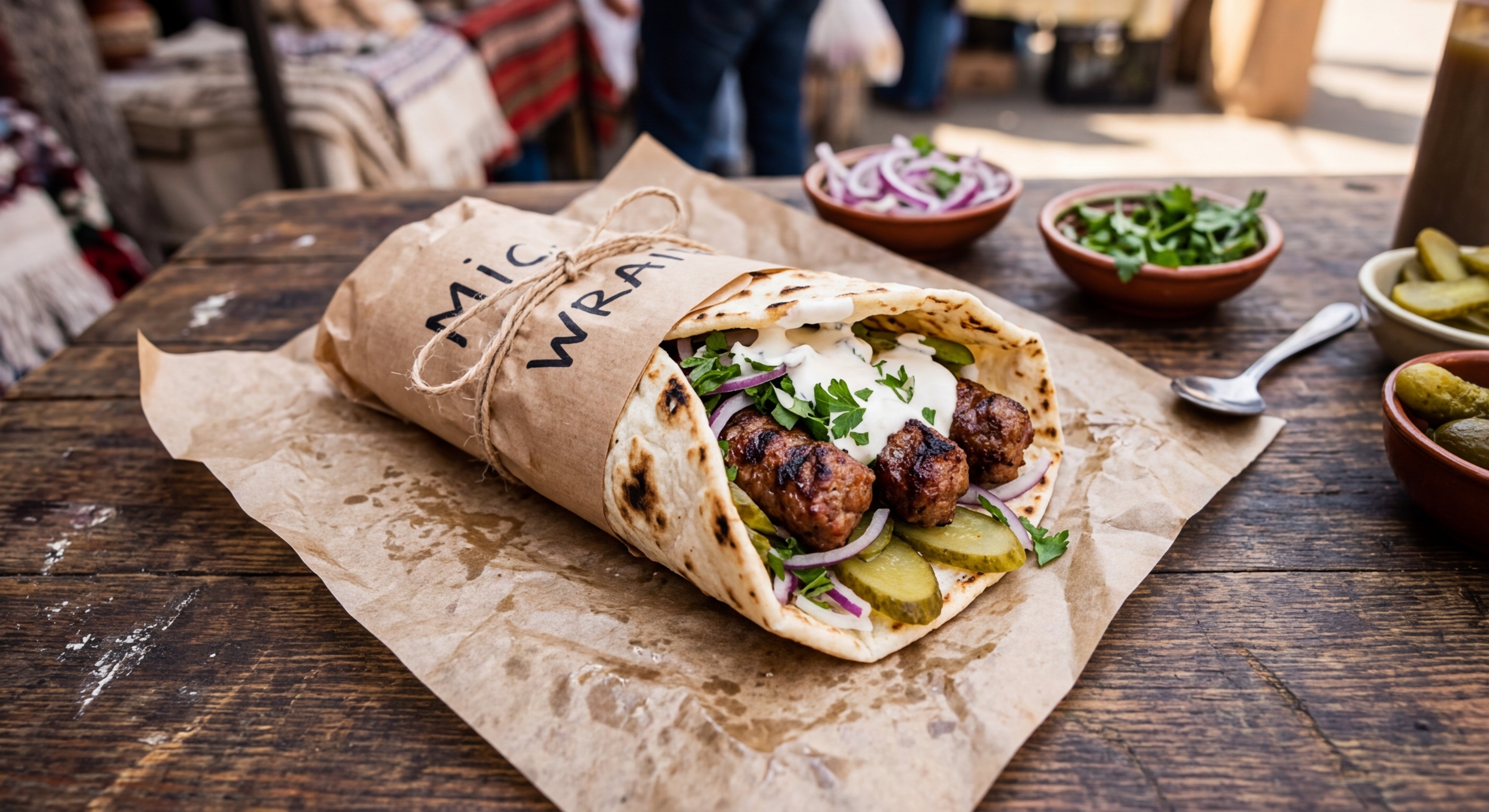
Mici Wrap
Mici
A modern format for a very old food: mici tucked into a flatbread wrap with pickled cucumbers, raw onion rings, muștar, and a smear of sour cream. Sold at Bucharest street food markets and festival stalls as a portable lunch. The wrap does not improve the mici but it makes them walkable.
On the Map
Where to Eat
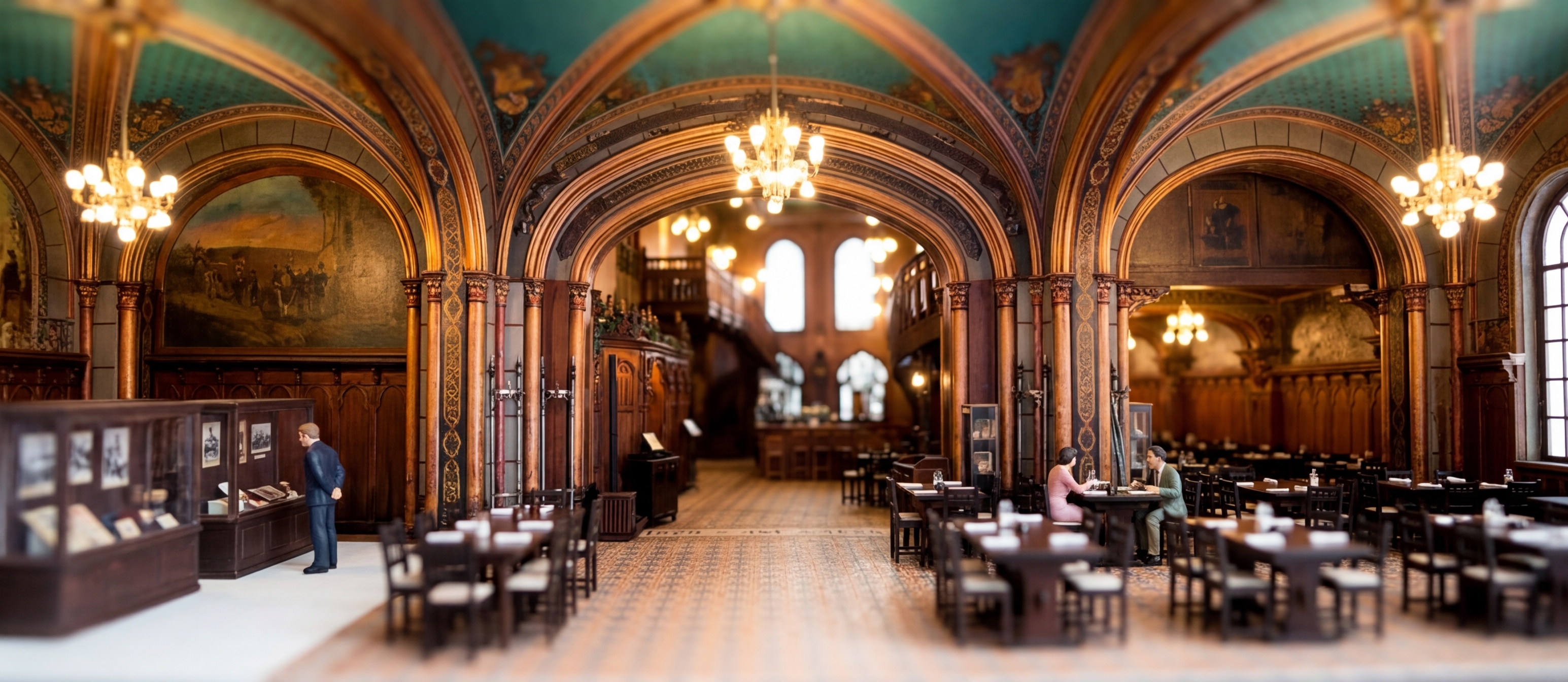
Caru' cu Bere
Bucharest, Romania
Bucharest's most famous beer hall, opened in 1879 on Stavropoleos Street in the old centre, with a Gothic Revival interior of stained glass, carved wood columns, and painted ceilings that survived two world wars and the communist period. The kitchen serves Romanian classics alongside its celebrated draught beer, and mici appear on the menu as a straightforward national staple. Eating mici in this setting is less about the street-food experience and more about the room: the arched vaults, the painted tiles, the long communal tables. The building is a national monument. The food is honest, the mici grilled to order, and the beer is the reason most people choose a table here.
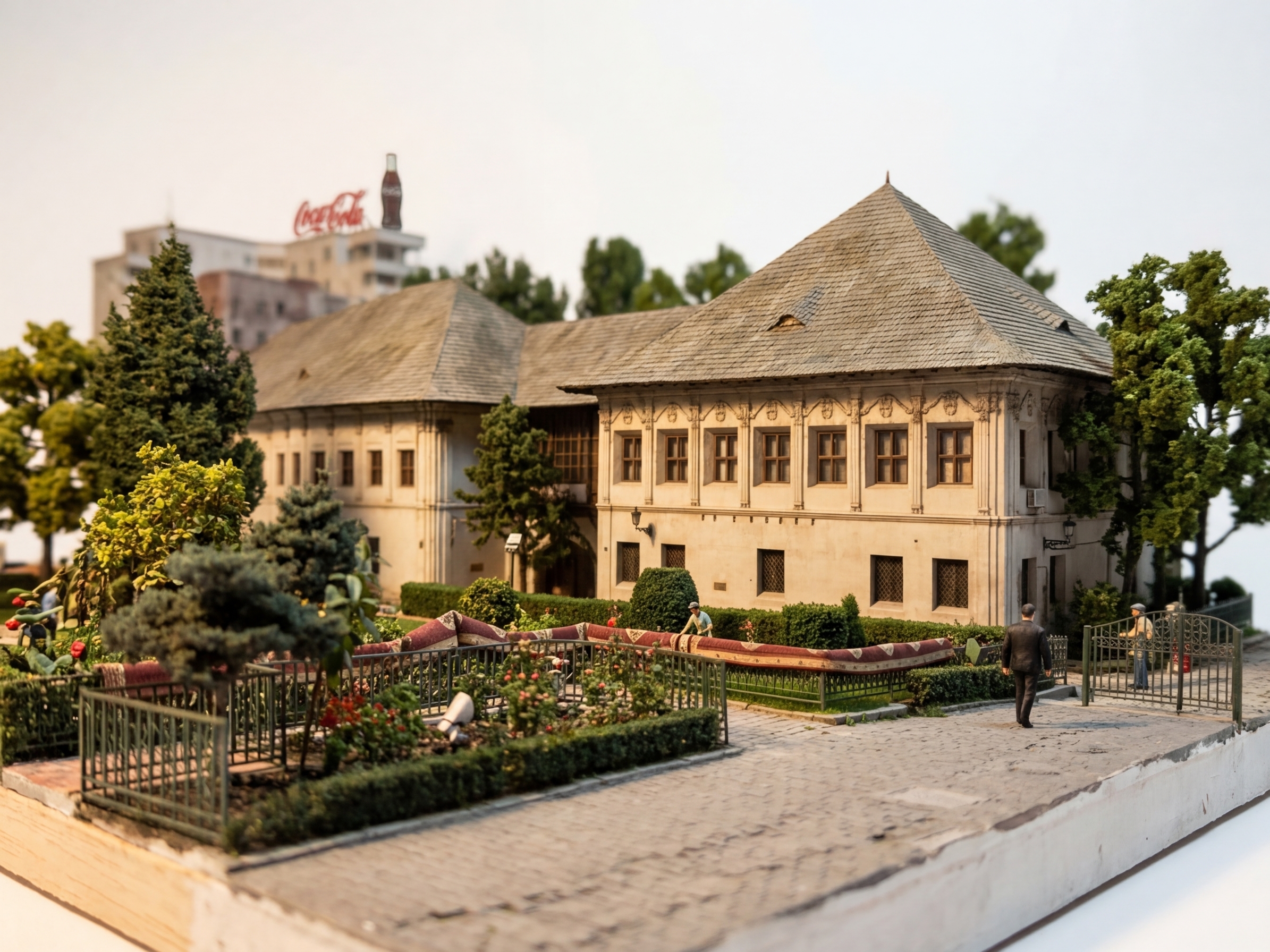
Hanul lui Manuc
Bucharest, Romania
One of Bucharest's oldest surviving hans (inn-courtyards), built by Armenian merchant Manuc Bei in 1808 on the edge of the old market district. The building wraps around a central courtyard and has operated almost continuously as an eating and drinking place for over two centuries. The kitchen serves traditional Romanian dishes, with mici grilled over charcoal among the standing items on the menu. The han's location near the old princely court and its age make it one of the most historically grounded places in Bucharest to eat the dish that local legend says was invented in precisely this kind of establishment.
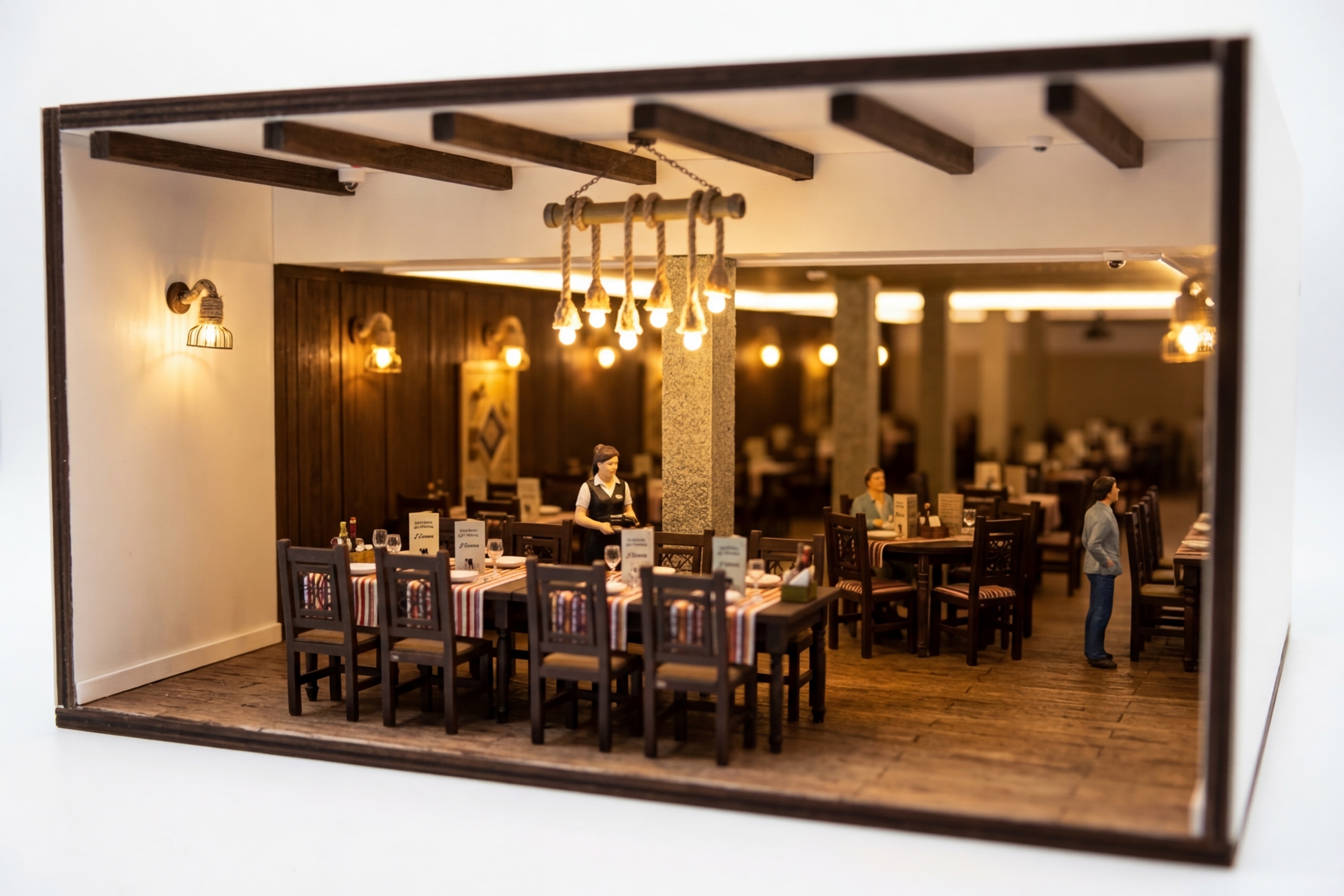
La Cocosatu'
Bucharest, Romania
A legendary Bucharest beer hall and mici institution, operating in various forms since the early communist period in the Floreasca neighbourhood. The name, meaning 'at the hunchback's', refers to a nickname attached to an early owner. La Cocosatu' represents the category of Bucharest bere-and-mici hall: a large, rowdy indoor-outdoor space where cold draft beer and freshly grilled mici are the only things on most tables. The mici are made to a house recipe with a pronounced garlic and black pepper flavour, grilled over a long charcoal rack, and served on paper with a wooden board underneath. A cult spot for Bucharestians who grew up eating mici here, and a marker of the city's grilling tradition that pre-dates the current wave of food tourism.
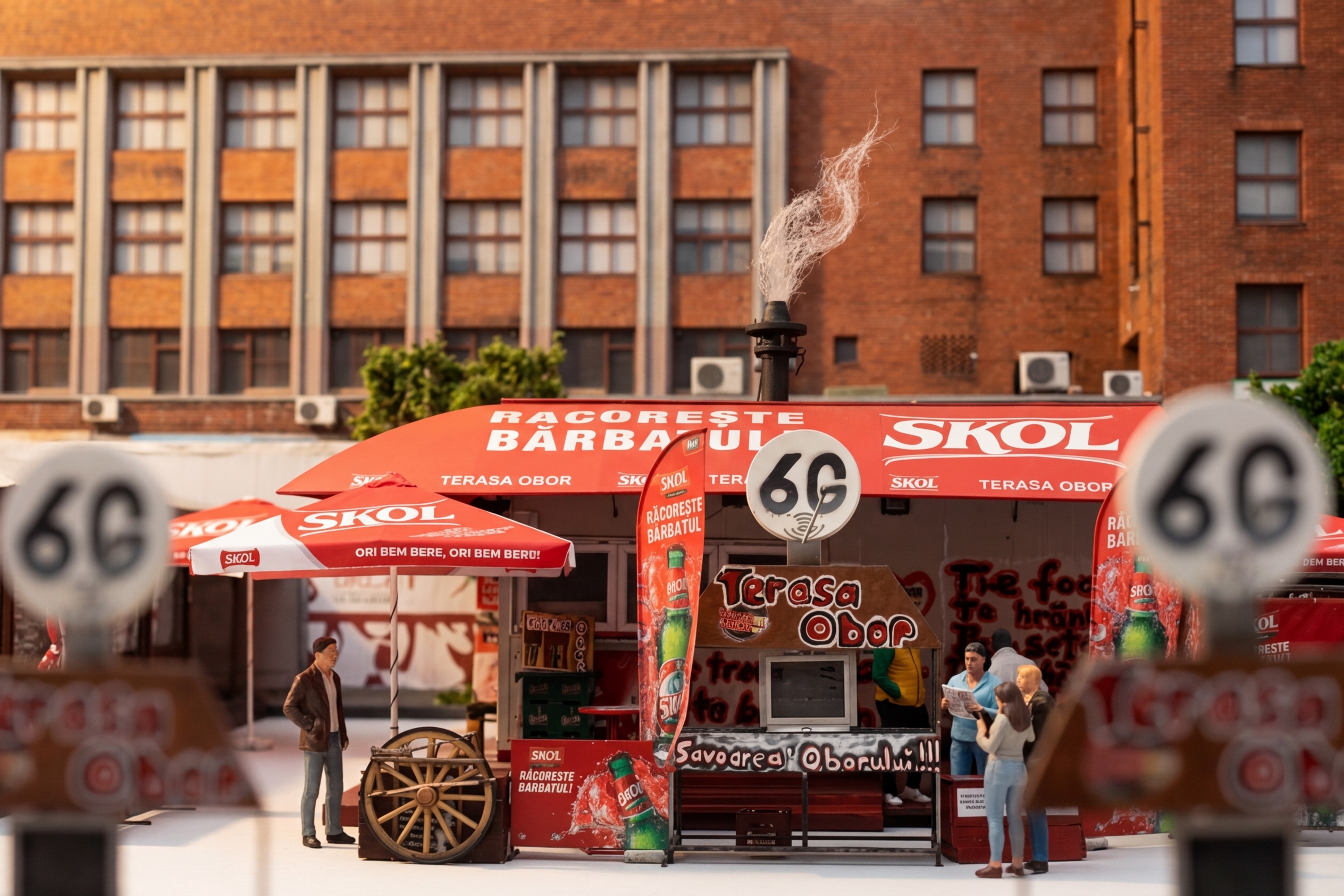
Terasa Obor
Bucharest, Romania
A large open-air terrace beside the Obor market in northeastern Bucharest, one of the city's oldest and most working-class food institutions. Obor is the city's main public market, and the terrace beside it has fed market workers, vendors, and locals since the communist era. The menu is short and practical: mici, beer, bread, and mustard. The charcoal grill runs from morning through the evening. Mici here arrive hot from the grill, six to a plate, with a smear of sharp muștar on the side and a basket of white bread. The clientele is local and the prices are low. This is not a tourist destination but a working terrace where the food is the point.