Merguez
مرقاز (Mergāz)
Tunisia
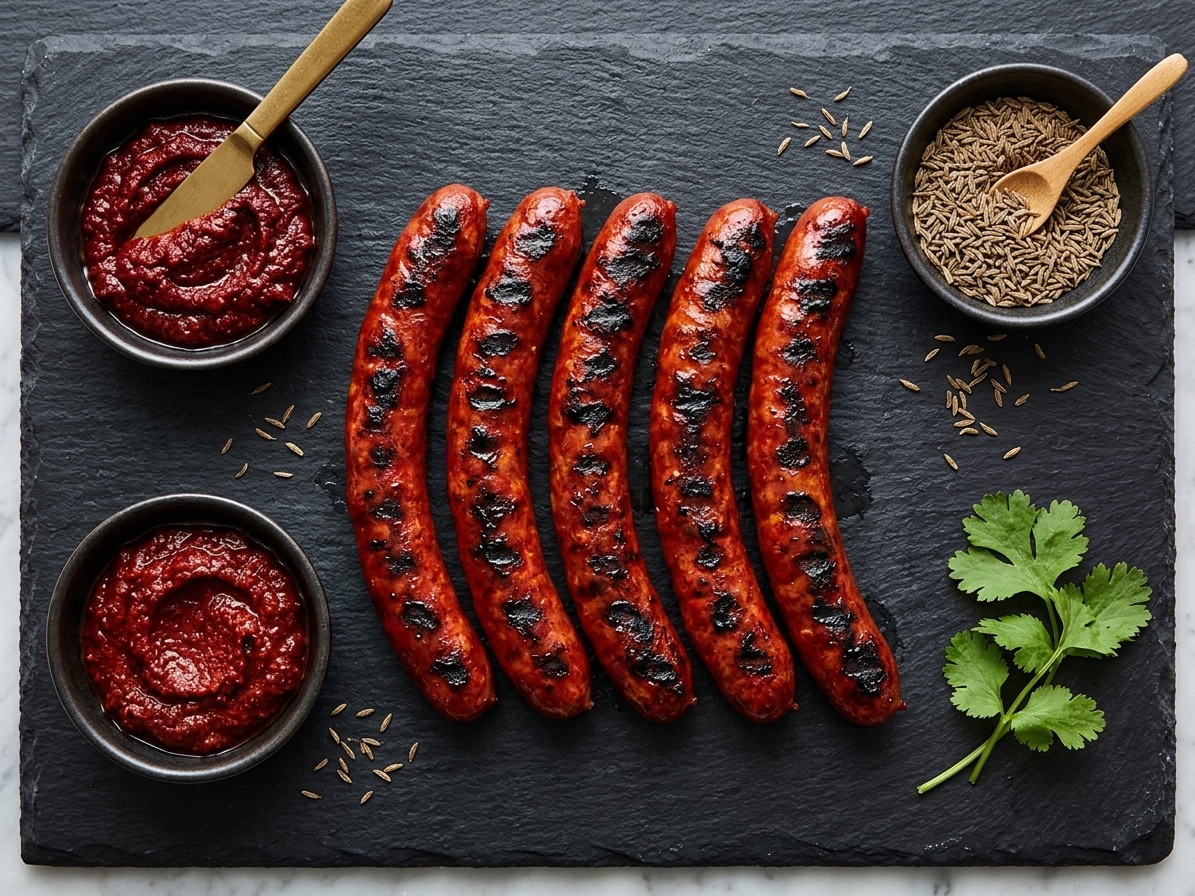
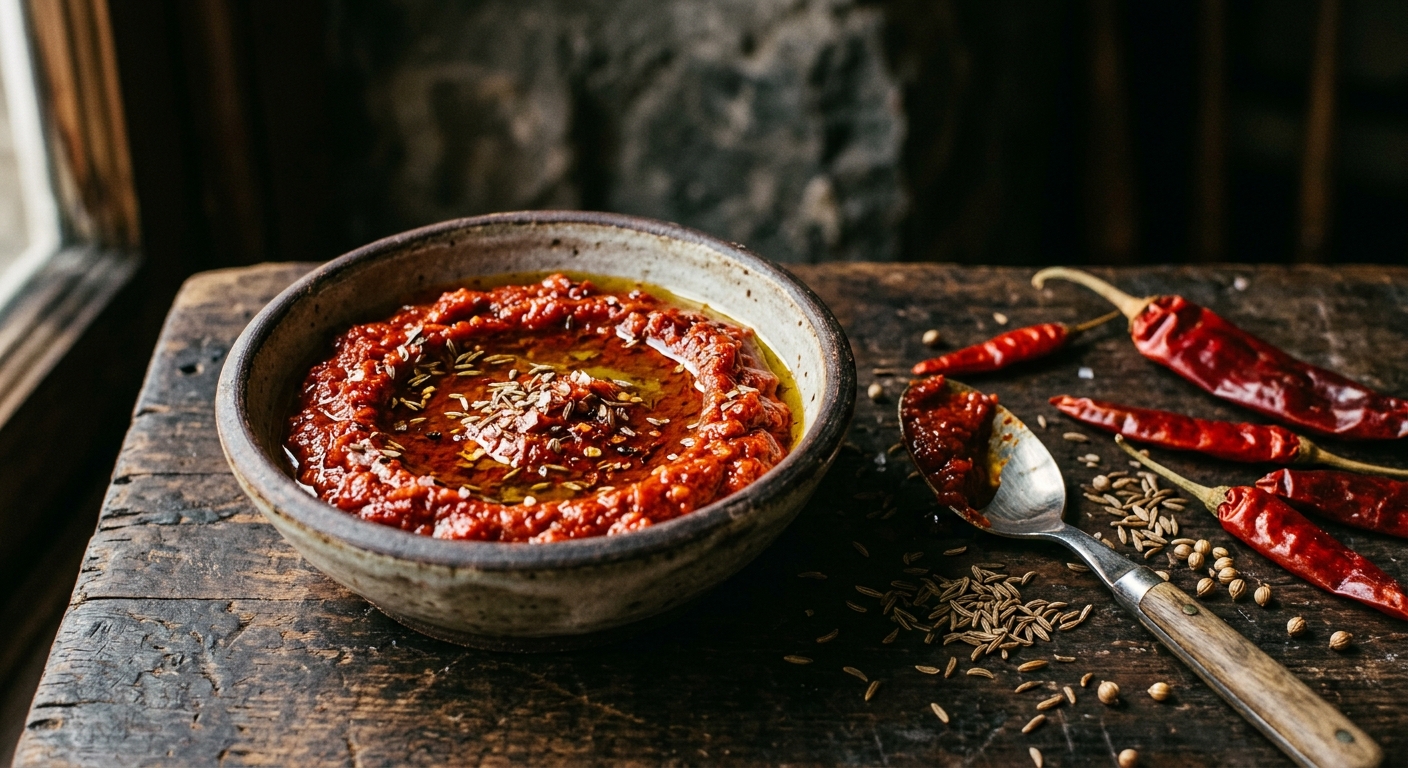
Merguez is a fiery red sausage from North Africa, made from lamb (or a mix of lamb and beef), seasoned with harissa, cumin, coriander, fennel, and garlic. The deep red color comes from the harissa paste and sometimes additional paprika or chili. Thin-skinned and heavily spiced, it is grilled fast over high heat until charred on the outside and juicy within. Born on the street grills of Tunisia and Algeria, merguez crossed the Mediterranean with North African migration and became one of France's most beloved sausages — a fixture of Parisian markets, Lyon boucheries, and summer barbecues from Marseille to Brussels.
History
The merguez traces its roots to the Berber and Arab culinary traditions of the Maghreb — present-day Tunisia, Algeria, and Morocco. The word likely derives from the Berber 'amrguez' or the Arabic 'mirqāz.' For centuries, it was a street food staple, made fresh by local butchers and grilled over charcoal on every corner. The great wave of North African migration to France in the mid-20th century — particularly from Algeria after independence in 1962 — brought the merguez to French soil. It was an immediate hit. By the 1970s and 80s, merguez had become as French as the baguette: sold in every supermarket, served at every outdoor event, and essential at any proper barbecue. Today, France consumes more merguez than any other country, and it has spread to Belgium, the Netherlands, Germany, and beyond. But the best merguez is still found in Tunisia — hand-made, heavily spiced, and grilled seconds before you eat it.
Ingredients
Preparation
Lamb (and sometimes beef) is coarsely ground — merguez has a rougher texture than European emulsified sausages. The meat is mixed with harissa paste, ground cumin, coriander, fennel, garlic, paprika, and chili until the mixture turns a vivid red. It is stuffed into thin lamb casings and formed into small, thin links — typically 12-15cm long and about 2cm thick. The sausages are grilled over very high heat (charcoal preferred) for just 3-5 minutes per side. The thin casing chars and crisps while the inside stays moist and juicy. They can also be pan-fried, but grilling is the authentic method.
Taste
Bold, spicy, and deeply aromatic. The harissa brings a warm, building heat — not a sharp burn but a slow fire that grows. Cumin and coriander give it an earthy, slightly nutty depth. The lamb fat melts into the spices during grilling, creating an intensely savory, smoky flavor. Every bite is a punch of North African spice.
Texture
Coarsely ground with a rustic, grainy bite — very different from the smooth emulsion of German or Swiss sausages. The thin lamb casing snaps and chars on the grill, giving a crispy exterior. Inside, the meat is loose-textured, moist, and crumbly in the best way. The fat renders generously, keeping everything juicy.

Rituals & Traditions
The charcoal grill is non-negotiable
In Tunisia and across the Maghreb, merguez is grilled over charcoal — never gas, never a pan. The smoke and high heat create the characteristic char that defines a proper merguez. Street vendors grill them on small portable braziers called 'kanoun,' and the smell of charring merguez is the smell of every North African evening market.
Eat it fast, eat it hot
Merguez is at its best straight off the grill — the casing still crackling, the fat still sizzling. In Tunisia, you eat it standing at the street vendor's stall, tearing off pieces of bread to grab the sausage. Letting it cool is considered almost disrespectful to the craft.
France's adopted national sausage
Merguez is arguably the most consumed sausage in France today. It appears at every 'barbecue républicain,' every summer fête, every stadium concession stand. The annual French consumption exceeds 30,000 tons. It arrived with North African immigrants and conquered the country within a generation — a culinary integration story like no other.
Recipes
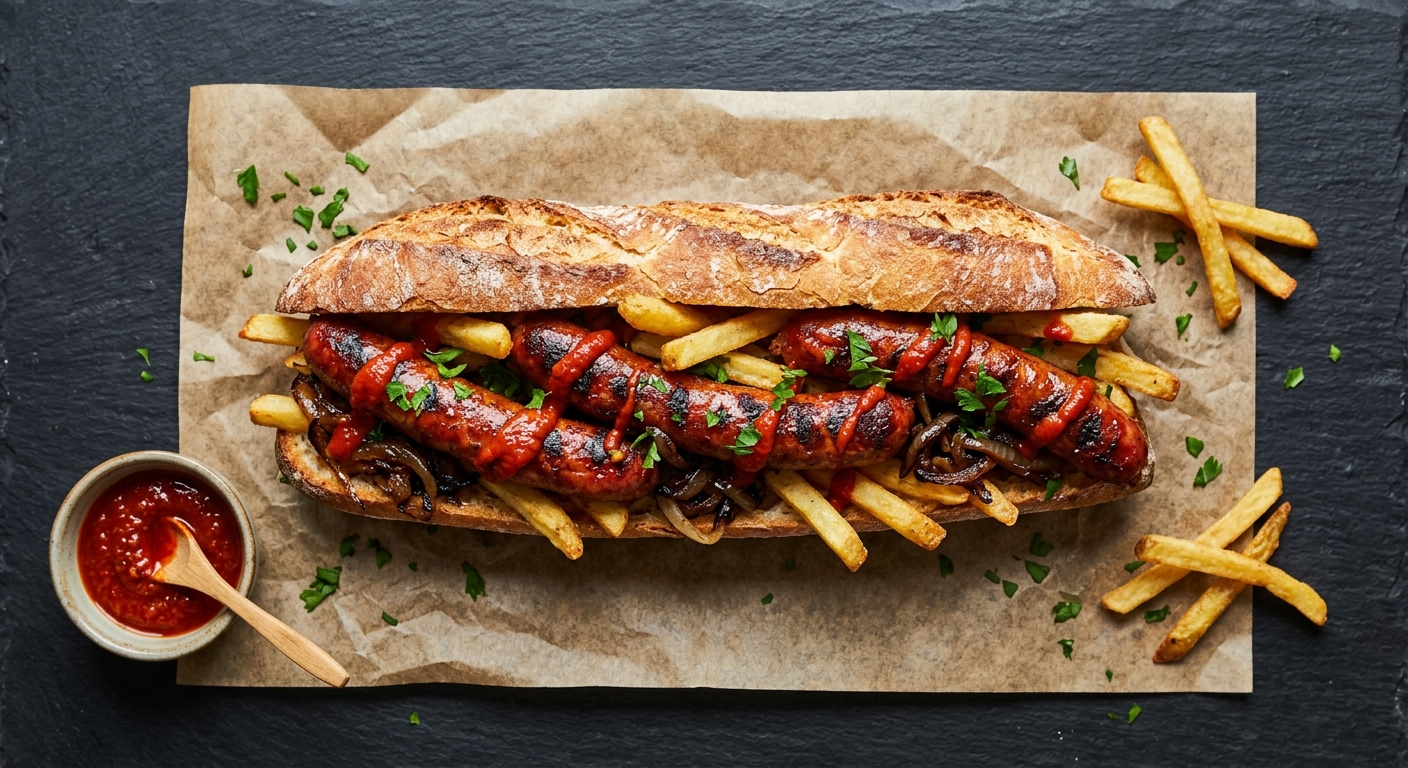
Merguez-Frites Sandwich (Le Merguez-Baguette)
Merguez
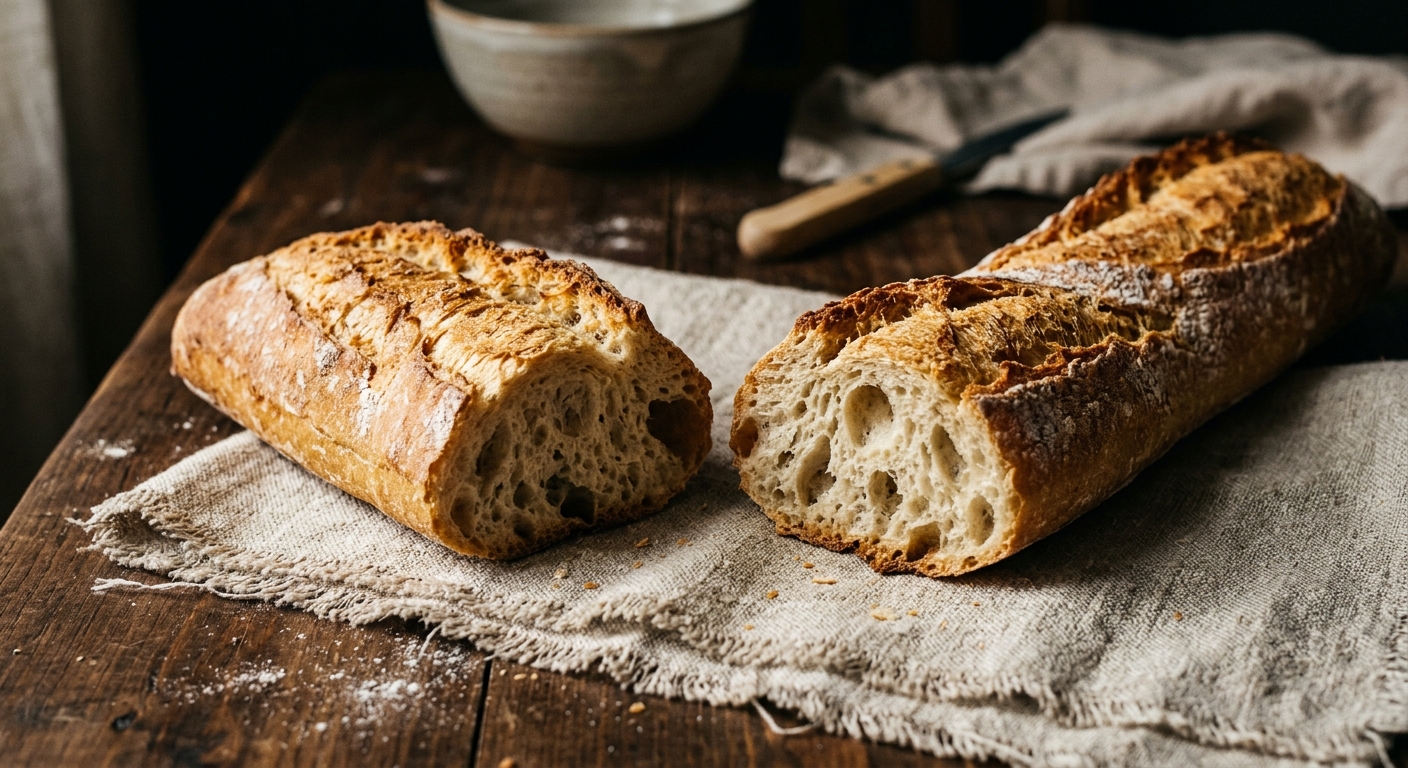
France's ultimate street sandwich: grilled merguez stuffed into a crusty baguette with harissa, grilled onions, and — because this is France — a handful of frites shoved in for good measure. Found at every street fair, stadium, and late-night kebab stand from Paris to Toulouse.
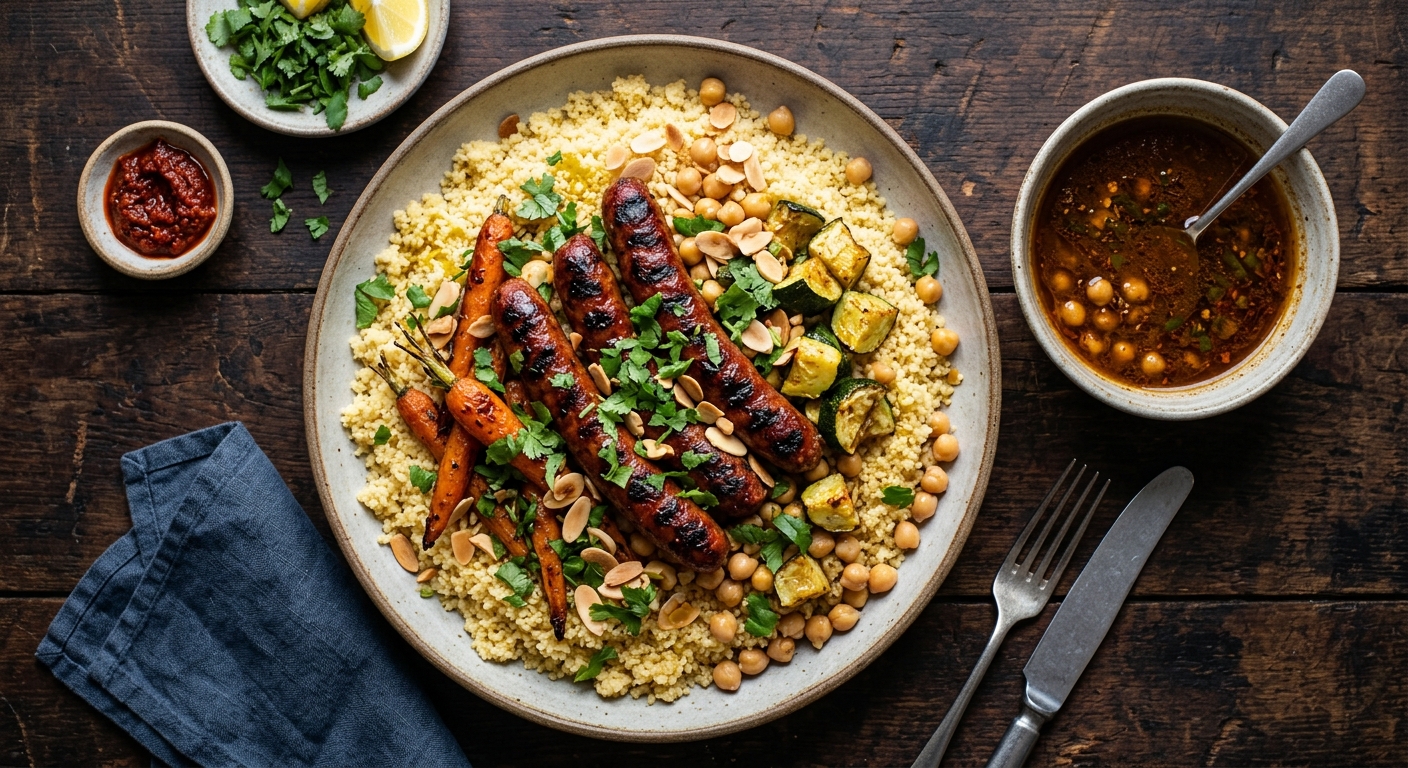
Merguez Couscous Royal
Merguez
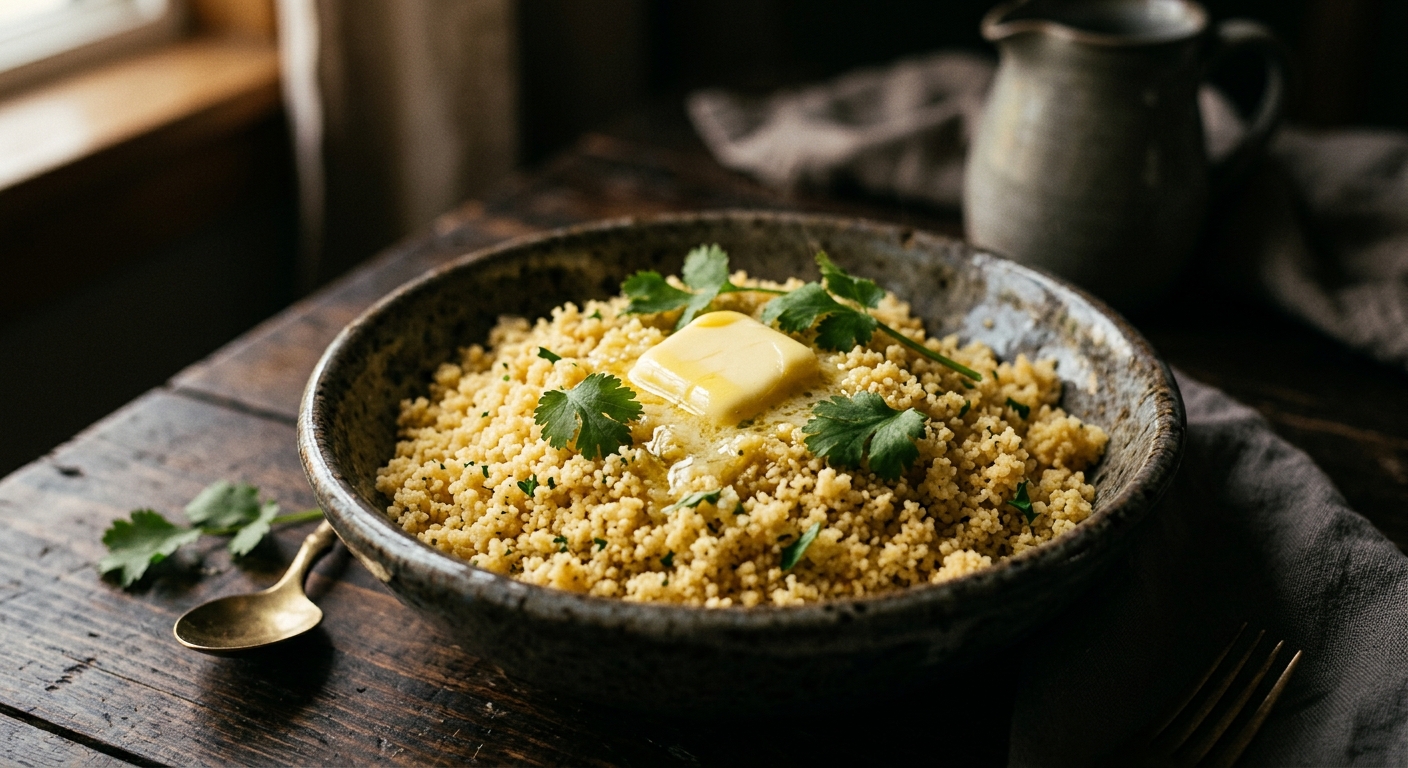
The grand Friday lunch of the Maghreb: fluffy steamed couscous piled high with grilled merguez, chickpeas, roasted vegetables, and a fragrant spiced broth ladled over everything. A dish that brings families together across North Africa and France.
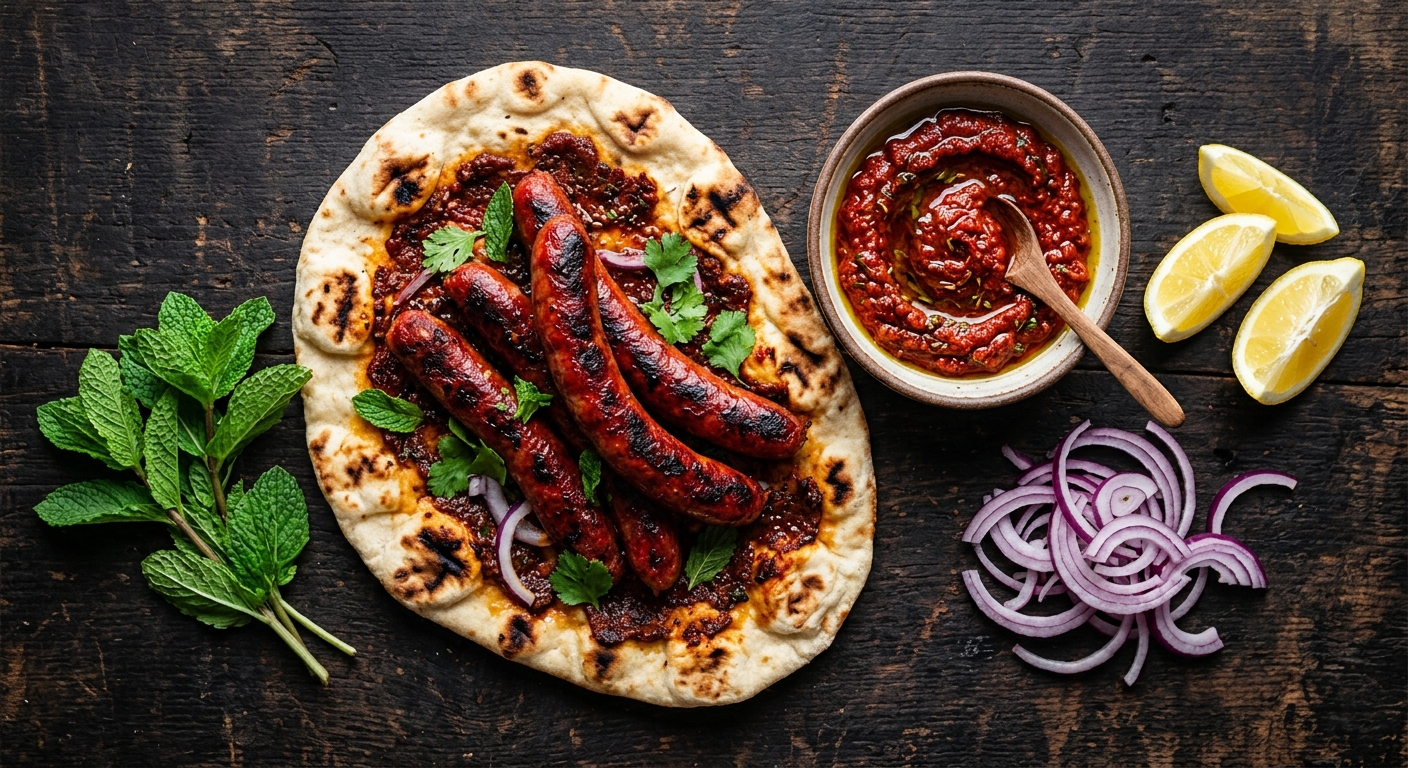
Classic Grilled Merguez with Harissa & Flatbread
Merguez
The purest way to eat merguez: charcoal-grilled until charred and blistered, served with extra harissa, a squeeze of lemon, and warm flatbread to tear and wrap. Street food perfection from the souks of Tunis.