Mazzafegato
Marche & Umbria, Italy
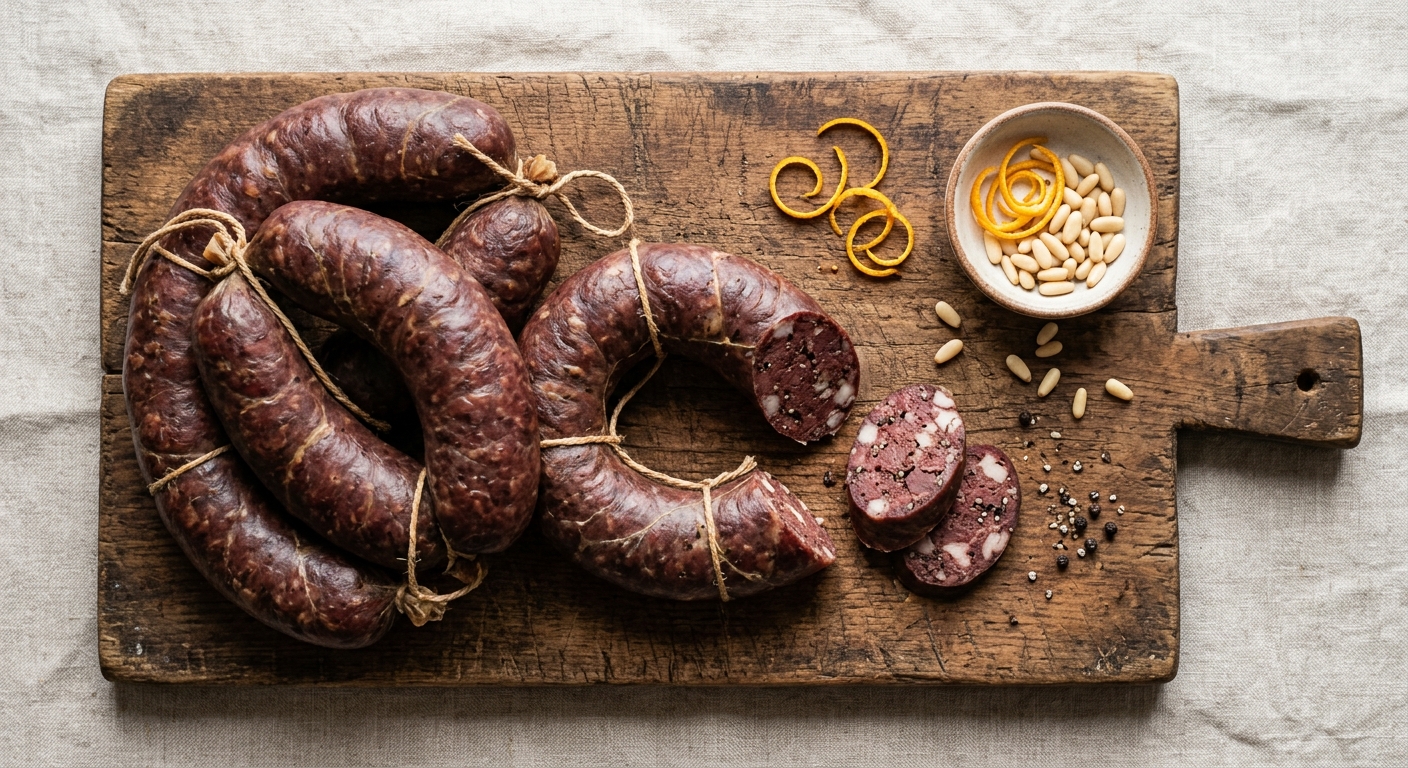
Mazzafegato is central Italy's pork liver sausage, born from the winter pig slaughter in the Marche and Umbria regions. The name comes from 'ammazzare il fegato' (to kill the liver), a blunt label for a blunt sausage. Two versions exist: dolce, with orange zest, pine nuts, and raisins; and piccante, spiked with chili. The sweet version is an oddity in Italian charcuterie, a technique traceable to ancient Roman preservation methods. This is a salume povero, a poor man's sausage that turns liver and scraps into something worth seeking out.
History
Mazzafegato belongs to the norcino tradition of Umbria. Wandering pork butchers (norcini) from the town of Norcia traveled through central Italy each winter, slaughtering pigs and processing every part. The liver went into mazzafegato. The sweet version, with its citrus zest and dried fruit, reflects an older logic: sugar and acid preserved offal before refrigeration. Roman-era recipes describe similar preparations. In the Marche, farm families still make it during la mattanza, the annual pig killing in December or January. Production remains small, local, and seasonal. You will not find mazzafegato in a supermarket in Milan.
Ingredients
Preparation
Butchers mince pork liver, shoulder meat, and fat through a coarse plate. For the dolce version, they fold in grated orange or lemon zest, toasted pine nuts, and raisins soaked in vin santo. The piccante version gets crumbled dried chili instead. Both get garlic, salt, and coarse black pepper. The mixture fills natural pork casings, tied into links about 15 centimeters long. Mazzafegato is a fresh sausage, not cured or dried. Cooks grill it over embers or pan-fry it in olive oil within a few days of stuffing.
Taste
The dolce version opens with a burst of orange oil, then the mineral richness of liver takes over, with pine nuts adding small pockets of sweetness. The piccante version is more direct: iron and pork fat, then a slow chili burn that builds across the palate. Both carry the unmistakable depth of fresh liver.
Texture
Coarse and grainy from the liver, with chunks of fat that melt during cooking. The natural casing gets crisp when grilled. Pine nuts and raisins in the dolce version create a contrasting chew. The inside stays soft, almost crumbly, never as smooth as a pâté.
Rituals & Traditions
La Mattanza: the winter pig slaughter
Mazzafegato is made during the annual pig slaughter in December or January, when farm families gather to process the entire animal over two or three days. The liver goes into the sausage while it is still warm. This communal event, disappearing from modern Italy, is the only context in which mazzafegato is made.
Eat it fresh, within days
Mazzafegato is not a cured sausage. The liver spoils fast. Eat it within three or four days of making, grilled or fried. Freezing destroys the texture.
Never boil it
Boiling dissolves the fat and leaches out the liver's flavor. Mazzafegato needs direct heat: a grill, a cast-iron pan, or embers. The casing must crisp.
Dolce for breakfast, piccante for dinner
In parts of the Marche, the sweet version is a morning food, eaten with bread and coffee during the days of la mattanza. The spicy version appears at the evening meal with wine and polenta.
Recipes
Mazzafegato alla Griglia
Mazzafegato
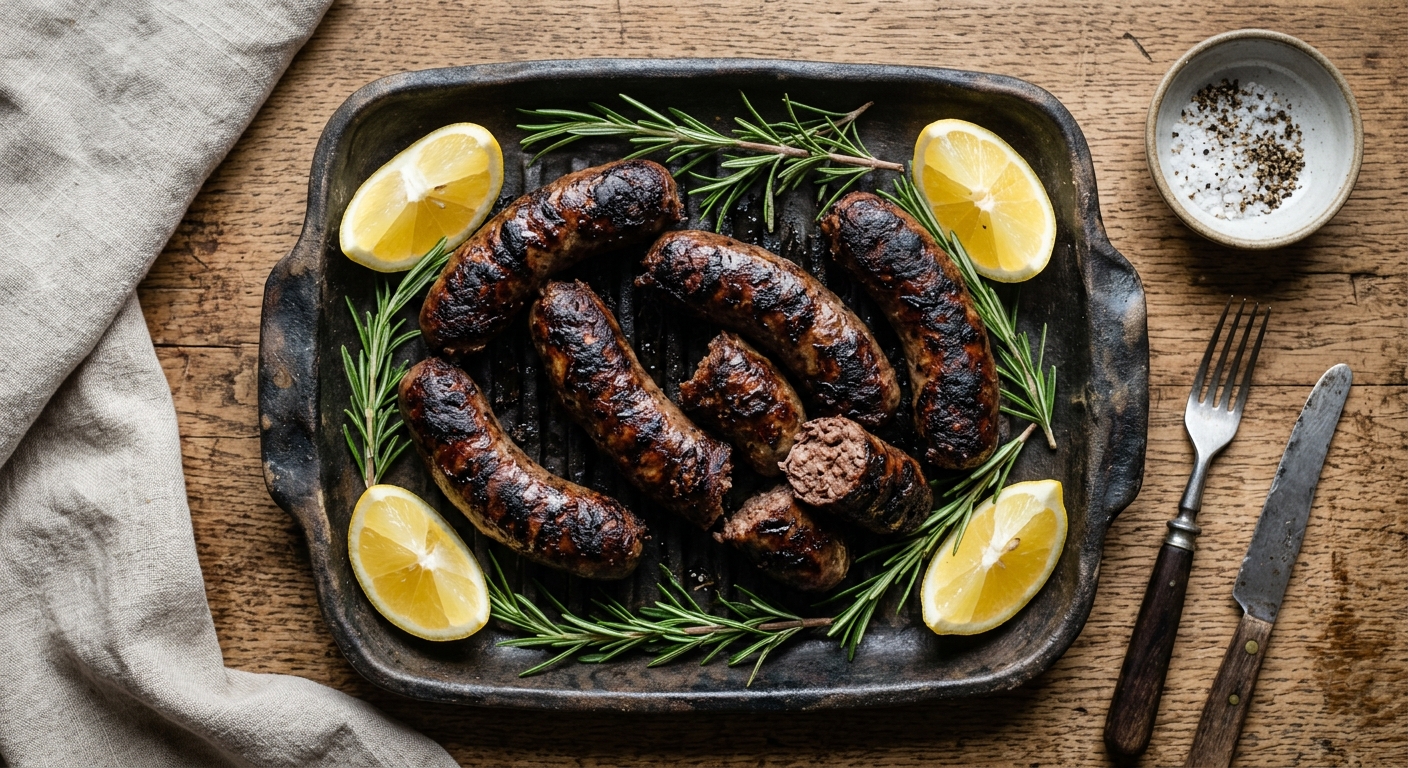
The simplest and oldest way to cook mazzafegato. Whole links go over hot embers until the casing blisters and the liver fat renders into the coals, sending up smoke. Served with nothing more than bread and a squeeze of lemon. This is mattanza food, eaten standing around the fire on the day the pig is killed.
Mazzafegato con Polenta
Mazzafegato
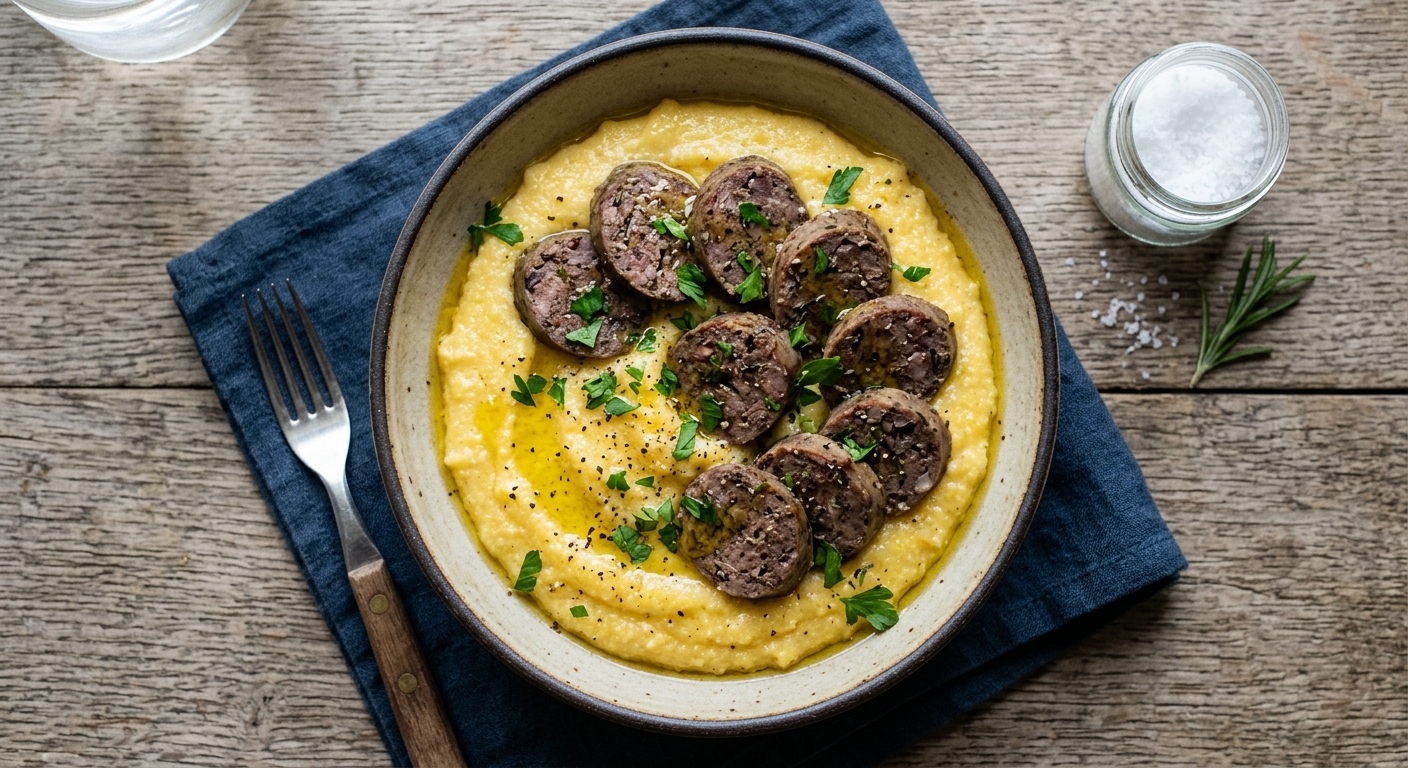
Pan-fried mazzafegato on a bed of creamy polenta, the standard winter supper in the Marche hill towns. The sausage juices mix into the polenta on the plate. A glass of Verdicchio on the side. Nothing else required.
Crostini di Mazzafegato
Mazzafegato
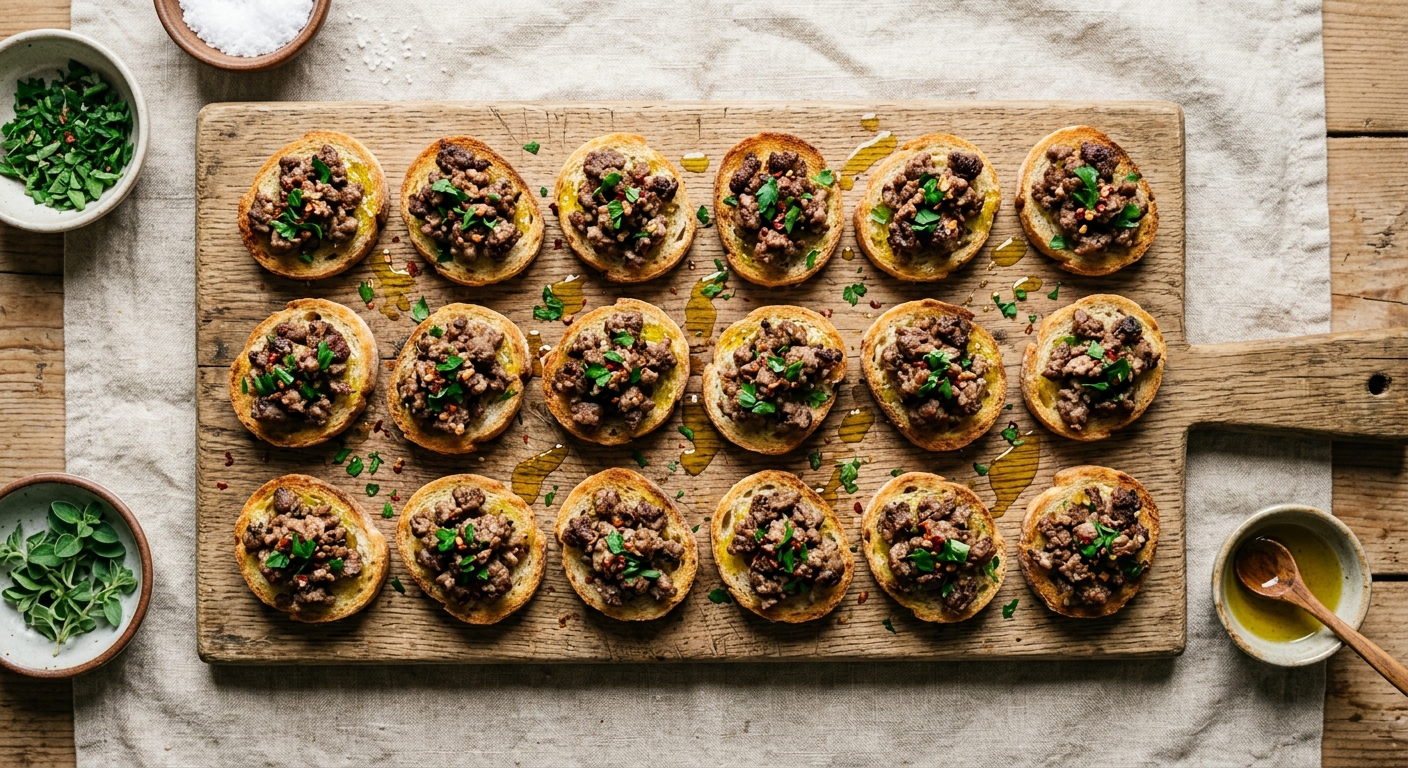
Crumbled mazzafegato fried with garlic and a splash of white wine, spread on toasted bread rubbed with olive oil. A close cousin of the Tuscan crostini neri (chicken liver crostini), but with pork liver and the option of the dolce version's sweetness. Serve as antipasti with a glass of Verdicchio.
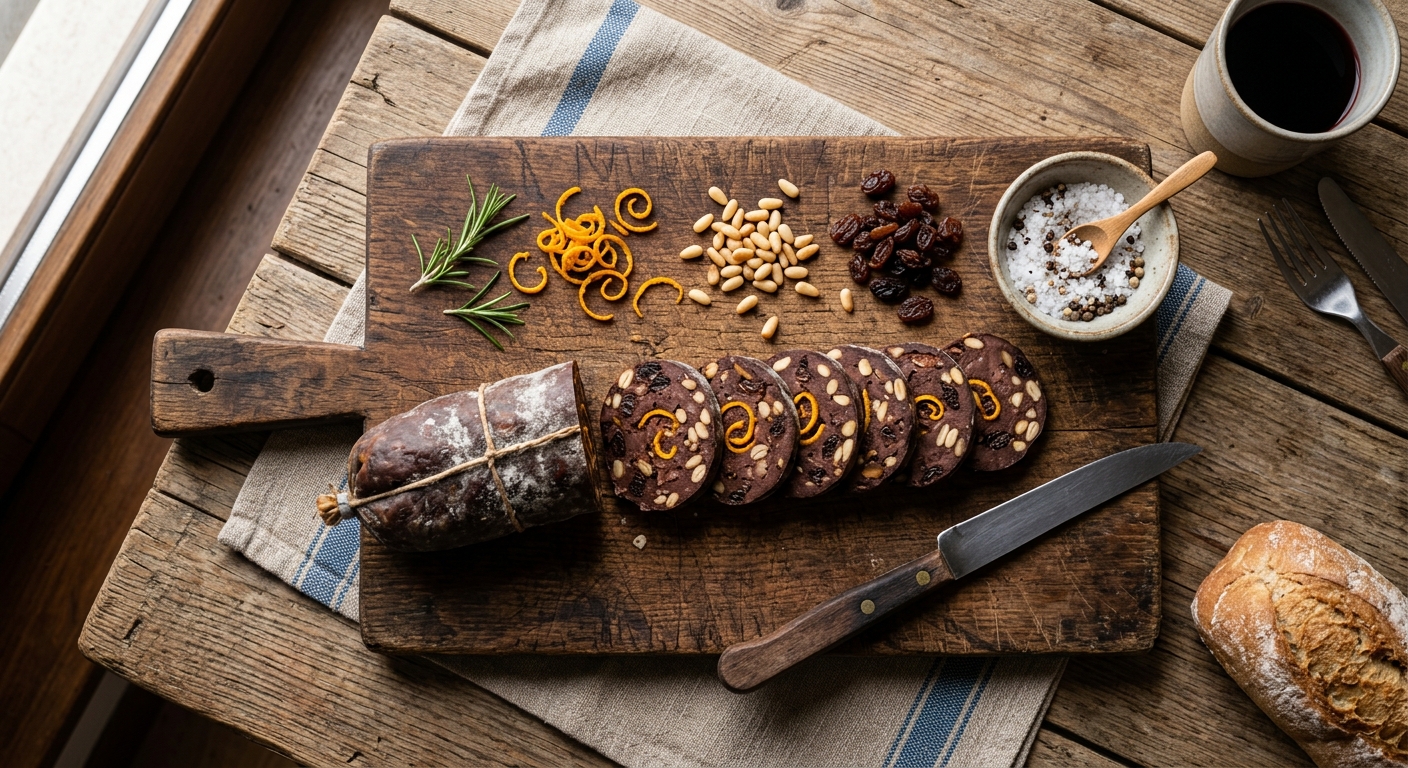
Mazzafegato Dolce with Orange Zest and Pine Nuts
Mazzafegato
The sweet version of mazzafegato, unique in Italian sausage-making. Orange zest, toasted pine nuts, and raisins soaked in vin santo go into the liver mixture. When fried, the raisins caramelize and the orange oil blooms in the hot fat. This recipe makes the sausage from scratch, as it should be: mazzafegato dolce is not something you buy, it is something you make during the winter slaughter.
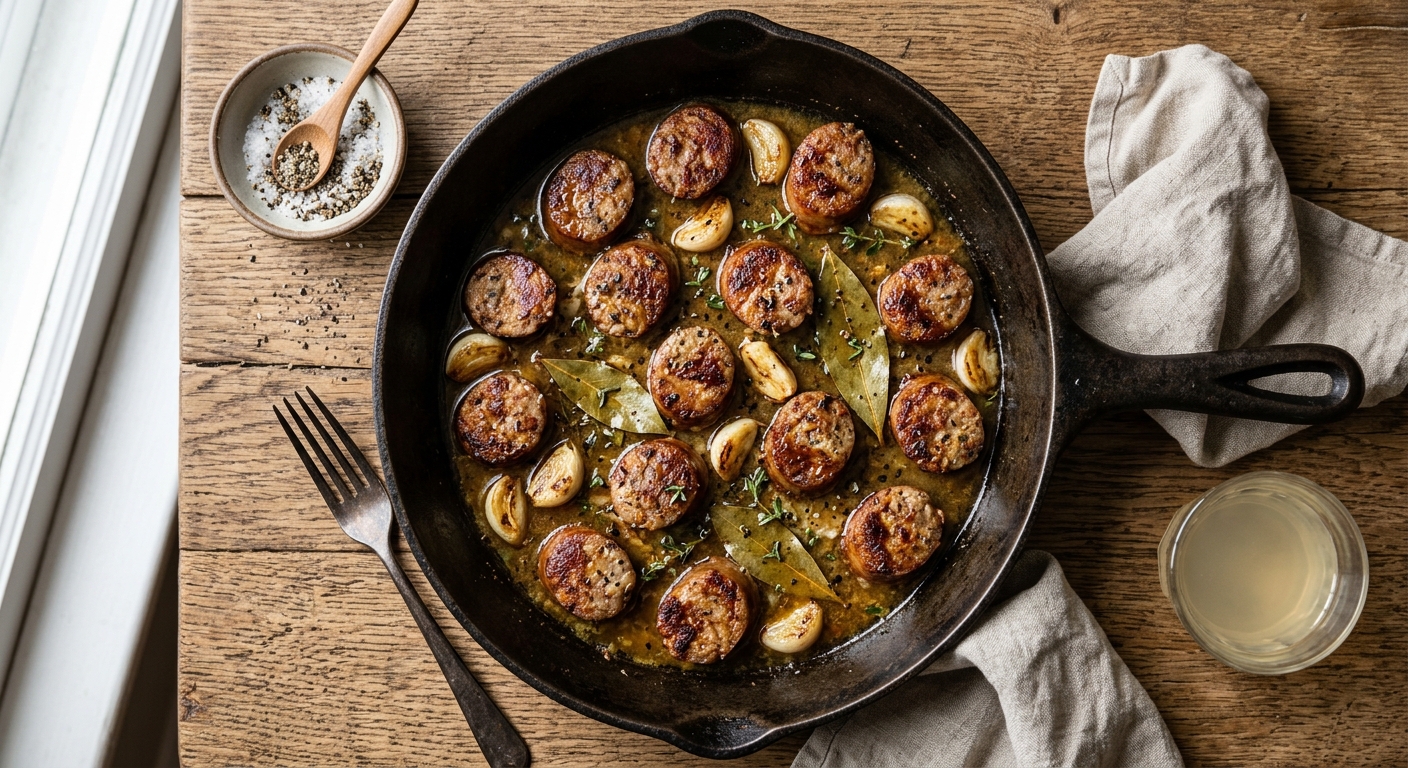
Mazzafegato in Padella with White Wine and Bay Leaves
Mazzafegato
A stovetop braise that starts with a hard sear and finishes with white wine and bay leaves. The wine deglazes the pan and creates a thin sauce from the liver's rendered fat. Bay leaves add a bitter herbal note that counters the richness. Twenty minutes from pan to plate.
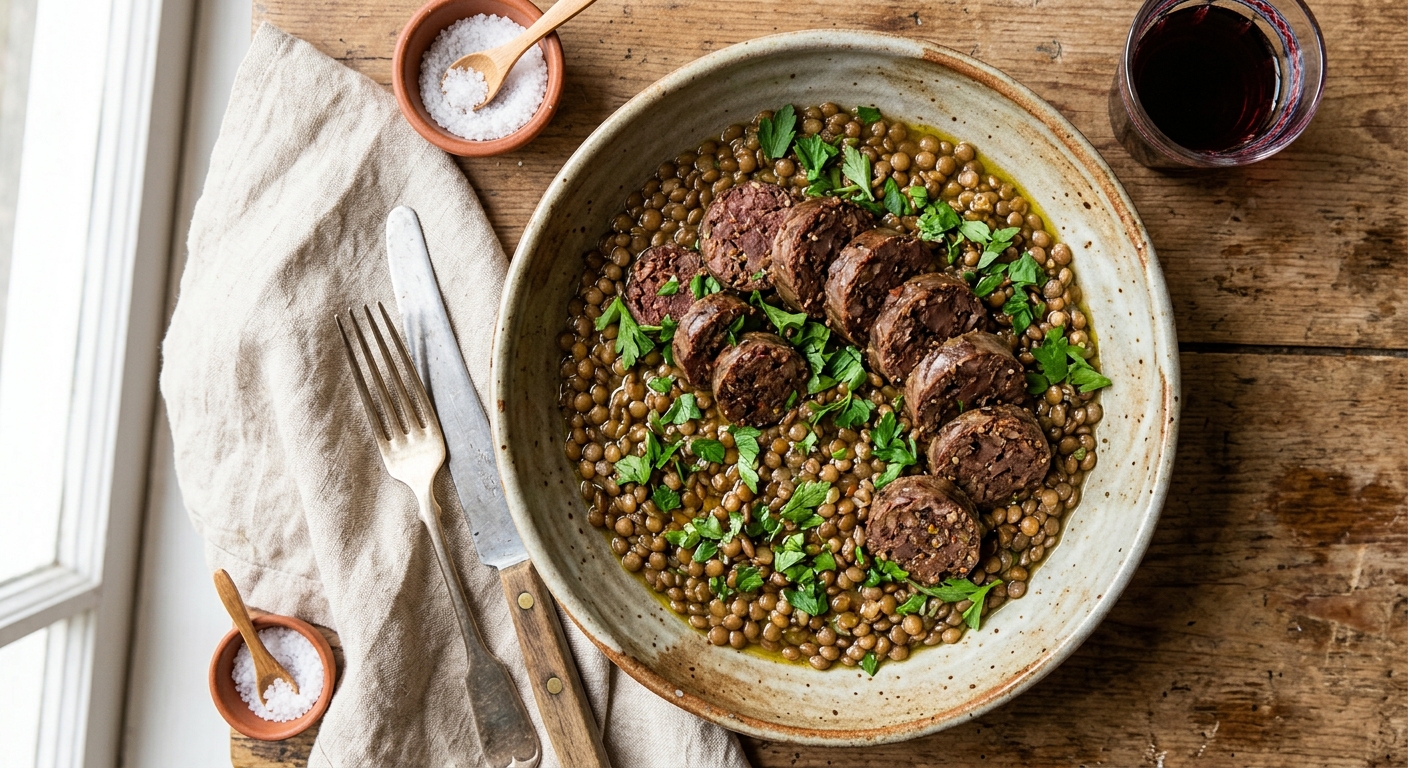
Mazzafegato with Castelluccio Lentils
Mazzafegato
Mazzafegato paired with Castelluccio lentils from the Piano Grande plateau in the Sibillini Mountains. These tiny Umbrian lentils hold their shape and need no soaking. The earthy lentils and mineral liver share the same terroir: the same hills, the same winter, the same table. A January dish that belongs in January.
On the Map
Where to Eat
Osteria a Priori
Perugia, Italy
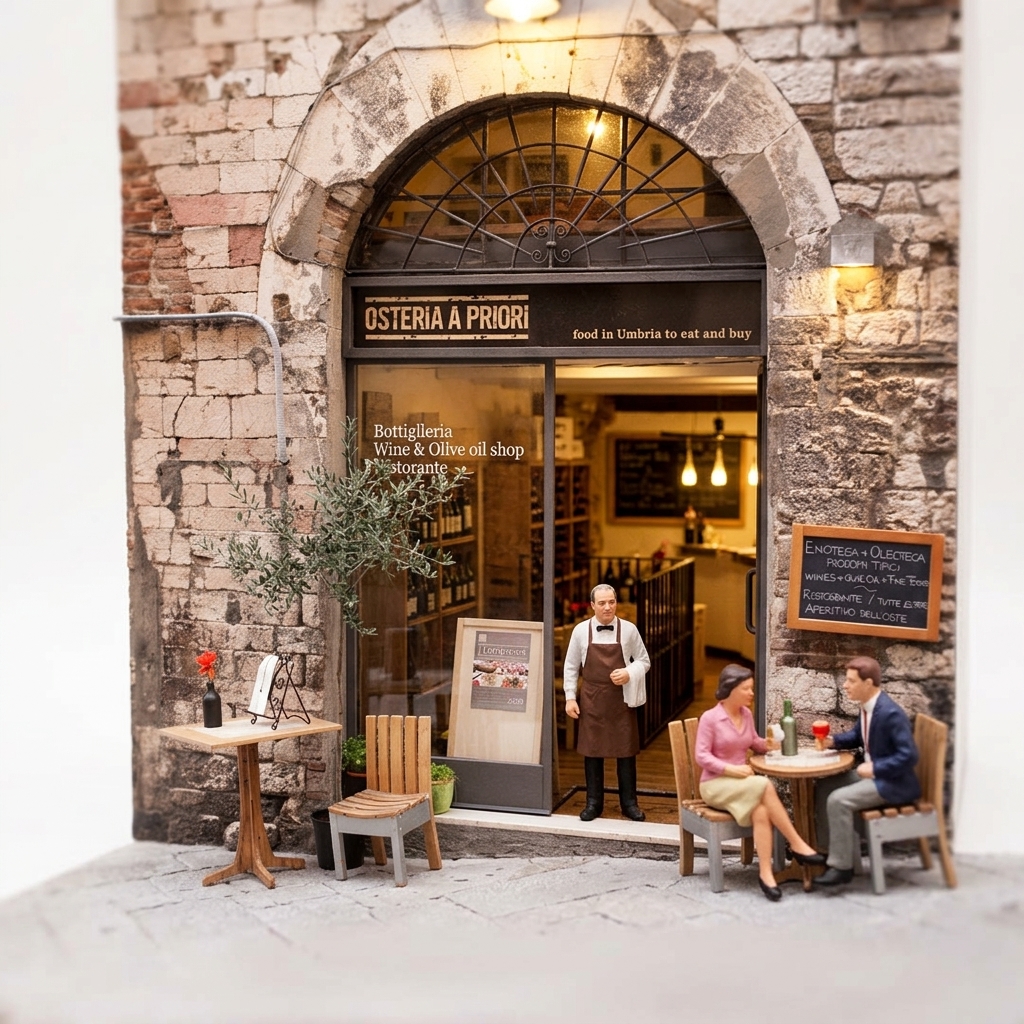
A narrow, stone-walled osteria tucked into one of Perugia's medieval alleys near Corso Vannucci. The kitchen focuses on Umbrian salumi and local meats. During the colder months, mazzafegato shows up on the antipasti board alongside crostini neri and local pecorino. The Sagrantino selection runs deep. Tables seat maybe thirty people. Reservations in winter are a good idea.
Ristorante Vespasia
Norcia, Italy
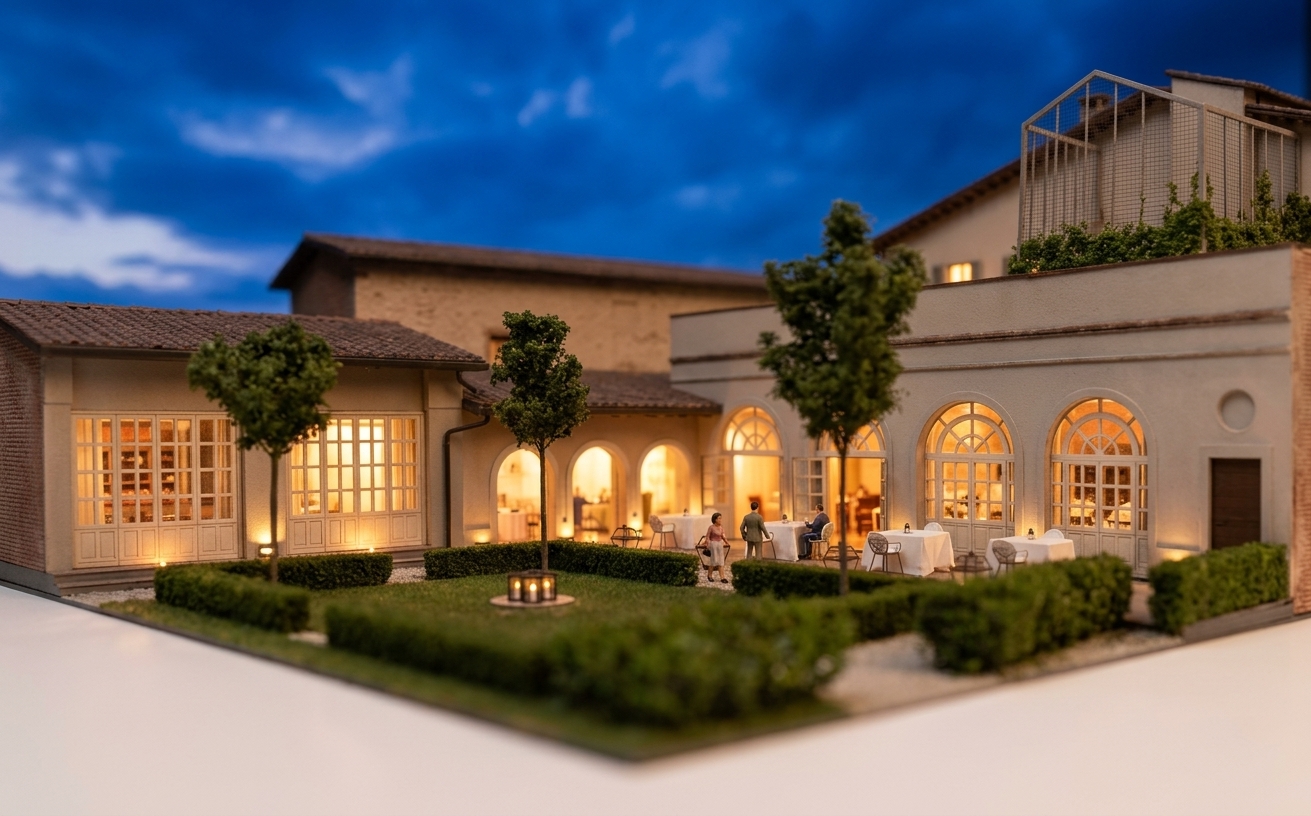
Fine dining inside Palazzo Seneca, a 16th-century palace in Norcia's old town. Chef takes Umbrian ingredients and refines them without losing their origin. Mazzafegato appears as a starter, deconstructed with a smear of liver mousse, candied orange, and toasted pine nuts on house-made bread. Castelluccio lentils and black truffle round out the Umbrian menu. Vaulted stone ceilings. A serious wine cellar focused on Sagrantino and Montefalco Rosso.
Trattoria del Teatro
Fabriano, Italy
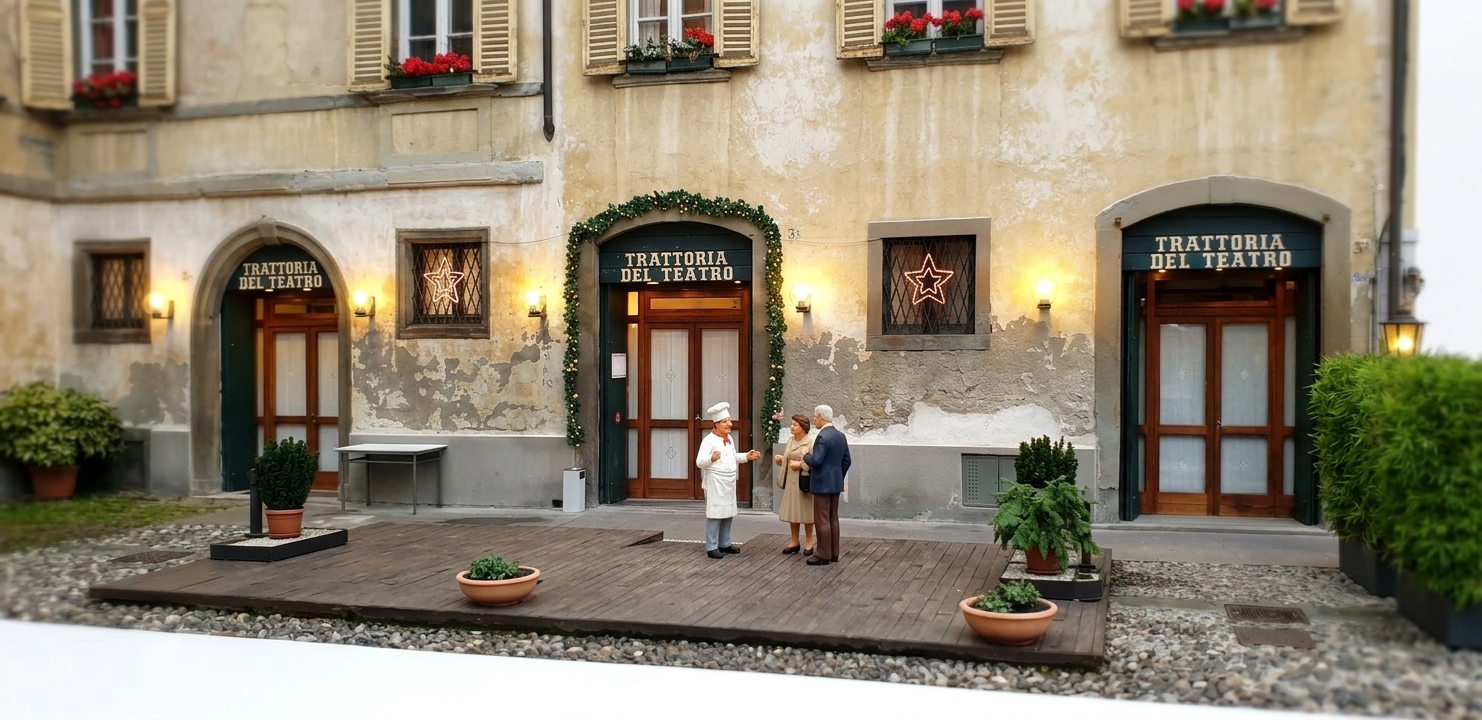
A no-frills trattoria on a side street near the Teatro Gentile in Fabriano. The menu changes with the season. In winter, mazzafegato appears grilled alongside polenta and local greens. The wine list favors Verdicchio from nearby Cupramontana. Paper tablecloths. Handwritten specials on a chalkboard. The kind of place where the owner takes your order from memory.