Loukaniko
Λουκάνικο
Peloponnese, Greece
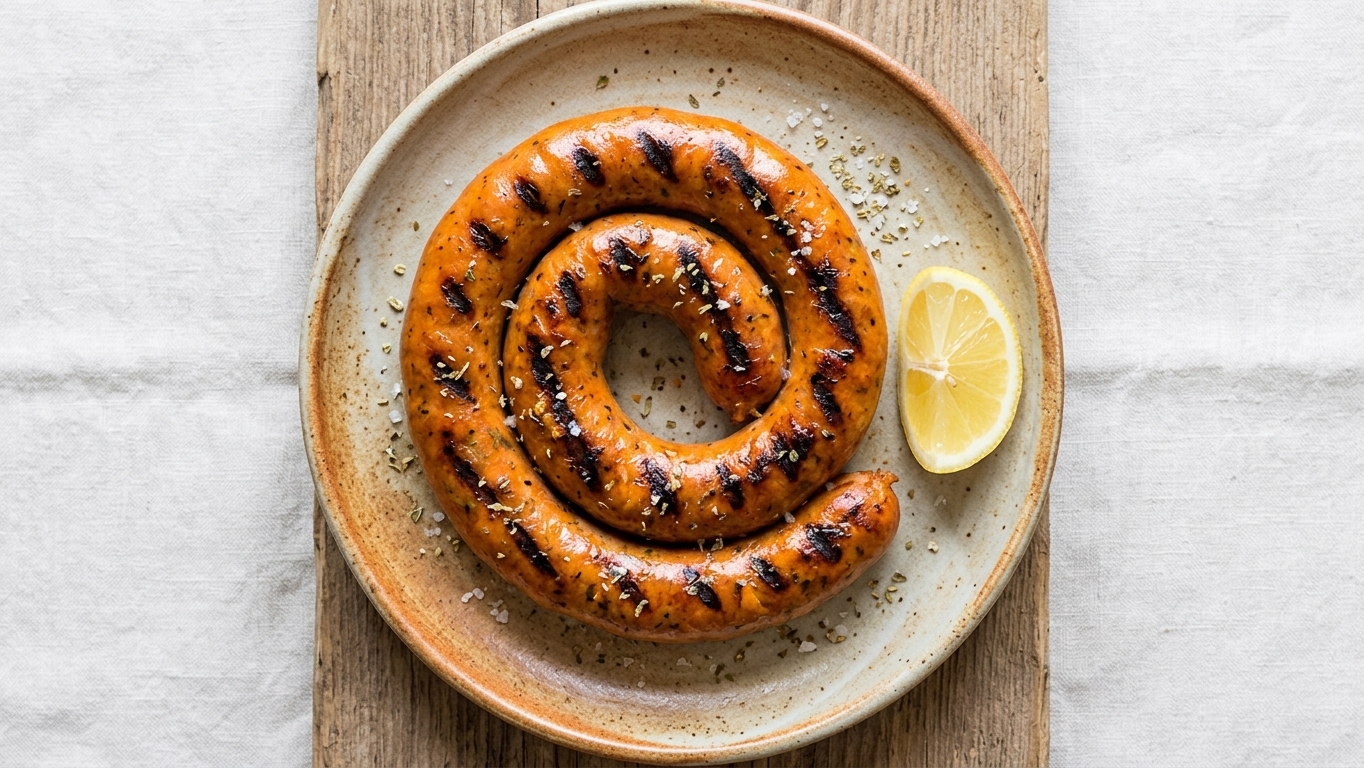
Greece's oldest sausage: a fresh pork link seasoned with orange peel, red wine, and fennel seed, cooked over charcoal until the skin splits and char marks cross the casing. Every region has its version. The Peloponnese uses citrus peel and wine. Some islands smoke the links over olive wood. Crete loads in leek and coriander. What stays constant is the wine, the heat, and the grill. Loukaniko is not eaten in a bun. It comes to the table whole, sliced on a wooden board, with bread to soak up the fat.
History
The word comes from Latin lucanica, a sausage the Roman writer Marcus Terentius Varro attributed to the Lucani people of southern Italy. Roman soldiers carried the technique into Greece. By the Byzantine era, pork sausages seasoned with wine and spices appear in texts describing market goods in Constantinople and Thessaloniki. The Ottoman period did not suppress the tradition in Christian communities, where pork remained central to feast-day cooking. After Greek independence in the 19th century, loukaniko became a fixture at panigíria (village festivals) and taverna menus. The orange-peel variant is particularly associated with the Peloponnese, where citrus orchards are common.
Ingredients
Preparation
Pork shoulder and fat are ground coarsely, then mixed with red wine, dried orange peel, fennel seed, coriander, garlic, and black pepper. The wine keeps the mixture loose and adds acidity. The links are tied off at 10-12cm, then either used fresh within two days or hung to dry for a week in a cool space. Fresh loukaniko must be grilled or pan-fried over high heat until the casing blisters and the interior reaches 70°C. Rest two minutes before slicing.
Taste
The orange peel is the first thing you notice: citrus bitterness, not sweetness, cutting through the fatty pork. Fennel seed gives a faint anise note. The wine rounds out the salt and keeps the sausage from tasting heavy. Char from the grill adds another layer. Nothing about this is subtle, but nothing is aggressive either.
Texture
Coarse-ground, with visible chunks of meat and fat. The natural casing snaps when you bite through it. Inside, the texture is dense and slightly crumbly from the wine, not smooth or emulsified like a German sausage. Slices hold together but break along the grain.
Rituals & Traditions
Grill over charcoal, not gas
Loukaniko needs real charcoal heat. Gas grills run too cool and miss the blistering. The char marks are part of the flavor, not decoration.
Slice on the board, not the plate
Loukaniko comes to the table whole. It is cut on a wooden board in front of diners, not pre-sliced in the kitchen. The presentation is part of the ritual at any decent taverna.
The panigíri tradition
At Greek village festivals (panigíria), loukaniko grills over open fires from midnight until dawn. Every saint's day feast on the Peloponnese and the islands involves a communal grill. The sausage feeds the whole village.
Do not prick the casing
Pricking releases the fat and wine before they have a chance to keep the inside moist. Cook loukaniko whole, and let the casing blister and char on its own terms.
Recipes
Grilled Loukaniko with Orange
Loukaniko
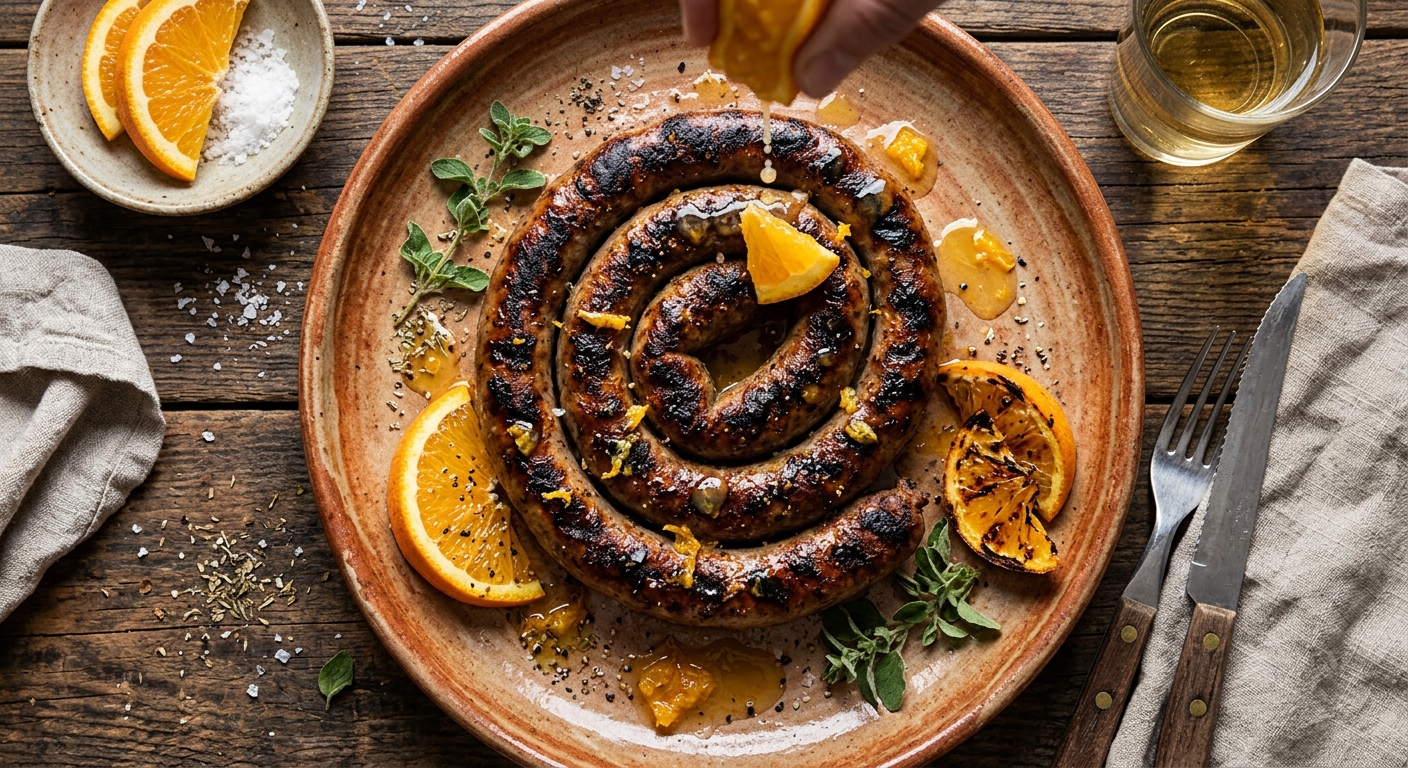
The traditional way to serve loukaniko on the Peloponnese: grilled over charcoal, then sliced and finished with fresh orange juice squeezed directly over the hot sausage. The citrus in the marinade answers the orange peel already inside the casing. A few minutes of prep, all the cooking on the grill.
Loukaniko Omeleta
Loukaniko
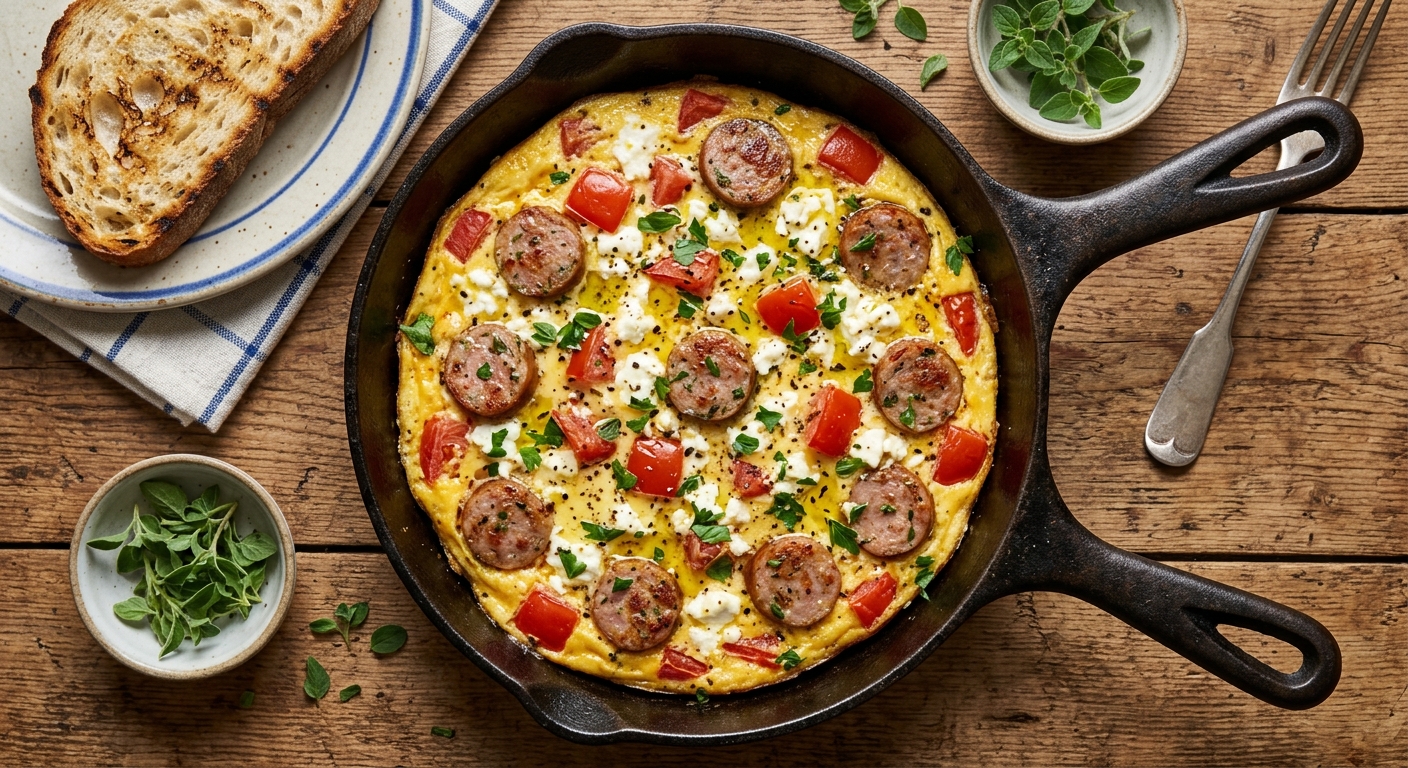
A Greek sausage omelette: sliced loukaniko fried in olive oil until the edges brown, then eggs poured in and cooked into a soft, folded omelette with tomato and herbs. The fat from the sausage seasons the eggs. Fifteen minutes, one pan.
Loukaniko Pita Wrap
Loukaniko
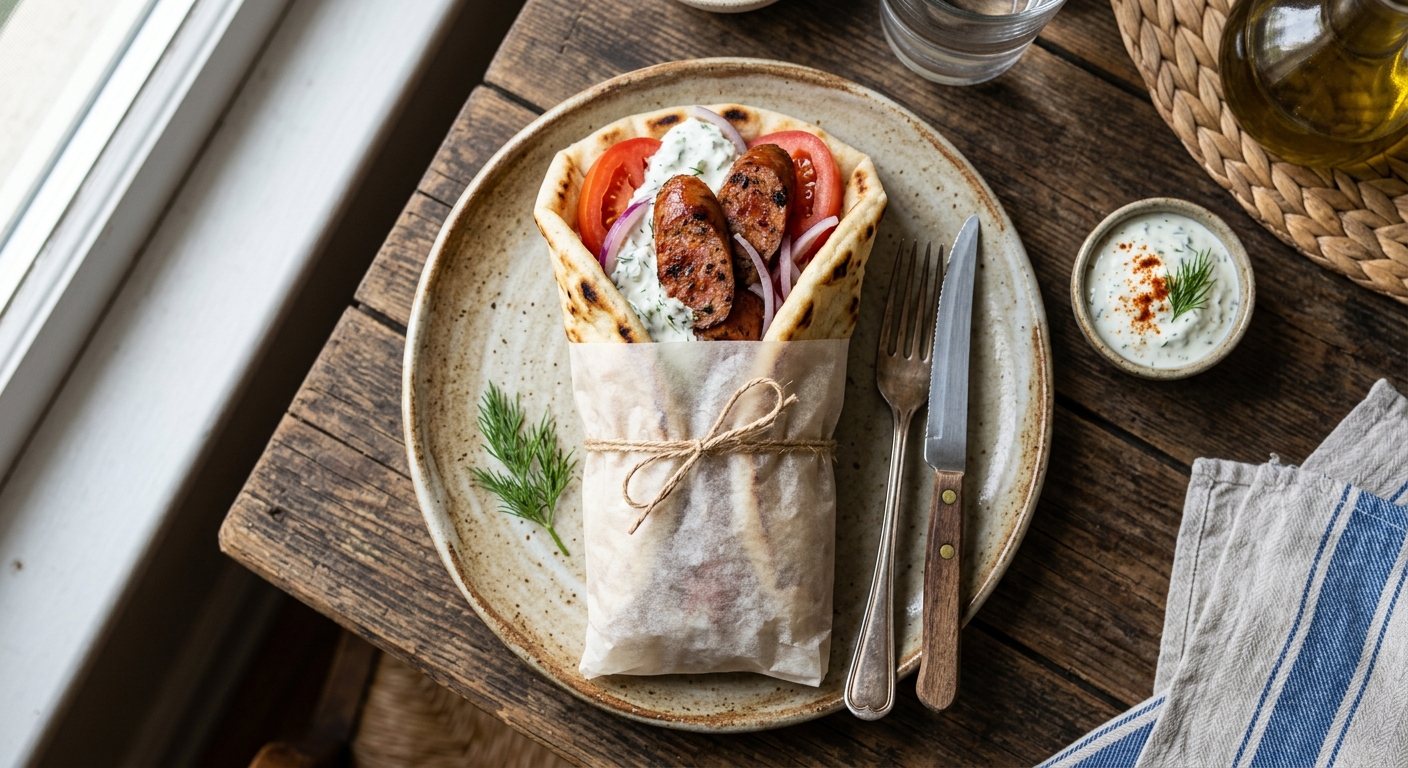
Street-food style: grilled loukaniko sliced and wrapped in warm pita with tzatziki, sliced tomato, and onion. The same logic as a souvlaki wrap, but with the sausage as the main event. Quick to make at home if you have a grill pan.
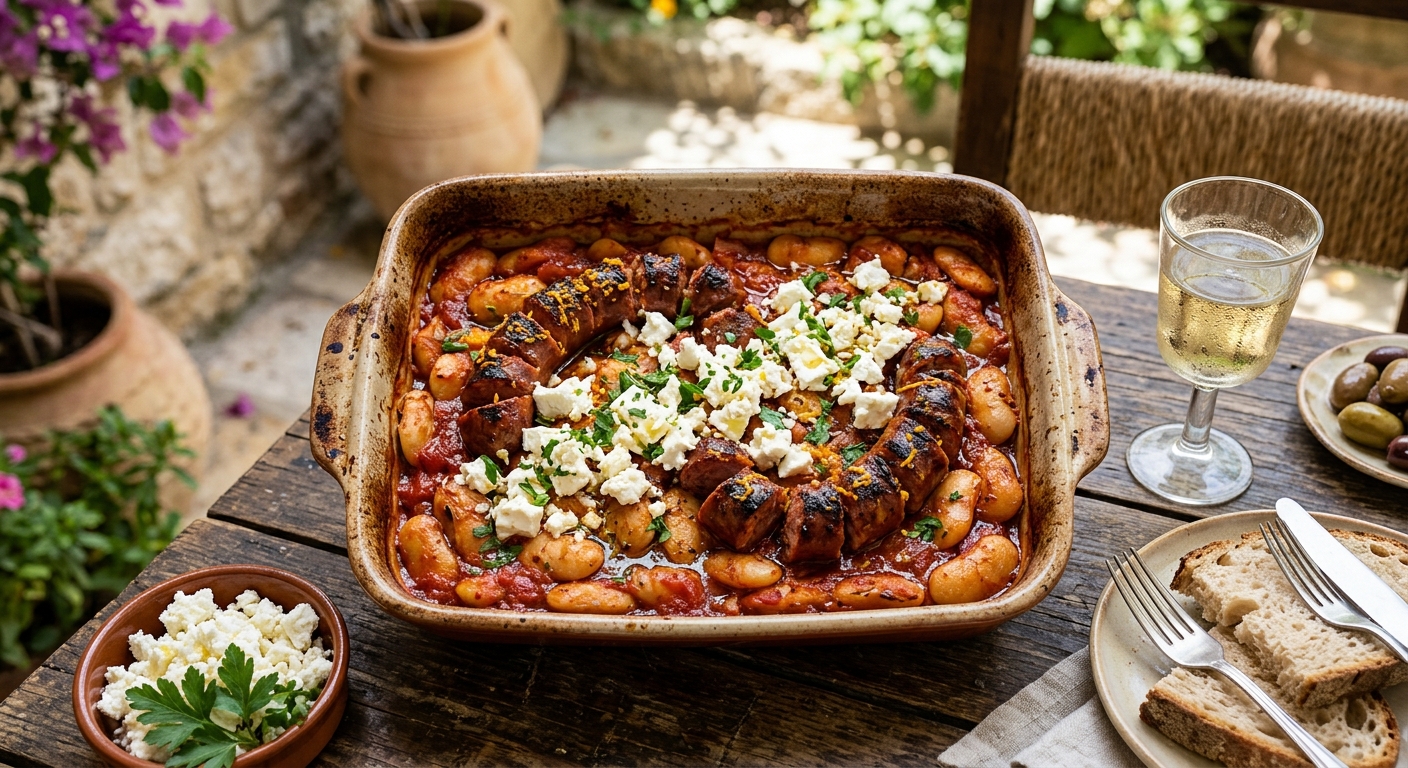
Loukaniko with Gigantes
Loukaniko
Giant white beans slow-cooked in tomato sauce with chunks of loukaniko. The beans absorb the sausage fat and wine. The result is thick, filling, and good the next day. A staple of taverna menus across northern Greece and the islands.
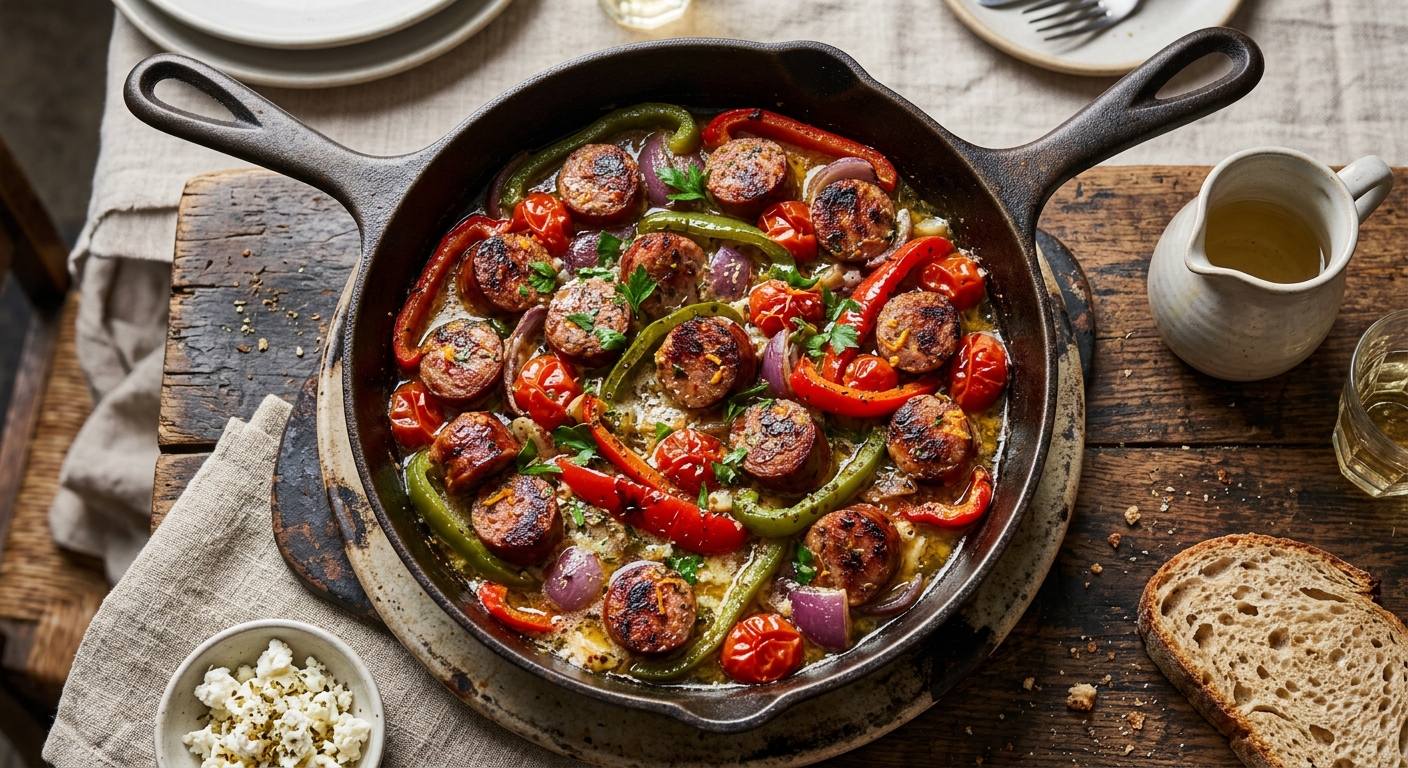
Loukaniko with Roasted Peppers and Tomatoes
Loukaniko
Pan-fried loukaniko cooked down with roasted red peppers, ripe tomatoes, and a splash of white wine. The sausage fat becomes the base for the sauce. Serve with bread to get everything off the pan.
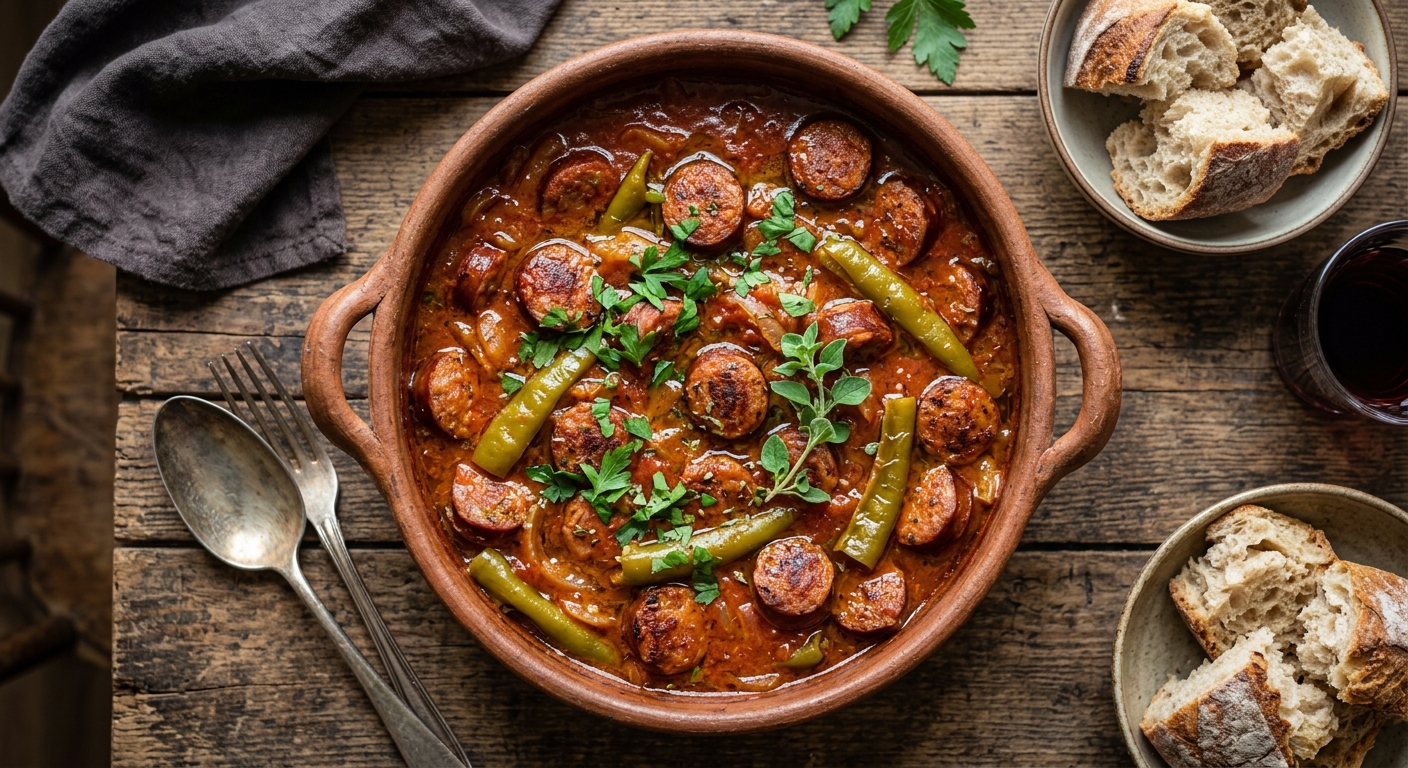
Spetsofai
Loukaniko
The mountain stew of Pelion: loukaniko braised with long green peppers and tomatoes in red wine until everything collapses into a thick, dark sauce. It comes from the villages around Mount Pelion in Thessaly, where shepherds cooked sausage and whatever peppers they had on hand. The result is rich and deeply savory. Serve with bread, not rice.
On the Map
Where to Eat
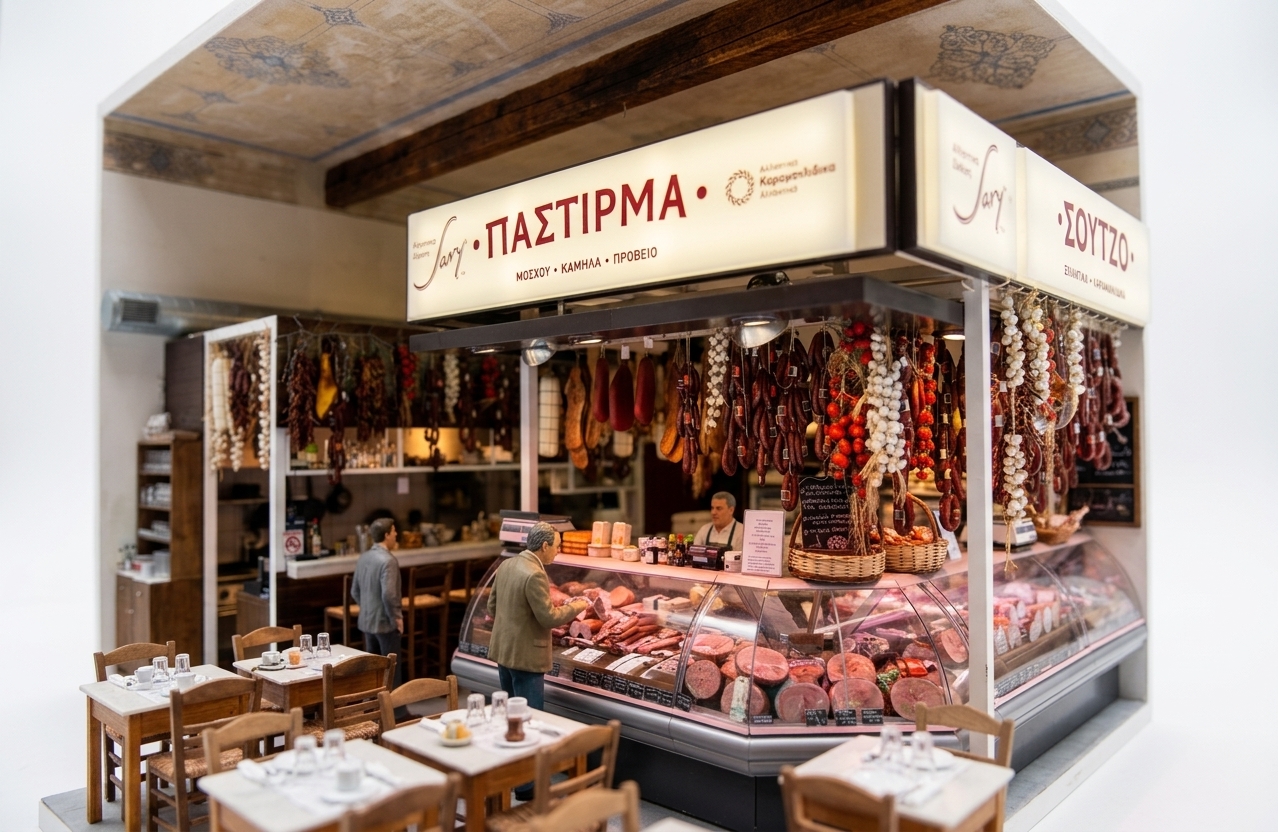
Ta Karamanlidika tou Fani
Athens, Greece
Part deli, part restaurant, on Sokratous Street in the central market district of Athens. Fani Koutsovitis opened it in 2009 to preserve the charcuterie traditions of the Karamanlides, the Greek Orthodox communities of Anatolia expelled in the 1923 population exchange. The glass cases hold cured meats, aged cheeses, and loukaniko from small Greek producers. You can eat at the marble counter or at one of the tables in back. The loukaniko is sliced to order from whole links, served with bread and a glass of ouzo or tsipouro.
Taverna Sigalas
Fira, Santorini, Greece
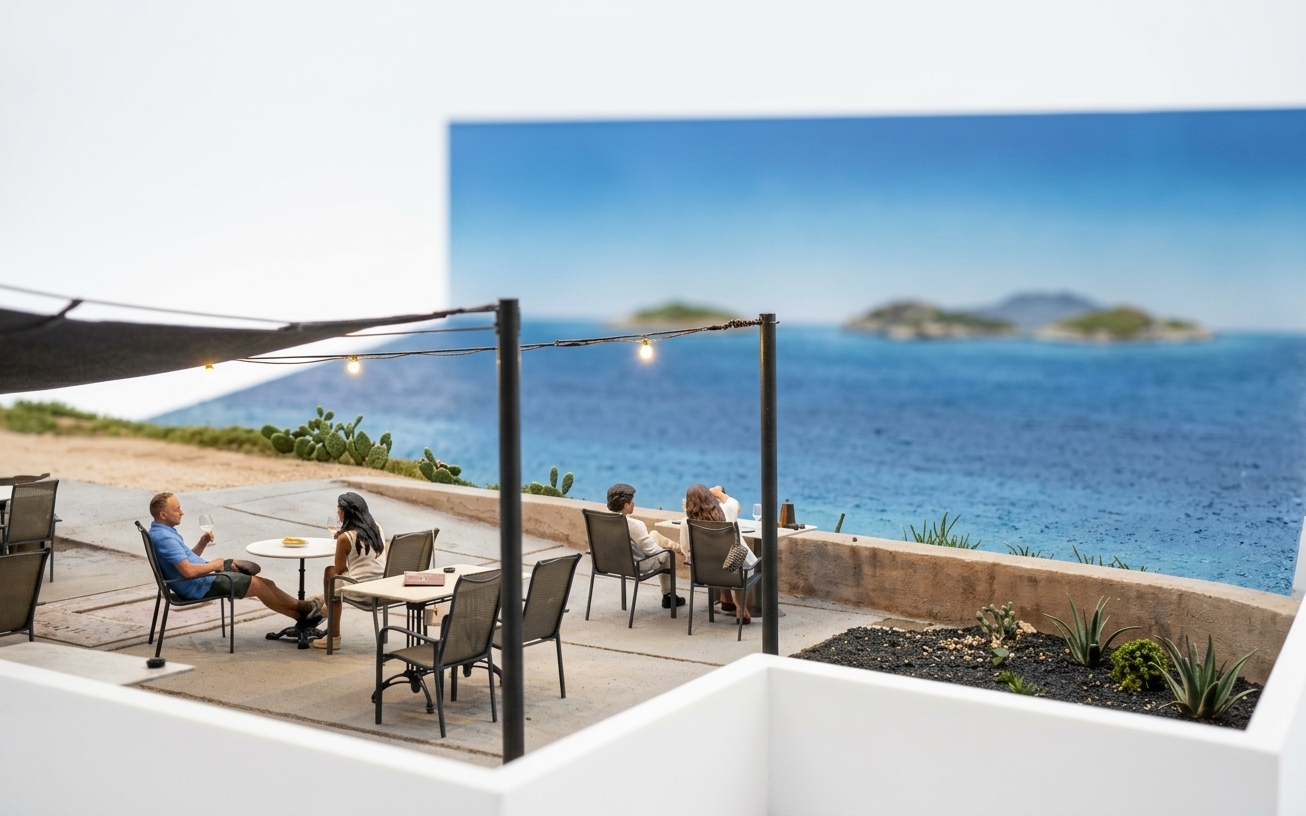
Open since 1887 in the main square of Fira, Santorini. The Sigalas family has been grilling meat on this island for four generations. The terrace looks out over the caldera and the whitewashed cliffs. Loukaniko, lamb chops, and local fava made from Santorini's yellow split peas are the things to order. The wine list leans on Assyrtiko from the island's volcanic slopes. Crowds fill the terrace from May through October. In winter, the locals come back.
To Kati Allo
Athens, Greece
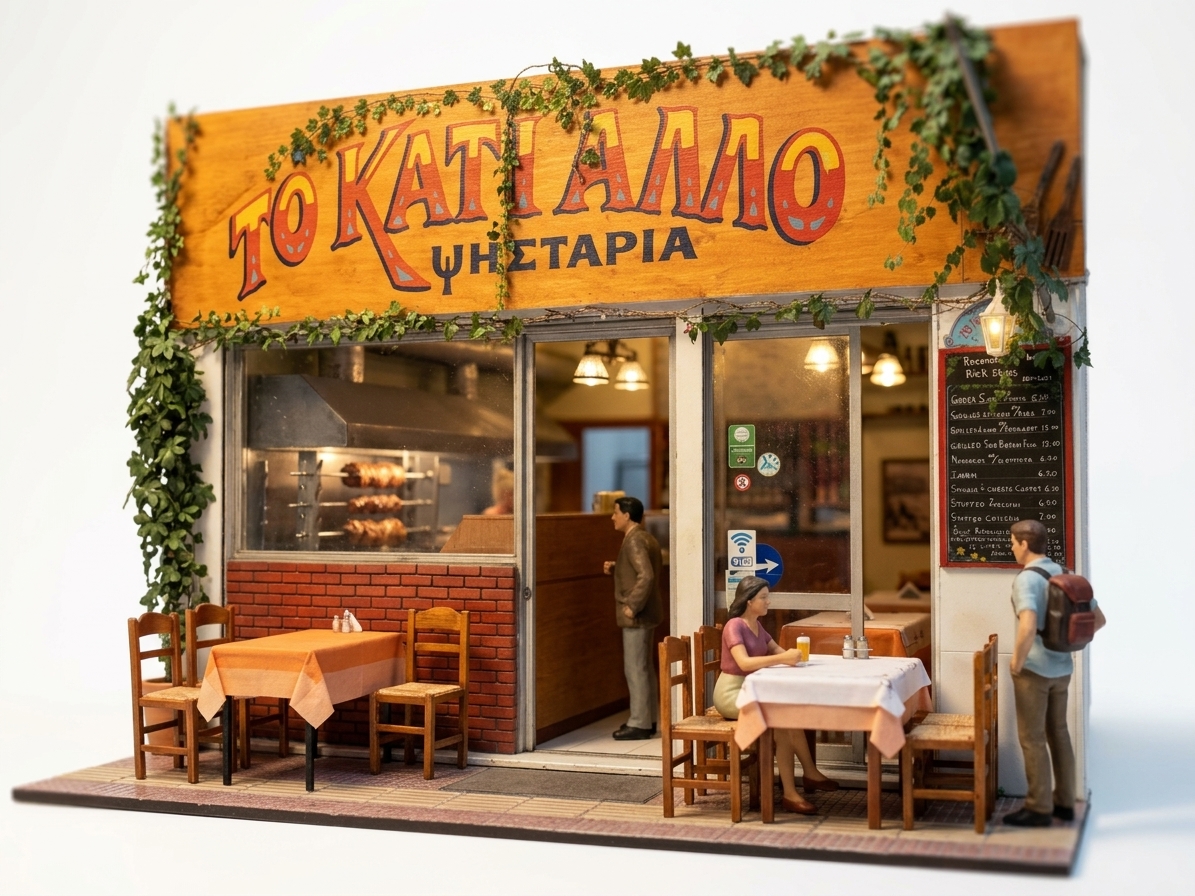
A Psirri taverna on Aisopou Street, in the old craftsmen's district just west of Monastiraki. Wood tables, paper tablecloths, and a charcoal grill that runs from noon until the last customer leaves. The menu is short: grilled meats, mezedes, house barrel wine. Loukaniko comes to the table whole on a wooden board, still spitting from the grill. The neighborhood was run-down for decades and is now half-gentrified, but To Kati Allo has stayed the same.