Longganisa
Pampanga, Philippines
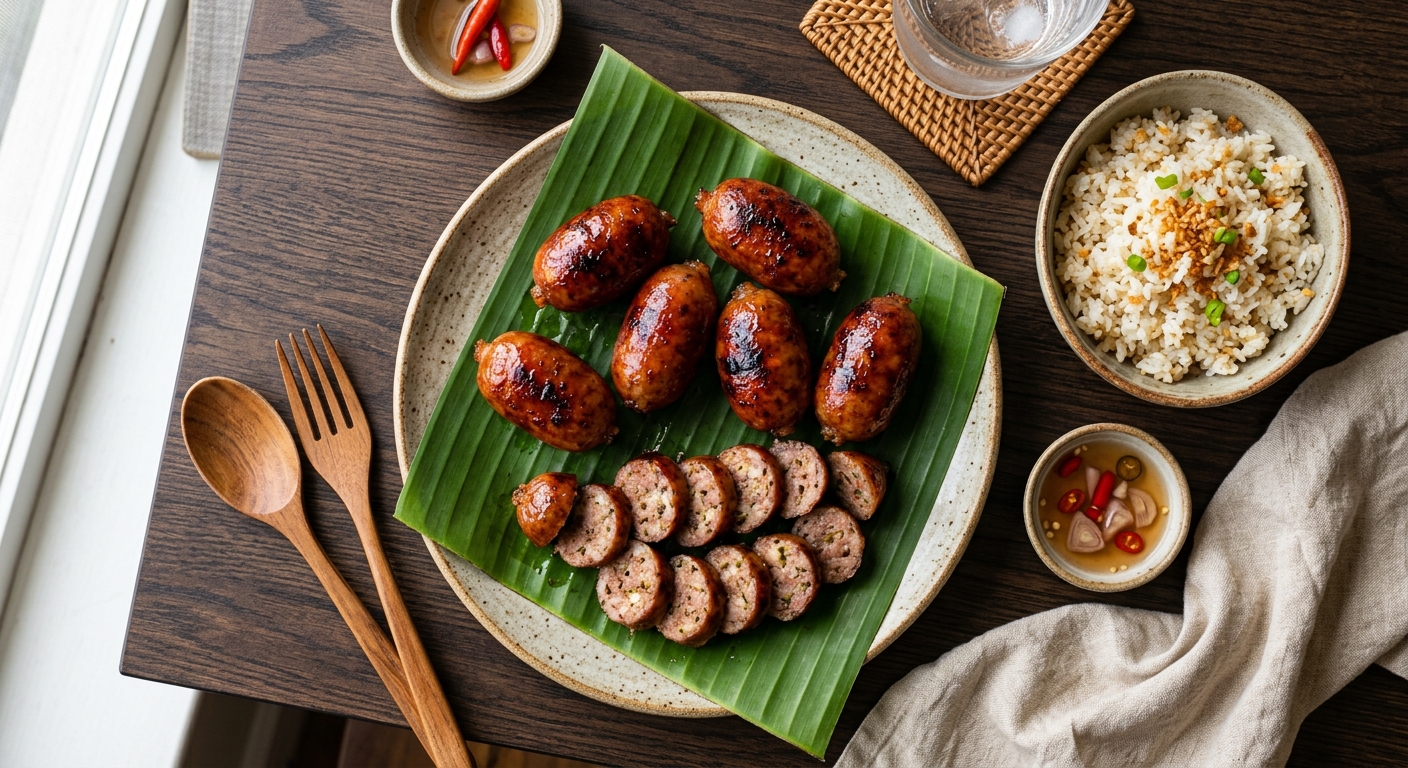
Longganisa is the Filipino fresh or cured pork sausage at the centre of the country's most beloved breakfast. Short, plump, and tied in individual links, it comes in two broad styles: hamonado, which is sweet from sugar and pineapple or anise wine, and de recado, which is garlic-forward and lightly sour. Pampanga makes the most celebrated version, a hamonado type cured with generous sugar and garlic until the casing glazes and the fat caramelises in the pan. Every Philippine province has its own formula. Vigan longganisa from Ilocos Norte is small, dense, and pungent with garlic and vinegar. Lucban in Quezon packs its links with oregano and fat. The Pampanga version sits between sweet and savoury, with the sugar doing most of the talking but the garlic never far behind.
History
Longganisa descends from the Spanish longaniza, a spiced pork sausage introduced to the Philippine archipelago during the 300-year colonial period that ended in 1898. Filipino cooks kept the casing and the basic technique but rewrote the seasoning to match local taste and available ingredients. Sugar, a crop central to the Pampanga economy, entered the recipe and became the defining feature of the Kapampangan version. Garlic, grown across Central Luzon, gave the sausage its other dominant note. The province of Pampanga, long considered the culinary capital of the Philippines, standardised its hamonado version through generations of home cooks and market vendors. By the 20th century, longganisa had separated entirely from its Iberian ancestor and was a Philippine original in everything but name. San Fernando in Pampanga became the reference point for the sweet type, while Vigan and Lucban developed their own distinct versions. Today longganisa is made fresh in home kitchens and sold by small producers throughout every Philippine province, with each locality defending its own recipe as the correct one.
Ingredients
Preparation
Pork shoulder and belly are minced together, keeping a good proportion of fat for the characteristic richness. The meat is seasoned with minced garlic, sugar, soy sauce, a splash of vinegar, and black pepper, then mixed by hand until the sugar dissolves into the fat. In Pampanga, the ratio of sugar to meat is high enough that the raw mixture tastes noticeably sweet. The seasoned meat rests in the refrigerator for at least a few hours, overnight at best, to let the cure penetrate. The mixture is then filled into narrow pork casings and tied into short links. Pampanga longganisa is typically sold fresh rather than dried, cooked the same day or the next morning. Pan-frying in a little water first, then letting the water evaporate and the casing fry in the rendered fat, produces the glossy, caramelised exterior that defines the dish.
Taste
Sweet and garlicky in equal measure, with the caramelised casing adding a slight bitterness that keeps the sweetness from going flat. The pork fat carries the garlic through every bite. A faint sour note from the vinegar cuts the sugar without announcing itself. Eaten alongside garlic fried rice and a runny fried egg, the combination of sweet sausage fat, starchy rice, and egg yolk is the taste of the Philippine morning.
Texture
The casing caramelises and tightens in the pan, giving the outside a slight snap. The interior is soft and fatty, with a coarse grind that holds the garlic chunks. The sugar causes the sausage to stick to the pan if the heat is too high; cooked properly, the exterior is lacquered and glossy, the interior still juicy.
Rituals & Traditions
The silog breakfast
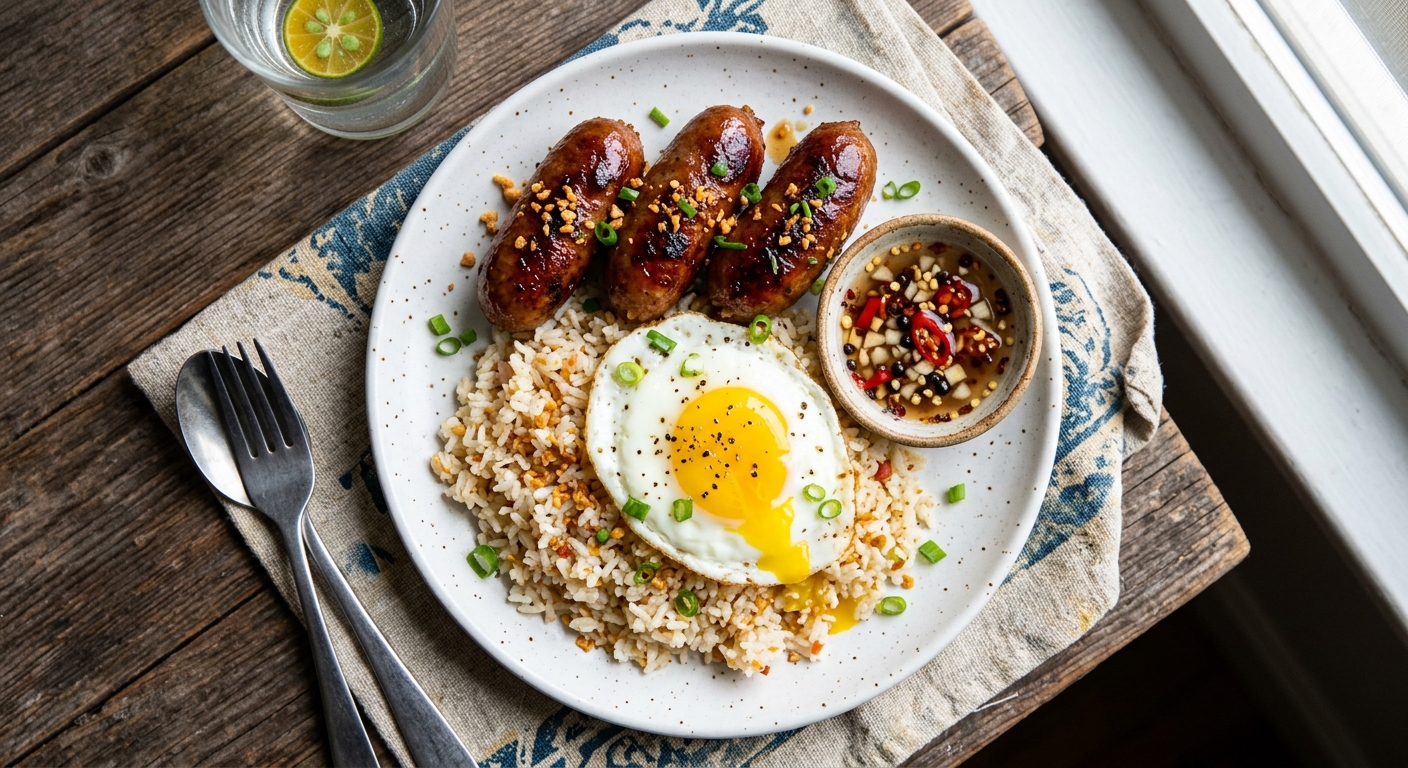
Silog is a portmanteau: si from sinangag (garlic fried rice), log from itlog (egg). Prefix the protein to name the meal: longsilog is longganisa plus garlic rice plus egg. Tapsilog uses tapa (cured beef). Tosilog uses tocino (sweet cured pork). The silog format is the dominant breakfast structure across the Philippines, and longsilog is the most common version in Pampanga. Every carinderia (local eatery) in the region serves it from early morning, and the combination is so ingrained that Filipinos describe breakfast hunger with a single word: longsilog.
Start the pan with water, not oil
Place the longganisa links in a pan with enough water to come halfway up the sides. Cook over medium heat until the water evaporates entirely. The sausages then fry in their own rendered fat. The water step prevents the sugar from burning before the interior cooks through. Most Filipinos cook longganisa this way by instinct; skipping it and going straight to a dry or oiled pan usually results in burst casings and scorched sugar on the outside with raw pork inside.
Pasalubong from Pampanga
Pasalubong is the Filipino custom of bringing food or gifts home from a trip. Longganisa from Pampanga is one of the most carried pasalubong items when Filipinos travel through Central Luzon. Market stalls in San Fernando and Angeles City sell fresh links by the kilogram, vacuum-packed for the journey. Workers returning to Manila from a Pampanga trip often arrive with a bag of longganisa for the household. The act of bringing it is understood as care, a tangible proof of having been somewhere specific.
Recipes
Longganisa Fried Rice
Longganisa
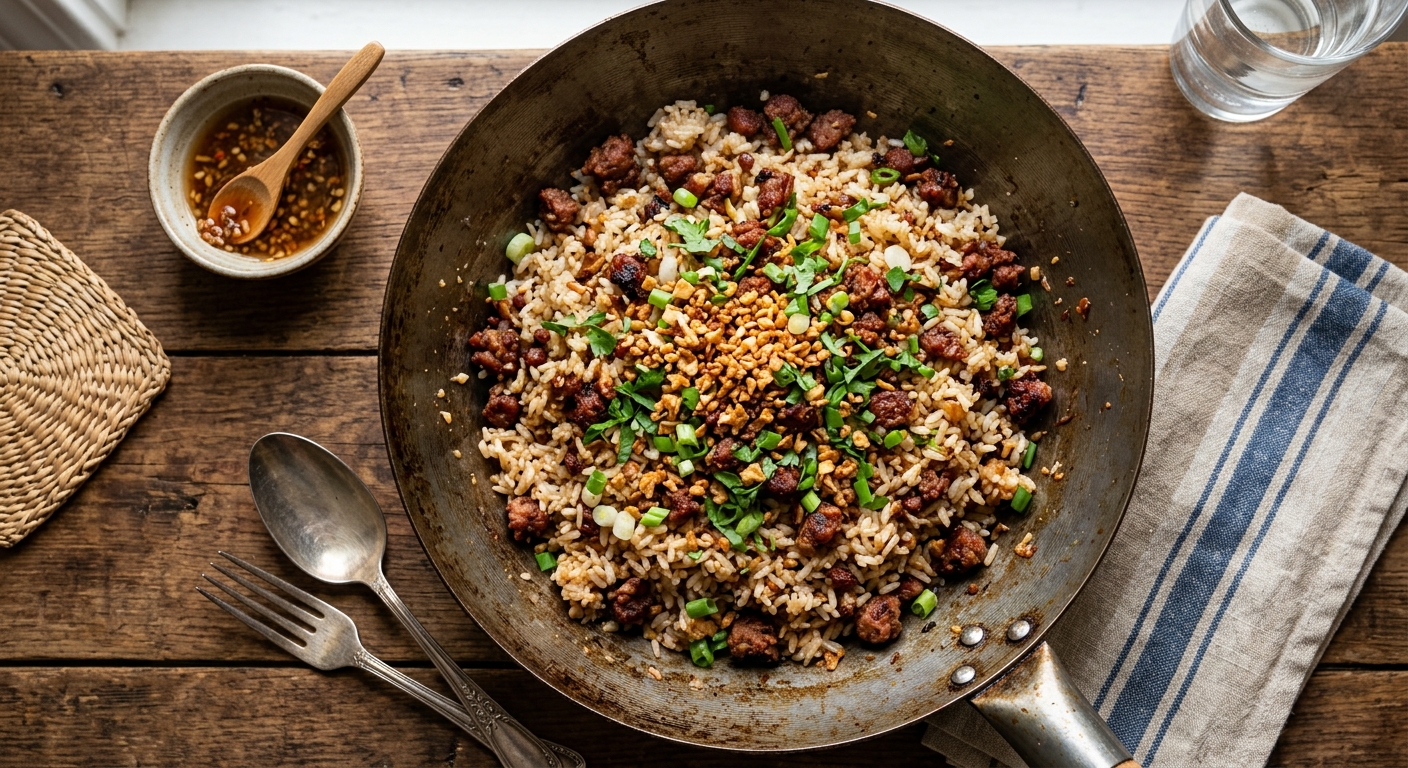
Garlic fried rice with longganisa crumbled through it, cooked in one pan so the sausage fat flavours every grain. This is the sinangag of longsilog taken further: the sausage becomes part of the rice rather than sitting alongside it. The sweetness of Pampanga longganisa works well here, the caramelised meat bits distributed through the rice and giving each spoonful a different ratio of fat, garlic, and starch. A fast, filling dish that works as breakfast, lunch, or a late-night meal from leftover rice.
Longganisa Pandesal
Longganisa
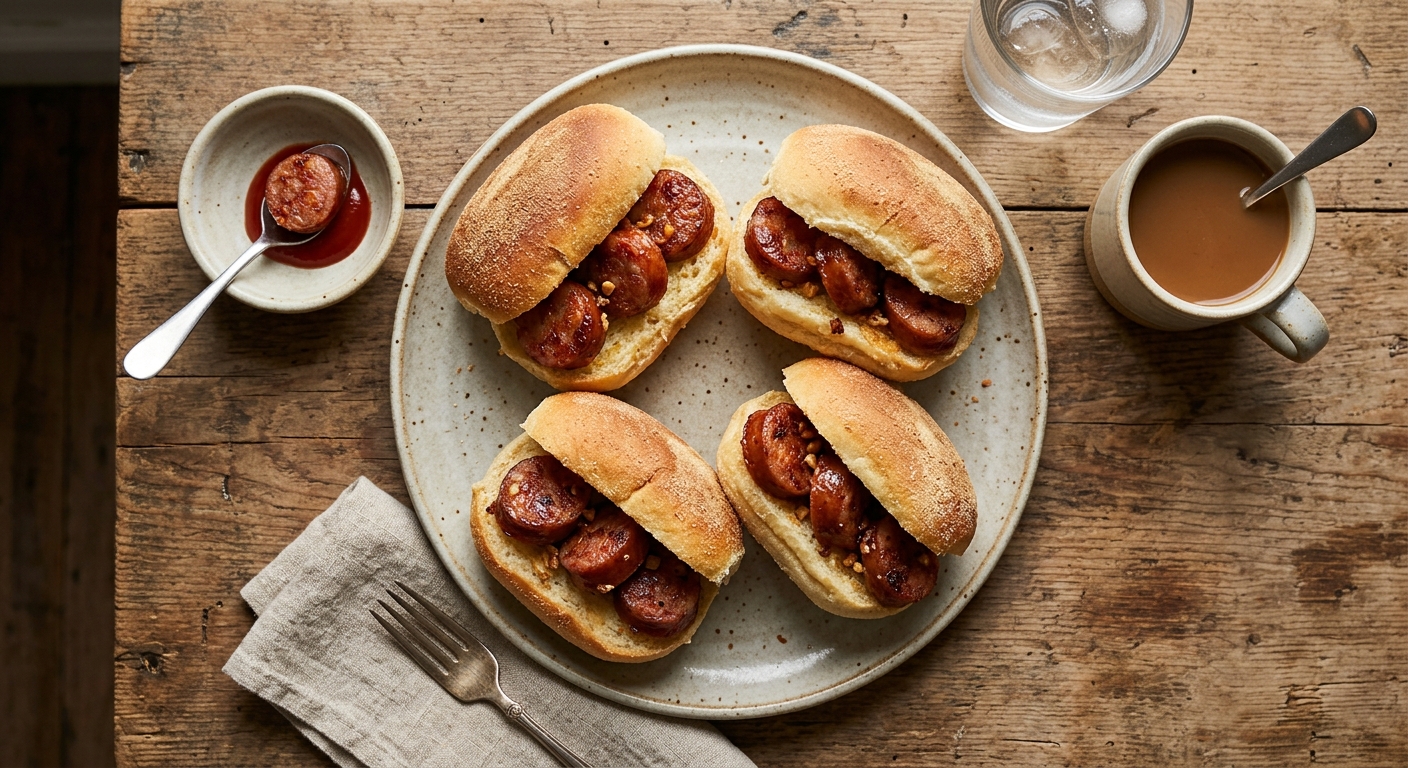
Pandesal is the soft, slightly sweet Filipino bread roll dusted in fine breadcrumbs, bought fresh from bakeries before sunrise across the country. Stuffed with fried longganisa and a smear of garlic mayonnaise or just the rendered sausage fat, it becomes the most common breakfast sandwich in the Philippines. No toasting needed; the roll is soft enough to compress around the sausage. A good pandesal pulls apart in your hands. The longganisa juices soak into the crumb, and the crust's light sweetness echoes the sugar in the sausage. This is morning food at its most practical.
Longganisa Pasta
Longganisa
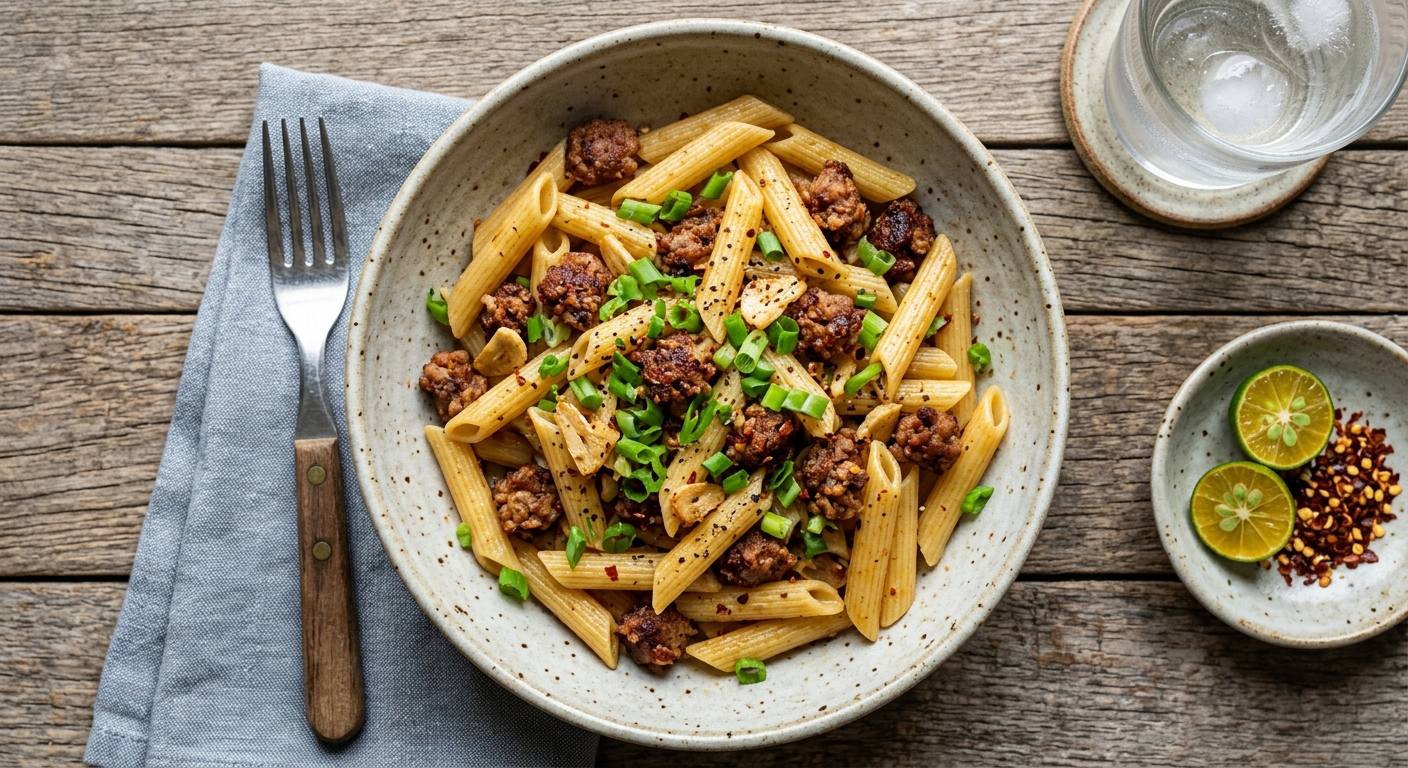
Filipino-style pasta with longganisa as the meat base. The sausage casings are removed and the meat crumbled into the pan, where it fries in its own sweetened fat before tomatoes and garlic join. The result sits somewhere between a Filipino bolognese and an aglio e olio, with the longganisa's sugar giving the sauce a slight caramelised gloss. Banana ketchup is traditional in Filipino pasta cooking and optional here; it deepens the sweetness in a way that straight tomato does not. A quick weeknight dish that turns Philippine pantry staples into something the whole household finishes.
Longganisa Sinigang
Longganisa
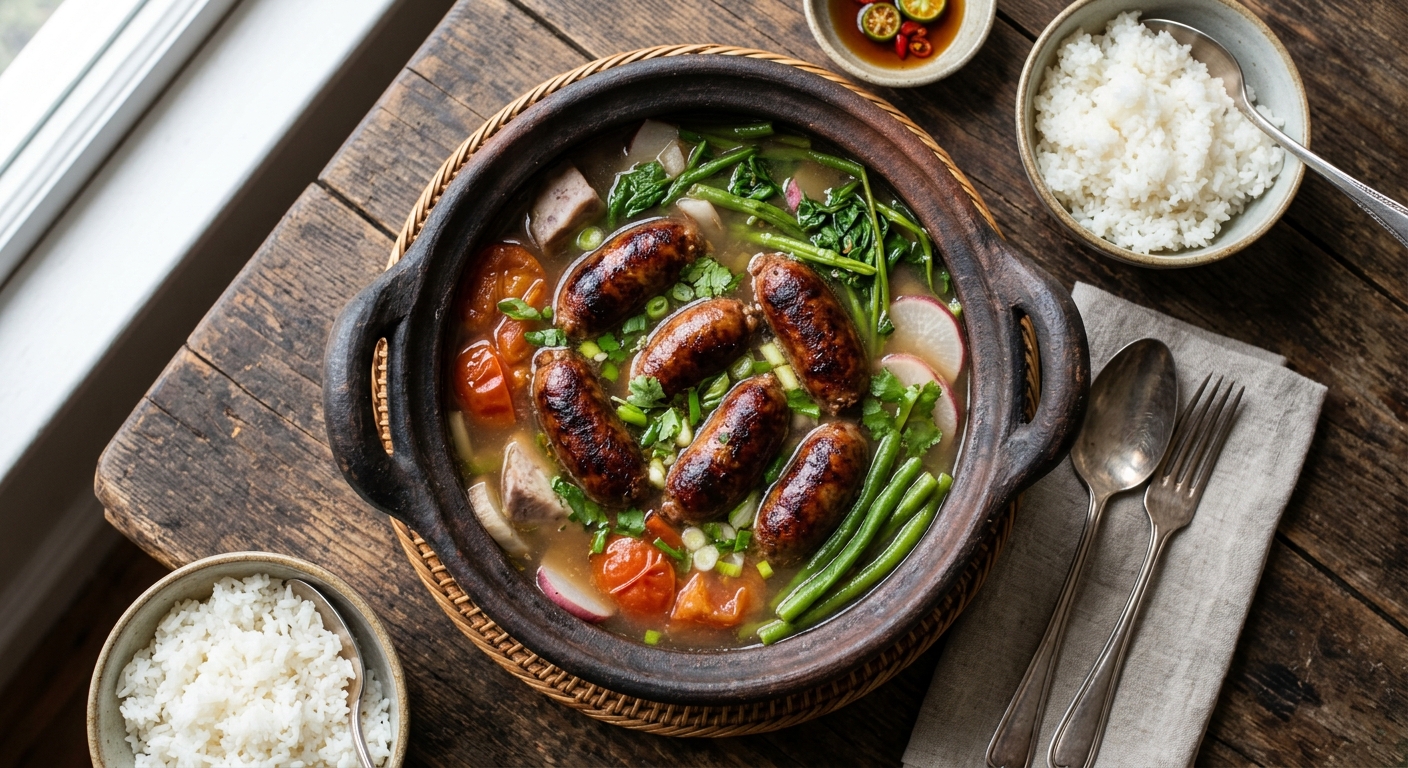
Sinigang is the Philippine sour soup, tamarind its traditional souring agent, vegetables its body, and usually pork or shrimp its protein. Longganisa in sinigang is a less common version, specific to Pampanga, where cooks add the sweet cured sausage to the sour broth for a deliberate tension between the fat-sweetness of the longganisa and the sharp tamarind. The fat from the sausage enriches the broth in a way that fresh pork cuts do not, and the sugar in the longganisa softens the tartness at the edges. The result is a soup richer and more complex than standard sinigang, with the sausage links bobbing in the broth alongside kangkong (water spinach) and long green chilli.
Longganisa and Tocino Skewers
Longganisa
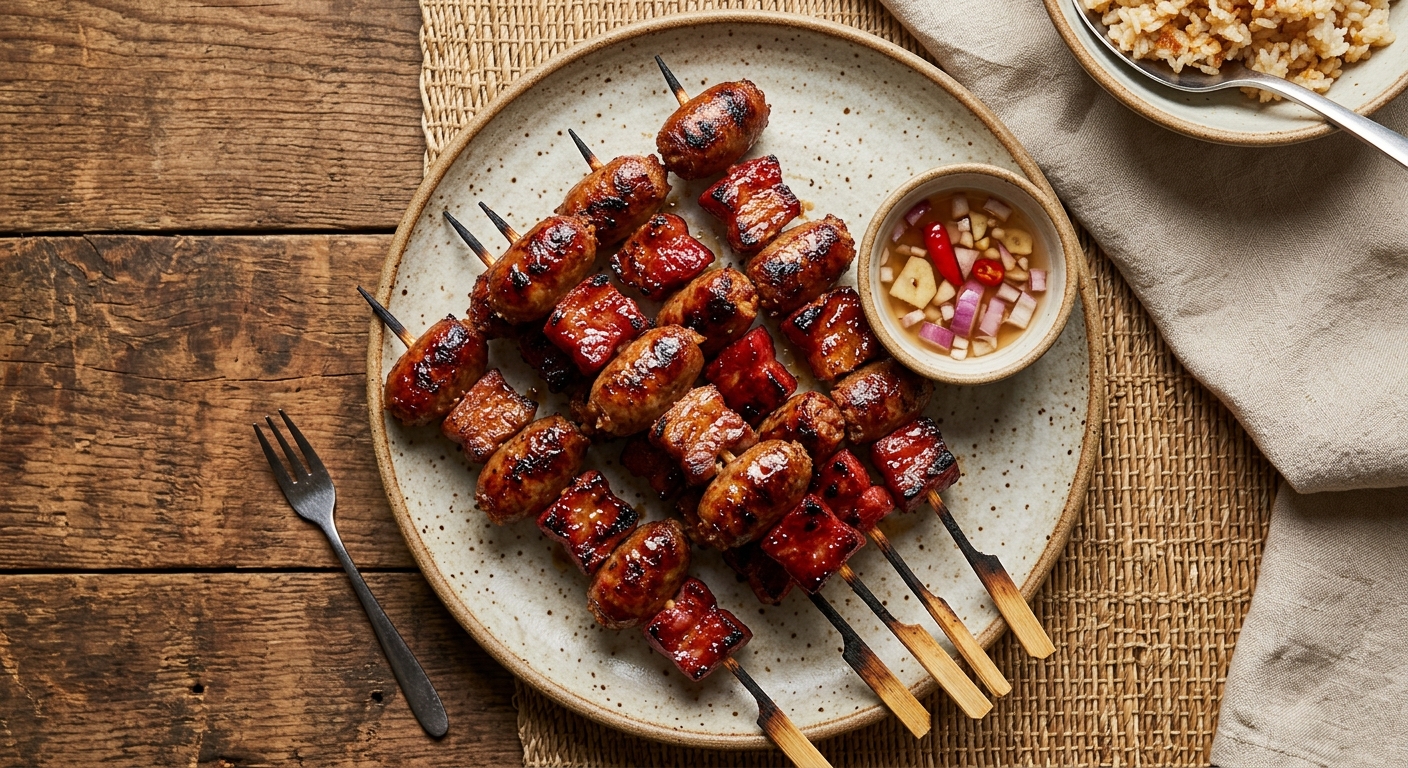
Grilled skewers alternating longganisa and tocino, cooked over charcoal until the sugar in both meats chars and the fat drips into the coals. The combination of the two Filipino cured pork preparations on one stick makes this a festival and backyard staple in Central Luzon. Tocino is sweet cured pork without a casing; longganisa is the cased version. Together on a skewer over a barbecue, they represent the Filipino talent for caramelised pork in a form you can carry and eat standing up.
Longsilog
Longganisa
The most common Philippine breakfast: longganisa, sinangag (garlic fried rice), and itlog (fried egg) on one plate. The word is a portmanteau of all three components. Sweet Pampanga-style longganisa caramelises in its own fat. Garlic fried rice made from day-old rice absorbs what spills from the pan. The egg goes on top, yolk intact until broken at the table. The combination of sweet sausage fat, starchy rice, and runny yolk is the taste of the Philippine morning, found at every carinderia from Pampanga to Mindanao.
On the Map
Where to Eat
Apag Marangle
Guagua, Philippines
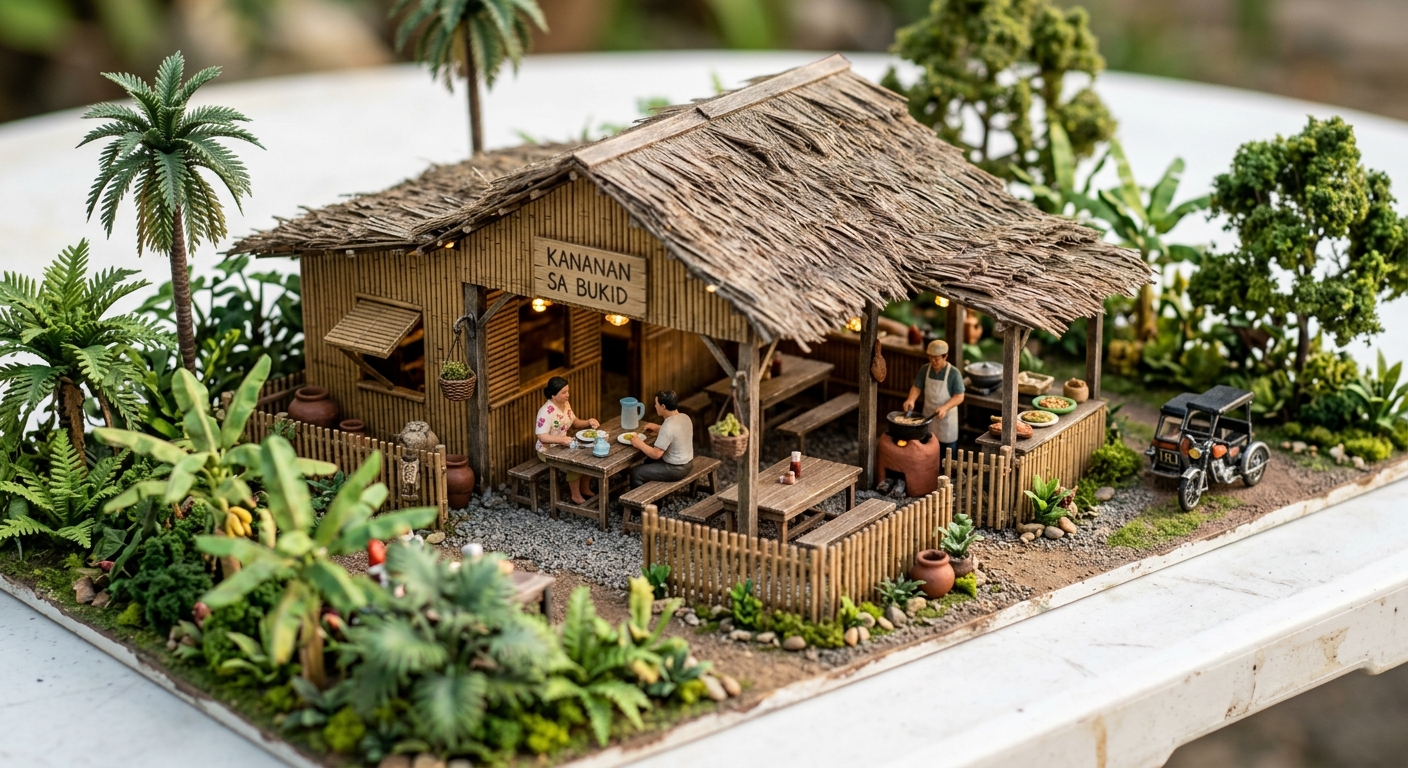
Apag Marangle opened in Guagua, Pampanga, with a menu built around the traditional Kapampangan communal meal format called salu-salo. The name translates roughly to come, let's eat together. The restaurant serves the full repertoire of regional dishes: kare-kare, sisig, lechon kawali, betute (stuffed deep-fried frog), and longganisa from the Guagua style, the garlicky sour type distinct to this part of southern Pampanga. The longganisa de recado from this region is denser and more acidic than the hamonado versions made in San Fernando and Angeles, cured with vinegar and packed with whole garlic cloves. Dishes arrive in the traditional banquet style at the table, meant for sharing across a group. The setting in Guagua, the municipal origin of the Guagua longganisa style, makes this the most contextually appropriate place in the region to eat the sausage. A second location operates in Angeles City.
Bale Dutung
Angeles City, Philippines
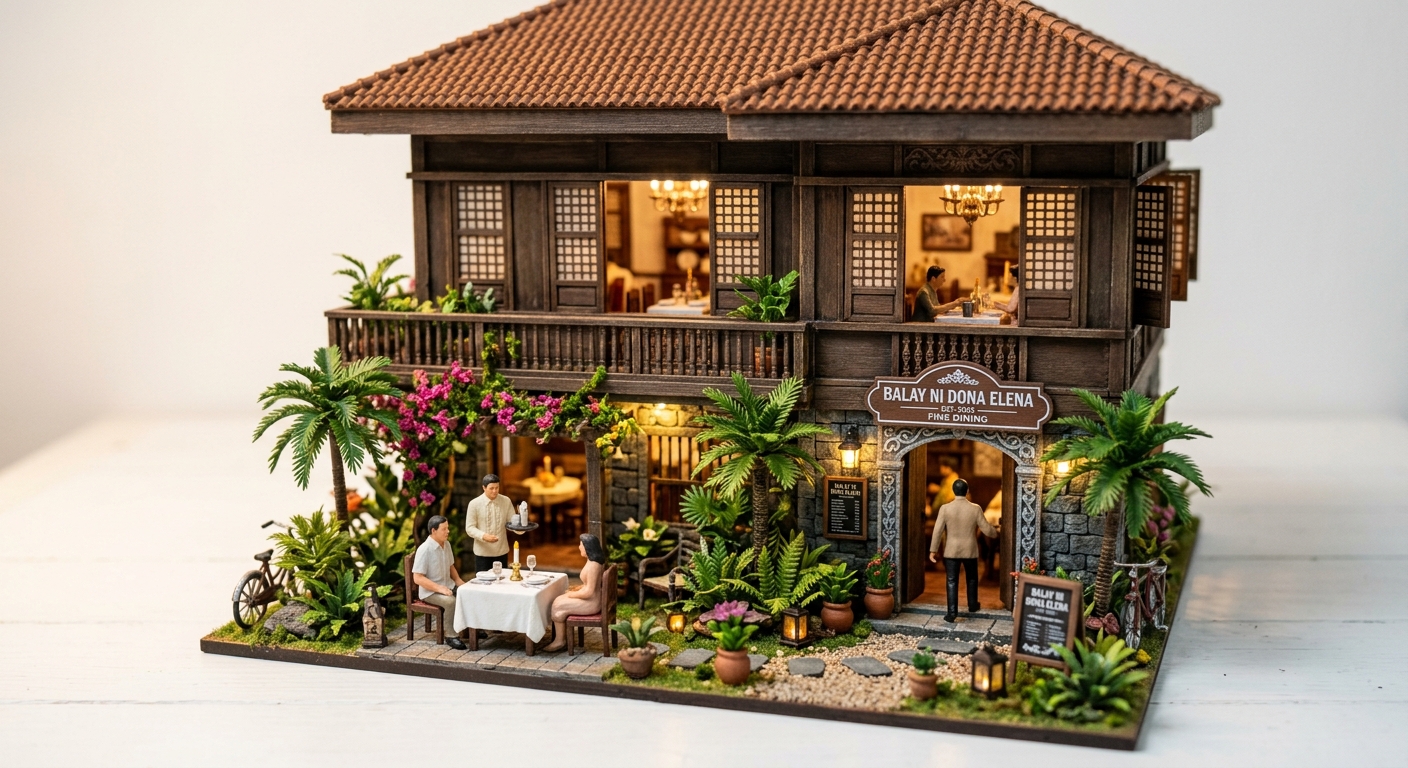
Bale Dutung is the private dining space of Chef Claude Tayag in a compound in Villa Gloria Subdivision, Angeles City. The name means House of Wood in Kapampangan; the building is built from reclaimed hardwood and antique materials, with Tayag's sculpture and art filling the rooms. Dinner is by reservation only, served as a multi-course Kapampangan degustation. The Kapampangan Spread includes longganisang Guagua alongside dishes like sisig, lechon, kare-kare, and the pork preparations that Tayag has spent decades refining. Anthony Bourdain filmed an episode of No Reservations here in the mid-2000s, eating the same food that Tayag's family and community grew up on. The longganisa served here traces back to the Guagua style, a garlicky, slightly sour version from the municipality south of San Fernando, distinct from the sweeter San Fernando type. Bale Dutung is not a restaurant in the conventional sense; it is a dining event, and the longganisa arrives in the context of a full Kapampangan table.
Everybody's Cafe
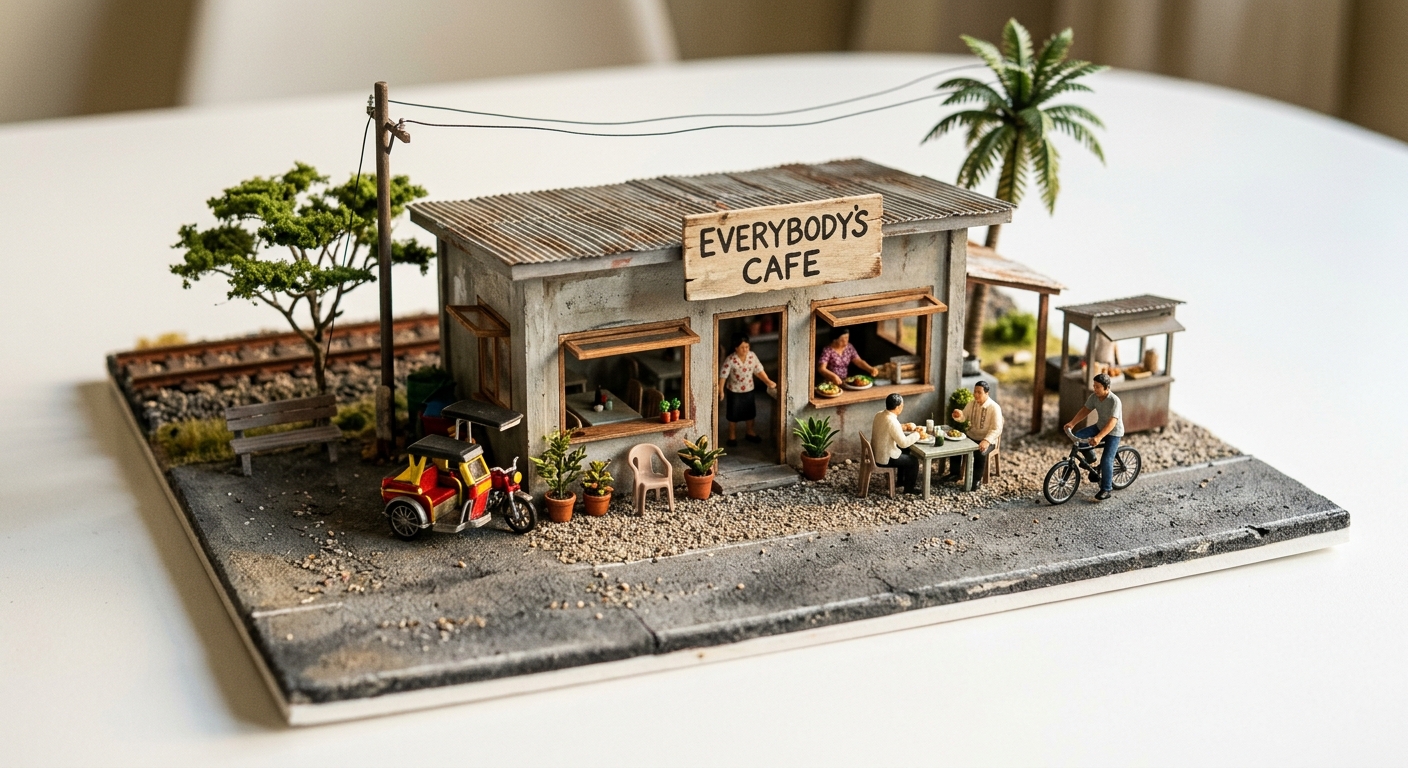
San Fernando, Philippines
Everybody's Cafe has operated on MacArthur Highway in San Fernando since 1967, making it one of the oldest and most documented Kapampangan restaurants in Pampanga. The carinderia-style layout puts the day's dishes in trays behind glass at the front: morcon (rolled beef stuffed with boiled egg and sausage), kare-kare (oxtail stew in peanut sauce), and longganisa hamonado cooked to order. The longganisa here is the Pampanga sweet type, made in-house and fried only when ordered so it arrives in the pan's own rendered fat, glossy and caramelised at the edges. The dining room is functional and loud at lunchtime, packed with locals and travellers stopping on the drive between Manila and the northern provinces. No menu innovations, no tourism-facing theatre. The food tastes the same as it did a generation ago.