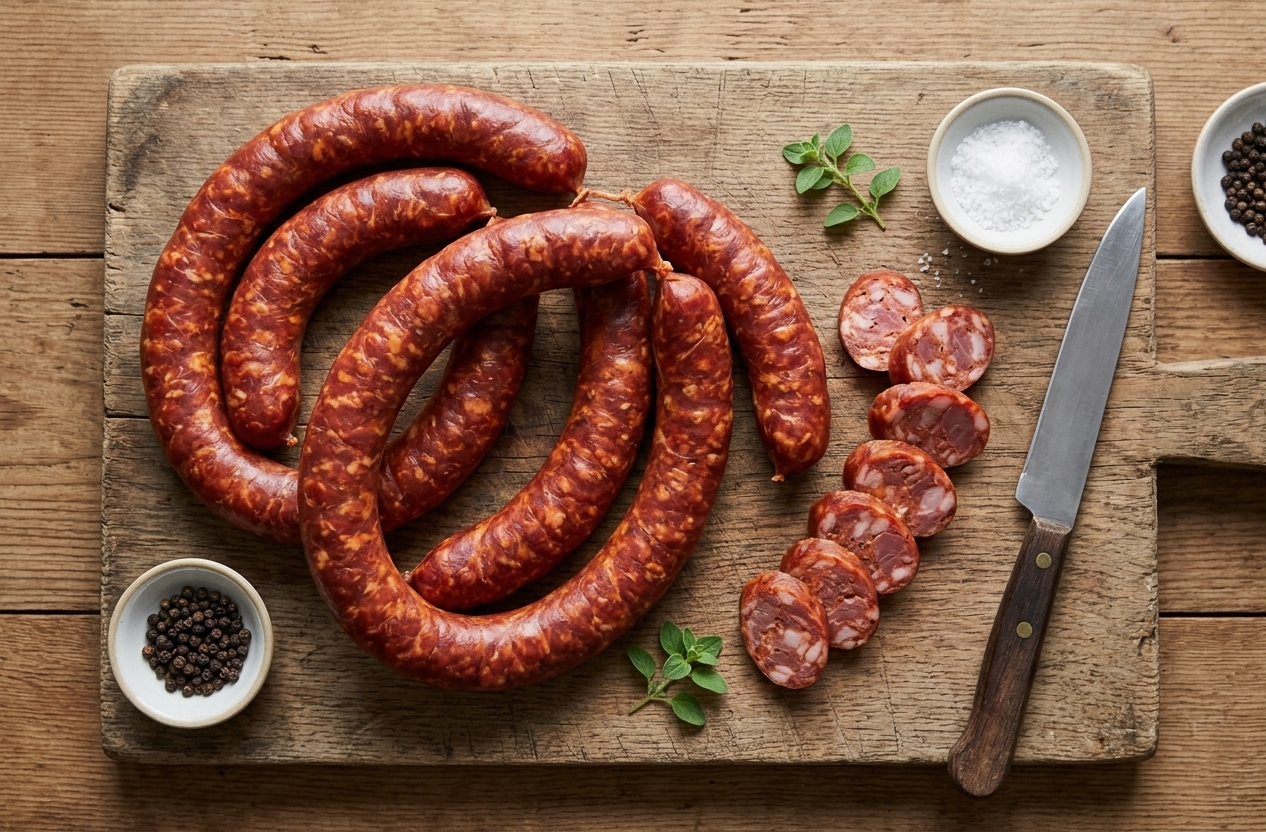
Longaniza Chilena
Longaniza
Ñuble, Chile
Chile's go-to fresh pork sausage, seasoned with ají de color (Chilean paprika), cumin, garlic, and oregano. Some makers add merkén, a smoked chili from the Mapuche tradition, for extra heat. The grind is coarse, the casing thin, and the links either coiled into spirals or strung out long. Every asado in Chile starts with longaniza on the grill, split lengthwise and charred until the fat crackles. The sausage shows up on street carts stuffed into marraqueta bread with pebre, the cilantro-onion-chili salsa that goes on everything.
History
Longaniza arrived in Chile with Spanish colonists in the 1500s, but the sausage adapted fast. Chilean cooks swapped Old World spices for New World peppers: ají de color replaced pimentón, and cumin took the lead over oregano. Chillán, a farming city in the Ñuble region, became the production center by the 19th century. The surrounding central valley grows most of Chile's peppers and raises pigs on small farms. In 2010, Longaniza de Chillán received IGP (Indicación Geográfica Protegida) recognition, the first Chilean sausage with geographic protection. The sausage remains a working-class staple. Street vendors sell longaniza sandwiches outside soccer stadiums and on market corners. At home, it signals the start of an asado before the beef hits the grill.
Ingredients
Preparation
Pork shoulder and belly are ground through a coarse plate. The meat gets mixed with ají de color, cumin, minced garlic, oregano, salt, and black pepper. Some producers add a splash of red wine or vinegar. The mixture rests overnight in the refrigerator so the spices penetrate the meat. Next morning, it goes into narrow natural hog casings, tied into long links or coiled into flat spirals for the grill.
Taste
Warm cumin and garlic up front, with a paprika sweetness from the ají de color. The pork flavor stays central. Merkén versions carry a smoky, slow-building heat that sticks around. Less aggressive than Argentine chorizo, more aromatic than a plain bratwurst.
Texture
Coarse and rustic. Visible chunks of pork and fat break apart when you bite in. The thin casing snaps on the grill and gets crisp at the edges. Inside, the meat stays loose and juicy, never dense or emulsified.
Rituals & Traditions
Grill it first at the asado
Longaniza opens every Chilean asado. It goes on the grill before the beef, served as a snack with bread and pebre while the main meats cook. Skipping this step would confuse your guests.
Split lengthwise before grilling
Cut the longaniza down the middle (mariposa style) so it lies flat on the grill. More surface area means more char, and the casing crisps on both sides.
Never skip the pebre
Longaniza without pebre is incomplete. The fresh, raw salsa with cilantro, onion, and chili cuts through the richness of the grilled pork.
Do not overcook
A dried-out longaniza is a wasted longaniza. Medium-high heat, frequent turning, and pulling it off the grill while the inside is still juicy. The fat should sizzle, not evaporate.
Recipes
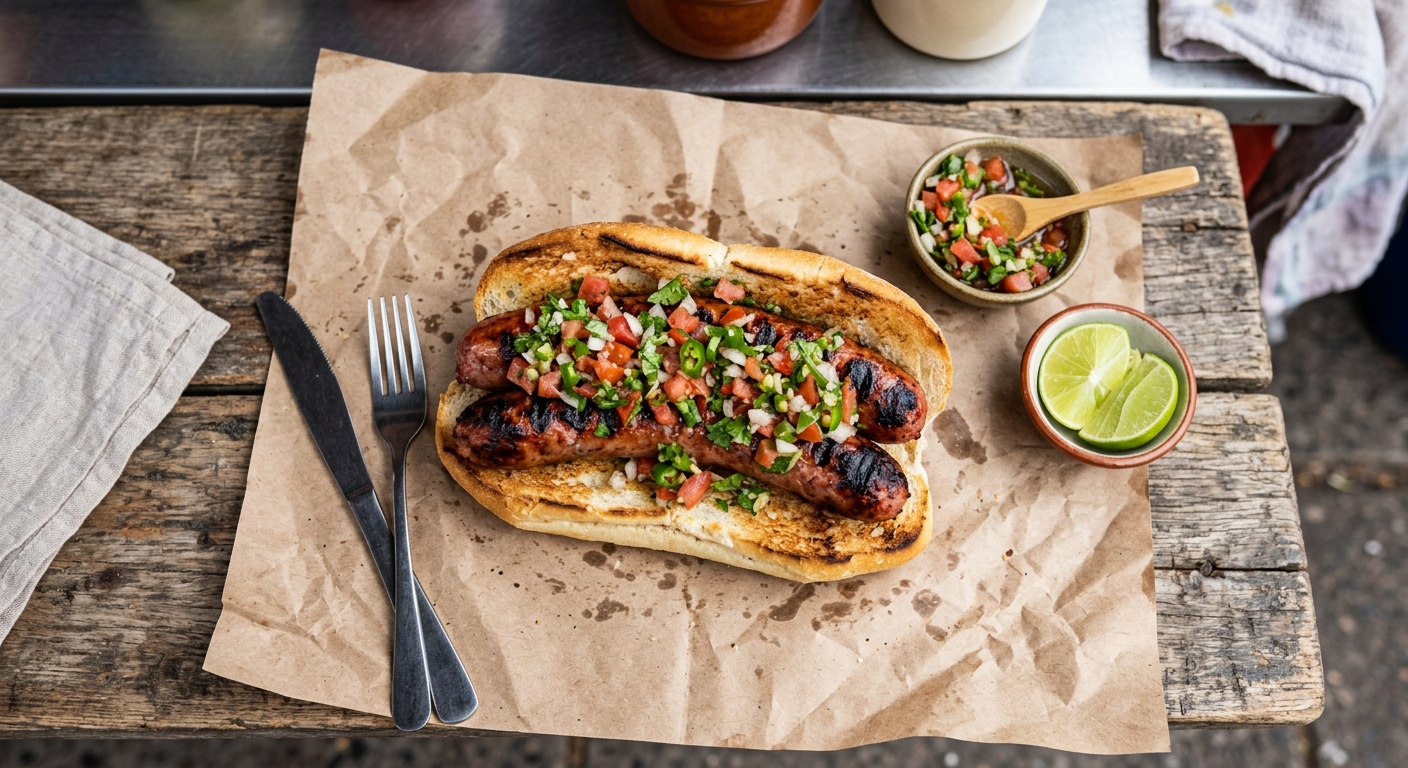
Choripán Chileno
Longaniza Chilena
The Chilean version of the South American choripán: a grilled longaniza split lengthwise and stuffed into a warm marraqueta roll with a generous spoonful of pebre. Street vendors outside soccer stadiums sell these by the hundreds on match days. The bread matters as much as the sausage. A good marraqueta has a thin crackly crust and a soft interior that soaks up the pork fat.
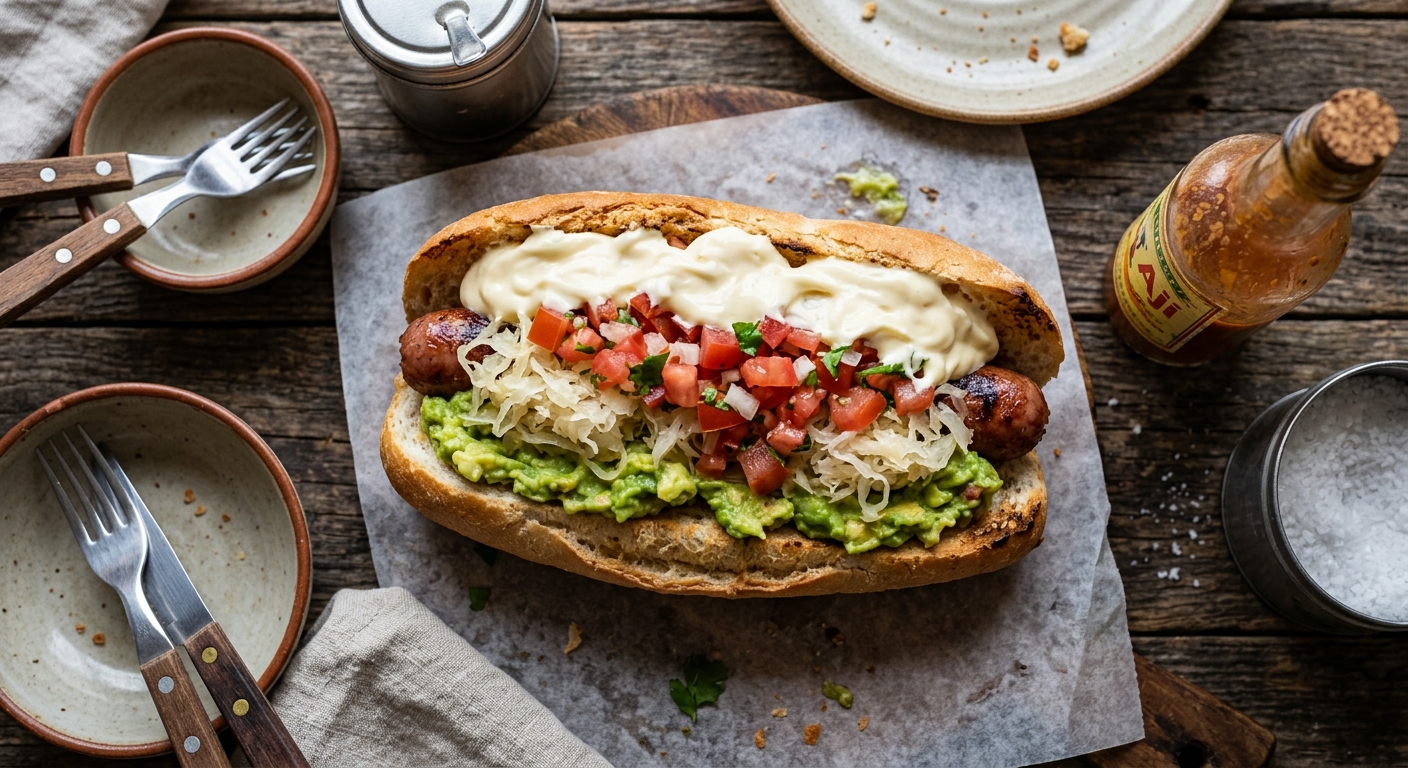
Choripán Completo
Longaniza Chilena
The loaded Chilean version of a longaniza sandwich, built like a completo (Chile's maximalist hot dog). A grilled longaniza goes into a marraqueta roll, then gets buried under mayo, diced tomato, sauerkraut, and mashed avocado. The combination sounds excessive. It works. The acidity of the sauerkraut and the fat of the avocado balance the grilled pork. Street carts in Santiago sell these late at night.
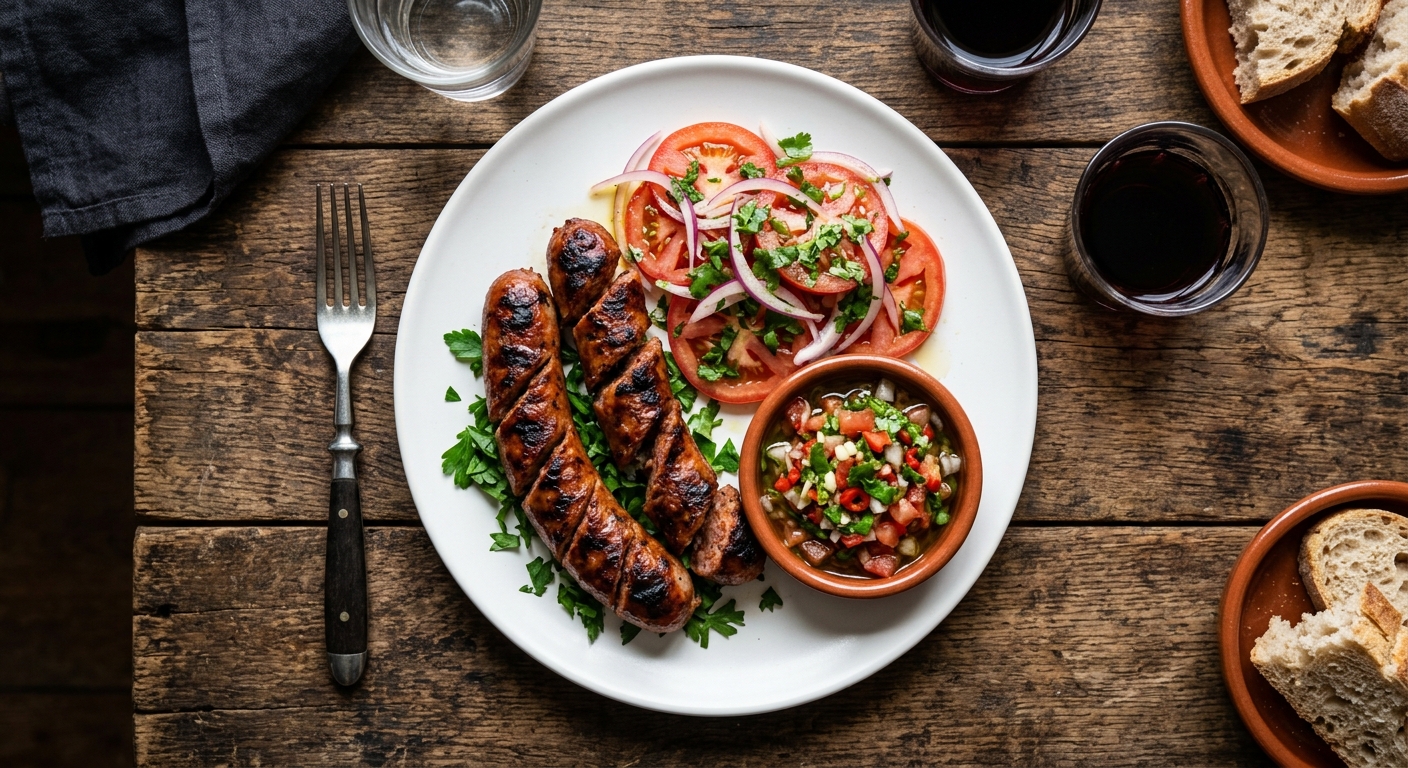
Longaniza al Plato
Longaniza Chilena
The straightforward Chilean plate: grilled longaniza served with ensalada chilena (tomato and onion salad) and bread. Nothing fancy, nothing hidden. This is what you eat at a cocinería in the Mercado de Chillán at 11 AM with a glass of pipeño wine. The salad does the work of cutting through the fat. The bread mops up what is left.
Empanada de Longaniza
Longaniza Chilena
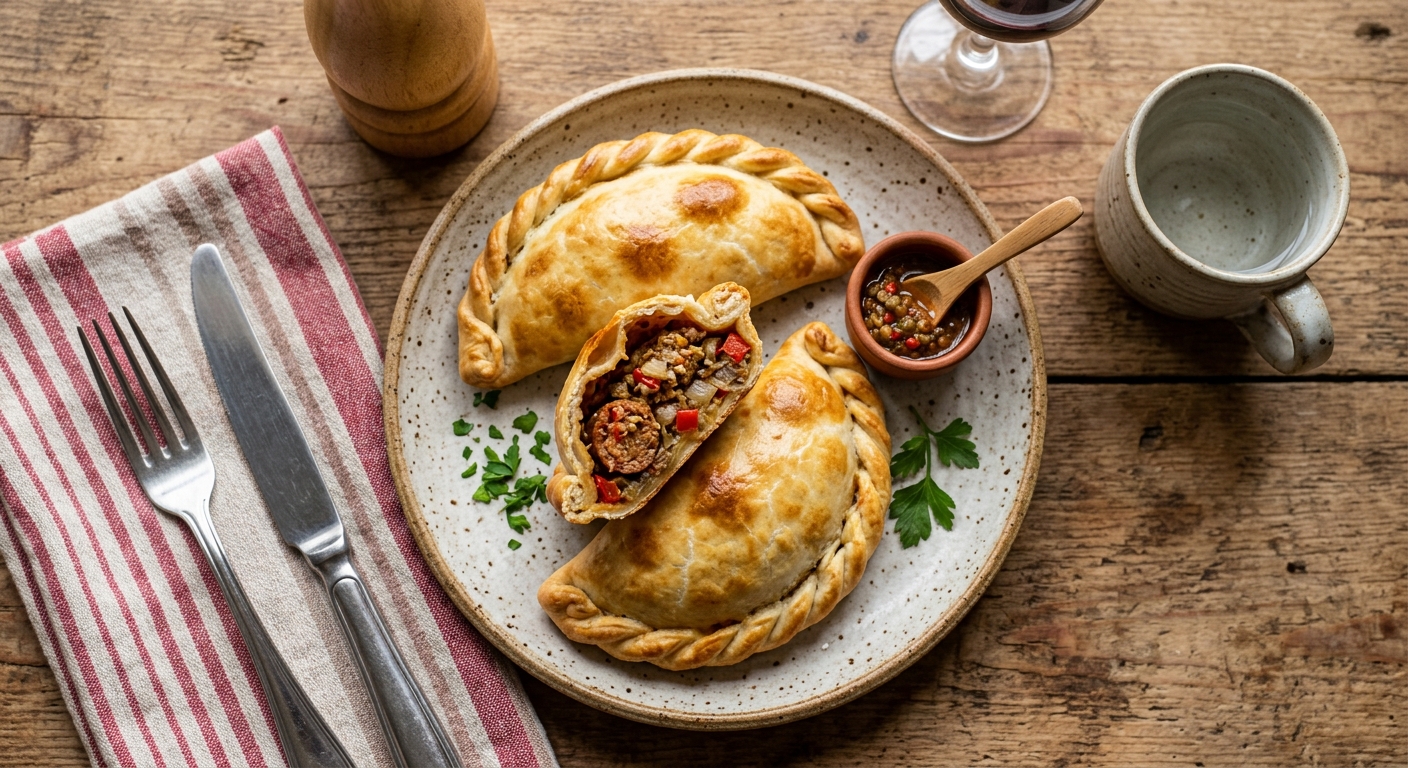
A baked empanada filled with crumbled, fried longaniza, sautéed onion, and a slice of hard-boiled egg. The dough is the standard Chilean empanada dough: wheat flour, lard, and warm water. Unlike the classic pino empanada (which uses diced beef), the longaniza version brings its own seasoning, so the filling needs little else. Popular at bakeries in the Ñuble region and at roadside stops along the Ruta 5.
Huevos Revueltos con Longaniza
Longaniza Chilena
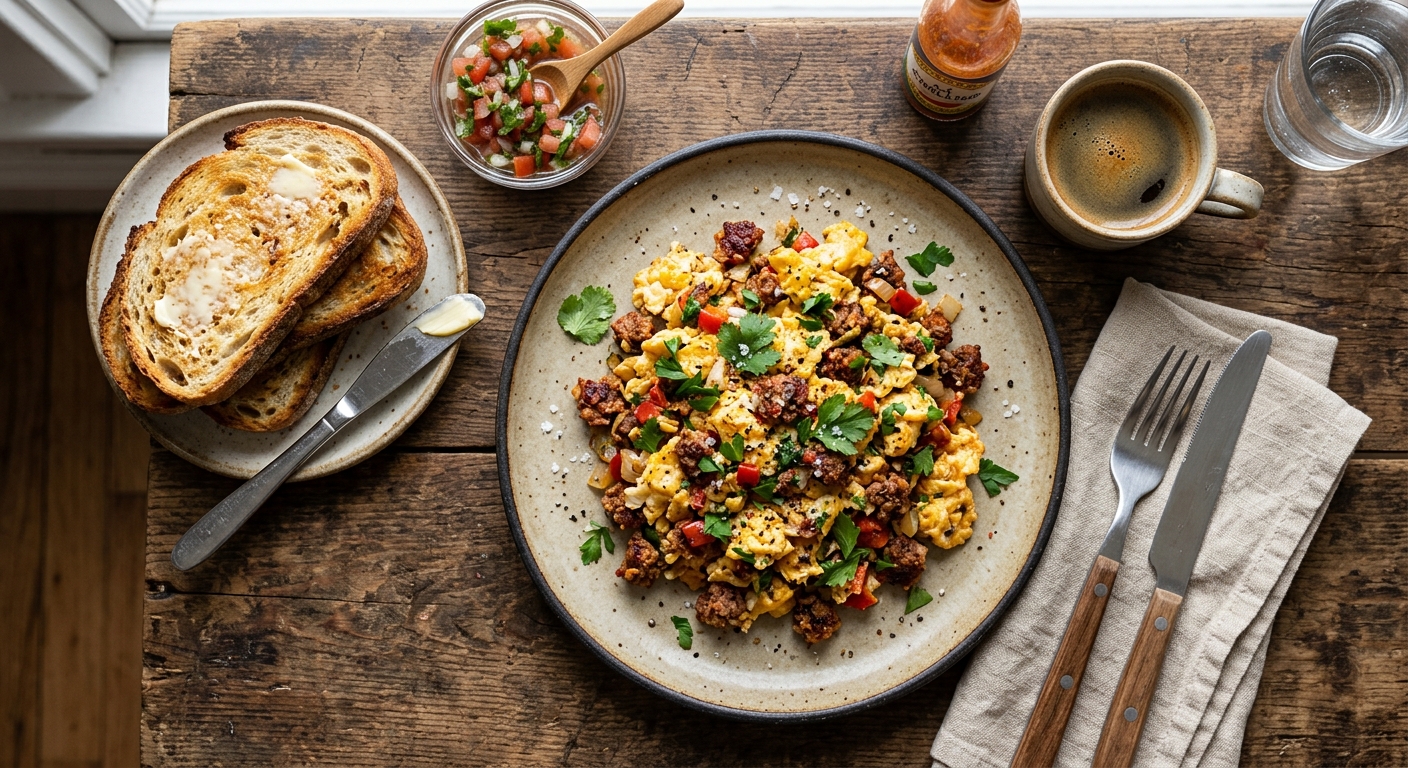
The classic Chilean breakfast: crumbled longaniza fried in its own fat until crisp, then scrambled with eggs. The cumin and paprika from the sausage season the eggs without adding anything else. Fast, filling, and practical. Served with toasted marraqueta and a cup of tea. This is weekday morning food, not weekend brunch.
Porotos con Longaniza
Longaniza Chilena
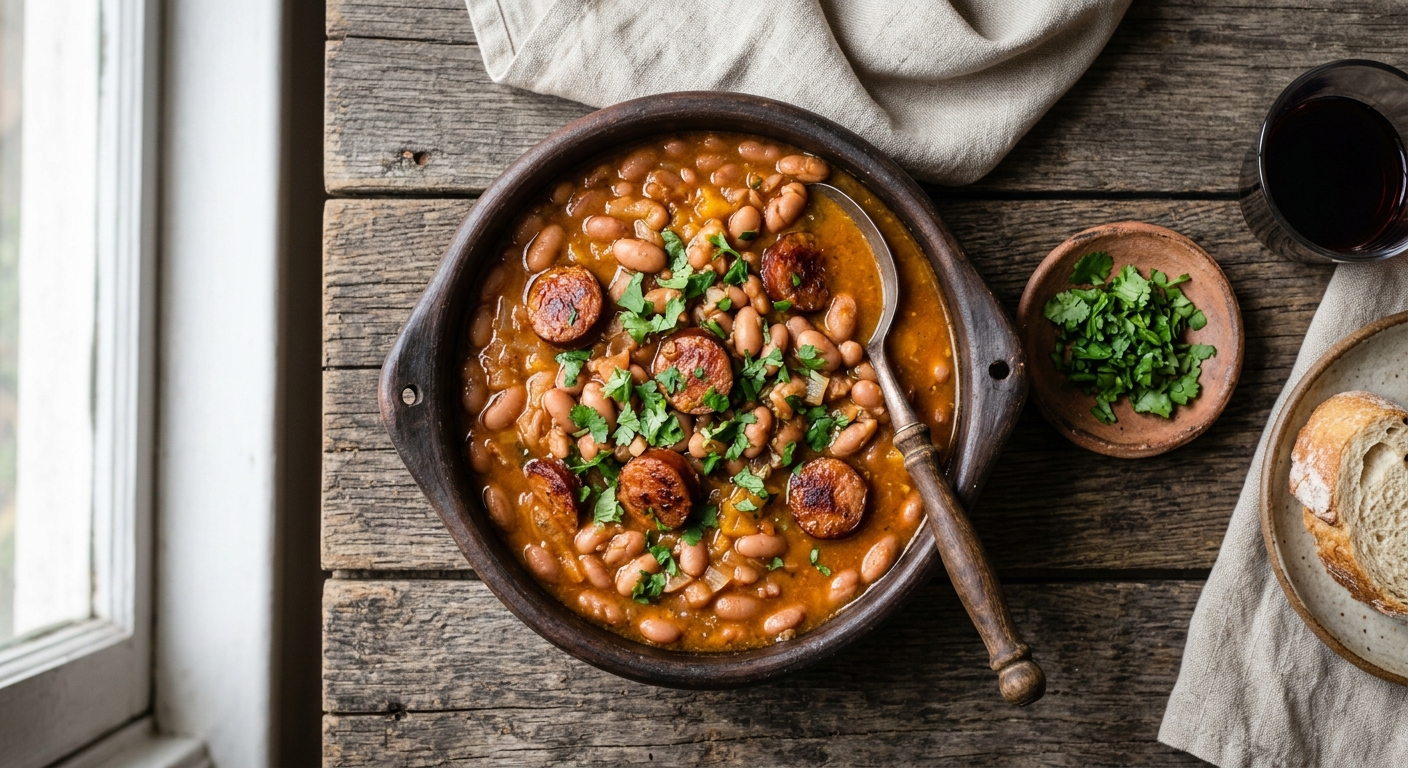
A Chilean bean stew with longaniza sliced into thick rounds and browned before going into the pot. The cranberry beans (porotos) cook low and slow until they collapse into a thick, starchy broth. The longaniza fat melts into the beans and seasons the whole pot. Cumin ties the sausage and the stew together. A cold-weather lunch that sticks to your ribs.
On the Map
Where to Eat
El Hoyo
Santiago, Chile
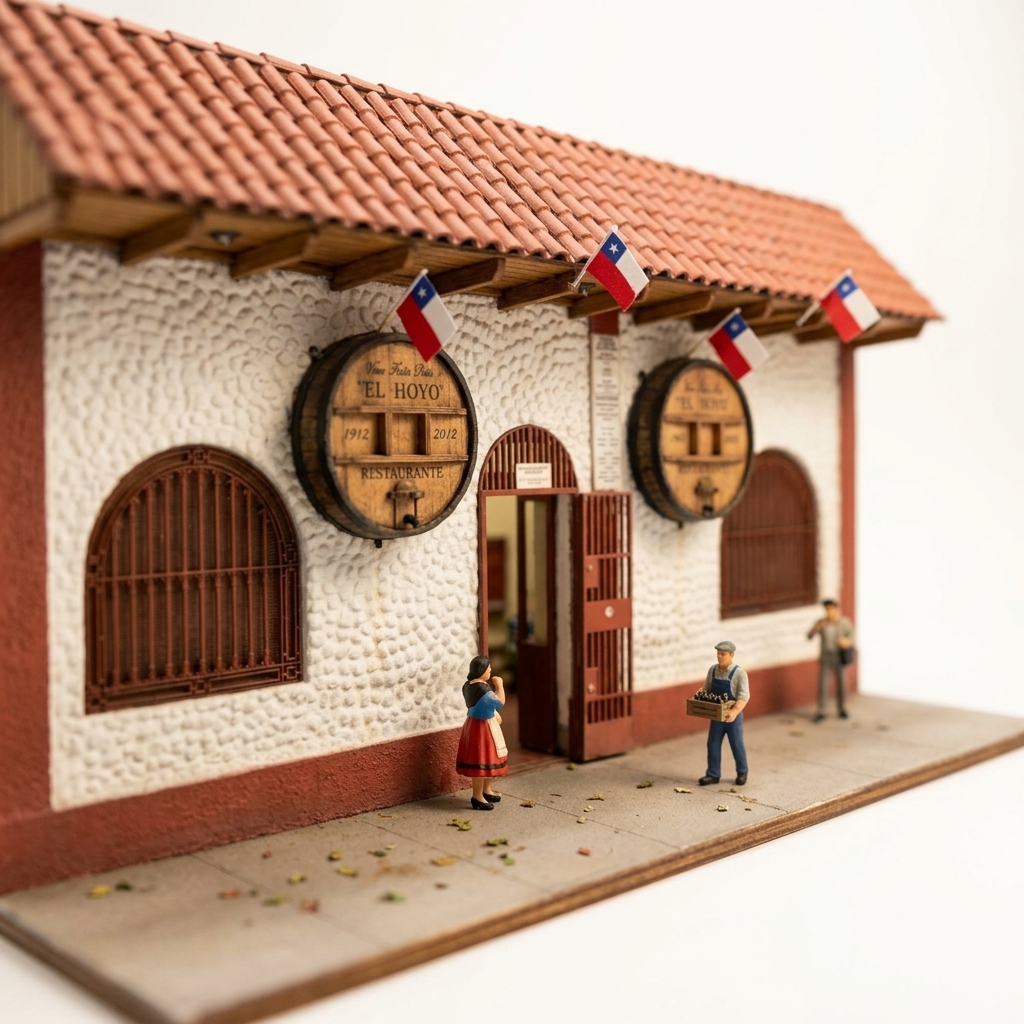
A traditional Chilean restaurant in Santiago's Estación Central neighborhood, known for home-style cooking in large portions. The interior looks like a 1970s canteen and has not changed much. Longaniza comes fried or grilled, served with puré de papas (mashed potatoes) or porotos (beans). The cazuela and pastel de choclo are also solid. Workers from the nearby train station and bus terminal fill the tables at lunch. Cheap wine by the jug.
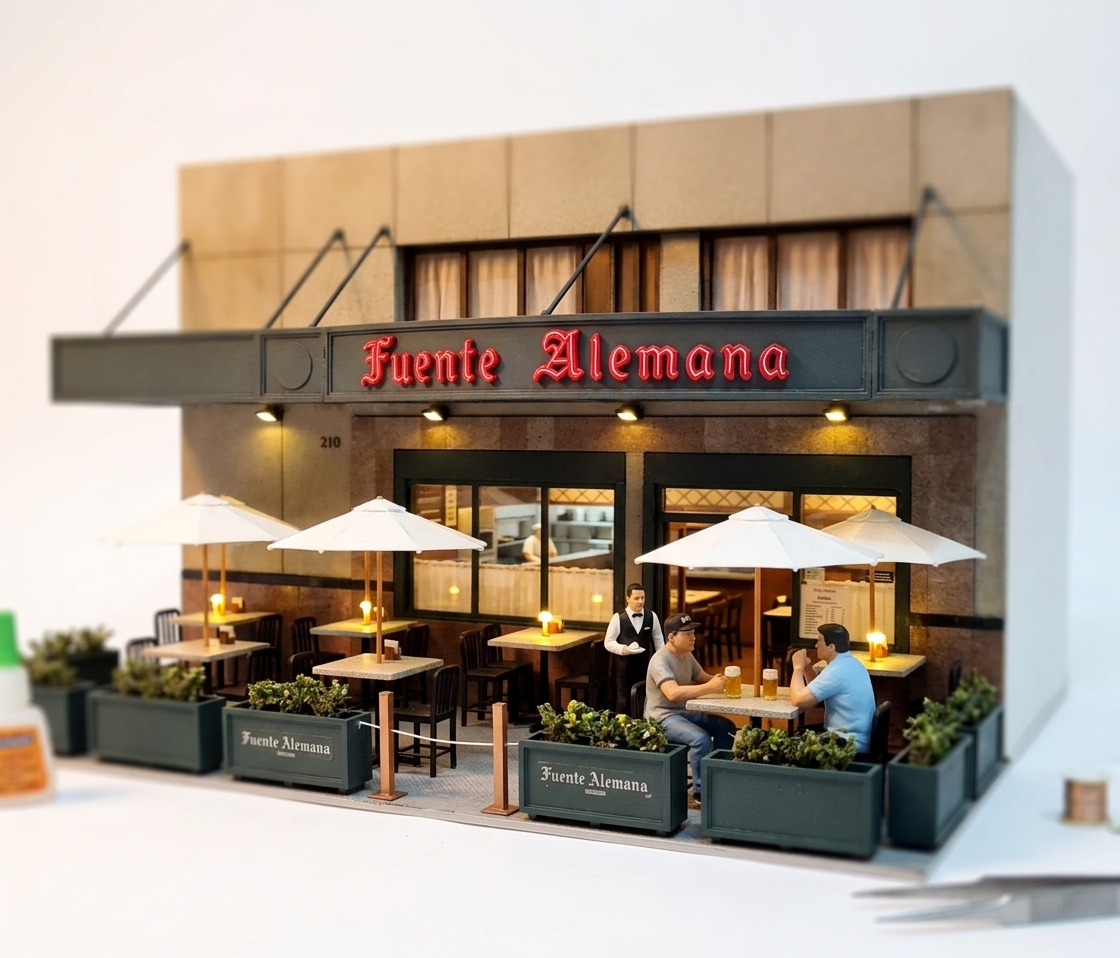
Fuente Alemana
Santiago, Chile
A Santiago institution on Avenida Pedro de Valdivia, open since 1939. The long counter seats fill with office workers at lunch ordering lomitos, churrascos, and longaniza sandwiches. The longaniza arrives grilled and split in a warm marraqueta with a smear of mayo and a scoop of pebre. Speed matters here. The cooks work a wall of flat-top grills without stopping, and the sandwiches arrive fast. No table service, no reservations, no fuss.
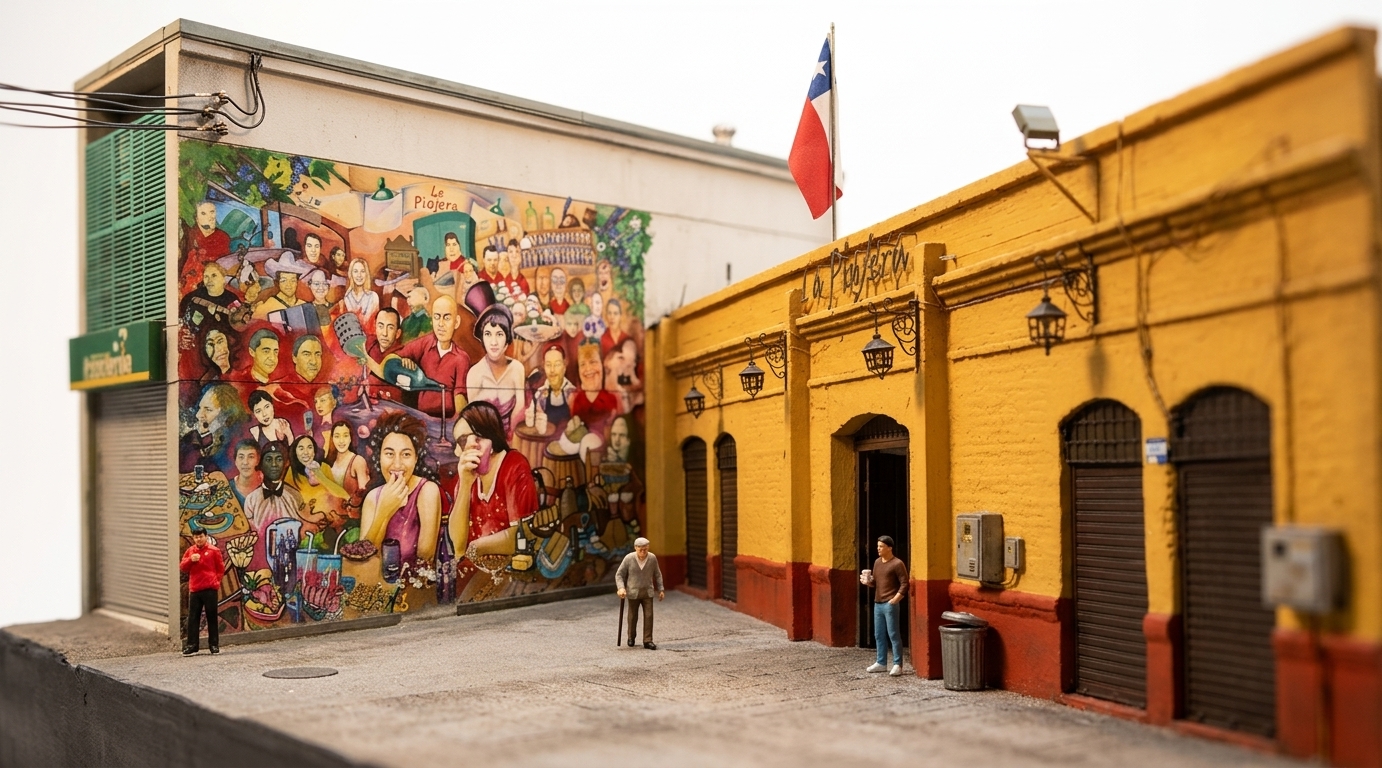
La Piojera
Santiago, Chile
A legendary dive bar near Santiago's Mercado Central, open since 1916. The name means "the flea pit," a nickname given by a visiting president who found the place too rough. The regulars took it as a badge of honor. Terremoto (white wine, pineapple ice cream, and Fernet) is the signature drink. The food is blunt and filling: longaniza plates, arrollado, pernil. Plastic tables, loud conversation, and zero pretension.
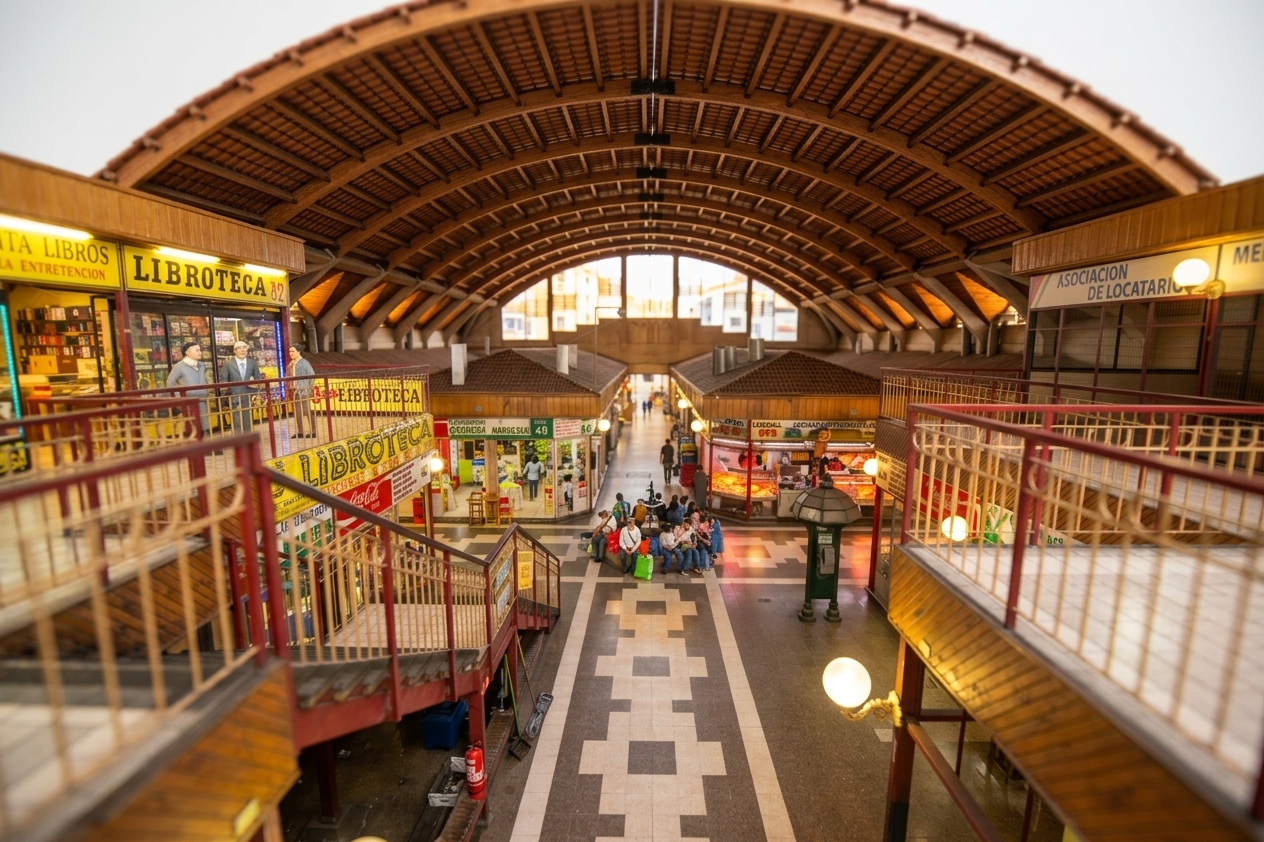
Mercado Central de Chillán
Chillán, Chile
The covered market in the center of Chillán, ground zero for longaniza in Chile. Dozens of vendors sell raw longaniza by the kilo, and several cocinerías (market kitchens) inside grill them to order. The quality varies stall to stall, but the best vendors use pork from nearby farms and grind it on-site. Go in the morning when the coils are fresh. Order a longaniza plate with ensalada chilena and a glass of vino pipeño from the barrel.