
Linguiça
São Paulo & Southeast Brazil
Linguiça is a pork sausage with deep roots in Portuguese cuisine that became, through centuries of use in Brazil, one of the essential components of the Brazilian table. It arrives in two distinct everyday forms. Calabresa is the smoked version: cured, dried, heavy with sweet paprika and garlic, sliced into coins and thrown onto the grill or into the frying pan. Toscana is fresh and unsmoked, seasoned with fennel seed and black pepper in the Italian-immigrant tradition of São Paulo's interior. Both show up at the churrasco, Brazil's communal grilling tradition, where linguiça on skewers over charcoal is as expected as picanha. The calabresa half coils in dozens of supermarket refrigerators across the country, and the toscana sweats in butcher cases from the coffee-growing highlands around Campinas to the gaúcho plains of Rio Grande do Sul. Neither style is delicate food. Both are built for fire, fat, and sharing.
History
Linguiça came to Brazil with the Portuguese in the 16th century. In Portugal, it was already an established sausage: cured pork seasoned with paprika and garlic, stuffed into thin casings, smoked and dried for preservation. The Portuguese version is still made in Trás-os-Montes and the Alentejo with protected designations. In Brazil, the colonial kitchen adapted the sausage to local conditions — more paprika, less drying time in the humid tropical climate, eventually the emergence of the calabresa type as a distinct smoked style. The toscana variant came much later. Between 1880 and 1930, over four million Italian immigrants arrived in Brazil, the majority heading to São Paulo state to work on coffee fazendas. Those from Tuscany and Veneto brought their sausage-making knowledge with them, including the fresh fennel-and-pork sausage that became toscana. By the mid-20th century, both styles were fully embedded in Brazilian food culture across class lines. Calabresa anchored the boteco menu and became the default churrasco sausage in the mass-market rodízio. Toscana remained closer to the artisanal butcher and the home kitchen, particularly in the interior of São Paulo and in southern Brazil. The word linguiça itself comes from the Latin 'longanicia', a long thin sausage mentioned in Roman cookbooks. The shape has persisted across two millennia.
Ingredients
Preparation
For calabresa, pork shoulder and fat are ground together on a medium plate. Sweet and smoked paprika go in first, then garlic, salt, black pepper, sugar, and curing salts. The mixture is packed into medium pork casings and tied into links of 15 to 20 centimetres. The links hang in a cold smoking chamber over wood — traditionally quebracho or eucalyptus in Brazil — for four to six hours at low temperature, then rest in a cool dry space for one to three days until the skin tightens. Industrial versions skip the hanging and accelerate the smoke. For toscana, the process is simpler: no curing salts, no smoking. Ground pork is seasoned with fennel seed, black pepper, salt, and garlic, packed into casings, twisted into links, and sold fresh the same day. Toscana must be cooked within 48 hours. On the grill, both styles go over medium-high charcoal, turned frequently, until the skin blisters and chars in spots and the fat renders through the casing.
Taste
Calabresa leads with smoke and sweet paprika. The smokiness is present without being aggressive; the paprika gives the fat an orange colour and a mild heat that builds across several bites. Garlic is background rather than foreground. The fat carries most of the flavour, and on the grill the rendered fat drips into the coals, flares briefly, and returns as char. Toscana is fresher and brighter. Fennel seed is the defining character: the anise note cuts through the pork fat and lifts the whole profile. Black pepper provides heat. The raw garlic sharpens the finish. Both styles have the same basic texture once cooked but read as entirely different sausages on the palate.
Texture
The casing snaps under the teeth when the sausage comes off a hot grill. Inside, the grind is medium-coarse: distinct pieces of pork and fat, not a homogeneous paste. Calabresa has slightly firmer flesh because of the curing and drying. Toscana is looser and wetter. Both release a significant amount of fat on the first bite. The char on the outside of a well-grilled linguiça is papery and dry, contrasting with the soft, fatty interior.
Rituals & Traditions
Churrasco on Sunday
The Brazilian Sunday churrasco is a social institution. Extended family, neighbours, and friends gather from midday onward, the grill lit early, the first linguiças going on while the coals are still building heat. The grill master — always someone specific, never shared by committee — manages the fire and the sequence of meats. Linguiça goes on first, cooks fast, and is eaten while the heavier cuts are still working. The whole event runs three to five hours and the table is never fully cleared between courses.
Rodízio service
At a churrascaria rodízio, gauchos in traditional southern dress carry skewers of meat from the grill to the tables in a continuous rotation, slicing directly onto the diner's plate. Linguiça is always among the first skewers to circulate, often arriving before the more expensive cuts. The standard signal — a two-sided card, green for more, red for stop — controls the flow. The linguiça skewer comes around three or four times per meal. Regulars know to pace themselves for the picanha.
Cut the linguiça diagonally
At the table, calabresa linguiça is cut on a bias, at a 45-degree angle, into thick oval slices rather than straight rounds. The diagonal cut exposes more interior surface and gives each piece a larger flat face to char on the grill or in the pan. It is also how it is served at the boteco: a small wooden board, the sausage cut on a slant, a toothpick in each piece. The straight-cut version exists but is considered less finished.
Do not use toscana in feijão tropeiro
Feijão tropeiro calls specifically for calabresa. The smoked paprika fat is what seasons the beans and gives the dish its characteristic colour. Toscana's fennel flavour is wrong in this context: the anise note conflicts with the earthiness of the beans and the sharpness of the kale. In practice, bacon or paio (another smoked cured sausage) are acceptable substitutes; fresh toscana is not. This is a practical rule as much as a traditional one.
Recipes
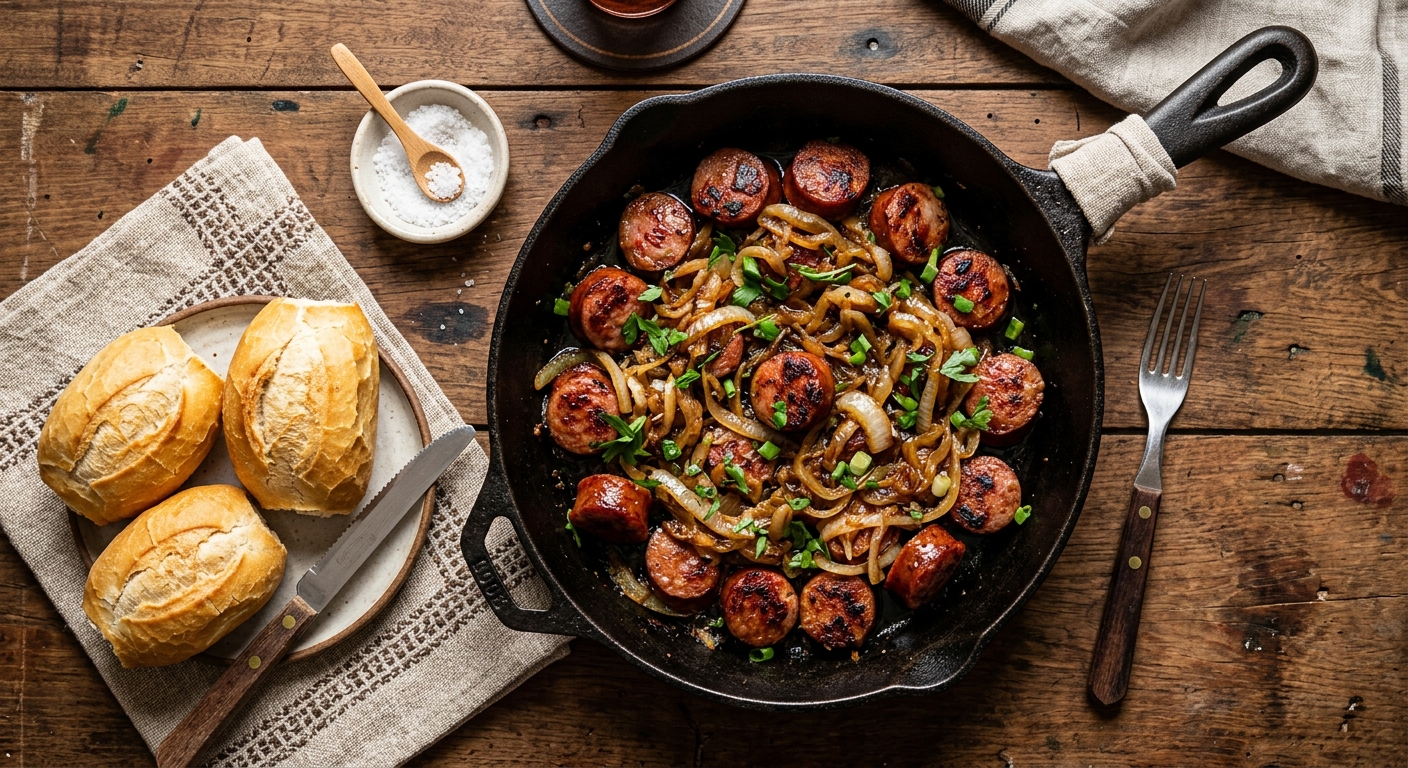
Linguiça Acebolada
Linguiça
Pan-fried calabresa slices cooked down with white onion until both the sausage and the onion are deeply caramelised and the pan is glazed with the combined fat and juices. This is one of the most ordered bar snacks in São Paulo botecos, served on a small wooden board with cold beer and a basket of bread for soaking.
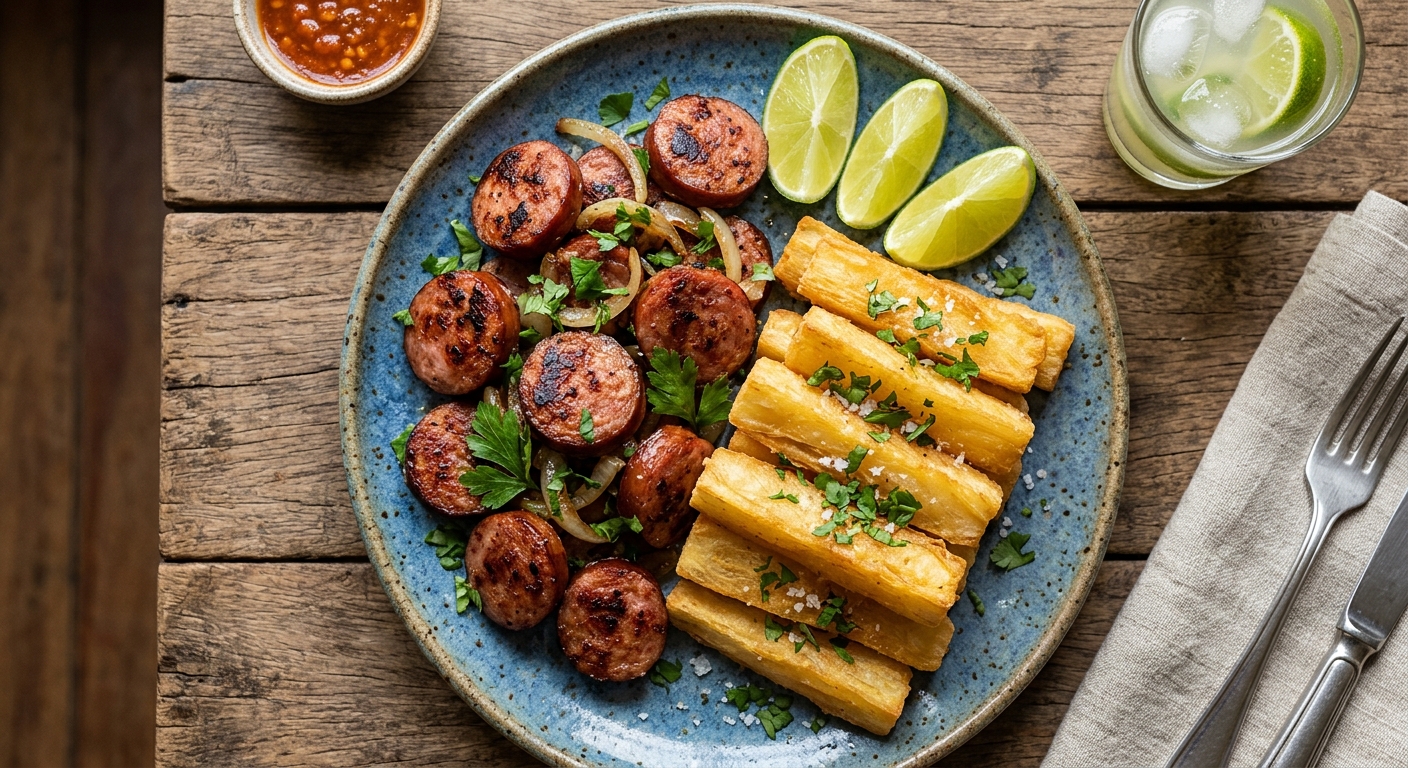
Linguiça com Mandioca Frita
Linguiça
Fried cassava and grilled or pan-fried linguiça on the same plate: one of the most repeated combinations in Brazilian bar food. The mandioca frita arrives fluffy inside and blistered at the edges, salted while hot. The linguiça alongside provides the smoke and fat. This is the standard petisco (bar snack) order at churrascos and botecos across São Paulo and Rio.
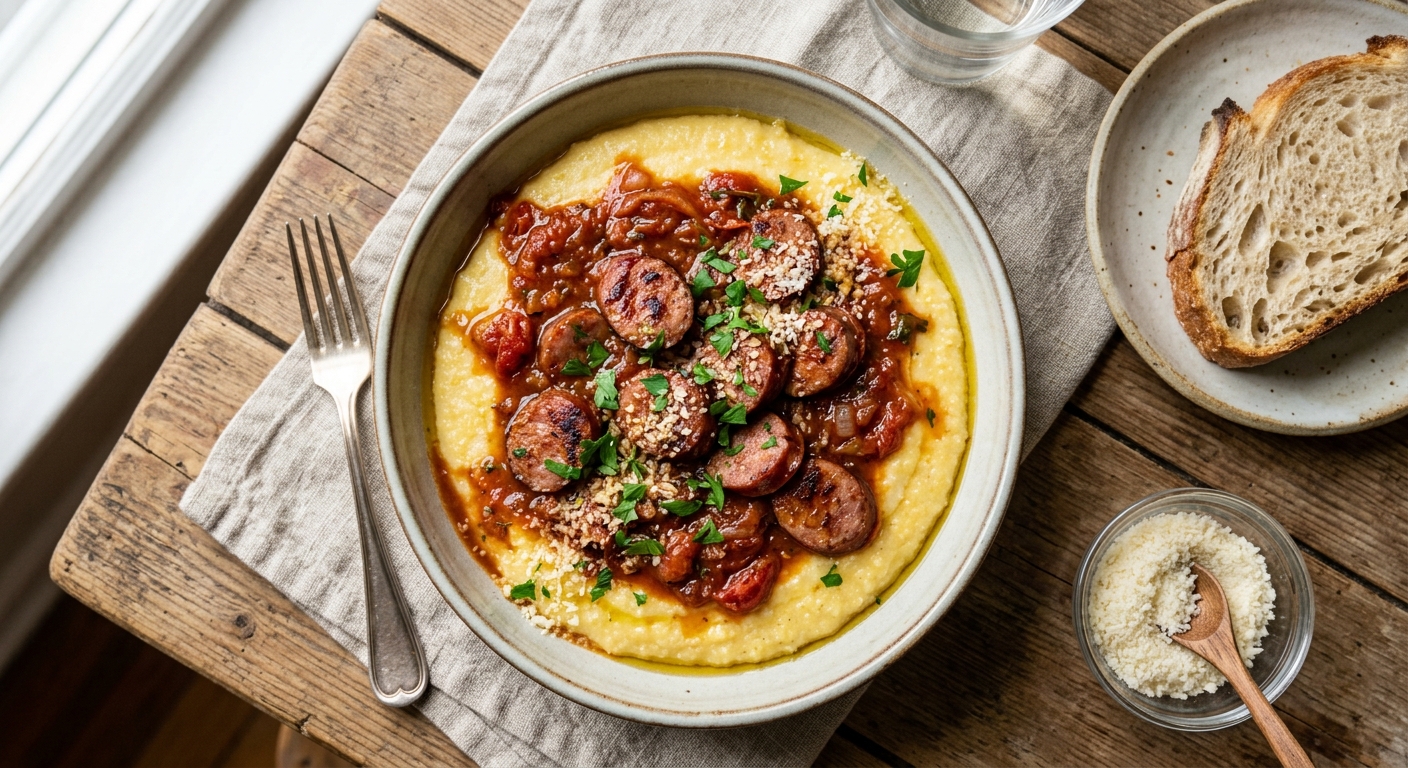
Linguiça com Polenta
Linguiça
A direct product of Italian immigration to São Paulo's interior, where the same families that brought toscana sausage-making also brought polenta. The linguiça toscana braises in a quick tomato sauce while the polenta cooks alongside, then both come together on the same plate. In the old coffee towns of the Paulista interior, this combination appears on Sunday tables the way polenta con salsiccia does in the Veneto it came from.
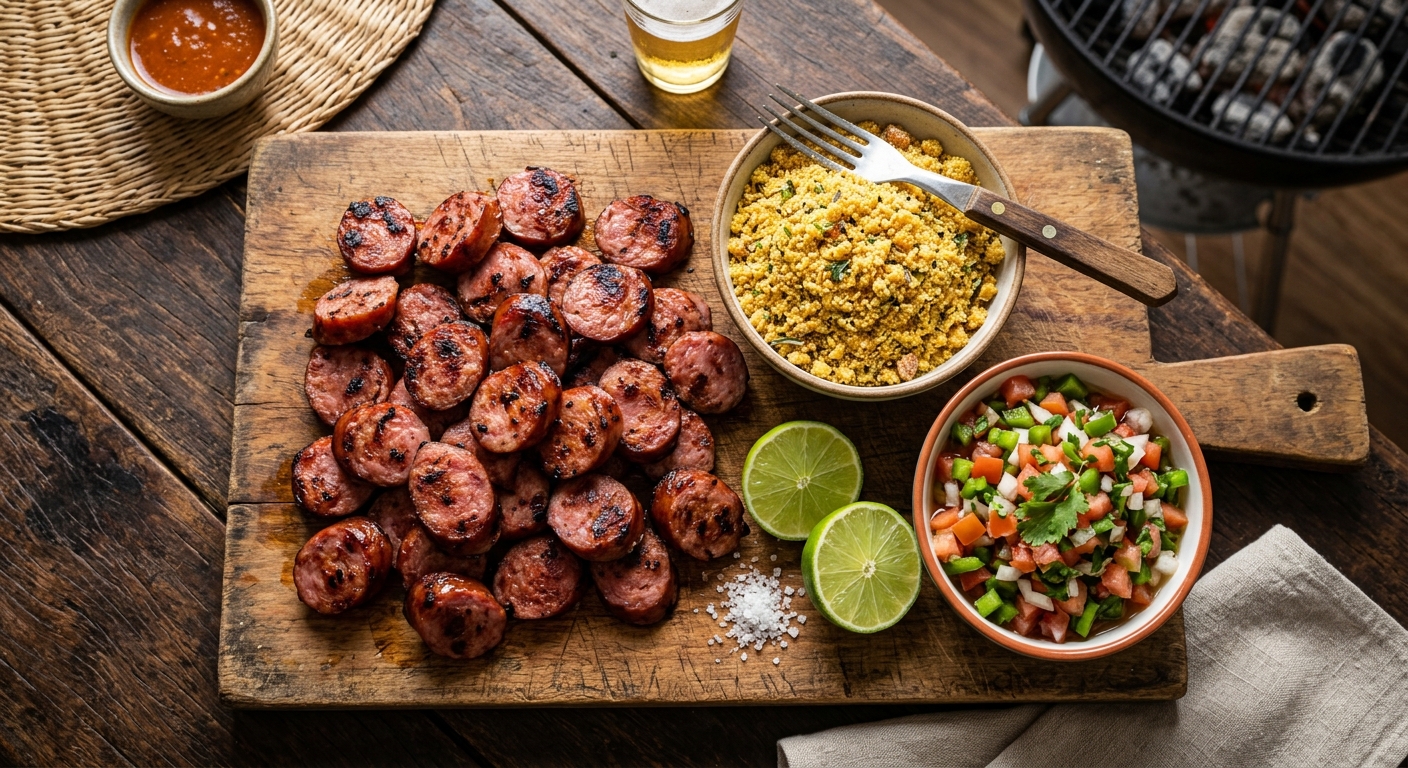
Linguiça na Brasa
Linguiça
Linguiça grilled directly over charcoal, the way it opens every Brazilian churrasco. The skin blisters, the fat drips into the coals, and the sausage arrives at the table charred in patches and split where the pressure built. This is not a refined preparation. It is the starting gun of the meal, eaten standing up while the grill is still loaded with everything that comes next.
Feijão Tropeiro com Linguiça
Linguiça
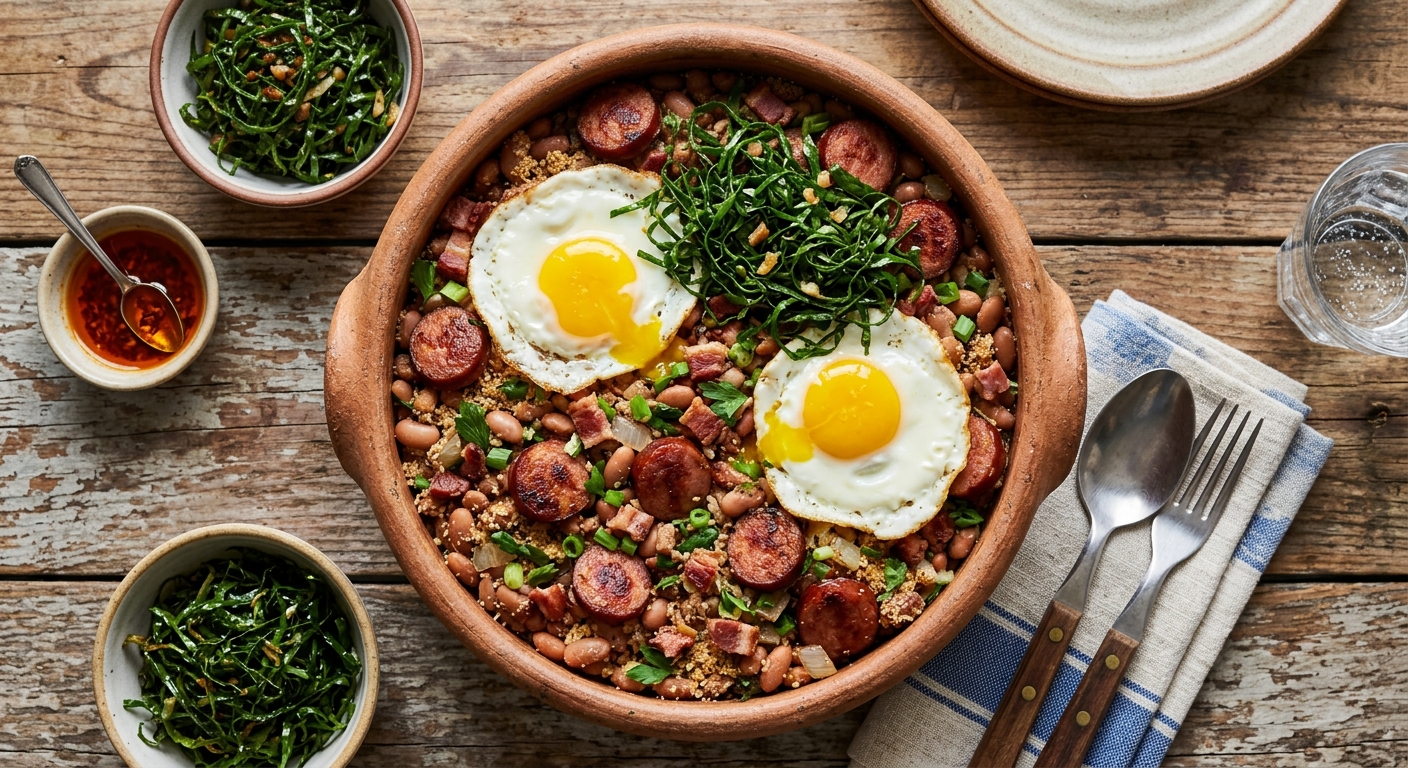
The trail food of the mule drovers who crossed the mountains of Minas Gerais in the 18th and 19th centuries, now one of the defining comfort dishes of Brazilian interior cooking. Carioca beans, fried calabresa, eggs, farofa, shredded kale, and fried garlic all come together dry in a single pan. The linguiça provides the fat base. Nothing here is subtle.
Linguiça com Vinagrete
Linguiça
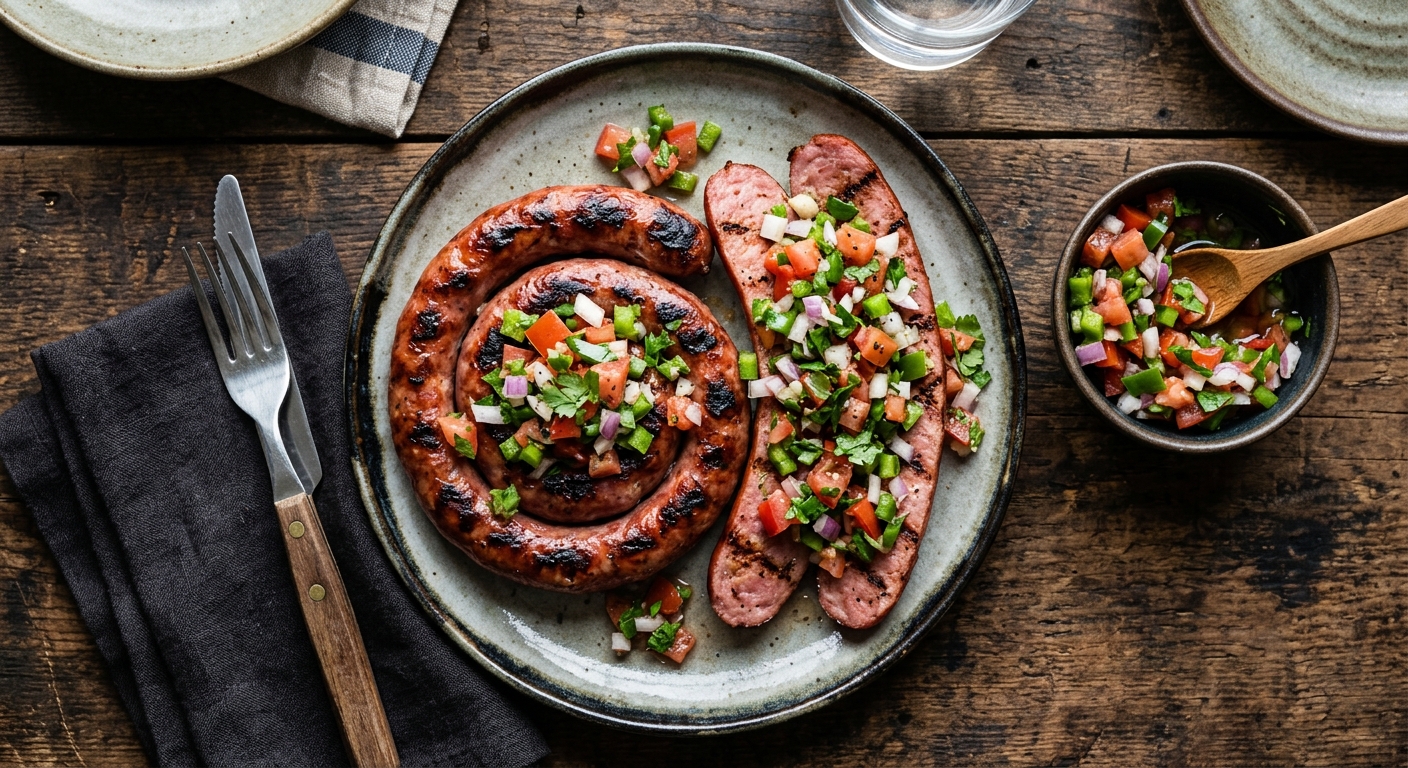
Grilled linguiça split open and covered with Brazilian vinagrete, the coarse tomato-onion-pepper salsa that appears on every churrasco table. The vinagrete is made an hour ahead so the vegetables soften in the acid and the flavours merge. The combination is the simplest statement of what the Brazilian grill table is about: fire, fat, and acid in balance.
On the Map
Where to Eat
Bar do Juarez
São Paulo, Brazil
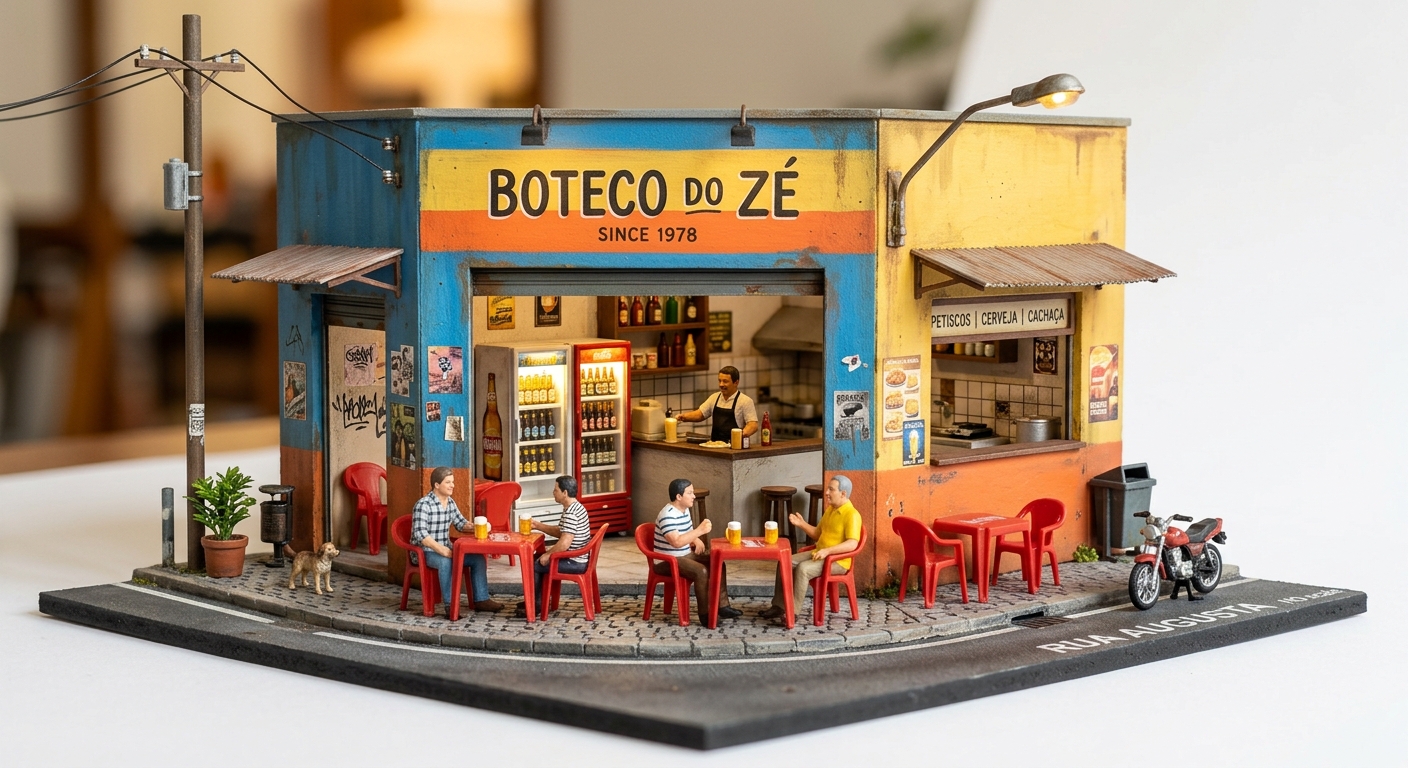
Bar do Juarez was founded in 1999 by Juarez Alves, who came from Bahia to São Paulo in 1973 and built his bar business around the kind of boteco that once filled the old city centre: bare tables, cold beer from the fridge, and straightforward food cooked to order. The group now has six locations across the city, including Itaim, Pinheiros, Brooklin, Moema, Santana, and Mooca, each designed to evoke the mid-century neighbourhood bar rather than a themed restaurant. Linguiça acebolada is one of the most ordered items on the menu: calabresa cut on the bias and fried in a cast-iron pan with a mountain of caramelised white onion, brought to the table sizzling with a basket of pão francês alongside. The boteco ritual here is to use the bread to soak up the fat and onion juices from the pan. The petisco portions are sized for sharing and the draft beer, called chope, comes in small 200ml glasses refilled continuously. The Itaim location on Avenida Presidente Juscelino Kubitschek is the most central for visitors.
Churrascaria Palace
Rio de Janeiro, Brazil
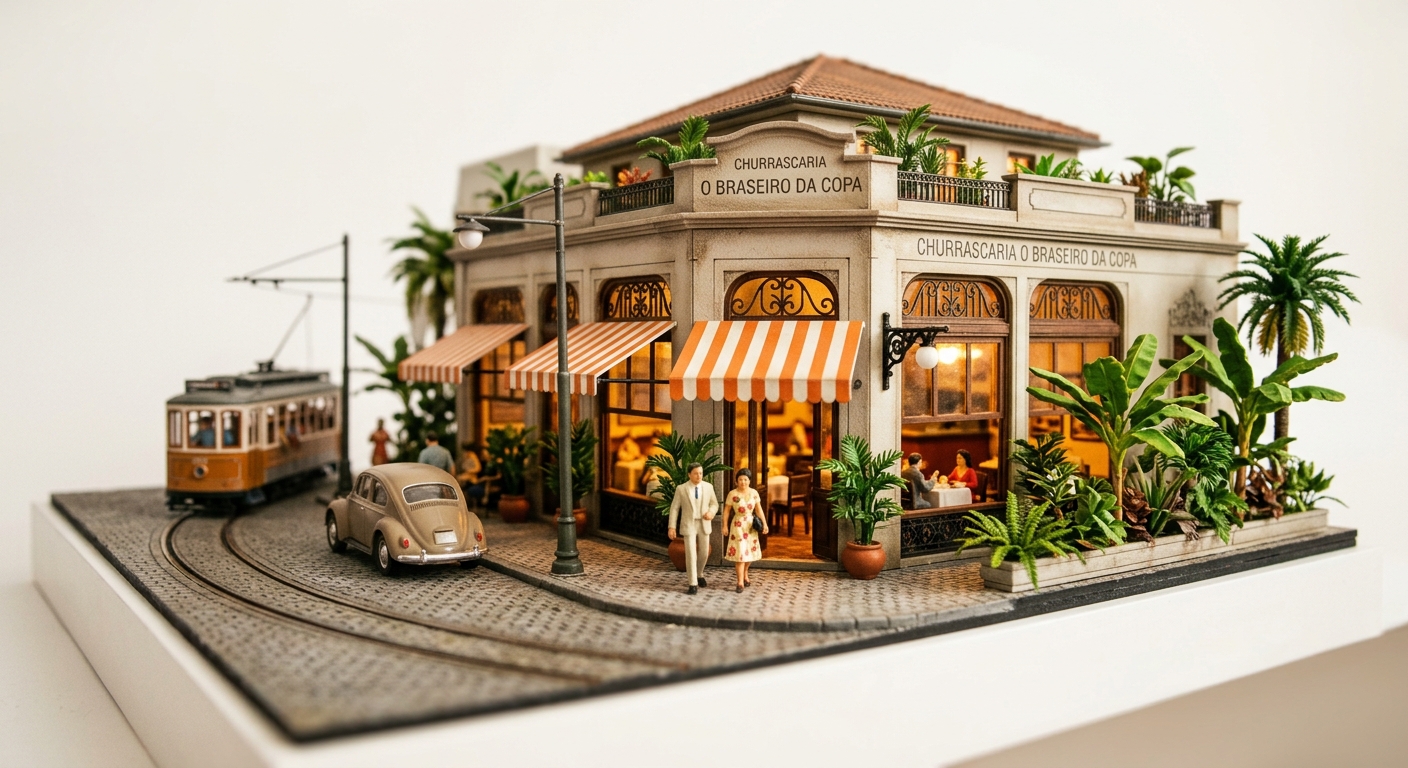
Churrascaria Palace has operated in Copacabana since 1951, making it one of the oldest continuously running steakhouses in Rio de Janeiro. The address on Rua Rodolfo Dantas, a short walk from the beach, put it at the heart of the neighbourhood when Copacabana was the most glamorous district in South America. The dining room retains a formal mid-century character: white tablecloths, attentive service, and a grill team that has been executing the same cuts for decades. The house claim to fame is the invention of the picanha borboleta, the butterfly-cut rump cap, developed in the 1980s by the longtime head griller. Linguiça calabresa appears as part of the full churrasco service, grilled over charcoal and sliced at the table before the premium cuts arrive. The restaurant runs a near-continuous all-you-can-eat service at lunch and dinner, with close to 40 cuts cycling through the dining room. The combination of location, longevity, and consistent quality makes it a reference point for the Rio churrasco tradition rather than a novelty.
Vento Haragano
São Paulo, Brazil
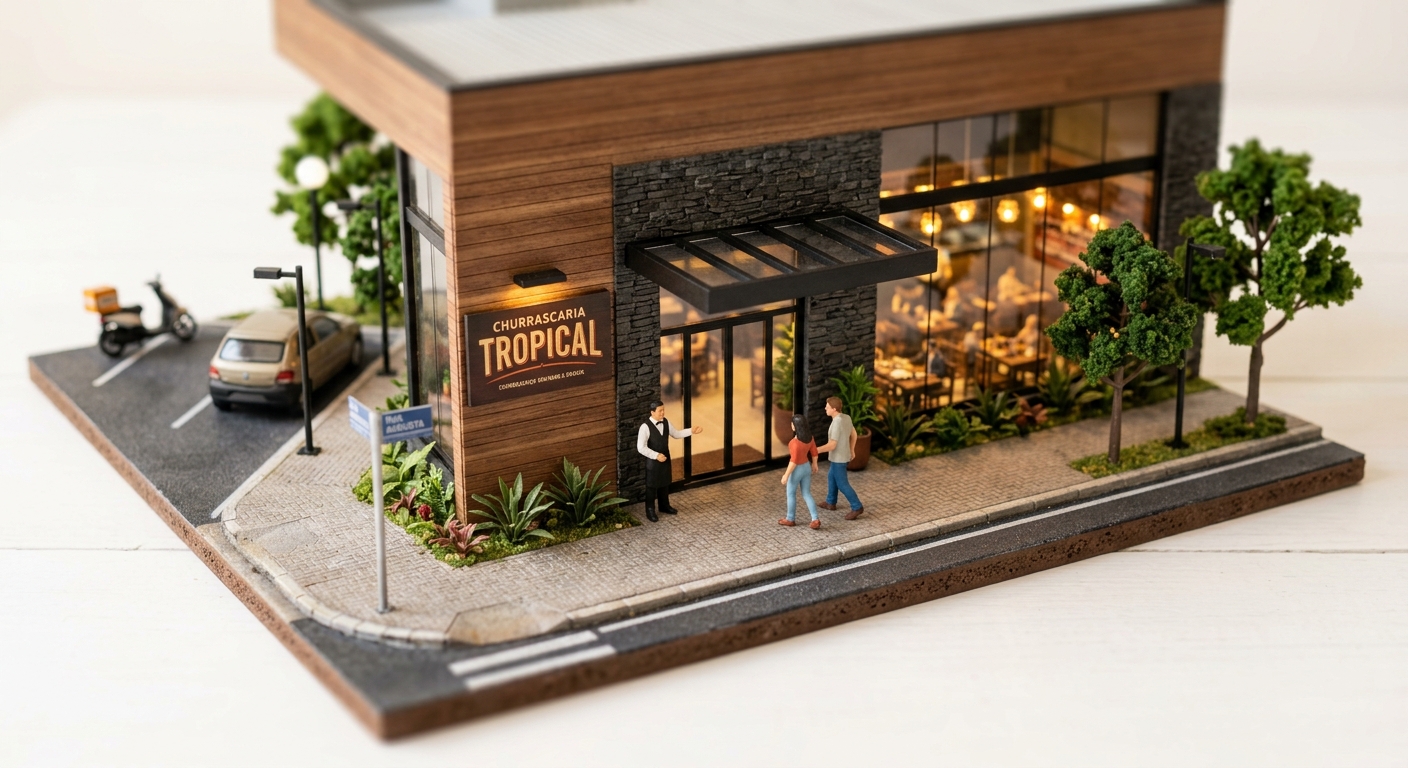
Vento Haragano opened in 1993 with the goal of bringing gaúcho churrasco to the centre of São Paulo. The name references the wind that fans the coals in Rio Grande do Sul, and the room plays the theme: waitstaff in traditional bombacha trousers and berets, wooden walls hung with leather tack and southern motifs, a dining room that seats several hundred without losing the sense of occasion. The restaurant sits a few blocks from Avenida Paulista in Jardim Paulista and draws a mixed crowd of families, office groups, and tourists who have heard that this is where the rodízio format is taken seriously. Linguiça toscana on a long metal skewer is one of the first cuts that circulates from the grill: the fresh pork sausage comes out blistered from the charcoal, split open at the skin, and is sliced at the table. It arrives before the picanha, before the fraldinha, as a signal that the grill is ready and the meal is beginning. The salad bar is extensive and includes farofa, vinagrete, and pickled vegetables. Reservations are advisable on weekends.