Jerk Sausage
Jerk sausage
Portland Parish, Jamaica
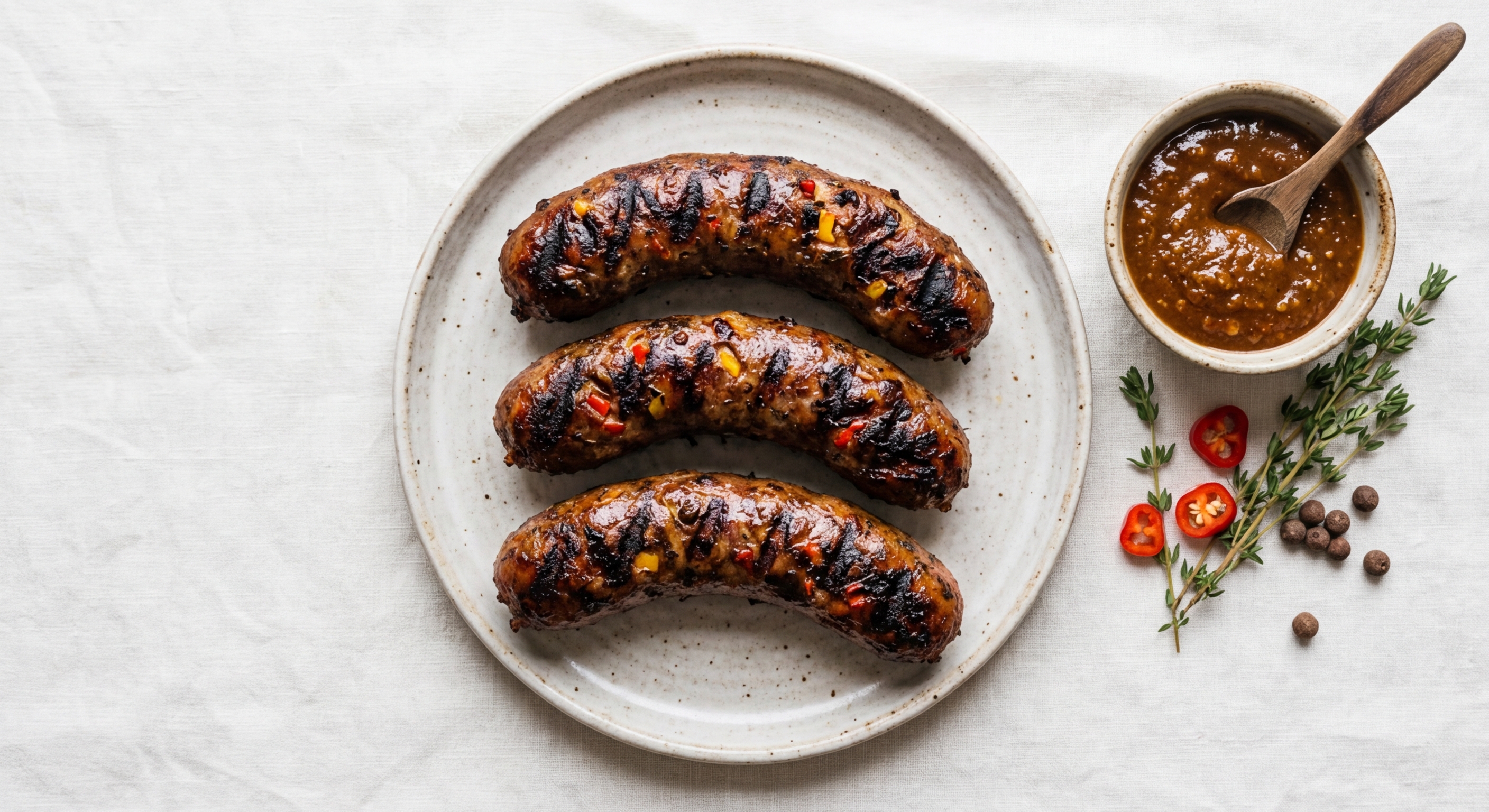
Jamaican jerk sausage is pork ground with scotch bonnet peppers, allspice, thyme, garlic, ginger, and scallions mixed directly into the meat before it goes into natural casings. This is not jerk sauce applied to any sausage after cooking; the spice is in the grind. The result carries the full heat and resinous sweetness of jerk seasoning throughout every bite, not just on the surface. Grilled over pimento wood, the fat renders through a blackened casing and the allspice smoke layers into everything underneath.
History
Jerk cooking in Jamaica traces back to the Maroon communities, descendants of enslaved Africans who escaped colonial plantations and established autonomous settlements in the Blue Mountains and the Cockpit Country interior. They hunted wild boar, seasoned it with scotch bonnet and the pimento (allspice) that grows wild across the island, and cooked it in covered pit fires over pimento wood. The smoke and the spice were both preservation and flavour. Boston Bay in Portland Parish became the first commercialised jerk location when vendors set up roadside pits along the coast road in the mid-20th century. The sausage form came later, adapting the jerk spice blend for a ground pork filling that could be sold by the link rather than by weight of whole meat. Today it sits at every serious jerk centre alongside chicken and pork shoulder, and it travels well into diaspora kitchens in London, Toronto, and New York where pimento wood is replaced by charcoal but the seasoning remains.
Ingredients
Preparation
Pork shoulder and belly are ground together on a medium plate to keep some texture. The jerk seasoning, scotch bonnet, allspice berries, thyme, garlic, ginger, and scallions, is blended to a coarse paste with soy sauce, brown sugar, cinnamon, and nutmeg. This paste is mixed thoroughly into the ground pork with salt and black pepper, then the mixture rests for at least two hours to let the spices penetrate. The seasoned meat goes into natural pork casings and the links are tied at 15-18cm. Cooking is over fire: pimento wood at a jerk centre, charcoal or a gas grill at home. The sausage needs 15-20 minutes over medium-high heat, turned regularly, until the casing blisters and chars and the interior reaches 70°C.
Taste
The first hit is scotch bonnet heat, sharp and fruity, then the allspice comes in underneath, dark and resinous. The brown sugar in the seasoning rounds the heat without sweetening the sausage outright. Garlic and ginger sit in the back. The pimento wood smoke, when present, adds a layer that no other cooking method replicates.
Texture
The grind is medium-coarse, with enough fat from the belly to keep the sausage moist through high-heat cooking. The casing chars and tightens on the grill, giving a firm snap at the bite. Inside, the meat is dense but not dry, with the fat and spice paste running through the whole cross-section.
Rituals & Traditions
The Boston Bay roadside pit
At Boston Bay, the pits are loaded before dawn and the vendors are cooking by mid-morning. Customers pull off the road, point at what they want, and the vendor hacks it off the pit and wraps it in foil with a piece of hard dough bread. No menu, no table, no order ticket. You stand at the roadside and eat. The sausage comes off the pit black and dripping, and you eat it before it cools.
Use the whole scotch bonnet
In jerk cooking, the scotch bonnet is not decoration. It is the primary heat source and provides a fruity, tropical note that no other chilli replicates. Substituting milder peppers changes the character entirely. If the full heat is too much, reduce the quantity but keep the variety.
Jerk at the Sunday market
Across Jamaica, Sunday afternoons at outdoor markets and community gatherings mean jerk smoke in the air. Families set up portable pits or buy from a vendor set up in a car park. The sausage feeds quickly, cooks on a small grill in 20 minutes, and travels well in foil. It has become the informal party food of the Jamaican weekend.
Recipes
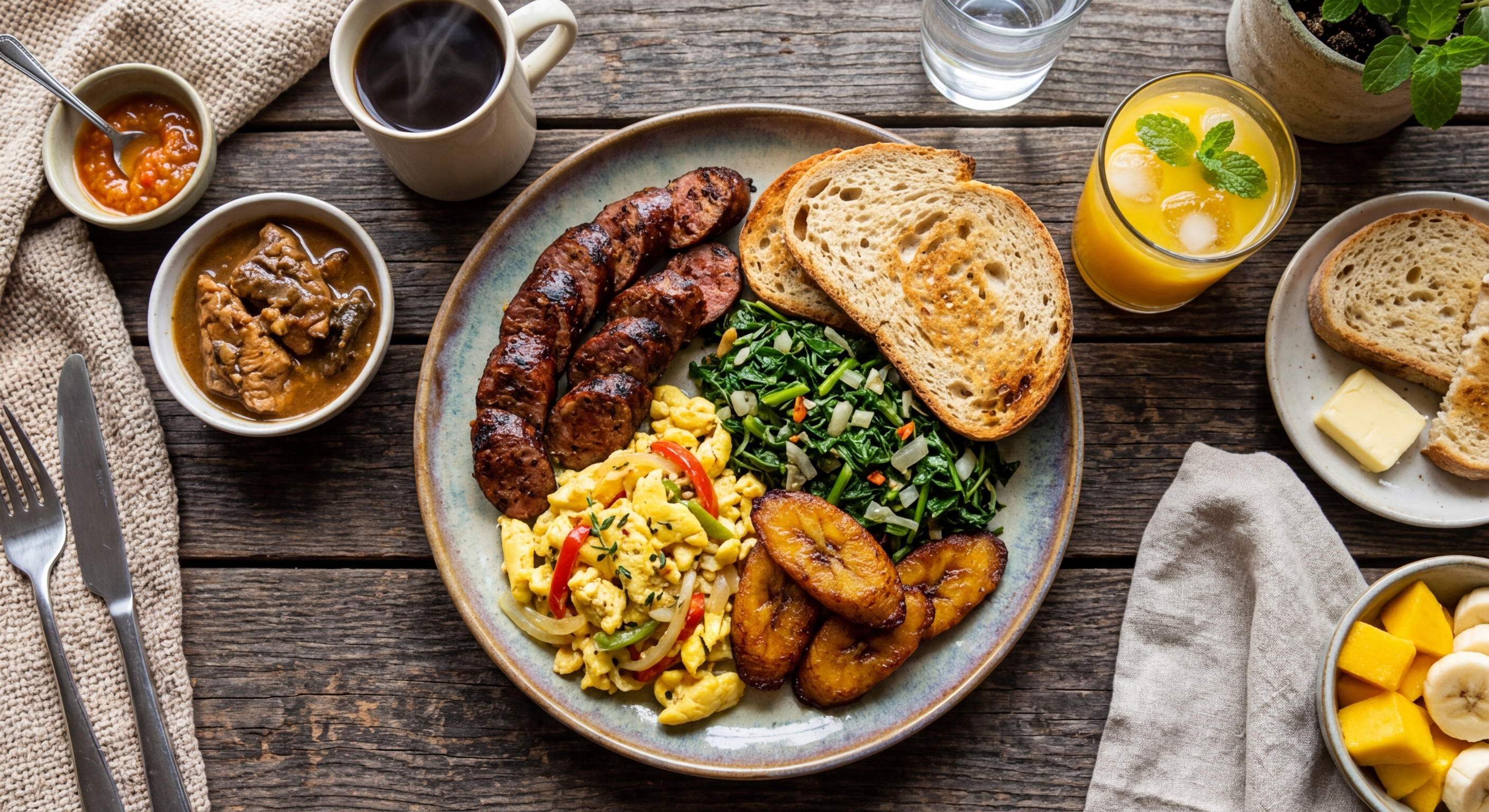
Jamaican Breakfast with Jerk Sausage, Ackee, and Callaloo
Jerk Sausage
Ackee and saltfish is Jamaica's national dish, but this is the fuller spread: ackee cooked with onion and scotch bonnet, callaloo wilted in garlic, jerk sausage grilled alongside. Hard dough bread goes on the plate for everything else to sit against. This is the kind of breakfast that needs no meal until dinner.
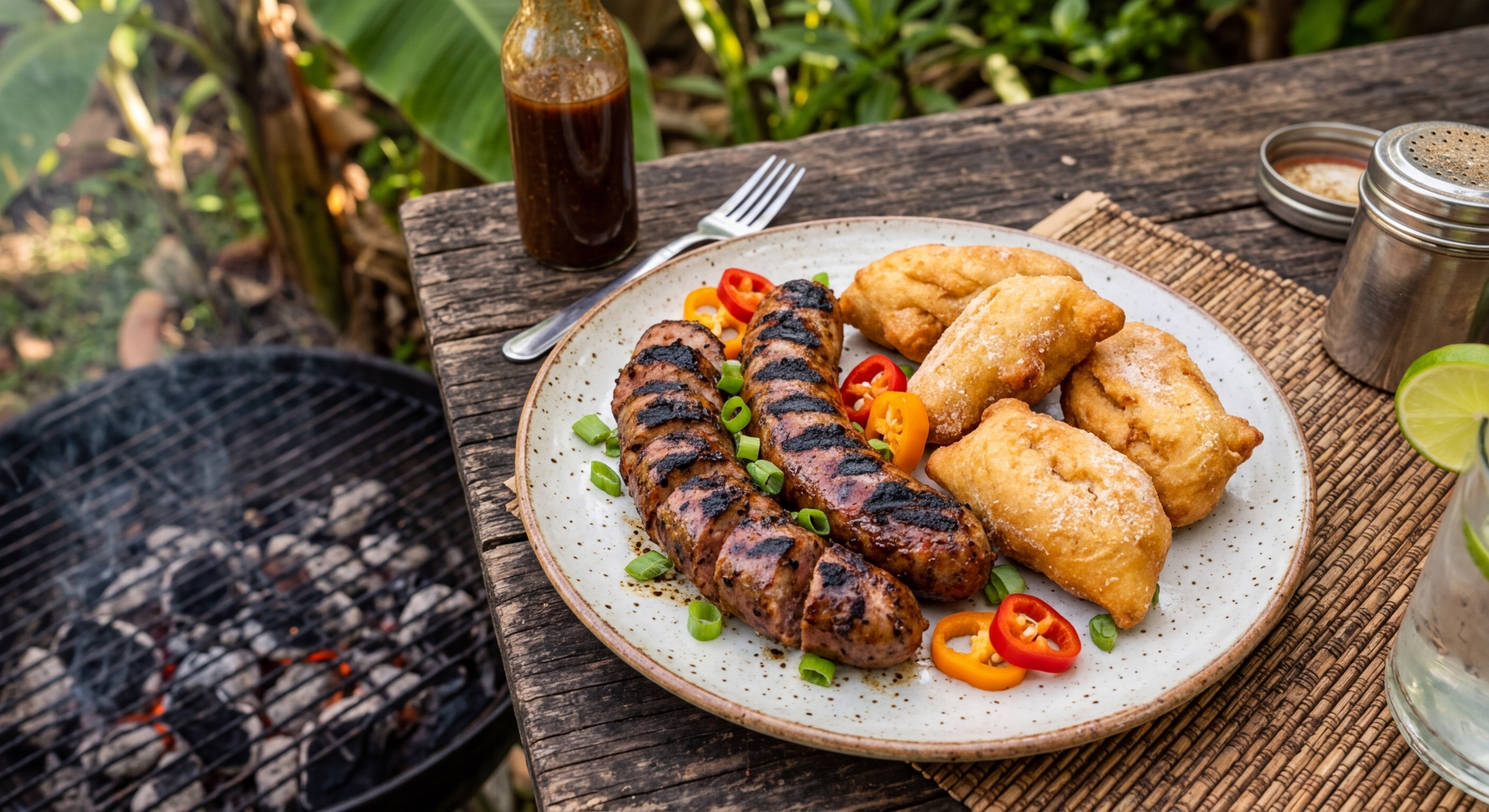
Grilled Jerk Sausage with Festival
Jerk Sausage
The closest you can get to a Boston Bay pit without pimento wood: jerk sausage grilled hot over charcoal until the casing blisters and the fat drips. The char is part of it. Served with festival, the slightly sweet fried dumplings that the roadside vendors always have on the side, and a squeeze of lime.
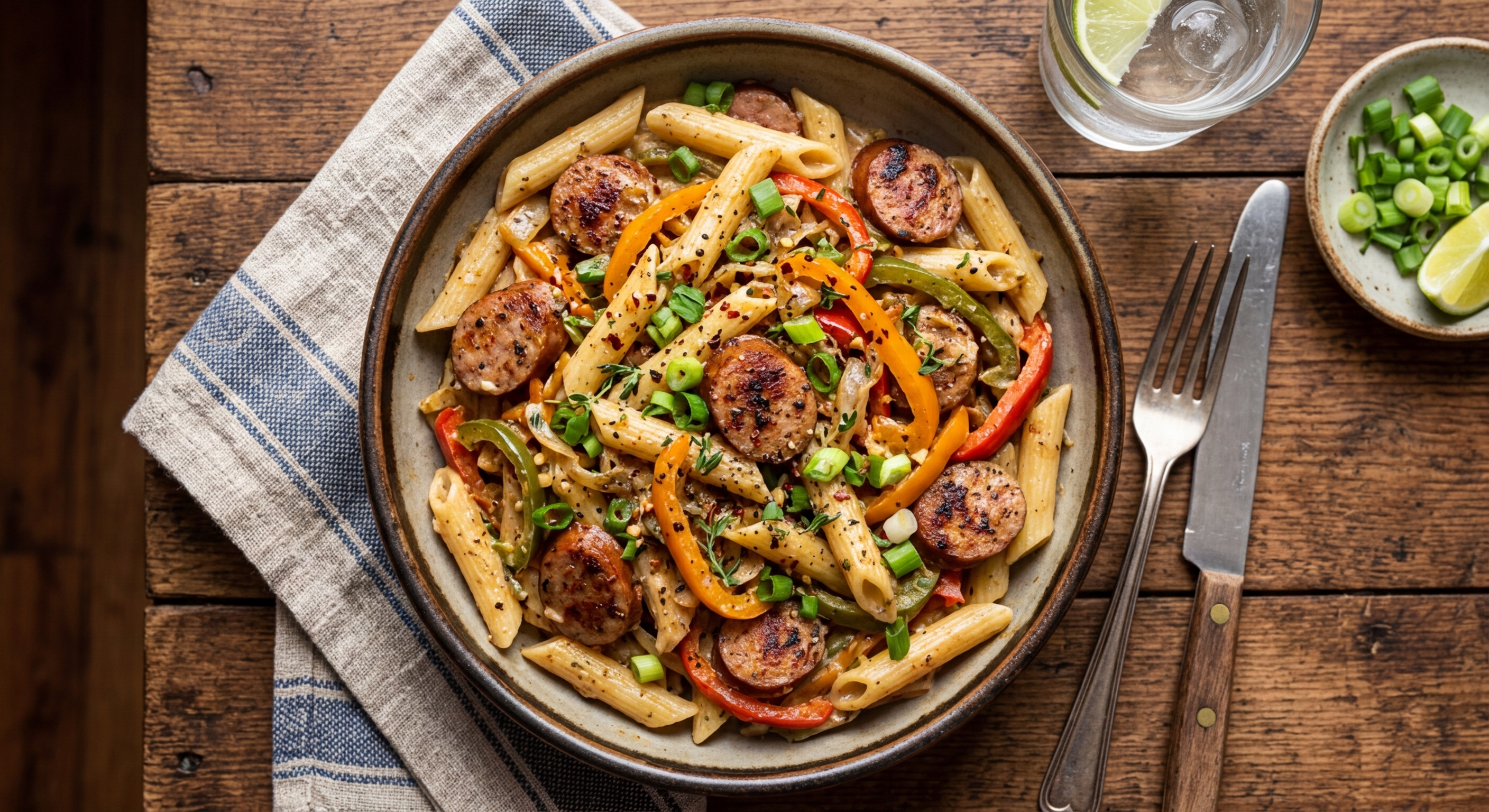
Jerk Sausage Pasta
Jerk Sausage
A diaspora kitchen move: jerk sausage crumbled into a coconut cream sauce with scotch bonnet, thyme, and spring onion. The heat from the sausage cuts through the fat of the cream. Penne or rigatoni catches the sauce in its ridges. This is not a traditional Jamaican dish; it is what happens when Jamaican cooking lands in London or Toronto and meets an Italian pantry.
Jerk Sausage Pepper Stew
Jerk Sausage
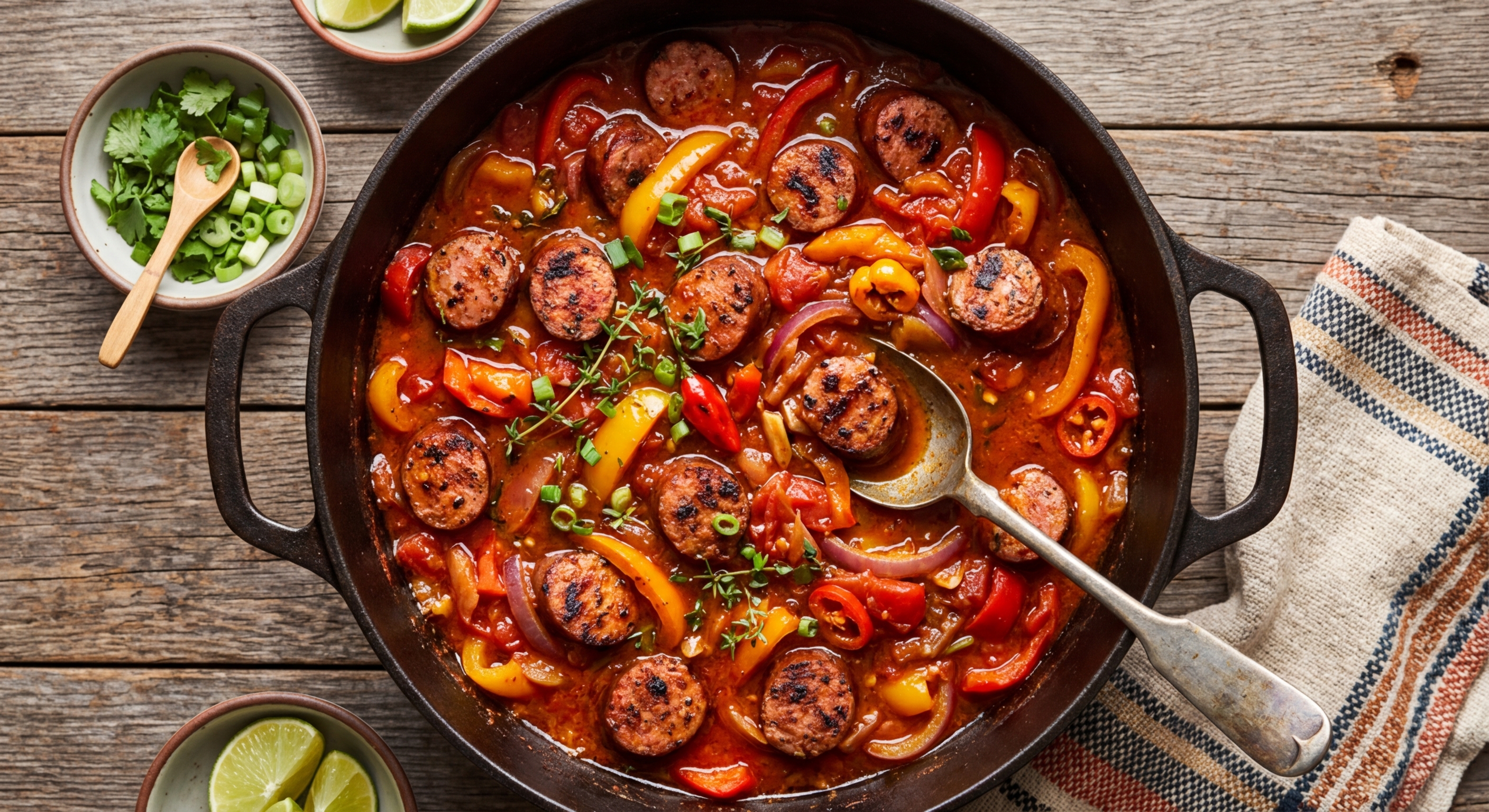
Braised jerk sausage in a sauce of scotch bonnet, bell peppers, tomato, and allspice. The stewing tones the raw heat of the scotch bonnet into something longer and more complex, and the allspice in the sausage deepens the whole pot. Eat it over rice or with thick slices of hard dough bread to mop up the sauce.
Jerk Sausage with Festival Dumplings
Jerk Sausage
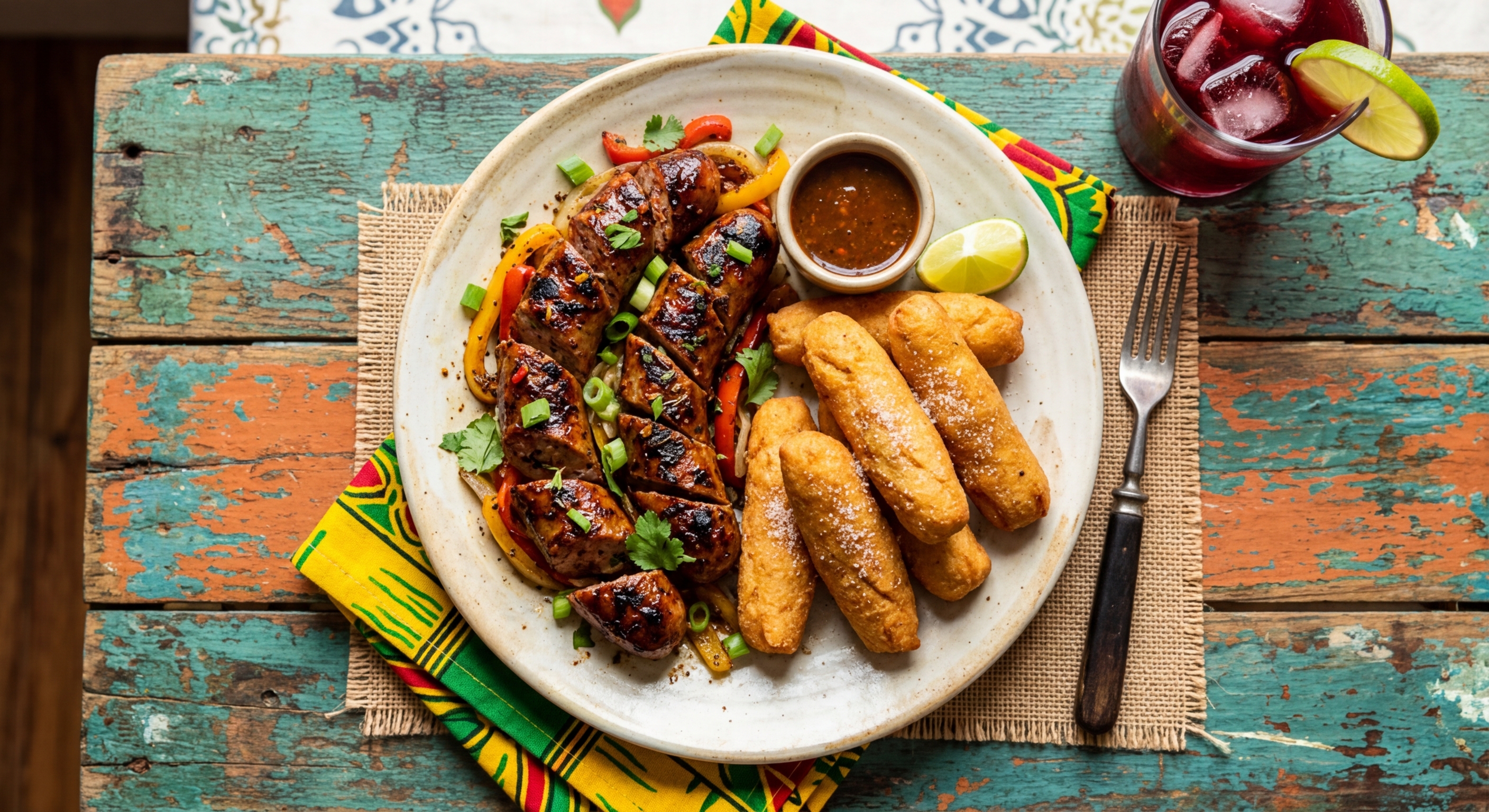
Festival is the roadside partner of jerk. These fried cornmeal dumplings carry a little sugar, which makes them sweet against the char and heat of the sausage. The contrast is the whole point. Every jerk vendor in Portland and Montego Bay has a pot of festival going alongside the pit. This recipe focuses on getting the festival right: a firm exterior, a soft middle, slightly sweet and golden.
Jerk Sausage with Rice and Peas
Jerk Sausage
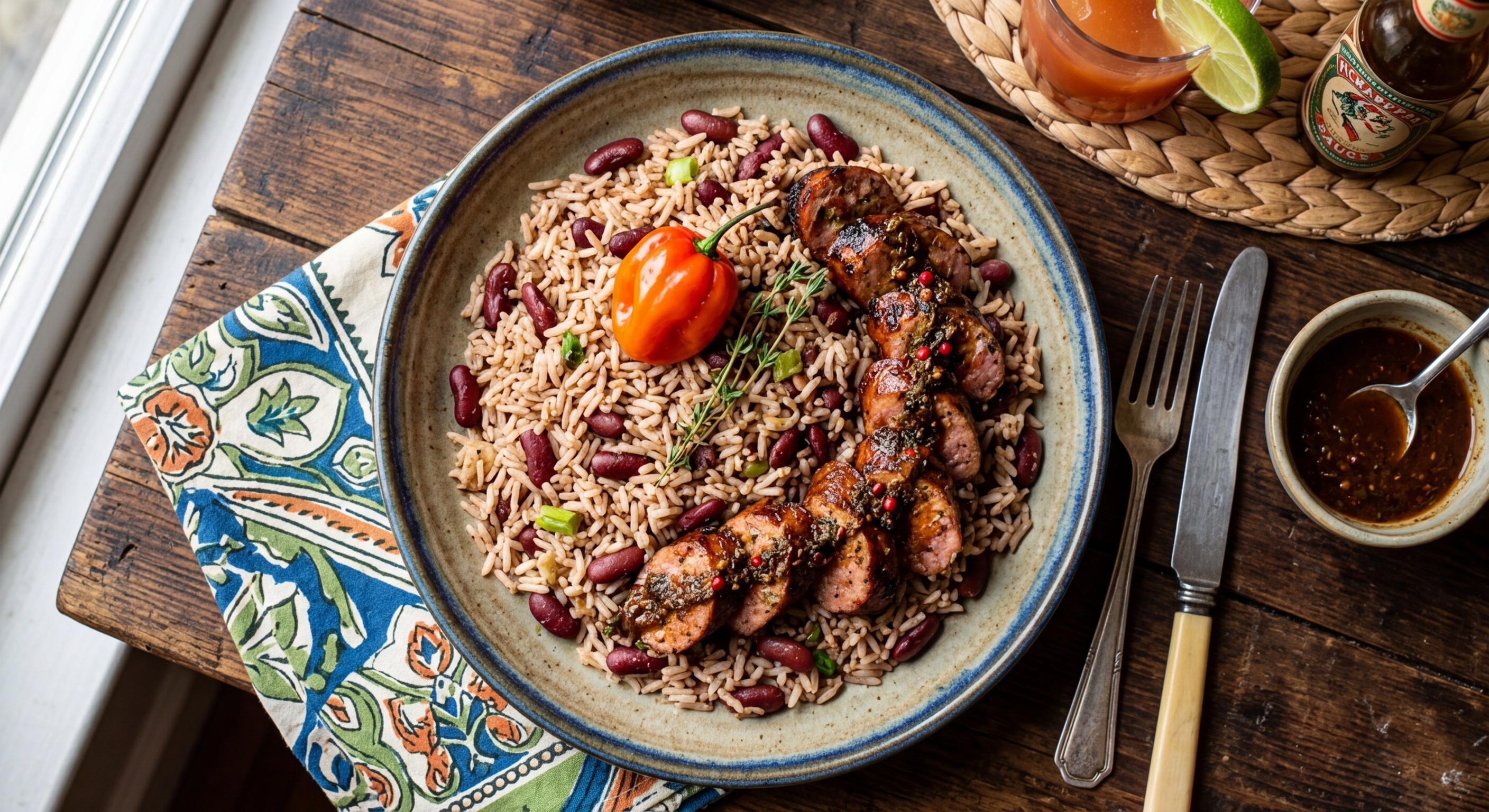
Rice and peas is not a side dish in Jamaica; it is the base of the meal. Kidney beans cooked into coconut milk with thyme and a whole scotch bonnet left intact give the rice a deep savouriness without turning it hot. The jerk sausage rests on top, sliced after grilling, its fat running down into the rice below.
On the Map
Where to Eat
Boston Jerk Centre
Boston Bay, Jamaica
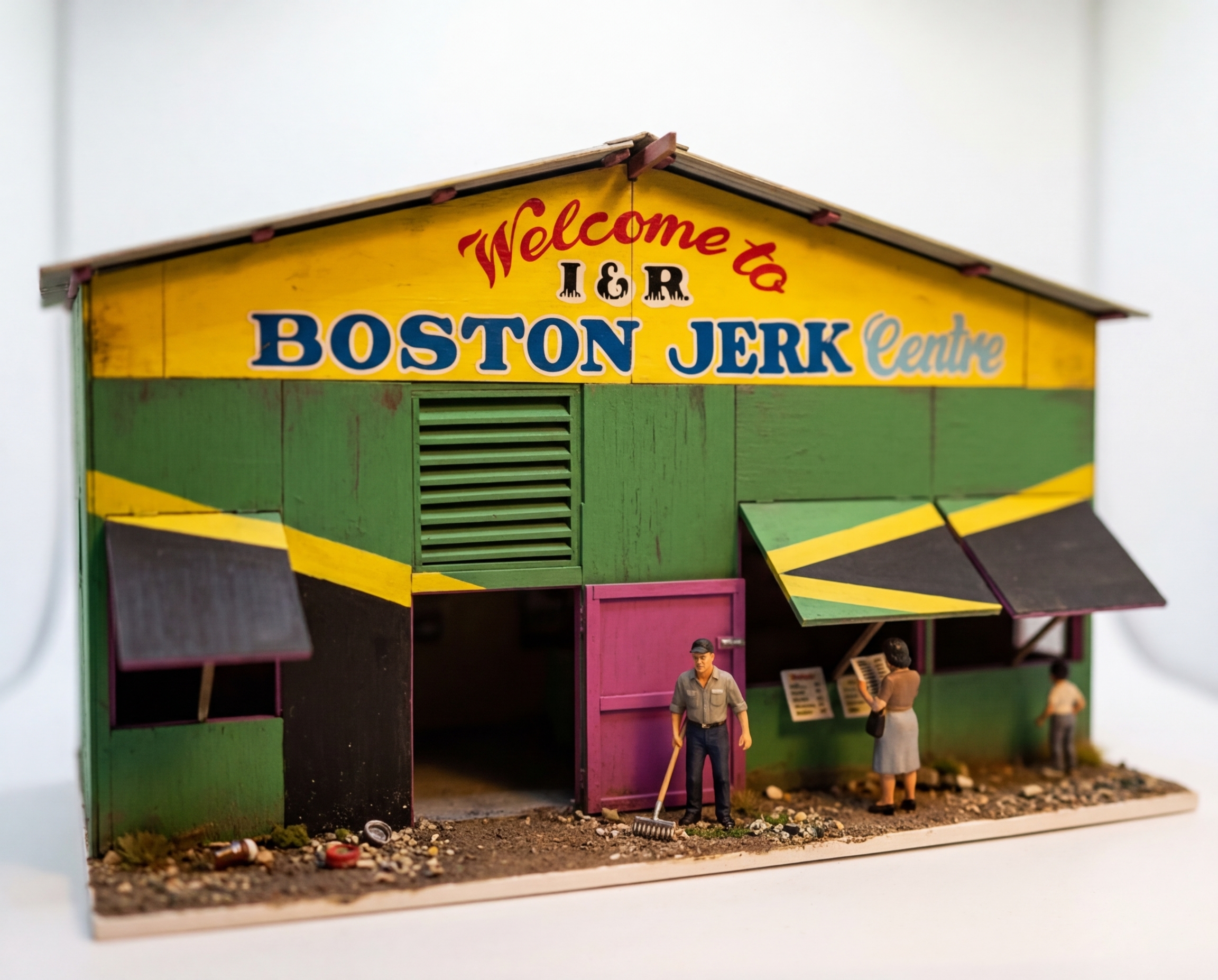
Boston Bay in Portland Parish is ground zero for jerk in Jamaica, and the cluster of pit stalls along this beach road is what people mean when they say the Boston Jerk Centre. No single operator owns the name; it refers to the row of open-air pits that have cooked pork, chicken, and sausage over pimento wood fires here for decades. Vendors arrive before dawn to load the pits, slow-cook the meat for hours, then open to whoever pulls off the road. The sausage comes out black on the outside, red within, drenched in pan juices, and sold by weight wrapped in foil with a piece of hard dough bread. It is coarser and smokier than jerk sausage from any inland centre because the pimento wood grows on the hillsides directly above the bay. The drive from Port Antonio takes twenty minutes and passes through some of the greenest road in the island.
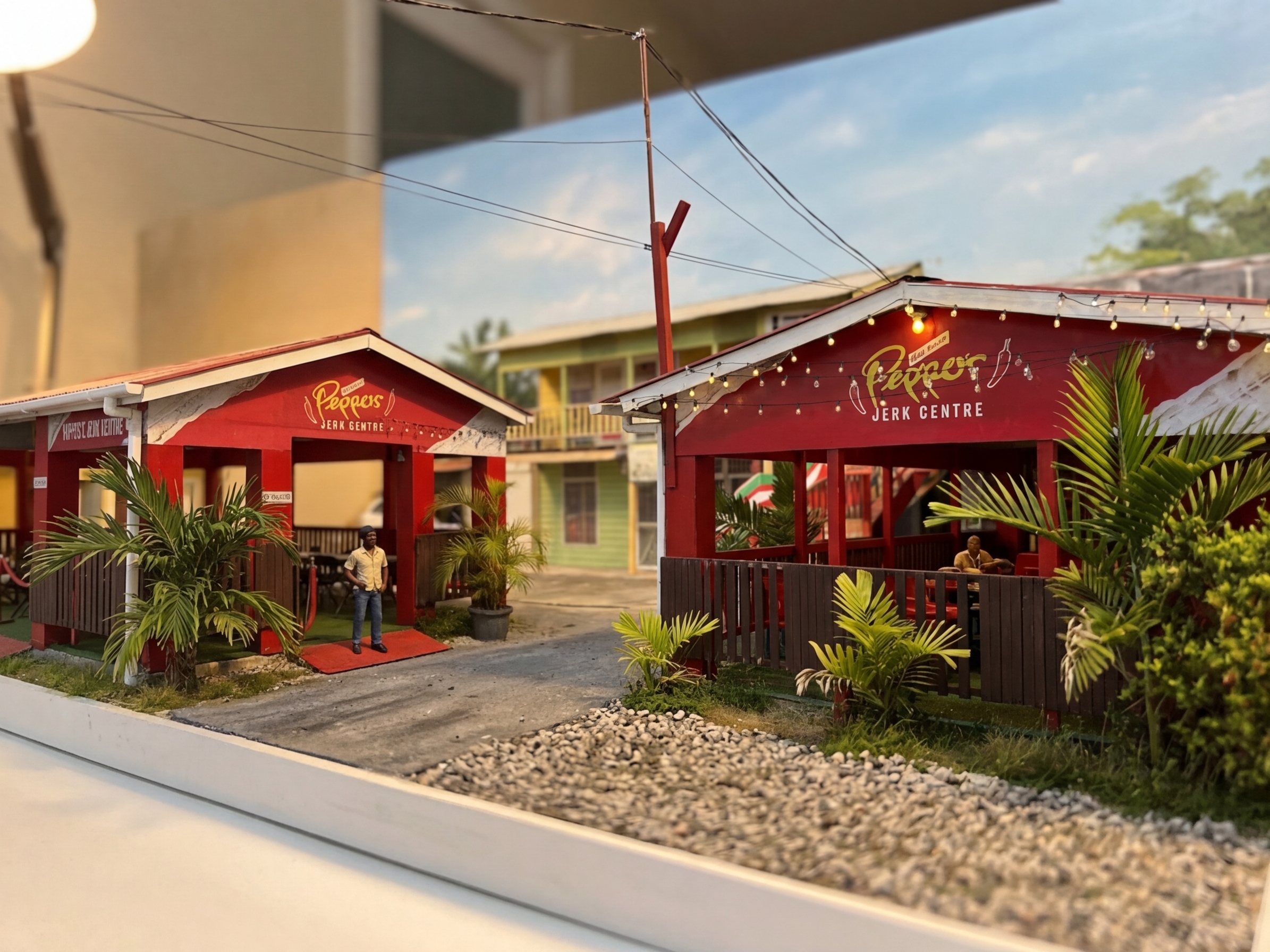
Pepperz Jerk Centre
Kingston, Jamaica
Pepperz sits on Constant Spring Road in Kingston, one of the capital's more dependable jerk spots for anyone who does not want to drive to the north coast for the real thing. The pit is loaded with pimento wood and the smoke hangs over the car park from midday onward. The jerk sausage here is seasoned with a house scotch bonnet paste that leans harder on the allspice than most, which gives the links a deeper, more resinous smoke character than the sweeter coastal versions. It comes with rice and peas or festival, your choice, and a small container of the house scotch bonnet sauce on the side. Kingston's jerk scene is less famous than Portland's but the city has its own tradition, and Pepperz is among the spots that locals point visitors toward when they ask where to eat near New Kingston.
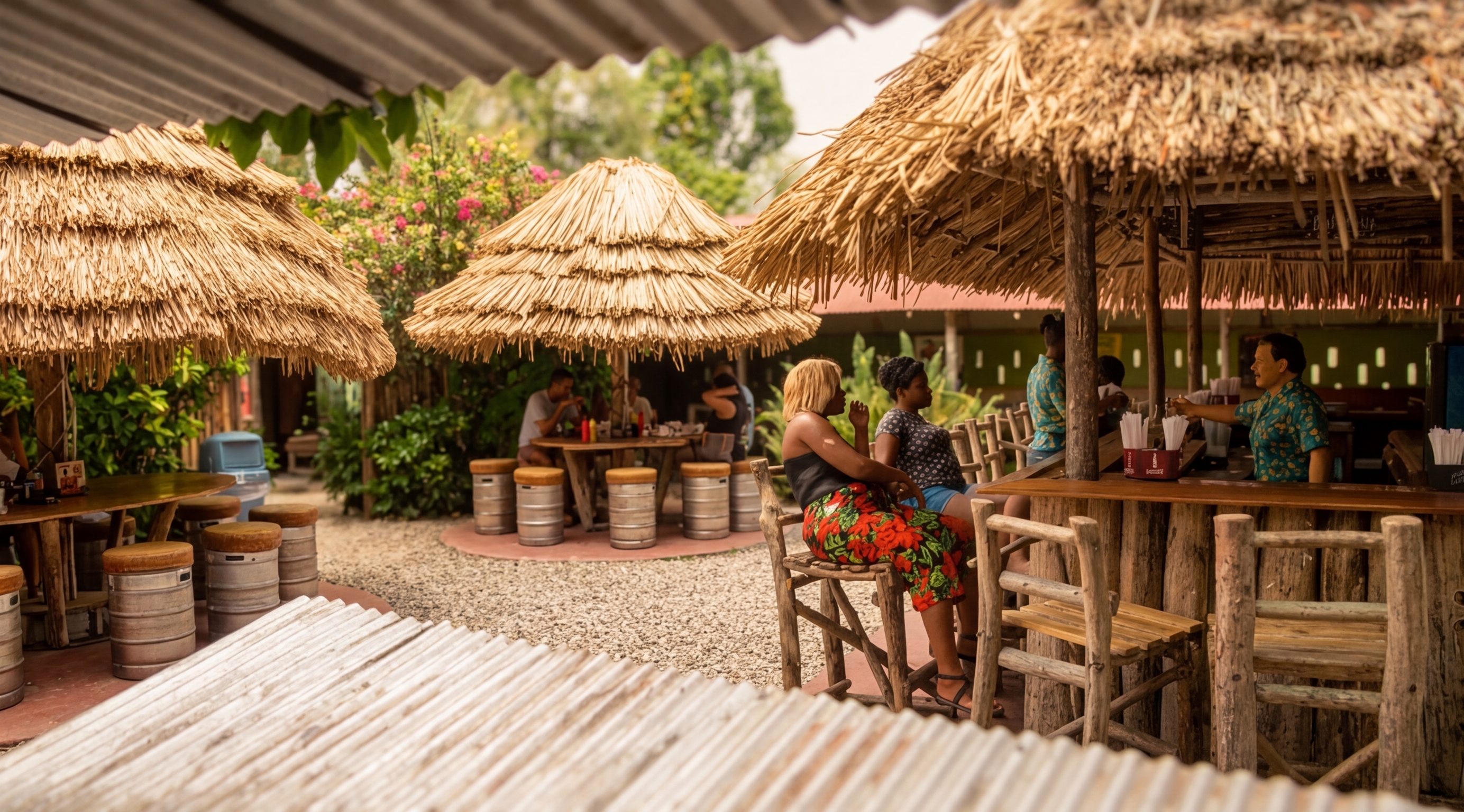
Scotchies Jerk Centre
Montego Bay, Jamaica
Scotchies is one of Jamaica's most recognised jerk operations, with the original location on the roadside between Montego Bay and Falmouth on the A1 highway. The pits burn pimento wood in the traditional Portland style; the menu runs pork, chicken, fish, and jerk sausage. The sausage is thick, coiled, and sold by the link or by the pound. Tables are picnic benches under a thatched roof, open to the road, with a rum bar at one end. The chicken is the national draw, but the sausage has its regulars who order two links, a bag of festival, and a bottle of Red Stripe and call it a complete meal. Scotchies also operates in Ocho Rios and Kingston. The Montego Bay location is the oldest and still the busiest on weekends.