Farmer's Sausage
Foarma Worscht
Southern Manitoba
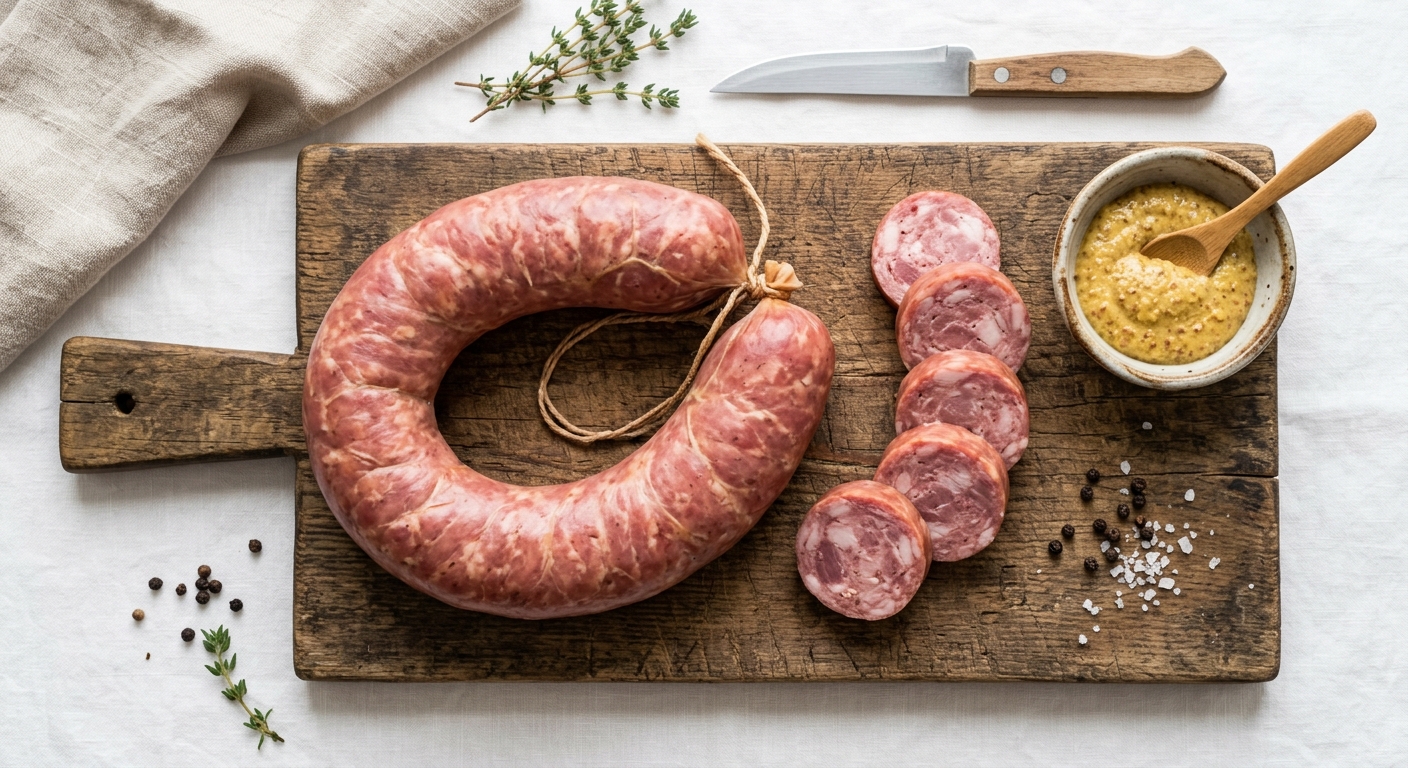
A cold-smoked pork sausage born in the Mennonite farming communities of southern Manitoba. Ground pork, salt, pepper, and woodsmoke. Four ingredients. No herbs, no garlic, no filler. The sausage gets its character from the smoking process: hung in a smokehouse over smoldering wood (often oak or maple) at temperatures too low to cook the meat. The result is a firm, rosy link with a pronounced smoke flavor and a coarse, meaty texture. Mennonite families across the Canadian prairies have eaten it two or three times a week for over a century.
History
Mennonite settlers brought their sausage-making traditions from the Russian Empire (modern-day Ukraine and southern Russia) when they arrived in Manitoba in the 1870s. The Canadian government offered them block settlements and military exemptions in exchange for farming the prairies. They established tight-knit colonies around Steinbach, Winkler, and Altona, and the smokehouse became as essential as the barn. Every farm had one. Hog butchering happened in late fall when temperatures dropped below freezing, and the sausage provided protein through the long prairie winter. The recipe stayed oral for generations, passed from mother to daughter during schlachtfest (butchering day). Commercial production started in the 1960s when operations like Pioneer Meat in Altona and Winkler Meats began selling to grocery stores. Mennonites who left Manitoba for jobs in Toronto, Calgary, or Vancouver started ordering farmer's sausage by mail. It became an identity marker: wherever you found Mennonites, you found farmer's sausage.
Ingredients
Preparation
Pork shoulder and back fat are ground through a coarse plate. Salt and black pepper are mixed in by hand. Nothing else. The seasoned meat is stuffed into natural hog casings and tied into loops or long links about 5cm in diameter. The sausages hang in a smokehouse where hardwood (oak, maple, or sometimes apple) smolders at 20-30°C for 8 to 12 hours. This cold-smoking preserves and flavors the meat without cooking it. The finished sausage is firm to the touch, deep pink inside, and smells like a campfire.
Taste
Smoke comes first, clean and woody, not acrid. Then the pork asserts itself: fatty, saline, with a slow black pepper burn at the back of the throat. The flavor is concentrated because the cold-smoking draws moisture out of the meat. No herbs compete for attention. No spices mask the pork. You taste animal and fire.
Texture
Dense and firm when cold, with visible fat marbling through the coarse grind. The casing has a satisfying snap. Pan-fried or grilled, the exterior crisps and caramelizes while the inside softens and releases rendered fat. Sliced thin and eaten cold, the texture is almost salami-like.
Rituals & Traditions
Schlachtfest
The annual late-fall hog butchering brought extended families together. Men slaughtered and broke down the carcasses. Women made sausage, rendered lard, and packed the smokehouse. Children turned the grinder. The whole operation took two days and produced enough sausage for winter.
Pan-fry until the fat sings
Slice the sausage into thick coins and fry in a dry pan over medium heat. No oil needed. The rendered fat does the work. Cook until both sides are golden-brown with crispy edges. The kitchen will smell like a smokehouse.
Do not boil it
Boiling washes out the smoke flavor and turns the texture rubbery. If you need to cook it in liquid, add it to soup in the last 10 minutes.
Recipes
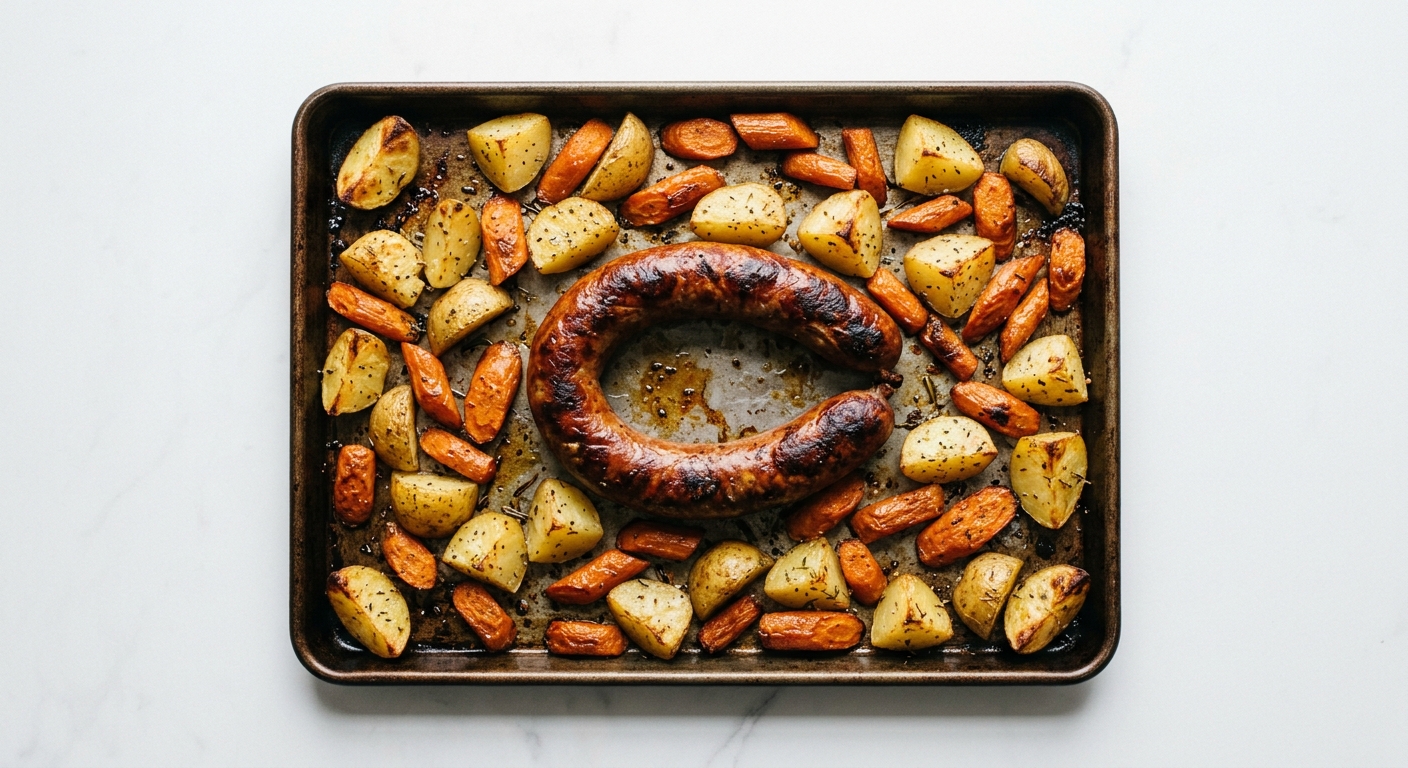
Baked Farmer's Sausage with Potatoes and Carrots
Farmer's Sausage
The weeknight dinner of Manitoba working families. Whole farmer's sausage rings on a sheet pan surrounded by quartered potatoes and carrots, baked until everything caramelizes. The sausage fat renders into the vegetables. You put it in the oven, set a timer for 40 minutes, and your meat and sides are done at the same time. Serve with gravy made from the pan drippings.
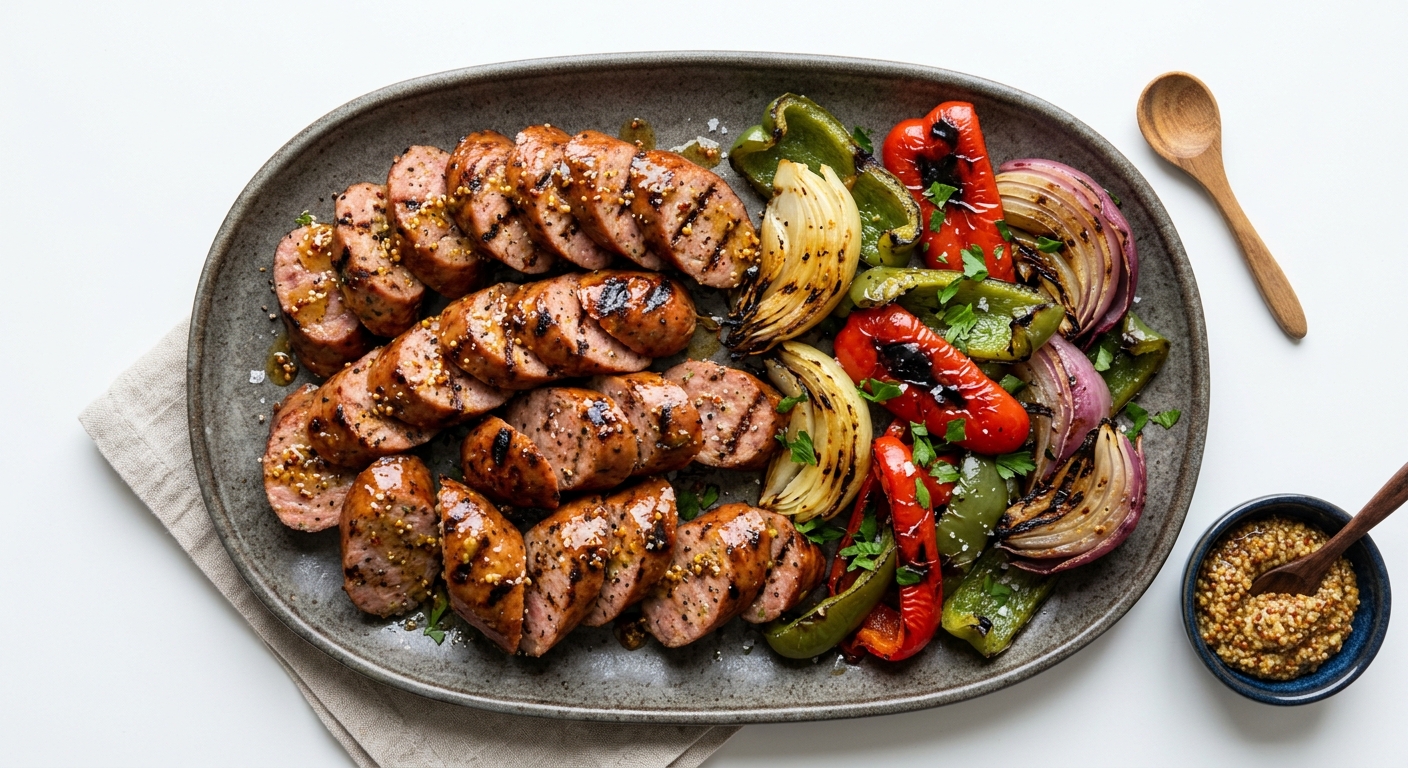
BBQ Farmer's Sausage with Peppers
Farmer's Sausage
Farmer's sausage on the backyard grill, served with charred bell peppers and onions. This is the summer version, the one that shows up at every Manitoba community barbecue, church picnic, and hockey team fundraiser. The sausage is already smoked, so the grill just heats it through and adds char marks. Brushed with a mustard-based BBQ glaze in the last five minutes.
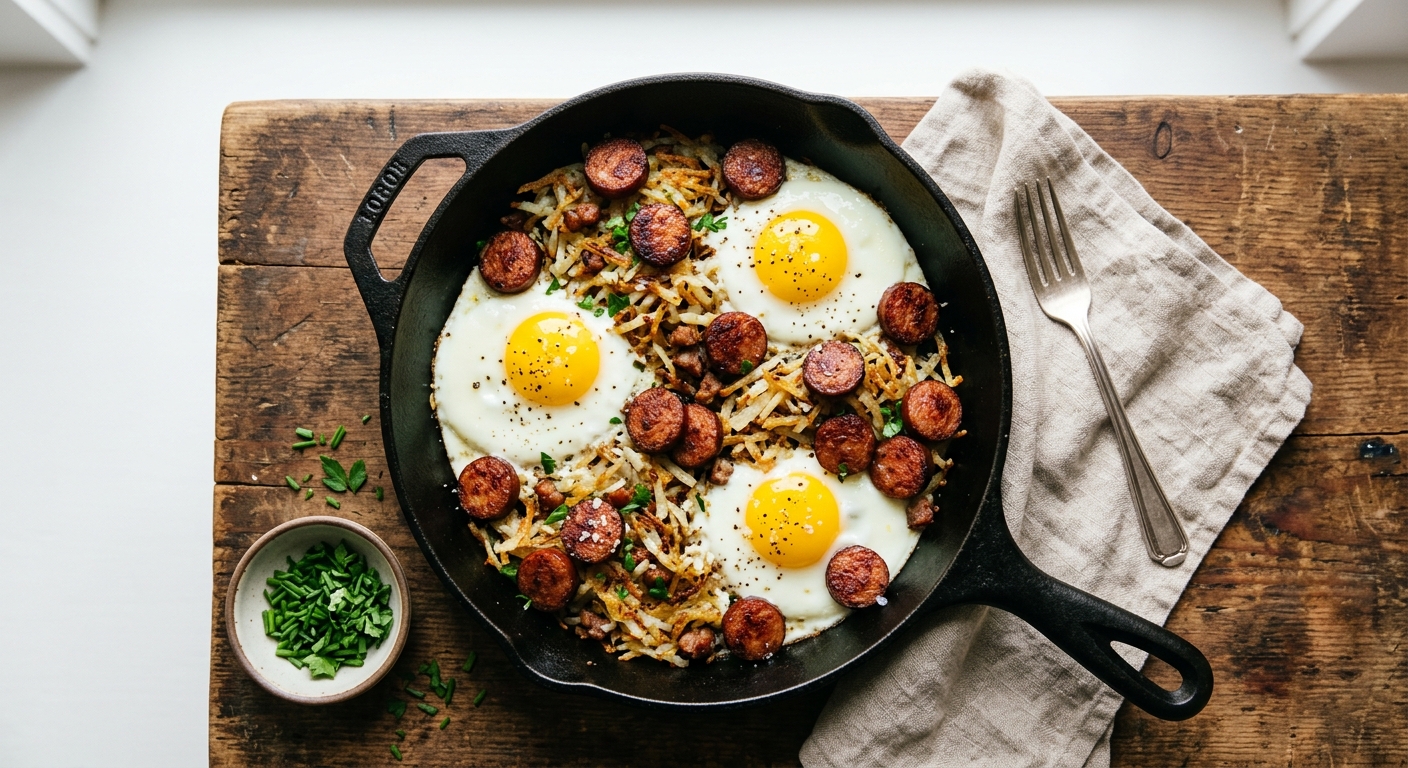
Farmer's Sausage Breakfast Skillet
Farmer's Sausage
Thick coins of farmer's sausage fried until crispy, then surrounded by hash browns, onions, and topped with fried eggs. This is Saturday morning breakfast in Steinbach, Winkler, and every Mennonite kitchen from the Red River to the Rockies. The sausage goes in the pan first so its rendered fat cooks everything else. No additional oil needed.
Farmer's Sausage with Kielke
Farmer's Sausage
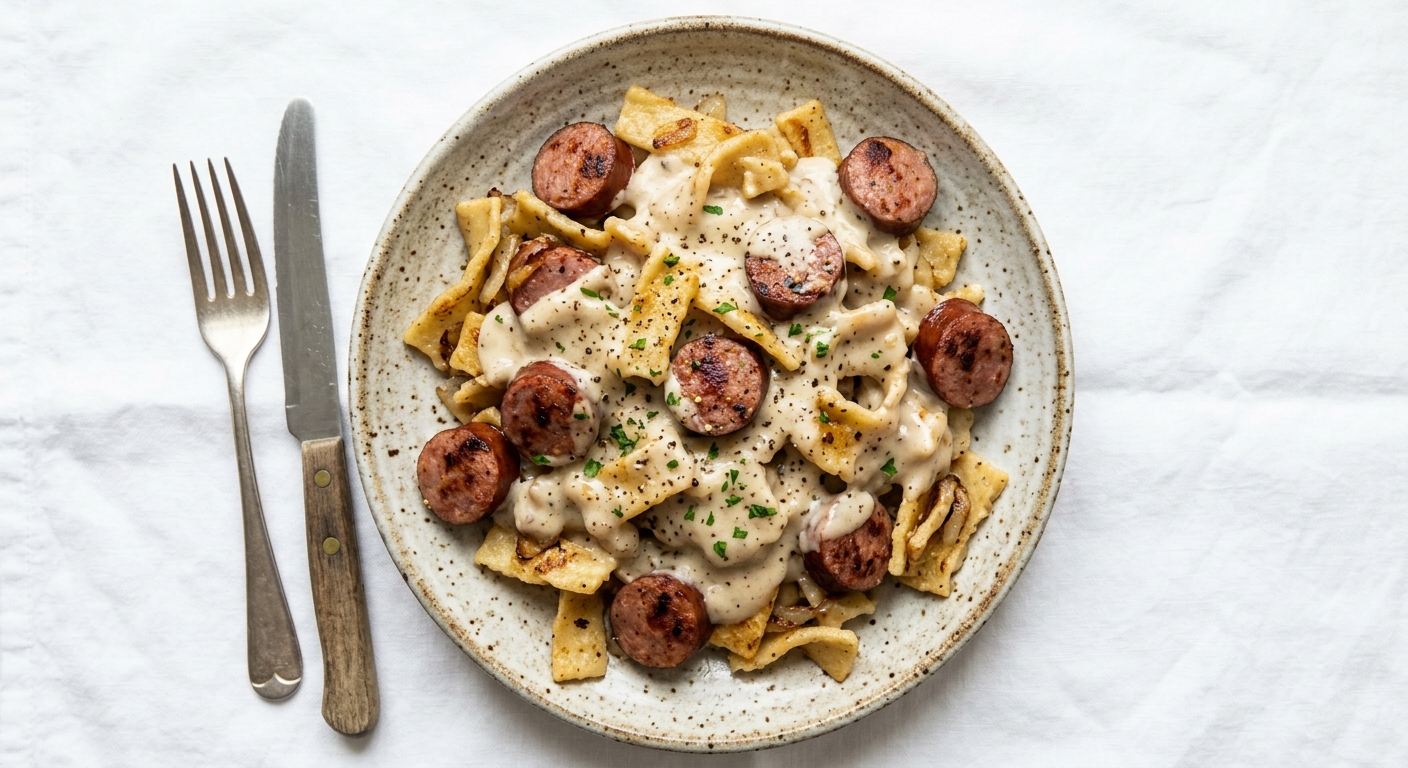
Kielke are thick, hand-cut Mennonite egg noodles, boiled then fried in butter until the edges brown. Served alongside sliced farmer's sausage with schmauntfatt ladled over the top. This was the midweek meal in every Mennonite household, eaten so often that children grew up thinking pasta meant kielke. The noodles are rustic and irregular, nothing like store-bought pasta.
Farmer's Sausage Soup
Farmer's Sausage
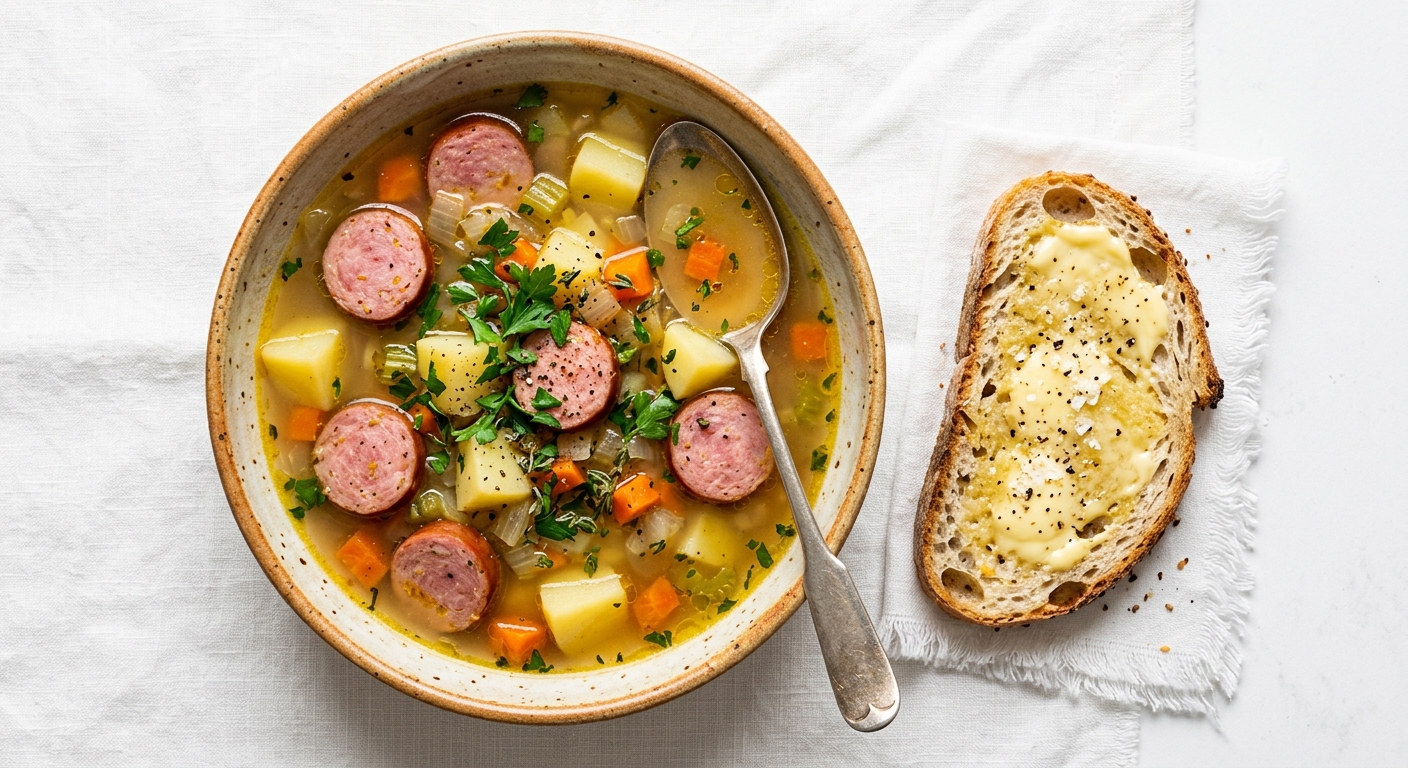
A thick, filling soup built around chunked farmer's sausage, potatoes, carrots, and onions simmered in chicken broth. This is what Manitoba farm families eat when it hits minus 30 outside and the wind is blowing horizontal across the prairie. The sausage goes in near the end so the smoke flavor stays sharp. Some versions add cabbage or turnip. A cast-iron pot of this on the woodstove will feed a family of six.

Vereniki with Farmer's Sausage and Schmauntfatt
Farmer's Sausage
The defining Mennonite meal. Cottage cheese-filled dumplings served with pan-fried farmer's sausage coins and a ladleful of thick cream gravy (schmauntfatt). This combination appeared on Mennonite tables in southern Manitoba two or three times a week for a century. The vereniki are boiled, then fried in butter until golden. The schmauntfatt is just cream, flour, salt, and pepper reduced to a thick sauce. Three components, none of them complicated, all of them essential.
On the Map
Where to Buy
Earls Meat Market
Steinbach, Canada
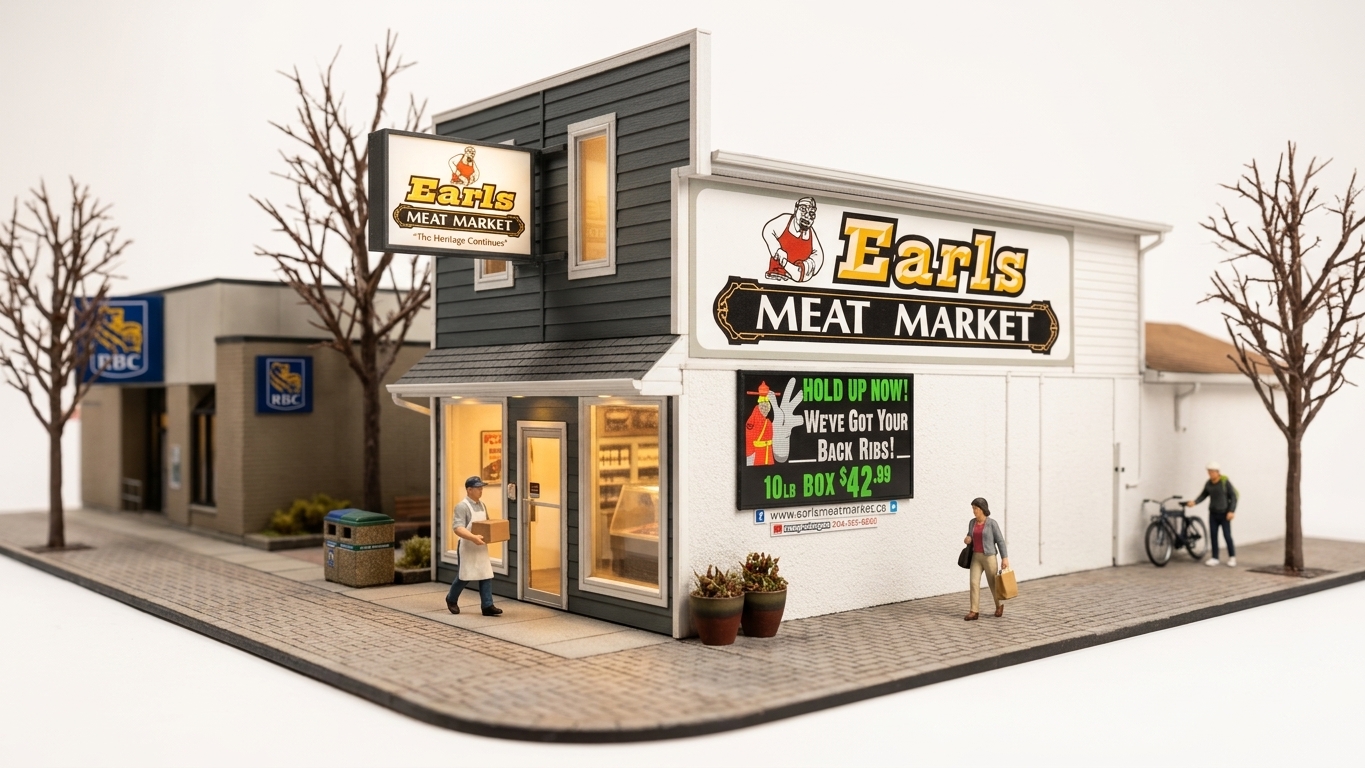
Earl Funk opened this custom-cut butcher shop in Steinbach in 2005, committed to buying only local, naturally raised beef and pork. His farmer's sausage recipe comes from four generations of meat cutters in his family. The pork is sourced from Manitoba farms, ground on-site, and smoked in their own smokehouse behind the shop.
Pioneer Meat
Altona, Canada
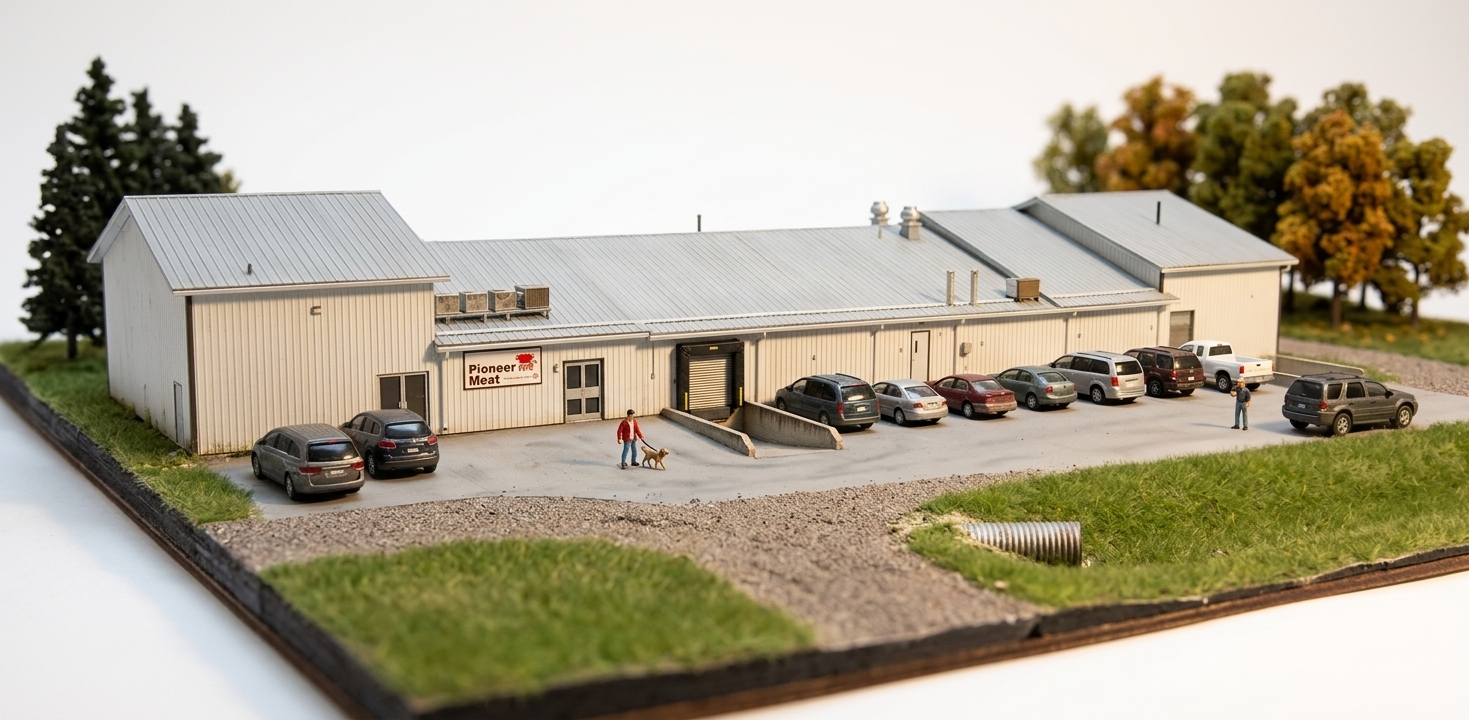
Operating in Altona, Manitoba for over 50 years, Pioneer Meat calls their farmer's sausage 'the true original.' The recipe has been maintained across three generations, and the smoking process uses the same hardwood technique the founders learned from their Mennonite elders. The sausage has a coarser grind and heavier smoke than most commercial versions. They ship across Canada to homesick Mennonites who cannot find proper farmer's sausage in their adopted cities.
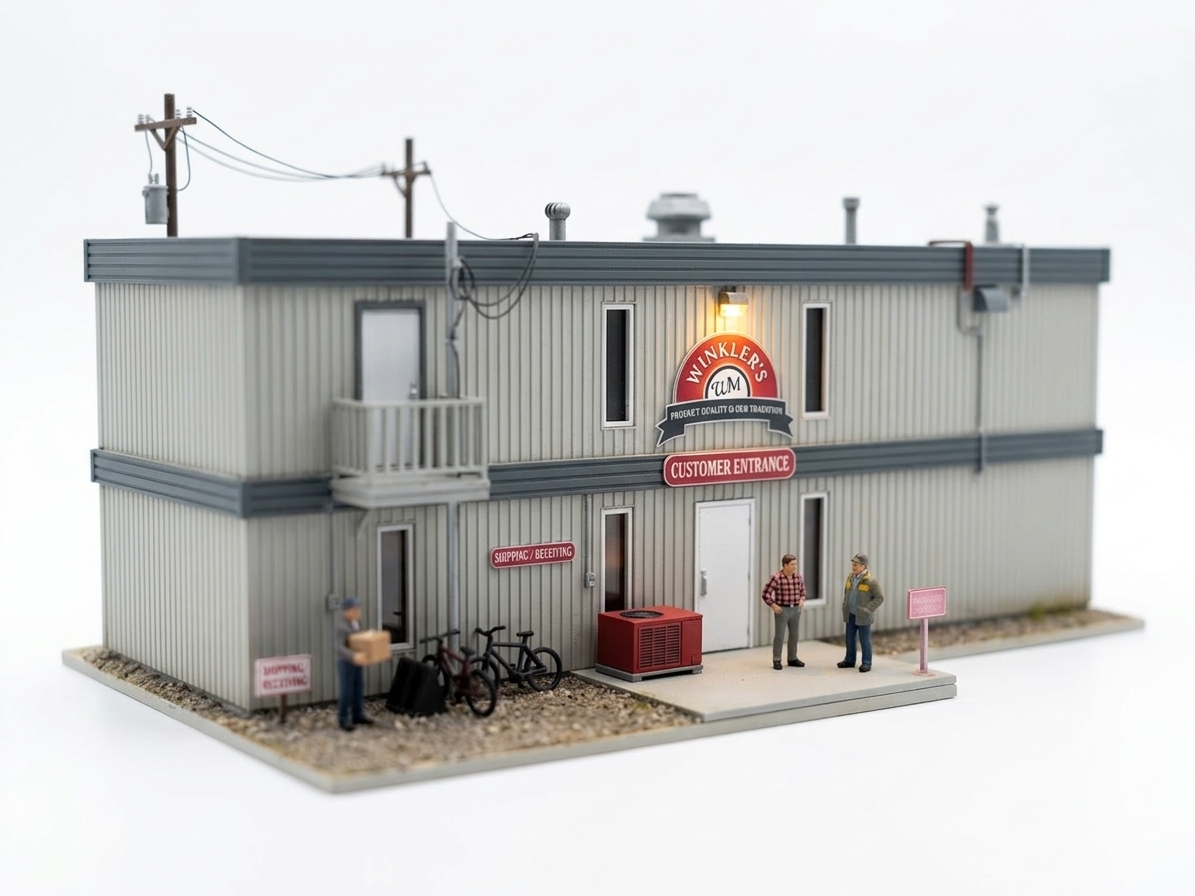
Winkler Meats
Winkler, Canada
A family-run meat processor in Winkler, Manitoba that turned a Mennonite farm recipe into a nationally distributed product. Their farmer's sausage is made with high-quality pork cuts, salt, pepper, and natural smoke. No gluten, no fillers. Available in grocery chains across Canada, from Walmart to independent butchers. They also produce cheese-stuffed and mini versions, but the original plain farmer's sausage remains the bestseller.
Where to Eat
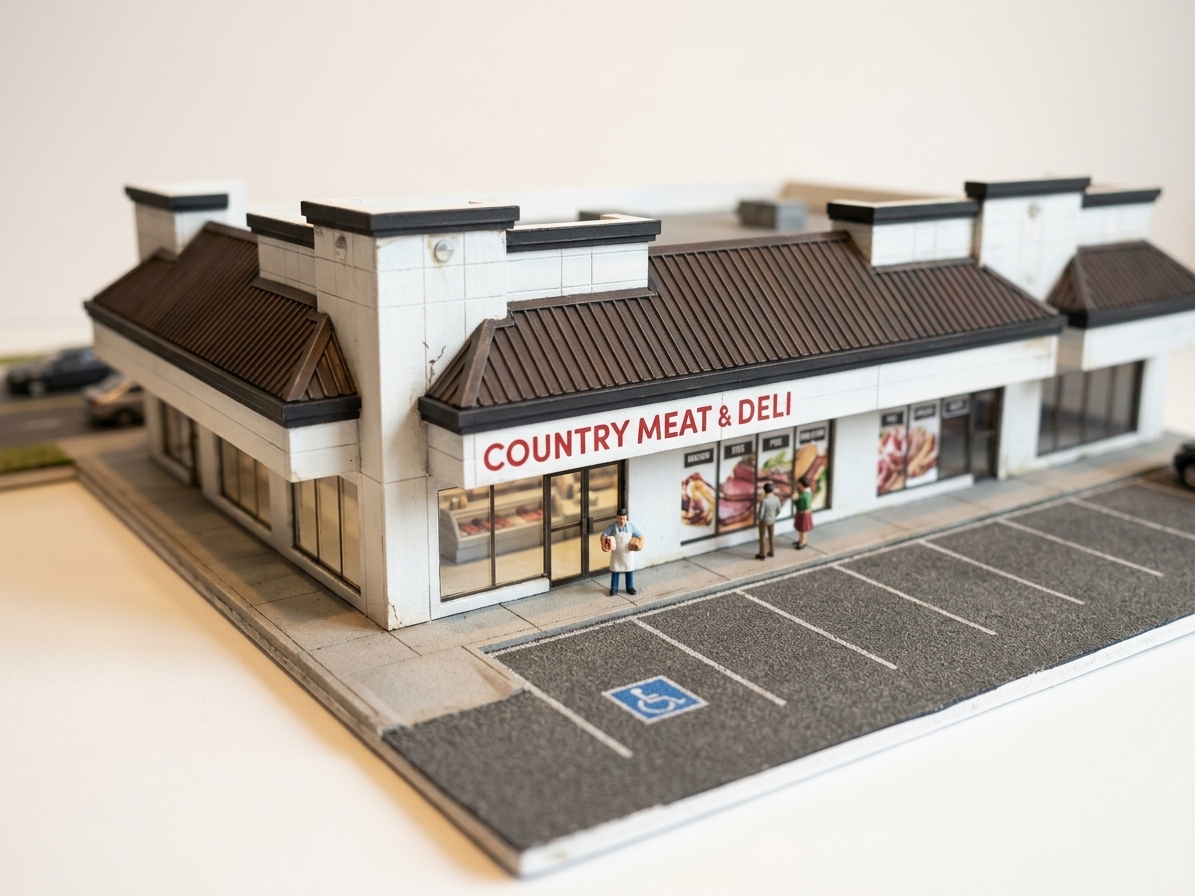
Country Meat & Sausage
Steinbach, Canada
A butcher shop and deli with locations in Blumenort and Steinbach. They smoke their own farmer's sausage on-site and sell it by the ring or by the box. The deli counter serves sandwiches and platters built around their smoked meats. Mennonites who moved away from southern Manitoba order bulk shipments and freeze them. During the holidays, the lineup stretches out the door.
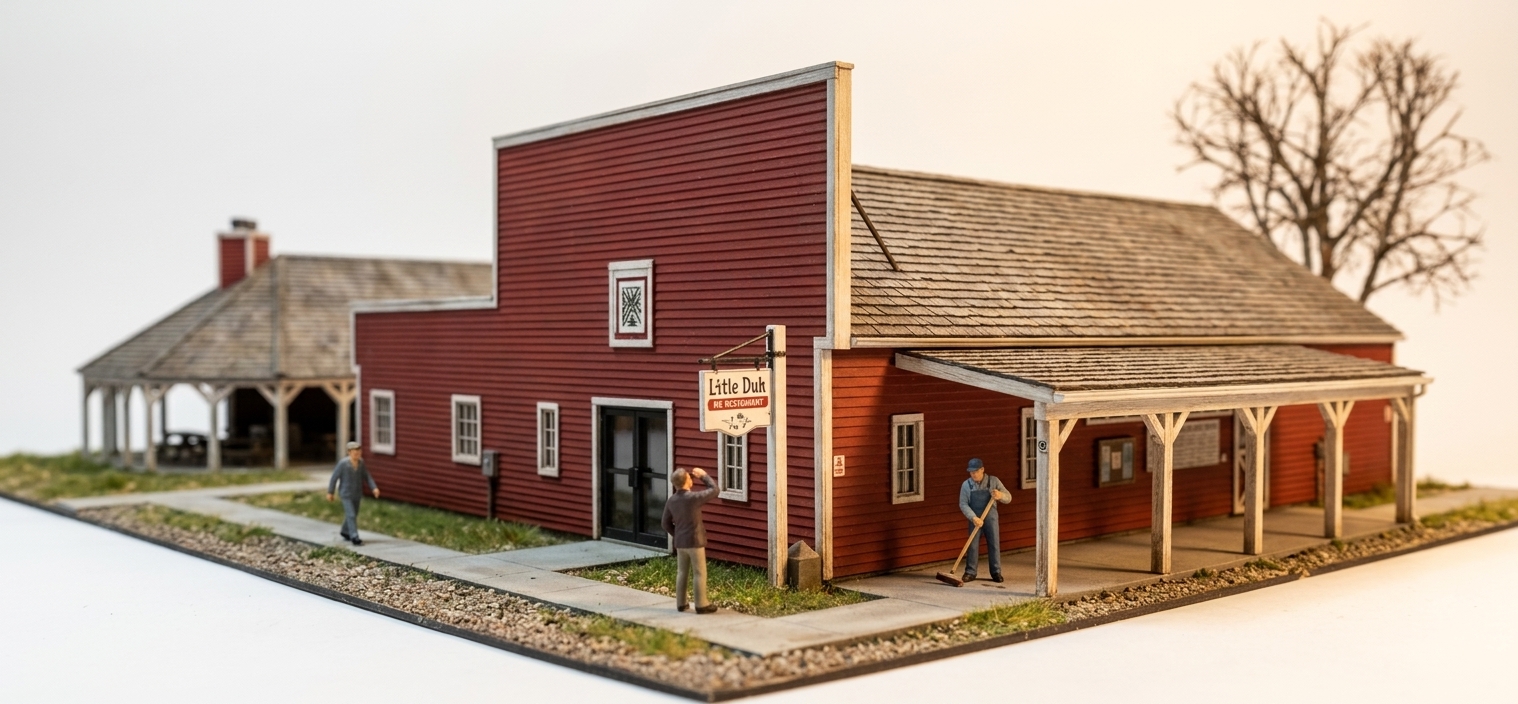
Livery Barn Restaurant
Steinbach, Canada
A cafeteria-style restaurant inside the Mennonite Heritage Village museum in Steinbach. The building is an actual converted livery barn with exposed beams and rough-hewn wood. The menu reads like a Mennonite grandmother's weekly rotation: vereniki with schmauntfatt, komst borscht, kielke, and thick coins of fried farmer's sausage. Open May through September, 11am to 2pm. You pay museum admission to get in, but the food alone justifies the ticket.
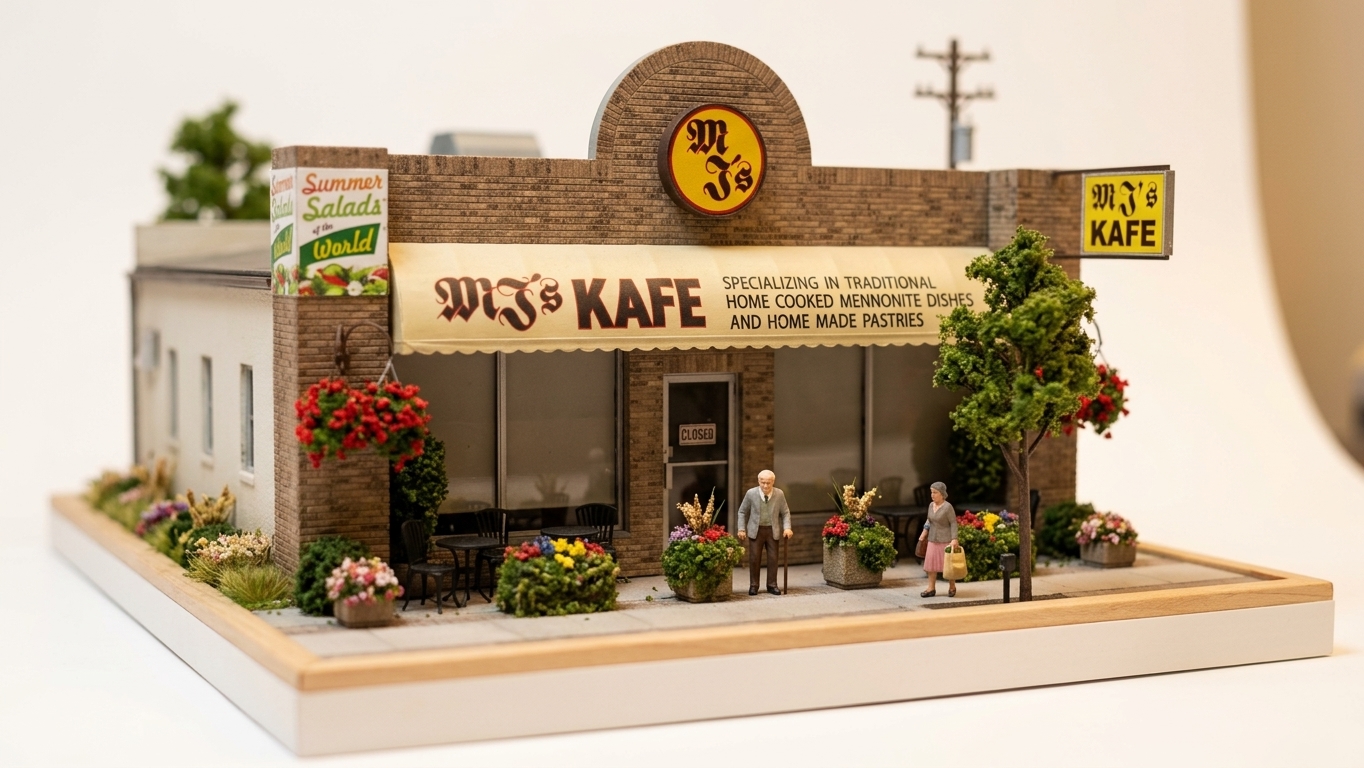
MJ's Kafe
Steinbach, Canada
A small restaurant on Steinbach's Main Street serving traditional Mennonite comfort food alongside standard diner fare. The farmer's sausage comes pan-fried with eggs for breakfast or alongside perogies for lunch. They grow herbs in their own garden and source meat from local processors. The kind of place where the waitress calls you 'hon' and the coffee never stops flowing.

The Don Restaurant
Steinbach, Canada
A Steinbach institution that has served the community for decades. Known for incorporating local farmer's sausage into both traditional and modern dishes. The sausage plate comes with fried onions, mustard, and a pile of home fries. It is the kind of place where farming families stop in after Saturday errands and order the same thing they ordered last week.