Droëwors
Gauteng, South Africa
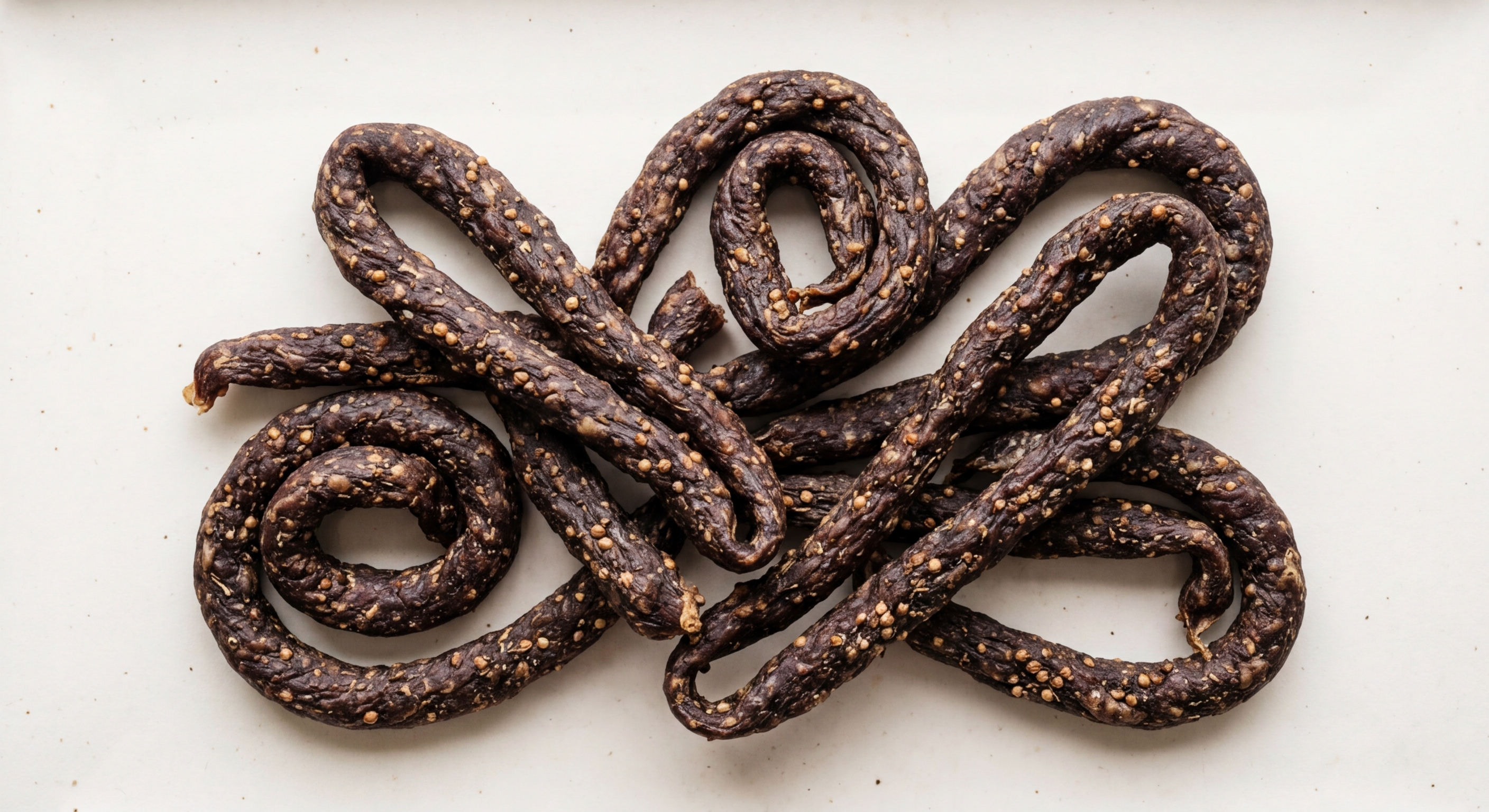
Droëwors is the dried version of boerewors: a thin beef sausage stuffed into narrow casings and hung in dry air for several days until firm, dark, and reduced to a fraction of its original weight. The name is Afrikaans for 'dry sausage'. No smoke, no heat, just airflow. The coriander dominates every bite, toasted and cracked before mixing, and the concentrated beef and fat hold the spice in a dense, chewy structure. South Africans eat droëwors as a snack at rugby matches, on road trips, at braais, and out of paper bags at airport shops on the way home.
History
Droëwors developed alongside boerewors from the same Dutch and German settler food traditions that arrived at the Cape in the 17th century. The technique of air-drying meat was already established in southern Africa through biltong, but droëwors applied the same principle to sausage. The thinner casing was the critical adaptation: a sausage dried in a thick casing would rot from the centre before the outside firmed. By using thin sheep or collagen casings and keeping the diameter narrow, farmers achieved reliable preservation without refrigeration. The dried sausage became trail food for voortrekkers moving inland during the 19th century. It travelled in saddlebags, required no cooking, and provided concentrated calories and protein on the move. Today, South African law includes droëwors under the same regulations that govern boerewors, requiring a minimum meat content and limiting fat. The product moved from farmhouse production to commercial butcheries in the 20th century, and from butcheries to supermarket biltong bars and vacuum-packed retail formats. Airport shops stock it nationwide as the last South African food purchase before boarding.
Ingredients
Preparation
Beef and fat are coarsely minced together, never fine-ground. Coriander seeds go into a dry pan first: toasted until fragrant, then cracked in a mortar rather than ground to powder. The coarse texture is the point. Cloves, nutmeg, pepper, salt, and vinegar go in with the meat, and everything is mixed by hand until the fat is evenly distributed. The mixture goes into the thinnest available casings, usually 18mm to 22mm sheep gut or collagen, and is linked into short lengths of 20 to 30 centimetres. The sausages hang in a cool, dry, well-ventilated space for three to seven days depending on humidity. No refrigeration, no smoke, no brine. The surface darkens and firms, the casing tightens around the meat, and the sausage loses 40 to 50 percent of its starting weight as moisture leaves. The finished droëwors snaps cleanly when bent and shows a dark red-brown interior with visible fat and coriander.
Taste
Coriander, then beef. The toasted coriander is not a background note here: it arrives first and stays through the finish. The fat carries the clove and nutmeg, both present but subdued. The vinegar tang is brief, more of a brightness than a sourness. The salt is high enough to preserve, which means each stick delivers a full hit of seasoning. Game variants with kudu or springbok have a leaner, more mineral quality underneath the same spice profile.
Texture
Dense and chewy, with a clean snap when the stick breaks. Fresh droëwors bends before it breaks; properly dried droëwors breaks straight through without crumbling. The casing has fused to the meat during drying and is not removed before eating. Fat pieces are visible and distributed through the cross-section. The interior is dry enough that no moisture transfers to the hand when held. Over-dried droëwors crumbles at the break; under-dried droëwors feels soft and has a slick surface.
Rituals & Traditions
The airport bag
South Africans leaving the country buy vacuum-packed droëwors at the airport as a final act before boarding. It goes into the carry-on or checked luggage, declared at customs where required. Expats receive it as a care package. The joke is that you can smell a South African's suitcase. The droëwors arrives at the destination drier than when it left, because the aircraft hold removes more moisture during the flight.
Pre-fire snack at the braai
Boerewors does not go on the braai until the coals are ready, which takes thirty to forty minutes from lighting. During that time, the designated braai master and any early guests eat droëwors standing around the fire. It is the built-in waiting food: no preparation, no plates, no cutlery. Sticks are pulled from a paper bag and eaten by hand while the coals whiten.
Store it dry
Droëwors continues to lose moisture after purchase. Store it in a breathable paper or cloth bag, never sealed plastic, unless vacuum-packed for long-term storage. Sealed in plastic, the droëwors sweats and the surface goes slick. A paper bag in a cool spot keeps it in good condition for several weeks. If the surface develops white blooms, that is dried fat, not mould, and the droëwors is fine to eat.
Recipes
Droëwors Braaibroodjie
Droëwors
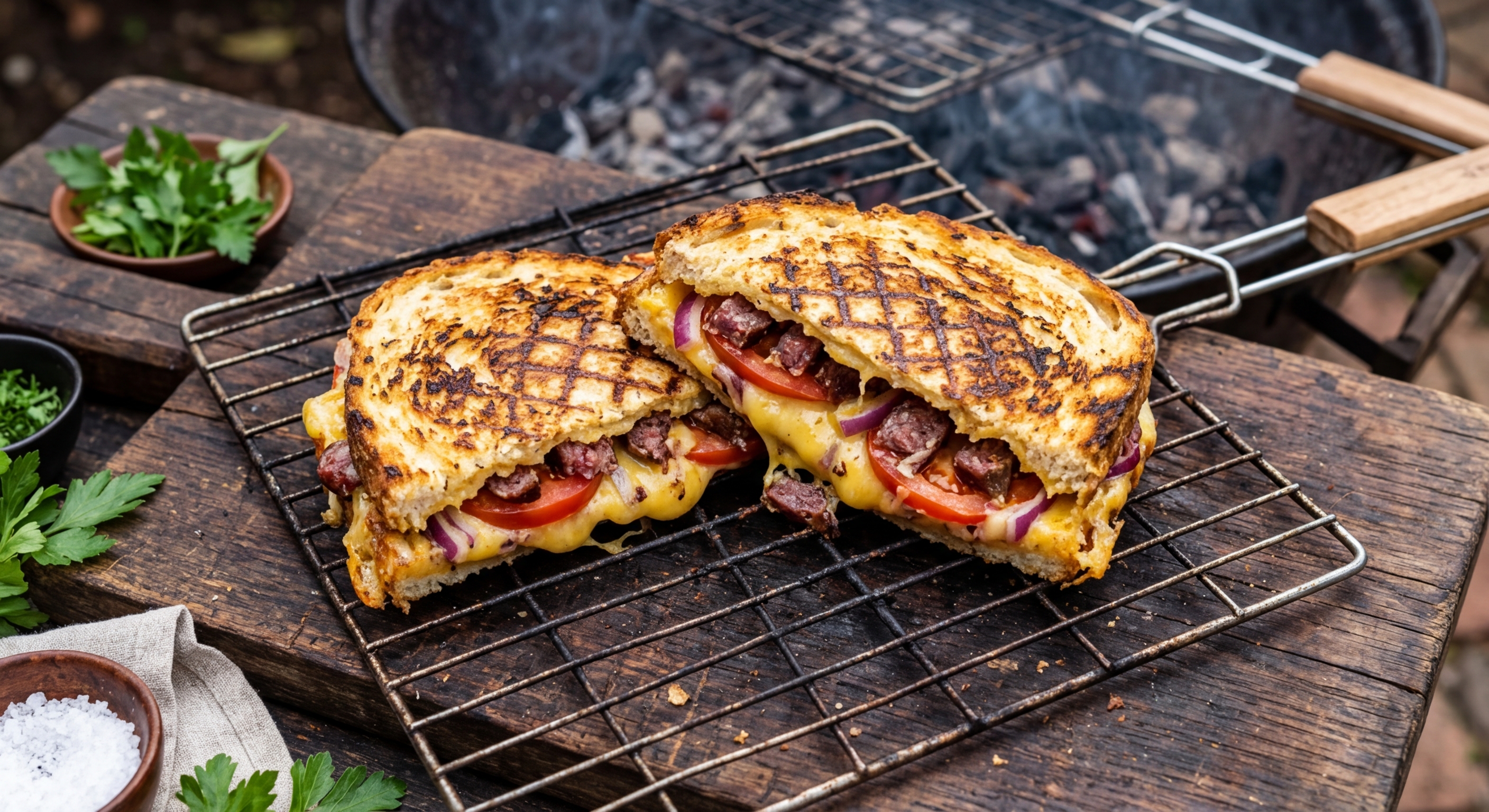
A braaibroodjie is a South African grilled cheese sandwich made directly on the braai grid. This version packs droëwors pieces, mature cheddar, tomato, and onion into white bread, buttered on the outside, and grills it over the dying coals after the meat comes off. The droëwors rehydrates slightly in the heat and the coriander blooms into the melted cheese.
Droëwors Cream Cheese Dip
Droëwors
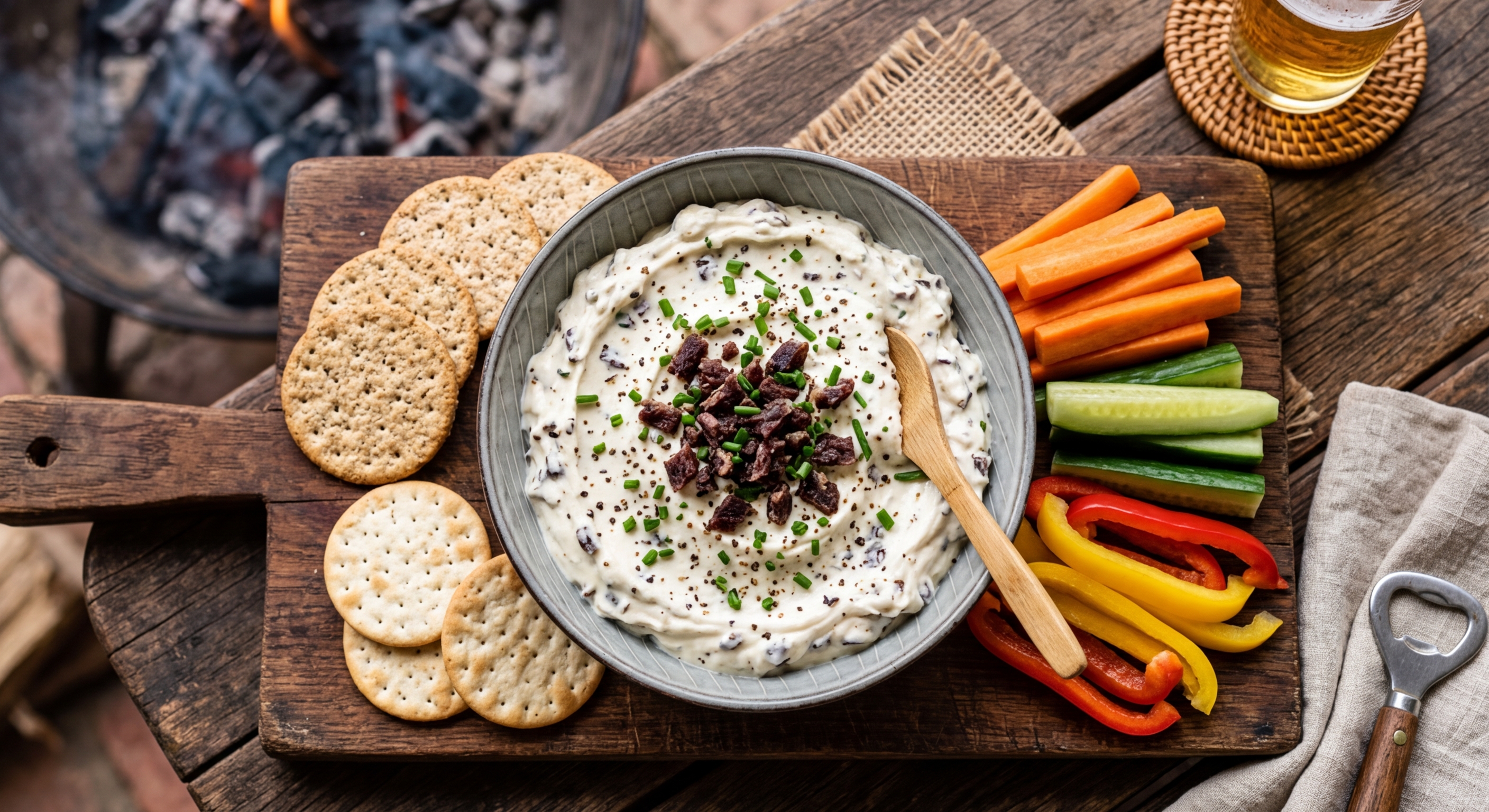
A braai snack dip made by folding finely chopped droëwors into cream cheese with chives, lemon juice, and black pepper. The droëwors provides salt and coriander heat, so the cream cheese needs nothing else heavy. Serve it with crackers, raw vegetables, or chips alongside the snack board while the coals build.
Droëwors Potjie
Droëwors
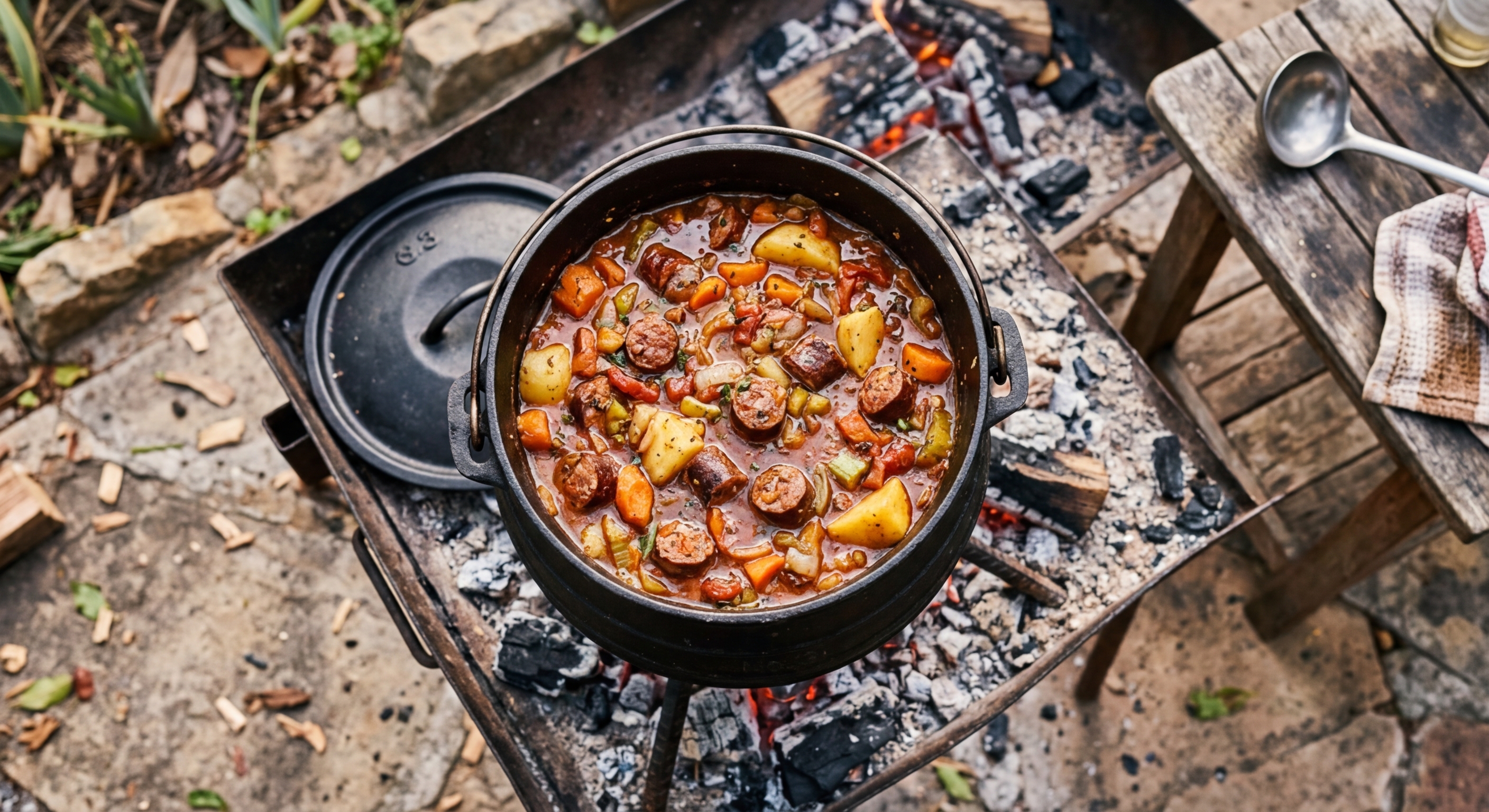
A potjie is a cast-iron pot stew cooked over coals, and this version uses rehydrated droëwors as the base protein alongside root vegetables, tinned tomatoes, and chakalaka. The dried sausage releases concentrated beef and coriander into the broth as it cooks, which no fresh sausage can replicate. The potjie sits on low coals for two hours without stirring. That is the rule.
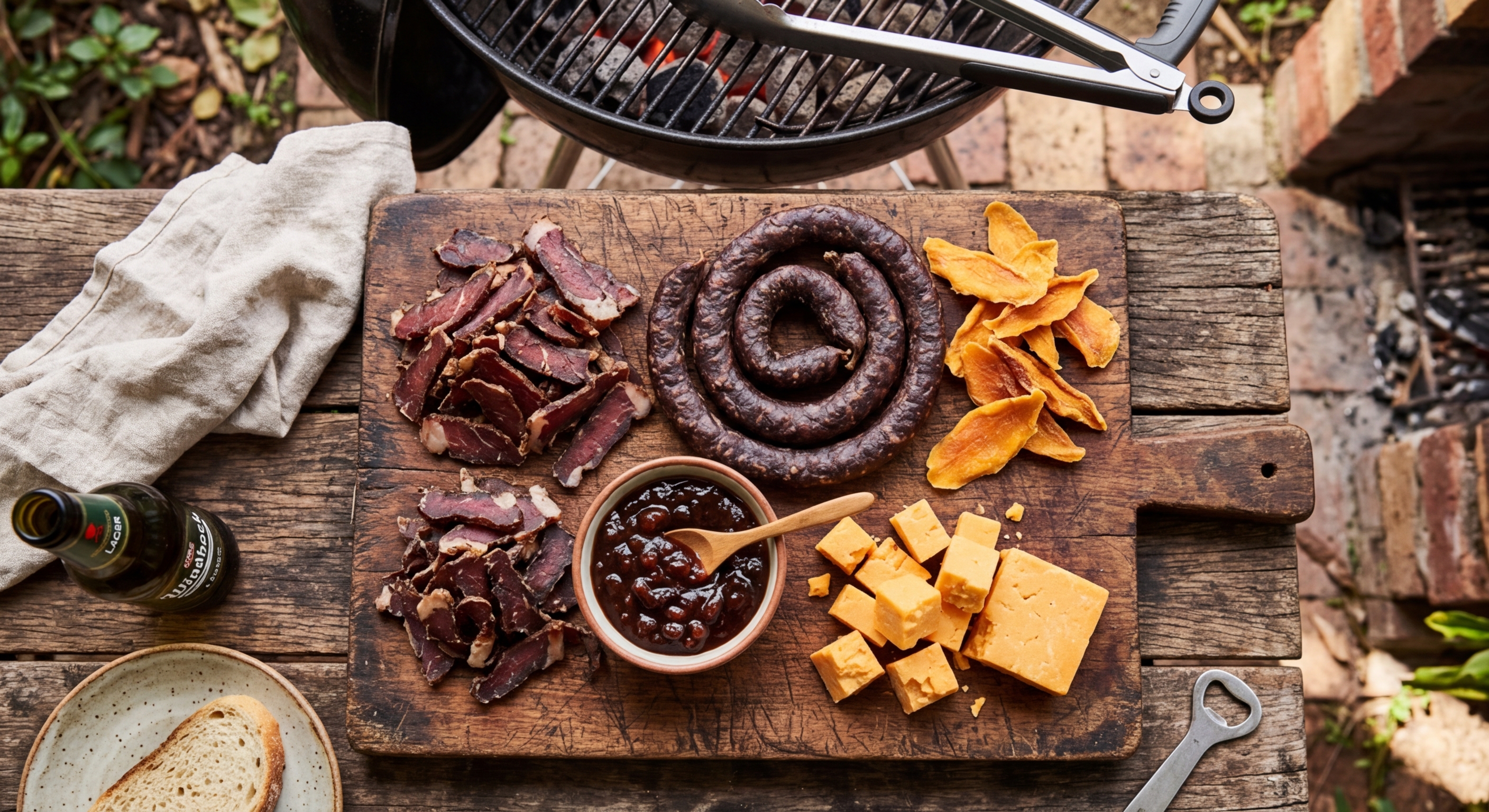
Droëwors Snack Board
Droëwors
A South African snack board built around droëwors sticks, biltong slices, mature cheddar, dried fruit, and Mrs Ball's chutney. No cooking. The board is assembled ten minutes before guests arrive and picked at all afternoon. This is the table every South African braai sets up during the hour it takes for the coals to reach temperature.
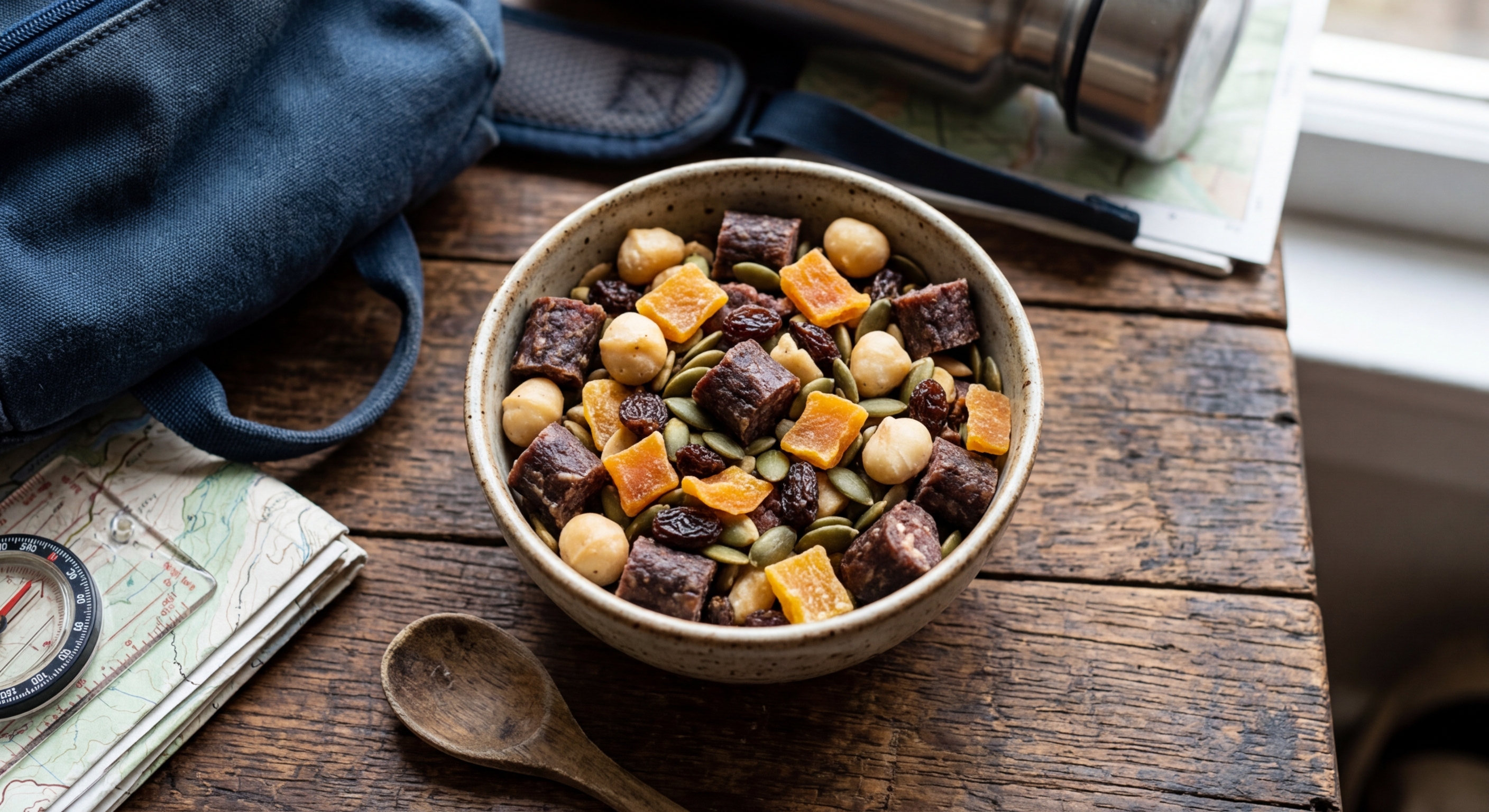
Droëwors Trail Mix
Droëwors
A hiking and road trip snack mix built around droëwors sticks broken into bite-sized pieces, dried mango, macadamia nuts, pumpkin seeds, and raisins. No cooking, no refrigeration. This is the food South Africans take into the bush, up mountain trails, and across the Karoo on long drives. The droëwors carries enough salt that the mix needs nothing else added.
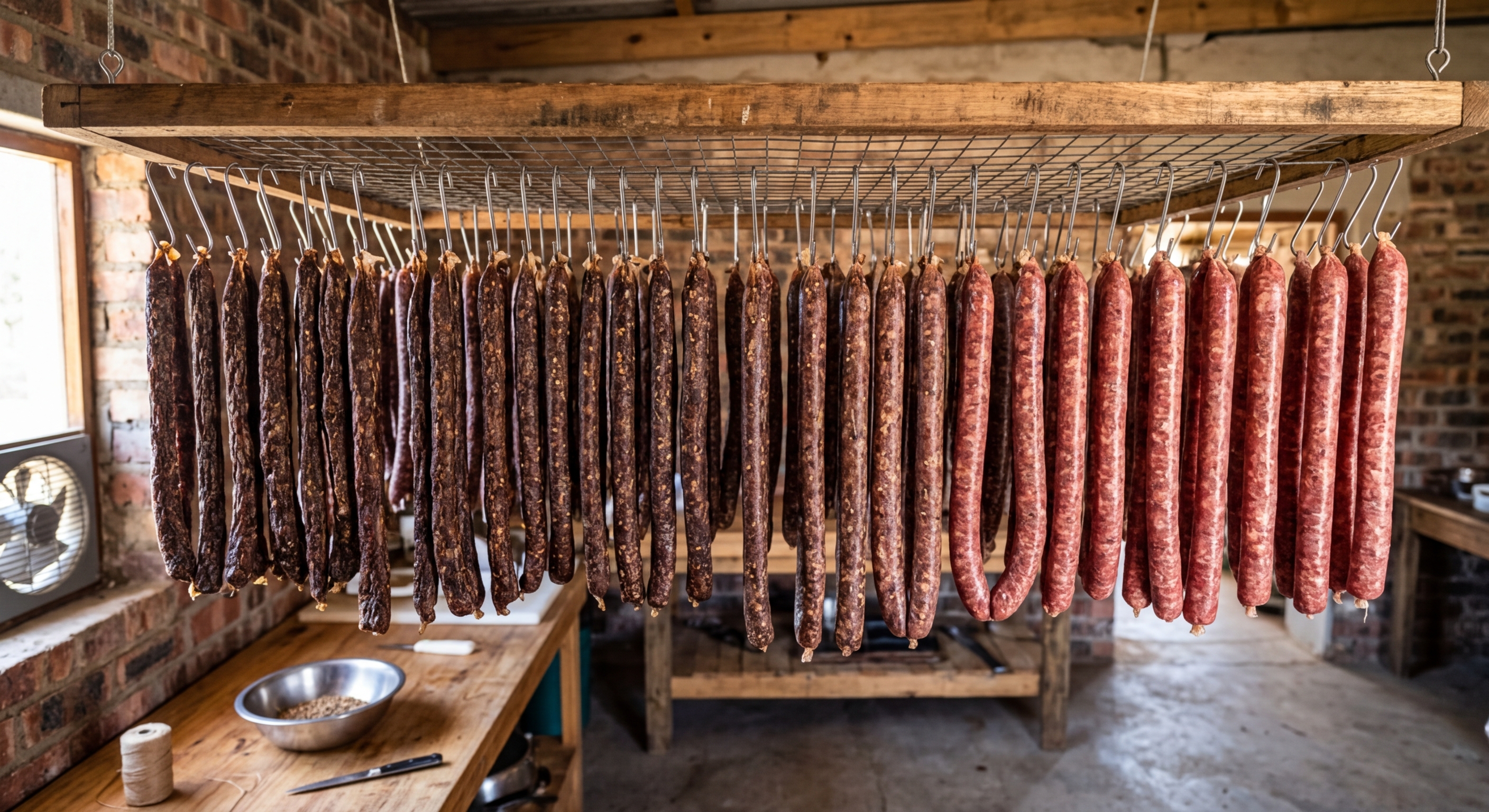
Homemade Droëwors
Droëwors
Making droëwors at home requires a meat grinder, a sausage stuffer, thin casings, and somewhere dry and well-ventilated to hang the sausages for several days. The process is not difficult. It is mostly waiting. This recipe follows the traditional Highveld method: coarsely ground beef, toasted coriander, and a drying period of four to six days depending on the climate.
On the Map
Where to Eat
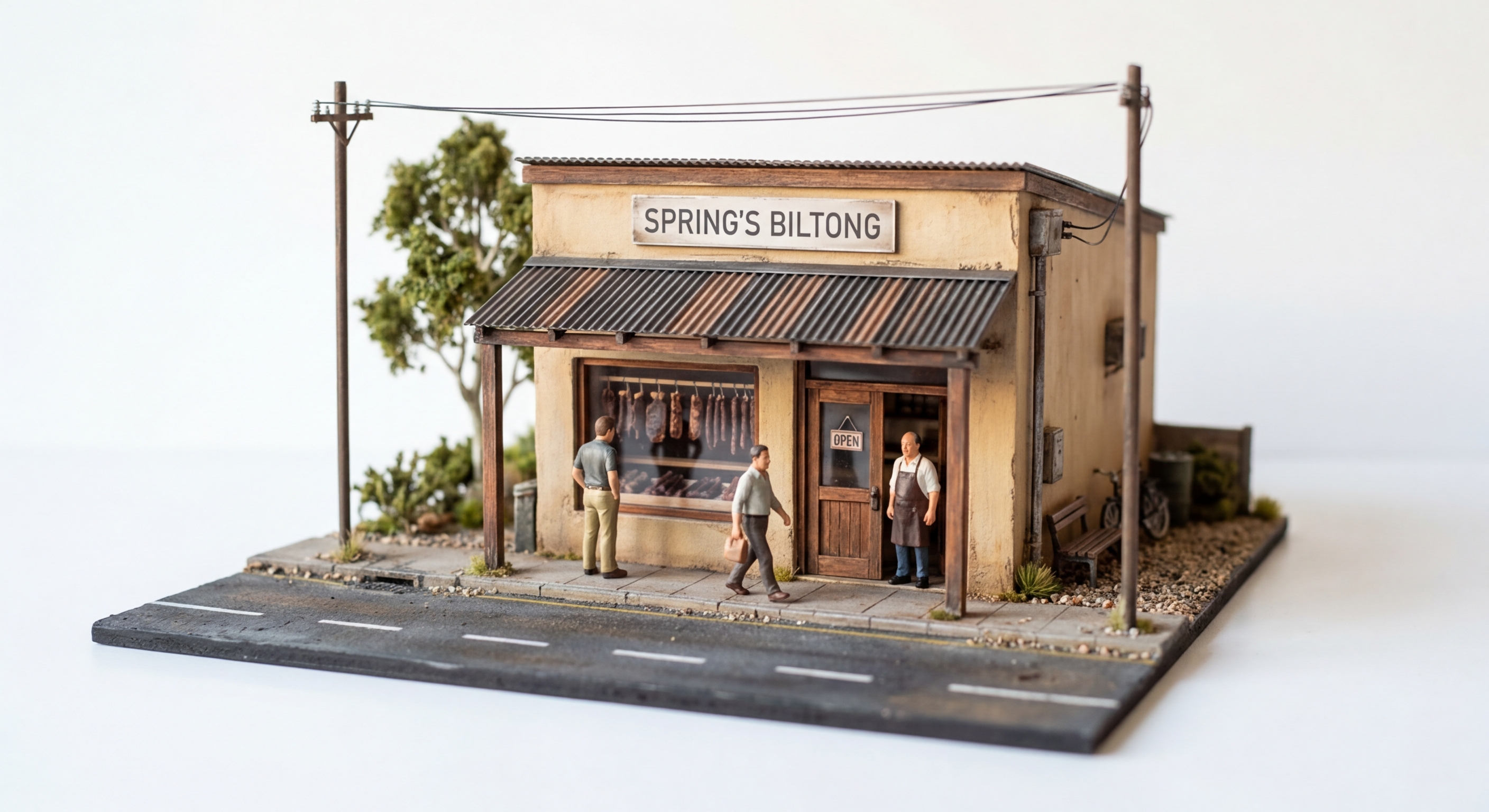
Bobaas Biltong
Springs, South Africa
A Gauteng institution on Ellis Drive in Springs, on the East Rand. Bobaas has been making beef biltong and droëwors for decades and supplies both walk-in customers and online orders across the province. Their droëwors is the coriander-forward Highveld style: dry, crumbly at the break, with a dark exterior from several days of air-drying. Game droëwors from venison and kudu also come in and out depending on the season. Free delivery applies to Gauteng orders above a certain threshold.
Food Lover's Market Fourways
Johannesburg, South Africa
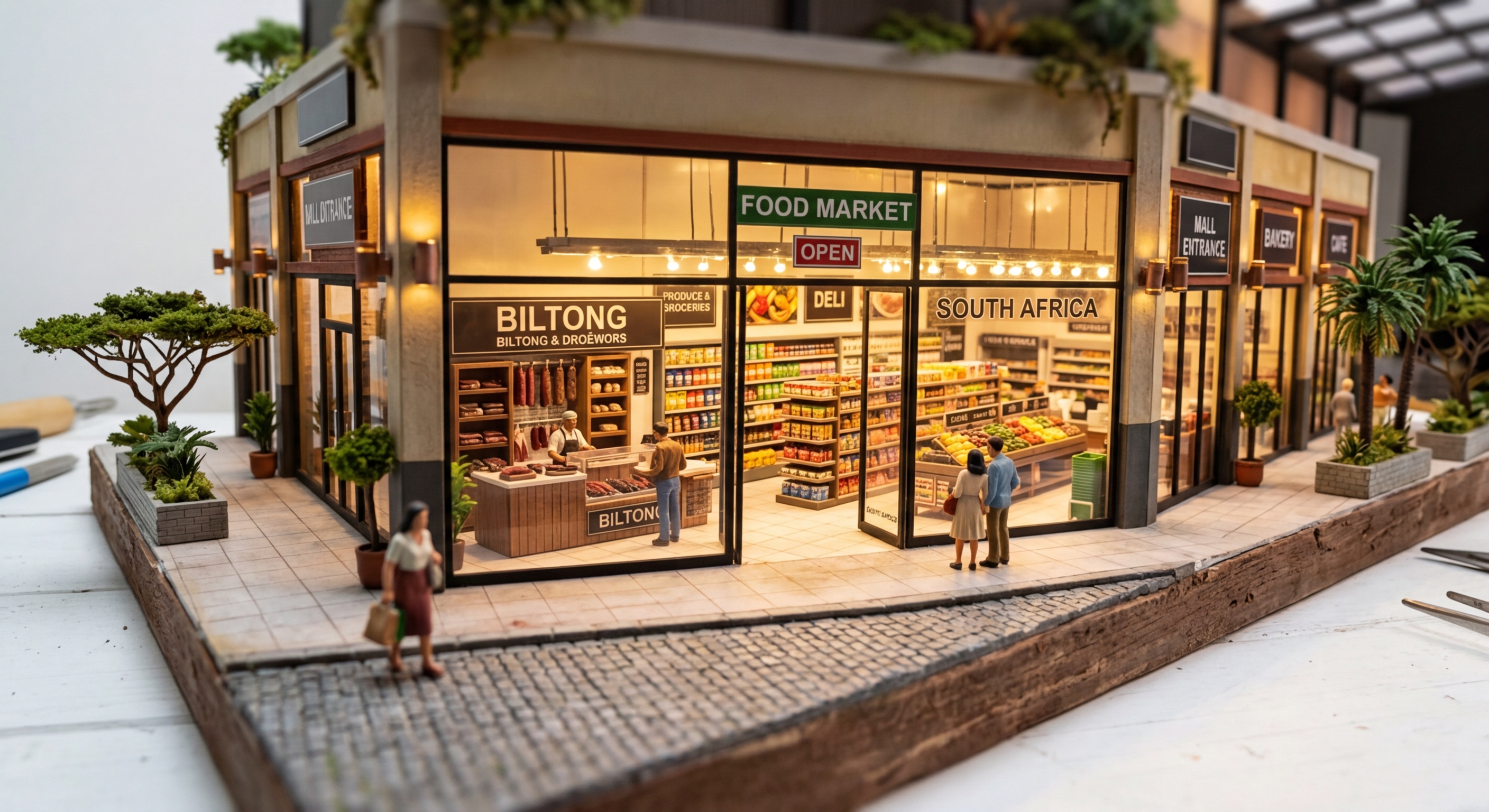
The Fourways Mall branch of Food Lover's Market operates a Biltong Bar inside its gourmet butchery, where droëwors is cut and weighed at the counter. The house spice blend is made by Freddie Hirsch Spices and includes coriander, pepper, and a splash of vinegar. Droëwors is produced in-store and sold alongside wet and dry biltong, chilli bites, and snapsticks. The counter draws a steady crowd from the northern Johannesburg suburbs on weekend mornings before rugby matches and braais.
Joubert & Monty
Cape Town, South Africa
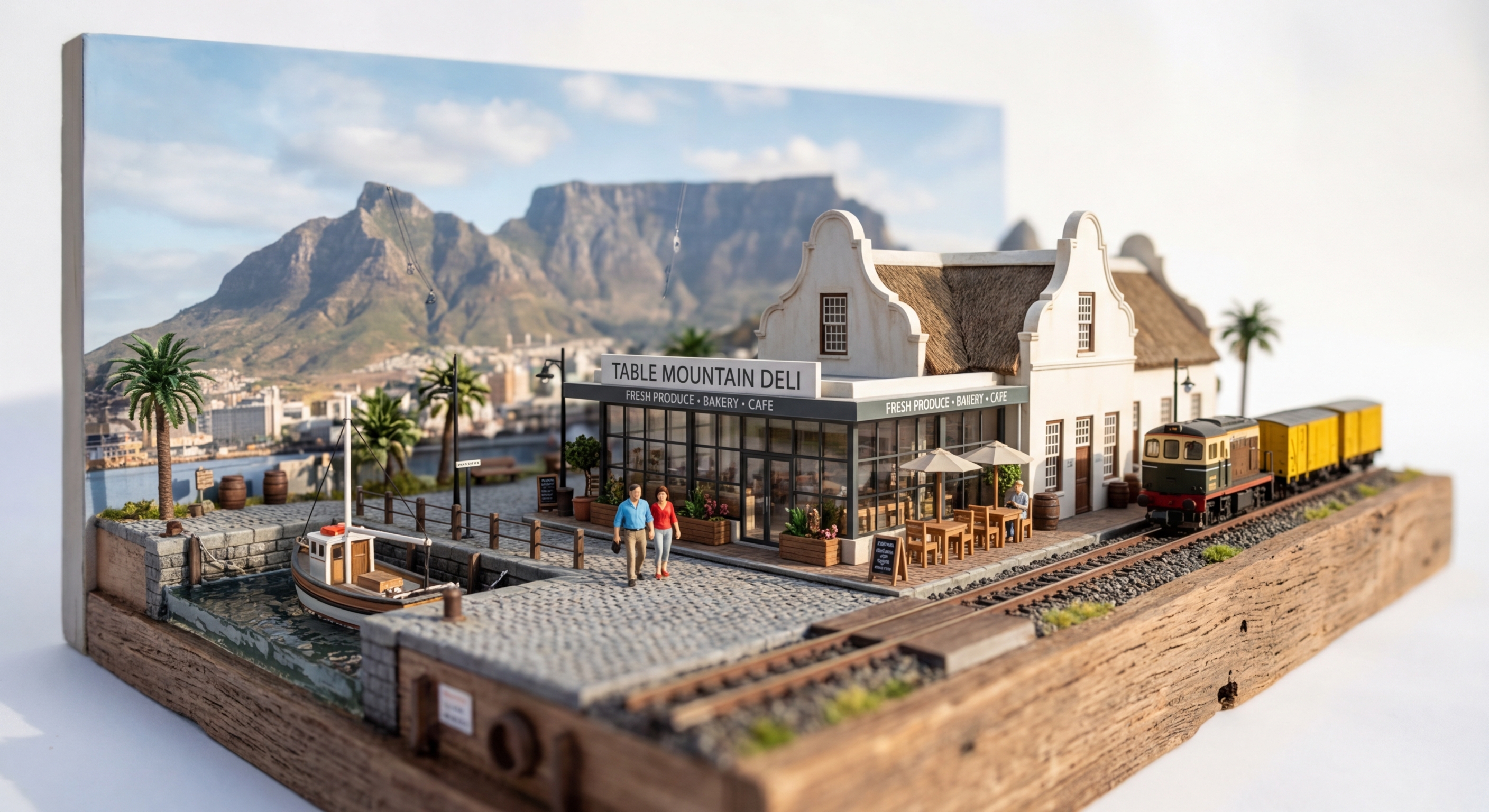
Founded in 1942 and now running stalls in major Cape Town shopping centres including the V&A Waterfront, Canal Walk, and Cavendish Square, Joubert & Monty is one of South Africa's most recognised biltong and droëwors brands. Their droëwors comes in beef and ostrich variants, sold by weight from glass-fronted counters. Tourists and locals both queue here, and the product turns over fast enough that the droëwors is never old.