Doktorskaya Kolbasa
Докторская колбаса
Moscow, Russia
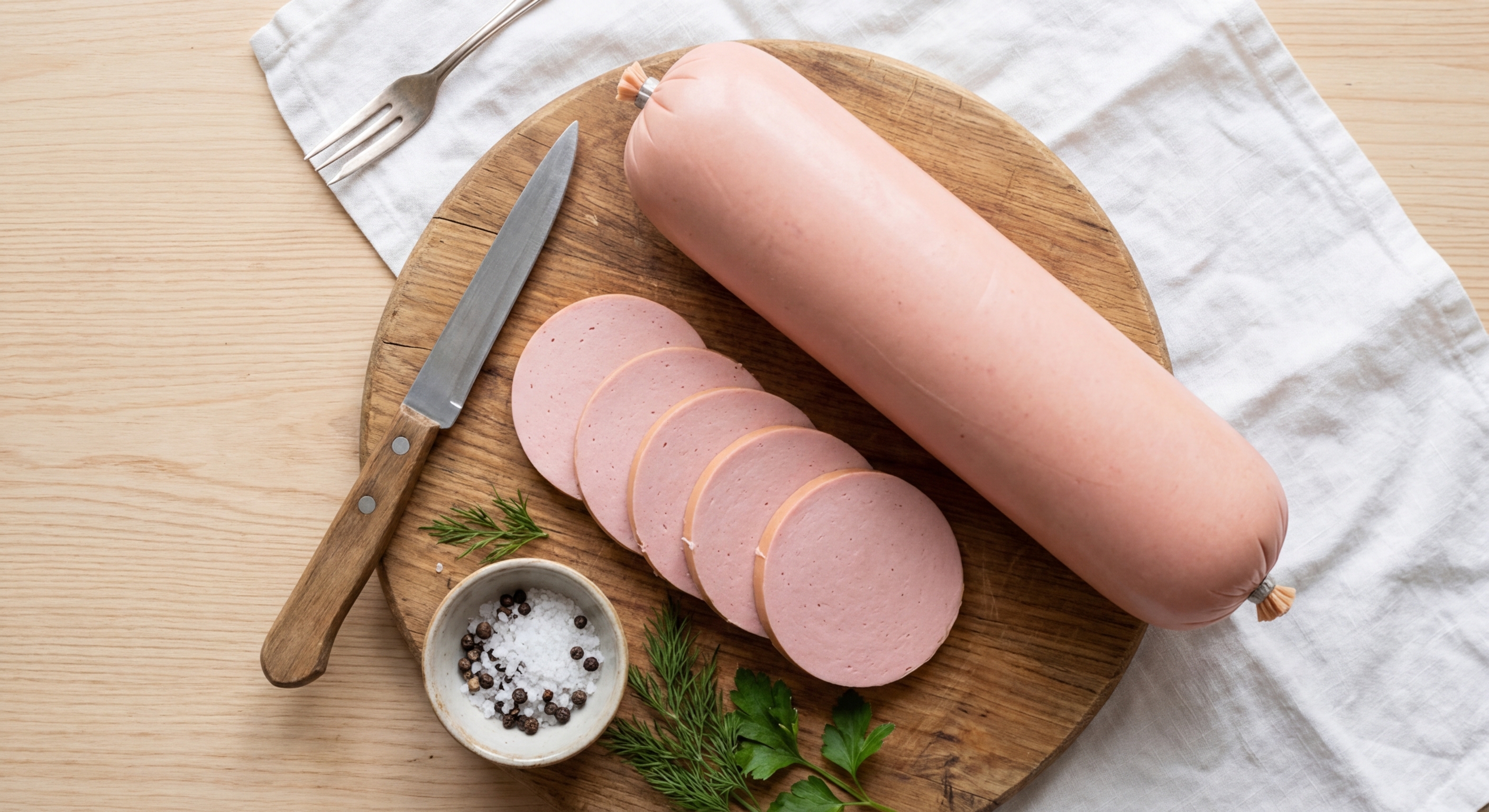
The sausage of the Soviet Union. Doktorskaya Kolbasa (Doctor's Sausage) was created in 1936 under a government directive to produce a nutritious food for people recovering from illness, specifically those whose health had been ruined by tsarist deprivation. The name was not ironic. The People's Commissariat of Food Industry wrote the original GOST recipe: beef, pork, eggs, milk, salt, sugar, a touch of nutmeg and cardamom. No fillers. No fat scraps. A pale pink log of emulsified protein, smooth as paste, sold by the kilogram from behind glass counters in state gastronoms across eleven time zones. Every Soviet citizen ate it. Most ate it often. It was cheap, always available, and tasted of nothing offensive. Sliced cold on buttered black bread, it fed workers, schoolchildren, and pensioners alike. Decades of nostalgia are baked into every bite for anyone who grew up in the USSR or its successor states.
History
In 1936, nutritionist Anastas Mikoyan led the effort to industrialize Soviet food production. Doktorskaya was one of several standardized products developed that year alongside Soviet champagne, mayonnaise, and canned goods. The recipe, codified as GOST 23670, specified exact proportions: 25% lean beef, 70% semi-fat pork, 3% eggs, 2% cow's milk. The salt, sugar, nutmeg, and cardamom were measured to fractions of a gram. This uniformity was the point. A Doktorskaya bought in Vladivostok tasted the same as one bought in Minsk. During World War II, factory production scaled to feed troops and evacuees. In the postwar decades, it became the everyday protein of Soviet life. The GOST recipe held through the 1970s and 80s. After the Soviet collapse, manufacturers began substituting chicken, starch, and soy protein to cut costs. Traditional GOST-compliant versions still exist, labeled accordingly, and are more expensive. Russians of a certain age read the ingredient list before buying.
Ingredients
Preparation
The beef and pork are ground separately, chilled, then combined and emulsified with eggs, milk, and the spice mixture in a bowl chopper until a smooth, homogeneous farce forms. The mixture is stuffed into large-diameter casings (typically 100-120mm), tied into logs 30-40cm long, and cooked in water at 75-80°C until the internal temperature reaches 70°C. The logs cool in cold water, then chill overnight. The result is a firm, sliceable cylinder. Most Russians eat it cold, straight from the fridge, sliced 5-8mm thick. Pan-frying is the second-most common preparation: slices in a dry or lightly oiled pan until the cut faces brown and curl slightly at the edges.
Taste
Mild, faintly sweet, and clean. The nutmeg and cardamom are present but restrained, a whisper rather than a statement. The overall flavor is more about texture than spice: smooth, slightly salty protein with a vague milkiness from the eggs and milk in the emulsion. The taste is not aggressive in any direction. That is both its limitation and the reason hundreds of millions of people grew up eating it.
Texture
The texture is the defining characteristic. Smooth, close-grained, no visible fat or meat fibers. When sliced cold, it holds its shape cleanly. When pan-fried, the surface develops a faint crust while the interior stays dense and moist. Cheaper modern versions with starch are spongier and release more water when cooked. GOST-compliant versions have a tighter, firmer bite.
Rituals & Traditions
Read the label
Russians who grew up in the Soviet era check the ingredient list. GOST 23670-compliant Doktorskaya contains beef, pork, eggs, milk, salt, sugar, nutmeg, and cardamom. If the list includes soy protein, starch, or chicken, it is a cheaper substitute. Both exist. They are not the same thing.
Butter first
On a buterbrod, the butter goes on before the sausage, not after. Cold, thick, edge-to-edge. The butter is not optional. Russians who skip it are not making a buterbrod, they are making a sandwich, which is different.
The New Year's salad
Olivier salad with Doktorskaya is the New Year's Eve dish across Russia and the former Soviet republics. Families make it on December 31 in enormous bowls. No other sausage substitutes. Some modern cooks use ham, but the traditionalists insist on Doktorskaya. The salad without the sausage is a different dish.
Do not freeze the log
Freezing Doktorskaya breaks the emulsion. On thawing, the texture turns grainy and watery. Buy only what you will eat within 5 days of opening.
Recipes
Buterbrod s Doktorskoy
Doktorskaya Kolbasa
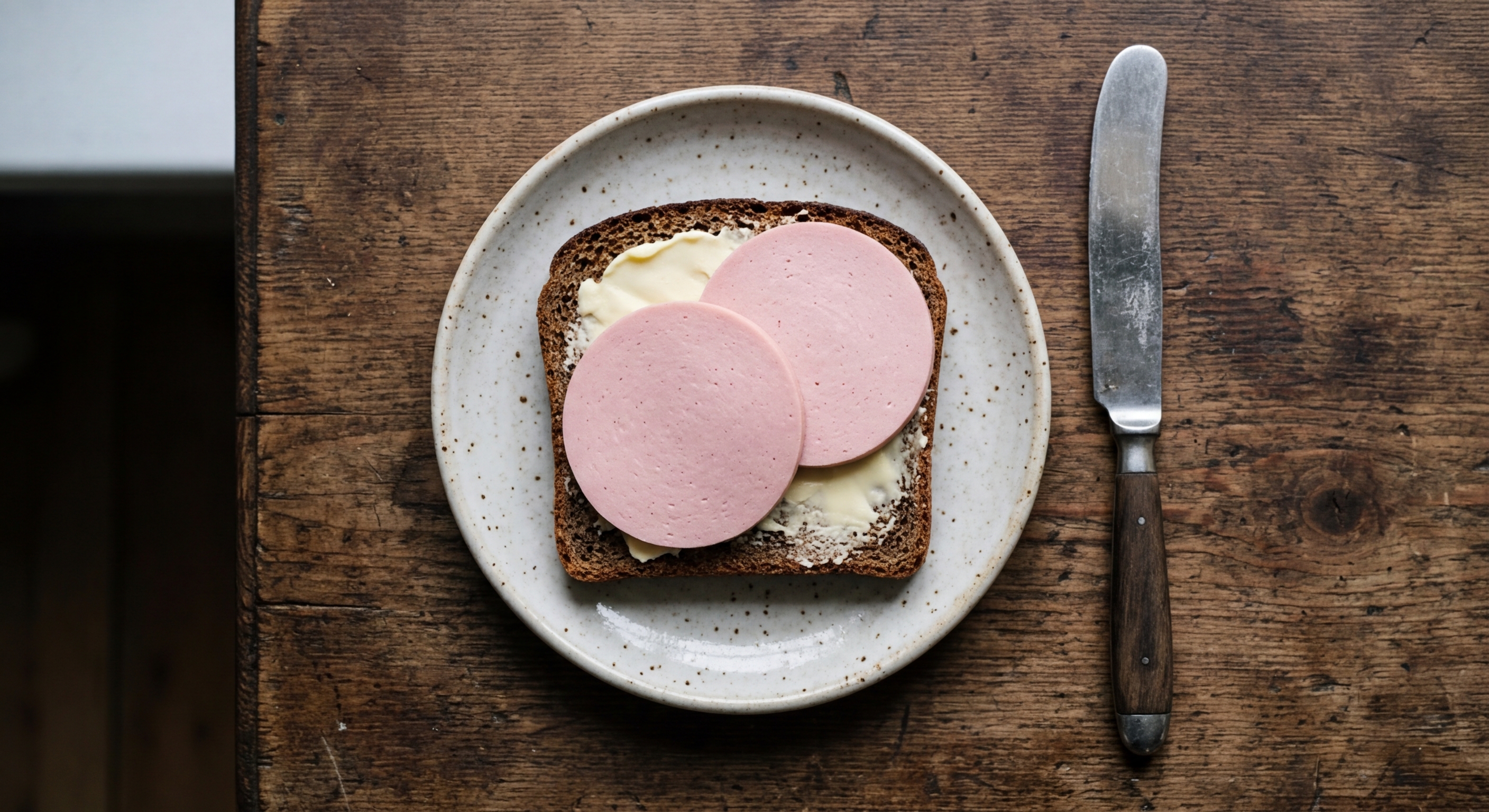
The Soviet open sandwich, reduced to its elements: black rye bread, cold unsalted butter, two slices of Doktorskaya Kolbasa. No recipe in this collection is simpler. No recipe has been eaten more times. Generations of Soviet schoolchildren left for class with this in hand. The butter must be cold and thick. The bread must be rye. The sausage goes on top, not folded.
Doktorskaya v Klyare
Doktorskaya Kolbasa
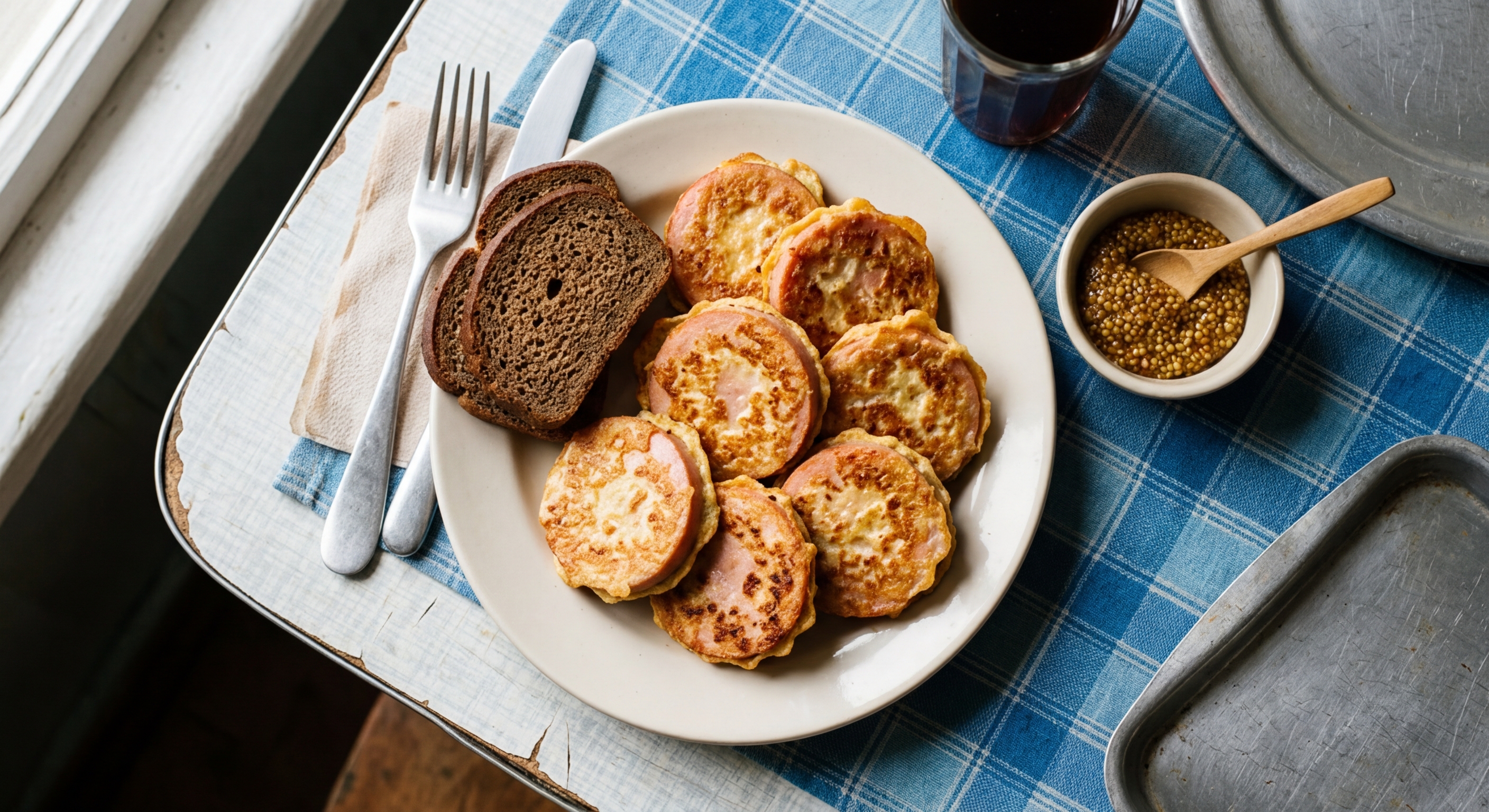
Thick slices of Doktorskaya Kolbasa dipped in egg batter and fried until the coating is golden and the sausage inside is hot. A Soviet-era school canteen preparation that turns a cold deli item into something substantial. The batter seals in moisture and adds the crunch the smooth sausage lacks on its own. Serve with sour cream or ketchup.
Makarony po-Flotski s Kolbasoy
Doktorskaya Kolbasa
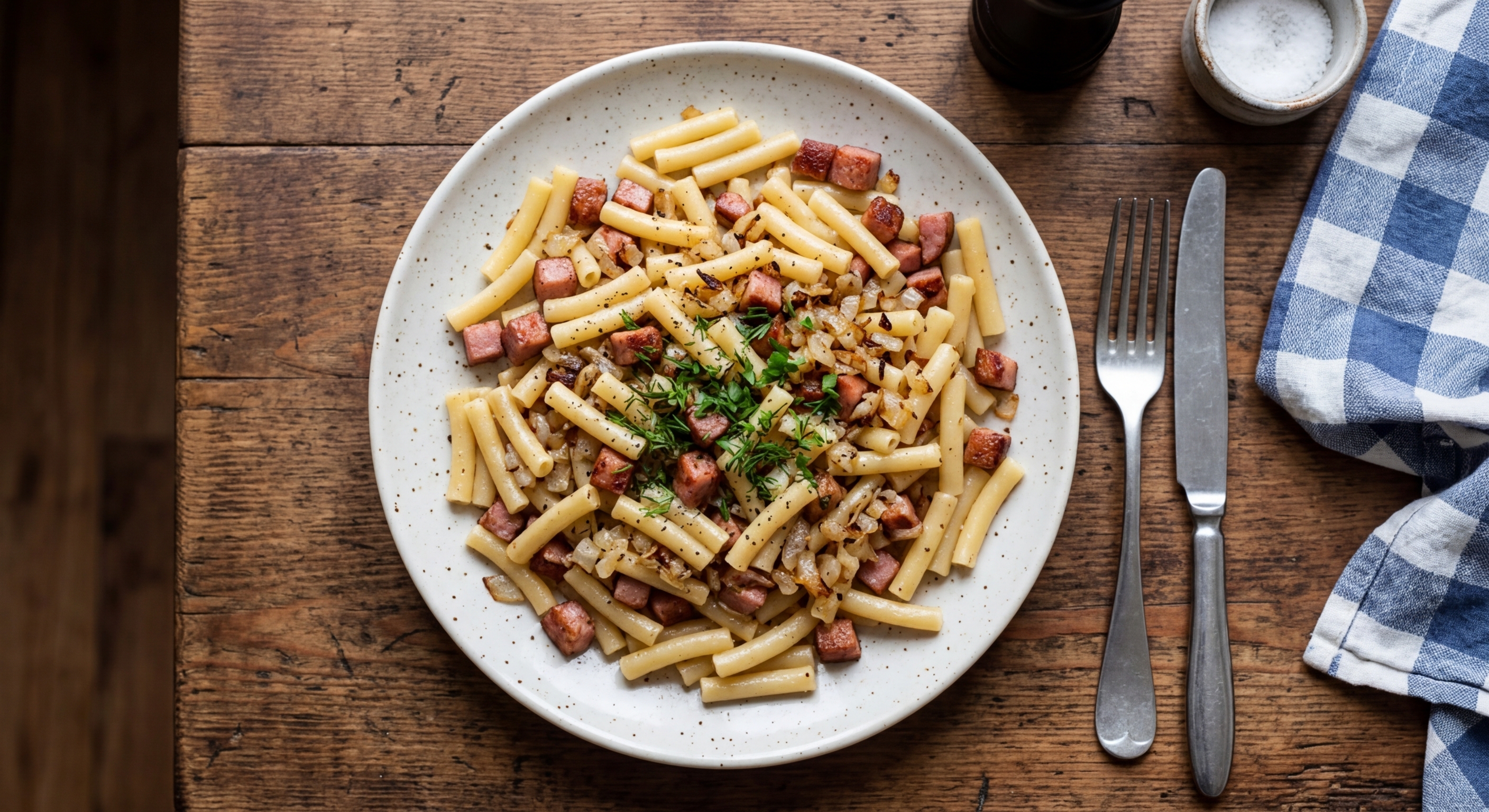
Navy-style pasta: a Soviet standby named for Russian naval mess halls, where it was made with minced meat. The household version uses whatever is available, and Doktorskaya Kolbasa, chopped and fried with onion, works as well as anything. Short pasta, fried diced sausage, onion, a ladleful of pasta water to bind it. Five ingredients, fifteen minutes. This was lunch in ten thousand Soviet apartments every weekday.
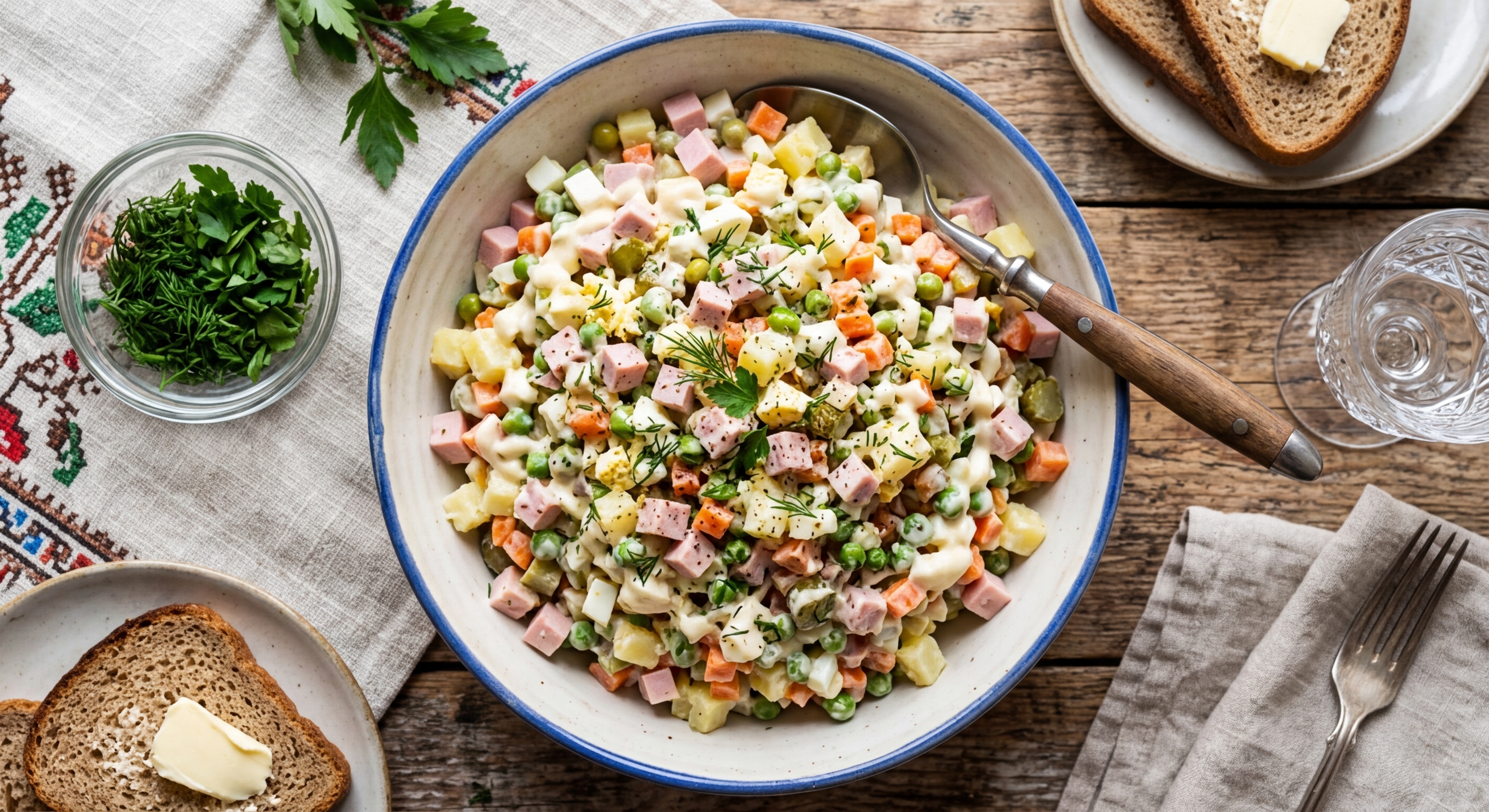
Olivye s Kolbasoy
Doktorskaya Kolbasa
The Soviet New Year's salad. Every December 31, across eleven time zones and beyond, families make Olivier in vast bowls and leave it in the refrigerator overnight. The base is diced Doktorskaya Kolbasa, boiled potatoes, carrots, pickled cucumbers, canned peas, hard-boiled eggs, all bound in mayonnaise. The French chef Lucien Olivier invented a distant ancestor of this at the Hermitage restaurant in Moscow in the 1860s. What Soviet cooks made with it bears little resemblance to the original, but it became the dish that marks the passage from one year to the next.
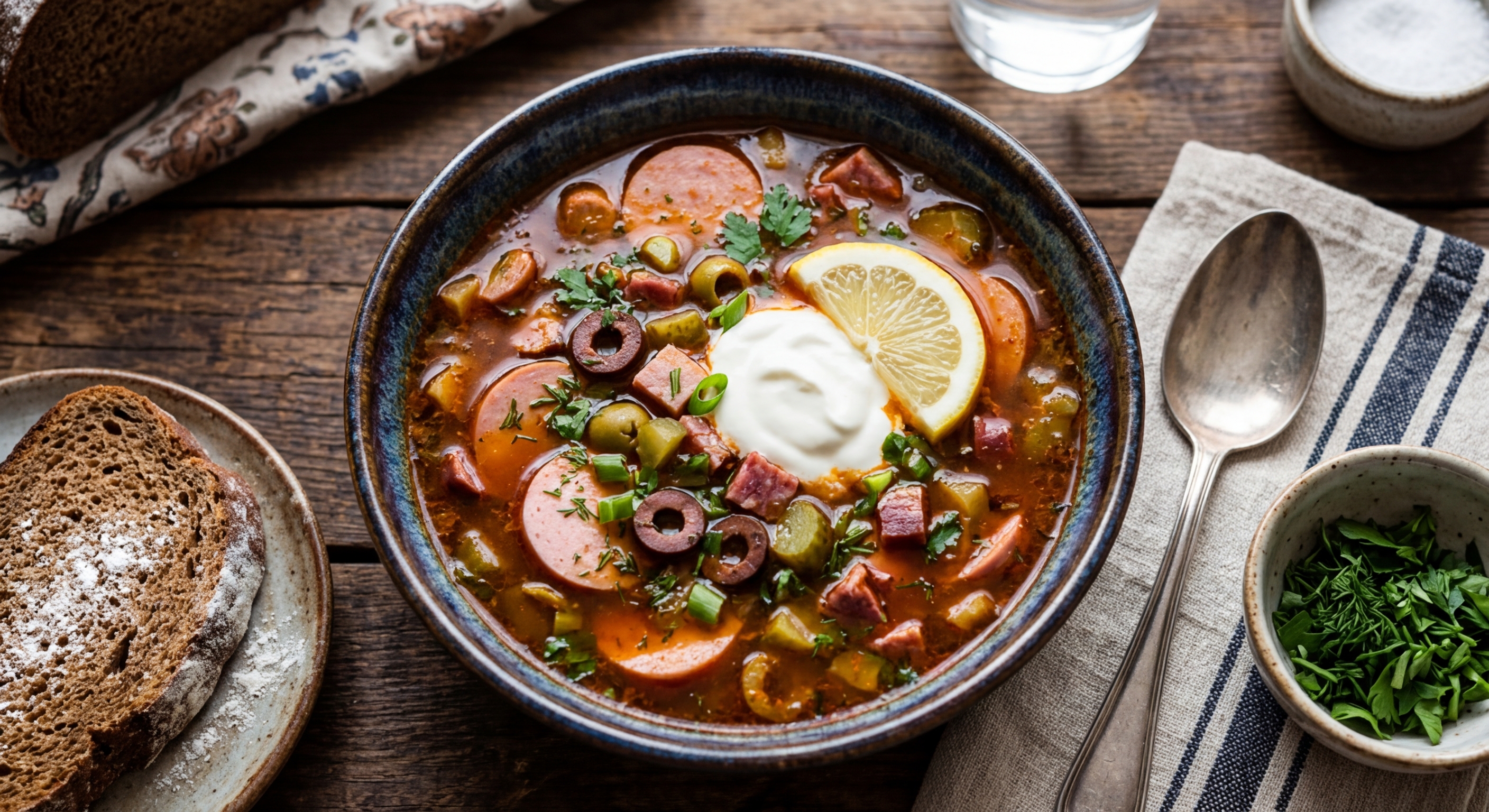
Solyanka s Kolbasoy
Doktorskaya Kolbasa
Solyanka is Russia's most argued-over soup: briny, sour, thick with meats and pickles, finished with a slice of lemon and a spoonful of sour cream. The meat version traditionally draws on whatever cured and cooked meats are in the house, and Doktorskaya Kolbasa is the standard Soviet-era addition. The pickled cucumbers are not optional. The sour brine from the cucumber jar goes into the pot too. This soup rewards leftover hunting.
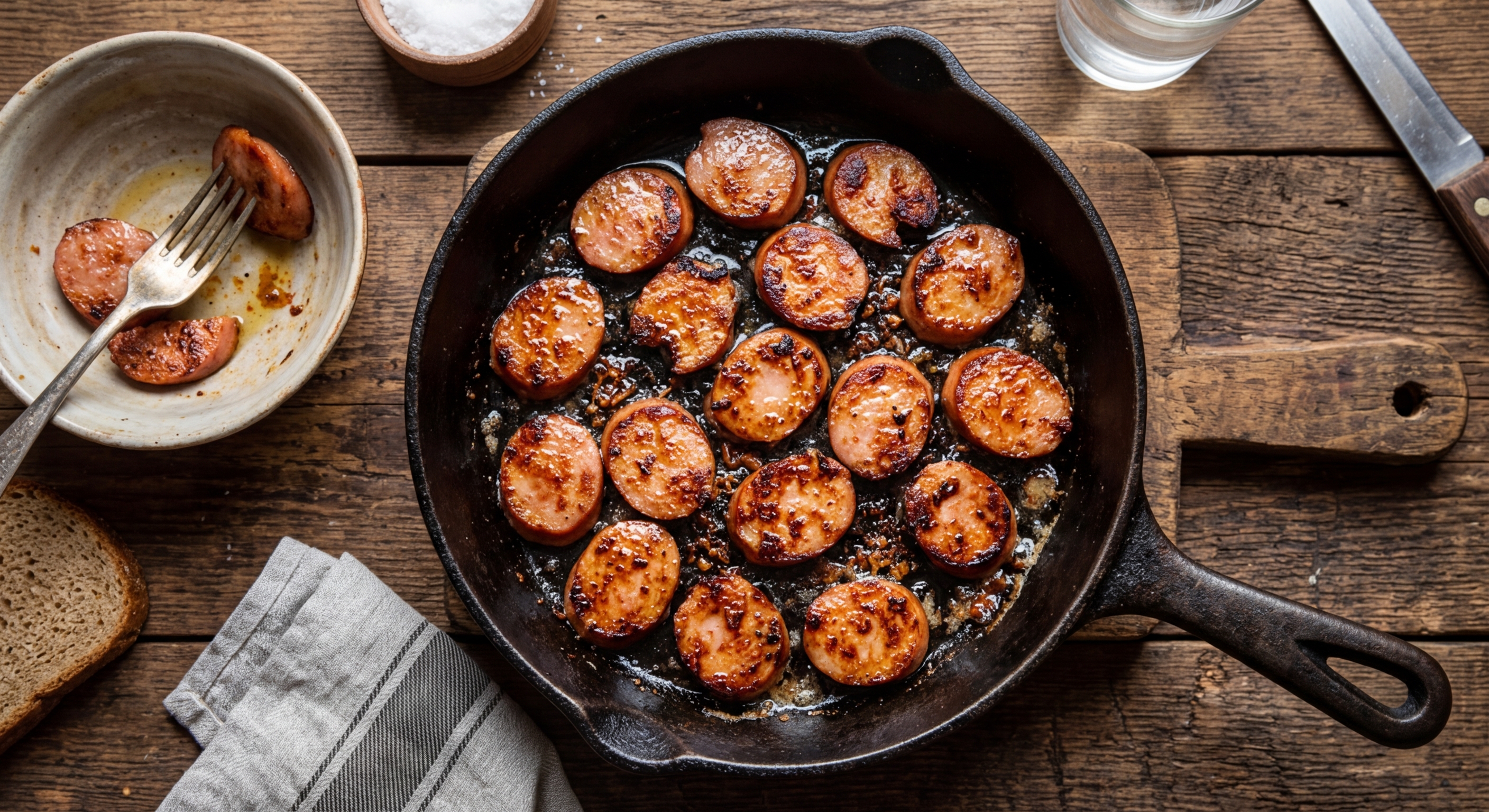
Zharenaya Doktorskaya
Doktorskaya Kolbasa
Pan-fried Doktorskaya Kolbasa slices with browned, curled edges and a crust on each face. The transformation is significant: the bland cold sausage develops a savory, caramelized exterior. Serve with fried or mashed potatoes, a fried egg alongside, or piled on black bread. This is the hot version of the buterbrod, the version you make when you have five minutes and a pan.
On the Map
Where to Eat
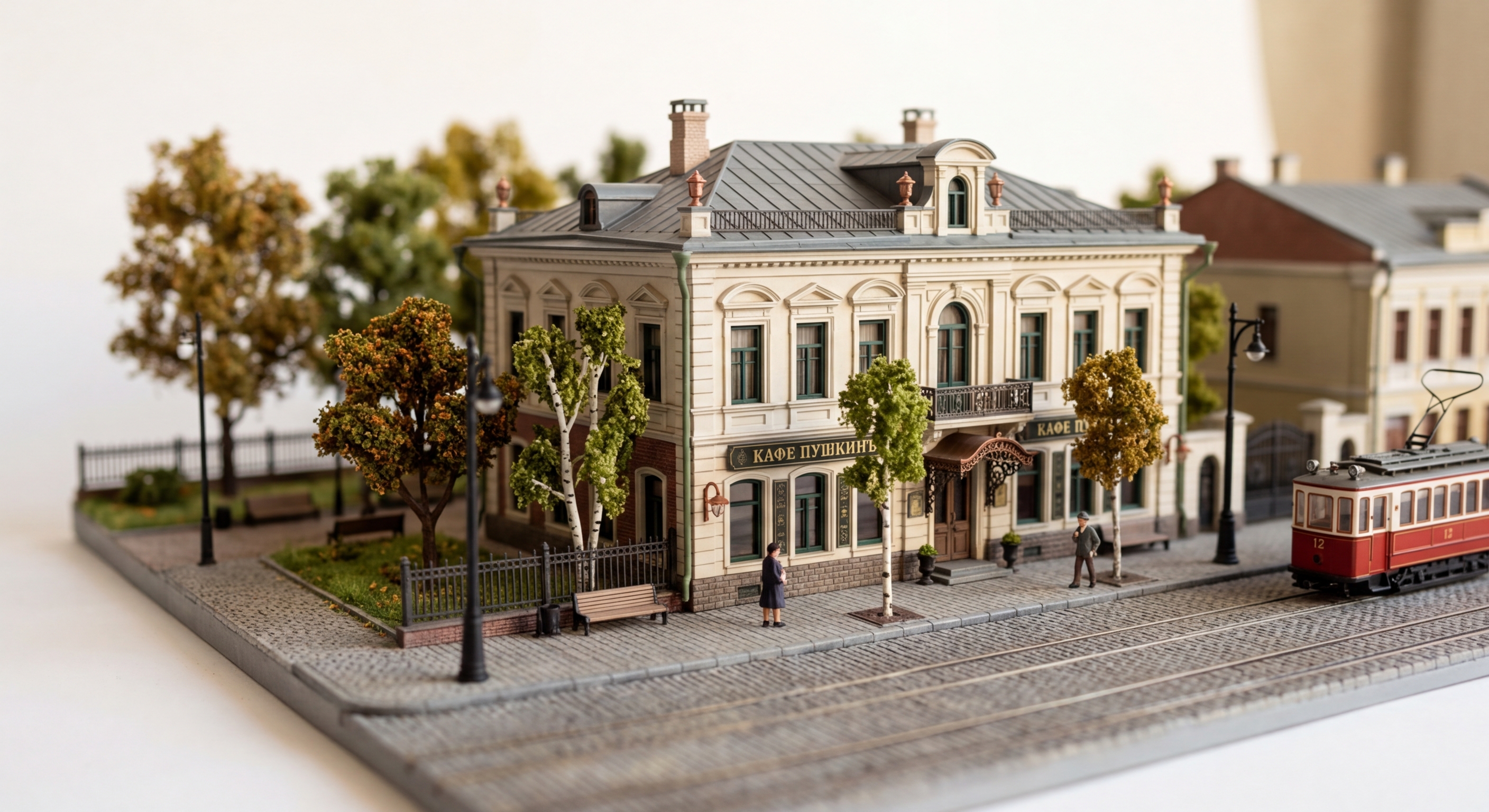
Café Pushkin
Moscow, Russia
A Moscow institution on Tverskoy Boulevard, open since 1999, designed to evoke a 19th-century Russian apothecary and library. The menu covers pre-revolutionary Russian cuisine, but the cold appetizer section includes a zakuski spread with kolbasa platters, and the kitchen draws on the full tradition of Soviet-era comfort food. Doktorskaya appears as part of meat assortments and buterbrod. The three-story building has a pharmacy aesthetic on the ground floor, a library room on the second, and a rooftop café. Foreign visitors call it the most theatrical dining room in Moscow, which is fair. The food holds up.
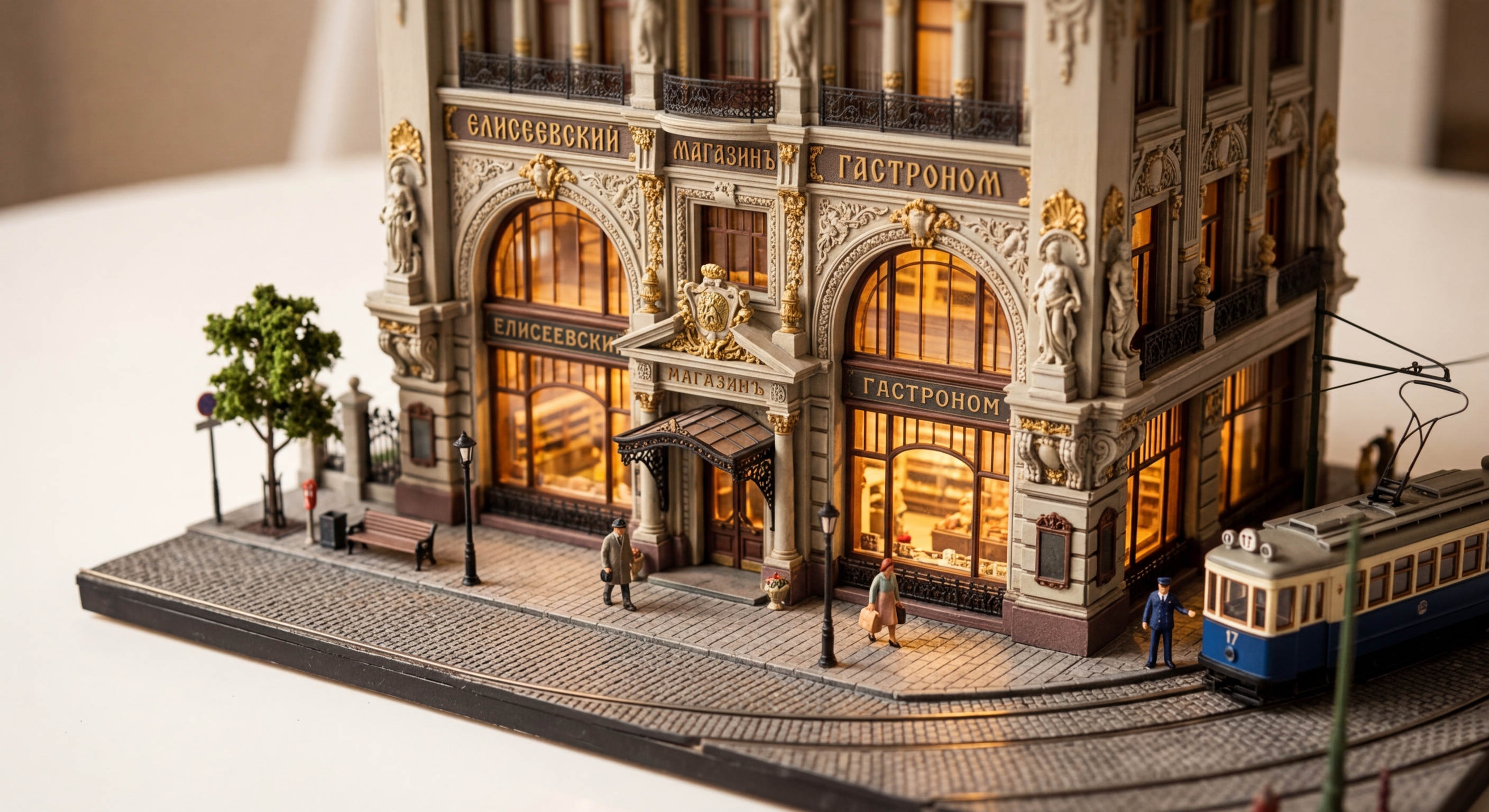
Eliseevsky Gastronom
Moscow, Russia
The most famous food shop in Russia, occupying a Belle Époque building at 14 Tverskaya Street since 1901. Merchant Grigory Eliseev had the interior fitted with chandeliers, gilded plaster, and stained glass before the revolution. The Bolsheviks nationalized it and renamed it Gastronom No. 1, but the name Eliseevsky stuck in common use. During the Soviet decades, Doktorskaya Kolbasa sat behind the glass counters alongside smoked fish, caviar, and Soviet champagne. The shop reopened as a commercial food hall in the post-Soviet years and continues to stock traditional Russian kolbasy at the deli counter. The baroque interior is reason enough to visit, but the cold cuts are the point.
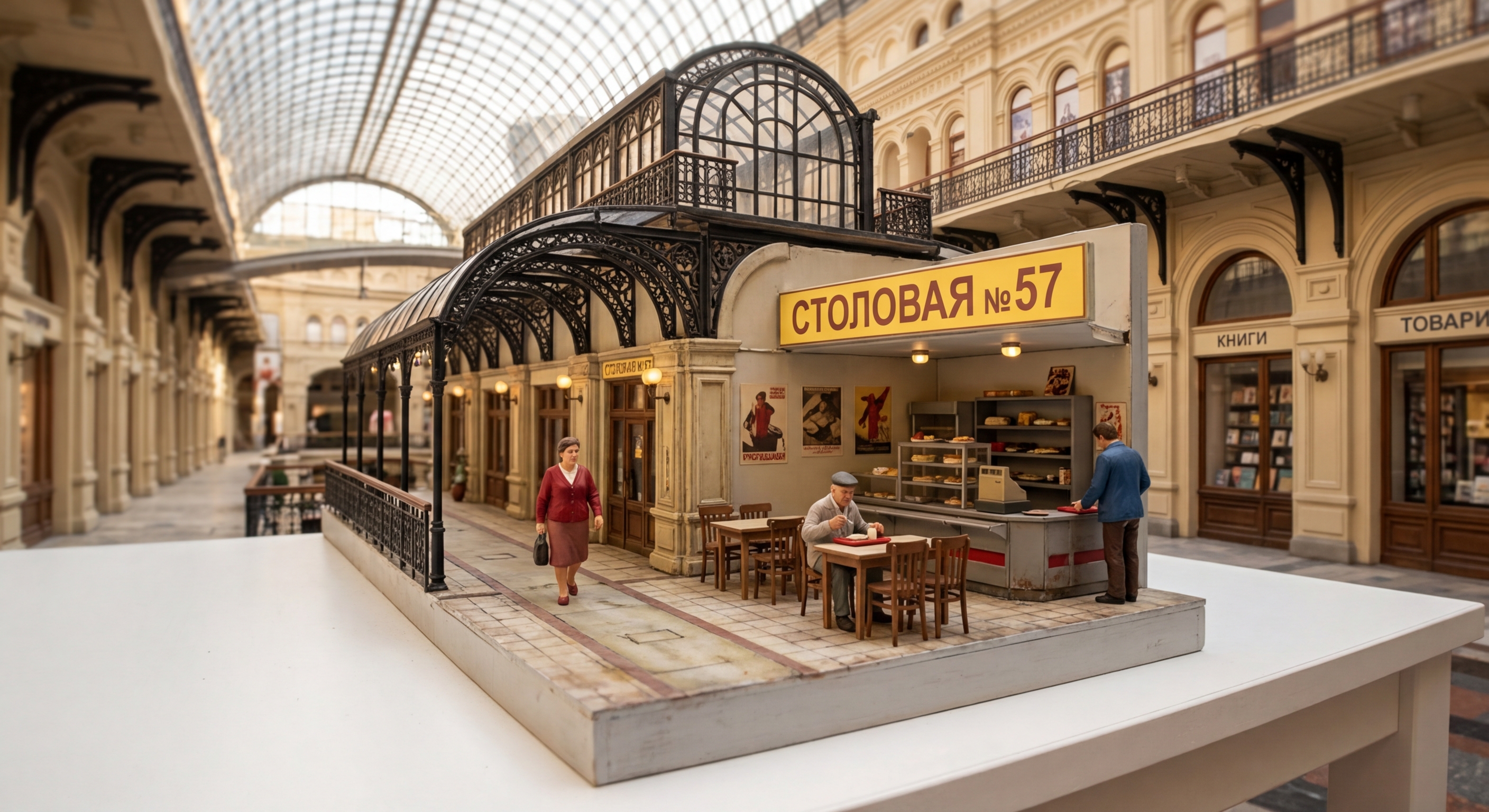
Stolovaya No. 57
Moscow, Russia
A Soviet-style canteen on the third floor of GUM, the grand arcade facing Red Square. Stolovaya No. 57 opened in 2007 as a deliberate recreation of the Soviet stolovaya format: tray service, low prices, and a menu pulled straight from the USSR cookbook. Olivier salad with Doktorskaya Kolbasa is a fixture on the menu, and the canteen sells buterbrod (open sandwiches) with thick slices of the sausage at the counter throughout the day. The setting is tourist-facing but the food is accurate. GUM itself was the state department store where Soviet citizens queued for goods. The canteen leans into that history without irony.