
Csabai Kolbász
Csabai kolbász
Békéscsaba, Hungary
Csabai kolbász is Hungary's most exported cured sausage, a PGI-protected product from Békéscsaba in the southern Great Plain. A deep, brick-red exterior comes from two paprikas: sweet for colour and body, hot for the burn that defines the sausage's character. Pork is hand-boned from pigs fattened above 135 kilograms, mixed with garlic and caraway, cold-smoked over beechwood, then air-dried until firm. The result is a sausage you can slice thin and eat raw with bread, or cut thick and cook into stews and eggs. Békéscsaba has been making this sausage since at least 1868, and the Csabai Kolbászfesztivál every October turns the town into a pilgrimage site for sausage enthusiasts across central Europe.
History
Békéscsaba's sausage-making tradition reaches back to the 18th century, when Slovak settlers arrived in the then-depopulated town and brought their own methods for curing and smoking pork. Over several generations these merged with Hungarian paprika cultivation, which had spread through the Great Plain after Ottoman-era trade routes introduced the pepper to the region. Written records of a distinctive Csabai-style sausage appear from 1868 onward. The combination of locally grown hot and sweet paprika, smoked over the beechwood forests of the nearby Mátra hills, and air-dried in the dry continental climate of the Great Plain, produced a flavour that proved difficult to replicate elsewhere. By the early 20th century Csabai kolbász was being shipped to Budapest markets and from there to Vienna. The communist era nationalised production, funnelling the sausage through state food enterprises, but local families continued making kolbász at home through the winter pig-slaughter season known as disznóvágás. After 1989, artisan producers re-established individual workshop production. The European Union granted PGI status in 2012, fixing the geographic boundary of production to the town of Békéscsaba and its immediate surroundings. The annual Csabai Kolbászfesztivál, running since 1997, now draws up to 100,000 visitors over a long October weekend.
Ingredients
Preparation
Pork shoulder and leg are hand-boned to remove all sinew, then coarsely minced. The meat goes into a mixing trough with sweet paprika, hot paprika, salt, crushed garlic, caraway, and black pepper. Quantities are calibrated so that sweet paprika coats the surface red and hot paprika delivers a persistent burn in the back of the throat. The mixture is stuffed tightly into natural pork casing and tied into links of roughly 25 to 40 centimetres. The links hang in a smoking chamber and receive cold smoke from beechwood for several days at low temperature, never above 20 degrees Celsius. This cold-smoking phase dries the surface without cooking the interior. The sausages then move to an airy drying room for several weeks, losing moisture until they reach the characteristic firm, dense texture of the finished product. PGI rules fix minimum drying times and require beechwood as the sole smoking fuel.
Taste
Hot paprika arrives first and stays. The heat is not sharp like chilli but a slow, building warmth that lingers through the entire experience. Behind it: sweet paprika depth, garlic that is present without being aggressive, and the faint anise note of caraway. The smoke is detectable but not dominant; it functions as a bass note rather than the lead. Salt is restrained, allowing the paprika and garlic to carry. Eaten raw on fresh bread, the fat content softens the heat. Grilled, the fat renders and concentrates the paprika notes further. In a stew, the sausage releases its red oil into the cooking liquid and becomes the seasoning of the entire dish.
Texture
Raw and cold-sliced, csabai kolbász has firm resistance to the knife and a compact, slightly granular cross-section from the coarse grind. The fat is distributed in visible white flecks through the deep red meat. The casing is tight against the filling. Thin slices have a papery flexibility; thicker rounds hold their shape on a board. Grilled in a pan, the exterior chars slightly at the edges and the centre softens, the fat pools at the surface. In a stew the sausage slices absorb liquid and become tender without falling apart.
Rituals & Traditions
Csabai Kolbászfesztivál
Each October, Békéscsaba hosts the Csabai Kolbászfesztivál, running since 1997 and now drawing up to 100,000 visitors over a long weekend. Producers from across Hungary bring their sausages for blind judging by panels of butchers, chefs, and food journalists. Categories include traditional csabai, gyulai, and creative variations. The town square fills with stalls selling kolbász with bread and mustard, pálinka tasting tables, and live folk music. A sausage-making competition invites teams of amateur producers to stuff and smoke kolbász on site, judged on adherence to traditional technique. The festival is the single largest celebration of Hungarian cured sausage and functions as both a market and a living demonstration of the craft.
Disznóvágás: the winter pig slaughter
The disznóvágás, held in November and December in rural Hungarian households, is the origin point of csabai kolbász. Neighbours and family gather before dawn; the pig is killed, cleaned, and broken down over a day of communal work. The blood goes into blood sausage, the liver into hurka, and the best shoulder and leg meat into kolbász. The mincing, seasoning, stuffing, and tying are done as a group. By evening the sausages hang in the smokehouse. Pálinka is poured throughout the day. The tradition has declined in cities but remains active in villages around Békéscsaba. Some families in the town itself maintain a smokehouse for exactly this annual event.
Slice thin for a charcuterie board, thick for cooking
The thickness of the cut determines how csabai kolbász behaves. Thin slices, two to three millimetres, lie flat on bread and release their red paprika oil into the white crumb on contact. They are transparent enough at the edges to show the fat distribution. Thick rounds, eight to ten millimetres, hold structure in a pan and develop a slight char on the cut faces. In a stew, thick slices absorb broth without disintegrating. The wrong cut makes both uses worse: thick slices are hard to eat raw, thin slices dissolve in a pot.
Do not refrigerate before serving
Csabai kolbász is a cured sausage, not a fresh one. It stores at cool room temperature in a dry, airy space, exactly as it was aged. Refrigerating it makes the fat cold and waxy, which dulls the paprika aroma and makes the texture stiff. If a sausage has been refrigerated for storage, bring it to room temperature for at least thirty minutes before slicing. Cold fat does not release flavour. The paprika oils need ambient temperature to be expressive.
Recipes
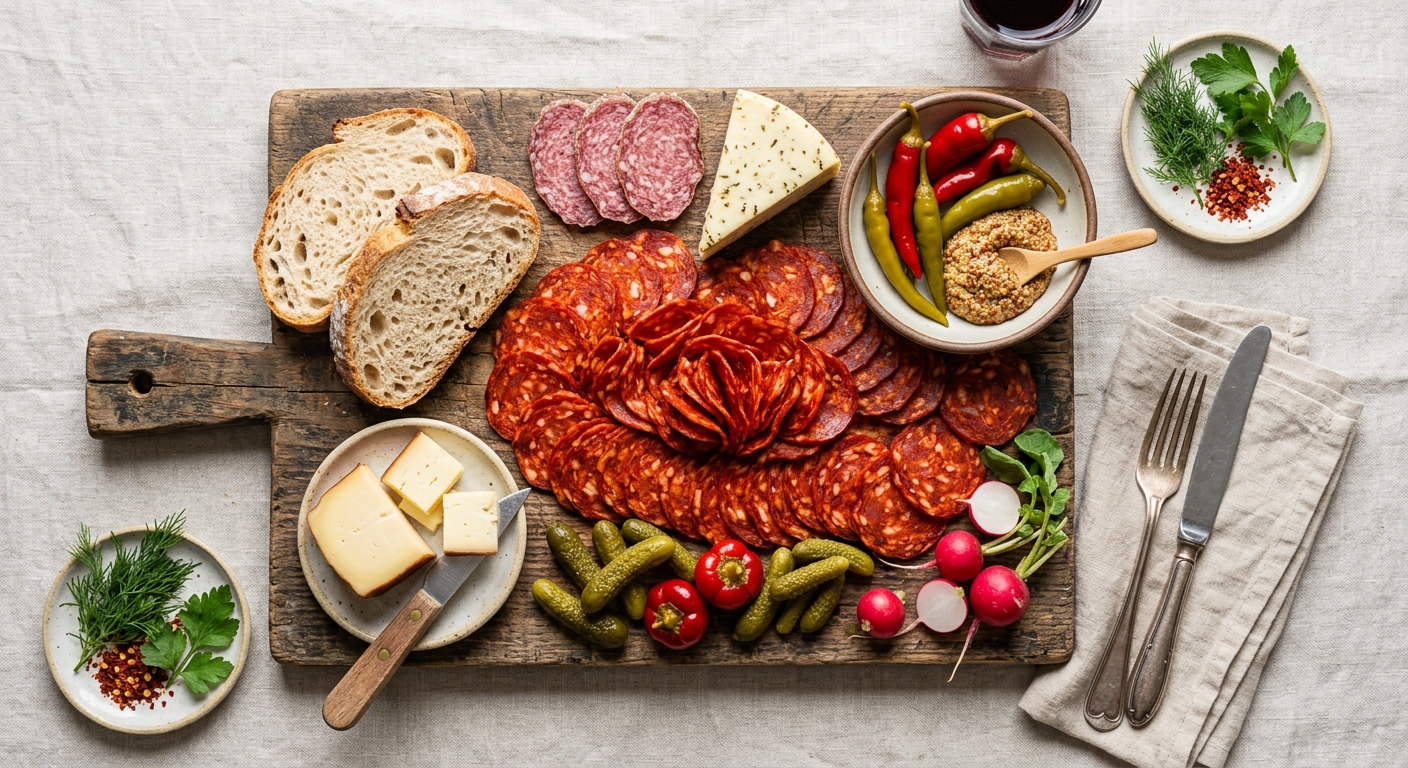
Csabai Kolbász Board
Csabai Kolbász
A cold-cut board built around csabai kolbász: thin slices fanned over a wooden board with pickled wax peppers, Hungarian mustard, dense rye bread, and a few radishes for crunch. The format of every festival stall and most Hungarian kitchen tables when guests arrive.
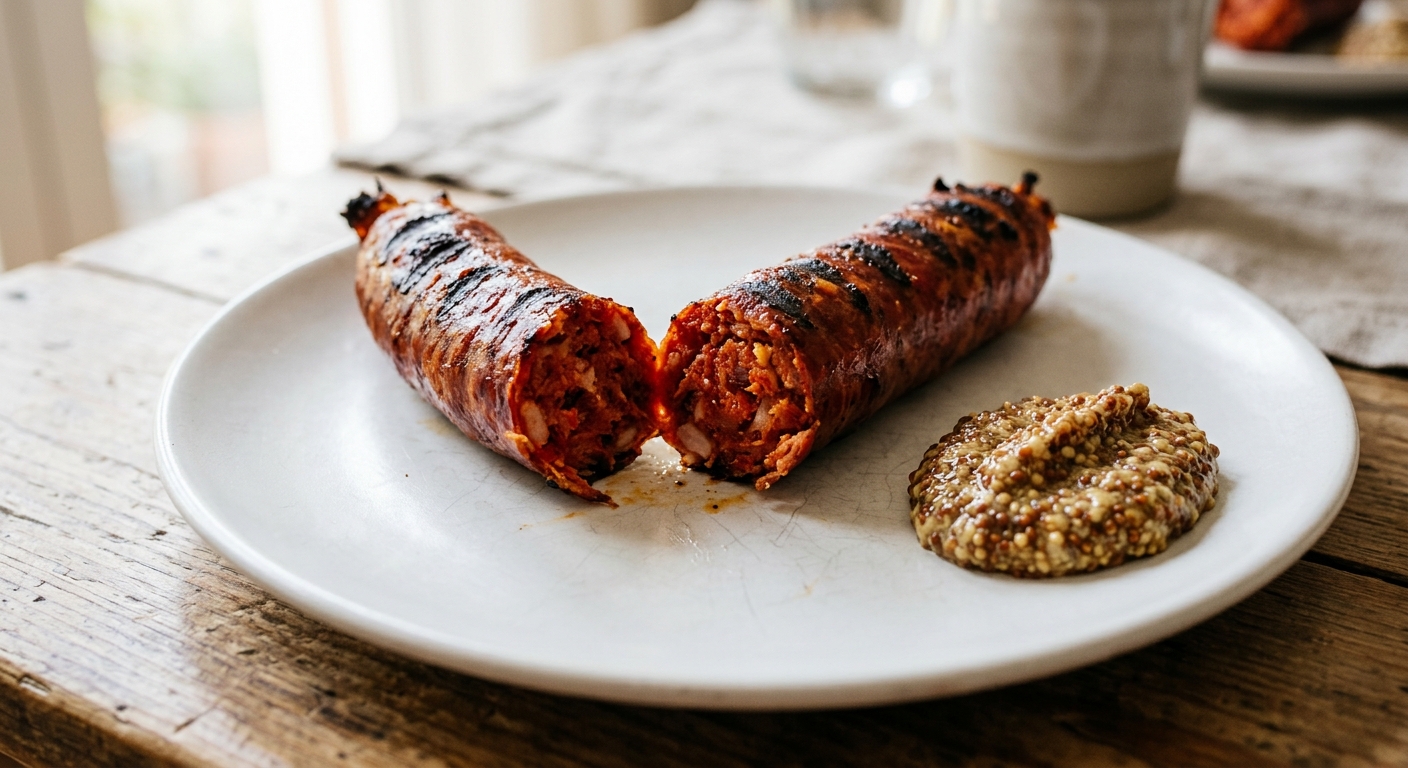
Grilled Csabai with Mustard
Csabai Kolbász
The simplest way to cook csabai kolbász: score, grill, eat with Hungarian mustard and bread. The paprika fat runs out onto the grill grate and smokes, coating the sausage in a second layer of flavour. Festival stalls at the Kolbászfesztivál serve it exactly this way.
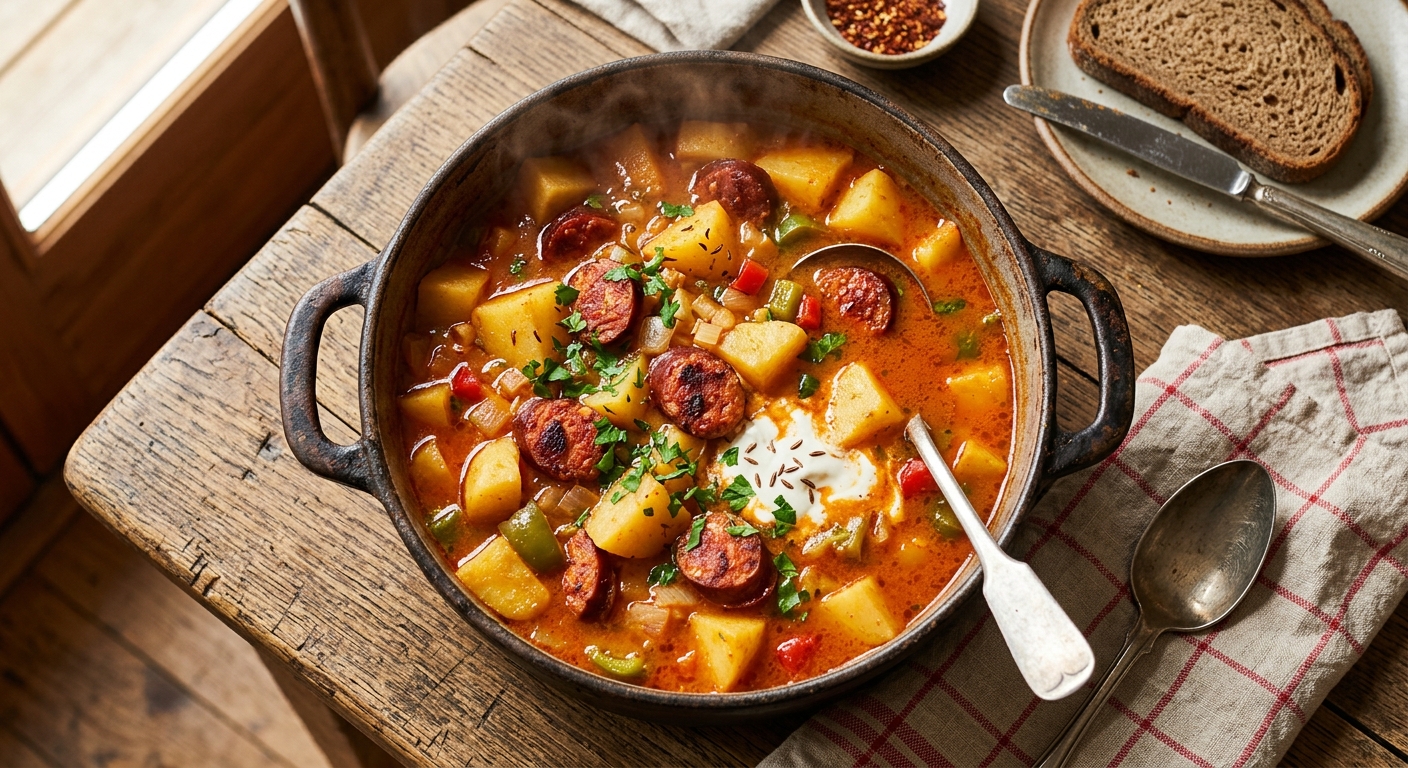
Kolbászos Krumpli
Csabai Kolbász
A one-pot potato stew seasoned almost entirely by the csabai kolbász cooked inside it. The sausage releases red paprika oil into the broth, turning the potatoes orange and the cooking liquid into something worth soaking bread in. A Hungarian farmhouse staple.
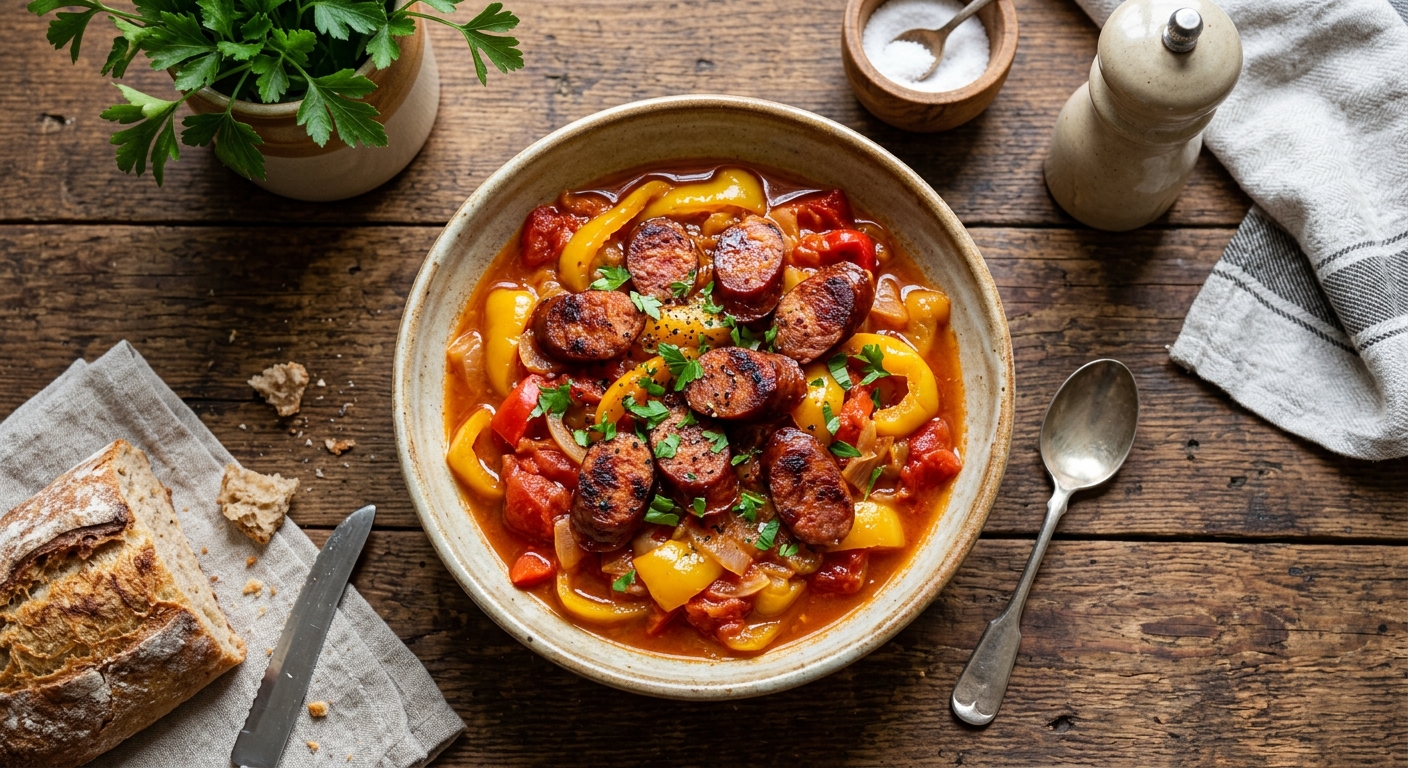
Kolbászos Lecsó
Csabai Kolbász
Lecsó is Hungary's answer to ratatouille: a stew of wax peppers and tomatoes cooked down in pork fat until jammy, then loaded with csabai kolbász rounds that release their paprika oil into the whole pot. Eaten with fresh bread and a spoonful of tejföl on top.
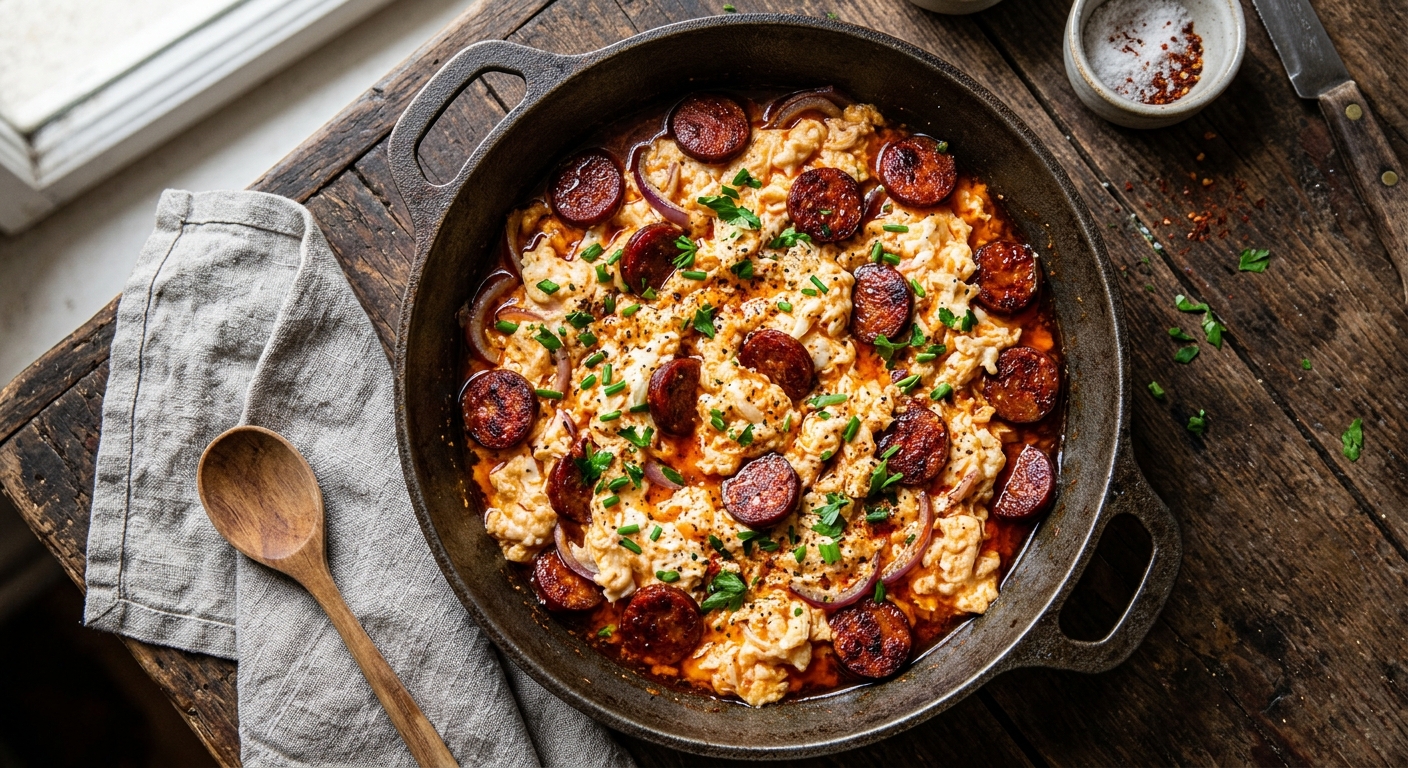
Kolbászos Rántotta
Csabai Kolbász
Scrambled eggs fried in the paprika fat of csabai kolbász. The eggs take on the deep red colour and paprika flavour of the sausage without needing any additional seasoning. A Hungarian breakfast staple in sausage-making households during the disznóvágás season.
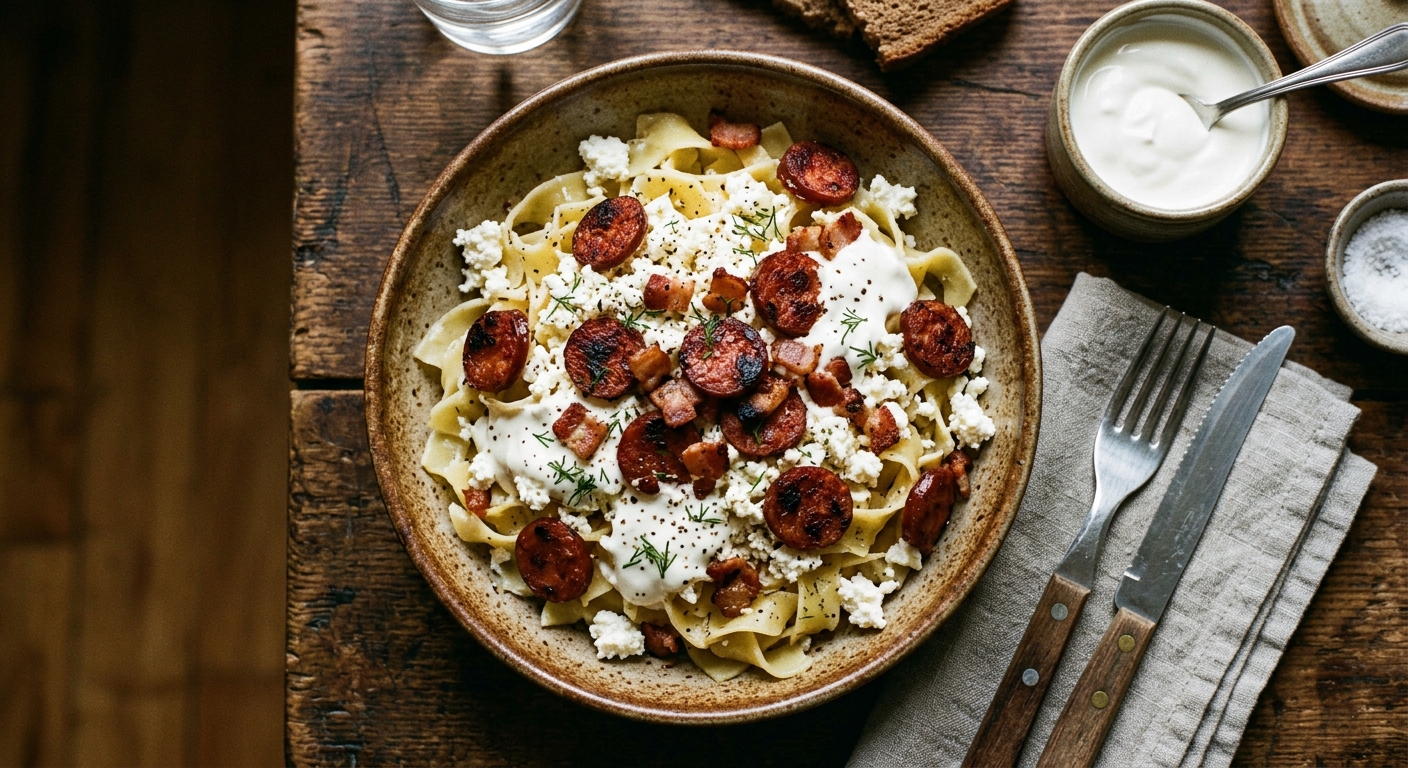
Kolbászos Túrós Csusza
Csabai Kolbász
Túrós csusza is one of Hungary's oldest pasta dishes: egg noodles tossed with cottage cheese, fried pork crackling, and sour cream. Adding csabai kolbász turns it into a full meal. The paprika fat from the fried sausage stains the noodles red and seasons the whole dish.
On the Map
Where to Eat

Belvárosi Disznótoros
Budapest, Hungary
A Budapest institution that brings the rural Hungarian pig-slaughter feast into the city centre. You order at a counter, choose a meat from the daily selection, then pick two sides and pickles. The menu reads like a disznóvágás spread: blood sausage, liver sausage, smoked ribs, pork chops, and cured kolbász including csabai. Paprika runs through nearly everything. Two locations operate in central Budapest: the original on Károlyi Mihály utca in District V, and a second on Király utca in Erzsébetváros. Both draw neighbourhood regulars and workers at lunch, tourists and food-curious visitors in the evenings. The format is fast, the food is filling, and the prices match the working-class origins of the dishes on offer.
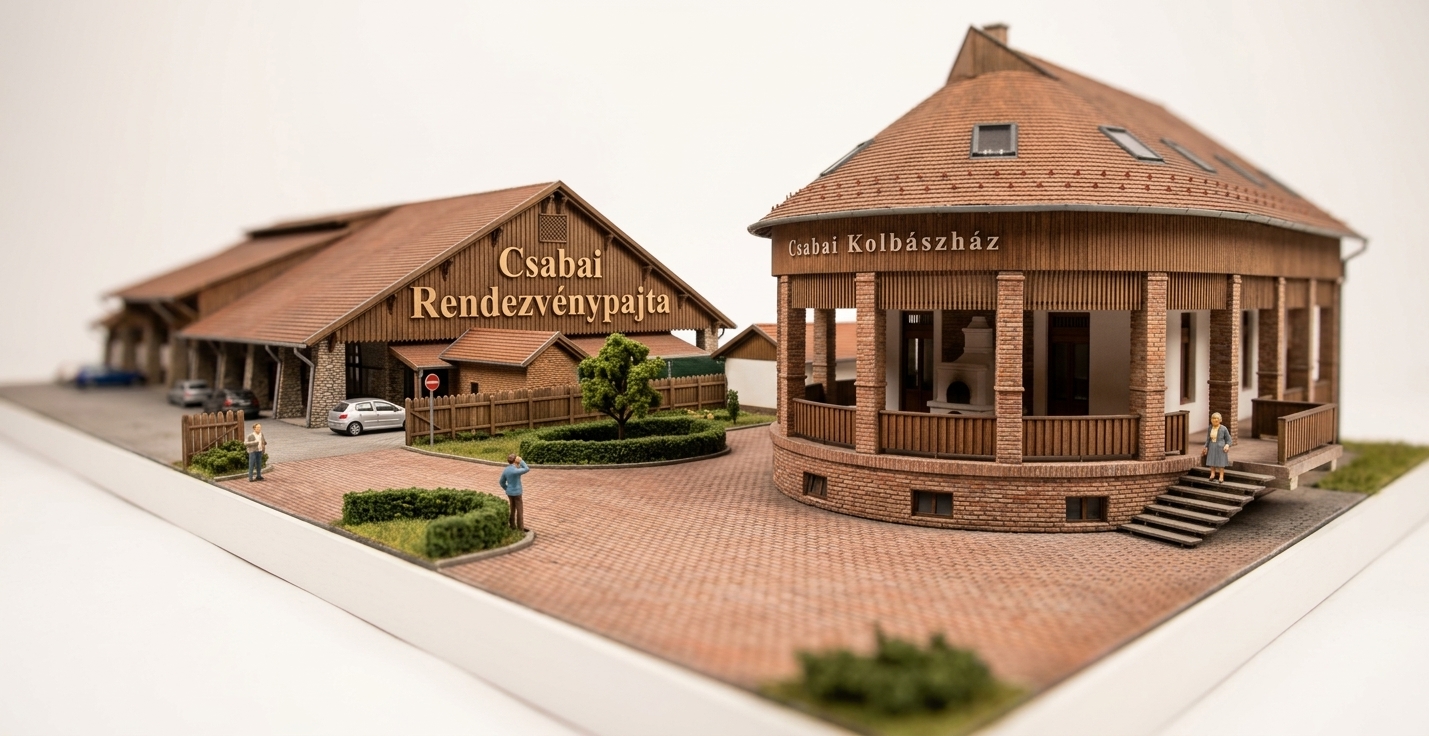
Csabai Kolbászház
Békéscsaba, Hungary
A 500-square-metre gastronomic and cultural venue in Békéscsaba dedicated to csabai kolbász and its surrounding food culture. The building sits on Gyulai út with an attached garden and open yard. Visitors eat Csabai Pajta sausage grilled on site alongside fresh bread and mustard, or order street-food variations from the Pajta Street Food counter, where csabai kolbász appears in burgers alongside goose liver and blue cheese. The house also stocks a retail selection of regional cured meats for purchase. During the Csabai Kolbászfesztivál each October the venue operates as one of the festival's anchor points, hosting sausage-making demonstrations and tastings. The space functions equally as a restaurant, a market, and a living exhibit of the town's defining product.
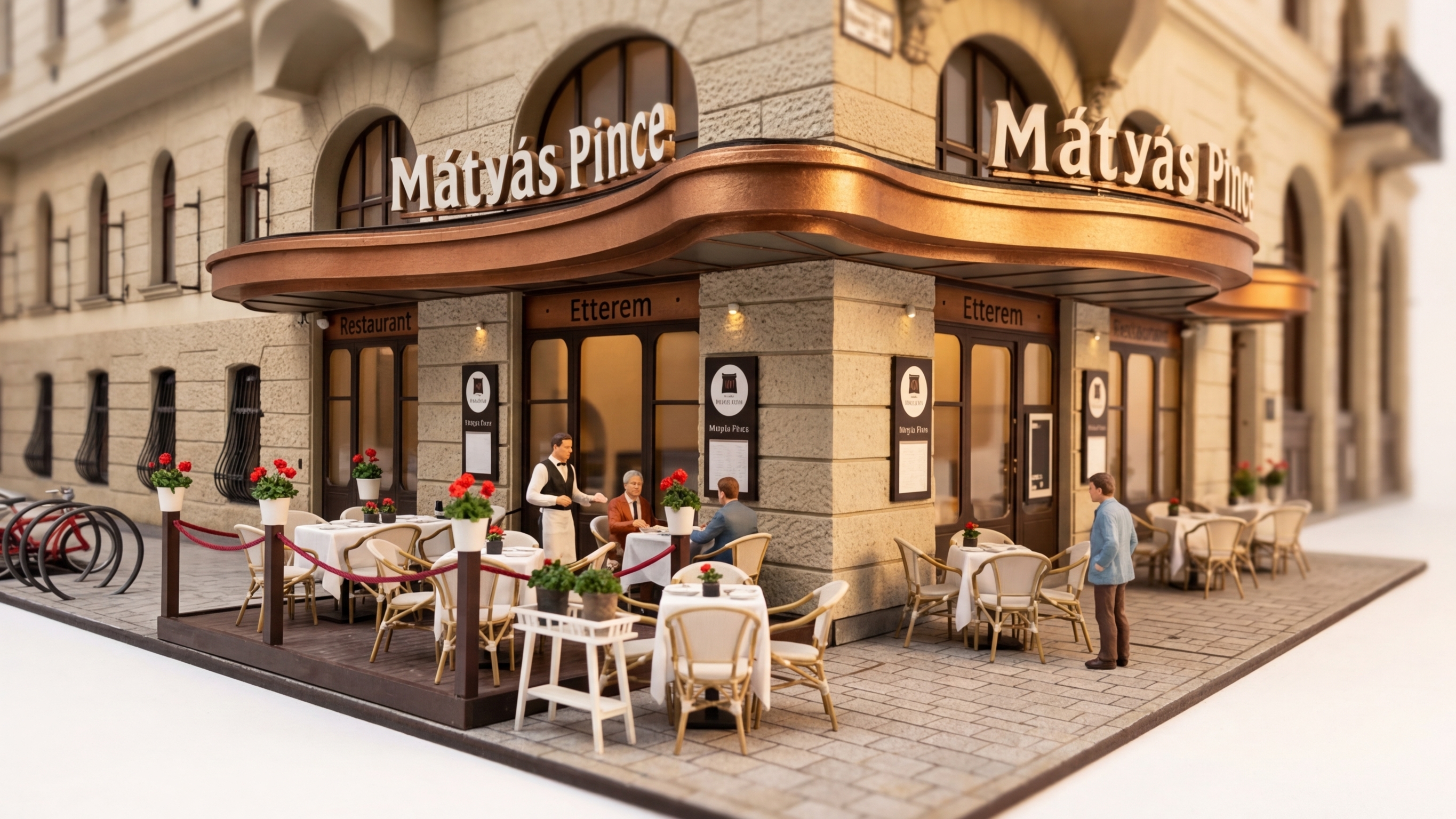
Mátyás Pince
Budapest, Hungary
One of Budapest's oldest continuously operating restaurants, founded in 1904 at the foot of the Elizabeth Bridge on the Pest side of the Danube. Named after the Renaissance king Mátyás, the vaulted cellar dining room retains its original painted walls and ornate fittings. The kitchen serves classical Hungarian cuisine: gulyás, paprikás csirke, töltött káposzta, and charcuterie plates that include csabai kolbász alongside Hungarian salami and pickled vegetables. Gypsy music plays in the evenings. The restaurant has long attracted both Hungarian guests on special occasions and international visitors drawn by the historical interior. The charcuterie boards here are composed rather than assembled: csabai in thin slices next to winter salami, a pot of mustard, pickled peppers, and dense rye bread.