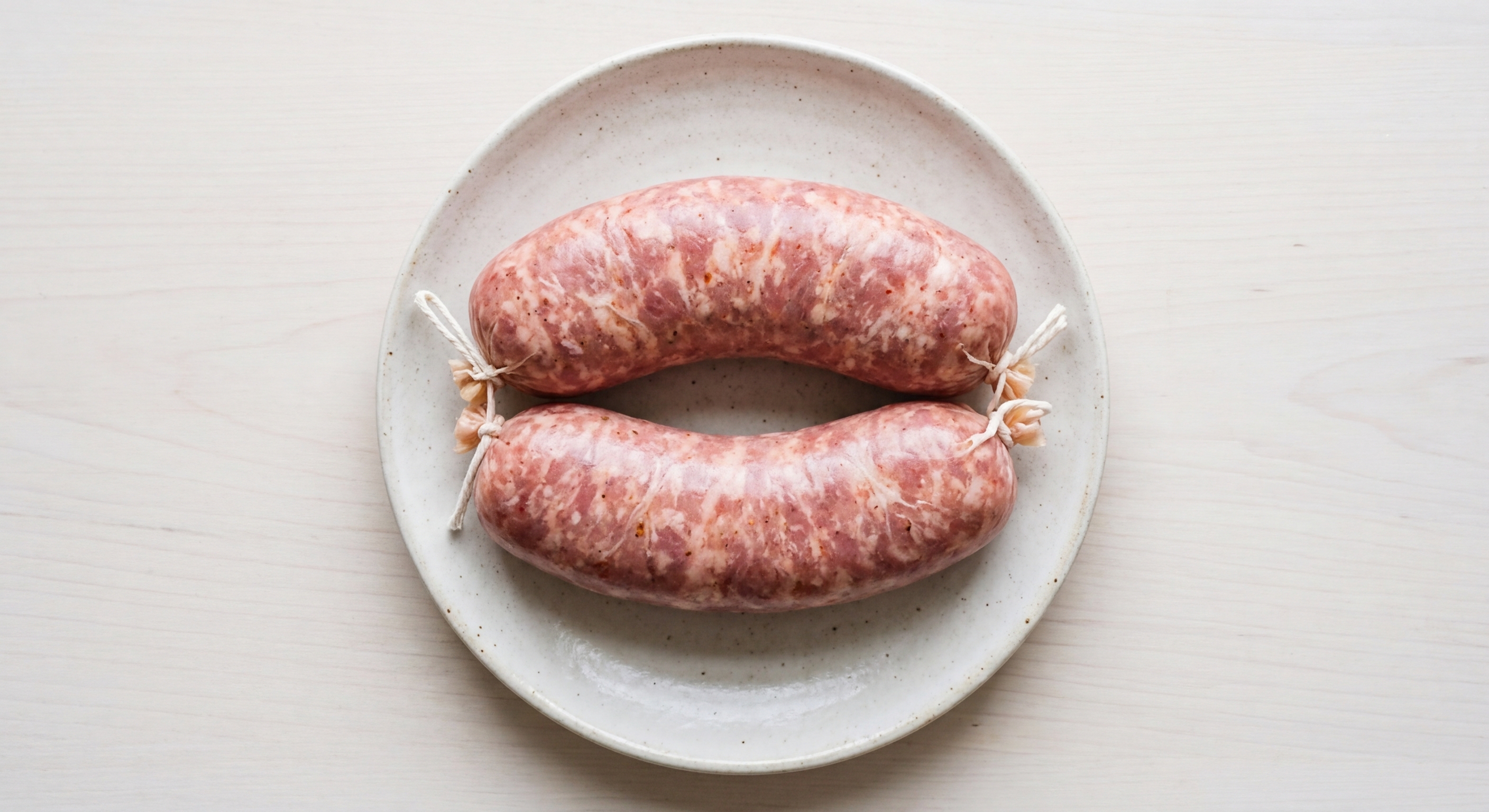
Chorizo Uruguayo
Chorizo criollo
Montevideo & Uruguay
Uruguay has more cattle per person than any other country on earth, and this fact shapes everything about its food. But at an asado, the chorizo goes on the grill before the beef. These short, thick fresh pork sausages, seasoned with garlic, oregano, nutmeg, and black pepper, cook fast over hardwood embers while guests drink wine and wait for the main cuts. The asador checks them often. A skin that puffs and chars at the edges signals they are ready. The choripán, chorizo split and tucked into crusty bread with chimichurri or salsa criolla, is the street food that defines Montevideo. You find it at parrillas, at football stadiums, at Sunday markets, and at the smoke-filled stalls of the Mercado del Puerto.
History
Chorizo came to Uruguay with Spanish and Italian immigrants in the 19th century. The gauchos adapted it to local conditions: coarser grind, shorter links, no smoke, no curing. Uruguay's grasslands produced pork and beef in such abundance that fresh sausage, not preserved sausage, became the norm. The chorizo criollo settled into a different character than its Argentine neighbor across the Río de la Plata. Uruguayan chorizo is thicker, coarser, and leans on nutmeg where the Argentine version leans on cumin. Italian arrivals brought their preference for aromatics, and oregano became as essential as garlic. By the 20th century, the Mercado del Puerto in Montevideo had become the cathedral of this tradition: a 19th-century iron market hall with parrillas running the length of it, open fires visible from the street, smoke rising through the roof, and chorizo on every grill.
Ingredients
Preparation
Pork shoulder is ground through a coarse plate, leaving visible chunks. Some butchers blend in a small amount of beef for a firmer texture. The meat gets seasoned with minced garlic, dried oregano, freshly grated nutmeg, black pepper, and salt. A splash of cold water helps distribute the fat evenly. The mixture goes into wide natural hog casings and gets tied into short links of about 12 centimeters. No smoking, no curing, no resting beyond a few hours in the refrigerator. At the parrilla, the chorizo goes on the grill raw, over medium-hot coals, turned once or twice until the skin puffs and colors and the fat inside runs clear.
Taste
Garlic and oregano carry the first notes. Nutmeg gives warmth without spice. The grilled fat comes through at the end. This chorizo is mild enough for bread but has enough character to hold its own without it.
Texture
Coarse and juicy. The wide casing resists the grill long enough to build a skin with some snap. Inside, the ground pork stays loose, never packed dense, with visible fat pockets that soften on the heat.
Rituals & Traditions
First on the grill
At a Uruguayan asado, the chorizo goes on before the beef. It cooks while the fire settles and guests gather. Eating chorizo in the first round, with bread and a glass of Tannat, is not optional. It is how the asado begins.
Never pierce the casing
Piercing the casing to let fat escape is a common mistake. The fat stays inside and bastes the meat from within as it cooks. Punctured chorizo dries out.
The choripán at Mercado del Puerto
Montevideo's Mercado del Puerto has run continuously since 1868. On Saturdays, every stall in the iron market hall fires up its parrilla, and the smoke rises through the roof. Locals and tourists eat choripán standing at the counter. Sitting at a table costs more. Most regulars stand.
Do not serve it with ketchup
Salsa criolla or chimichurri. Those are the condiments. Ketchup on a choripán is considered a statement, and not a good one.
Recipes
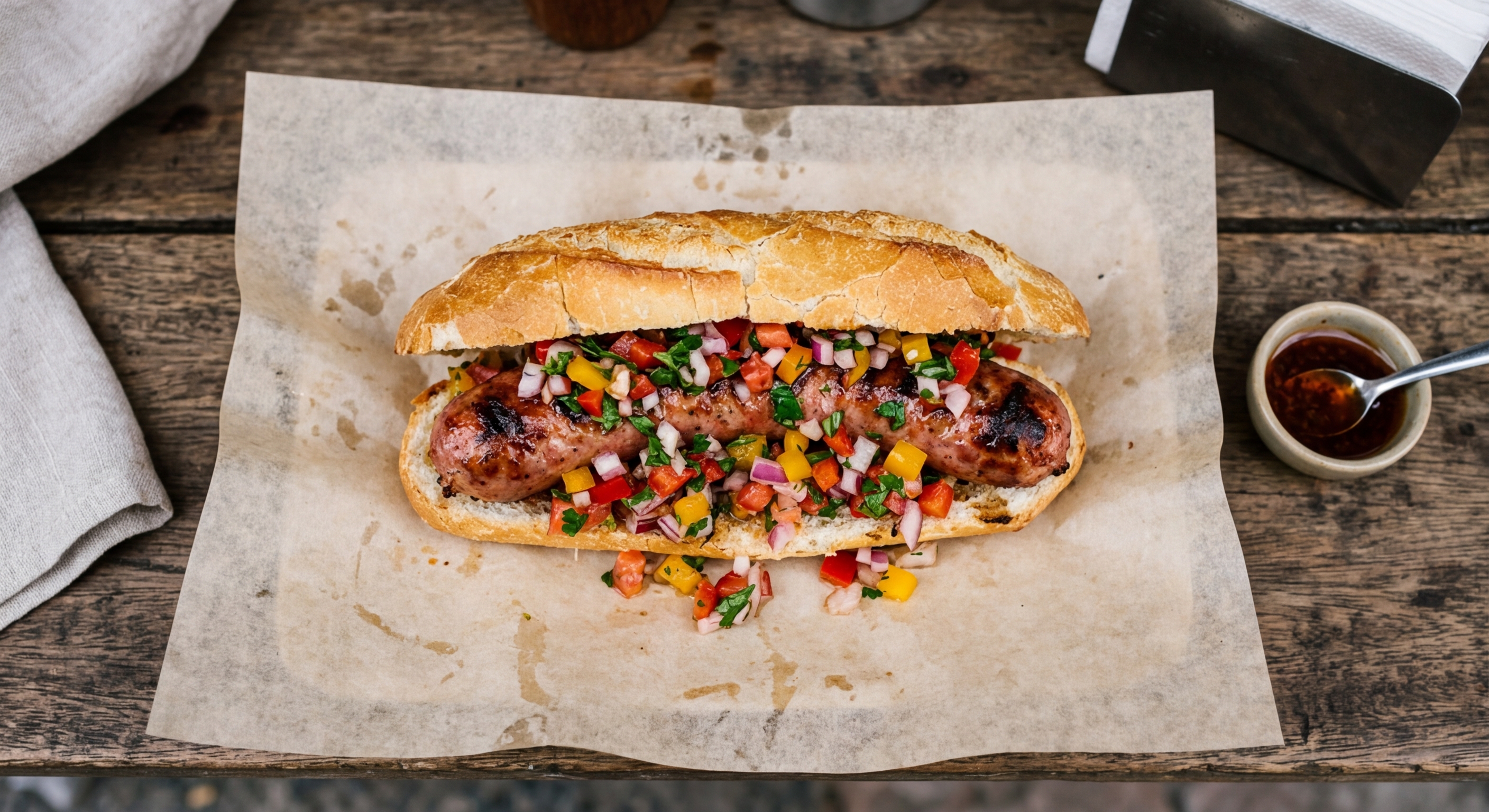
Choripán Uruguayo
Chorizo Uruguayo
The choripán is Uruguay's street food. Grilled chorizo, split and laid open inside a crusty bread roll, finished with salsa criolla or chimichurri. You eat it standing. The bread soaks the juices and the salsa criolla cuts the fat with raw onion and vinegar. Every parrilla in Montevideo serves one. The Mercado del Puerto sells them from noon until the fires go out.
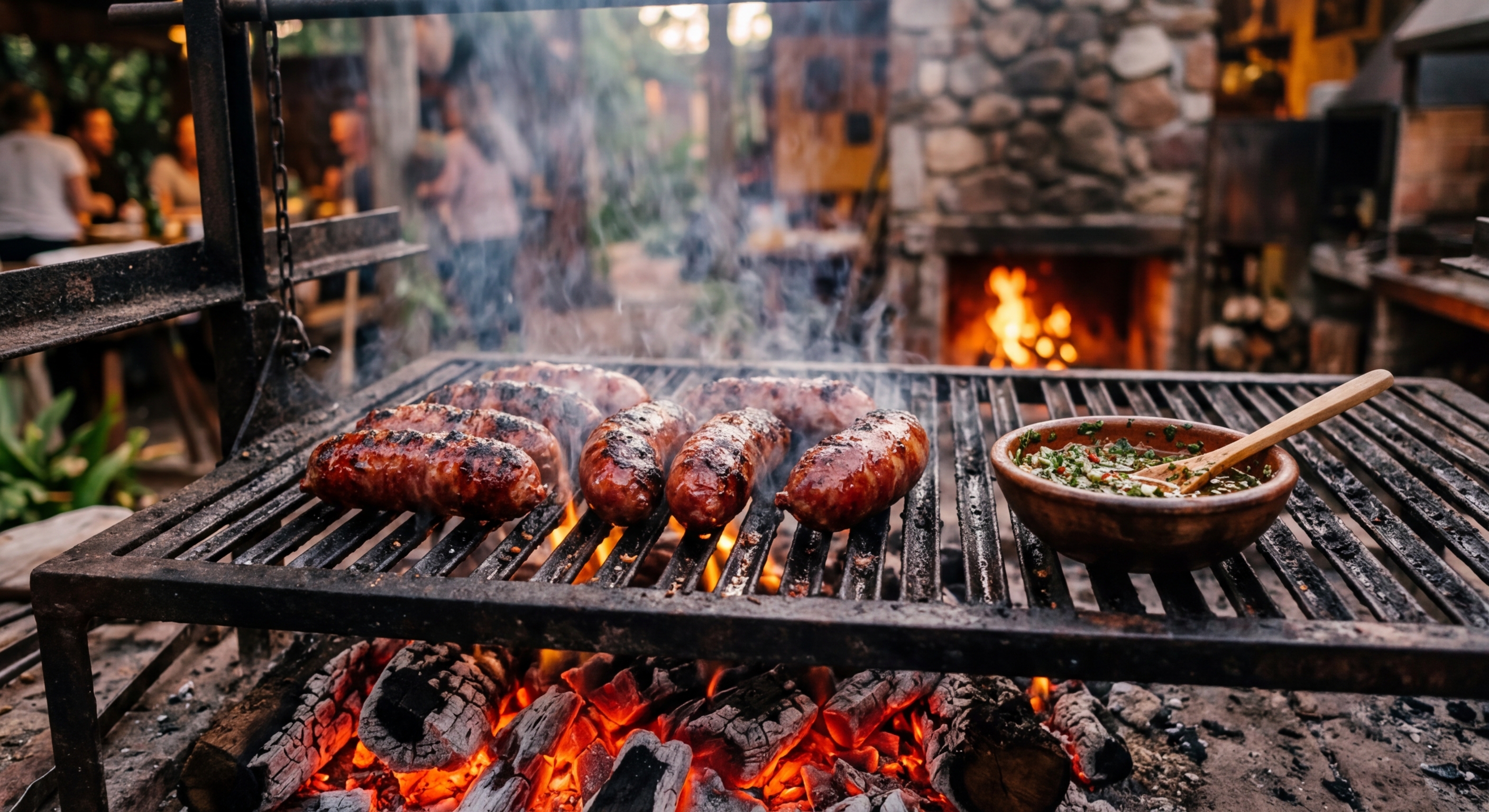
Chorizo a la Parrilla
Chorizo Uruguayo
This is the asado version: chorizo grilled on its own, served whole with chimichurri and bread on the side. No splitting, no sandwich. The asador places the links on the grill when the coals are at their hottest, turns them once, and pulls them off when the skin is tight, charred in lines, and the fat has rendered through. The chorizo rests for two minutes on a wooden board before cutting. This is how the sausage course works at a Uruguayan family asado, before the beef takes the main grill time.
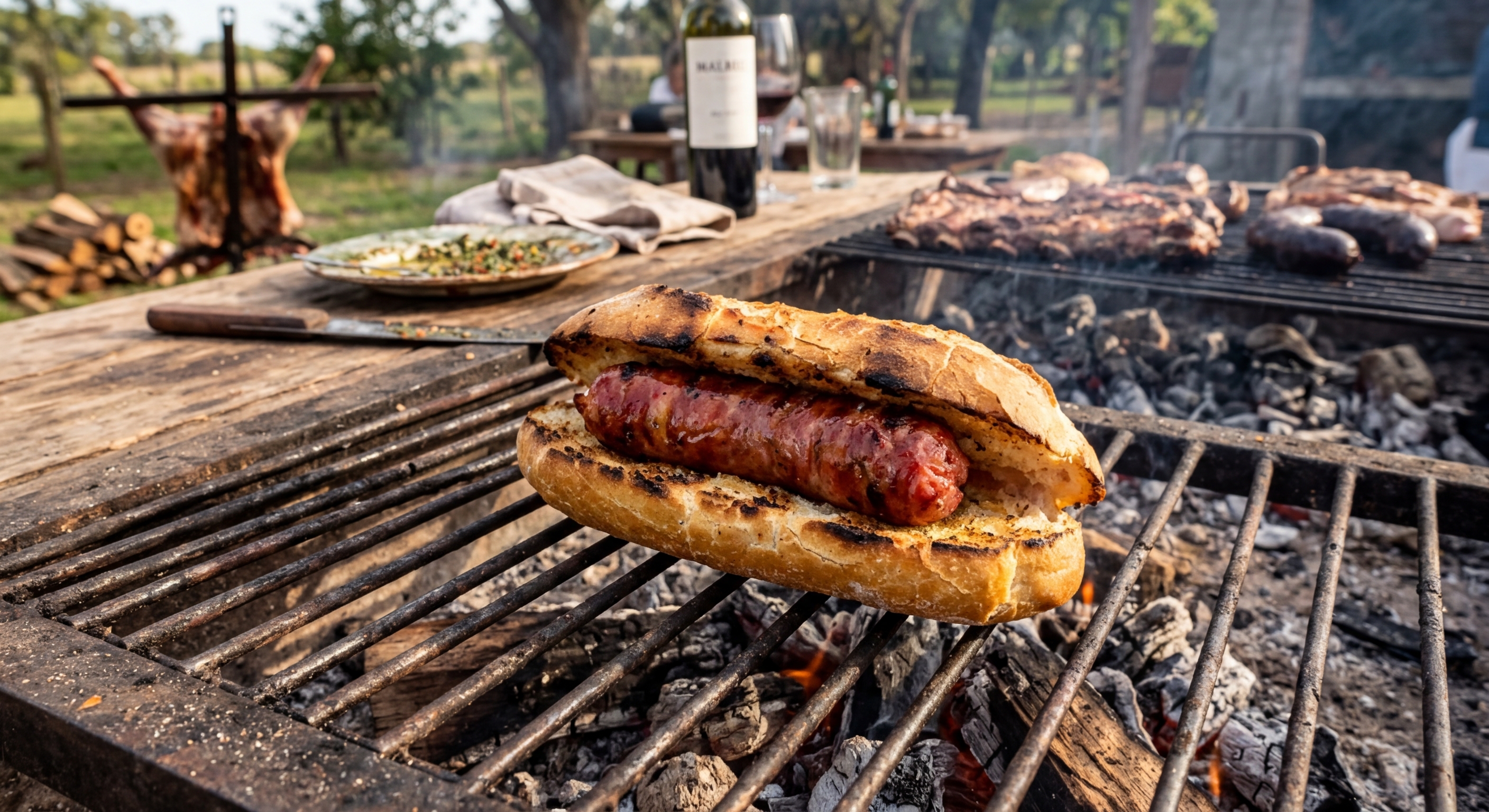
Chorizo al Pan
Chorizo Uruguayo
A variation on the choripán where the bread does more of the work. The chorizo cooks inside a split roll placed directly on the grill, so the bread chars on the outside while the sausage fat soaks into the crumb from below. The result is a single object: bread and sausage fused, with a crackling exterior and a grease-soaked interior that holds together as you eat it. Street vendors at football stadiums in Montevideo use this technique when the crowd is large and time is short.
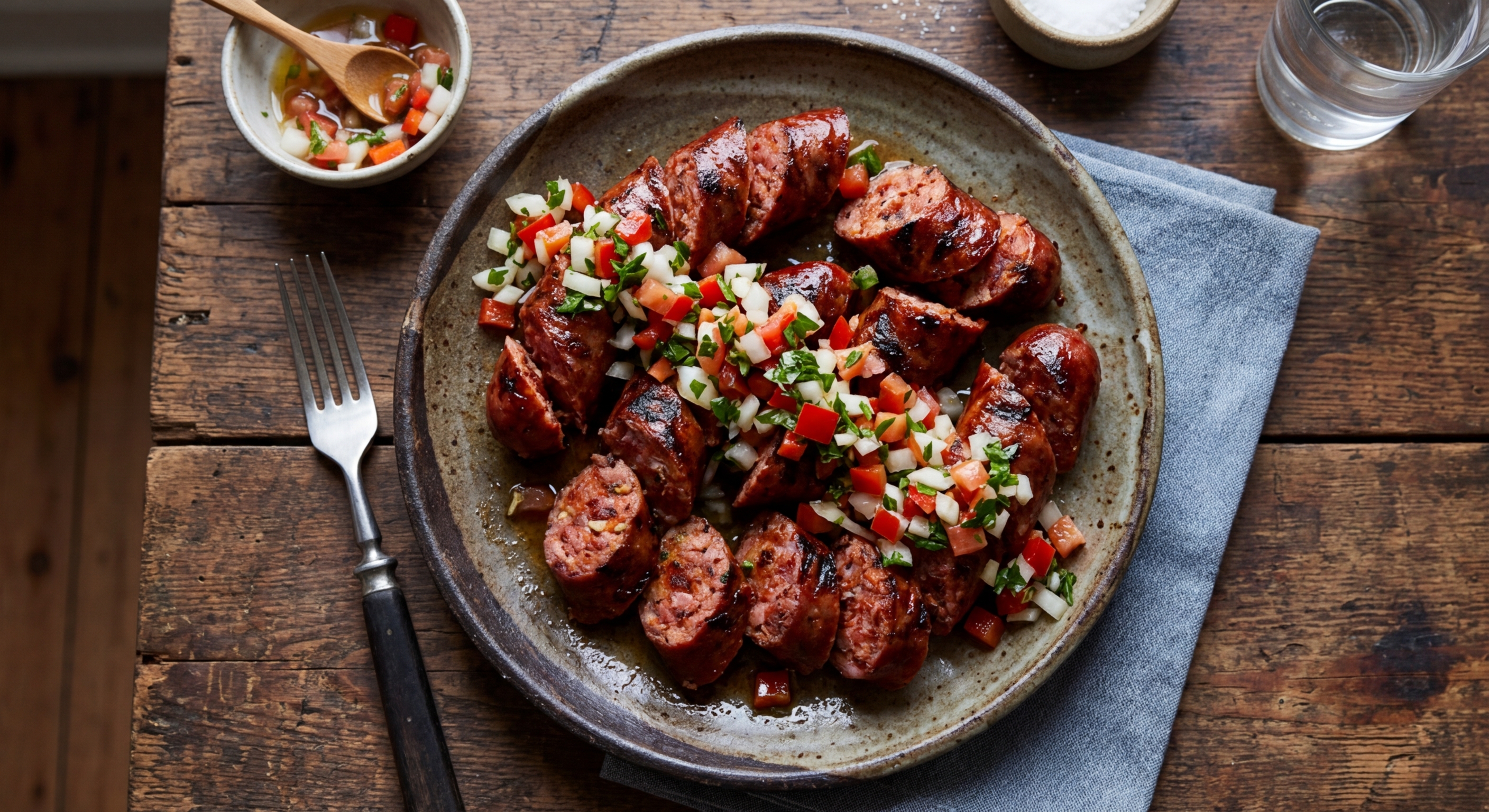
Chorizo con Salsa Criolla
Chorizo Uruguayo
Salsa criolla is not a cooked sauce. It is a macerated raw relish of white onion, tomato, green pepper, red wine vinegar, and oil, chopped fine and left to sit for thirty minutes before serving. Poured over freshly grilled chorizo, the cold relish hits the hot sausage and the vinegar rises in a brief steam. The contrast is the whole point: grilled fat against raw acidity, hot against room temperature. This is standard table service at Uruguayan parrillas alongside the bread basket.
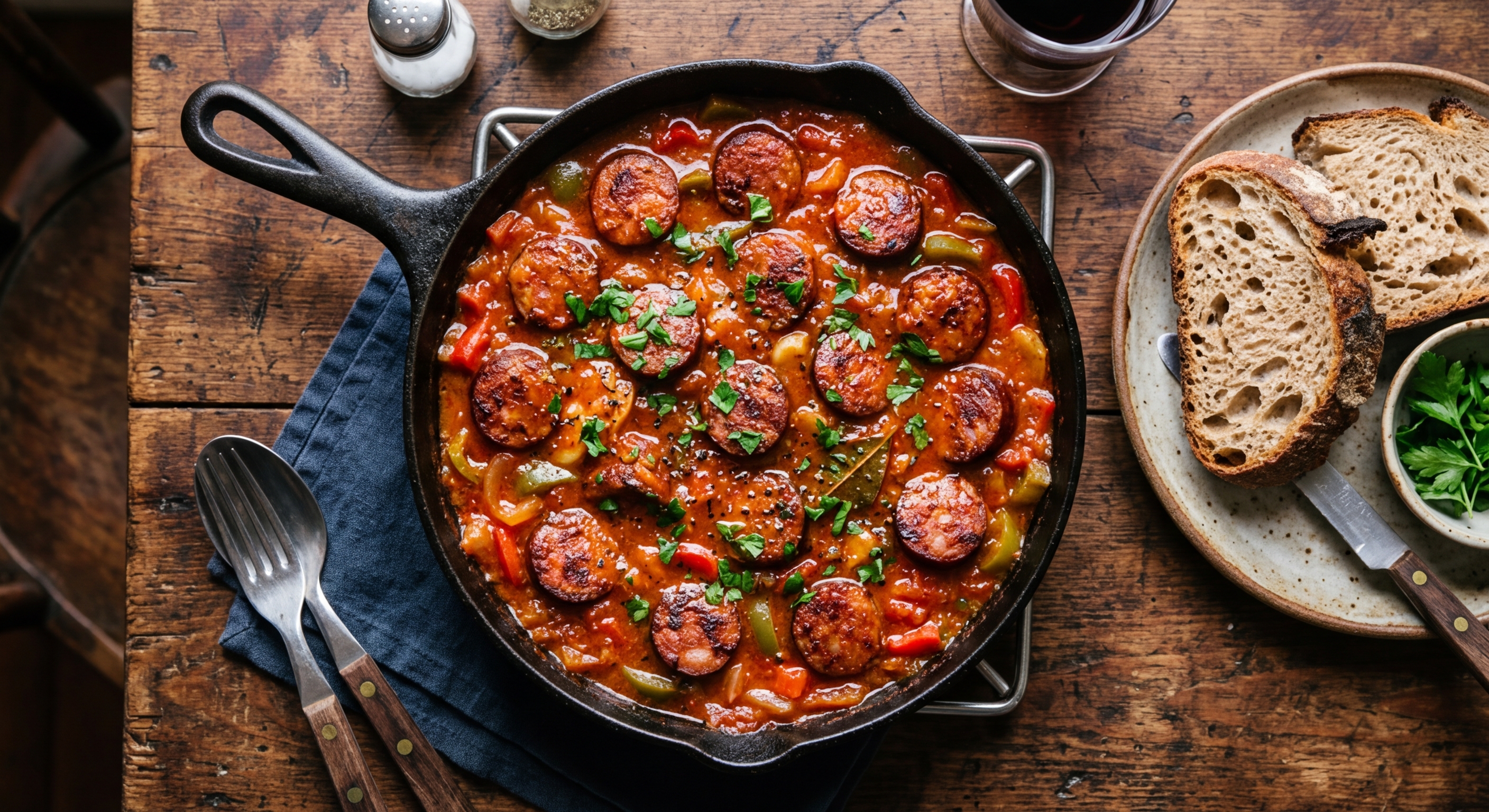
Chorizos a la Pomarola
Chorizo Uruguayo
Pomarola is Uruguayan home cooking with Italian roots: a simple tomato sauce, cooked low with onion, garlic, and oregano. In this recipe, chorizo links brown in a pan first, then simmer in the sauce for twenty minutes. The sausage fat enriches the tomatoes and the sauce thickens around the casings. It is the weeknight version of asado, made on a stovetop when the parrilla is not an option. Italian immigrants who settled in Montevideo in the late 19th and early 20th centuries brought this technique. It stayed.
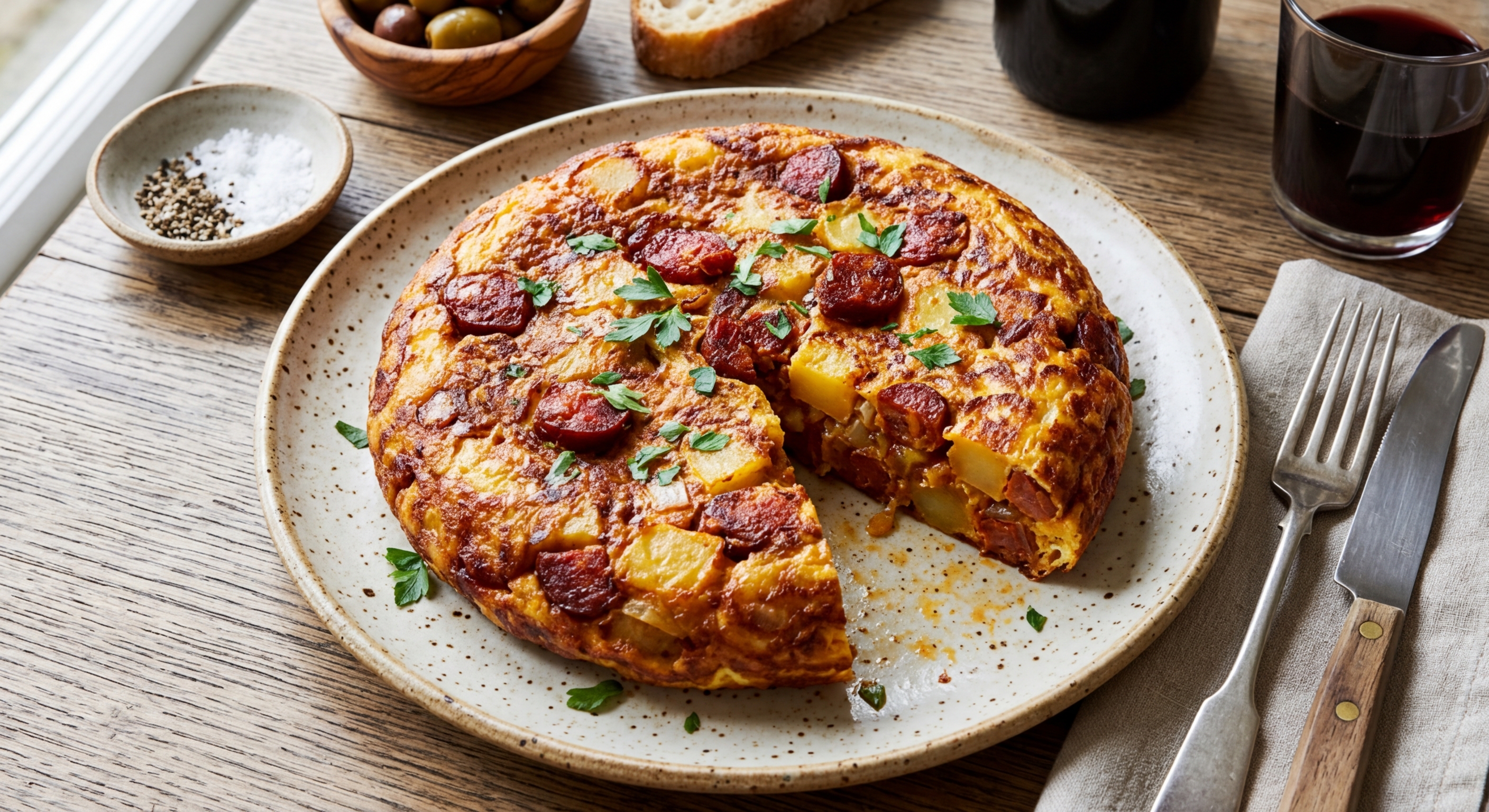
Tortilla de Chorizo
Chorizo Uruguayo
This is not the Mexican tortilla. In Rioplatense Spanish, tortilla means a thick egg frittata cooked in a pan, flipped halfway through on a plate and slid back to cook the second side. The chorizo, sliced into rounds and fried until the edges crisp, goes into a beaten egg base with onion and potato. The result is dense and rich, cut into wedges and eaten at room temperature. It turns up at Uruguayan family lunches, at the weekend market, and as a next-day use for leftover grilled chorizo.
On the Map
Where to Eat
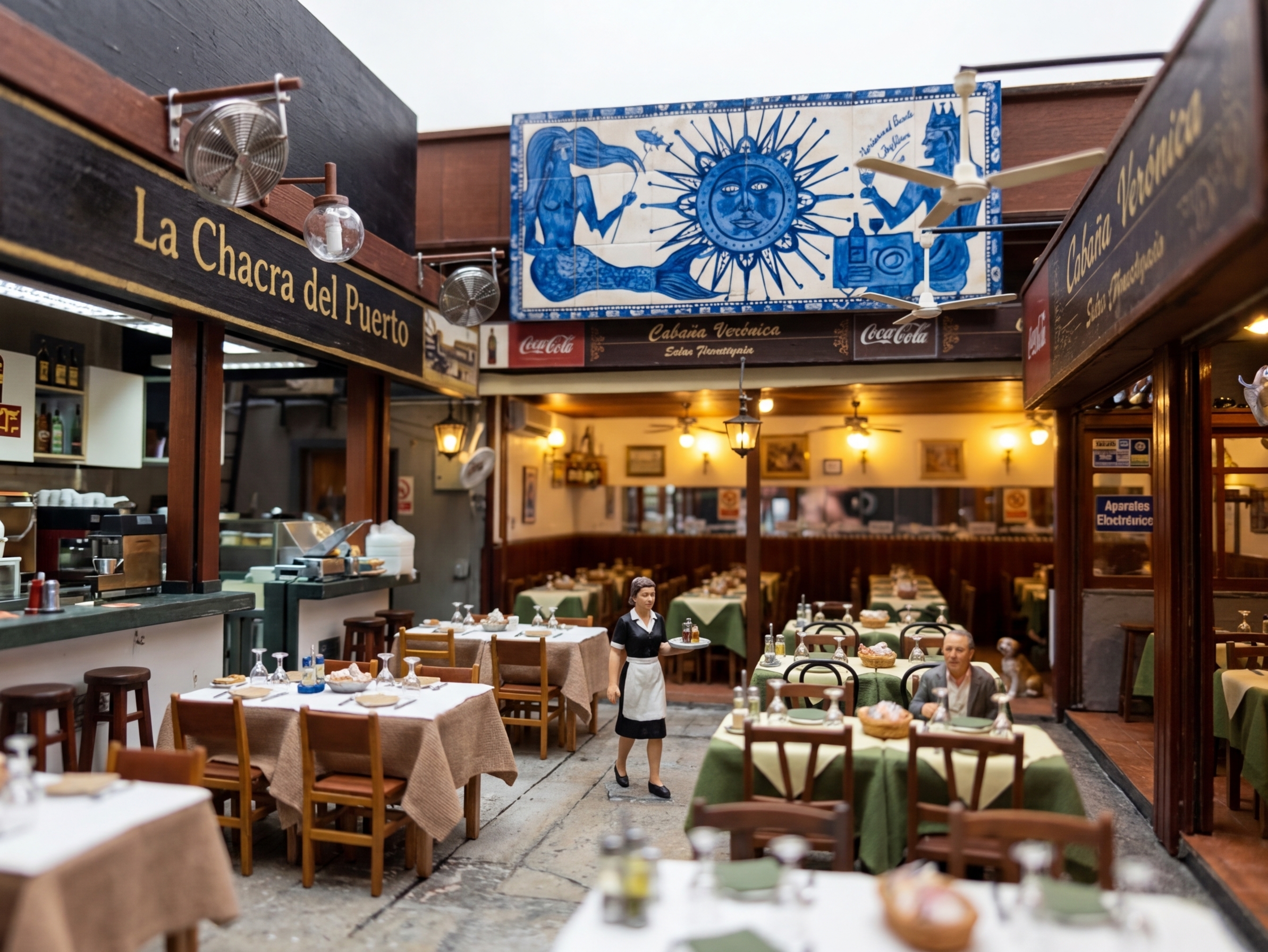
Cabaña Verónica
Montevideo, Uruguay
Verónica inherited the parrilla from her parents and has run it for more than thirty years inside Mercado del Puerto. The stall sits under the original 1868 steel-beam roof, and the fire runs on firewood, not charcoal. The chorizo here is short and thick, grilled until the skin pulls tight and blisters. Morcilla and provoleta share the grill, and the massive sirloin cuts have drawn repeat visitors from across Montevideo and from abroad. Verónica works the counter herself during peak hours. The restaurant opens at 11 and closes when the market day ends, typically by late afternoon.
El Palenque
Montevideo, Uruguay
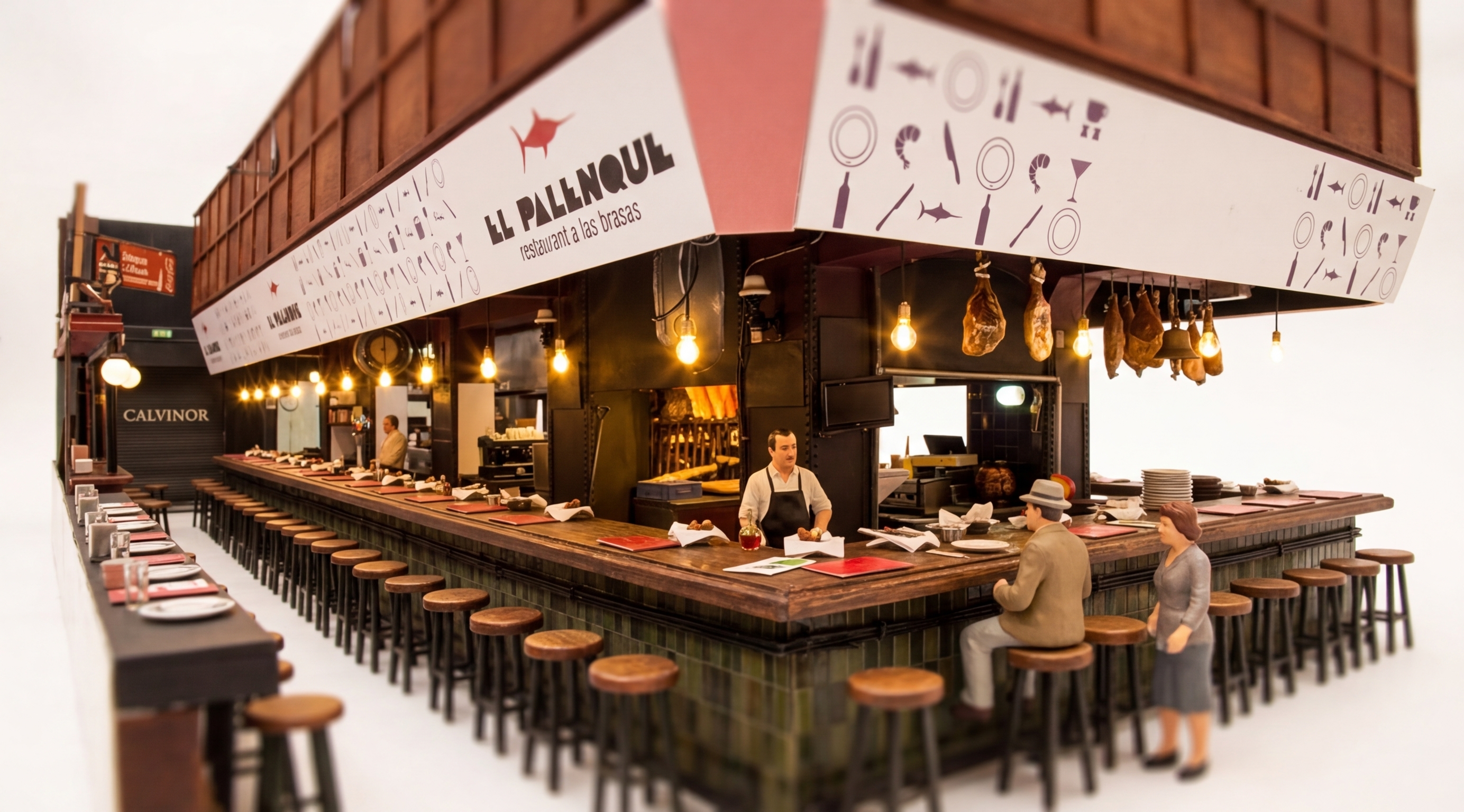
El Palenque opened in 1958 inside Montevideo's Mercado del Puerto, the iron-roofed market hall near the old port, and has run the same parrilla ever since. The grill sits at the center of the stall, visible from the entrance, loaded with chorizo, morcilla, rib cuts, and sweetbreads over wood embers. The cooking shows a Galician influence alongside the local tradition: empanadas and octopus dishes share menu space with the full asado spread. On Saturdays, when every stall in the market fires up simultaneously, El Palenque fills by noon and stays that way through mid-afternoon. The choripán here is the baseline by which many Montevideo residents judge all others.
La Pulpería
Montevideo, Uruguay
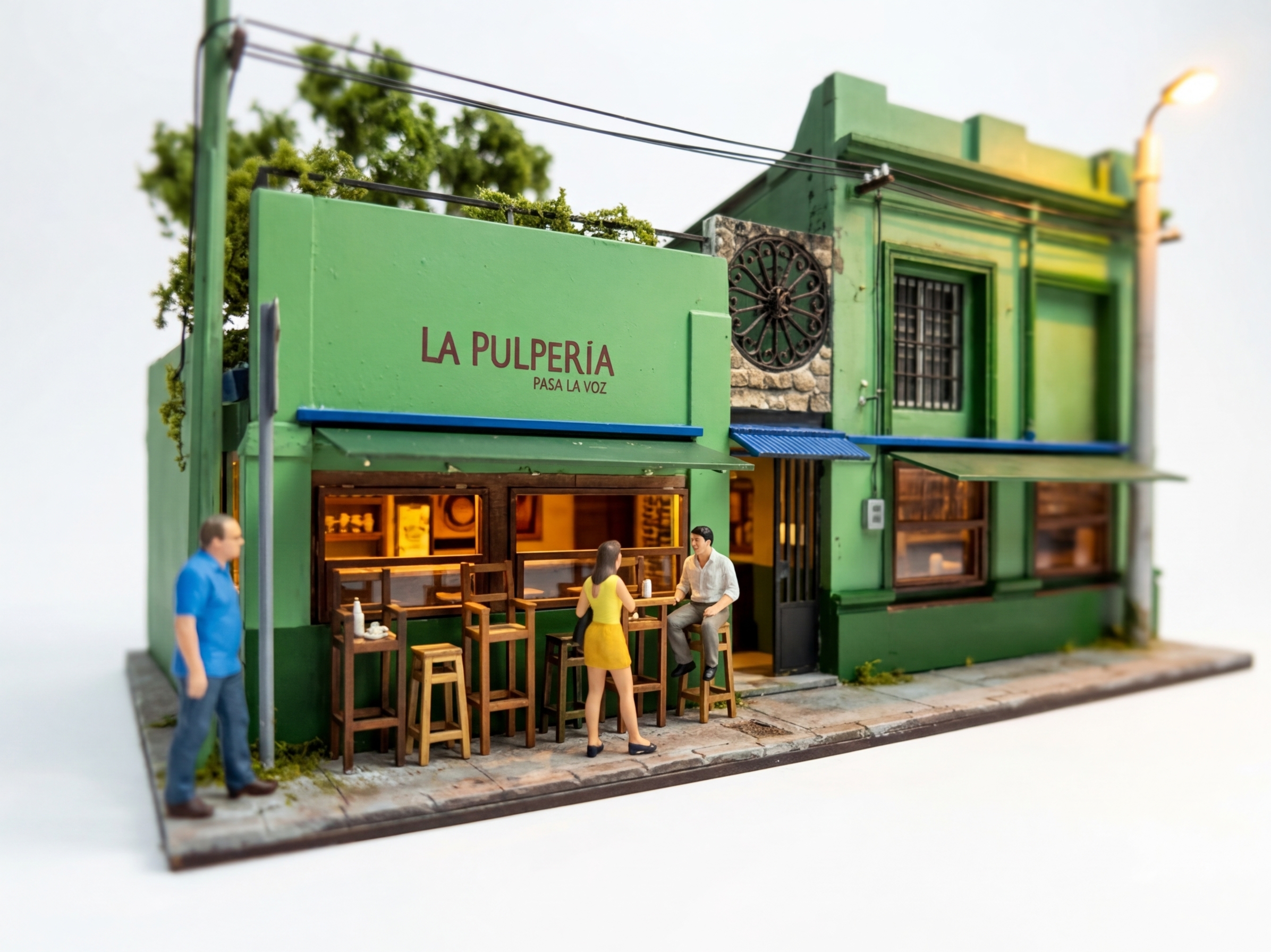
La Pulpería has been operating in the Punta Carretas neighborhood since 1994. It opens only for dinner, Tuesday through Saturday, and takes no reservations. The line forms on the sidewalk. Inside, the parrilla takes up most of the kitchen, and the menu is short: chorizo, sweetbreads, ribs, a few beef cuts, and morcilla. The portions run large and the prices stay modest. Regulars treat it as a working parrilla, not a dining destination, and the no-frills approach is the point. The chorizo here has a thicker casing than average, and the grill time shows in the dark char marks on the skin.
Lo de Silverio
Montevideo, Uruguay
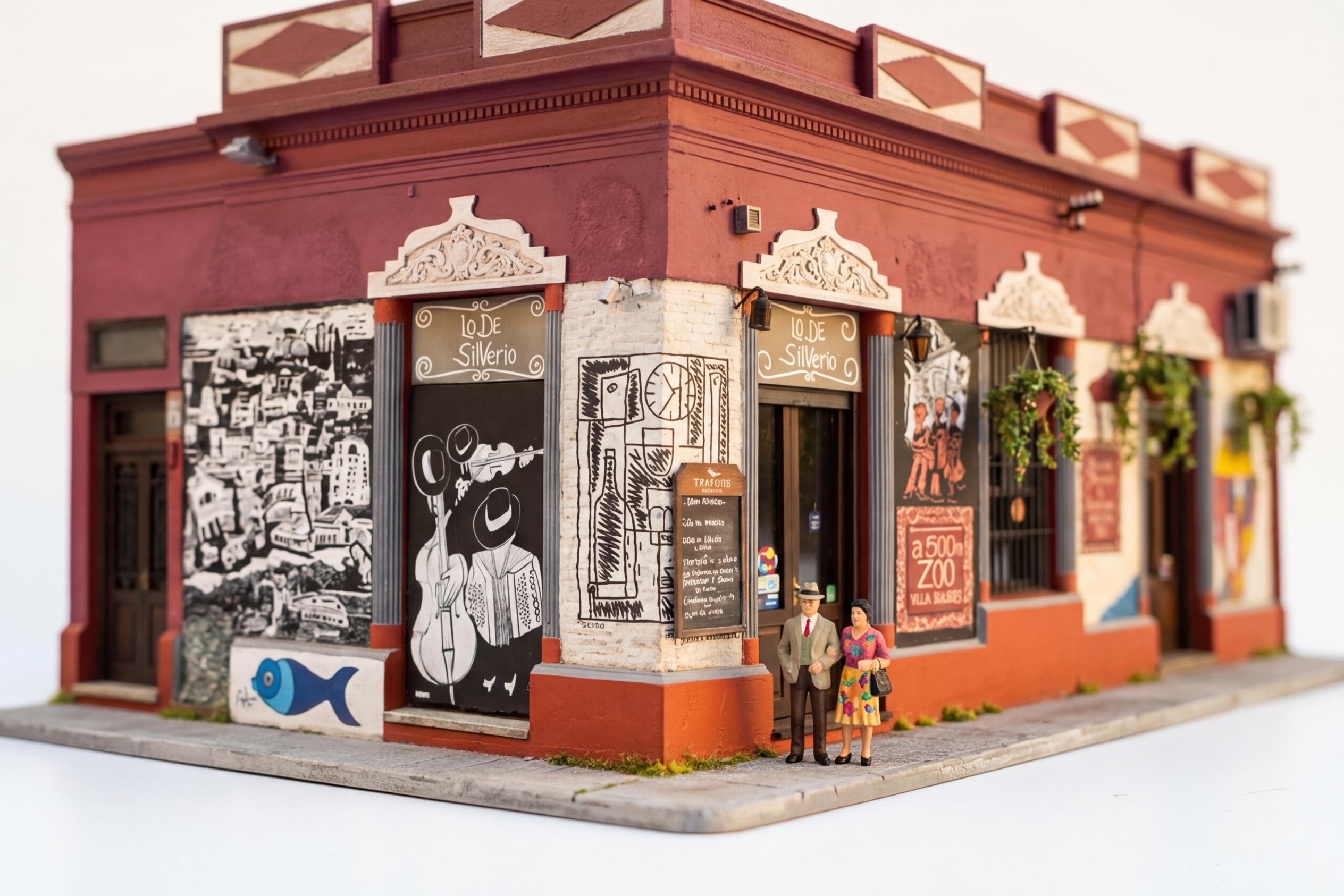
Lo de Silverio opened in 1962 on Alejo Rossell y Rius in the Parque Batlle neighborhood, and its corner position under the trees has not changed since. The outdoor tables fill on weekends when families come for the full asado spread: chorizo and morcilla first, then ribs, picanha, and loin cuts, all cooked over wood embers on a long open grill. The murals on the exterior walls make the building recognizable from half a block away. The cooking here is straightforward and the portions are large. Lo de Silverio functions as a neighborhood institution, drawing the same families across generations rather than chasing a tourist crowd.