Chorizo
Extremadura, Spain
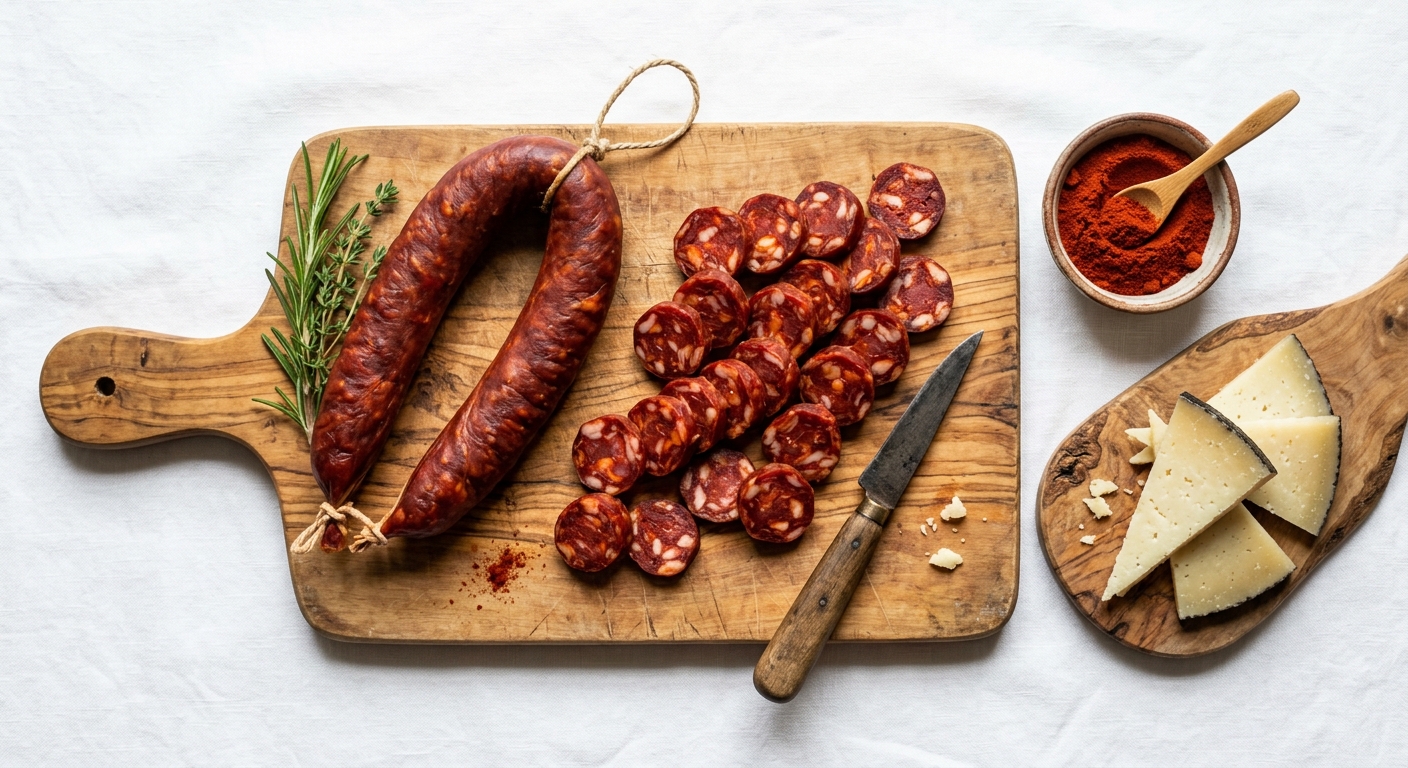
Spain's most iconic cured sausage, made from coarsely chopped pork seasoned with pimentón (smoked paprika) and garlic, then stuffed into natural casings and dry-cured for weeks. The red comes from pimentón de la Vera, a smoked paprika produced in Extremadura. Chorizo exists in hundreds of regional variants across Spain, from soft and spreadable to hard and sliceable.
History
Before the 16th century, Iberian pork sausages existed but looked nothing like modern chorizo. Everything changed when Hieronymite monks in the La Vera valley of Extremadura began cultivating peppers brought from the Americas and drying them over oak smoke. That smoked paprika, pimentón de la Vera, gave chorizo its red color and smoky bite. By the 18th century, chorizo had become a pantry staple across Spain. Each region developed its own version: León made theirs coarse and heavily smoked, La Rioja went finer and milder, Pamplona ground the meat almost to a paste. The sausage traveled to Latin America with colonists, spawning Mexican, Argentine, and Portuguese variations that barely resemble the Spanish original.
Ingredients
Preparation
Pork shoulder and back fat are coarsely chopped (never ground fine), mixed with generous amounts of pimentón, garlic, salt, and oregano, then stuffed into natural hog casings. The sausages are tied into horseshoe shapes or long links and hung to cure in cool, dry air for two to eight weeks, depending on the desired firmness.
Taste
Smoky, garlicky, with a warm paprika heat that ranges from sweet (dulce) to spicy (picante) depending on the pimentón used. Cured versions concentrate the flavor into something deep and earthy. Fresh chorizo is brighter, with more raw garlic punch.
Texture
Cured chorizo is firm and dense with visible chunks of fat marbled through dark red meat. The exterior develops a thin, slightly tacky rind. Fresh (cooking) chorizo is soft and crumbly, releasing bright red paprika-tinted fat when heated.
Rituals & Traditions
The matanza
The traditional annual pig slaughter in November or December, when families gather to make chorizo and other embutidos for the year. Entire villages participate.
Use pimentón de la Vera
The smoked paprika from the La Vera valley is what makes real Spanish chorizo. Regular paprika produces a different sausage entirely.
Never confuse with Mexican chorizo
Mexican chorizo is raw, made with chili peppers and vinegar, and bears little resemblance to the Spanish original. They are two different sausages.
Recipes
Bocadillo de Chorizo
Chorizo
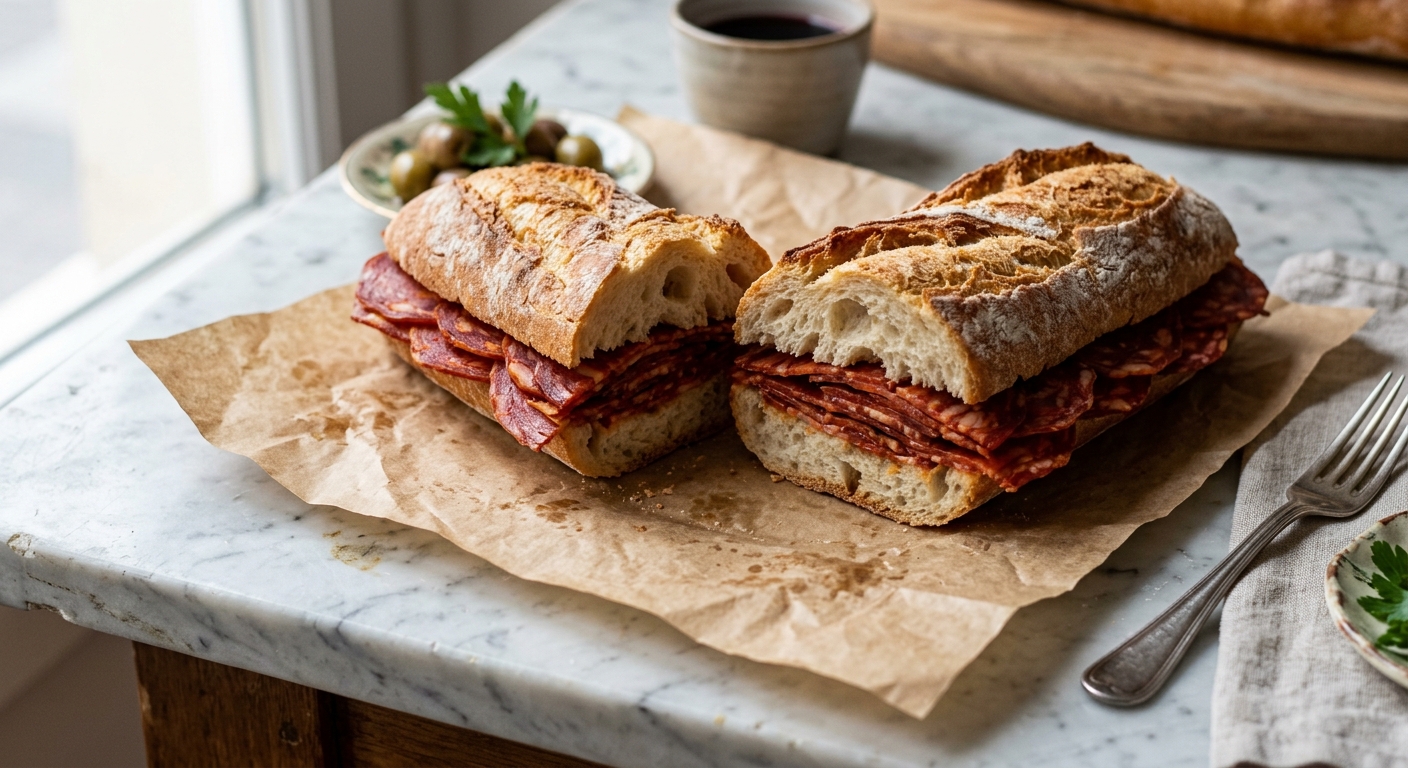
The simplest and most eaten chorizo preparation in Spain: cured chorizo sliced onto a crusty baguette. No condiments, no lettuce, no nonsense. The bread should be fresh enough to have a shattering crust and soft interior. The chorizo does all the work.
Chorizo a la Sidra
Chorizo
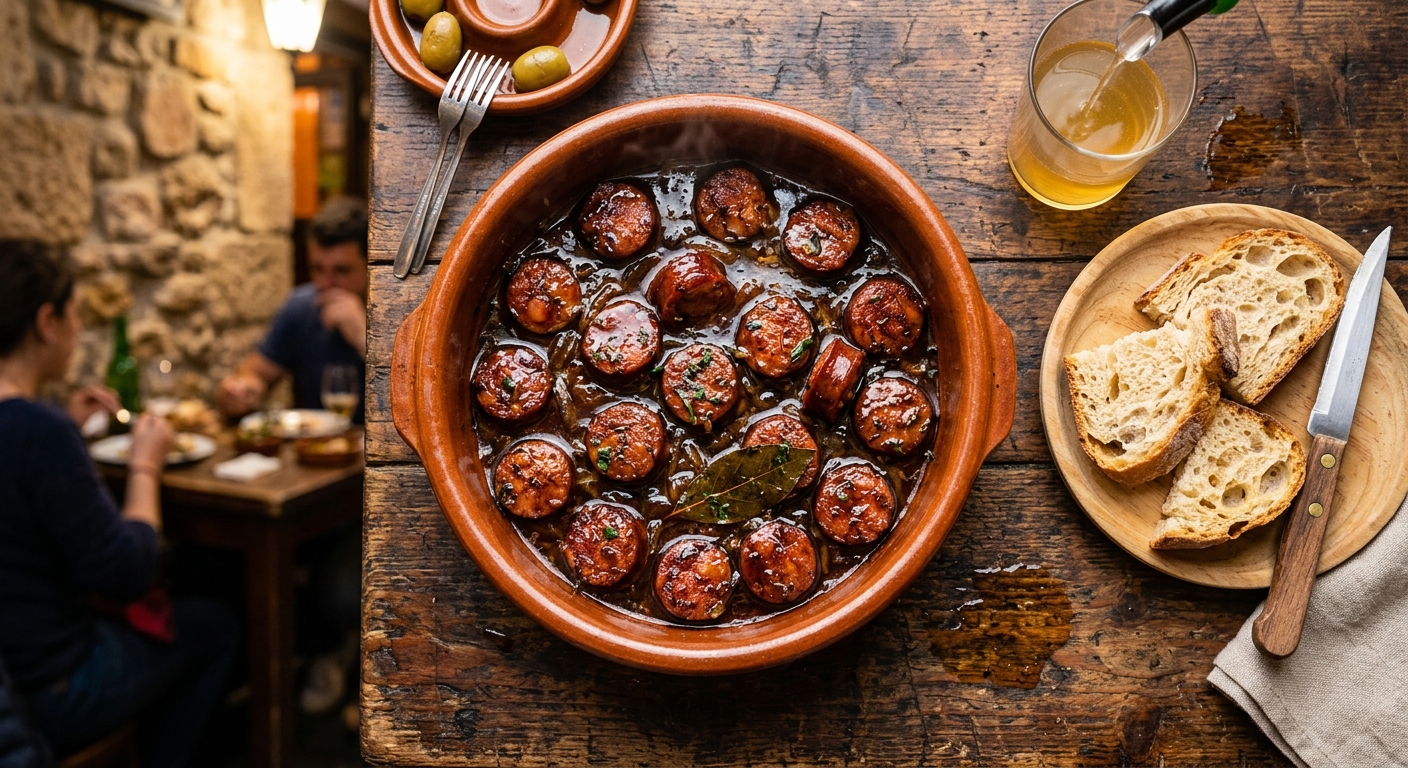
The classic Asturian tapa: whole chorizos simmered in hard cider until the alcohol cooks off, leaving a sweet, tangy glaze. The cider cuts through the fat and smoke. Two ingredients, fifteen minutes, one of the best things you can eat in Spain.
Chorizo al Infierno
Chorizo
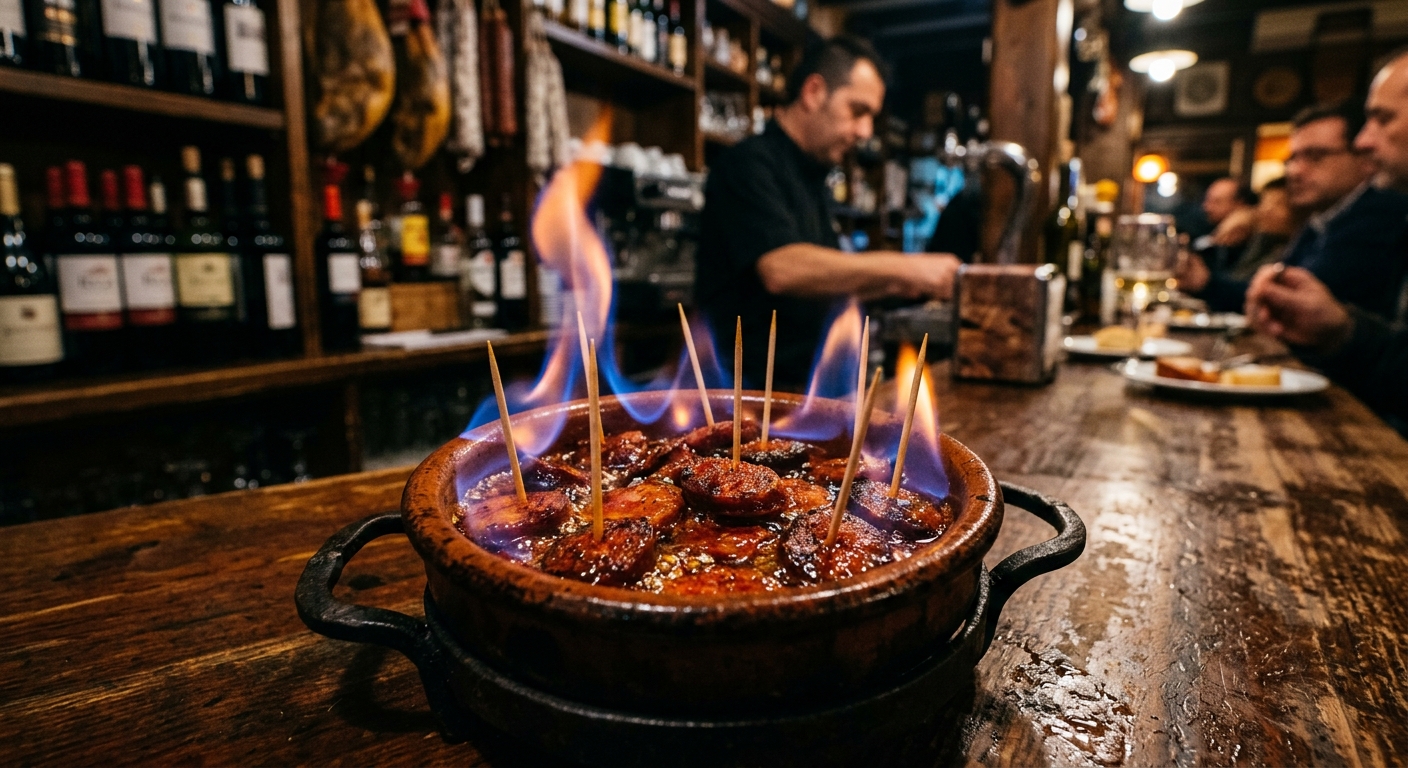
Chorizo flambéed in aguardiente or brandy, a dramatic tapas bar staple. The spirit is lit tableside, burning blue around the sausage until the alcohol is consumed. The chorizo picks up a faint anise or grape note from the spirit. Best eaten in a dark bar where you can watch it burn.
Fabada Asturiana
Chorizo
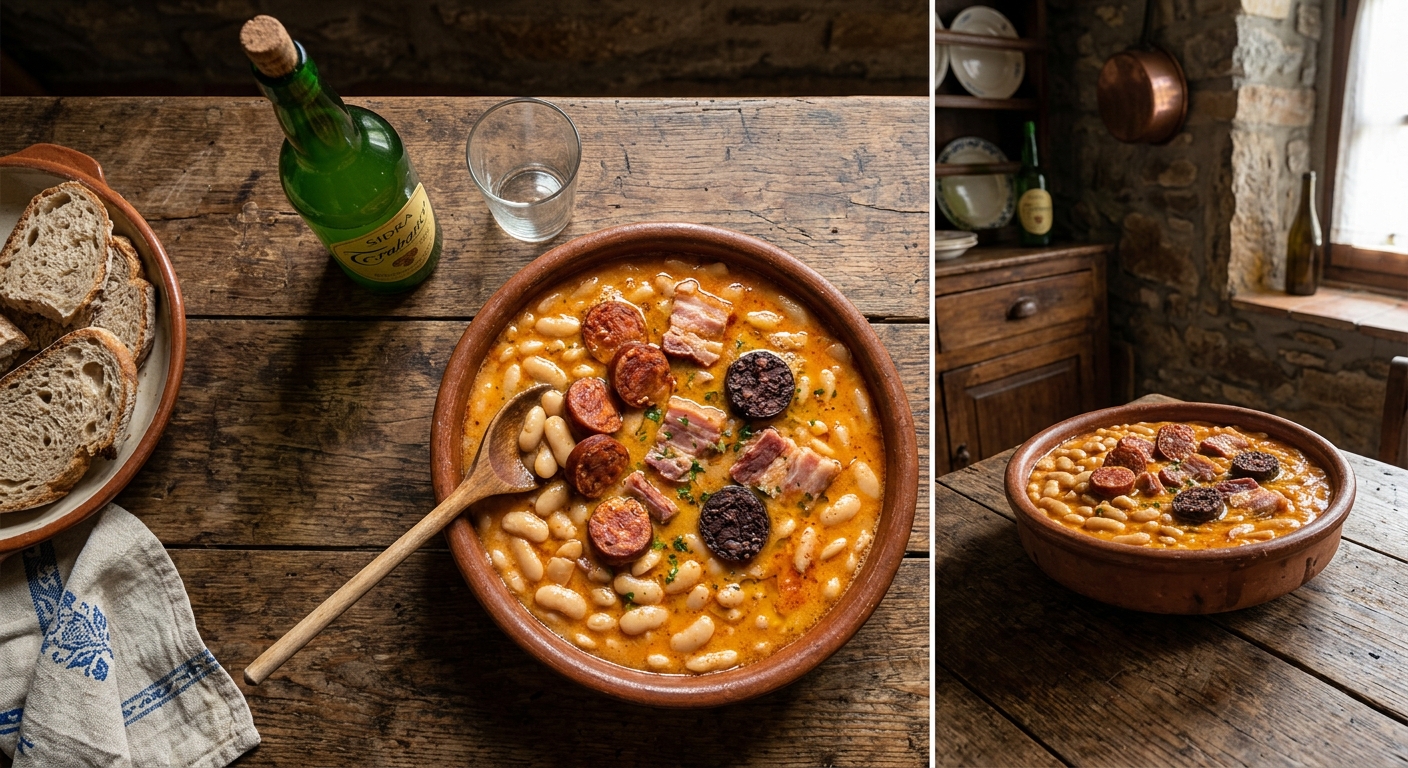
The great bean stew of Asturias: large white fabes beans cooked low and slow with chorizo, morcilla (blood sausage), and lacón (cured pork shoulder) until the beans are creamy and the broth thick with rendered pork fat. A dish for cold, rainy days, which Asturias has in abundance.
Huevos Rotos con Chorizo
Chorizo
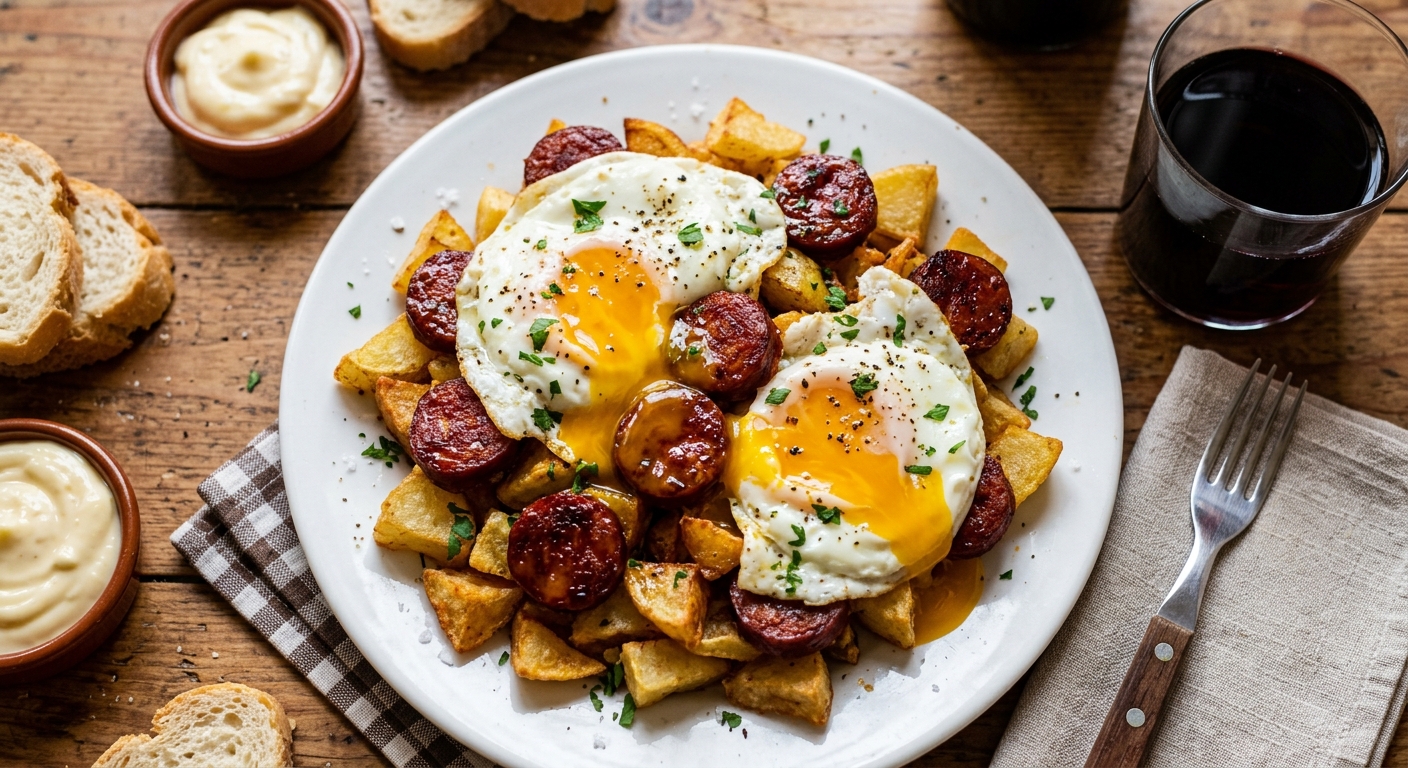
Broken eggs over fried potatoes and chorizo, a Madrid bar classic. The eggs are fried until the whites set but the yolks stay runny, then smashed open over a pile of crispy potato chips and sliced chorizo. The yolk becomes the sauce.
Patatas a la Riojana
Chorizo
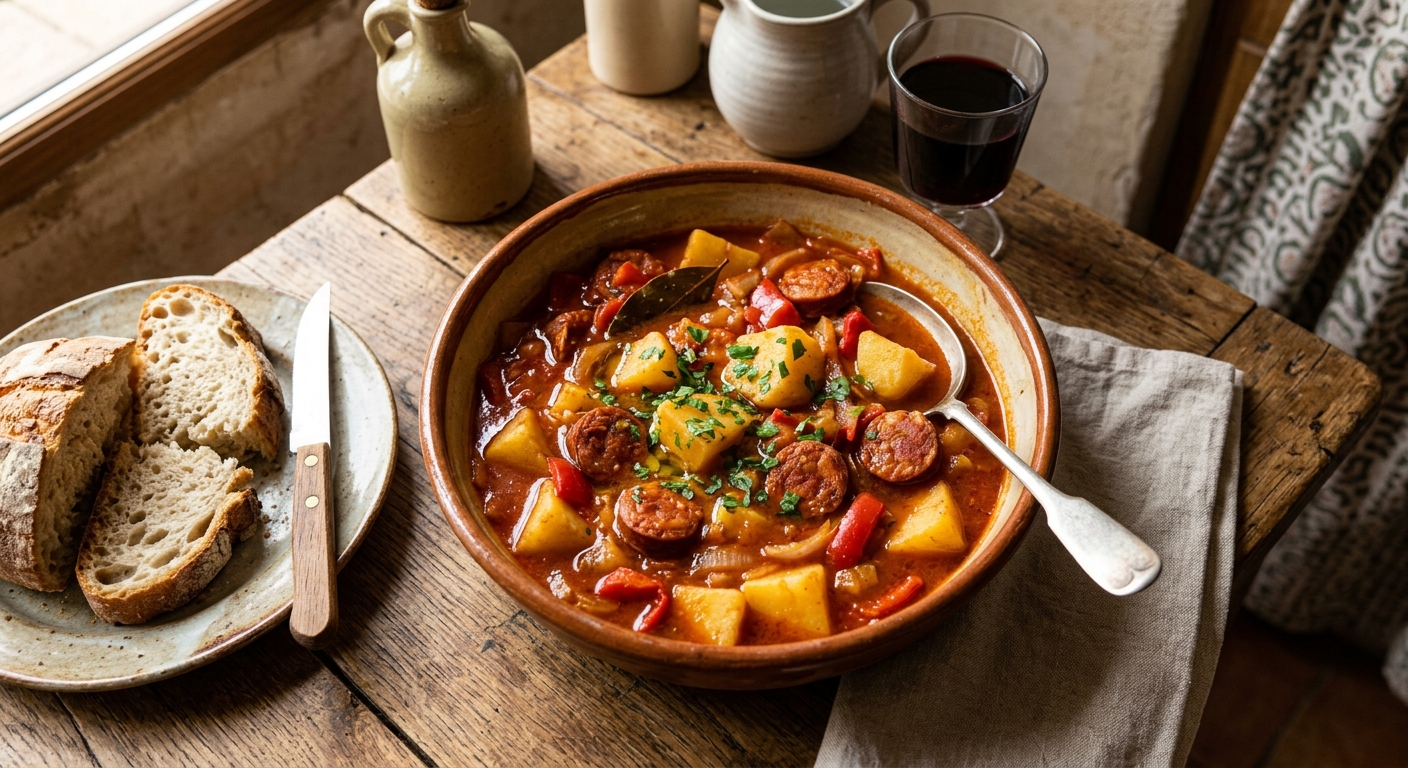
A hearty potato and chorizo stew from La Rioja. Chunks of potato simmer with sliced chorizo, onion, and pimentón until the broth turns rust-red from the paprika fat. A cold-weather staple in northern Spain, eaten as a first course or a full meal with bread.
On the Map
Where to Buy

Embutidos Ezequiel
Villamanín, Spain
A family-run producer in Villamanín, León, making IGP Chorizo de León for over 75 years. Their chorizos are coarse-ground, heavily smoked over oak, and cured in the cold mountain air of the Cantabrian foothills. They run an on-site restaurant where you can eat their products with local bread and wine.

Palacios Alimentación
Albelda de Iregua, Spain
The largest chorizo producer in La Rioja, based in Albelda de Iregua since 1983. Palacios makes their chorizo with pimentón de la Vera and distributes across Europe and the Americas. Their chorizo extra and chorizo sarta are among the most widely available Spanish chorizos outside Spain.
Señorío de Montanera
Badajoz, Spain
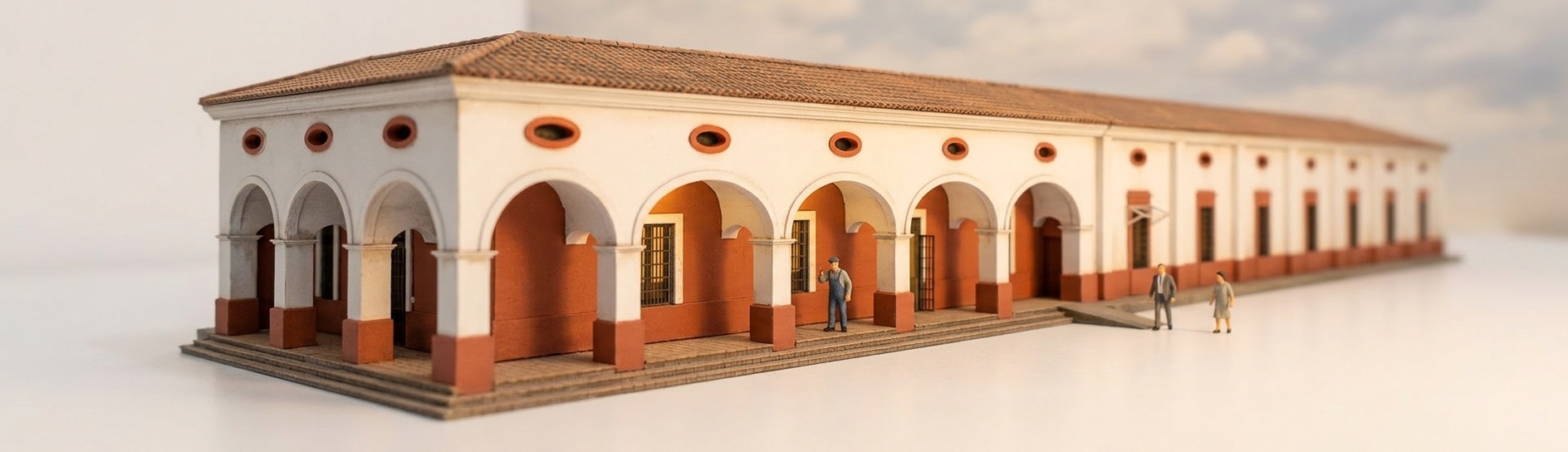
Premium Ibérico producer in Badajoz, Extremadura. Their chorizo ibérico de bellota is made from 100% acorn-fed Ibérico pigs that roam the dehesa oak forests. DOP Dehesa de Extremadura certified. The chorizo has a deeper, nuttier flavor than conventional pork chorizo, with a rich marbling from the acorn-fed fat.
Where to Eat
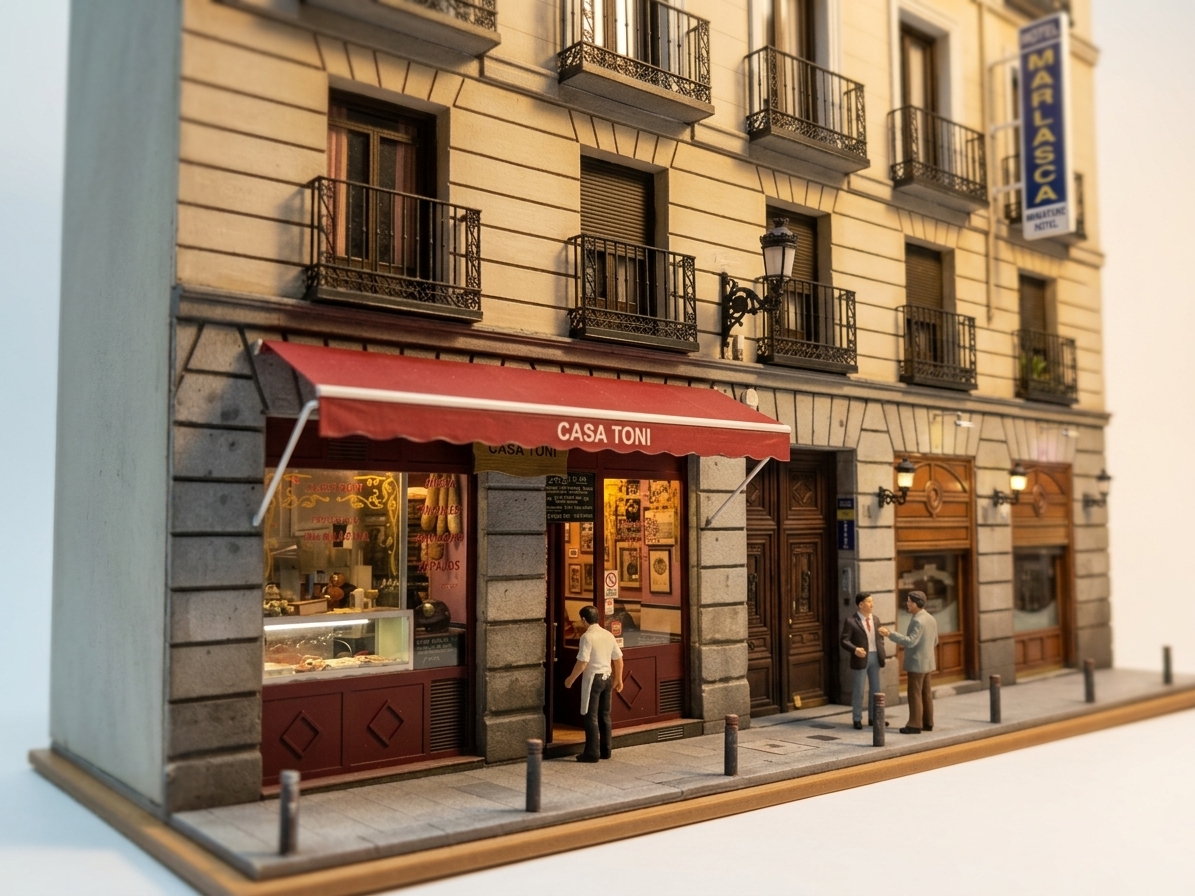
Casa Toni
Madrid, Spain
A no-frills tapas bar near Puerta del Sol that has been serving fried chorizo, patatas bravas, and offal to Madrileños for decades. Cramped, loud, and packed at lunchtime. The fried chorizo here is sliced thick, cooked in its own fat, and served on a small plate with bread to mop up the paprika-stained oil.
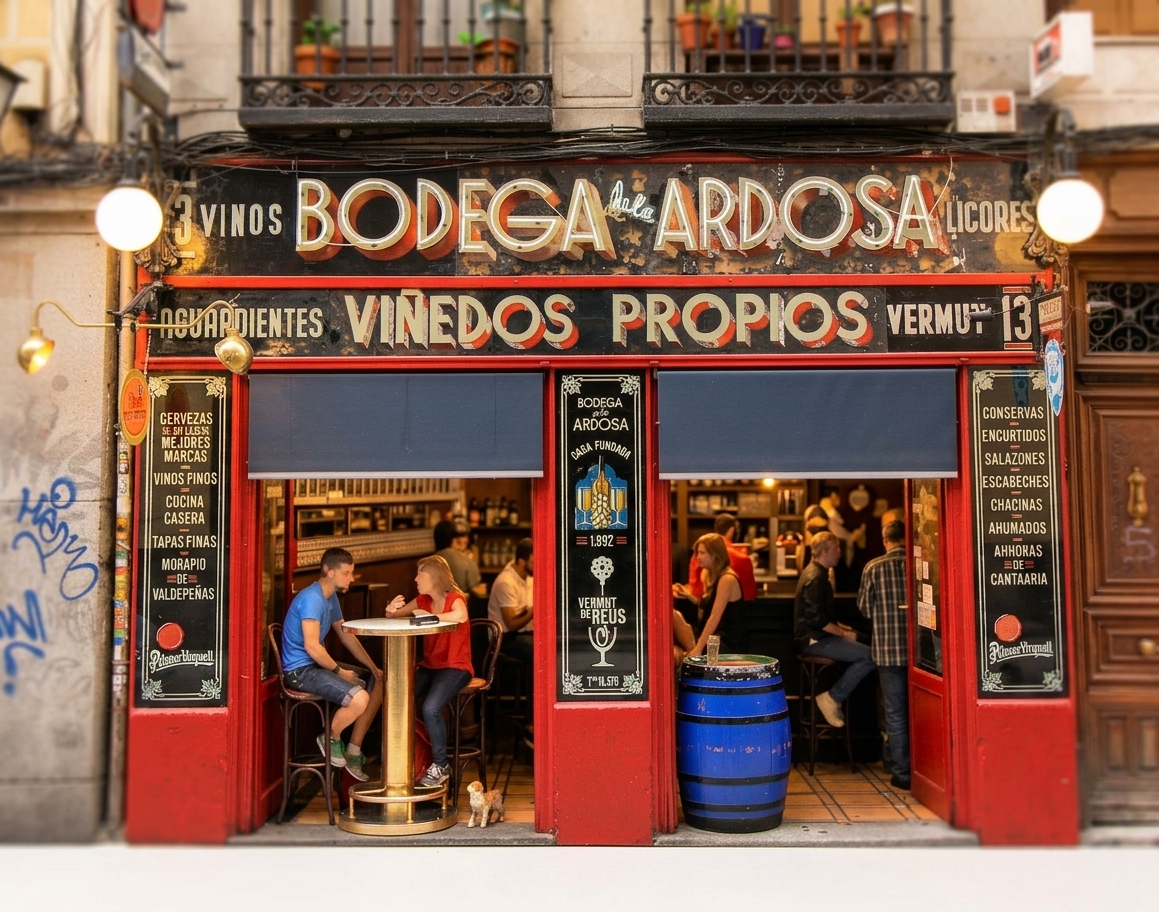
La Ardosa
Madrid, Spain
One of Madrid's oldest tapas bars, pouring wine and serving cured meats since 1892. The zinc-topped bar is always crowded, the walls covered in old bullfighting posters. Their chorizo comes sliced from a whole cured piece kept behind the bar, served alongside croquetas and their famous tortilla. Cash only.
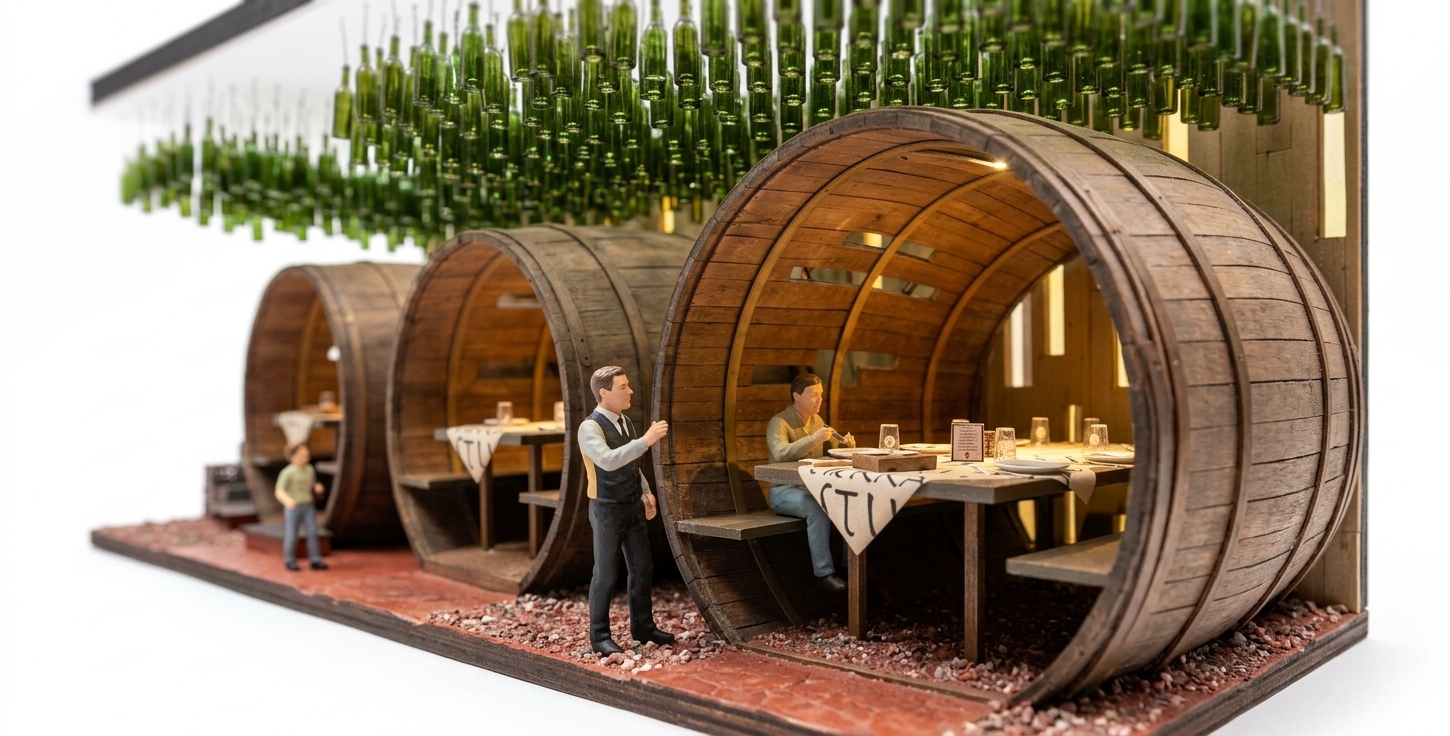
Tierra Astur
Gijón, Spain
A modern sidrería (cider house) in Gijón with the soul of a traditional one. Specializes in Asturian cuisine, and their chorizo a la sidra is a benchmark: whole chorizos simmered in hard cider until the alcohol burns off, leaving a sweet, tangy glaze on the smoky sausage. The cider is poured from height in the traditional escanciado style.
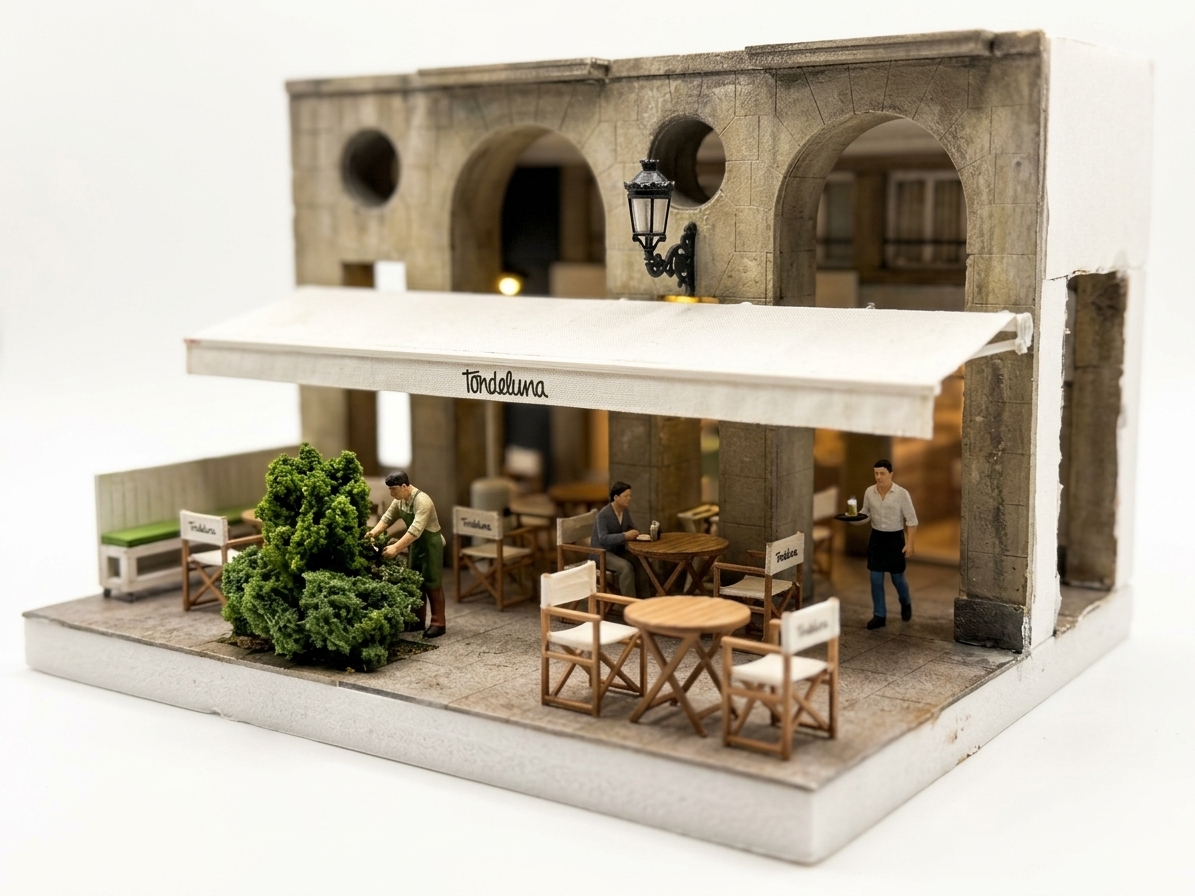
Tondeluna
Logroño, Spain
Chef Francis Paniego's restaurant in Logroño, the capital of La Rioja. High cuisine made accessible: the menu features Riojan chorizo in refined forms, including their signature macaroni with Riojan chorizo. The wine list runs deep with local Tempranillos. Sits in the heart of Calle Laurel, Logroño's famous tapas street.