Butifarra
Botifarra blanca
Catalonia, Spain
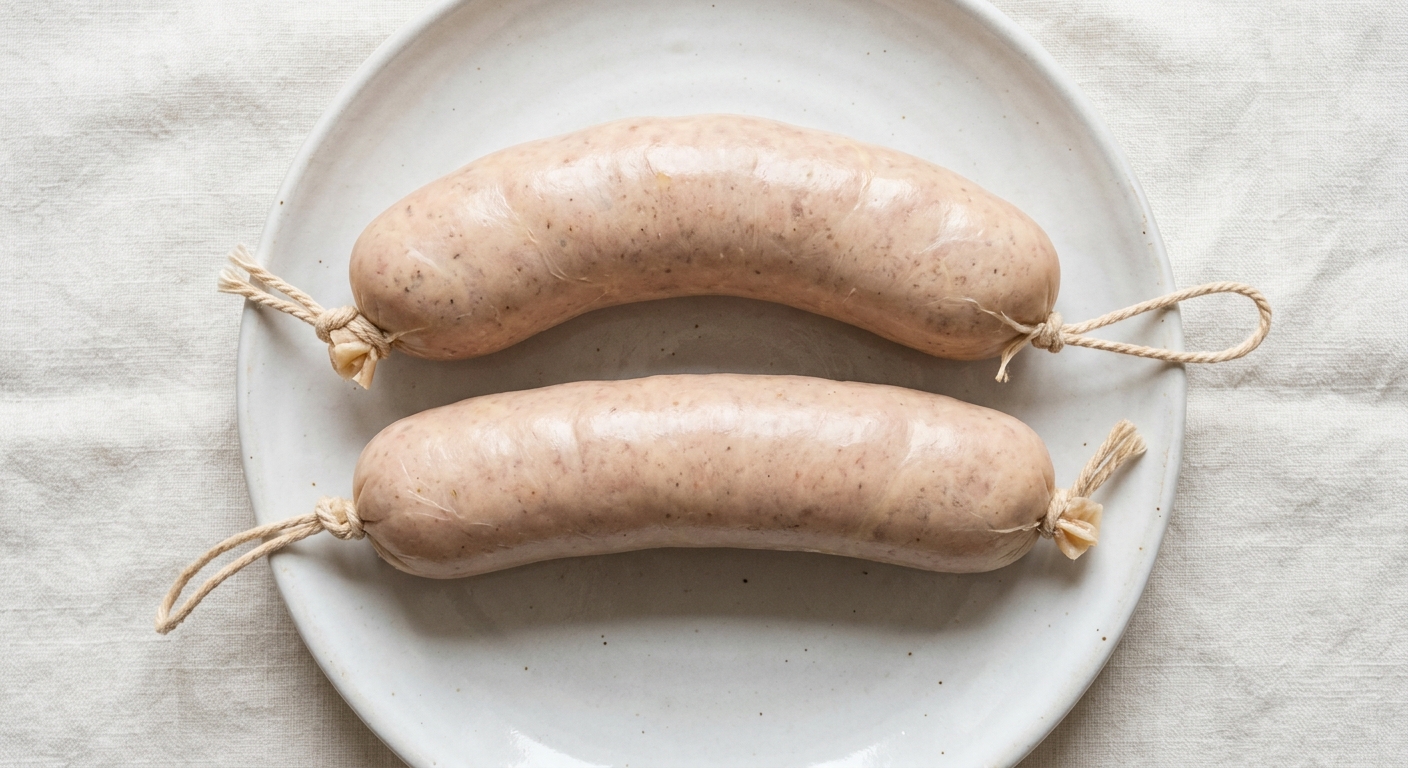
Butifarra is Catalonia's fresh white sausage, built on lean pork and back fat, seasoned with white wine, pine nuts, salt, and white pepper. The white wine tenderises the grind and carries the pine nut's oil through the mix; the result is a sausage with a pale, dense interior and a faint sweetness that disappears the moment the heat hits it. It is the centrepiece of botifarra amb mongetes, the Catalan dish of grilled sausage with stewed white beans, which appears on virtually every traditional restaurant menu between Barcelona and the Pyrenees. The sausage exists alongside its blood-filled counterpart, the butifarra negra, but the blanca is the one that anchors Catalan cooking as a weekday staple. PGI protection covers the broader category under Botifarra Catalana, fixing standards for pork content, casing, and seasoning.
History
Butifarra's written record in Catalonia goes back to medieval cookbooks, most prominently the Llibre de Sent Soví from the 14th century, which describes a white pork sausage seasoned with spices. The name derives from the Catalan botifarra, itself tracing to the Latin botulus (sausage) through Occitan. Throughout the medieval period, the sausage formed part of the matança, the annual domestic pig slaughter that ran from November through January, when pig-owning families produced enough cured and fresh sausage to carry through winter. Butifarra blanca was the perishable product of that slaughter, eaten in the days immediately after, while negra, fuet, and llonganissa dried and cured for the months ahead. The combination with mongetes (white beans) emerged from the subsistence logic of Catalan rural cooking: protein and starch from what the farm produced. By the 19th century, the greixonera and the botifarra amb mongetes had become fixtures of Barcelona's working-class taverns, the fondas and bodegues of the Raval and Barceloneta. The Osona comarca, centred on Vic, became the heartland of Catalan charcuterie production. Vic's weekly market, running since the Middle Ages, traded butifarra alongside fuet, llonganissa, and other cured meats. Today the comarca still concentrates the highest density of artisan botifarra producers in Catalonia, and Vic's market remains one of the best places in Spain to buy fresh sausage directly from the maker.
Ingredients
Preparation
The lean pork and back fat are minced on a medium plate, keeping enough fat content for juiciness without becoming greasy. Dry white wine goes into the bowl with the meat, along with salt, white pepper, and whole or roughly crushed pine nuts. Some producers from the Osona comarca add a grate of nutmeg. The mix is worked briefly by hand to distribute the pine nuts and wine without overworking the grind. It is stuffed into natural pork casing and tied into links of approximately 15 to 20 centimetres. Because butifarra is a fresh sausage, it goes directly to market or kitchen without curing or smoking. It keeps for three or four days in a cold larder. Cooking is almost always on a planxa (flat griddle) or wood-fire grill, pressed gently with a spatula to ensure contact with the heat and prevent the casing from lifting.
Taste
White wine gives the sausage a faint acidity that lifts the pork without obscuring it. The pine nuts contribute small bursts of fat and a gentle resinous note between bites. White pepper rather than black keeps the seasoning present but not assertive. Cooked on a planxa, the casing tightens and browns, the interior stays tender with a slight bounce. The fat released from cooking pools around the sausage and, when mongetes are added to the pan, becomes the sauce.
Texture
The grind is medium-fine, denser than a Northern European sausage but not emulsified like a frankfurter. Bite through the casing and the interior has resistance and moisture. Pine nuts are occasionally visible as pale flecks in the cross-section. Overcooked, the sausage tightens and dries; correctly cooked on a hot planxa or grill, it remains juicy through the centre. Cold and sliced, it holds its shape cleanly.
Rituals & Traditions
Botifarra amb mongetes at the family table
Every traditional Catalan restaurant puts botifarra amb mongetes on the menu as a fixed dish, not a seasonal special. It is what you order when you want to eat Catalan food without explanation. The sausage comes off a planxa or wood grill, the beans come from a clay pot or are thrown into the same pan. In home kitchens across Catalonia, this is Sunday lunch and midweek dinner in equal measure. Recipes vary by comarca: some add garlic to the beans, some add a sprig of thyme, some add nothing. The sausage stays the same.
La matança and the fresh sausage days
In rural Catalonia, the matança runs from late November to January. Neighbours gather over two days, the pig is slaughtered and broken down, and the butifarra blanca is stuffed on the first afternoon. It goes on the grill that evening while it is still warm, the freshest possible version, eaten by the people who made it with bread and wine. The cured products, fuet and llonganissa, hang for weeks. The botifarra is eaten within days. The freshness is the point.
Cook on high heat and press gently
Butifarra needs a hot planxa or grill, not a slow pan. The heat should char the casing and seal the interior fast. Press the sausage gently with a spatula every minute or so to maintain contact with the surface. This prevents the casing from lifting and ensures even browning. Do not pierce the sausage. The juice inside is part of the flavour; lost to the pan, it cannot be recovered.
Do not confuse blanca with negra
Butifarra blanca (white) and butifarra negra (black, with pig's blood) are different sausages with different applications. The negra has a stronger, more mineral flavour and a firmer texture. Both are served at the Catalan table and both are called butifarra, which creates confusion in markets and restaurants. When ordering or buying, specify blanca. The negra is typically paired with sweet accompaniments like honey or sweet potato; the blanca goes with beans, peppers, or wild mushrooms.
Recipes
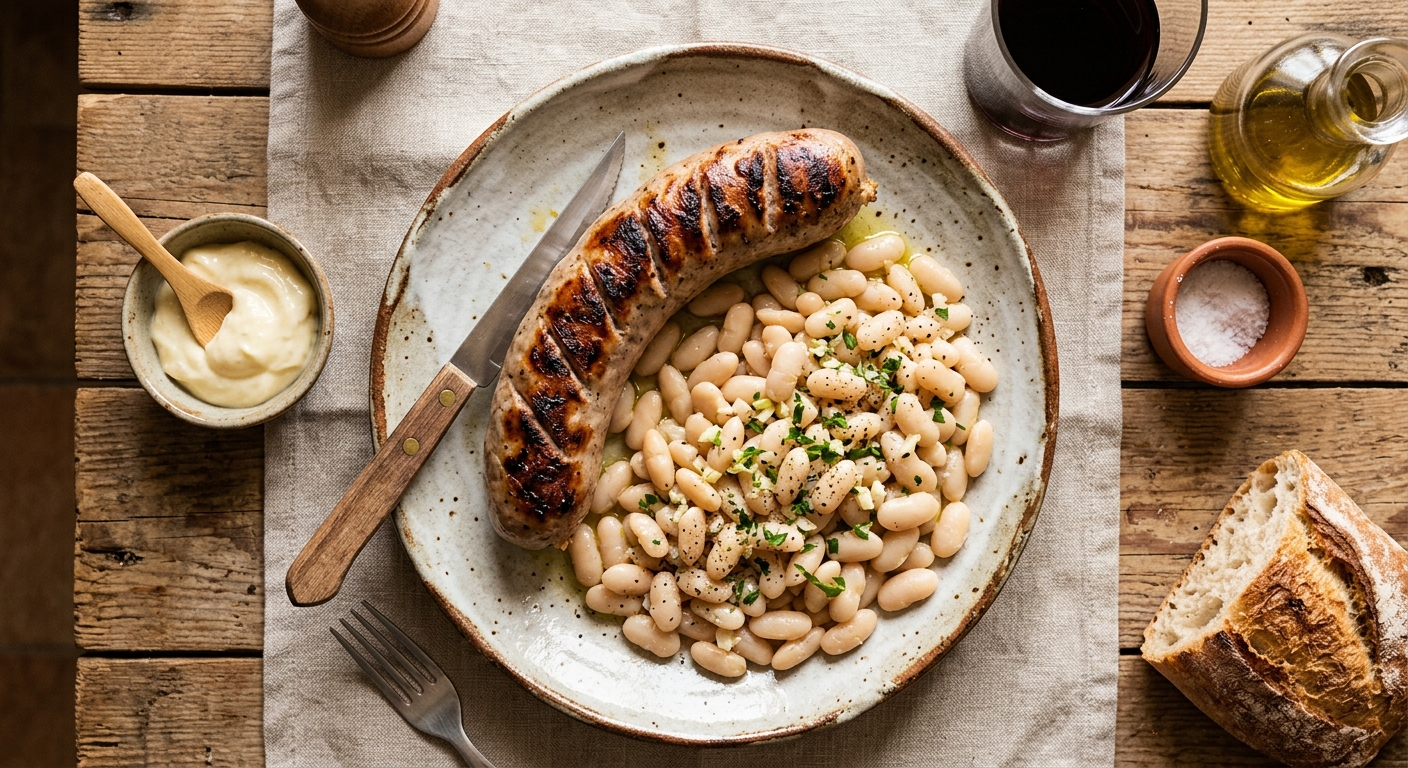
Botifarra amb Mongetes
Butifarra
The defining Catalan dish. Grilled butifarra blanca on a hot planxa, the fat running into ganxet beans that have been warming in the same pan. The beans absorb the rendered pork fat and become the sauce. Pa amb tomàquet on the side.
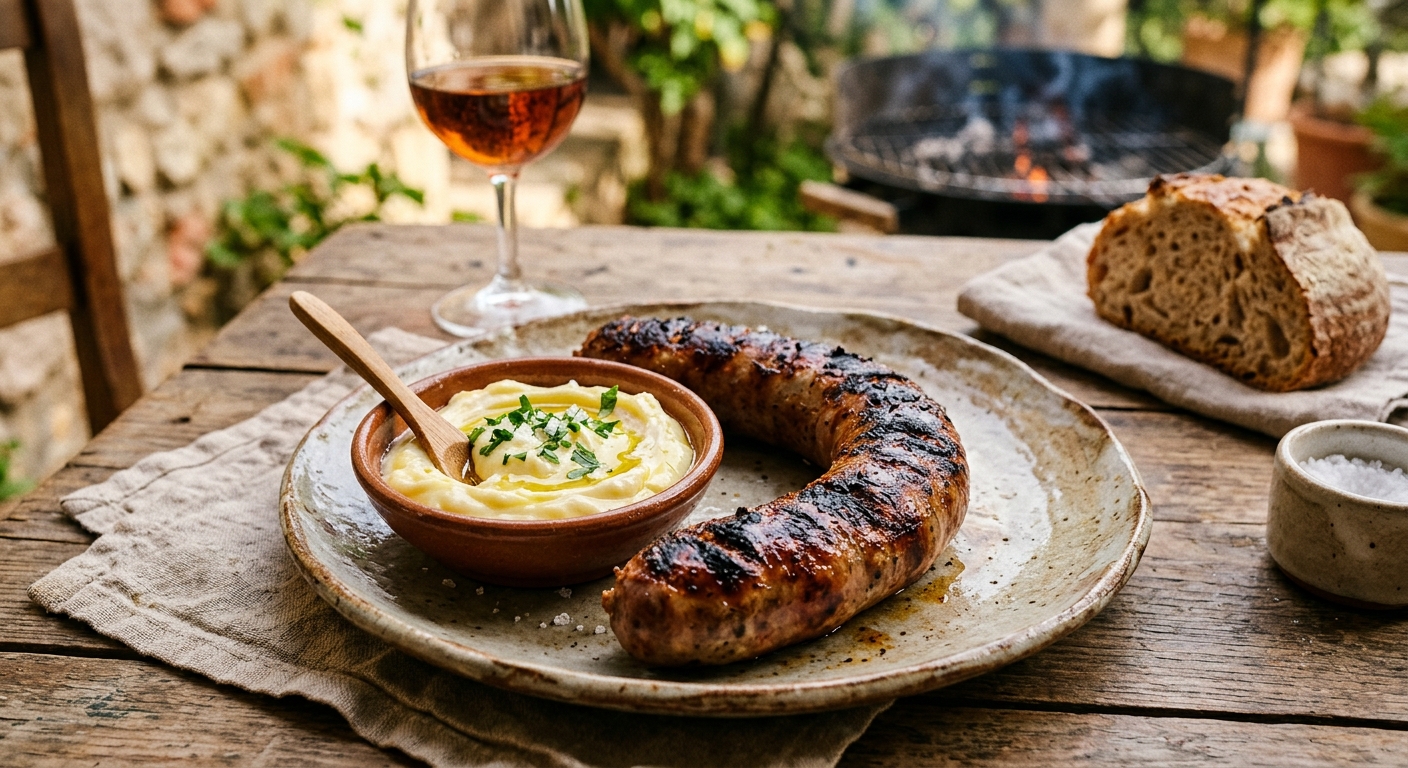
Butifarra a la Brasa
Butifarra
Butifarra cooked over charcoal, the way it is served at Catalan outdoor meals and calçotades. The coals do what a planxa cannot: give the casing a faint smoke and char it in patches. Eat with allioli and bread.
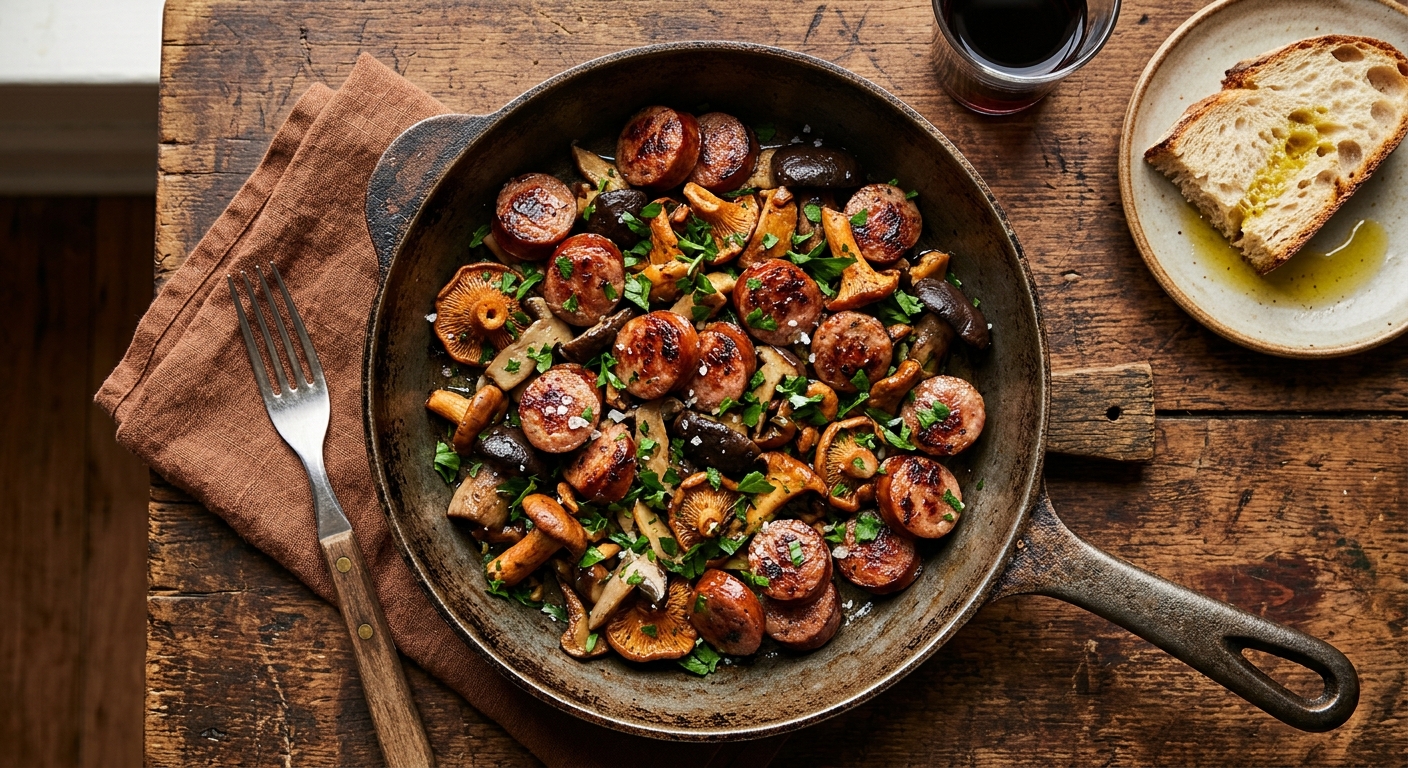
Butifarra amb Bolets
Butifarra
An autumn dish from the pre-Pyrenean forests of Catalonia. Butifarra cooked in a pan with wild mushrooms, garlic, parsley, and white wine. The mushrooms release their liquid and form a broth that becomes the sauce. Serve with bread to soak it up.
Butifarra amb Pebrots
Butifarra
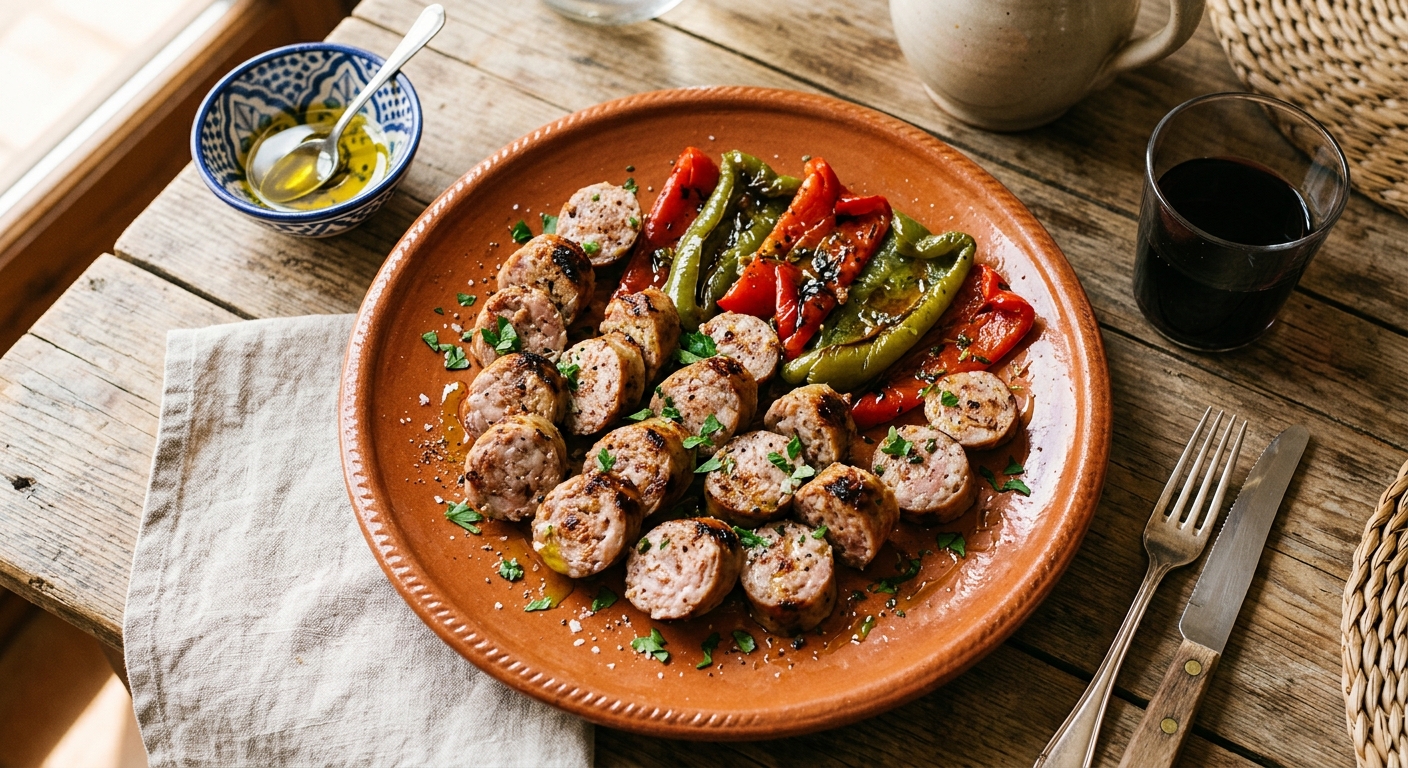
Butifarra sliced and cooked with roasted red and green peppers, garlic, and olive oil. The peppers soften and sweeten as they cook; the sausage fat seasons the whole pan. A simple late-summer dish when market peppers are at their peak.
Escudella i Carn d'Olla
Butifarra
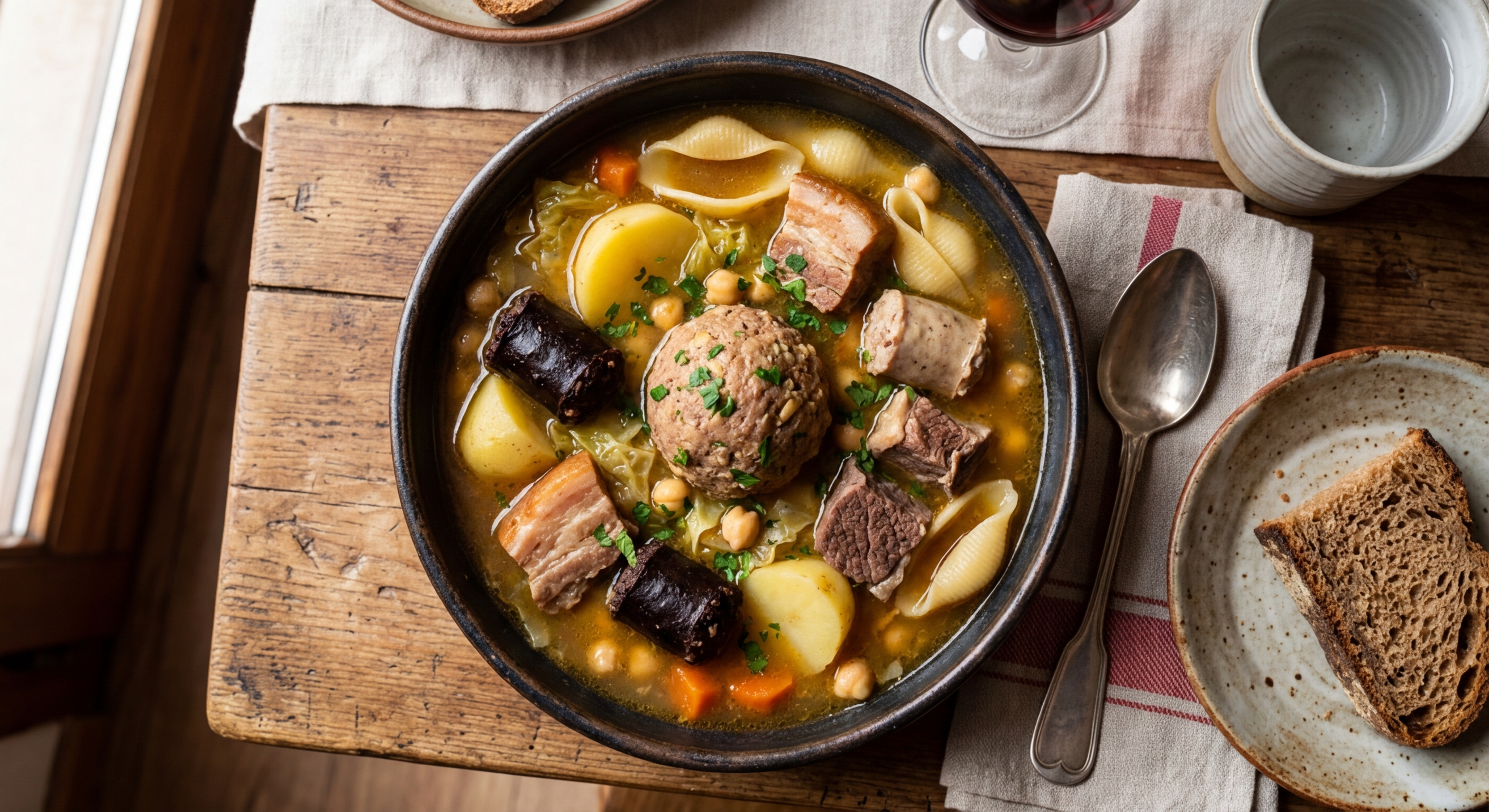
Catalonia's Christmas stew, a two-course meal from a single pot. The broth goes out first, with galets (large shell pasta) or rice. Then the meats: butifarra blanca, butifarra negra, a pilota (meat and pine nut dumpling), chicken, beef, pork, and root vegetables. The family eats together and the kitchen smells of bone broth for two days.
Trinxat amb Butifarra
Butifarra
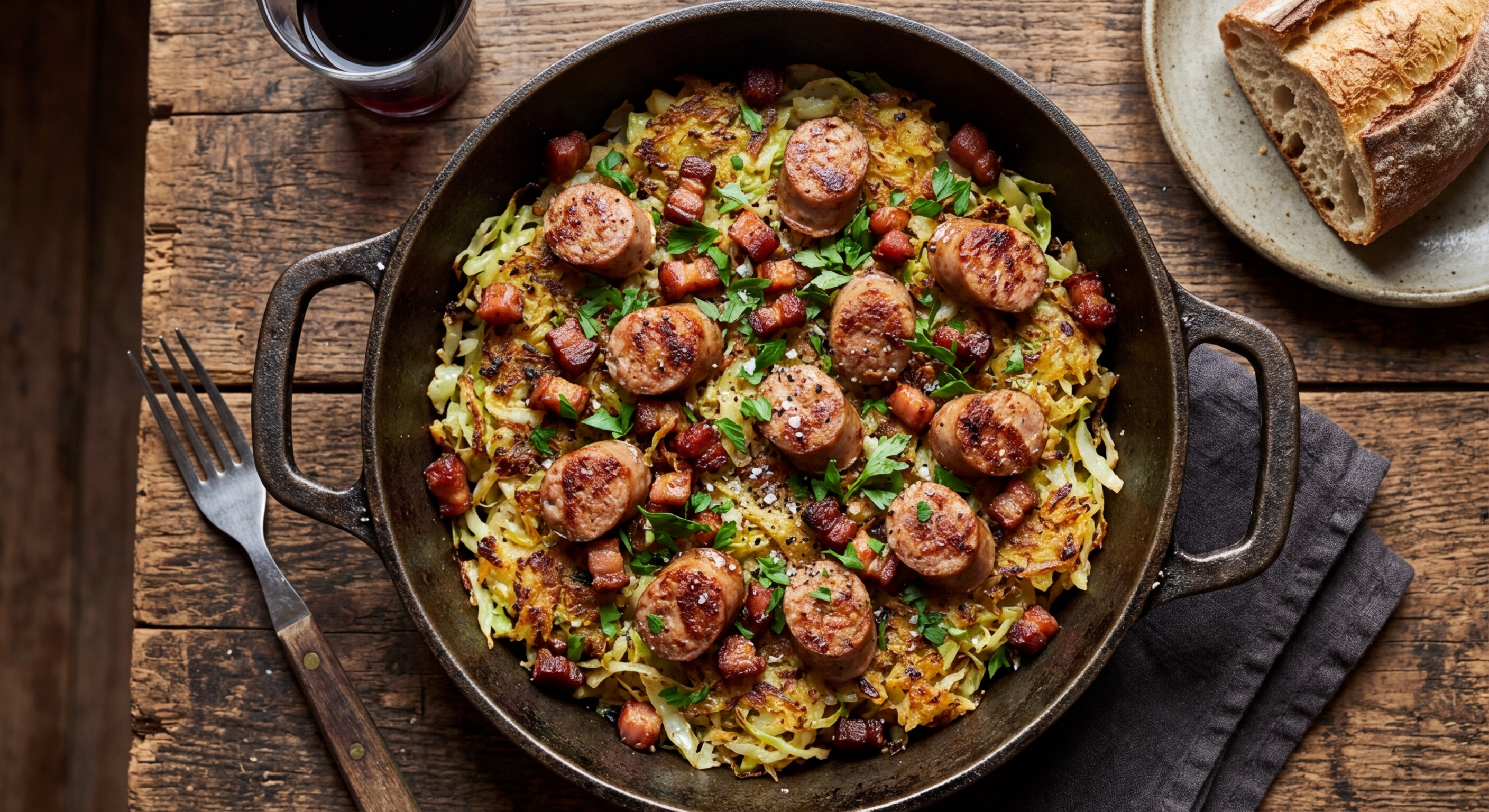
Trinxat is the Pyrenean winter dish of boiled cabbage and potato mashed together and fried in pork fat until a crust forms. Butifarra cooked alongside provides the protein and the fat that seasons the whole pan. The dish comes from the Cerdanya and Ripollès comarcas, where winters are cold and the cooking is built to last.
On the Map
Where to Eat
Agut
Barcelona, Spain
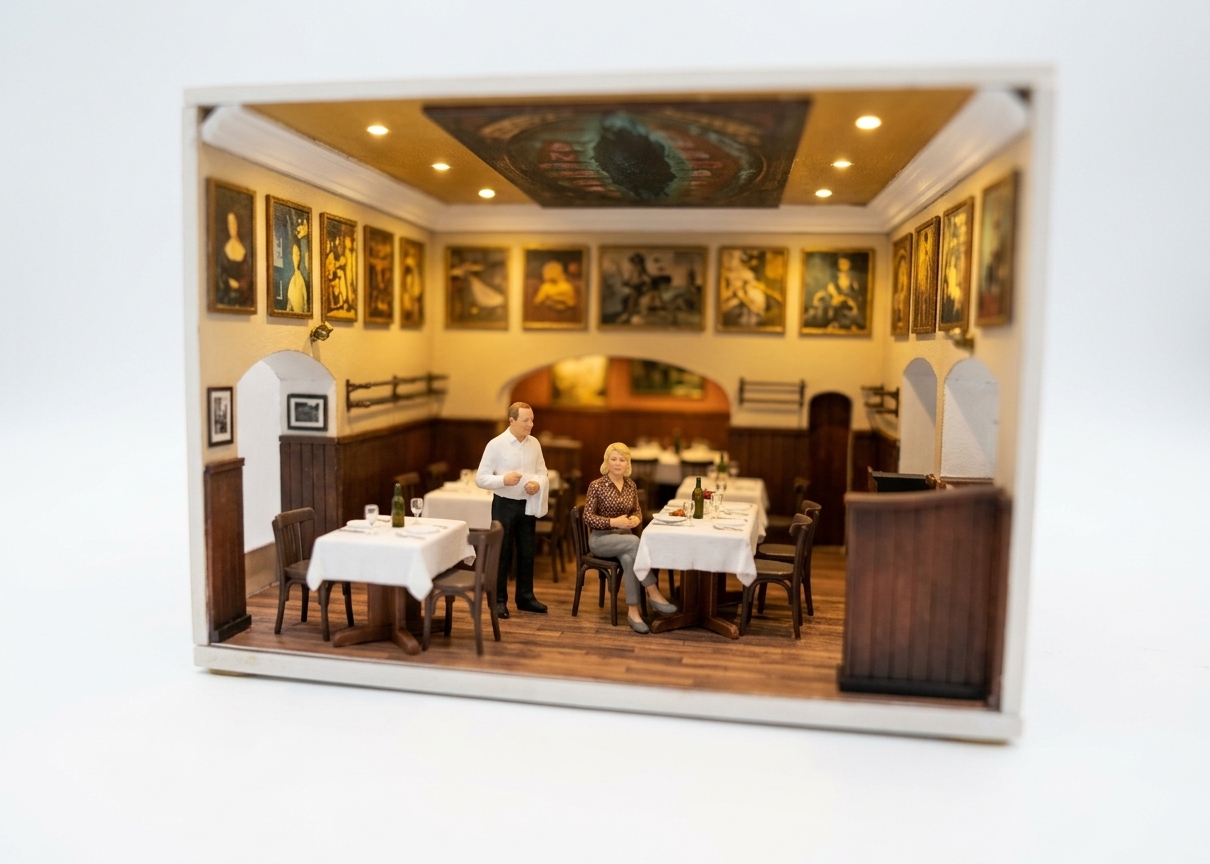
Agut opened in 1924 in the Barri Gòtic of Barcelona, on Carrer d'en Gignàs near the waterfront. It is a small, dark restaurant with bare stone walls, low ceilings, and a menu that has not tried to modernise. Botifarra amb mongetes is a permanent fixture, alongside bacallà amb arros, fideus a la cassola, and grilled veal. The wine list focuses on Catalan and Spanish bottles. Lunch is the main service; weekday tables fill with professionals from the nearby offices. At weekends the restaurant draws Barcelonans who want a specific meal in a specific room without fuss or theatre. The kitchen treats Catalan cooking as a daily discipline rather than a heritage performance. Prices are honest for what is on the plate.
Can Culleretes
Barcelona, Spain
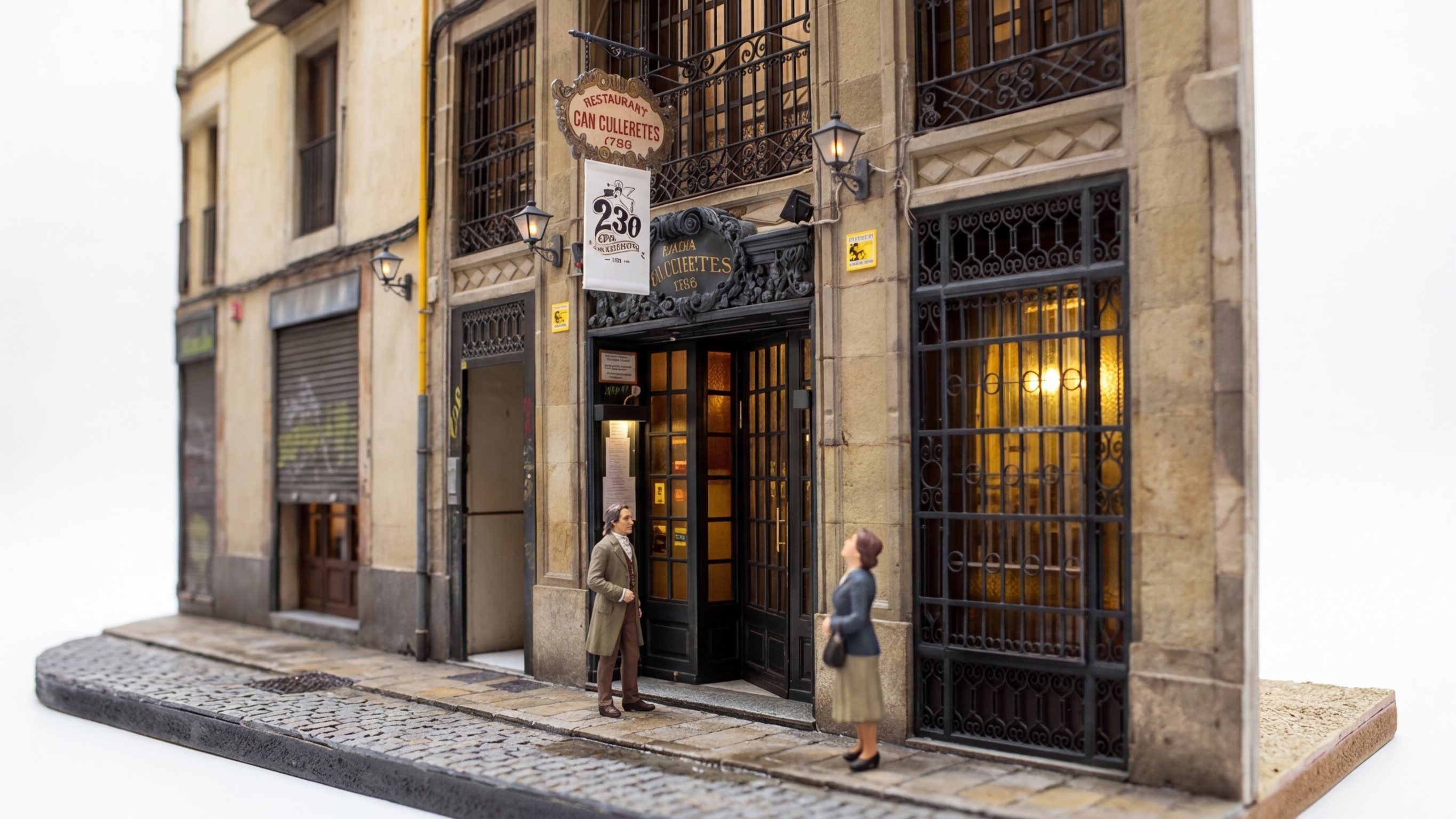
Founded in 1786, Can Culleretes holds the title of oldest restaurant in Catalonia and the second oldest in Spain according to the Guinness World Records. It sits in the Barri Gòtic of Barcelona on Carrer Quintana, two minutes from the Boqueria market. The dining rooms are covered in Catalan football photographs, bullfighting posters, and signed celebrity portraits going back decades. The menu does not chase trends. Botifarra amb mongetes appears at every lunch service, cooked the same way it has been for generations: the sausage on a hot planxa, the ganxet beans warmed in the rendered fat, the plate arriving with pa amb tomàquet and a basket of bread. Suquet de peix, escudella, and bacallà a la llauna fill the rest of the card. House wine comes by the half-litre in a ceramic jug. Reservations are necessary on weekends; queues form outside at lunchtime without them.
Fonda Europa
Granollers, Spain
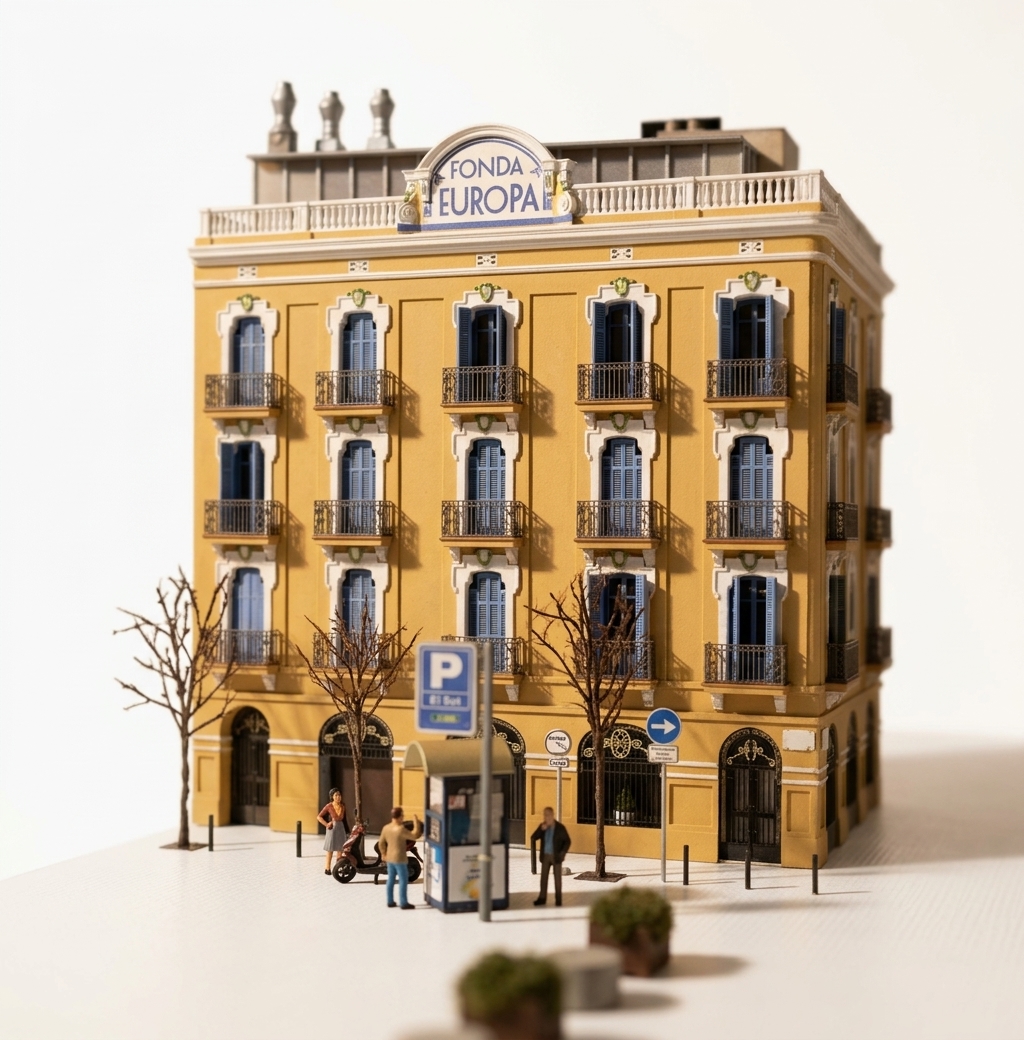
Fonda Europa opened in Granollers in 1771, making it one of the oldest continuously operating restaurants in Spain. Granollers sits in the Vallès Oriental comarca, northeast of Barcelona, in the heart of the white bean country that produces mongetes del ganxet. The restaurant occupies a building on the Plaça de la Porxada in the town centre and has served Catalan cooking to travellers and locals for more than two centuries. The botifarra amb mongetes here is a reference version: the beans come from local farms in the Vallès, the sausage from Osona producers. The menu also covers escudella de pagès, cap i pota (calf's head and trotter stew), and grilled meats. Fonda Europa functions as a hotel as well as a restaurant. The dining room maintains its original tile floor and wooden beams. Reservations are required for lunch on market days in Granollers.