Arabiki Sausage
粗挽きソーセージ
Tokyo & Kantō
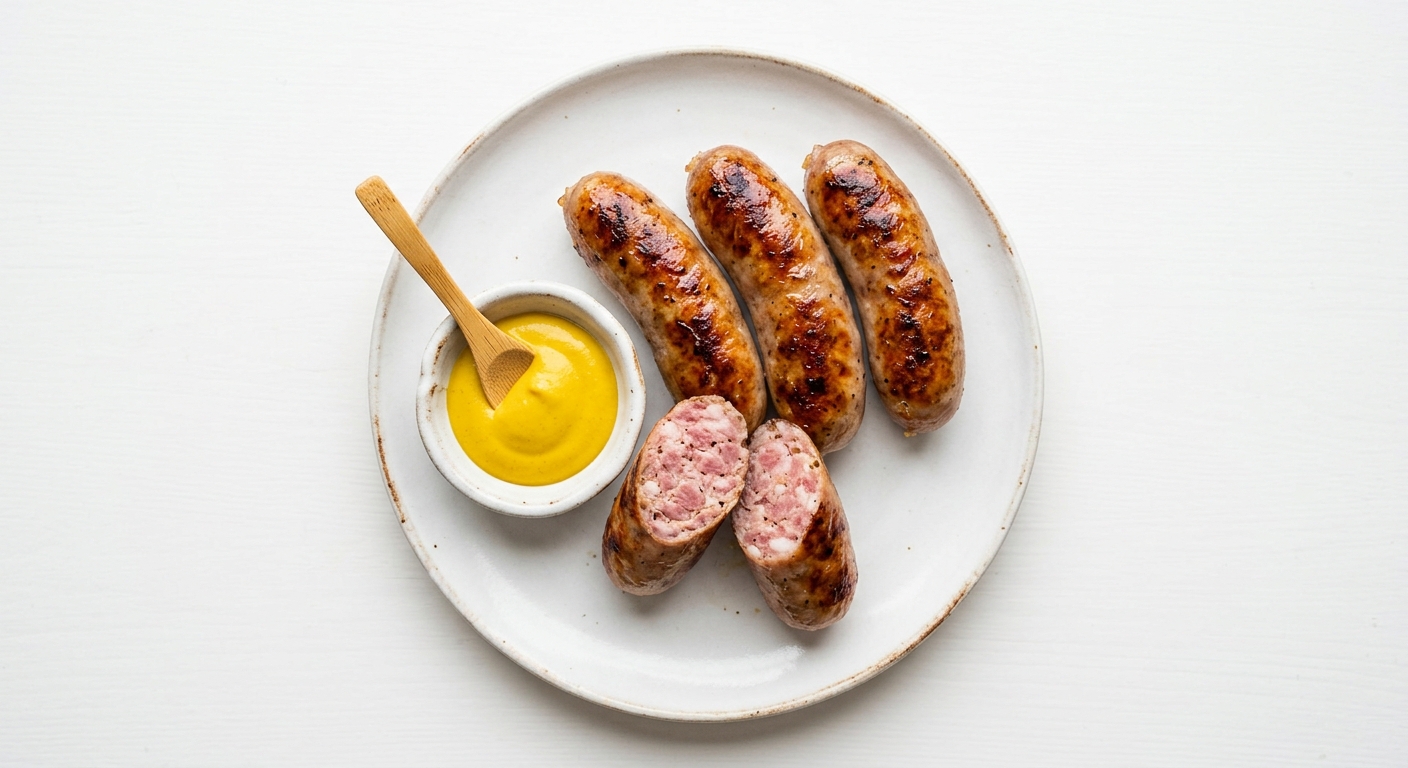
Japan's coarse-ground pork sausage, born from German technique filtered through Japanese precision. The name comes from 粗挽き (arabiki), meaning 'coarse grind,' not from anything Arabic. Pork is chopped into 5mm chunks or larger, stuffed into sheep casings, and lightly smoked. The result snaps when you bite through the taut casing, then floods your mouth with hot pork fat and juice. Nippon Ham launched the category in 1985 with Schau Essen, and within a year it was a ¥10 billion product. Now arabiki sausages sit in every konbini hot case, every supermarket meat aisle, every festival yatai, and every izakaya menu in the country.
History
German sausage-making arrived in Japan during the Meiji era (1868-1912), when the government hired European experts to modernize the country's food production. German butchers taught Japanese meat processors the craft, and small-scale wurstmacherei appeared in port cities. But sausages remained a niche product until the postwar economic boom. In February 1985, Nippon Ham (now NH Foods) launched Schau Essen: coarse-ground pork in natural sheep casings, sold in vacuum packs. The name combined the German words for 'show' and 'eat.' Sales hit ¥10 billion in the first year, ¥26 billion by 1986. Itoham followed with their Gourmet Frank Arabiki in 1993. The category exploded. Convenience stores added arabiki to their hot food cases, rotating them on heated rollers behind the register. Festival stalls (yatai) started grilling them on sticks. Beer halls paired them with German-style lagers. By the 2000s, arabiki had become as Japanese as onigiri.
Ingredients
Preparation
Pork shoulder and back fat are ground through a coarse plate (5mm or wider), keeping the meat cold throughout. Salt, pepper, and a touch of nutmeg are mixed in. The seasoned meat is stuffed into natural sheep casings (narrower than hog casings, giving arabiki its characteristic slim profile) and twisted into short links about 12cm long. The sausages are briefly hot-smoked over cherry or beech wood, then quickly chilled. The smoking is lighter than European styles: just enough to set the casing and add a faint wood note without overwhelming the pork.
Taste
Clean pork flavor up front, with a gentle smokiness that sits behind the meat rather than on top of it. Black pepper provides warmth without heat. A whisper of nutmeg rounds the finish. The seasoning is restrained compared to German originals: no garlic, no marjoram, no caraway. Japanese arabiki lets the pork quality speak. The fat content is calibrated so each bite releases a burst of juice without feeling greasy.
Texture
The defining feature. Biting through the taut sheep casing produces an audible snap, then you hit the coarse-ground interior: chunky pork pieces held together by rendered fat, not emulsified paste. The contrast between the crisp outer skin and the loose, juicy filling is what separates arabiki from finer-ground frankfurters. Japanese consumers judge arabiki by this snap. If the casing does not crack, the sausage fails.
Rituals & Traditions
The konbini roller
Every convenience store in Japan keeps arabiki sausages turning on heated rollers behind the counter. You point, the clerk grabs one with tongs, slides it into a paper sleeve, and hands it over. Eaten standing outside the konbini at 2am after the last train. A rite of passage.
Boil then sear
The Japanese home method: boil arabiki in water for 3 minutes to heat the interior and plump the casing, then sear in a hot pan with a drop of oil for 2 minutes to crisp the skin. This two-step technique maximizes both the snap and the juiciness.
Do not microwave
Microwaving destroys the casing snap and turns the texture rubbery. The whole point of arabiki is the contrast between crisp skin and juicy interior. A microwave eliminates both.
Recipes
Arabiki Bento Box
Arabiki Sausage
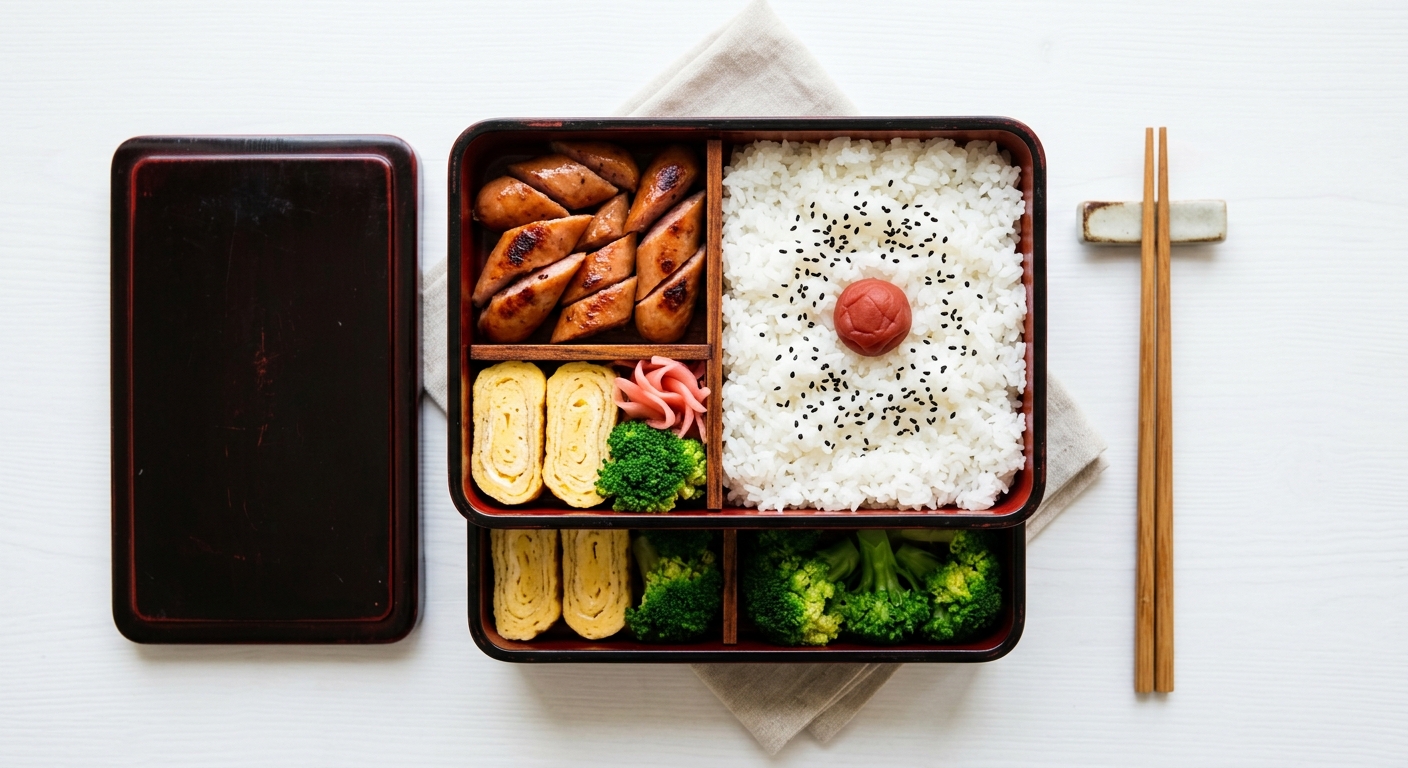
A proper bento is not a meal thrown into a container. It follows rules: rice fills half the box, protein takes a quarter, and vegetables and pickles share the rest. Color matters. You want at least three colors visible when the lid comes off. Diagonal-cut arabiki sausage handles the protein and adds red. Tamagoyaki brings yellow. Broccoli brings green. Umeboshi on the rice brings pink. The whole assembly takes 30 minutes once you have the rhythm down.
Arabiki Curry Rice
Arabiki Sausage
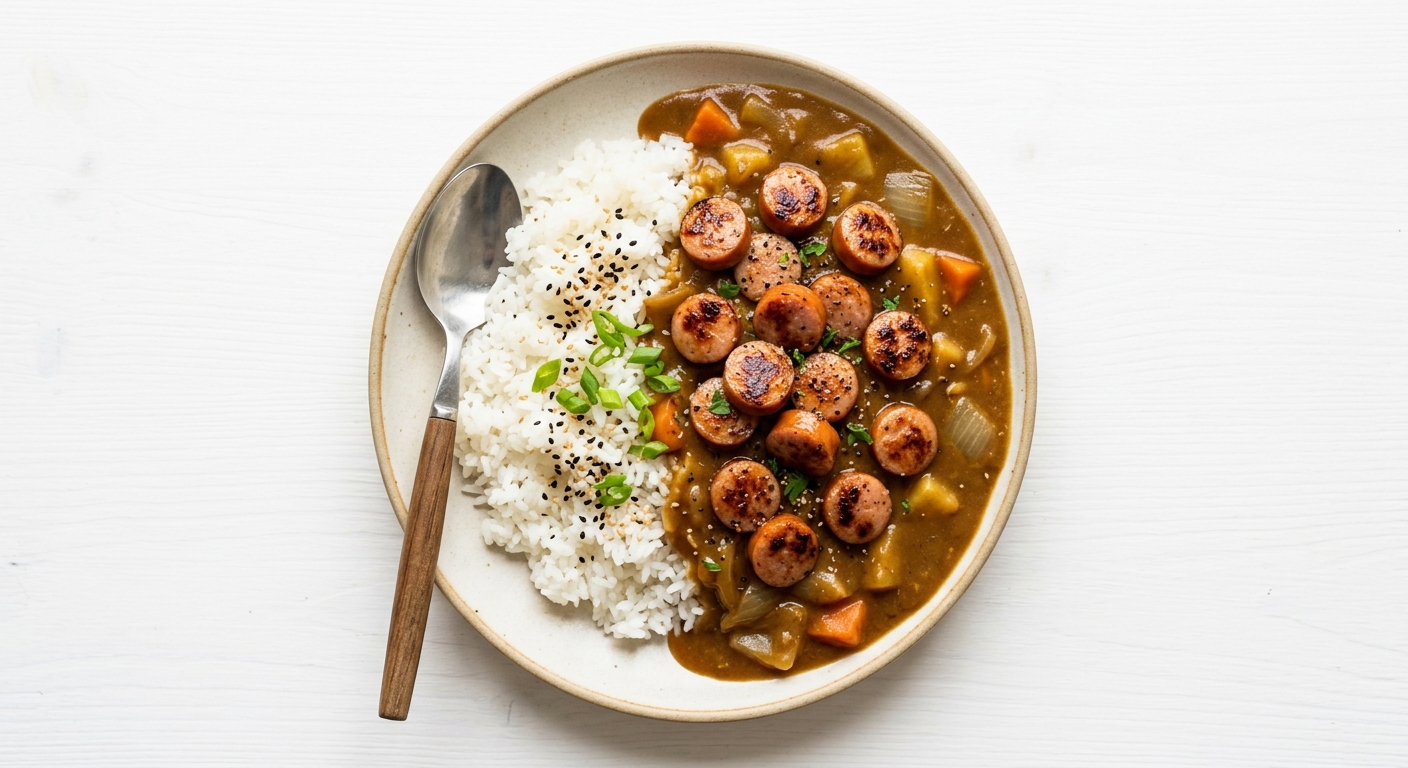
Japanese curry belongs to a different family than Indian or Thai versions. It starts with a dark roux block, melts into a thick sauce with carrots, potatoes, and onion, and coats steamed rice in a warm blanket. Searing thick coins of arabiki sausage and laying them on top adds pork fat to the sauce and a snap to every bite. This is Tuesday-night cooking in most Japanese households.
Naporitan with Arabiki
Arabiki Sausage
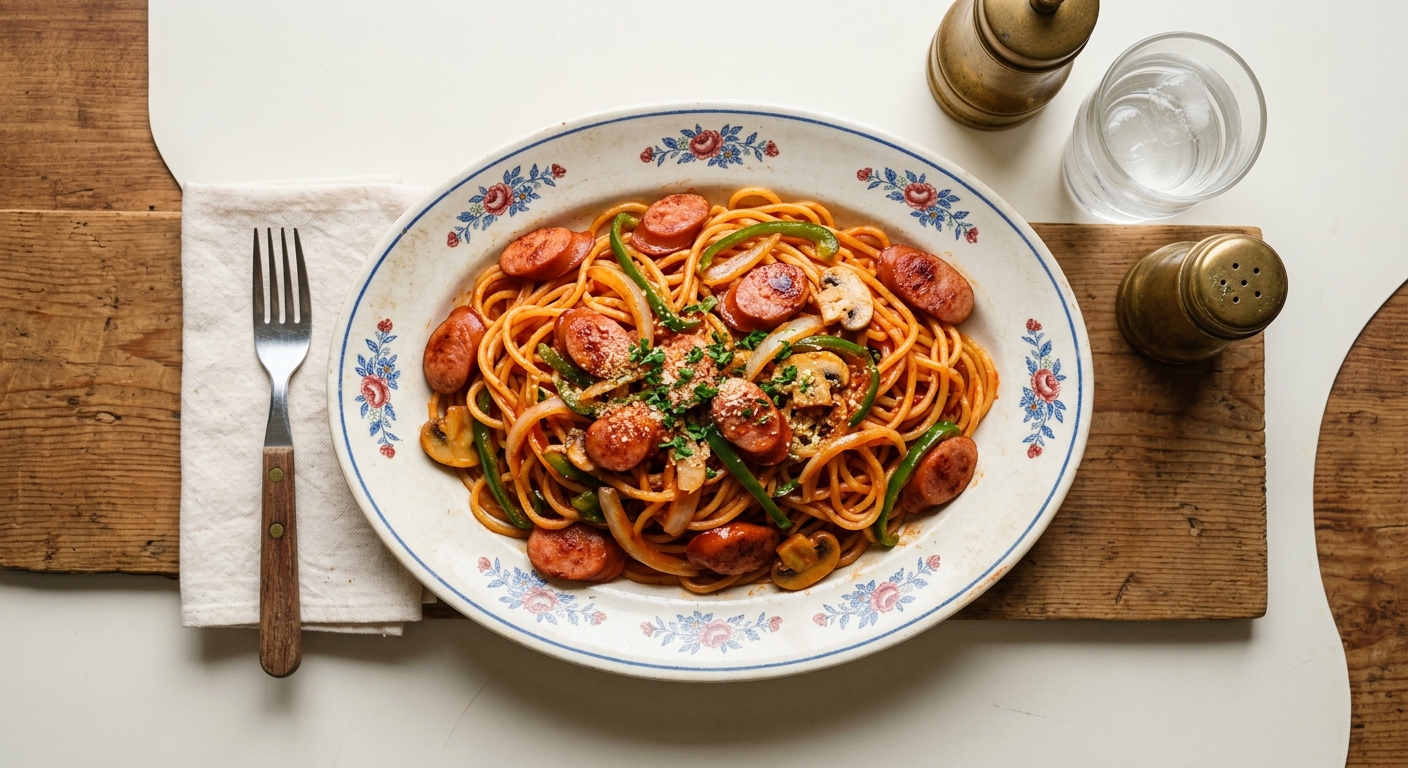
Naporitan has nothing to do with Naples. A hotel chef in Yokohama invented it in the late 1940s, using what occupied Japan had on hand: spaghetti, ketchup, and canned goods. The dish became a fixture in kissaten, those wood-paneled coffee shops where businessmen eat lunch. Thick arabiki rounds replace the usual thin wieners, and they hold up to the sweet, tangy sauce without falling apart.
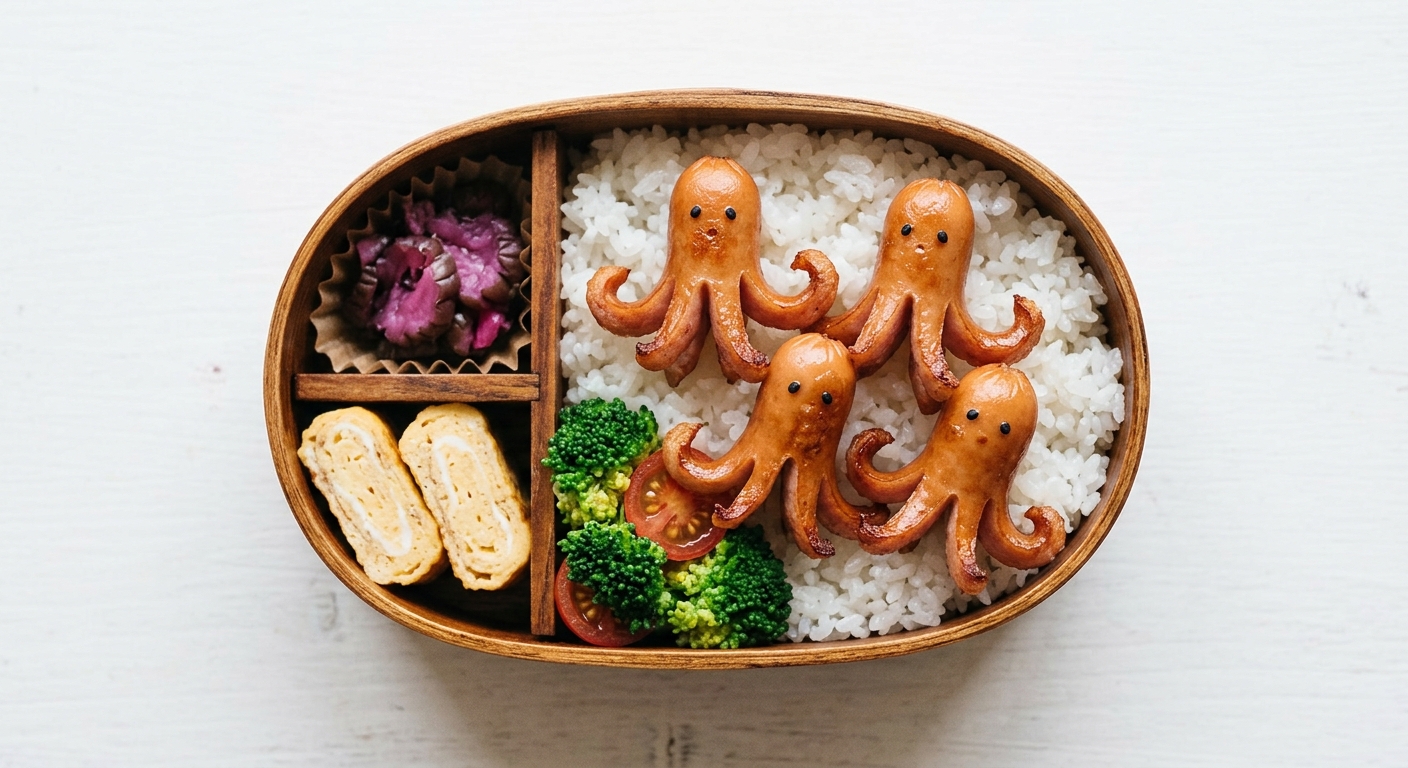
Octodog Arabiki (タコさんウインナー)
Arabiki Sausage
Every Japanese kindergartener knows this shape. Cut four slits into the bottom half of an arabiki sausage, drop it in a hot pan, and watch the legs curl outward into a tiny octopus. Two black sesame seeds pressed into the top become eyes. The whole thing takes five minutes and turns a packed bento into something a child will eat without protest.
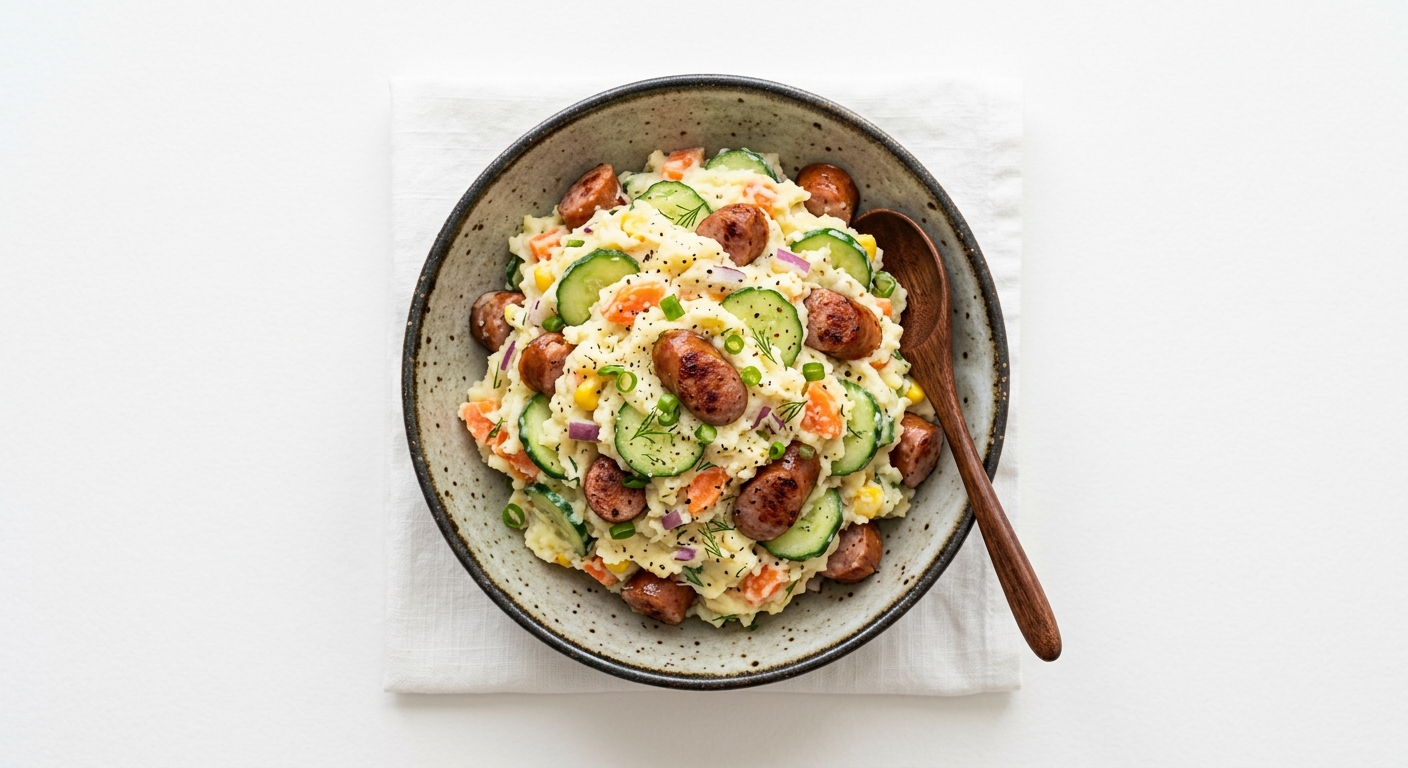
Japanese Potato Salad with Arabiki
Arabiki Sausage
Japanese potato salad sits in a glass case at every izakaya counter in Japan. The potatoes are half-mashed so you get both creamy and chunky textures in the same bite. Thin cucumber slices and shredded carrot add crunch. Diced arabiki sausage, pan-fried until the edges crisp, brings a smoky pork note that Kewpie mayo ties together. Served cold, sometimes with a beer, sometimes with rice.
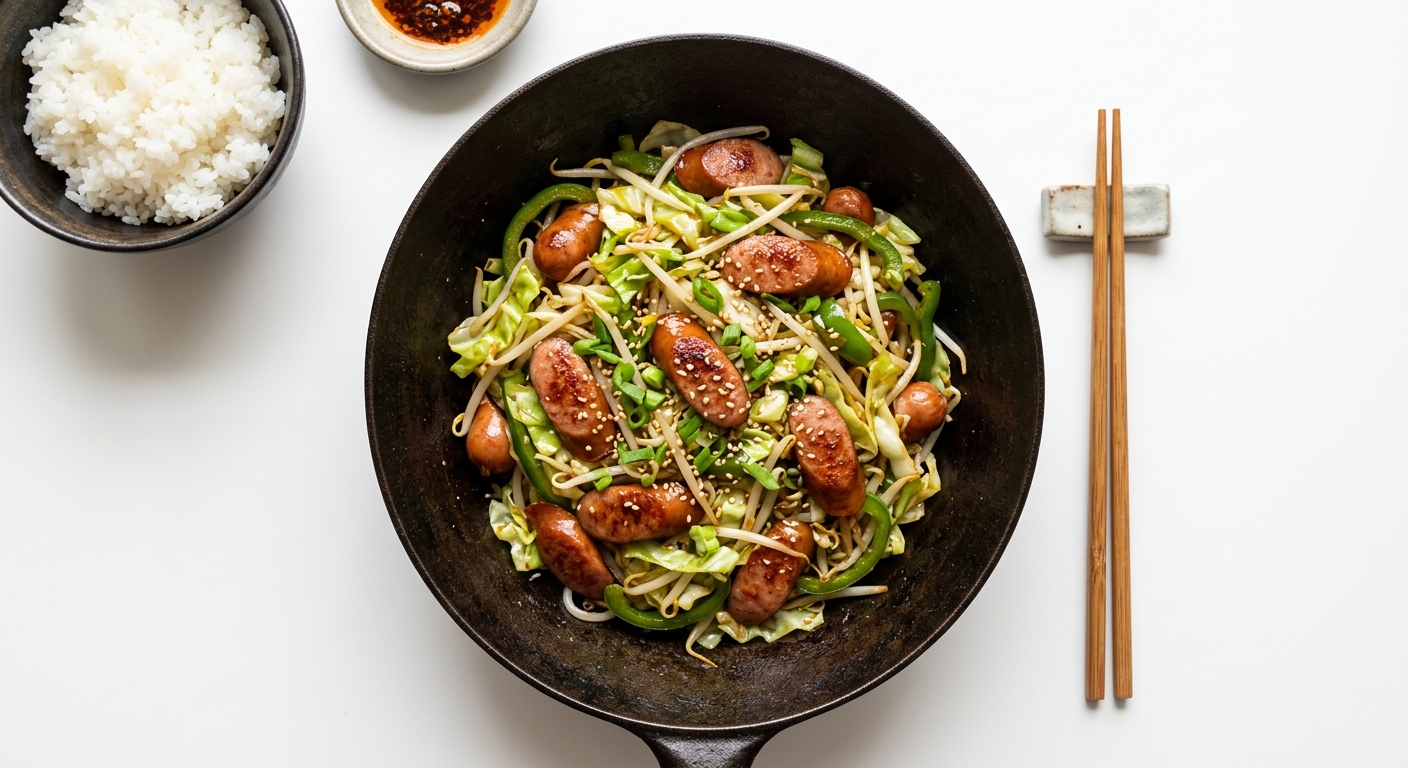
Arabiki Vegetable Stir-Fry
Arabiki Sausage
A wok over high heat, sliced arabiki, whatever vegetables you have. The sausage releases enough fat to coat the pan, and the natural casing picks up char from the wok surface. Soy sauce goes in last, hits the hot metal, and fills the kitchen with smoke. Done in under ten minutes.
On the Map
Where to Eat
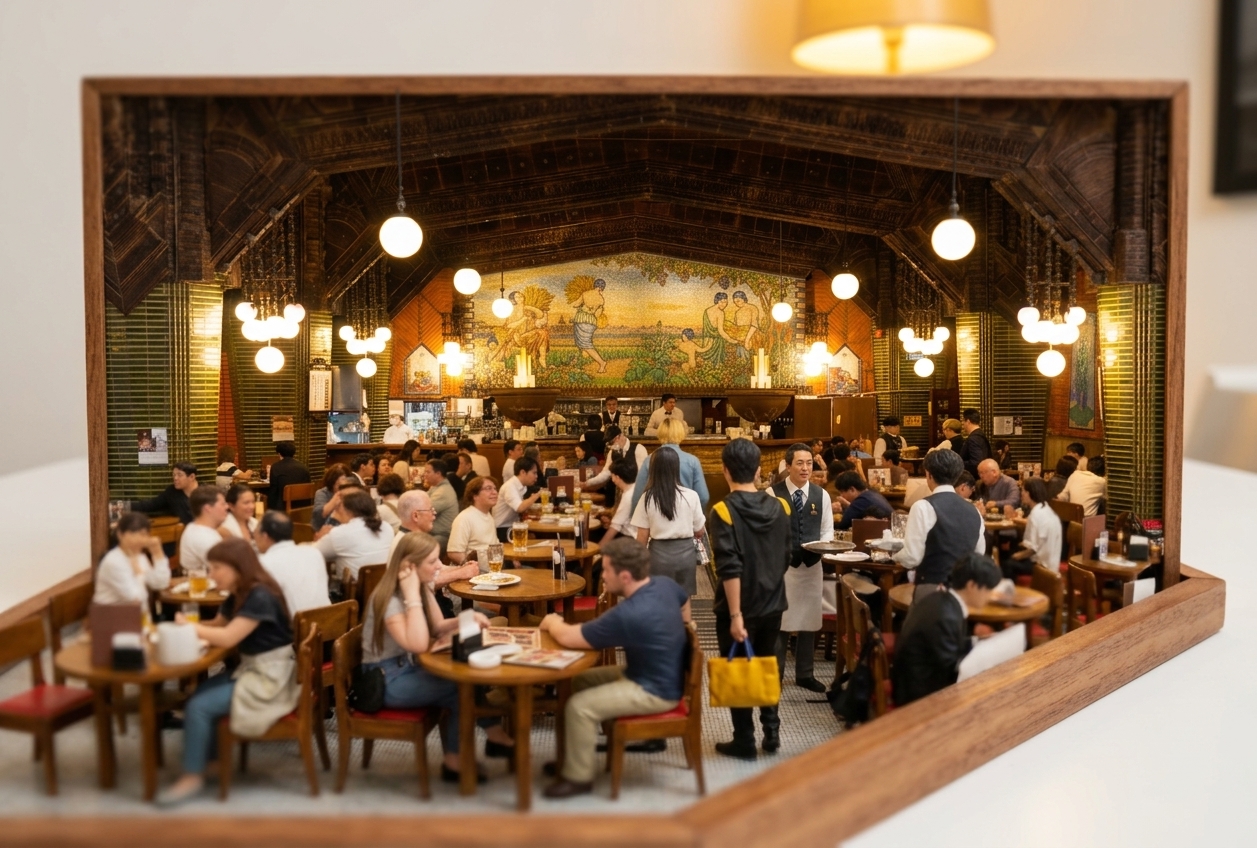
Ginza Lion Beer Hall
Tokyo, Japan
Built in 1934, Ginza Lion is Tokyo's oldest beer hall and a registered tangible cultural property. The interior channels Munich: mosaic tiles, vaulted ceilings, and long communal tables. The sausage platter offers six types including arabiki, served with karashi mustard and sauerkraut. Sapporo beer flows from the taps. Office workers pack the hall after 6pm, loosening their ties over plates of sausage and mugs of draft.
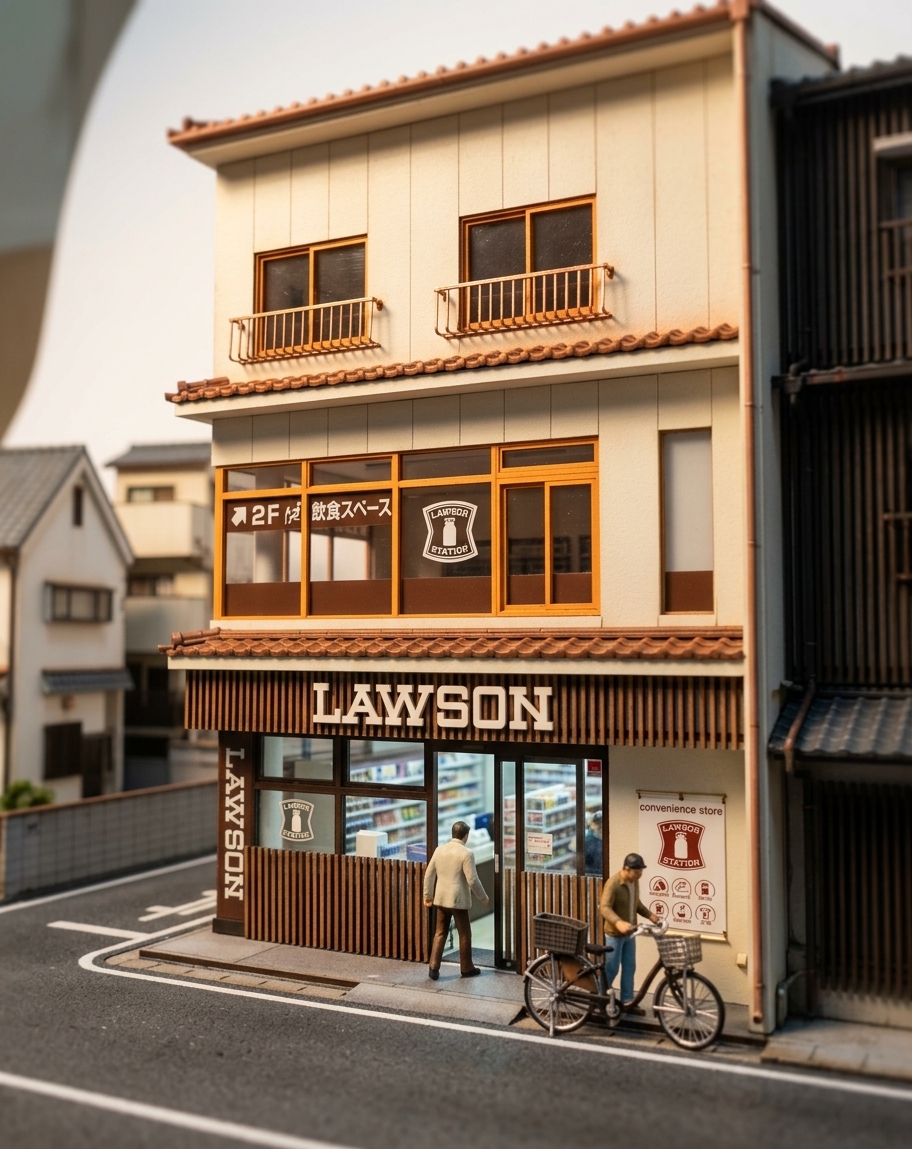
Lawson (Konbini)
Tokyo, Japan
Not a restaurant. A convenience store chain with 14,000 locations across Japan. But Lawson's hot food case is where most people first eat arabiki sausage. The sausages rotate on heated metal rollers behind the counter, staying warm for hours. You point, the clerk grabs one with tongs, wraps it in a paper sleeve. Eaten standing on the sidewalk outside. Available 24 hours, 365 days a year. The most democratic sausage experience in Japan.
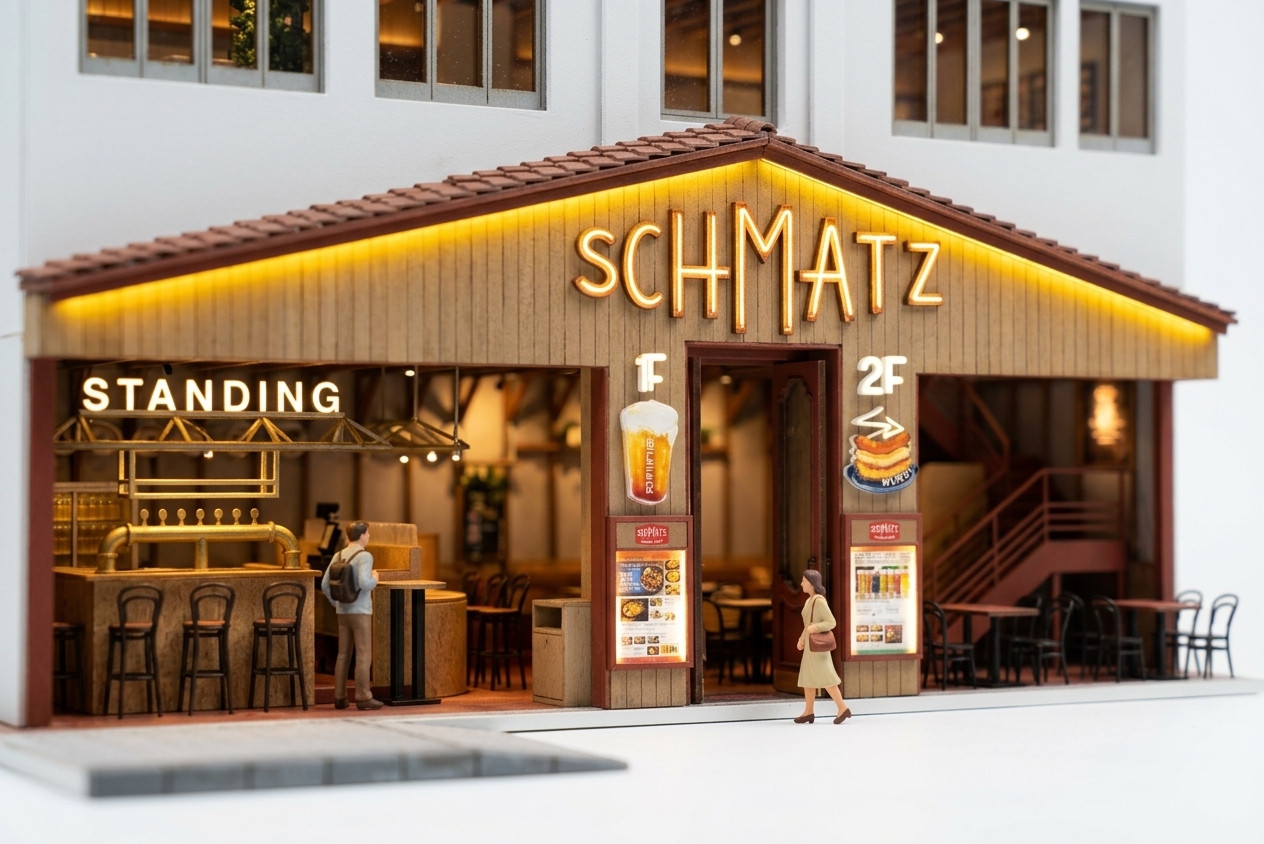
SCHMATZ Nakameguro
Tokyo, Japan
A German-Japanese beer dining concept created by two Germans in Tokyo. One minute from Nakameguro Station. The sausages are made by artisans who trained for three years and hold the German national qualification 'Geselle.' Coarse-ground arabiki-style links served with karashi mustard alongside original craft beers brewed by a Japanese brewery following Germany's Reinheitsgebot purity law. The interior mixes Bavarian timber with Tokyo minimalism.
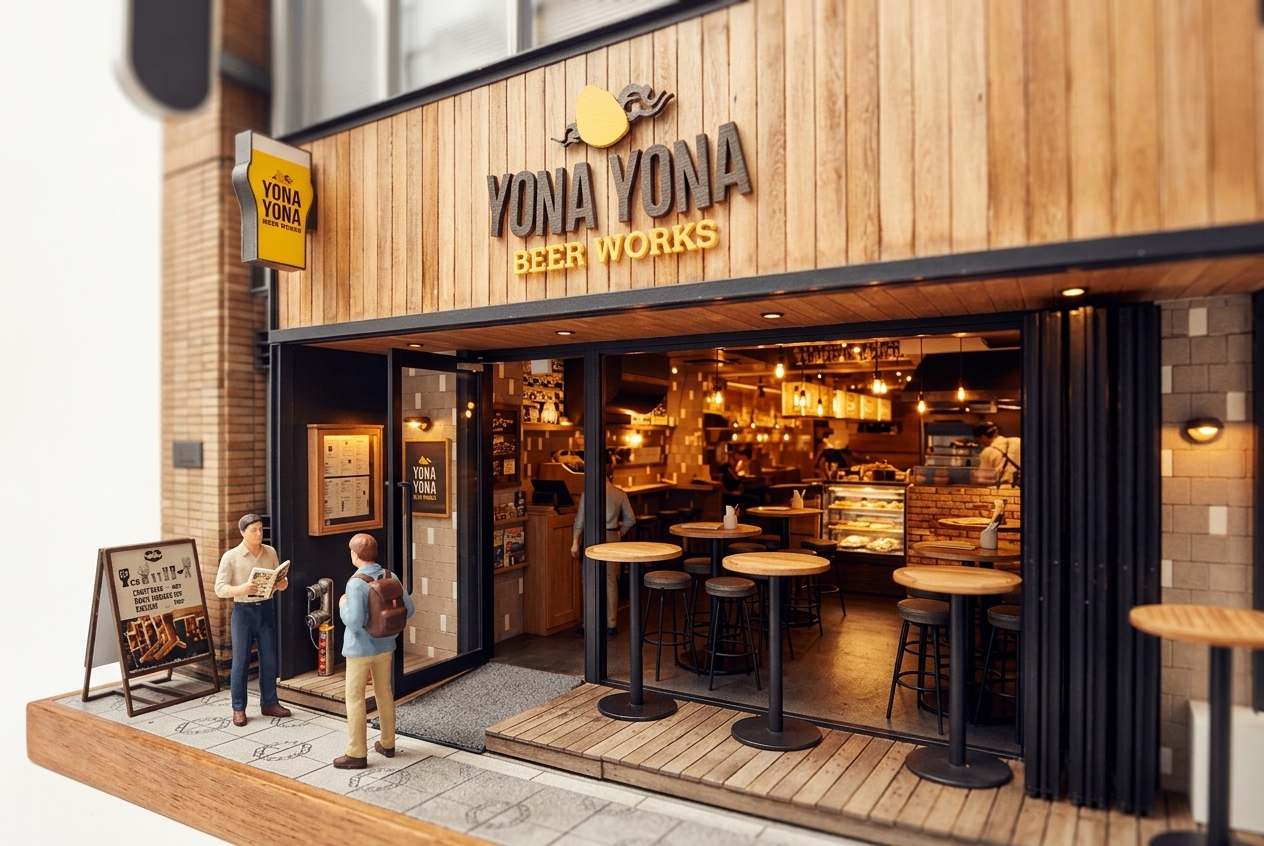
Yona Yona Beer Works
Tokyo, Japan
Yo-Ho Brewing's flagship tap room in Kanda, Tokyo. Twelve types of sausage on the menu alongside rotating craft beers from their Nagano brewery. The arabiki here is house-made with a coarser grind than the convenience store version, paired with whole-grain mustard. Roasted chicken and grilled pork chops round out the menu, but the sausages are the crowd favorite. Casual, loud, and packed on weekends.