Alheira
Alheira de Mirandela
Trás-os-Montes, Portugal
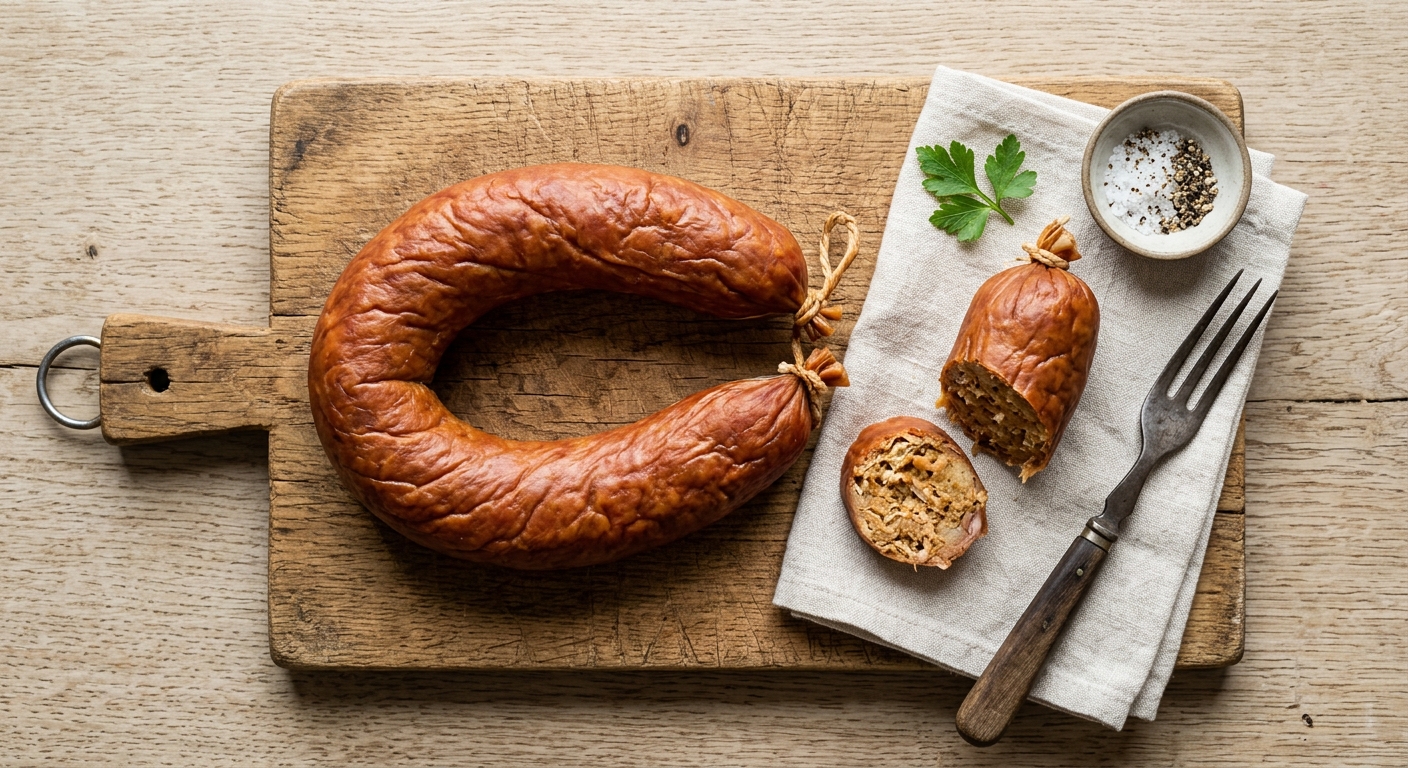
Alheira is a smoked Portuguese sausage from Trás-os-Montes with a horseshoe shape, a pale golden skin, and a soft bread-and-meat filling. Portuguese Jews invented it during the Inquisition as camouflage: since they could not eat pork, they stuffed casings with poultry, bread, garlic, and olive oil so that Inquisition inspectors would see sausages hanging in their smokehouses and move on. The classic serving is deep-fried whole until the skin blisters, then plated with a fried egg and french fries. Alheira de Mirandela holds PGI (IGP) protection since 2008.
History
In the late 15th century, King Manuel I ordered all Jews in Portugal to convert to Christianity or leave. Many converted outward but continued Jewish practice in secret. These crypto-Jews (known as marranos or cristãos-novos) faced constant scrutiny from Inquisition agents, who checked homes for signs of Jewish observance. The absence of pork sausages in a smokehouse was one such sign. Jewish families in the mountains of Trás-os-Montes responded by making sausages from chicken, duck, turkey, and game birds, mixed with wheat bread, garlic, paprika, and olive oil. The sausages looked like any other cured meat hanging from the rafters. The deception worked. Over centuries, Christian neighbors adopted alheira into their own cooking. Modern recipes often add pork or veal alongside the poultry. The town of Mirandela became the center of production and secured PGI status for Alheira de Mirandela in 2008. Today, alheira is sold across Portugal in supermarkets and at rural fairs, but the Trás-os-Montes original remains the standard.
Ingredients
Preparation
Poultry (and in modern versions, pork or veal) is boiled until tender, then shredded by hand. Stale wheat bread soaks in the cooking broth. The shredded meat, soaked bread, minced garlic, olive oil, paprika, salt, and pepper are mixed into a thick paste. The mixture goes into natural casings, tied into a horseshoe shape, then cold-smoked over oak or chestnut wood for several days. The result is a sausage with a lighter color and softer texture than most cured meats. To serve, deep-fry it whole in hot oil until the skin splits and turns golden brown. It can also be grilled or baked.
Taste
Mild and savory with a pronounced smokiness. The garlic and paprika come through first, followed by a rich poultry flavor. The bread filling absorbs the smoke and fat during cooking, creating a creamy interior that contrasts with the crispy fried skin.
Texture
Soft and almost creamy inside, due to the bread content. The fried skin is thin, crispy, and blistered. Cut it open and the filling is loose, moist, somewhere between a stuffing and a pâté. Nothing like the firm bite of a pork sausage.
Rituals & Traditions
Fry it whole
Alheira must be fried whole in hot oil. Do not slice it before frying. The casing traps steam inside, and the skin should blister and crack open on its own. The drama of the split skin is part of the dish.
Never microwave
Microwaving alheira produces a rubbery, steamed mess. The bread filling turns gummy and the skin goes limp. Fry it, grill it, or bake it. Those are the three acceptable methods.
Inquisition survival food
Alheira began as a life-saving deception. Jewish families made poultry sausages to hang in their smokehouses, fooling Inquisition agents into believing they ate pork. The sausage exists because of religious persecution, a fact that every Portuguese person knows.
Feira da Alheira
Mirandela holds an annual alheira fair where local producers compete for the best alheira. Thousands of visitors come to taste, buy, and argue about whose grandmother made the best one.
Recipes
Caldo Verde with Alheira
Alheira
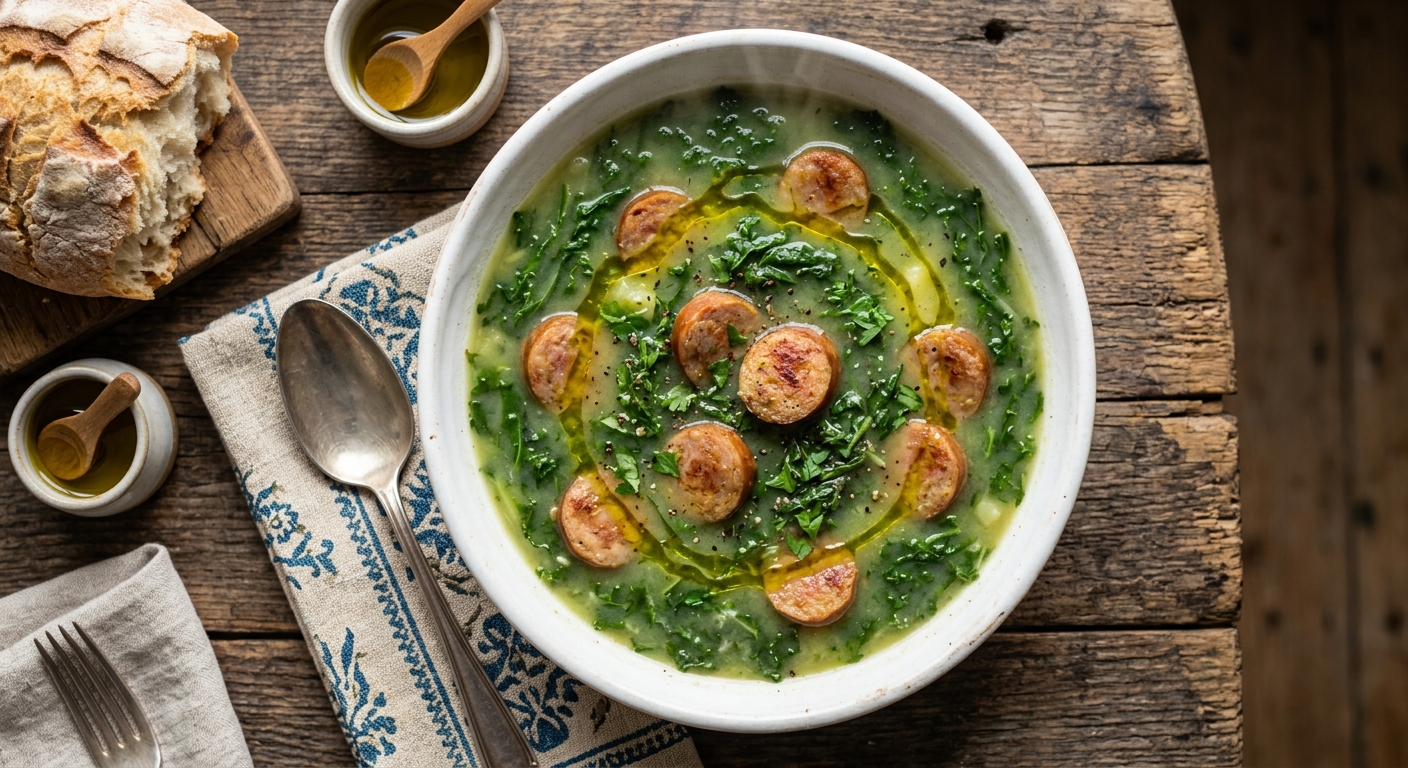
Caldo verde is Portugal's potato and kale soup, usually finished with slices of chouriço floating on top. This version swaps in alheira, which falls apart into the broth and thickens it with its bread filling. The result is a richer, cloudier soup. Common in Trás-os-Montes, where alheira is more available than chouriço and the winters demand a heavier bowl.
Alheira Frita com Ovo e Batatas
Alheira
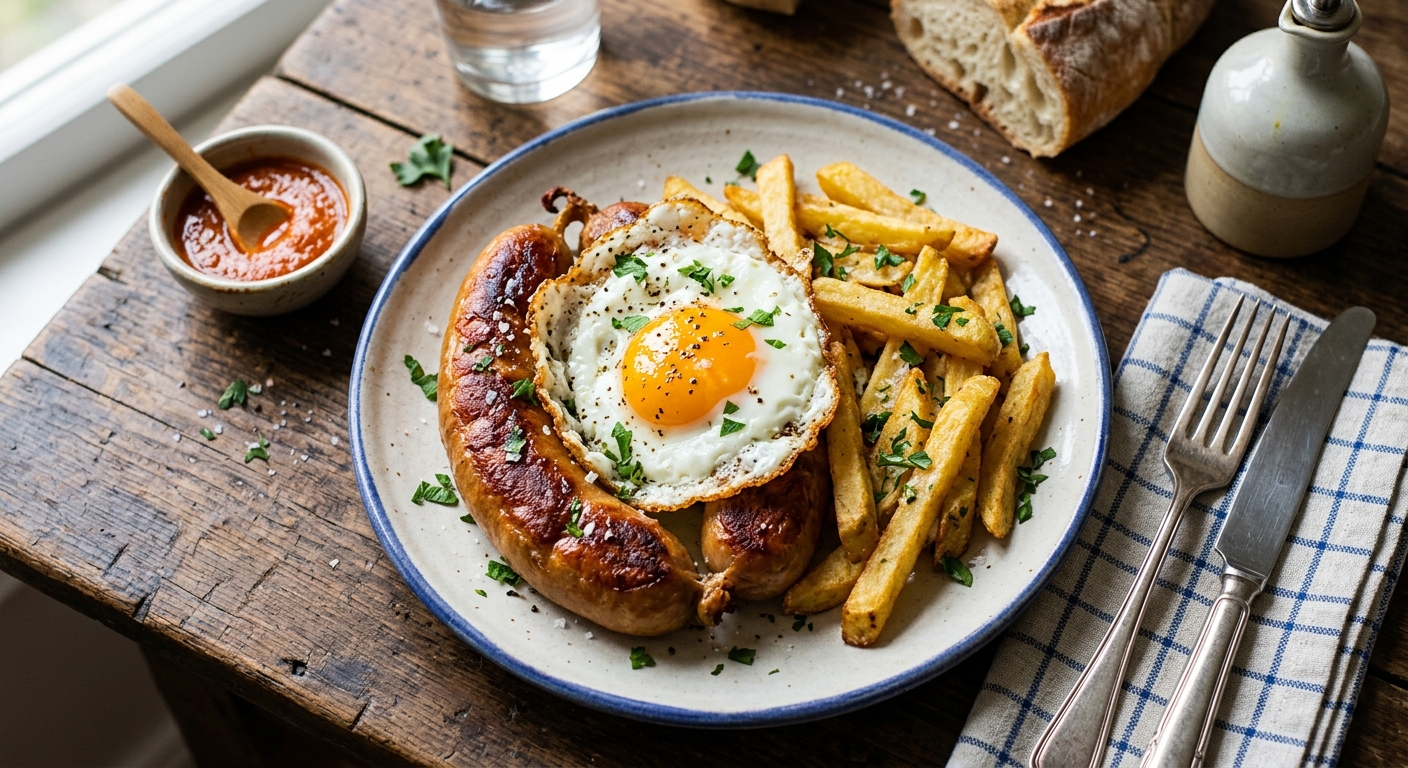
The national alheira plate: one whole sausage deep-fried until the skin blisters open, a fried egg with a runny yolk, and a pile of thick-cut fries. Every tasca in Portugal serves a version of this. The egg yolk breaks over the split alheira and mixes with the bread filling. Three components, no complexity, total satisfaction.
Alheira Grelhada
Alheira
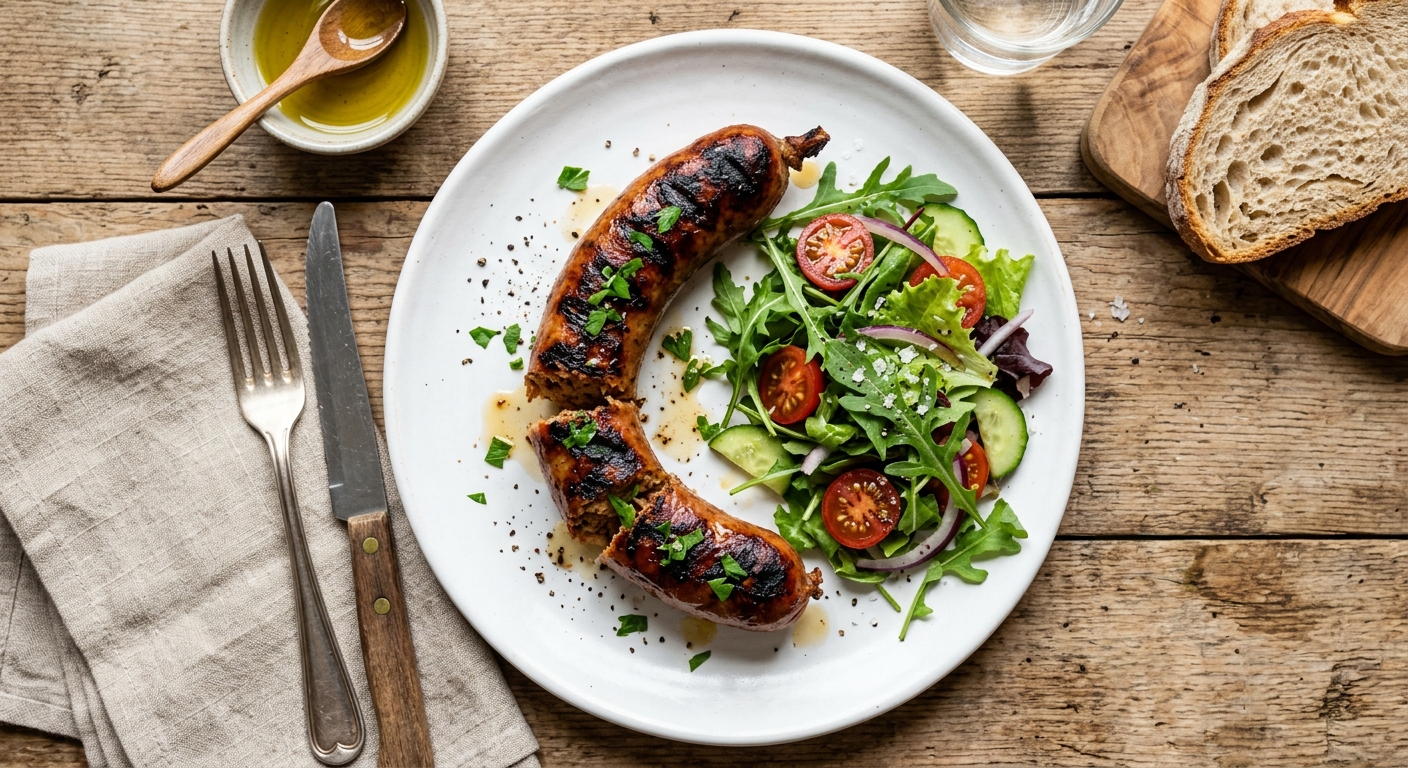
Grilled alheira is the alternative to frying, common in summer and at outdoor gatherings. The charcoal gives the skin a smoky char while the bread filling stays soft. Served with grilled vegetables or a simple salad. Less oil, more smoke, same creamy interior.
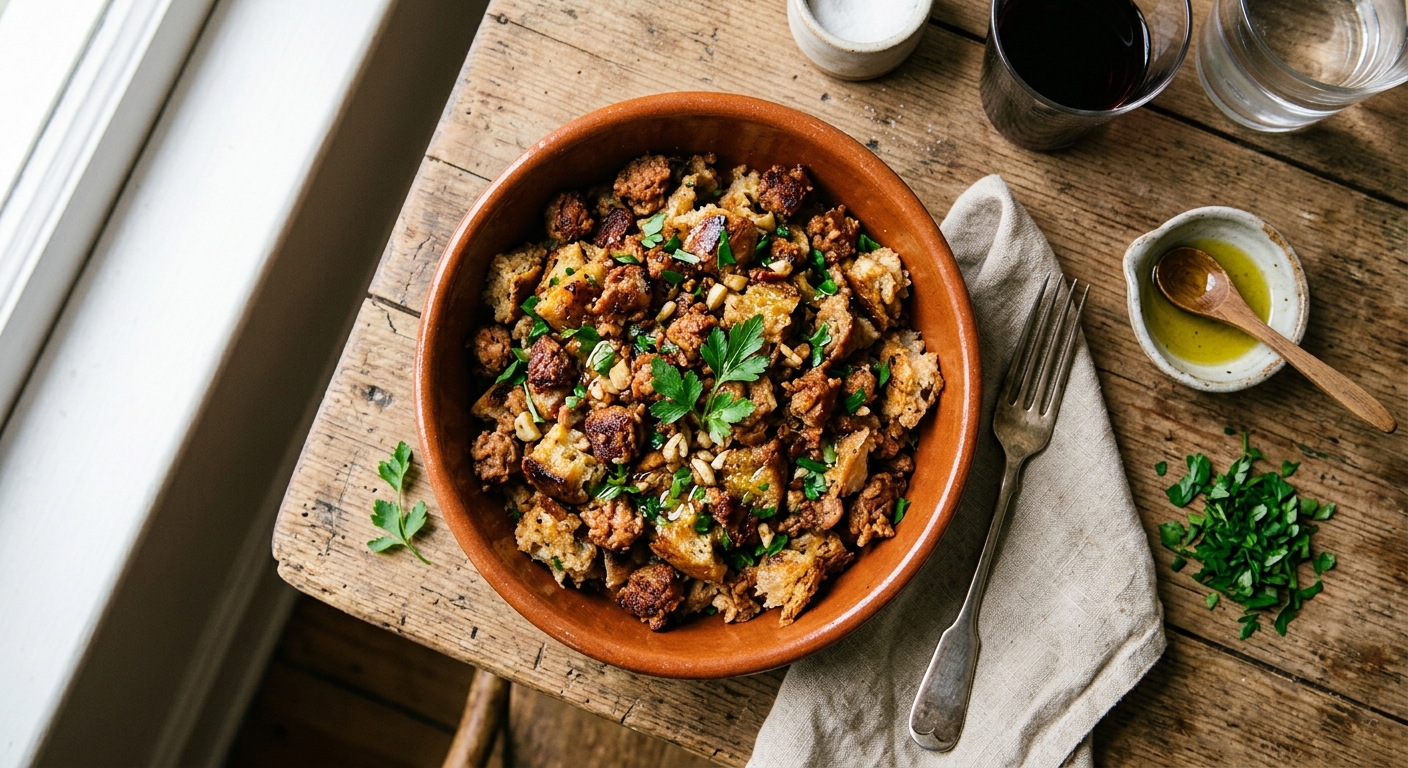
Migas de Alheira
Alheira
Migas is a Portuguese bread dish from the Alentejo tradition: stale bread torn apart and fried in fat with garlic. This version uses crumbled alheira as the fat and protein source. The bread soaks up the smoky, garlicky oil from the sausage filling. Dense, filling, and built for cold mountain evenings. A peasant dish that refuses to go away.
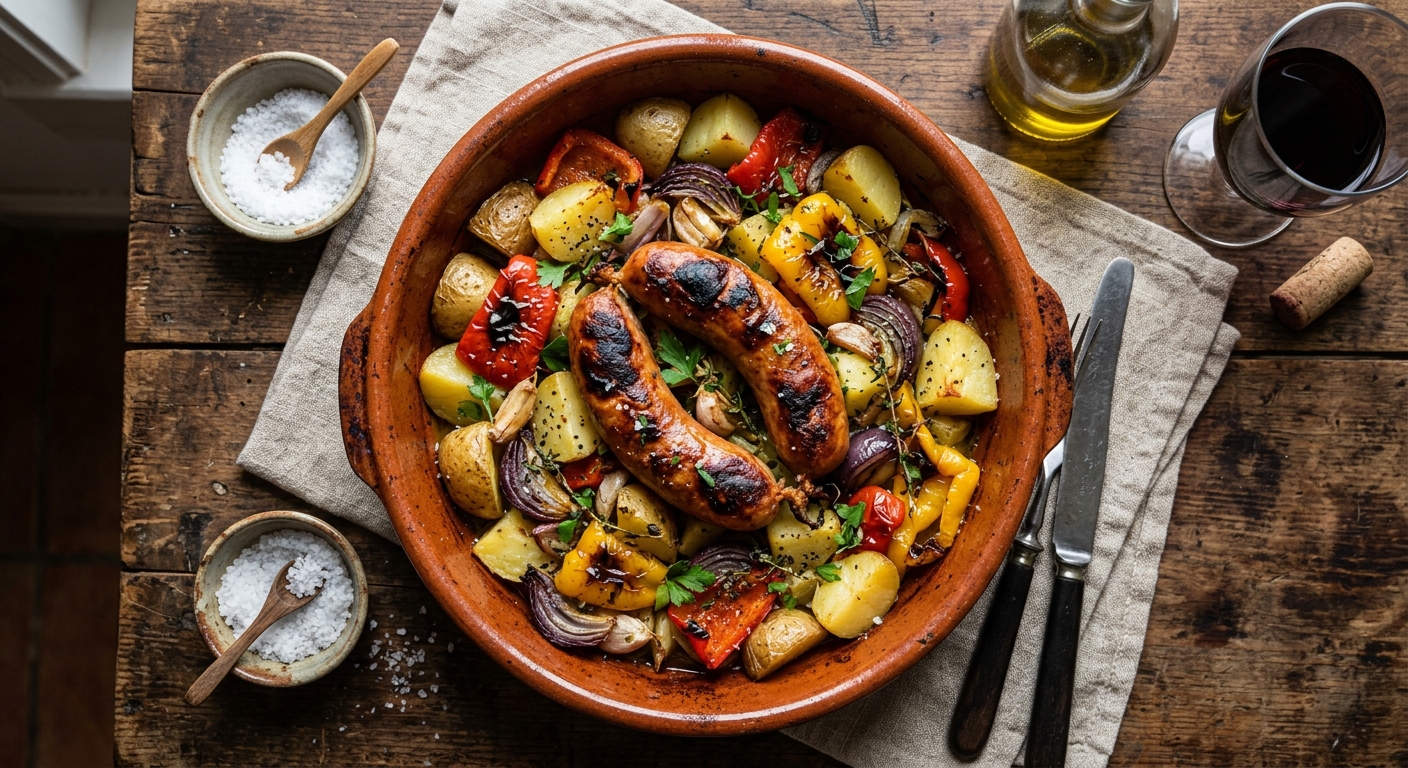
Alheira no Forno com Legumes
Alheira
Oven-baked alheira on a bed of roasted vegetables. The oven method is more hands-off than frying: arrange everything on one tray, bake, and serve. The sausage skin turns crisp in the dry heat while the vegetables caramelize underneath. A weeknight dinner for people who want alheira without a pot of hot oil on the stove.
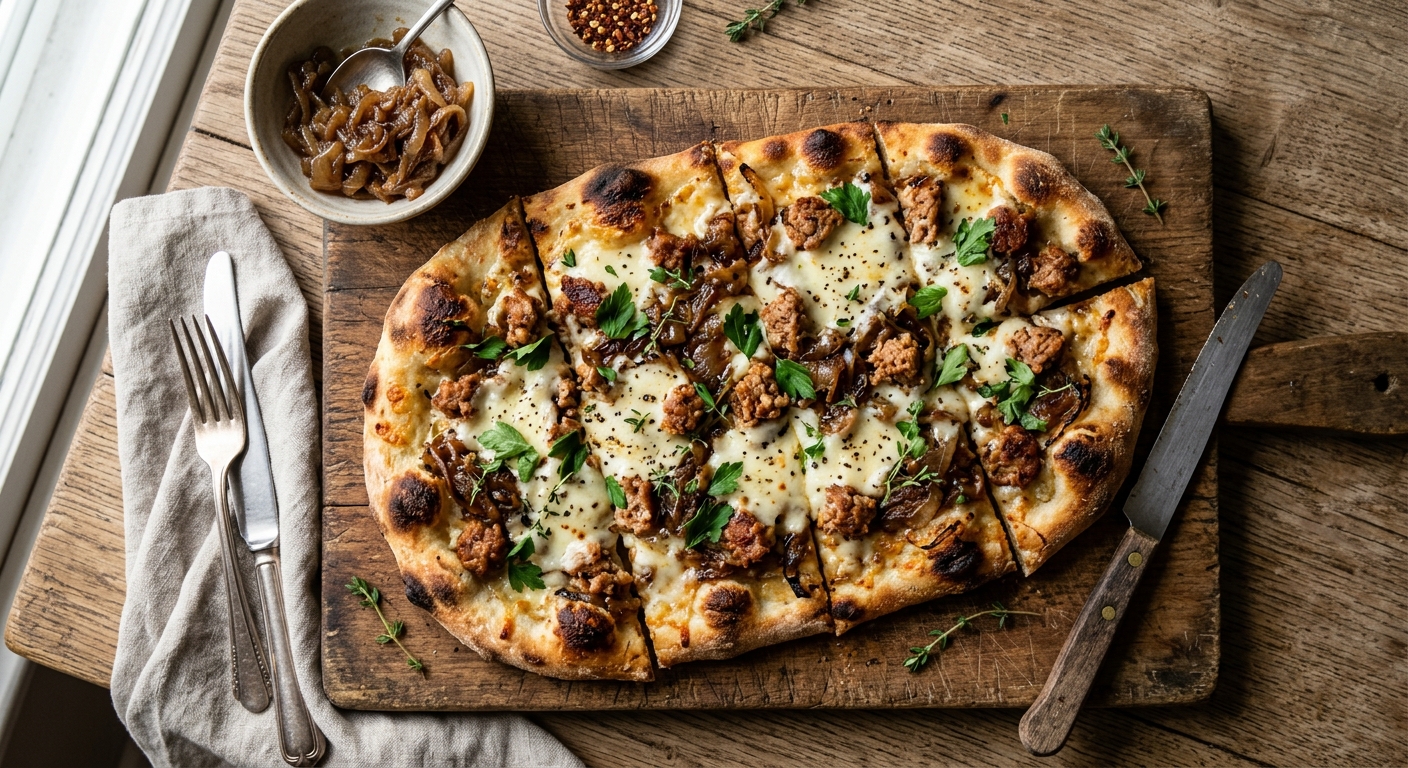
Flatbread with Crumbled Alheira
Alheira
A thin flatbread topped with crumbled alheira, caramelized onions, and a drizzle of olive oil. Portuguese pizzerias and modern tascas have adopted alheira as a topping in recent years. The sausage crumbles on the dough like ground meat, and the bread filling crisps up in the oven. Finish with arugula after baking.
On the Map
Where to Eat
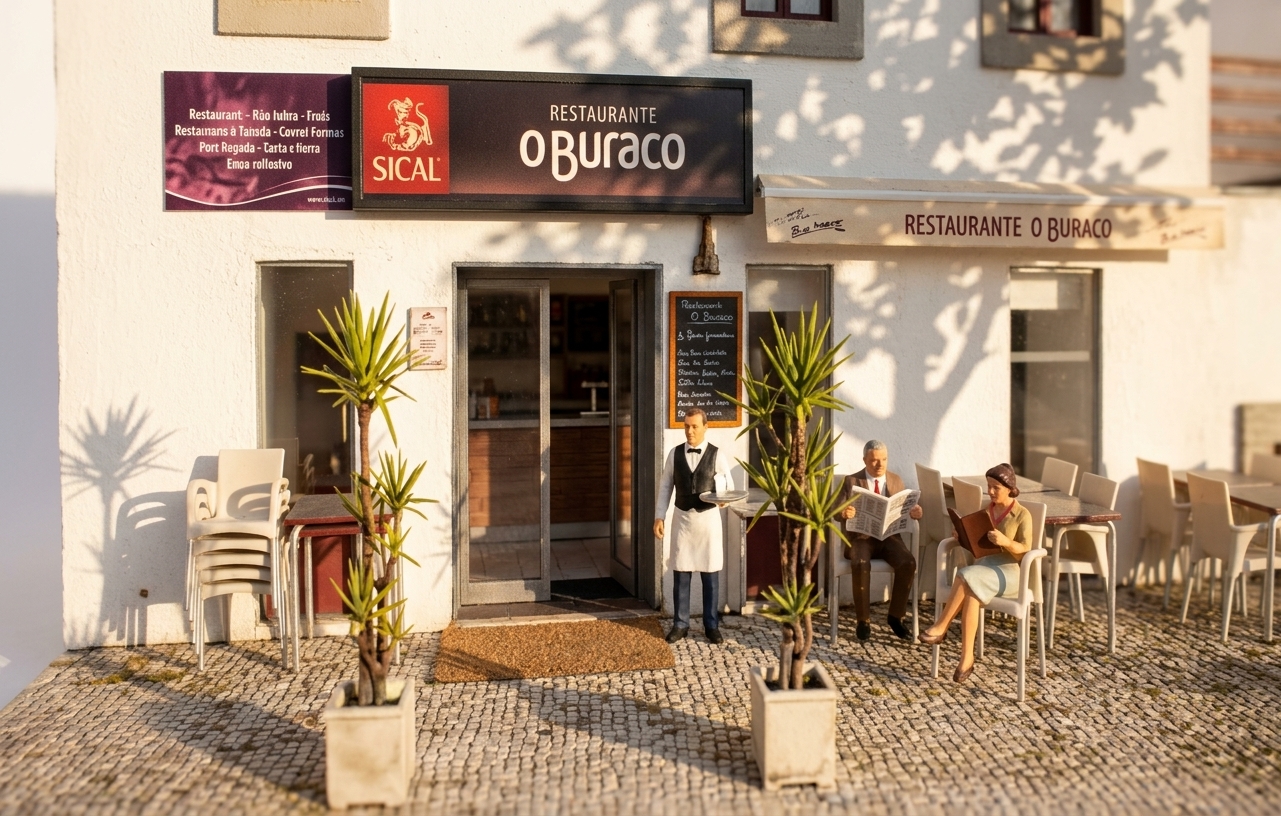
O Buraco
Porto, Portugal
A narrow, no-frills tasca in Porto's Cedofeita neighborhood, open since the 1970s. The name means 'the hole', which describes the size of the place. They serve petiscos and daily specials on paper placemats. The alheira comes grilled rather than fried, charred on the outside, the bread filling warm and loose inside. Pair it with a jug of house red and some boiled potatoes. Cash only.
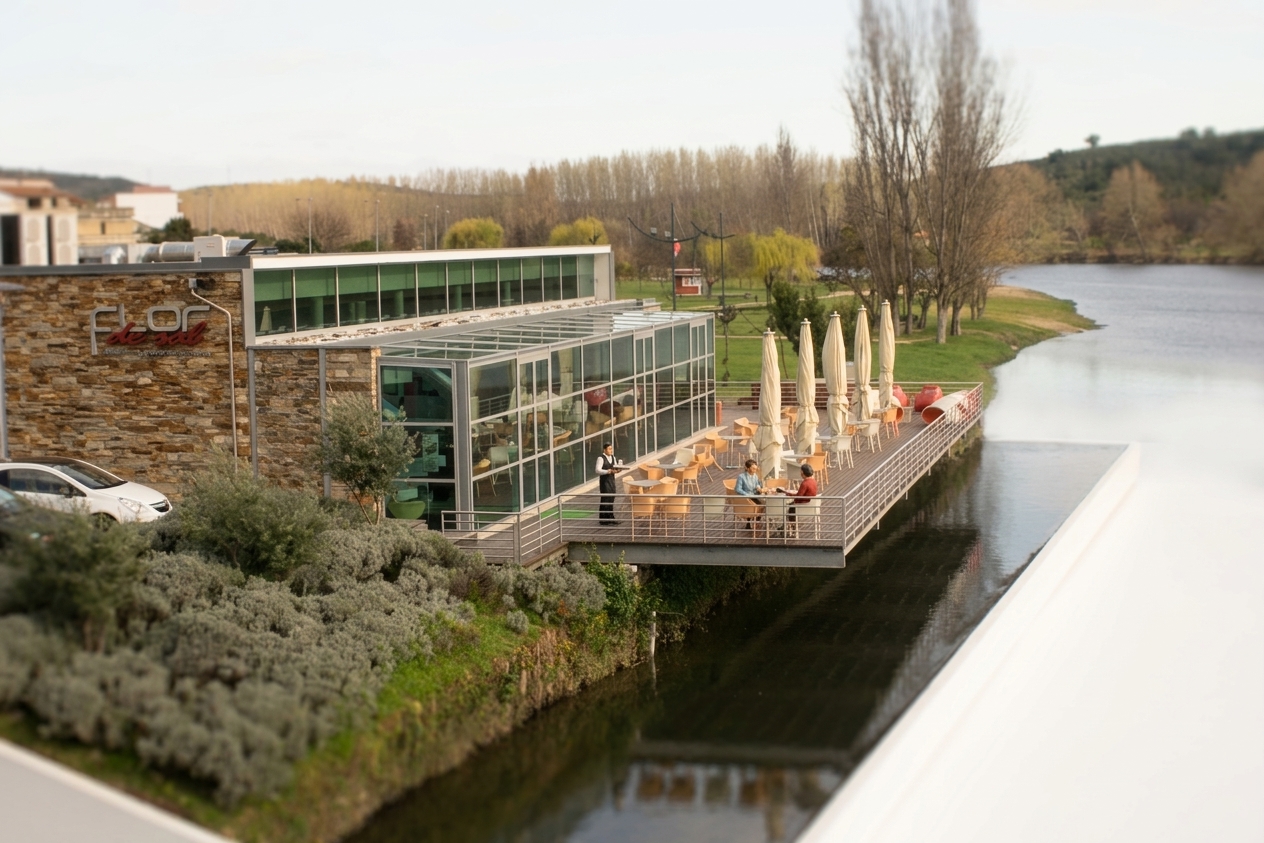
Restaurante Flor de Sal
Mirandela, Portugal
A Mirandela restaurant where alheira is not a menu item but the menu item. The house alheira frita arrives in a cast-iron dish: split and blistered, with a fried egg on top and a mound of hand-cut fries. They source from local producers within a 20-kilometer radius. The dining room is simple, the wine list all Douro and Trás-os-Montes, and locals fill every table at lunch.
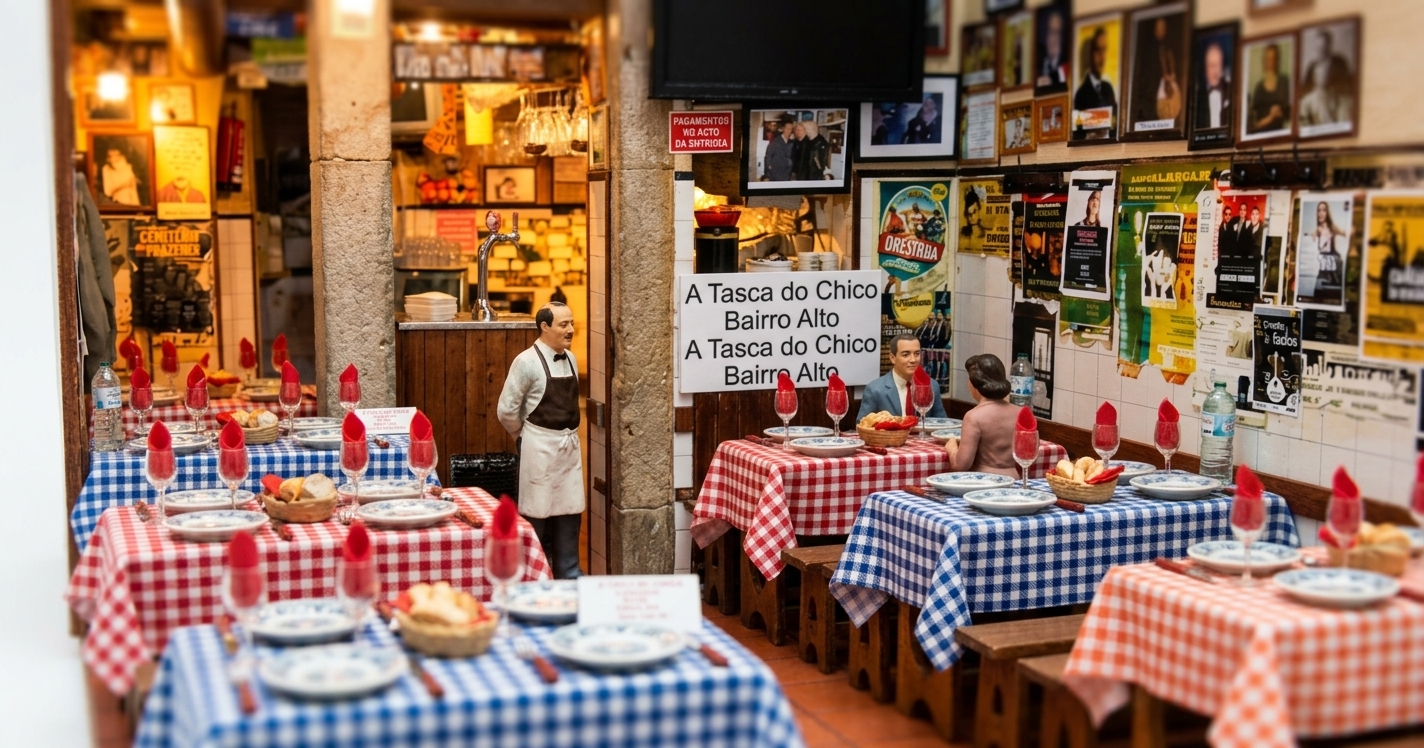
Tasca do Chico
Lisbon, Portugal
A fado tavern in Lisbon's Bairro Alto where the tables are tight, the fado is live, and the petiscos menu includes a fried alheira that regulars order before the singing starts. The alheira comes with a fried egg, a few leaves of salad, and a basket of bread. The room holds maybe 30 people. Reservations are not taken; the line forms early.