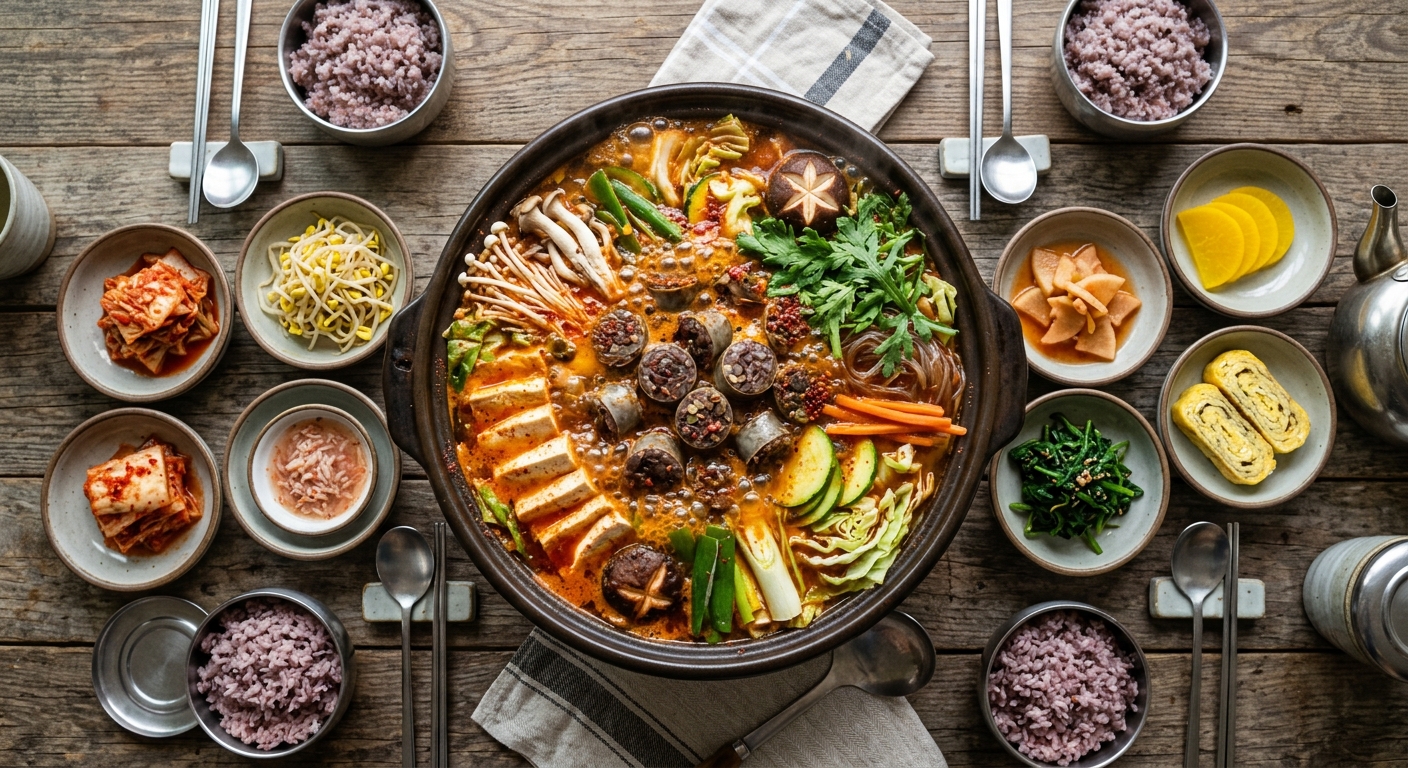
Sundae Jeongol (Sundae Hot Pot)
Recipes with Sundae
A table hot pot built around sundae, pork offal, vegetables, and a spiced broth. The jeongol format means everything goes into the pot at once and cooks at the table. It is a meal for sharing, loud and informal, with each person pulling ingredients from the bubbling center.
Prep Time
20 min
Cook Time
25 min
Servings
4
Difficulty
Medium
Ingredients
- 400g steamed sundae links, sliced into thick rounds
- 150g pork brisket, thinly sliced
- 100g pork liver, sliced (optional)
- 200g napa cabbage, cut into large pieces
- 150g Korean radish (mu), cut into half-moons
- 2 medium zucchini, sliced
- 4 shiitake mushrooms, stems removed and halved
- 3 green onions, cut into 5cm pieces
- 2 red chili peppers, sliced
- 3 tablespoons gochujang
- 2 tablespoons gochugaru
- 2 tablespoons soy sauce
- 1 tablespoon doenjang
- 4 garlic cloves, minced
- 1 teaspoon sesame oil
- 1.2 litres anchovy and kelp stock
- Cooked rice or ramyeon noodles for finishing
Steps
Make the sauce base: combine gochujang, gochugaru, soy sauce, doenjang, and minced garlic in a bowl. Mix into a thick paste.
Arrange all the vegetables in sections in a wide, shallow pot: radish at the bottom (it takes the longest), then cabbage, zucchini, and mushrooms arranged around the pot. Place the pork slices and sundae rounds in the center.
Spoon the sauce paste over the top of everything. Add the green onions and chili slices. Pour in the stock around the edges of the pot.
Bring to a boil over high heat, then move to a portable burner at the table if you have one. Reduce to a steady simmer and cook for 15 to 20 minutes until the radish is tender and the broth is rich and red.
Drizzle sesame oil over the pot before serving. Each diner takes from the pot with their chopsticks and spoon. At the end, add cooked rice or dry ramyeon noodles directly to the remaining broth and cook for 3 minutes.
Tips
The radish must go at the bottom of the pot, against the heat. Placed on top, it stays too firm. Adding cooked rice to the leftover broth at the end (the bokkeum-bap finish) is expected, not optional, at most Korean hot pot meals.