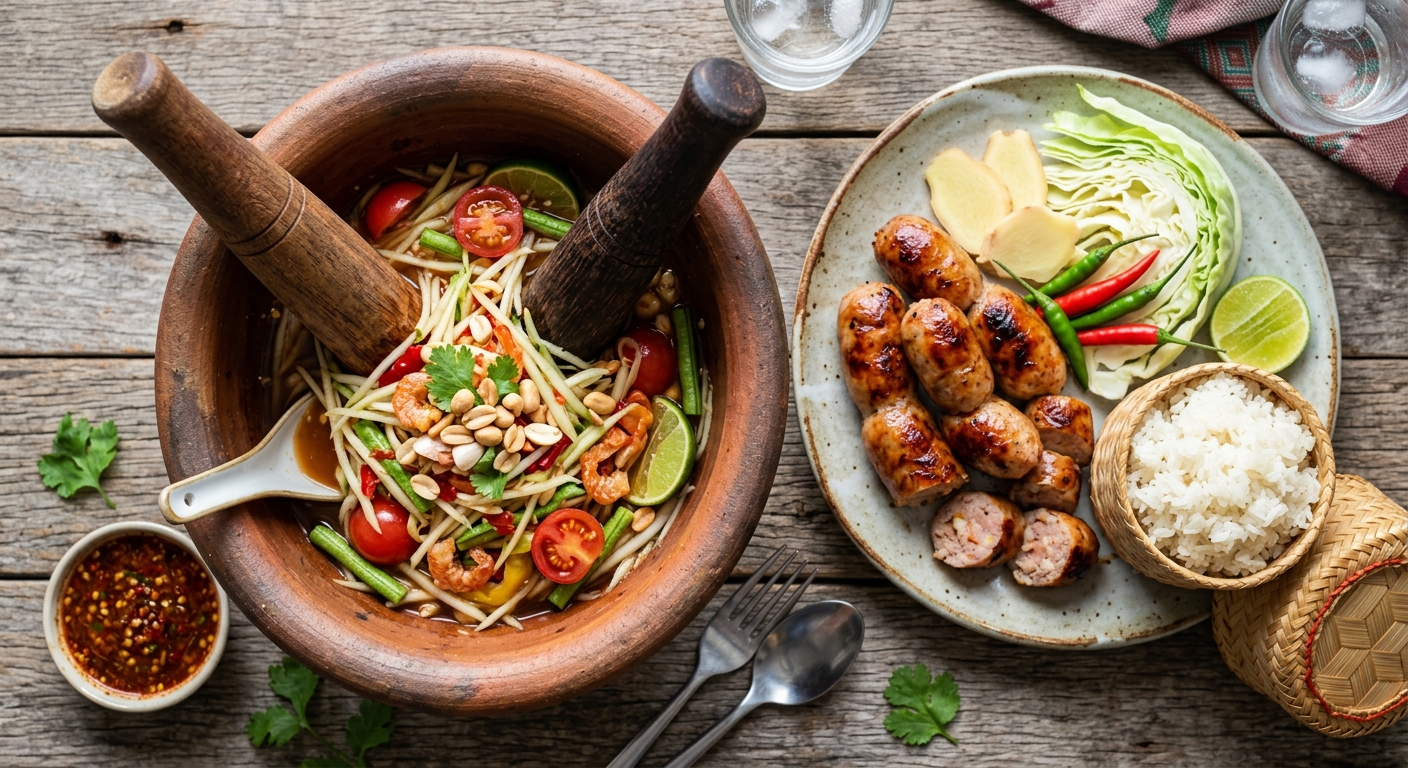
Sai Krok Isan with Som Tam
Recipes with Sai Krok Isan
The most Isan of all combinations: grilled sai krok isan served alongside a fresh som tam (green papaya salad). No cooking required for the som tam itself — the pestle and mortar does all the work. The sour fermented sausage and the sour papaya salad are not redundant: their acids arrive differently, one from lactic fermentation and one from lime juice, and the sausage fat grounds the freshness of the raw salad. A standard Isan outdoor meal.
Prep Time
20 min
Cook Time
12 min
Servings
2
Difficulty
Medium
Ingredients
- 8 links sai krok isan
- 200 g green papaya, peeled and julienned (or use a box grater on firm unripe papaya)
- 8 cherry tomatoes, halved
- 4 long beans (snake beans), cut into 3 cm lengths
- 2 cloves garlic
- 3–5 bird's eye chillies (adjust to heat preference)
- 1.5 tbsp palm sugar or light brown sugar
- 2 tbsp lime juice
- 1.5 tbsp fish sauce
- 1 tbsp dried shrimp
- 2 tbsp roasted peanuts
- Steamed sticky rice to serve
- Raw cabbage wedges to serve
- Fresh ginger coins to serve
Steps
Start the sai krok isan over charcoal or in a pan. It takes 10–12 minutes and the som tam comes together in 5, so get the sausage going first.
In a large pestle and mortar, pound the garlic and chillies to a rough paste. Add the dried shrimp and pound briefly.
Add the long bean pieces and bruise with the pestle — two or three firm presses, not a full pound. The beans should crack but not break apart.
Add palm sugar, lime juice, and fish sauce. Mix with the pestle and a spoon. Taste: the dressing should be sour, salty, and just sweet enough to balance. Adjust if needed.
Add the papaya and tomatoes. Use the pestle to pound gently and then use a spoon to toss and mix — the papaya should stay in long strands, not be pulped.
Transfer the som tam to plates. Place the grilled sai krok isan alongside. Add sticky rice, raw cabbage, and ginger coins. Scatter peanuts over the som tam.
Tips
Green papaya is unripe papaya sold at Asian grocers. It is firm and pale inside with no sweetness. Julienning by hand gives cleaner strands than a box grater. The pestle and mortar is not decorative — the brief pounding releases juice from the papaya and integrates the dressing differently than tossing with a spoon would.