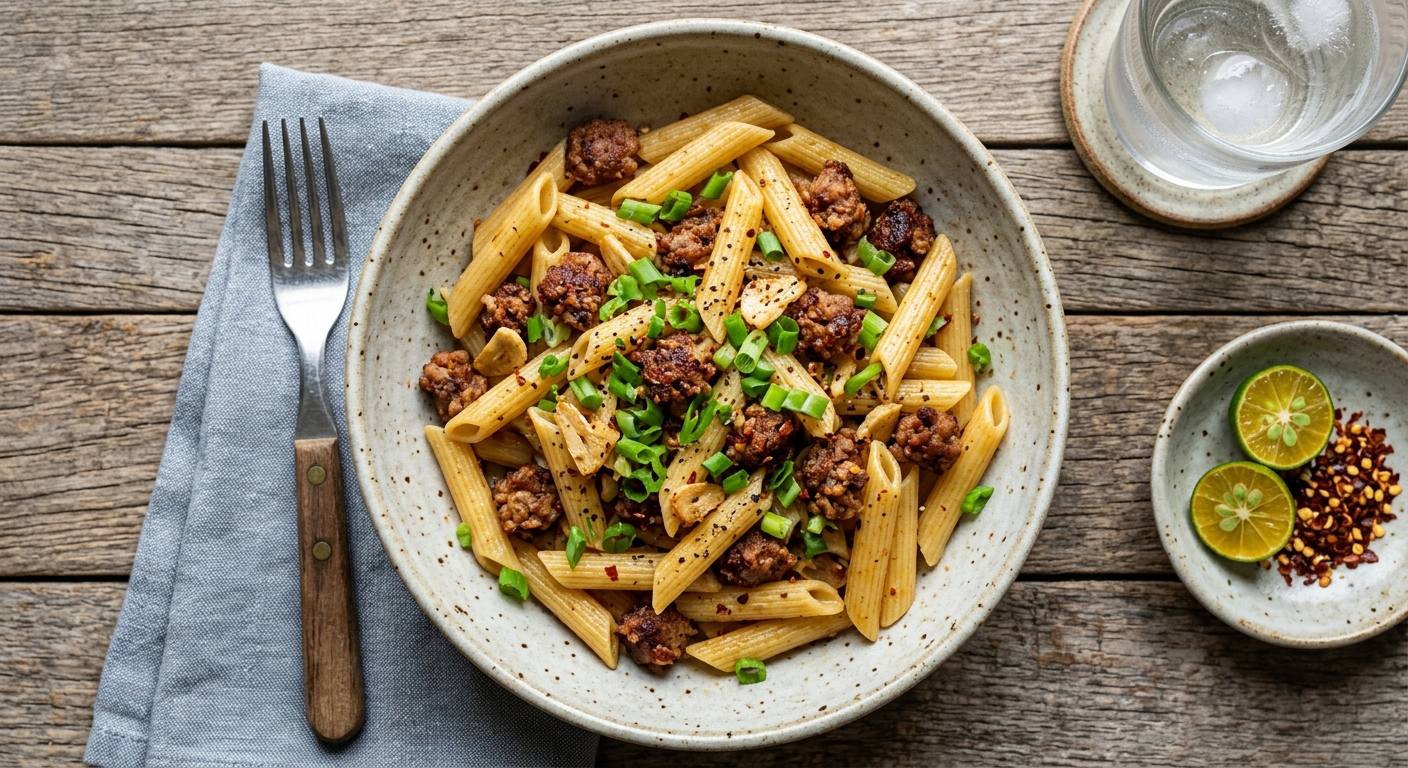
Longganisa Pasta
Recipes with Longganisa
Filipino-style pasta with longganisa as the meat base. The sausage casings are removed and the meat crumbled into the pan, where it fries in its own sweetened fat before tomatoes and garlic join. The result sits somewhere between a Filipino bolognese and an aglio e olio, with the longganisa's sugar giving the sauce a slight caramelised gloss. Banana ketchup is traditional in Filipino pasta cooking and optional here; it deepens the sweetness in a way that straight tomato does not. A quick weeknight dish that turns Philippine pantry staples into something the whole household finishes.
Prep Time
10 min
Cook Time
25 min
Servings
4
Difficulty
Easy
Ingredients
- 8 links longganisa, casings removed
- 400g spaghetti or linguine
- 1 head garlic, minced
- 1 medium onion, finely chopped
- 400g canned crushed tomatoes
- 2 tbsp banana ketchup (optional)
- 1 tsp soy sauce
- 2 tbsp olive oil or neutral oil
- Salt and black pepper to taste
- Grated cheese (Eden or Parmesan) for serving
Steps
Cook the pasta in well-salted boiling water until al dente. Reserve 1 cup of pasta water before draining.
Heat the oil in a large pan over medium heat. Add the longganisa meat, breaking it up as it cooks. Fry for 5–6 minutes until browned and caramelised. The fat will render and the meat will take on colour from the sugar in the sausage.
Add the onion to the pan and cook for 3 minutes until soft. Add the garlic and cook another minute.
Add the crushed tomatoes, banana ketchup if using, and soy sauce. Stir to combine. Simmer for 10 minutes until the sauce thickens slightly. Season with salt and pepper.
Add the drained pasta to the sauce and toss to coat, adding pasta water a little at a time to loosen if needed. Serve with grated cheese over the top.
Tips
Filipino pasta is traditionally sweeter than Italian. Banana ketchup is the authentic local addition and worth seeking out in Asian grocery stores. Without it, a pinch of sugar added to the tomato sauce achieves a similar effect. Use the pasta water generously; the starch helps the sauce cling to the noodles.