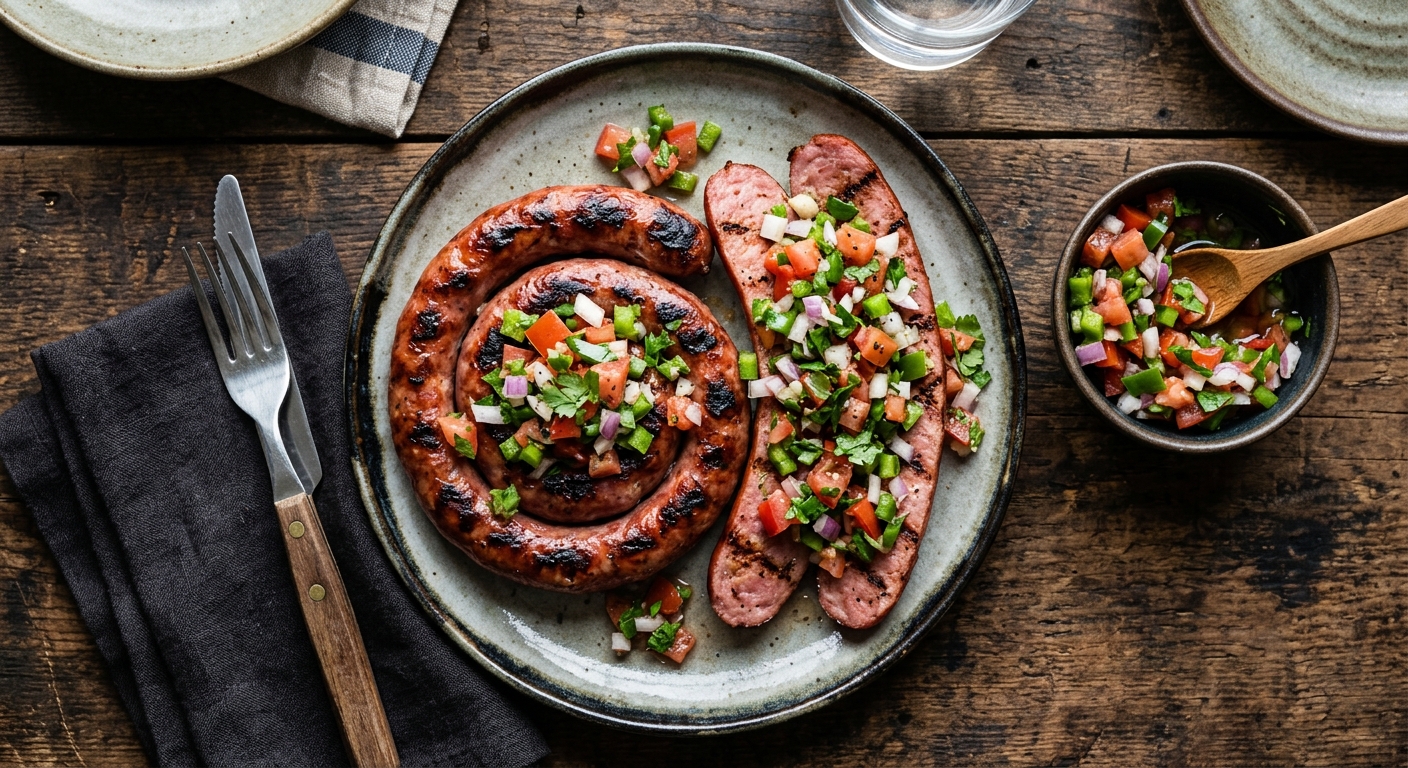
Linguiça com Vinagrete
Recipes with Linguiça
Grilled linguiça split open and covered with Brazilian vinagrete, the coarse tomato-onion-pepper salsa that appears on every churrasco table. The vinagrete is made an hour ahead so the vegetables soften in the acid and the flavours merge. The combination is the simplest statement of what the Brazilian grill table is about: fire, fat, and acid in balance.
Prep Time
20 min
Cook Time
15 min
Servings
4
Difficulty
Easy
Ingredients
- 600 g linguiça calabresa, whole links
- For the vinagrete:
- 4 medium ripe tomatoes, seeded and finely diced
- 1 large white onion, finely diced
- 1 green bell pepper, seeded and finely diced
- 1 bunch flat-leaf parsley, leaves only, finely chopped
- 4 tbsp white wine vinegar
- 3 tbsp olive oil
- 1 tsp salt
- Black pepper to taste
Steps
Make the vinagrete at least 1 hour before serving. Combine the diced tomato, onion, green pepper, and parsley in a bowl. Add the vinegar, olive oil, salt, and pepper. Stir well and cover. Leave at room temperature, stirring once or twice. The onion will soften, the tomatoes will release juice, and the salsa will become brighter and more cohesive as it sits.
Light a charcoal grill to medium-high heat. Grill the linguiça links whole, turning every 4 to 5 minutes, until the skin is blistered and charred in patches and the fat is running clear, about 12 to 15 minutes total.
Remove the sausages from the grill. Place on a wooden board and immediately score each one lengthwise along the top with a sharp knife — a single cut that opens the sausage without splitting it in two. The interior fat will run out into the cut.
Spoon the vinagrete generously over each split sausage. The cold, acidic salsa goes directly onto the hot fat that has pooled in the cut. Serve immediately, with additional vinagrete on the side.
Tips
The vinagrete must be made ahead. Fresh-chopped vegetables without resting time taste raw and sharp. The hour of marinating does most of the work. Seeding the tomatoes is worth the effort — the seeds and excess liquid dilute the salsa if left in. The salt in the vinagrete draws moisture from the vegetables, so the salsa will be wetter after an hour than when first made.