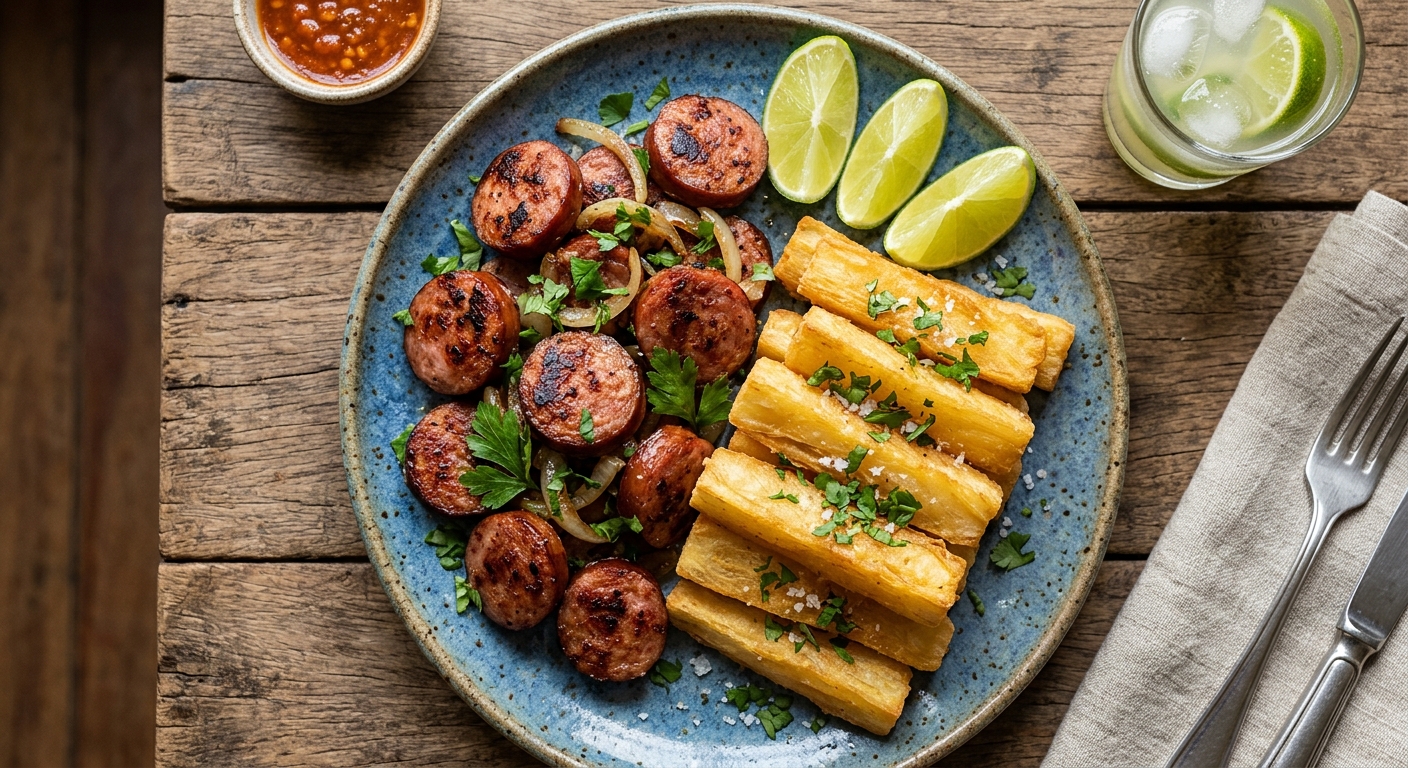
Linguiça com Mandioca Frita
Recipes with Linguiça
Fried cassava and grilled or pan-fried linguiça on the same plate: one of the most repeated combinations in Brazilian bar food. The mandioca frita arrives fluffy inside and blistered at the edges, salted while hot. The linguiça alongside provides the smoke and fat. This is the standard petisco (bar snack) order at churrascos and botecos across São Paulo and Rio.
Prep Time
20 min
Cook Time
30 min
Servings
4
Difficulty
Easy
Ingredients
- 500 g linguiça calabresa, sliced on the diagonal
- 800 g fresh cassava (mandioca), peeled and cut into batons
- Vegetable oil for frying
- Coarse salt
- 2 garlic cloves, minced
- 1 tbsp olive oil
- Fresh parsley, chopped, to finish
Steps
Bring a large pot of salted water to a boil. Add the cassava batons and cook for 20 to 25 minutes until tender through to the centre. Drain and let steam dry for 5 minutes. Remove any fibrous cores that run through the centre of the pieces.
Heat 5 cm of vegetable oil in a heavy pot to 180°C. Fry the cassava in batches for 4 to 5 minutes per batch until the exterior is golden and blistered. Do not crowd the pot. Drain on paper towels and salt immediately.
While the cassava fries, heat a cast-iron or heavy frying pan over medium-high heat. No oil needed. Add the linguiça slices in a single layer. Cook for 3 to 4 minutes per side until deeply browned on both flat faces.
Remove the pan from the heat. Add the minced garlic and the tablespoon of olive oil to the residual fat in the pan, swirl for 30 seconds off the heat until the garlic softens.
Arrange the fried cassava on a large plate or board. Lay the linguiça slices over and around. Spoon the garlic oil from the pan over everything. Scatter parsley over the top and serve immediately.
Tips
Fresh cassava is best for this preparation. Frozen cassava works but produces a waterlogged result if not properly dried before frying. The pre-boiling step is not optional — raw cassava takes too long to cook through in oil. The garlic goes in off the heat because it burns fast in a dry pan and turns bitter.